Categories
Featured Juneau News Juneau Local Ketchikan Local News Feeds Sitka Local

Report: Nearly half of all federal funding for tribes at risk under ‘big beautiful’ bill

Serina Fast Horse, left,of Sicangu Lakota & Blackfeet Tribes, talks with Jacy Bowles, of Xicana and Diné descent, as they walk to the former Elwha Dam site during the 2023 Tribal Climate Camp on the Olympic Peninsula, Wednesday, Aug. 16, 2023, near Port Angeles, Wash. (AP Photo/Lindsey Wasson, File)

AP- A new report from Portland State University found that budget cuts under President Donald Trump’s new spending bill threaten nearly half of federal funding allocated to federally recognized Native American and Alaska Native nations last year.

Roughly $530 million of the $1.19 billion allocated to Northwest tribal nations in fiscal year 2024 — used to fulfill the federal government’s trust and treaty obligations to Native American and Alaska Native tribes — is at risk of being cut. The congressionally allocated funds serve myriad functions for tribes in the Northwest, including providing clean drinking water, affordable housing, schools, transit and land management. Funding is decided by Congress on a yearly basis and can be disbursed over a period of time that exceeds the calendar year it is allocated.

“All across the board tribes are worried about the funding cuts that are happening right now,” said Serina Fast Horse, who is Lakota and Blackfeet and serves as the co-director of the Northwest Environmental Justice Center, which provides grant application assistance and advising to Indigenous communities in the Northwest.

Fast Horse says there are serious concerns among Northwest tribes about further cuts to vital programs ranging from health and wellness to early childhood education. The report warns of vulnerabilities to programs and grants that tribes rely on for resilience in the face of climate change, like improving home weatherization, managing forestland and renovating aging homes. Federal dollars to help Northwest tribes bolster their infrastructure against the increasing threats from wildfire, drought and sea-level rise could also be slashed.

The Portland State report found millions in Clean Air Act funding could also go away — the Environmental Protection Agency earmarked nearly $2 million in 2024 for Northwest tribes in a series of grants for monitoring air quality and pollution. Much of the congressionally allocated funding has yet to be distributed to tribes and is now at risk of being cut altogether.

The report demonstrates how proposed major reductions across the federal government, including at the Environmental Protection Agency, the Department of the Interior and the National Oceanic and Atmospheric Association, could reverberate across Indian Country.

Tribal officials shared concerns that drastic cuts could cause the federal government to fall short of trust and treaty obligations that mandate the federal government support tribal services, uphold tribal sovereignty and protect tribal treaty resources — responsibilities that courts, including the U.S. Supreme Court, have repeatedly upheld.

“All the funding reductions addressing clean water, air and dealing with climate change have impacts on the Tribes’ culture and treaty protected resources,” said William E. Ray Jr., chair of the Klamath Tribes.

Researchers declined to disclose specific projects at risk of elimination for fear of retaliation, and a number of tribes and tribal organizations declined to comment to InvestigateWest, citing similar concerns.

“Trump and Congressional Republicans are wreaking havoc on Tribal communities with their ‘Big, Ugly BETRAYAL’ of a law that arbitrarily cuts many programs supporting folks in Indian Country, where chronic underfunding is already impacting services and exacerbating disparities,” said Oregon Senator Jeff Merkley, a Democrat.

He added that the federal government plays an outsized role in funding essential services to tribal communities, including health care, education and public safety, and that the Inflation Reduction Act took important steps in advancing funding for water infrastructure and environmental programs for tribes.

In 2024, Clean Air Act related funds were used to fund 15 projects for 12 Northwest tribes. The Confederated Tribes and Bands of the Yakama Nation, the Confederated Tribes of the Umatilla Indian Reservation, and the Tulalip Tribes are some of the Native American nations set to receive research grants for improving air quality and pollution monitoring. Among 12 tribes selected for funding, several of them focus on minimizing exposure to poor air quality and harmful pollutants to their elderly and medically vulnerable residents. Other tribes intend to study impacts of pollutants on important first foods — culturally significant staple foods consumed before colonization — that officials say are critical to improving health outcomes for their citizens.

Researchers at PSU examined 469 programs impacted by President Trump’s reversal of former President Joe Biden’s Executive Order 14008, which sought to address climate change and created a number of environmental justice initiatives. Sixty of the programs identified by researchers were specifically named in the Republican-led spending bill for cuts, and 17 of those provided funding directly to tribes. The programs accounted for roughly 35% of all federal investments in tribes in 2024. The report says not all of the funding will be cut, but a significant portion of it could be.

The cuts come at a time when Native Americans and Alaska Natives already have limited access to federal services and funds, according to a December 2024 report from the U.S. Government Accountability Office, a nonpartisan congressional watchdog. It found when tribes had to compete with other entities for federal funding, they may receive a small portion of the total amount, and that limited access to federal services and funds contributes to known disparities for Native Americans and Alaska Natives compared to other Americans.

Of the $20.15 billion in federal funding that went to tribes between 2010 and 2024, tribes within the boundaries of Idaho received a total of $304.56 million, Washington tribes $1.81 billion, Oregon tribes $690.76 million, and Alaska Native tribes received $2.35 billion.

Other programs at risk of being cut include the EPA’s embattled Environmental Justice Government-to-Government Program, which funded initiatives by states, tribes and local governments to support activities that lead to measurable environmental or public health impacts.

Under that program, in 2023, the EPA awarded the Tulalip Tribes $977,000 to work in conjunction with the Confederated Tribes and Bands of Yakama Nation to create a tool to detect which homes are at greatest risk from wildfire smoke infiltration and dangerously hot weather, which are growing issues affecting both communities.

While the federal government has repeatedly affirmed its obligations to tribes, actual allocations remain disproportionately small compared to population figures. In 2024, Native American tribes received just 1.7% of federal energy and environment spending, despite Native people making up 2.9% of the U.S. population.

Between 2010 and 2024, tribes within the bounds of Idaho, Washington and Oregon received roughly $2.81 billion in federal investments in energy and environmental infrastructure, which represents roughly 14% of the $20 billion in allocations made to tribes nationwide.

The researchers determined that programs funded under the Inflation Reduction Act, Biden’s 2022 climate, health and tax law, are at particular risk of being eliminated. The funding allocated to tribes under the IRA represented a historic investment in infrastructure in Indian Country, more than doubling energy and infrastructure investment from $1.51 billion nationwide to $3.94 billion in 2024, around .04% of total federal grant spending obligations for 2024.

“When you put them in the context of how much money the federal government actually spends on certain things, it’s pennies on the dollar,” said Sophie Lalande, a co-author of the PSU report.

Soon after taking office and without consulting Congress, the Trump administration suspended some grants that tribal communities used heavily, such as community change grants, distributed by the EPA’s Offices of Environmental Justice and of External Civil Rights Compliance during the Biden administration, to support climate resilience and clean energy. Distributed as a part of the Inflation Reduction Act, the grants were suspended as part of the Trump administration’s anti-diversity, equity and inclusion efforts.

The grants helped tribal communities in the Northwest tremendously, according to Fast Horse.

“They were providing hundreds of thousands of dollars to communities for infrastructure improvements, like access to clean drinking water and climate resilience hubs, just really essential pieces of community development for health and safety of communities,” she said.

The report stresses a multiplier effect from investments made in tribal communities. Infrastructure dollars invested on tribal lands often serve as anchors for broader local development, since tribal lands often share regional infrastructure like power grids, roads or water systems with non-Native communities, with the power of dollars rippling outward into surrounding rural towns and cities.

Bobby Cochran, a researcher with Portland State University and senior project manager at the National Policy Consensus Center, co-authored the report.

“We just haven’t made a major investment in infrastructure since the ’60s or ’70s, so this wasn’t fluffy,” he said. “It’s really important stuff that was just trying to play catch-up.”

___

This story was originally published by InvestigateWest and distributed through a partnership with The Associated Press.
Categories
Politics

Even a brief government shutdown might hamper morale, raise costs and reduce long-term efficiency in the federal workforce

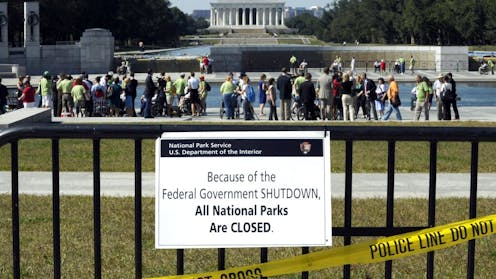
A sign indicates the closing of federal services during the government shutdown in 2013. AP Photo/Susan Walsh

As the federal fiscal year draws to a close, an increasingly familiar prospect is drawing near in Washington, D.C.: a possible government shutdown. And for federal workers, it couldn’t come at a worse time.

In the fractious and polarized political landscape of the United States, Democrats and Republicans have come to rely on short-term, stopgap funding bills to keep the government operating in the absence of elusive longer-term budget deals.

With the parties currently wide apart over the terms of even a short-term budget resolution, the government is set to shut down on Oct. 1, 2025, barring an 11th-hour deal that appears far off. If the shutdown does happen, it would mark another difficult moment this year for a federal workforce that has so far shed more than 300,000 jobs. This is largely due to ongoing Trump administration efforts to downsize parts of the federal government and restructure or largely eliminate certain government agencies with the stated aim of increasing efficiency.

With a government shutdown, hundreds of thousands of federal employees would be furloughed – sent home without pay until funding resumes.

As a team of financial economists who study labor markets and public sector employment and have examined millions of federal personnel records spanning such government shutdowns in the past, we have found that the consequences reach far beyond the now-familiar images of closed national parks and stalled federal services. Indeed, based on our study of an October 2013 shutdown during which about 800,000 federal employees were furloughed for 16 days, shutdowns leave an enduring negative effect on the federal workforce, reshaping its composition and weakening its performance for years to come.

What happens to workers

Millions of Americans interact with the federal government every day in ways both big and small. More than one-third of U.S. national spending is routed through government programs, including Medicare and Social Security. Federal workers manage national parks, draft environmental regulations and help keep air travel safe.

Whatever one’s political leanings, if the goal is a government that handles these responsibilities effectively, then attracting and retaining a talented workforce is essential.

Yet the ability of the federal government to do so may be increasingly difficult, in part because prolonged shutdowns can have hidden effects.

When Congress fails to pass appropriations, federal agencies must furlough employees whose jobs are not deemed “excepted” – sometimes commonly referred to as essential. Those excepted employees keep working, while others are barred from working or even volunteering until funding resumes. Furlough status reflects funding sources and mission categories, not an individual’s performance, so it confers no signal about an employee’s future prospects and primarily acts as a shock to morale.

Importantly, furloughs do not create long-term wealth losses; back pay has always been granted and, since 2019, is legally guaranteed. Employees therefore recover their pay even though they may face real financial strain in the short run.

A cynical observer might call furloughs a paid vacation, yet the data tells a different story.

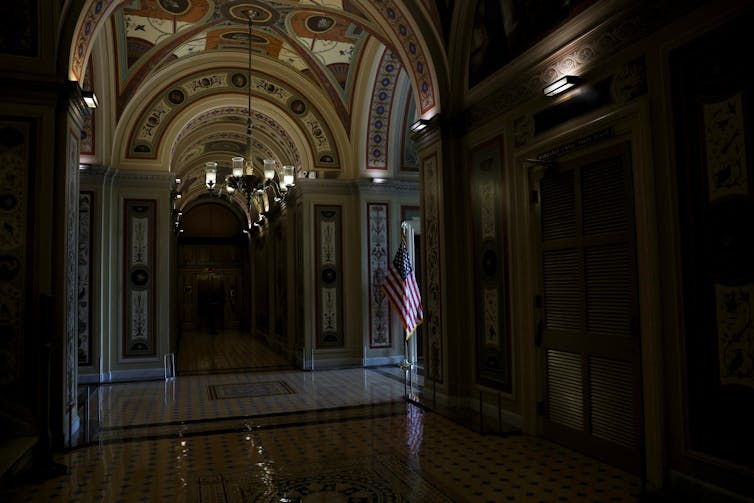
An empty hallway in the U.S. Capitol.
An American flag is seen inside the U.S. Capitol Building on Sept. 23, 2025, ahead of a looming government shutdown.
Photo by Anna Moneymaker/Getty Images

Immediate consequences, longer-term effects

Using extensive administrative records on federal civilian workers from the October 2013 shutdown, we tracked how this shock to morale rippled through government operations. Employees exposed to furloughs were 31% more likely to leave their jobs within one year.

These departures were not quickly replaced, forcing agencies to rely on costly temporary workers and leading to measurable declines in core functions such as payment accuracy, legal enforcement and patenting activity.

Further, we found that this exodus builds over the first two years after the shutdown and then settles into a permanently lower headcount, implying a durable loss of human capital. The shock to morale is more pronounced among young, female and highly educated professionals with plenty of outside options. Indeed, our analysis of survey data from a later 2018-2019 shutdown confirms that morale, not income loss, drives the exits.

Employees who felt most affected reported a sharp drop in agency, control and recognition, and they were far more likely to plan a departure.

The effect of the motivation loss is striking. Using a simple economic model where workers can be expected to value both cash and purpose, we estimate that the drop in intrinsic motivation after a shutdown would require a roughly 10% wage raise to offset.

Policy implications

Some people have argued that this outflow of employees amounts to a necessary trimming, a way to shrink government by a so-called starving of the beast.

But the evidence paints a different picture. Agencies hit hardest by furloughs turned to temporary staffing firms to fill the gaps. Over the two years after the shutdown we analyzed, these agencies spent about US$1 billion more on contractors than they saved in payroll.

The costs go beyond replacement spending, as government performance also suffers. Agencies that were more affected by the shutdown recorded higher rates of inaccurate federal payments for several years. Even after partial recovery, losses amounted to hundreds of millions of dollars that taxpayers never recouped.

Other skill-intensive functions declined as well. Legal enforcement fell in agencies that became short of experienced attorneys, and patenting activity dropped in science and engineering agencies after key inventors left.

Official estimates of shutdown costs typically focus on near-term GDP effects and back pay. But our findings show that an even bigger bill comes later in the form of higher employee turnover, higher labor costs to fill gaps, and measurable losses in productivity.

Shutdowns are blunt, recurring shocks that demoralize the public workforce and erode performance. These costs spill over to everyone who relies on government services. If the public wants efficient, accountable public institutions, then we should all care about avoiding shutdowns.

After an already turbulent year, it is unclear whether an upcoming shutdown would significantly add to the strain on federal employees or have a more limited effect, since many who were considering leaving have already left through buyouts or forced terminations this year. What is clear is that hundreds of thousands of federal employees are likely to experience another period of uncertainty.

The Conversation

The authors do not work for, consult, own shares in or receive funding from any company or organization that would benefit from this article, and have disclosed no relevant affiliations beyond their academic appointment.

​Politics + Society – The Conversation

Categories
Politics

Civil society helps uphold democracy and provides built-in resistance to authoritarianism

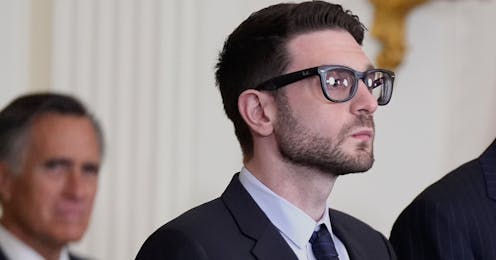
Alex Soros is the board chair of the Open Society Foundations, the philanthropy funded by his father, George Soros. AP Photo/Manuel Balce Ceneta

The New York Times reports that a senior Department of Justice official recently “instructed more than a half dozen U.S. attorneys’ offices to draft plans to investigate” the Open Society Foundations – philanthropies funded by the billionaire George Soros.

Citing a document that the news outlet said its reporters had seen, the report listed possible charges the foundations could face “ranging from arson to material support of terrorism.”

The philanthropic institution denied any wrongdoing.

“These accusations are politically motivated attacks on civil society, meant to silence speech the administration disagrees with and undermine the First Amendment right to free speech,” Open Society Foundations stated in response to the reported investigations. “When power is abused to take away the rights of some people, it puts the rights of all people at risk.”

The term “civil society” isn’t familiar to all Americans. But it’s part of what helped this country grow and thrive because it encompasses many of the institutions that uphold the American way of life. As a sociologist who studies nonprofits and civil society in the U.S and around the world, I have always been interested in the relationship between the health of a nation’s civil society and the strength of rights and freedom within its borders.

I’ve also noticed that often the term is used without a definition. But I think that it’s important for Americans to become more familiar with what civil society is and how it helps sustain democracy in the United States.

Civil society

The Encyclopedia Britannica defines civil society as “the dense network of groups, communities, networks and ties that stand between the individual and the modern state.”

This constellation of institutions consists of not-for-profit organizations and special interest groups, either formal or informal, working to improve the lives of their constituents. It includes charitable groups, clubs and voluntary associations, churches and other houses of worship, labor unions, grassroots associations, community organizations, foundations, museums and other kinds of nonprofits – including nonprofit media outlets.

Civil society does not include government agencies or for-profit businesses.

Political scientists and sociologists have long claimed that a healthy civil society, which in the U.S. includes a strong and independent nonprofit sector, helps sustain democracy. This is true even though most nonprofits don’t engage in partisan political activities.

My own analysis of survey data from 64 countries has shown that authoritarians have begun to use civil society groups to support their own purposes. But in the United States, at least, most civil society organizations still support democratic values.

Sometimes, scholars call civil society “the third sector” to distinguish it from the public and private spheres.

Most scholars agree that civil society strengthens and protects democracy, and that true democracy is impossible without it. These scholars distinguish between liberal democracies and illiberal democracies.

Liberal democracies have a separation of powers – meaning the executive, legislative and judicial branches of government. They protect individual rights, allow a free press, maintain an independent judiciary and safeguard the rights of minorities.

In illiberal democracies, there are periodic elections, but they are not necessarily fair or free. Civil society tends to be more restricted in illiberal democracies than in liberal ones.

An American strength from the start

The strength of America’s civil society helps explain the long success of democracy in the United States.

In 1835, when the French scholar and diplomat Alexis de Tocqueville visited the country, he marveled at the tendency of Americans to “constantly unite.” They created associations, he wrote, “to give fêtes, to found seminaries, to build inns, to raise churches, to distribute books, to send missionaries to the antipodes; in this manner they create hospitals, prisons, schools.”

Whereas the government initiated grand projects in France and the nobility did so in England, in the United States voluntary associations of ordinary individuals were behind most great endeavors.

People in periwinkle blue T-shirts stand while children sit on the ground, surrounded by dogs.
A Lutheran group that provides comfort dogs after traumatic events visits survivors of a school shooting in Minneapolis on Aug. 28, 2025.
AP Photo/Abbie Parr

What happens in nondemocratic countries

One way to see how important a robust civil society can be is to look at what happens in countries that do not have one.

The totalitarian countries of the 20th century, particularly communist China and the Soviet Union, outlawed civil society under the pretense that the party and the state represented the people’s true interests.

When the Berlin Wall fell in 1989, the United States and Western Europe devoted much diplomacy and foreign aid to helping the former USSR and the countries of Eastern Europe develop civil society institutions, believing this to be a precondition of those countries’ transition to democracy.

Today, civil society flourishes in formerly communist nations that have successfully made the transition to democracy, such as the Czech Republic, Estonia, Latvia and Lithuania. Civil society is restricted in that region’s countries that don’t embrace democracy, such as Belarus and Russia.

A man fixes a bicycle.
Volunteer Clayton Streich fixes a bicycle at Lincoln Bike Kitchen, an American nonprofit, in 2024 in Lincoln, Neb.
AP Photo/Rebecca S. Gratz

Not your grandma’s authoritarians

Today’s authoritarian rulers realize that civil society has the potential to support democracy and pry loose their grip on power. But few of those leaders outlaw civil society organizations entirely.

Instead, authoritarian leaders subordinate civil society organizations to achieve their own ends. In China, which had no civil society before the 1990s, the Communist Party now creates government-organized nongovernmental organizations, or GONGOs, which look like nonprofits and are technically separate from the state, but remain under state control.

Some authoritarians who take power in countries that already have a civil society sector tame these organizations and harness their power through a range of oppressive tactics. They leave alone service-providing organizations, like food banks, free clinics and homeless shelters, and use them to show citizens how they are bringing them benefits.

However, they crack down on advocacy organizations, such as human rights groups, labor unions and feminist groups, as these are a source of potential opposition to the regime. They then cultivate pro-regime civil society institutions, providing them with formal and informal support.

When authoritarians crack down on civil society groups, they sometimes destroy offices and imprison the organization’s leaders and members of their staff. But they generally use more subtle means.

For example, they may pass laws restricting the amount of funding, particularly foreign funding, available to nonprofits. They add layers of red tape that make it hard for nonprofits to operate, such as audits, registration requirements and information requests.

Authoritarians may use those hurdles selectively. Nonprofits that are neutral or friendly to the regime may find they can operate freely. Nonprofits the regime perceives as opponents undergo extensive audits, are forced to wait a long time when they seek to incorporate, and face constant demands for personal information about their funders, members and clients.

Man holding a sign with Vladimir Putin's face on it hands out newspapers.
An activist of the pro-Kremlin National Liberation Movement hands out materials while holding a sign that includes a portrait of Russian President Vladimir Putin in Moscow.
Getty Images

Attacks in the United States

Even before news broke of the Trump administration’s reported demand that the Open Societies Foundations be investigated, there were mounting signs that the U.S. was becoming more like authoritarian countries than it used to be in terms of how it treats civil society.

In March 2025, for example, President Donald Trump signed an executive order restricting a federal program that forgives student loans for people who work in public service organizations or the government. The order said that employees of institutions that the Trump administration deems to “have a substantial illegal purpose,” such as providing services to undocumented immigrants or serving the needs of transgender clients, would become ineligible for loan forgiveness.

Over the summer, Congress held three investigative hearings on nonprofits. The Republican Party’s leadership signaled its disdain and distrust of those groups with hearing titles like “Public Funds, Private Agendas: NGOs Gone Wild, ”How Leftist Nonprofit Networks Exploit Federal Tax Dollars to Advance a Radical Agenda,“ and “An Inside Job: How NGOs Facilitated the Biden Border Crisis.”

After the murder of conservative activist Charlie Kirk, Vice President JD Vance threatened “to go after the NGO network that foments, facilitates and engages in violence,” including the Ford Foundation and the Open Society Foundations, despite the fact that there is no evidence that these organizations support violence.

Some nonprofits have published open letters, issued public statements and provided congressional testimony in opposition to the administration’s claims.

What happens next is unclear. The threat to strip organizations of their nonprofit status may be an empty one, given that the Supreme Court has already ruled that doing so is regulated by law and the president cannot do it on a whim.

Many scholars of nonprofits are watching to see if the United States takes more steps down this road to authoritarianism, stays where it is or reverses course.

We are studying how America’s flourishing civil society resists any restrictions that limit the freedoms that have largely been taken for granted – until now.

The Conversation

Christopher Justin Einolf does not work for, consult, own shares in or receive funding from any company or organization that would benefit from this article, and has disclosed no relevant affiliations beyond their academic appointment.

​Politics + Society – The Conversation

Categories
Entertainment

Siblings Who Destroyed Charlie Kirk Memorial Launch GoFundMe, Raise $20k After Getting …

Reading Time: 3 minutes

In Arkansas last week, a memorial shrine dedicated to murdered podcaster Charlie Kirk was badly vandalized.

Kirk’s shooting death remains one of the most emotionally charged news stories in recent memory, so it’s not surprising that the two siblings responsible for the destruction have suffered social and professional consequences.

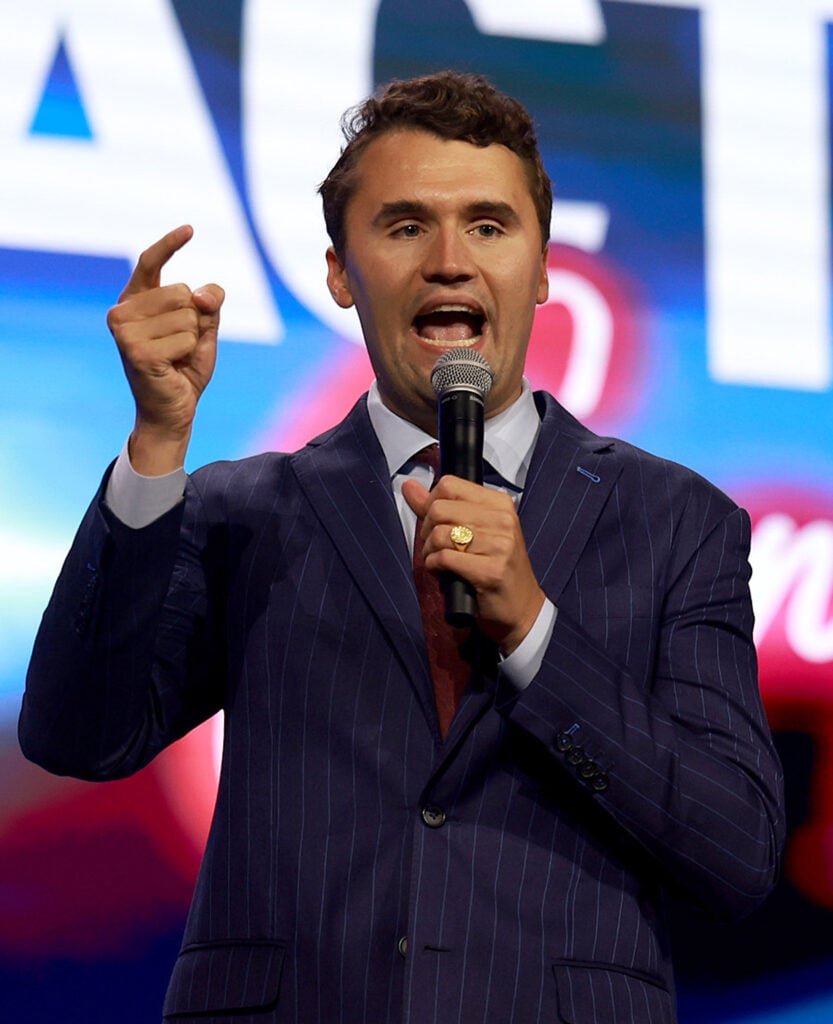
But many are shocked by the news that Kerri, 23, and Kaylee Rollo, 22, have responded by launching a GoFundMe page with the goal of raising $20,000 to cover their legal expenses.

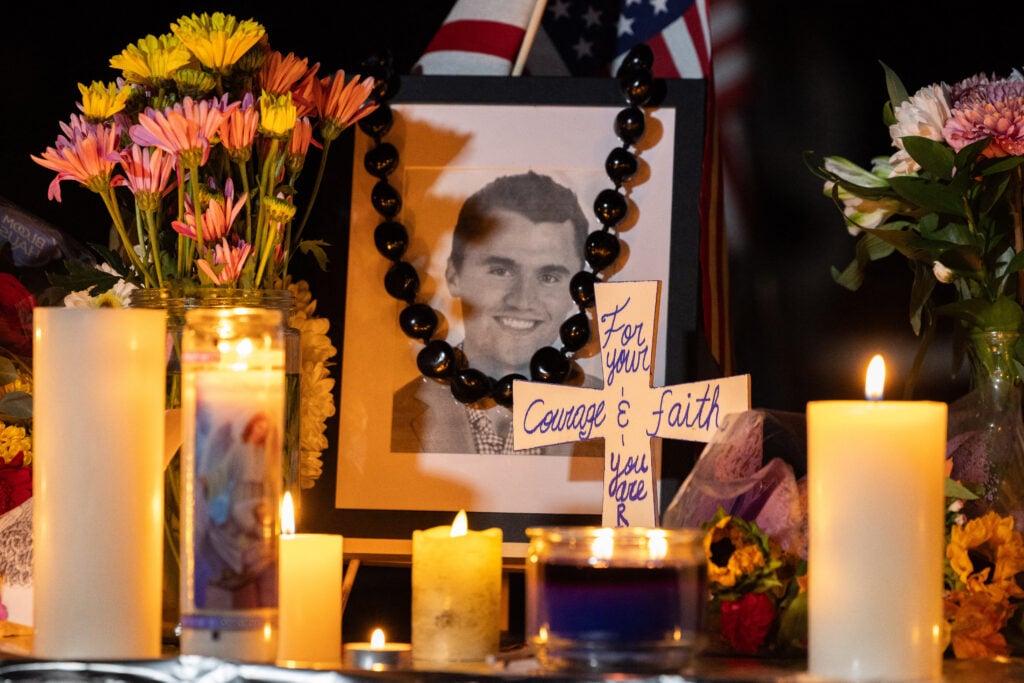
Candles and flowers are seen near a portrait of right-wing activist Charlie Kirk at a makeshift memorial during a candlelight vigil at Memorial Park in Provo, Utah, on September 12, 2025, after he was shot during a public event at Utah Valley University.
Candles and flowers are seen near a portrait of right-wing activist Charlie Kirk at a makeshift memorial during a candlelight vigil at Memorial Park in Provo, Utah, on September 12, 2025, after he was shot during a public event at Utah Valley University. (Photo by MELISSA MAJCHRZAK/AFP via Getty Images)

Shocking act of vandalism caught on camera

According to a report from the New York Post, the Rollos’ act of vandalism was caught on camera.

And they made their motives quite clear in front of numerous witnesses.

“F–k Charlie Kirk,” said Kerri, who uses they/them pronouns, in the video.

She then flipped two middle fingers at the camera and shouted, “Film all you want.”

“Charlie Kirk died as he lived, promoting violence,” Kerri continued, before shouting, “F–k Charlie Kirk” several more times and storming off.

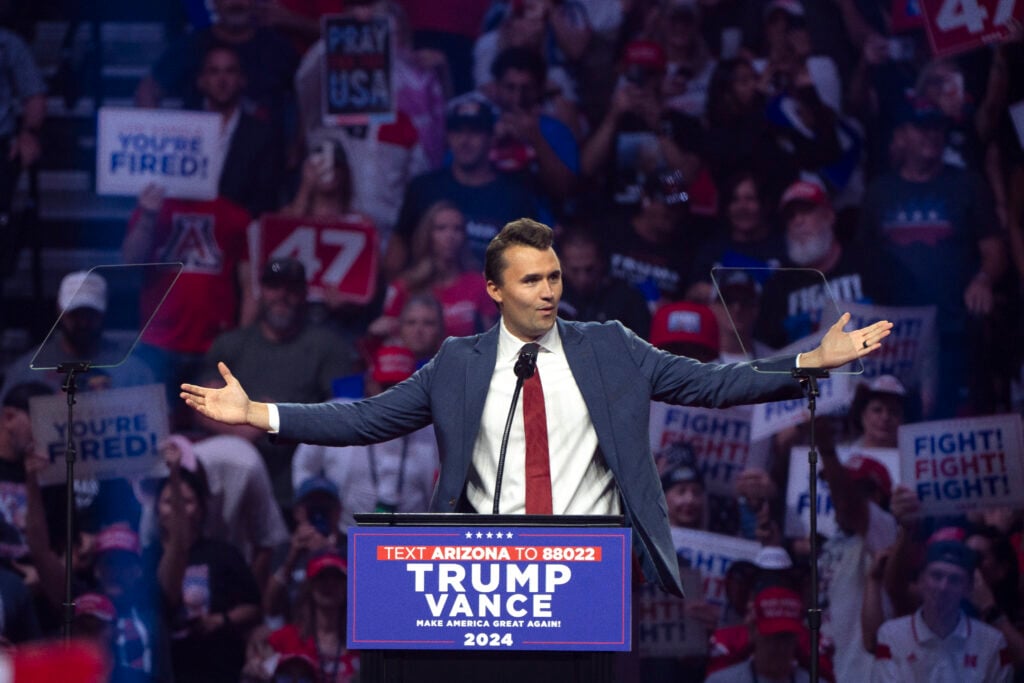
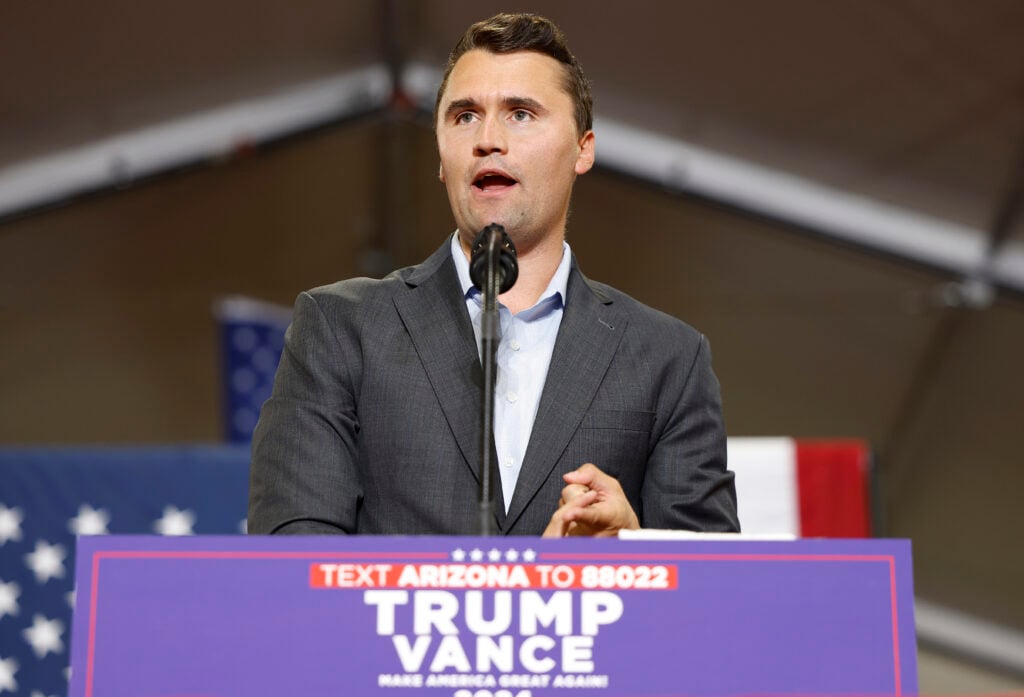
Turning Point USA Founder Charlie Kirk speaks during a campaign rally for Republican presidential nominee, former U.S. President Donald Trump at Desert Diamond Arena on August 23, 2024 in Glendale, Arizona.
Turning Point USA Founder Charlie Kirk speaks during a campaign rally for Republican presidential nominee, former U.S. President Donald Trump at Desert Diamond Arena on August 23, 2024 in Glendale, Arizona. (Photo by Rebecca Noble/Getty Images)

Shortly thereafter, the siblings were arrested by local police in Benton County, Arkansas.

According to the Post, Kerri was fired from her job at a local restaurant, and Kaylee was dumped by her boyfriend and kicked out of the house

Rollo sisters raise funds after trashing Charlie Kirk memorial

“My sibling and I are being doxxed online and my sibling was fired from their job,” Kaylee wrote in the GoFundMe.

In a statement, authorities clarified that the Rollos were not arrested for political reasons, but rather for destruction of property.

“Everyone has a right to be able to express their freedom of expression. But what the issue is, is when you trample on someone’s memorial, the human act of grieving,” said Benton County Justice of the Peace Joseph Bollinger.

Charlie Kirk, who founded Turning Point USA, speaks before Republican vice presidential nominee U.S. Sen. JD Vance (R-OH) gives remarks at a campaign rally at Arizona Christian University on July 31, 2024 in Glendale, Arizona.
Charlie Kirk, who founded Turning Point USA, speaks before Republican vice presidential nominee U.S. Sen. JD Vance (R-OH) gives remarks at a campaign rally at Arizona Christian University on July 31, 2024 in Glendale, Arizona. (Photo by Anna Moneymaker/Getty Images)

“You’re not just trampling on their freedom of expression, you’re trampling on the memory of a person. You’re trampling on our Benton County values,” he added.

The mother of Kaylee’s ex says she made the decision to evict her son’s girlfriend immediately after learning of the vandalism.

“Kaylee has lived in my home now for over a year, and I have never once cut her down or not allowed her to have the beliefs that she has,” said Lacy Christian, the mother of Kaylee’s ex, according to the Daily Mail.

“However, I will not allow someone living in my home to be OK [with] or celebrate a murder,” she added. “I will never allow someone to live in my home who is OK with destroying a memorial for someone else.”

The Rollo siblings have already raised more than $20,000 from more than 360 donors.

Siblings Who Destroyed Charlie Kirk Memorial Launch GoFundMe, Raise $20k After Getting … was originally published on The Hollywood Gossip.

​The Hollywood Gossip

Categories
Entertainment

Alyssa Milano Removes Breast Implants, Explains She’s ‘Letting Go’ of …

Reading Time: 3 minutes

Alyssa Milano is ready to heal — in more ways than one.

The actress and activist underwent an explantation this week.

In addition to explaining why she is joining others in removing her breast implants, she’s explaining why.

Milano is also emphasizing that she is unlearning toxic cultural messages that tell her that she needs implants to be loved, to be attractive, to be a woman.

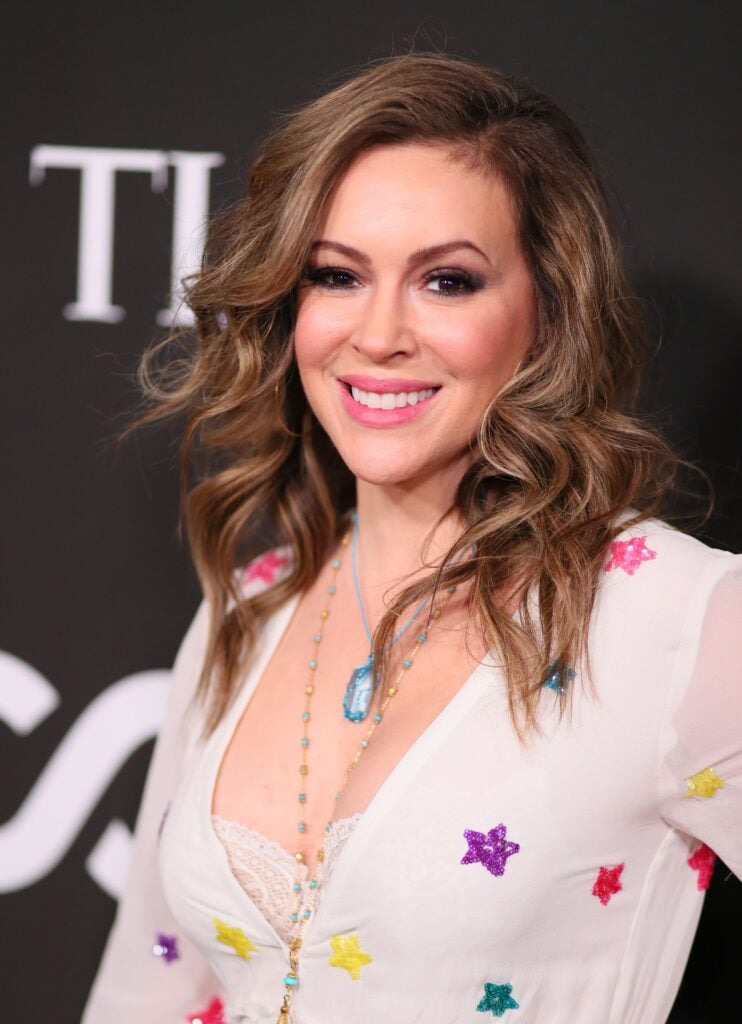
Alyssa Milano in January 2020.
Actress Alyssa Milano arrives for the 10th Anniversary CORE (Community Organized Relief Effort) Gala in Los Angeles on January 15, 2020. (Photo Credit: JEAN-BAPTISTE LACROIX/AFP via Getty Images)

Alyssa Milano has something to get off her chest

On Wednesday, September 24, Alyssa Milano took to her Instagram page to share a photo of herself in a hospital ground.

She also penned a lengthy caption, explaining and also affirming her decision to remove her implants.

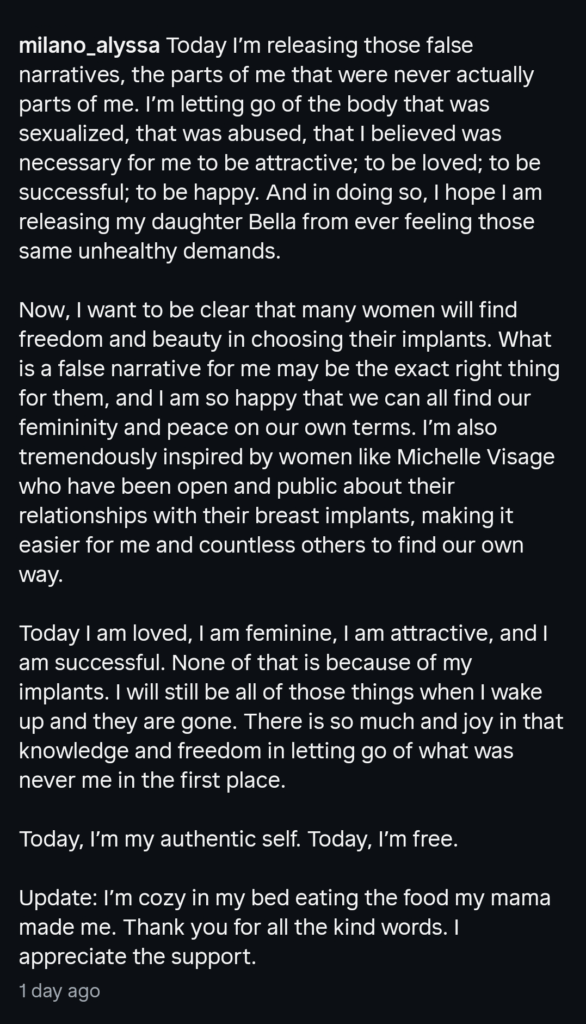
“Today I’m releasing those false narratives,” Milano began. “The parts of me that were never actually parts of me.”

“I’m letting go of the body that was sexualized, that was abused,” Milano wrote.

She is releasing the body “that I believed was necessary for me to be attractive; to be loved; to be successful; to be happy.”

Milano affirmed: “And in doing so, I hope I am releasing my daughter Bella from ever feeling those same unhealthy demands.”

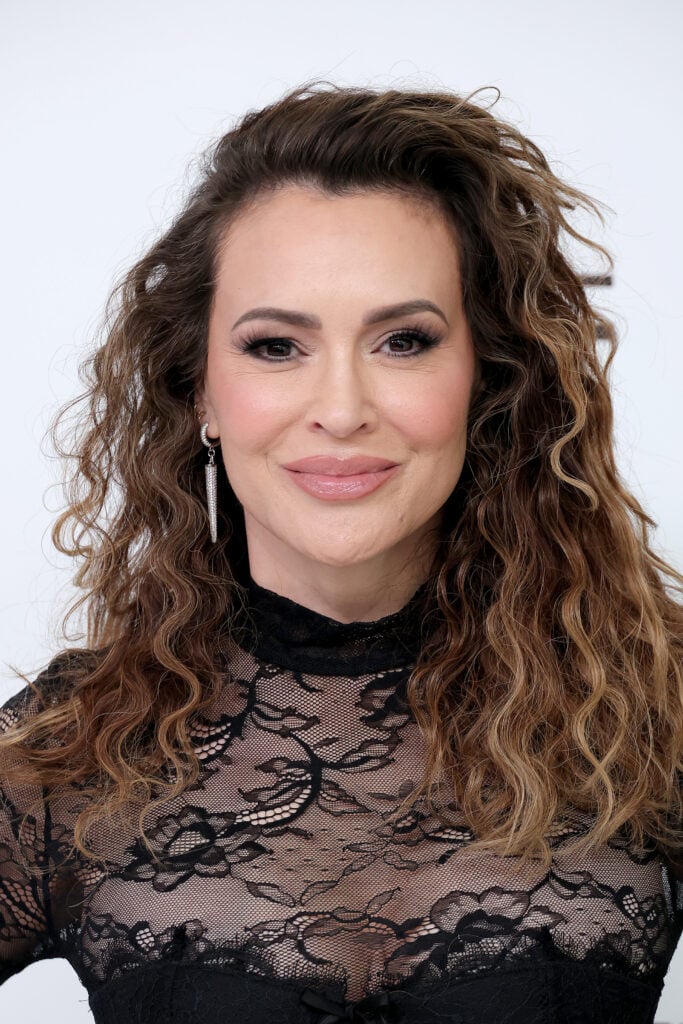
Alyssa Milano in March 2025.
Actress Alyssa Milano attends the Elton John AIDS Foundation’s 33rd Annual Academy Awards Viewing Party on March 02, 2025. (Photo Credit: Michael Loccisano/Getty Images for Elton John AIDS Foundation)

She’s not throwing those WITH implants under the bus

“Now, I want to be clear that many women will find freedom and beauty in choosing their implants,” Alyssa Milano emphasized.

“What is a false narrative for me may be the exact right thing for them,” she acknowledged.

“And,” Milano expressed, “I am so happy that we can all find our femininity and peace on our own terms.”

A lengthy dark mode Instagram caption from Alyssa Milano.
In September 2025, Alyssa Milano penned this Instagram caption to explain her implant-removal and to affirm her self-worth. She’s unlearning a lot of harmful messages. (Image Credit: Instagram)

“I’m also tremendously inspired by women like Michelle Visage,” Milano praised.

She spoke of women “who have been open and public about their relationships with their breast implants.”

This had the effect of “making it easier for me and countless others to find our own way.”

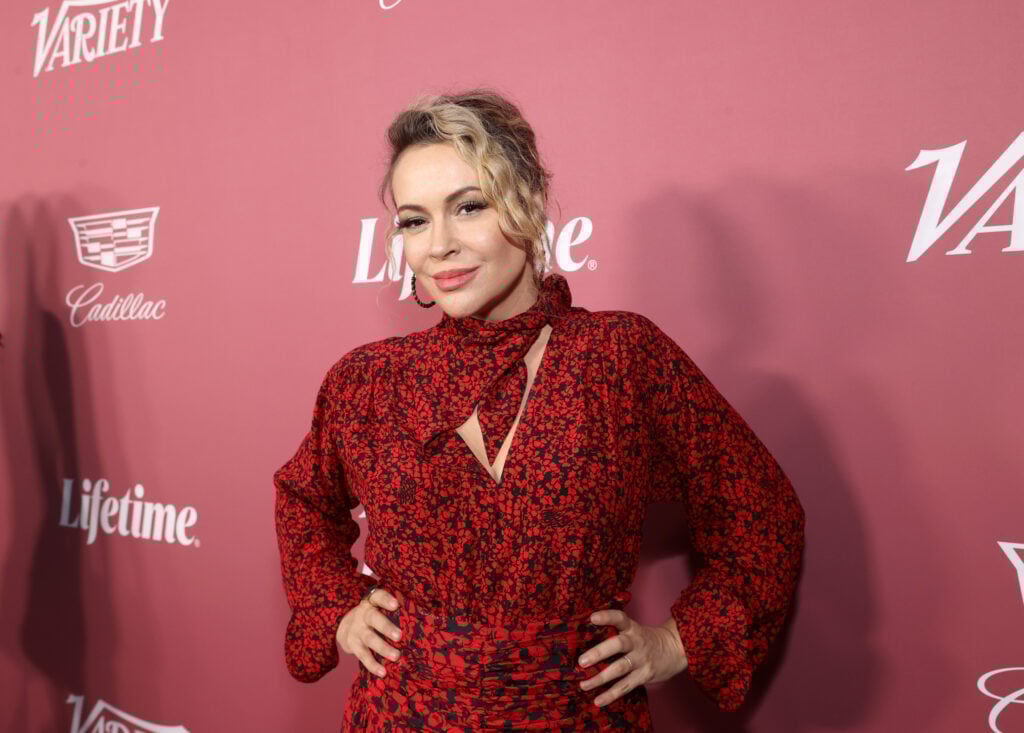
Alyssa Milano wears red.
Alyssa Milano attends Variety’s Power of Women Presented by Lifetime at Wallis Annenberg Center for the Performing Arts on September 30, 2021. (Photo Credit: Emma McIntyre/Getty Images for Variety)

Breast implants are a common form of gender affirming care for women, but she doesn’t want them anymore

“Today I am loved, I am feminine, I am attractive, and I am successful,” Alyssa Milano affirmed.

“None of that is because of my implants,” she declared.

“I will still be all of those things when I wake up and they are gone,” she added correctly.

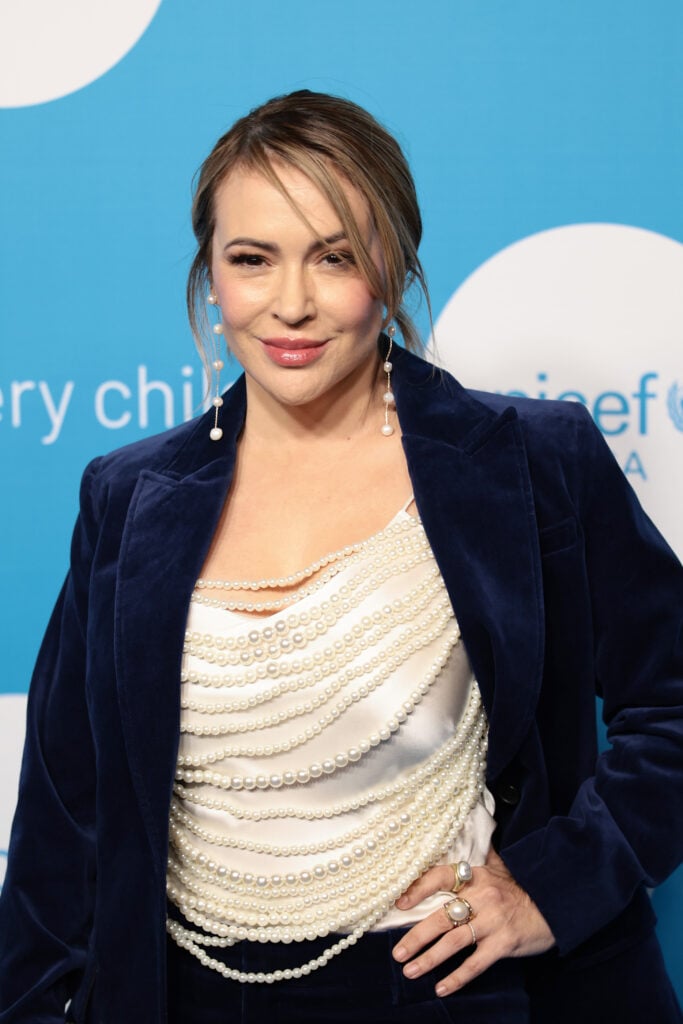
Alyssa Milano in November 2022.
Actress Alyssa Milano attends the 2022 UNICEF Gala at The Glasshouse on November 29, 2022. (Photo Credit: Dimitrios Kambouris/Getty Images)

“There is so much joy in that knowledge and freedom in letting go of what was never me in the first place,” Milano wrote.

“Today, I’m my authentic self,” she announced. “Today, I’m free.”

Milano’s lengthy caption ended with: “Update: I’m cozy in my bed eating the food my mama made me. Thank you for all the kind words. I appreciate the support.”

Alyssa Milano Removes Breast Implants, Explains She’s ‘Letting Go’ of … was originally published on The Hollywood Gossip.

​The Hollywood Gossip

Categories
Entertainment

Kody Brown: My Wife and Daughters are Total Wusses!

Reading Time: 3 minutes

In case you haven’t heard, Kody Brown is about to star on another reality show.

No, he isn’t leaving Sister Wives.

Instead, the former polygamist is one of many cast members who will soon take part in Special Forces: World’s Toughest Test, which premieres this evening on Fox.

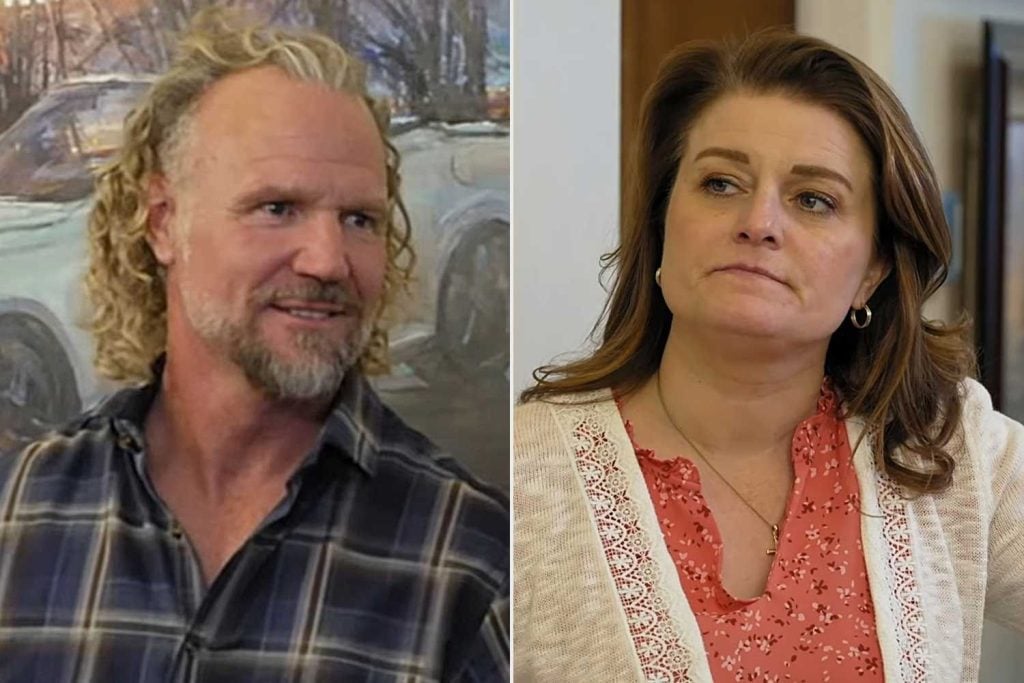
Kody addresses Robyn in an intense moment. (TLC)

Ahead of this season, the father of 17 complained to Queen of Stream’s Lauren Ashley Beck that he wishes he could have invited some loved ones to join him.

Teresa and Gia Giudice, for example, are both on the show. Same for husband and wife Andrew East and Shawn Johnson.

“Why didn’t you ask me if I have a family member that would [compete]?” asked at one point during this interview, adding that he’d have loved to have been on the series with, really, any of his sons.

But what about his daughters?

Kody Brown is interviewed here by TLC. (TLC)

“I wouldn’t have put any of my daughters through that, no matter what,” he replied. “It would’ve been a thing where you go if you want, but your dad says no — you decide.”

And what about wife Robyn Brown?

“I wouldn’t ever let Robyn do this,” Kody told the outlet earlier this month.

“I would never want to put her through this. She’s a tender person, she’s a great mother, but she’s not gonna be focused on her fitness and trying to do crazy [things].”

How sweet and generous of Kody, huh?

He’s basically saying his daughters aren’t tough and his spouse is not in shape.

(TLC)

Kody did admit during this same appearance that he’s a “cry baby,” but only when it comes to emotional pain, not physical pain.

Except, well… Kody previously admitted he faked some ailments in order to have coaches take it easy on him.

“I knew that my limits physically were never reached. I had more to give physically,” Kody told Us Weekly about how he got through this program.

Here is the official synopsis for Special Forces: World’s Toughest Test:

Celebrities from all genres take on — and try to survive — demanding training exercises led by directing staff agents, an elite team of ex-Special Forces operatives.

In this unique series, the only way for these recruits to leave is to give up on their own accord, through failure or potential injury, or by force from the agents.

Viewers see the recruits face the harshest of environments that simulate the highly classified selection process, pushing themselves in the ultimate test of their physical, mental and emotional resilience and revealing the celebrities’ deepest and truest character.

Kody Brown: My Wife and Daughters are Total Wusses! was originally published on The Hollywood Gossip.

​The Hollywood Gossip

Categories
Entertainment

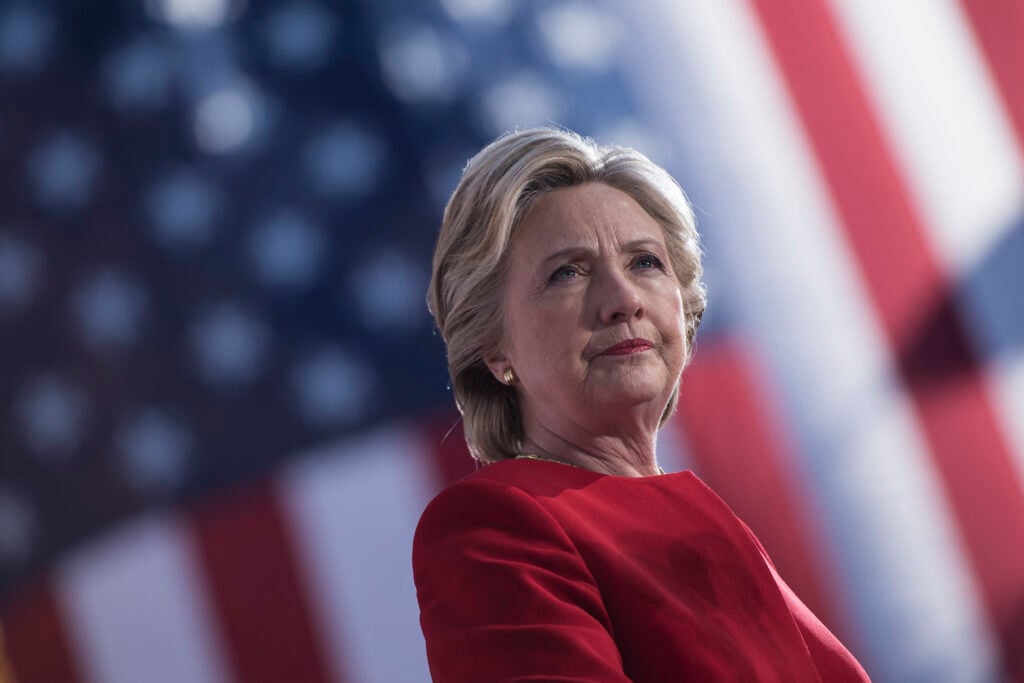
Hillary Clinton Slammed For Criticizing ‘White Men of a Certain Religion’ …

Reading Time: 3 minutes

It’s been two weeks since Charlie Kirk was shot and killed during a speaking engagement at a Utah college.

But while most news stories in 2025 have a shelf life of no more than a few hours, the Kirk murder remains the biggest hot-button issue of the day.

And Hillary Clinton has become the latest public figure to incur the wrath of social media users — some of whom argue that her remarks on the matter were at best insensitive and at worst offensive.

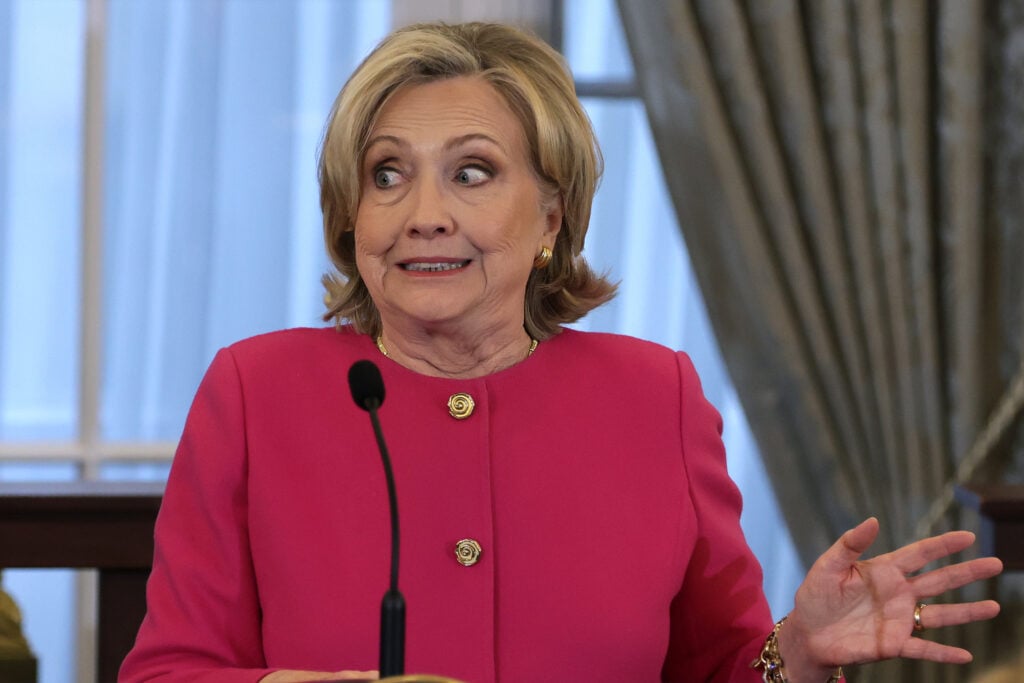
Former U.S. Secretary of State Hillary Clinton speaks during an unveiling of her portrait at the State Department on September 26, 2023 in Washington, DC. Secretary Clinton joined her predecessors to have their portraits hung at the seventh floor of the State Department.
Former U.S. Secretary of State Hillary Clinton speaks during an unveiling of her portrait at the State Department on September 26, 2023 in Washington, DC. Secretary Clinton joined her predecessors to have their portraits hung at the seventh floor of the State Department. (Photo by Alex Wong/Getty Images)

Hillary Clinton takes flak for ‘white male’ comments

Clinton appeared on MSNBC’s Morning Joe on Wednesday, and her comments about the current state of the nation rubbed some viewers the wrong way.

“You know, I love my country, and I love it, you know — warts and all,” Clinton said, adding:

“And I’m proud of the fact that we have always been a work in progress. You know, we haven’t gotten to the more perfect union.”

What started out as a message of unity veered — according to some — into divisive territory, as Clinton indirectly addressed the events of the past two weeks.

Charlie Kirk speaks at the opening of the Turning Point Action conference on July 15, 2023 in West Palm Beach, Florida.
Charlie Kirk speaks at the opening of the Turning Point Action conference on July 15, 2023 in West Palm Beach, Florida. (Photo by Joe Raedle/Getty Images)

“And the idea that you could turn the clock back and try to recreate a world that never was dominated by — you know, let’s say it — white men of a certain persuasion, a certain religion, a certain point of view, a certain ideology — it’s just doing such damage to what we should be aiming for,” Clinton said.

“And we were on the path toward that — I mean, imperfectly, lots of bumps along the way.”

The former secretary of state seemed to be suggesting that no single demographic group should dominate American politics.

But naturally, social media firebrands interpreted her comments in the least generous way possible:

Democratic presidential nominee Hillary Clinton speaks during a rally outside the University of Pittsburgh's Cathedral of Learning November 7, 2016 in Pittsburgh, Pennsylvania.
Democratic presidential nominee Hillary Clinton speaks during a rally outside the University of Pittsburgh’s Cathedral of Learning November 7, 2016 in Pittsburgh, Pennsylvania. (Photo by BRENDAN SMIALOWSKI/AFP via Getty Images)

“She’s saying WHITE MEN have graduated from ‘Basket of Deplorables’ to RELIGIOUS FANATICS! I wonder if she referring to Charlie Kirk?” wrote one X user.

These are, of course, very divisive times in the US.

But there are occasional glimmers of hope for better days ahead.

For example, Clinton eschewed the discord inherent in modern politics when she praised President Donald Trump for recent remarks in which he expressed optimism about Ukraine’s chances of winning its war against Russia.

“I welcomed what the President said yesterday,” Clinton said, referring to a Truth Social post in which Trump wrote that Ukraine “is in a position to fight and WIN all of Ukraine back in its original form.”

It might be a rather small step in the right direction — but at least it points to a future in which politicians of different parties can once again find common ground from time to time.

Hillary Clinton Slammed For Criticizing ‘White Men of a Certain Religion’ … was originally published on The Hollywood Gossip.

​The Hollywood Gossip

Categories
Entertainment

Robyn Brown: My Husband is a Horny, Desperate Pig!

Reading Time: 3 minutes

Kody Brown is about to show his true colors.

His true and pretty disgusting colors, we should emphasize.

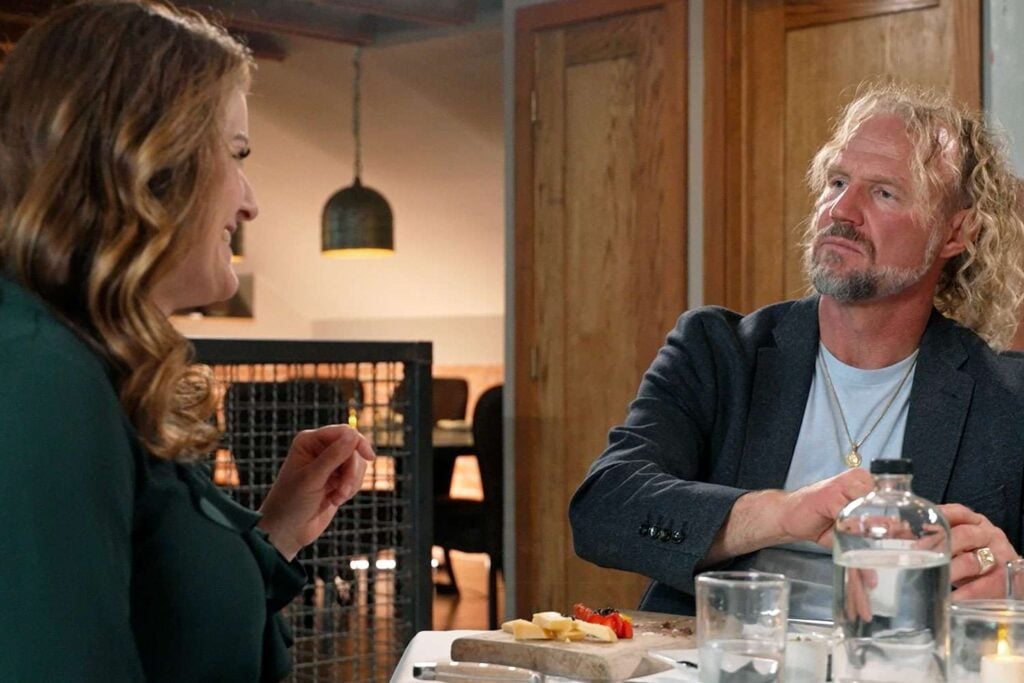
In a clip from this Sunday’s Season 20 premiere of Sister Wives, Kody admits that his relationship with legal wife Robyn is “wonderful.”

And yet… as teased in an earlier preview… there’s at least a consideration for Kody to take on yet another spouse at some point in the future.

Why would this be the case?!?

(TLC)

During a conversation with Robyn, Kody says “there’s something I want, maybe more than you do.”

Based on the footage provided by People Magazine, Robyn quickly appears puzzled and asks, “What? What do you mean?”

“I don’t want to talk about that subject,” Kody replies, prompting Robyn to figure it out and shoot back: “Oh, you’re talking about sex.”

Yes, Kody is talking about sex.

He’s telling the one woman who has chosen to stick by him that he wants to sleep with someone else.

(TLC)

Indeed, when it comes to perhaps adding a new sister wife to his household, Kody reveals his “primary motivation” is all about physical attraction.

“I’m afraid, at this state in my life, [it] would be just how good looking she is,” he actually says on air. “I’m not kidding.”

His wife is unimpressed, stating the obvious as follows: “And that would be the very worst reason.”

Still, Kody insists that he would “want to be able to connect” with a new partner, continuing to push the issue and forcing Robyn to try and hammer some sense into her awful husband.

“You don’t understand how you’re coming across,” she tells Kody.

Kody Brown addresses the confessional camera on Sister Wives.
No matter what Sister Wives viewers think of him, Kody Brown continues to speak his mind. (Image Credit: TLC)

Kody is undeterred by how offensive he sounds, though.

“I know, I know. I’m a guy and I don’t freaking care,” he simply says.

Perhaps more peeved than we’ve seen her in a very long time, Robyn later sits down for a confessional and says Kody is “just kind of being a bit of a pig right now.”

The whole awkward conversation comes after viewers saw Kody inform Robyn that another woman expressed interest in joining the polygamous family in the Sister Wives season 20 trailer, which was released in August.

“I got another one of those emails from some woman asking sort of like to get to know us for the purpose of joining the family,” Kody claims to Robyn in this video.

Kody and Robyn Brown have managed to stay together through the years. (TLC)

Robyn and Kody have been married since 2014.

Kody’s other three spiritual spouses — Christine, Janelle and Meri — have all left him at various points in the last four years or so.

They all seem very happy these days, with Christine recently saying on a podcast that she was baffled by the idea of any new wife entering the picture.

“Kody himself, he talked about how much he loved monogamy,” she said. “So why do that? Why ruin something so good?”

Sister Wives season 20 premieres Sunday, Sept. 28, at 10/9c on TLC.

Robyn Brown: My Husband is a Horny, Desperate Pig! was originally published on The Hollywood Gossip.

​The Hollywood Gossip

Categories
Politics

James Talarico on immigration, his faith, and how Democrats are getting it wrong

James Talarico is a Texas state representative who’s recently announced his candidacy for U.S. Senate. He’s a Democrat, but not afraid to criticize some aspects of his party.

“National Democrats have talked about defending democracy or protecting institutions,” he said. “But, this democracy of ours doesn’t work for a lot of people in this country. It doesn’t work for a lot of people in Texas…. This is a deeply broken political system. And I’m not interested in defending it.”

Talarico joined POLITICO’s Dasha Burns this week for an episode of The Conversation, in a wide-ranging conversation about his candidacy, his faith and what Democrats can learn from Beyoncé.

Talarico caught national attention when he flipped a state House district outside Austin in 2018, and has grown in prominence on social media, where he boasts millions of followers on TikTok and Instagram. The former school teacher who’s studying to be a pastor is joining a crowded race to try to turn a Senate seat blue in Texas.

His faith has been one of the central aspects of his campaign. “My faith is why I went into public service. My granddad was a Baptist preacher in South Texas [and he] told me that Jesus gave us these two commandments to love God and love neighbor, which means that your faith is inherently public, right?,” he said. “That means that your faith should impact how you treat people out in the world. And really politics is just another word for how we treat our neighbors at the most fundamental level.”

When it comes to immigration, a Texas issue in the national spotlight, Talarico offered a metaphor to explain his approach. “People have a desire for a sane immigration system, a secure border that can ensure public safety and can ensure that the people coming here are coming to contribute to our communities and not threaten our communities,” he said. “We should treat our southern border like our front porch. We should have a giant welcome mat out front, and we should have the lock on the door.”

The full episode of The Conversation is available this weekend on YouTube and wherever you get your podcasts.

​Politics

Categories
Politics

The nation’s cartoonists on the week in politics

Every week political cartoonists throughout the country and across the political spectrum apply their ink-stained skills to capture the foibles, memes, hypocrisies and other head-slapping events in the world of politics. The fruits of these labors are hundreds of cartoons that entertain and enrage readers of all political stripes. Here’s an offering of the best of this week’s crop, picked fresh off the Toonosphere. Edited by Matt Wuerker.

​Politics