Categories
Sports Fox

College Football Stock Watch: Why Penn State Is Trending Up, And Alabama Isn’t

Think back to this time a year ago. Penn State entered the 2025 season as a top-10 team and a trendy national title pick. By the second week of November, the Nittany Lions were 3-6, their head coach had been fired, and a season filled with promise had unraveled during a six-game losing streak. That’s a reminder of how quickly fortunes can change in college football. The teams generating offseason buzz don’t always deliver. Which brings us to 2026, where Penn State now leads the list of teams whose stock is rising heading into the season. FOX Sports lead college football analyst Joel Klatt revealed his latest “stock up” and “stock down” teams during a recent episode of “The Joel Klatt Show.” Klatt: Matt Cambell is now the new head coach at Penn State. This program was 7-6 last season, and I think this is clearly trending up. James Franklin had one very specific issue: losing big games. Once they lost that Oregon game, the season spiraled out of control.Campbell is a perfect fit at Penn State. His 10 seasons at Iowa State should tell us one thing: this team is going to be solid. In this era, you’re going to have years when you just hit the schedule lottery, and Penn State is set to face what I would say is a soft Big Ten schedule. They brought in a ton of guys from Iowa State, including QB Rocco Becht, whose 39 career starts are the most among returning quarterbacks in college football, and they have a schedule that really has a floor of nine wins.The toughest games on the schedule are USC at home, Michigan on the road, Washington on the road, and then Minnesota at home the following week. This is a schedule they can do some damage with.They’re certainly going to win more than seven games. There’s no doubt. I think they could be a 10-2 team fighting for a College Football Playoff spot. Klatt: Alabama is going to be a good football team, but I don’t know if that’s going to be enough. The Crimson Tide are losing their most important player in Ty Simpson, who carried them to some of those wins last year. Now you don’t have him. They won 11 games, reached the College Football Playoff and played in the Rose Bowl. They’re not doing that again.Alabama doesn’t have a terribly difficult schedule, at least by SEC standards, but this isn’t going to be as good a team as it was a year ago.I like Kalen DeBoer. I think he’s a wonderful football coach. The one thing he’s struggled with throughout his career is finding a reliable running game to complement what has consistently been an elite passing attack. Last year, Alabama couldn’t run the football. It’s actually shocking to watch Alabama line up and not be able to run the football. They’ve got to fix that, and I don’t know if that’s going to happen. They lost a first-round offensive tackle in Kadyn Proctor. They lost a first-round quarterback. They lost Germie Bernard. Are they going to be great on defense? I think that remains to be seen. This is going to be a young team. They’re going to be inexperienced, particularly at quarterback. In my estimation, experience at the quarterback position is the most important ingredient for any team in the country, and it’s very difficult to have top-end success with an inexperienced quarterback. Klatt: Lane Kiffin is a great coach. He’s done this before. He took Ole Miss, brought in a ton of transfers, rebuilt the culture and had a lot of success. It’s not like he has to reinvent the wheel. This is a program that has won national championships. The expectation at LSU is to compete at the top, and they haven’t been doing that. They went 7-6 and fired their head coach. Now you look at the talent they’ve brought in — including QB Sam Leavitt — and ask yourself: Is this really a seven-win team? The answer is no. Absolutely not. I think this team is going to compete for a College Football Playoff spot. LSU has zero top-10 finishes since winning the national championship in 2019. That’s wild. This is too good of a program to be stuck in that kind of stretch, and I think that’s going to change with Kiffin and all the talent that’s been infused into the roster. Klatt: I love Trinidad Chambliss. I love Kewan Lacy. But Ole Miss went 13-2 and reached the College Football Playoff semifinals a year ago. Pete Golding has said himself that he never wanted to be a head coach. Now he’s been thrust into that position because there really wasn’t another move for Ole Miss to make. He did a great job, but the bar is simply too high. The Rebels are going to take a step back. I hope I’m wrong, but remember this: Before Lane Kiffin arrived, Ole Miss had just two 10-win seasons dating back to 1975. Then Kiffin came in and completely changed the trajectory of the program. You can’t just expect that level of success to continue immediately. For decades, this was largely a .500 program. I think they take a step back from a 13-2 season and a College Football Playoff semifinal appearance. Klatt: The Bruins were 3-9 a year ago. They fired DeShaun Foster right before that game against Penn State, but it’s the hire they made that has me excited about this program moving forward. Bob Chesney is a really good football coach. UCLA is set to bring back QB Nico Iamaleava, and they’ve added more than 40 incoming transfers. So they’ve got experience at quarterback and a significant infusion of talent across the roster. And Chesney is bringing seven coaches from James Madison with him, including his offensive coordinator, defensive coordinator and special teams coach. That should sound familiar — it’s exactly what Curt Cignetti did when he left James Madison for Indiana. To me, this feels like Indiana-light. You could see a major jump for UCLA. It’s tough in the Big Ten, but they’ve got experience and talent at the quarterback position and a real coaching staff that can go out there and recruit talent. There’s a lot of energy in Westwood, and they’re recruiting at a high level. Klatt: I believe in the foundation of this program, but Illinois has won 19 games over the last two seasons. That’s real sustained success for a program that didn’t have much of it before Bret Bielema arrived. When you look at their offense, Luke Altmyer was a huge part of their success. Their offensive line was a huge part of it as well. Now they’re replacing four starters up front, they have to replace their top wide receiver in Hank Beatty, and they also lost their defensive coordinator to Notre Dame. Not every program can be great every single year. We see it with Georgia and Ohio State. Maybe we see it with programs like Miami or Oregon. Those teams have the resources to recruit and get talent out of the transfer portal, but at a program like Illinois, I don’t think they have the resources to do that. For Illinois, I think there’s going to be a dip. Then they’ll gain experience, get veterans, fill in the holes, and be very good in a couple of years. You’re going to have these dips before you can have the type of success that they had, especially after a two-year stretch with 19 wins. Klatt: It’s easy to go up from 4-8. Florida has had just one winning season in the last five years. The Gators should be better than that, but they haven’t been. Now Jon Sumrall comes in. He has a 43-12 record as a head coach and has consistently won wherever he’s been. This is a guy who knows how to coach. He’s brought in a lot of talent, and this is a program that should be able to recruit and sustain talent at a high enough level to compete as a strong SEC program. I’m buying Florida. It might not be a playoff push right away, but I’m definitely buying improvement from a 4-8 season a year ago after they fired Billy Napier as their head coach. Klatt: Last year, Vanderbilt set a program record with 10 wins. Now they have to replace the entire engine of that team in Heisman finalist Diego Pavia. I know they brought in some elite-level talent, particularly at quarterback, but it’s inexperienced talent. Pavia had a ton of starts under his belt and was a guy who knew how to play well in big moments. Do we really expect them to all of a sudden win 10 games again? That was a program record. I like Clark Lea, but very similar to Illinois, this is a program that is going to take a step back in order to move forward in the coming years. I’m selling Vanderbilt this year. Klatt: Say what you want about James Franklin and what he did in big games at Penn State, but the truth is, the guy can coach. He raised the level of Penn State, and I believe he’s going to raise the level of Virginia Tech. Virginia Tech had four straight seasons without being ranked at any point. That program should be better than that. Franklin retained Brent Pry, who is now the defensive coordinator. When Pry was the defensive coordinator at Penn State, that was a marriage that really worked. They had one of the better defenses in the conference — and really in the country. So he’s back in a role where I think he can excel. They have 27 incoming transfers, including 12 from Penn State. That’s going to raise the level of talent, and the ACC is not a very difficult conference. This is a team that I think, at some point this season, can be ranked and maybe even make a push toward the ACC championship game. Klatt: I like Georgia Tech, but the Yellow Jackets are coming off a couple of really strong seasons. Haynes King was the engine of that success, similar to Diego Pavia at Vanderbilt. They won nine games last year — their most since 2016 — but now they have to replace King and both coordinators. Losing that kind of continuity and experience is usually the recipe for a step back. Georgia Tech also has 11 games against Power 4 opponents this year, including non-conference games against Tennessee and Georgia. That’s not an easy schedule. This is not a team that’s going to win nine games again. I think they will take a step back this season before building back up in the future.​Latest Sports News from FOX Sports

Categories
Sports Fox

How Bears Coach Ben Johnson Is Challenging Caleb Williams To Become An Elite QB

Ben Johnson and Caleb Williams established many routines in their first season together. One of Johnson’s favorites was their post-practice meeting. All season long, they’d finish their work on the field and, once Williams got out of pads and into street clothes, the Chicago Bears’ rookie coach and second-year quarterback would log anywhere from 60 and 90 minutes together in Johnson’s office. Much has been made of how Williams once called his early-season relationship with his coach “fragile.” But in those post-practice meetings, they seem to have built something solid. And when I asked Johnson about the moments with Williams that were most fun last season, the coach pointed to those one-on-one sessions, where he would lay out the nuances of opposing defenses in relation to the Bears’ game plan. “It’s just this complete clarity of how we want to attack that opponent this week,” Johnson told me in March at the NFL Annual League Meeting in Phoenix. “I think the coolest thing was seeing [Williams’] growth from early in the season.” It’s not rare for an NFL head coach to spend time with his starting quarterback every day of the season. But it is rare to see a coach have as much of an impact on his quarterback as Johnson seemed to have on Williams in 2025. After all, at this time last year, there were concerns that the previous Bears regime left the QB in a state of developmental regression. Chicago won just five games in 2024 and fired its head coach in midseason for the first time in franchise history. Williams took 68 sacks, tied for the third-most all time. It was a tough rookie year for the No. 1 overall pick, who’d been touted as a generational prospect. But these coach-QB meetings helped catalyze the Bears’ breakout success in 2025. Williams engineered six fourth-quarter comebacks to lead all NFL quarterbacks last season, earning the nicknames “Iceman” and “Cardiac Caleb” — and just recently, the cover of “Madden NFL 27.” The Bears went 11-6 and made the playoffs for the first time since 2020. As Johnson tells it, those meetings had a cascading effect on the relationship between coach and QB. Everything improved: communication, repetition, execution. “We’d meet the night before the game to go over his favorite calls, and to see how that went from early in the season to what it looked like at the end of the season, [it was] much more fluid,” Johnson told me. “We just saw the game so much more through the same lens as the year went on. I think all those quarterbacks saw that and witnessed that firsthand. So I think that was the coolest thing, just to see where it started to where it finished.” At the end of Chicago’s season, which concluded in an overtime loss to the Los Angeles Rams in the divisional round, Johnson said he wanted Williams to get away from football for a little while. But just before he let Williams go, Johnson had a message for his QB about the 2026 season. “It’s going to be more difficult. I’m going to push you more,” Johnson told Williams, per the QB. “Yessir, let’s do it,” Williams remembered telling Johnson. While the players took their time off after the season, Johnson and his staff spent their time self-scouting, a process that spanned roughly a month and a half. They dove into every phase and every element of the game. “As you watch clip in and clip out, I think it would have been easy to get a little bit upset or disappointed that it didn’t look quite the way we want,” Johnson told me. “And yet I see it as, ‘Man, we got so much room for improvement. This is great. This is gonna be good to get these guys back in, and they’re gonna be able to see this. And hey, we can be so much better as an entire team if we just make these few small changes going forward.’” Of course, I was most curious about the Bears’ findings on the QB. Johnson told me he would boil the self-scout into three takeaways and goals for Williams, whose work is well underway, with minicamp in session this week. Johnson wouldn’t disclose all three points of emphasis, but he discussed one item after Williams finished the 2025 season with a 58.1 completion percentage, second-worst in the league. “We need to get the completion percentage up,” Johnson told me. “And so we’ll look at that as we go through the cut-ups of where we can best do that. There were probably 80 or 90 throws on tape that we felt like could have been completions. “You’re always going to have some drops by the route-runners. … We need to find a way to complete some of those other ones, though. That’s really the challenge for Caleb. If we do that, then we’ll be 65%, 70% completion, which is closer to where we want to be.” That’s the challenge for Williams — or at least one of them. The QB is already facing that challenge head-on. “It starts with reps,” Williams told the media in May at OTAs when asked about reaching the coach’s goal of a 70% completion rate. “And then the next part, it comes down to comfort in the offense. And I think that toward the end of the year, it started to grow for me. … The last part is the details, whether it’s the receiver’s steps and where his landmark is to break or settle. And then from there, it’s being able to deliver a catchable ball, whether it’s velocity or ball placement.” Meanwhile, Johnson is putting plenty of challenges on his own plate. That includes making sense of all the Bears’ narrow victories and come-from-behind games. As impressive as that quality was for Chicago, it can also lead to regression. Look at the Kansas City Chiefs as a cautionary tale. They made the Super Bowl in 2024 with a run of 17 consecutive wins in one-possession games (a streak that started in 2023). But the Chiefs lost nine one-possession games in 2025 and finished 6-11. As I tried to spit out a question about whether the Bears were worried about that same fate, Johnson, smiling wide, interrupted me. “You think it was fluky? Is that what you’re getting at?” he asked me. That’s not it. Anyone who listened to the Bears explain how they beat the Green Bay Packers on a bomb to receiver DJ Moore in Week 16 knows that Chicago’s comebacks were not fluky. They were a product of hard work and careful planning. That 46-yard walk-off play exemplified how Johnson’s steady hand and sharp mind can literally change the game, which was why Williams called him “the best coach in the world” after the game. Johnson had that play ready for that moment. That’s how the Bears won. “That’s a play that Coach and I — we were sitting in his office, one of those meetings — and we discussed that play,” Williams said after the game on the FOX broadcast. But history has a way of repeating itself, and dramatic wins are often not sustainable. Johnson admitted he’s thought about that. “It goes back to a term that I learned early as a coordinator called ‘unstable success,’” he told me. As the Detroit Lions’ offensive coordinator before coming to Chicago, Johnson knew that success in the screen game and the red zone did not automatically carry over from year to year. It was on the coaching staff and players to create and sustain success, rather than expect the same results, even with the same ingredients. So Johnson made that an emphasis every offseason. Detroit was a top-five team in the red zone for three years in a row, from 2022 to 2024. “I view that as a challenge,” Johnson told me. “So to your point, do you want all these games to come down to the very end like that? No, hopefully our growth as a team means that we score more early and more often and our defense plays a little bit better in terms of limiting the points, and we’re not in those spots. “But at the same time, I don’t want to lose that. I don’t want to lose that ability to score 14 points in less than two minutes. That’s something that you’re going to want to lean on at some point. And I think that’s part of who our guys are. That’s part of who Caleb is. … I view it as a challenge. And I think when you frame it that way, I think our guys will see it the same way.” That actually loops back to the discussion of completion percentage. Because if Williams becomes more efficient, Johnson said he could envision scenarios where the team might not need late comebacks to win games. But that changes the equation in more ways than one. Efficiency often means taking what’s available. And in today’s NFL, with two-high-safety defenses growing increasingly popular, efficiency requires quarterbacks to check the ball down and/or make good use of the short (and quick) passing game. How will the Bears balance that with Williams, who, considering his impressively low sack (27) and interception (7) numbers last season, was just the right amount of aggressive in 2025? “He knew when he could take chances and not. And certainly when you’re in that, ‘Hey, we’re in fourth downs from here on out’ mode, I think that kind of helps his mentality,” Johnson told me. “It’s so curious with him. He’s just always been such a great protector of the ball. For a guy that can be a little bit aggressive at times with some of these throws he makes, he rarely puts it in harm’s way. “And so I think that’s a little bit unique to him. And so maybe it’s one of those things we just need to encourage him to open it up a little bit more earlier in games, when he might be just a little bit more conservative in some of the decision-making early in games.” If you need any further proof that the Bears built something enviable last year, just look at their coaching staff moves this offseason. After just one year in Chicago, Johnson’s staff produced two offensive coordinators for other teams, with Declan Doyle taking over the Baltimore Ravens’ offense and Eric Bieniemy returning to his old gig as Kansas City’s OC. It’s clear that teams want the recipe for Chicago’s secret sauce. One thing that has been a common refrain from Johnson this offseason is that the Bears are starting over. They’re tearing everything down to ground zero, and they’re piecing together a brand-new version of the team for 2026. “The number one enemy that we would have right now is entitlement or complacency based on what we did a year ago,” Johnson told me. There’s no doubt the Bears are young and talented. There’s no doubt they showed tremendous progress in 2025. There’s no doubt their quarterback has the potential to be great. And how many times have we seen that go wrong in Chicago? But this particular team seems different, and that’s because of Ben Johnson, who is hell-bent on bridging the gap between goals and results. Just ask Caleb Williams.​Latest Sports News from FOX Sports

Categories
Sports Fox

What We Learned From The USA’s World Cup Friendlies Before Opener vs. Paraguay

No more friendlies. No more tune-ups. Next up for the United States after games against Senegal and Germany: the 2026 FIFA World Cup. There are positives and negatives to take away from a 3-2 win over Senegal and a 2-1 loss to Germany. Two former USA World Cup players (Maurice Edu in 2010 and Walker Zimmerman in 2022) break down their three biggest lessons. Chris Richards Is Essential To This Backline Edu: While the U.S. had plenty of positive spells between its win over Senegal and loss to Germany, it did concede multiple goals in both games. The USA started with three center backs — Alex Freeman and Tim Ream started both, while Mark McKenzie started against Senegal and Miles Robinson against Germany. In both games, the U.S. conceded twice. (Side note: I wouldn’t have minded seeing either McKenzie or Robinson start alongside Richards.) When healthy, Richards slots right into the middle of that defense between Freeman on the right and Ream on the left. Chris full trained on Monday, which is a positive sign that he’ll be ready to face Paraguay on Friday (9 p.m. ET on FOX/FOX One and streaming for free on Tubi). The USA Is Ready For Real Competition Zimmerman: The U.S. got two games against different teams that allowed it to defend differently. We were more compact in how we defended against Senegal, keeping the distance from the front to the back, we were able to press higher and be higher up the pitch, maintaining about 20-25 yards between our defense and attack. Then, against quality opposition in Germany, we had to be a bit more compact; it was more like 35. It was also helpful that Germany was fluid in how they defended. Germany pressed the American defense in a variety of ways. Sometimes, the press was high on our backline in a 4-3-3 formation, while other times it was a bit deeper in a 4-4-2. Being able to build an attack against various structures and looks was a great dress rehearsal for what we’ll see throughout the tournament. After Antonee Robinson’s absolute golazo, I thought we responded great the rest of the first half. That was a really good period that had the U.S. looking like a dangerous team going forward, putting pressure on Germany and competing well until the halftime whistle. Also, I think the first goal that Germany scored will actually be helpful over the long haul for the U.S. It allows the team to go back to the drawing board on set pieces. Kai Havertz getting in that position without any contact is not good enough. Now, it’s about emphasizing just how important set pieces are going to be during the tournament. Hopefully, this team learned about organization and communication necessary to make sure every set piece is defended with the proper amount of urgency. This week will be about tweaking little things to the system while making sure guys recover and continue to build fitness ahead of the USA’s World Cup opener on Friday night against Paraguay. The USA Can Compete With The Best Teams, But … Edu: When the USA is at its best, we can cause problems against the best teams at the World Cup this summer. The U.S. created chances and looked dangerous going forward against both Senegal and Germany. Christian Pulisic delivered a man-of-the-match performance against Senegal, while Folarin Balogun scored against Senegal and was lively against Germany. The key: We have to take our chances. Once you start facing the top teams in this tournament, they will make you pay if we’re not clinical when our moments come. In addition to causing problems in attack, I loved the response and character this group showed after conceding early against Germany. That mentality and fight will be important moving forward. USMNT World Cup Schedule Check out the full World Cup schedule (all available streaming on FOX One):​Latest Sports News from FOX Sports

Categories
Sports Fox

Crowds, History, And Welcome Speeches: USA’s Practice Focused On ‘Good Memories’

IRVINE, Calif. — Great Park, where the U.S. men’s national team has established its World Cup base camp, is the former site of Marine Corps Air Station El Toro, which was a military training hub for pilots, aircrews and ground personnel during World War II. Since then, the more than 1,300-acre property has been transformed into a sprawling public sports and recreation complex. In 2017, the city opened Great Park Championship Soccer Stadium, where the Americans will be training every day for the next several weeks. Monday, the team was welcomed by 5,500 devoted fans who flocked to the stadium for practice. All World Cup teams are required to conduct one public event, and U.S. Soccer said it received 32,000 registration applicants but had to cap the attendance. It was a festive start to the week ahead of the Americans’ World Cup opener vs. Paraguay on Friday at Los Angeles Stadium (9 p.m. ET on FOX) located a bit more than 40 miles from this temporary home. “Once a place where Americans trained to defend our nation, this is now a place where Americans train to represent the United States of America,” Larry Agran, the mayor of Irvine, told the buzzing crowd anxious to see their favorite players. U.S. manager Mauricio Pochettino also addressed supporters and gave somewhat of a motivational pregame speech. “The most important thing is you feel proud about your team,” Pochettino said while holding a microphone and pacing the field. “One thing is for sure: we are going to give everything to create good memories with you, for you to feel proud of your team.” The moment this country has been waiting for is finally here as the largest World Cup in history – a 48-team tournament co-hosted by the United States, Canada and Mexico – begins later this week. Half of the USA’s squad played in the World Cup four years ago in Qatar, so they are familiar with soccer’s grandest stage. But as captain Tim Ream told a room full of reporters before Monday’s training, this is new territory for everybody. “It’s not our first rodeo, but it’s the first one on home soil, so it kind of is our first rodeo in a way,” Ream explained. “It’s exciting. I’m old enough to remember bits and pieces from 1994 [World Cup]. I’ve tried to tell guys and convey the message in the media that it’s a once-in-a-career opportunity. With that comes more expectation and more pressure, but at the same time, you have to enjoy it. “And for me, it’s about opening your eyes and taking everything in because this is completely different from anything that any of us players have experienced. So take it in, enjoy it, embrace everything that it is, because it is so unique, so special, and it’s not something that we’ll ever get to do again.” Last week, while the team was at U.S. Soccer’s new National Training Center outside of Atlanta, several veterans spoke about the responsibility they feel to help first-timers savor every minute of the tournament. Star forward Christian Pulisic has said he was extremely focused during the 2022 World Cup in Qatar and admits he wasn’t always the easiest person to be around during the tournament. Goalkeeper Matt Turner said he didn’t do a good job of “soaking it all in.” “Like taking a video of something that was going on [and instead] just thinking, ‘Oh, that’s nice,’ and letting the moment pass by,” said Turner, who started every match four years ago. “I wish I documented more things from Qatar.” From the outset, the team appears to be striking a balance between joy and intensity. When players arrived at their hotel in Atlanta for the pre-tournament camp — and again upon reaching their hotel in Southern California — fans were there to cheer them on. Turner made sure to have his phone out and take in the moment as it unfolded. Defender Mark McKenzie, who’s playing in his first World Cup, has been walking around with a video camera to capture the experience. It’s not the film camera he wanted to bring – he forgot it back in France, where he plays for Ligue 1 club Toulouse – but has been using another one to take a bunch of photos and videos every day. “I think all those are important moments that you’ll look back on in 10, 15, 20 years and being able to share those moments with my son,” said McKenzie, who plans to make some kind of collage after the summer is over. “I wanted to make sure that I didn’t just document it for myself, but for everybody. I wanted something memorable, something special. “Obviously, the job is to handle the work on the pitch, but outside the lines, enjoying it as well and making sure we’re capturing it.”​Latest Sports News from FOX Sports

Categories
Sports Fox

Brendan Sorsby Scouting Report: Where Would He Rank Among Top QB Draft Prospects?

The Brendan Sorsby saga has taken another unprecedented turn. After previously being declared ineligible by the NCAA for wagering on college sports, the star quarterback was granted a temporary injunction Monday that makes him eligible to play for Texas Tech this fall — for now. The ruling sent shock waves throughout the sport and could have major ramifications within both college football and the NFL. Sorsby, scandal aside, is regarded as one of the more talented QB prospects in the country, bringing great attention to where — and if — he will play in 2026. There’s still the chance Sorsby winds up in an NFL supplemental draft this summer, which hasn’t seen anyone selected since the Arizona Cardinals used a fifth-round pick on safety Jalen Thompson in 2019. While Sorsby’s playing status appears to be far from settled, he’ll immediately return to the NFL radar should he again lose his NCAA eligibility. In the meantime, we’ve examined his biggest strengths and weaknesses, where he ranks as a draft prospect, his pro comps and his best NFL team fits. Strengths At a solid 6-foot-3, 235 pounds, Sorsby certainly looks the part of an NFL quarterback. And he possesses both the arm and athleticism to star at the highest level, as well. In today’s era of simplified offenses, statistics can certainly be misleading. Sorsby’s numbers speak for themselves, however. He completed 61.4% of his passes for 7,208 yards and 60 touchdowns against 18 interceptions over 35 combined games at Cincinnati (2024-25) and Indiana (2022-23) while rushing for another 1,295 yards and 22 touchdowns. He has plenty of arm strength to make every throw in the playbook and is a gifted, creative passer who can throw from various arm slots. He has excellent touch on intermediate throws, consistently “dropping it in the bucket” on fades and verticals. Sorsby can ramp up the RPMs and fire deep crossers and deep outs with precision, as well. Frankly, the arm talent is undeniable. As his rushing totals suggest, Sorsby is also a real threat as a runner. Cincinnati and Indiana both wisely called plenty of QB runs for him, but he isn’t reliant on them to keep the defense honest. He shows patience in the pocket and looks to exhaust his downfield passing opportunities before dropping his eyes to scramble — but when he does so, Sorsby can scoot. He accelerates smoothly and has good lateral agility to elude, as well as the body armor to absorb the occasional tackle. He is a competitive runner with good vision and understanding of where he is on the field, scrambling for first downs 109 times over the past three years. Sorsby plays with a swagger that will appeal to NFL teams. He showed steady development over his three seasons as a starter and looked like a future first-round pick at Cincinnati last year. Perhaps most importantly, he showed maturity and humility in publicly admitting his gambling addiction and recently completed a 35-day inpatient rehabilitation stint at Algamus, a respected gambling treatment facility in Goodyear, Ari. Weaknesses The concerns with Sorsby are just as obvious as his talent, though most of them are off the field. The quarterback position demands leadership, accountability and selflessness. Some NFL teams may have a hard time believing Sorsby possesses enough of these to justify a draft pick. He is an admitted gambling addict who bet thousands of times, including on Indiana while he played for the Hoosiers. He used family and friends’ names as a proxies to bet, clearly attempting to evade NCAA rules. Scouts looking to vet Sorsby may find few advocates. Though Curt Cignetti and many of his coaches were not yet at Indiana when Sorsby played there, others who were there may be hesitant to sully the reputation of the defending national champion Hoosiers. The program, itself, sounded like one seeking to distance itself from Sorsby with a short, terse statement to The Daily Hoosier following the discovery of his gambling. And given that the University of Cincinnati filed a million-dollar lawsuit against him for violating the 18-month NIL contract he signed following his Indiana transfer, Sorsby may not have many Bearcats supporters, either. His former teammates at Cincinnati might feel similarly given that Sorsby opted out of the 2026 Liberty Bowl versus Navy, a Jan. 2nd game the Bearcats lost 35-13 while generating just 12 total first downs on offense. Frankly, interested NFL teams will ultimately spend more time evaluating Sorsby’s character than his weaknesses on tape. But like with any young quarterback, he certainly has flaws. Sorsby shows good accuracy to all levels of the field, but some of his deep balls do flutter a bit, providing defenders a chance to recover. A couple of his interceptions this past season came on deep balls that hung in the air, notably including one in the final seconds of Cincinnati’s season-opener at Nebraska, where Sorsby was intercepted at the goal line to seal a 20-17 loss. While I like his ability to drop his arm angle and throw around defenders as well as over them, Sorsby often needlessly resorts to more of a sling-shot, sidearm release that effectively makes him a much shorter passer and more likely to have passes batted down at the line of scrimmage in the NFL. Like most quarterbacks at this stage of their careers, Sorsby can get a touch panicky when the rush is getting home and his accuracy diminishes when his feet aren’t set. As a runner, he often carries the ball with just one hand and, despite what his statistics suggest, he has struggled a bit with fumbles. While losing “just” five fumbles over his college career, Sorsby actually put the ball on the ground 12 times on 294 career attempts, per PFF. Draft range There was not a player in the 2026 draft class with a higher ceiling and lower floor than Sorsby, so projecting where he would have been selected is a more complicated hypothetical than it might appear. Let me explain. Sorsby is a more physically gifted and significantly more experienced quarterback than Alabama product Ty Simpson. If the former didn’t come with the off-field complexities noted above, I believe he could have been drafted before Simpson, who surprisingly went No. 13 overall to the Los Angeles Rams. This isn’t to suggest that the Rams specifically would rank Sorsby over Simpson. As noted prior to the draft, I thought Simpson — an accurate and quick-thinking pocket passer — was a particularly clean fit for Los Angeles. For the record, I do not believe that Sorsby would have challenged Fernando Mendoza as the Las Vegas Raiders’ No. 1 overall selection had he declared. Sorsby’s traits and ascending game would have attracted plenty of other suitors after Mendoza, however, including perhaps the New York Jets at No. 2 overall and the Cardinals at No. 3. But, of course, Sorsby does have character concerns, and NFL clubs may have known — or at least suspected — of them prior to the draft. (Reports of him being under NCAA investigation for sports gambling surfaced just days after the draft.) So, it’s also quite possible that he would have tumbled. Ultimately, though, the upside of a cheap contract for a starting caliber quarterback would just be too tempting for some clubs. I’m guessing someone would have thrown a Day 2 dart, at minimum. As for the 2027 draft, which Sorsby is presently tracking to be included in, the competition is considerably stiffer. In my way-too-early 2027 mock, I had five QBs coming off the board in the first round, and all by the No. 14 overall pick: Arch Manning (No. 1, Dolphins), Dante Moore (No. 2, Cardinals), Sam Leavitt (No. 4, Browns), Julian Sayin (No. 12, Jets) and LaNorris Sellers (No. 14, Steelers). Also of note, FOX Sports’ Joel Klatt ranked quarterbacks C.J. Carr and Trinidad Chambliss among his initial top-10 prospects in the 2027 class. There’s still obviously much to sort out with Sorsby, but as of today, I’d slot him behind most of this group and peg him as a second-round pick for 2027. Best NFL team fits My best NFL comp for Sorsby right now is a cross between Baker Mayfield and Jaxson Dart. It makes him suitable for several teams around the league. Chief among them: the Cardinals, Jets, Colts, Dolphins, Texans, Buccaneers, Ravens, Cowboys, Vikings and Steelers.​Latest Sports News from FOX Sports
Categories
Sports Fox

USA’s Previous World Cup Problem At A Key Position Should Be A Strength

U.S. Men’s National Team Training Base (IRVINE, Calif.) — It’s been perhaps the biggest problem for the United States men’s soccer team since the Stars and Stripes returned to the World Cup in 1990 following a 40-year absence: Scoring. The U.S. managed three goals in four games at Qatar 2022. In the 27 World Cup matches before that, they netted just 25. Compounding this problem is the fact that many of those tallies didn’t come from the American strikers, but from wingers or midfielders or even defenders. In fact, only four dedicated frontrunners — not hybrid attackers like the country’s all-time top scorers, Clint Dempsey and Landon Donovan — have converted for the USA at the World Cup in the modern era: Eric Wynalda, Brian McBride, Clint Mathis and Haji Wright. That’s it. There is reason to believe that this World Cup will be different. All three strikers on Mauricio Pochettino’s roster for this summer’s tourney are coming off prolific seasons in Europe. Folarin Balogun led the way with 19 goals for French Ligue 1 side AS Monaco, including five in the UEFA Champions League. Ricardo Pepi also had 19, averaging a goal every 89 minutes for Dutch champions PSV Eindhoven. And Wright, the lone holdover up top from four years ago, managed 18, helping Coventry City clinch promotion to the English Premier League. The U.S. will still need goals from other places, to be sure. Christian Pulisic is still the USA’s danger man. Weston McKennie is adept at arriving in the box at the perfect moment. And as we saw in the recent World Cup warm-ups against Senegal and Germany, fullbacks Antonee “Jedi” Robinson and Sergiño Dest can also contribute offensively. Still, when it comes to out-and-out strikers, coach Mauricio Pochettino is in an enviable position compared to his predecessors, who had a lot less to work with at the tip of the spear. The 24-year-old Balogun is projected to start when the U.S. kicks off its World Cup campaign on Friday against Paraguay in Los Angeles (kickoff at 9 p.m. ET on FOX and FOX One). “Being able to be able to hold the ball up and bring other players in, and then his movement in behind and getting himself into low-scoring positions is something that we’ve been crying out for a long time,” U.S. captain Tim Ream said of Balogun before Pochettino ran his squad through their paces Monday at the U.S. training base in Great Park. “He’s probably the most annoying striker for me to have to deal with in training, because he is so quick with his movements and physically strong.” Pepi, 23, and Wright, 27, offer other qualities. Pochettino recently called the former a “killer” in the box, while the latter can also drift out wide, pulling opponents with him. “The other guys are different profiles, different types of players,” Ream said of Pepi and Wright. “You saw Pepi in the Senegal game bringing Christian into the play…they all bring different challenges as defenders.” Goalkeepers, too. “All three of them are pretty good at scoring goals, I would say,” joked Matt Freese, Pochettino’s presumed No. 1 goalkeeper. “I see that every single day.” And all can be used in different situations. While Balogun will almost surely start on Friday, Pepi and Wright will feature heavily throughout the competition depending on match-ups, injuries or suspensions. Wright scored both U.S. goals in an exhibition win in October over Australia — who’ll be the Americans’ second group stage opponent this summer — while Pepi is well accustomed to a super-sub role. “My stats show that I’m an efficient player; whenever I’m on the pitch, I want to help and score goals,” Pepi said Monday in Spanish. That’s easier said than done, especially at the World Cup, where chances are notoriously difficult to come by. The U.S. must also shore things up defensively to succeed this summer, though Pochettino said on Monday that top center back Chris Richards (ankle injury) had returned to full contract and was working out normally with his teammates. Jedi also participated fully on Monday after limping out of Saturday’s match versus the Germans, though midfielder Tyler Adams was limited to a gym session for what a team spokesperson called “load management” reasons. Nonetheless, Balogun, Pepi and Wright have all proven they can take advantage of opportunities if and when they arrive. They all have developed chemistry with Pulisic and the other players behind them, and with each other. “We have a group of very talented forwards,” said Pepi, one of the final cuts in 2022. “We want the best for the national team, and we’re very excited and happy to be playing here in front of our fans. We prepare day by day; we train and spend a lot of time together off the pitch. And that really helps us when matchday arrives.”​Latest Sports News from FOX Sports
Categories
Sports Fox

Alexi Lalas: Christian Pulisic Will Lead USA By Example At The World Cup

With the United States set for its World Cup opening match on Friday, what is exactly is required from star forward Christian Pulisic in order to make an impact this summer? Expect him to let his playing do the talking. “Christian Pulisic is never going to be the personality people want him to be, the leader people want him to be. He’s going to lead by example,” FOX Sports analyst Alexi Lalas told Colin Cowherd on Monday’s edition of “The Herd.” Following a narrow 2-1 loss to Germany in the final tune-up match before the World Cup, Lalas went on to predict how Pulisic will handle his role as the focal point of the American attack. When Cowherd questioned what kind of production is mandatory from Pulisic, Lalas countered that fans and media shouldn’t wait for the star forward to transform into a vocal leader in front of the cameras. “He’s not particularly gregarious or larger-than-life when you see him interviewed. He doesn’t need to be that,” Lalas added. Instead, Lalas thinks Pulisic’s influence is completely tied to his play on the field. “He just needs to go on the field, take players one-on-one and in doing so, he’s going to draw plenty of defenders, open up space for others and then, he’s going to do what he’s so good at doing: beating players and providing the assist or finishing off the goal,” Lalas said. “He needs to be the star in the sense that he needs to dominate games. I think he can in this World Cup.” No Longer Underdogs Lalas reiterated that because this modern roster has received backing and resources from a young age, the old safety net of hiding behind the underdog label has expired. “Ultimately, when it comes to this team, we should expect more from this U.S. team than we ever have in the past. I don’t think that’s irrational or unfair to do that. Not grumpy ‘old-manning’ this, but this is a generation that’s been given absolutely everything from a very young age, and with that comes higher expectations,” Lalas said.  “America, you should expect your team to win this group.” If the U.S. takes care of business and wins Group B, which features Paraguay, Australia and Türkiye, the new 48-team tournament structure sets up a lighter path for the program in the single-elimination phase. “Now, you’re in this Round of 32, in which you’d be playing a team that you’re better than,” Lalas pointed out. “We’ve never been in a men’s World Cup where we’re playing in a knockout game against a team that we’re better than. You take care of business there, and you’re back to the Round of 16.” Should they navigate that unfamiliar territory as the hunted rather than the hunter, the unique advantage of playing on home soil could push the team into uncharted territory. “You need a little help from the soccer Gods there, but this team, especially with the magic of [home] World Cup … you’re in some rarified air.” Cowherd didn’t hesitate to drop a bold prediction of his own, projecting that the U.S. will not only advance from the group stage but win two games in the knockouts. “We’ve added [more] teams in this World Cup and they’re not powerhouse teams,” Cowherd noted. “There are some wins here potentially on the docket.” 2026 FIFA World Cup: How To Watch The World Cup will run from June 11–July 19, 2026. Spread across three countries, the tournament will culminate with the final on July 19 at New York New Jersey Stadium in East Rutherford, New Jersey. All 104 tournament matches will air live across FOX and FS1 with every match streaming live and on-demand within both the FOX One and the FOX Sports apps.​Latest Sports News from FOX Sports

Categories
Sports Fox

How Do Kit Numbers At The World Cup Work And What Do They Mean?

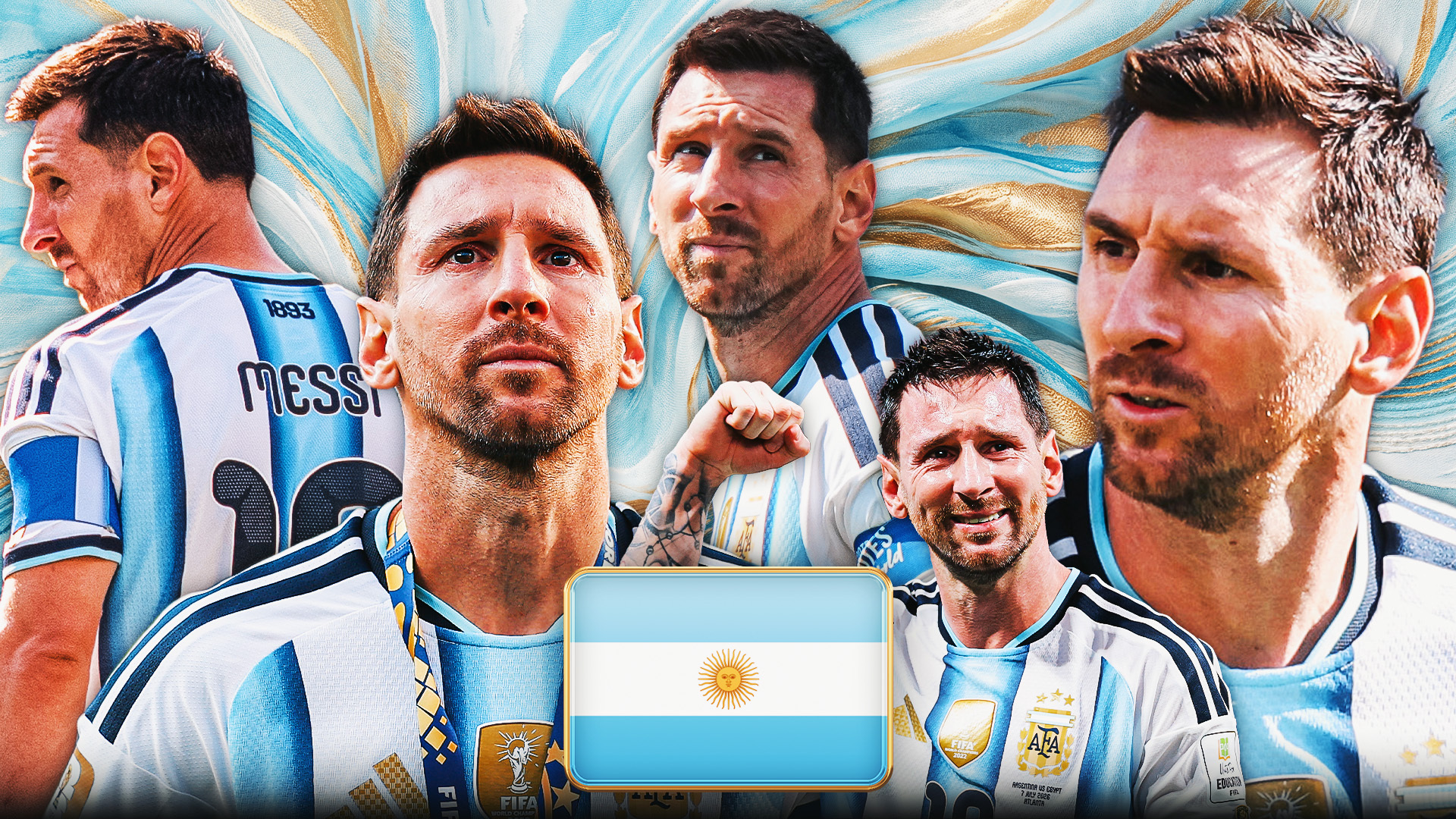
Ever wonder how World Cup players get their numbers? There are actually rules and parameters regarding how each of the 26 players on the 48 teams at this summer’s soccer extravaganza get assigned the numbers on their jerseys. Rules For Kit Numbers FIFA requires World Cup squads to be numbered from 1 to 26, with the No. 1 shirt exclusively belonging to a goalkeeper on the roster. That number is usually given to the first-choice keeper, while the other goalkeepers can wear any available number from Nos. 2 to 26. Interestingly enough, the expected starting goalkeeper for the U.S. men’s national team, Matt Freese, was given No. 24. His backup, Matt Turner (who was the USA’s starter in 2022), was given the No. 1 by USA manager Mauricio Pochettino. USA captain Tim Ream, who plays at the defender position, will wear No. 13. Players are also not allowed to switch squad numbers once the tournament begins, meaning the number assigned before the World Cup stays with them throughout the competition. Unlike club soccer, where players can often wear numbers up to 99, World Cup kit numbers are tied directly to the number of available roster spots. For the 2026 World Cup, that means 26 players and 26 numbers. Club teams usually have larger squads, youth academy players being promoted, and more movement across a season, which creates the need for a bigger pool of kit numbers. International tournaments are much more limited, so the numbering system is tighter and more straightforward. Numbers By Position Kit numbers also carry meaning because of soccer tradition. First-choice strikers typically wear the iconic No. 9 shirt, which is why Harry Kane will wear the number for England at his third World Cup. The No. 10 kit is often reserved for a nation’s biggest attacking star or most creative player, or at least the team’s most established player. Lionel Messi (Argentina), Neymar (Brazil) and Luka Modrić (Croatia) will wear the No. 10 this summer. That is not always the case, though. Cristiano Ronaldo has built his legacy wearing No. 7, the number he has made famous throughout his career. For the USA, Christian Pulisic will wear No. 10, a kit number that has belonged to him since 2016, when he was just 17 years old. Weston McKennie will continue wearing No. 8 for the United States, while Ricardo Pepi will wear No. 9. Expected starting striker Folarin Balogun will wear No. 20. 2026 FIFA World Cup: How To Watch The World Cup will run from June 11–July 19, 2026. Spread across three countries, the tournament will culminate with the final on July 19 at New York New Jersey Stadium in East Rutherford, New Jersey. All 104 tournament matches will air live across FOX and FS1 with every match streaming live and on-demand within both the FOX One and the FOX Sports apps.​Latest Sports News from FOX Sports
Categories
Sports Fox

How The Smallest World Cup Nation Recruited Its Team

Growing up in the Netherlands, Jurgen Locadia envisioned himself wearing those iconically vibrant orange jerseys at a World Cup. He played for the country’s youth national squads, was selected for the senior team a few times and started his professional career with Dutch clubs. So when peers tried to enlist him to play for Curaçao, a tiny island nation off the coast of Venezuela, he initially brushed them off. “I always had the hope to play for the Dutch squad,” Locadia, a forward for USL Championship side Miami FC, told me recently. But his friend and current Miami FC teammate, Eloy Room — who was also from the Netherlands and had already joined the Curaçao national team — was persistent. He was trying to help build something in Curaçao. Locadia remembers having conversations with Room four years ago while he was still attached to the Oranje. Room was trying to sell Locadia on the idea of qualifying for the 2026 World Cup. “I was like, ‘C’mon man, it’s not realistic,’” Locadia said he told Room. “But he was convinced. And that energy rubs off when you believe in something. And he believed in it. I was skeptical, but looking back, it’s ironic how life works out.” Call it the college transfer portal meets the World Cup. Countries use recruiting-style pitches on dual-national players to bolster their chances of qualifying for the world’s biggest tournament. The strategy worked for Curaçao, which will make its World Cup debut this summer as the smallest nation ever to qualify. The approach has also helped propel more established countries, such as Morocco, which reached the semifinals of the 2022 World Cup in Qatar and became the first African nation to do so. Other countries, including Senegal, Ivory Coast and Egypt, have followed similar paths by recruiting players who previously represented other nations at youth levels. Cape Verde, also making its inaugural World Cup appearance this summer, initially wooed Irish-born defender Roberto “Pico” Lopes via a LinkedIn message. But Curaçao’s interpersonal approach towards its program-building has also now paid dividends. “I don’t think we realize the impact right now,” said Locadia, who ultimately committed to the Blue Wave in 2023. “Personally, I still can’t comprehend that we qualified. I think once we’re all together at our [base camp in Boca Raton, Florida], then the World Cup really starts, but for now, it’s still hard to understand that we accomplished such a big thing.” ‘More Players Kept Coming’ The Caribbean island of Curaçao was formerly a regional hub of the Dutch Atlantic slave trade, and many Curaçaoans grew up in or at some point moved to the Netherlands due to colonial and political ties. In 2010, Curaçao became an autonomous country within the Kingdom of the Netherlands following the dissolution of the Netherlands Antilles. The population of Curaçao is around 158,000 and has a total land mass of 171 square miles — that’s seven times smaller than Rhode Island. Soccer and baseball are among the nation’s most popular sports, though locals have cheered for Brazil or Argentina during past World Cups since their country had never qualified. That was, however, until last November when Curaçao shocked the world, securing a berth to the 2026 tournament after a 0-0 draw against Jamaica in Kingston. The previous record for the smallest World Cup country was Iceland, which had a population of 350,000 when it reached the 2018 tournament in Russia. So, how did this unlikely contender reach soccer’s biggest stage? “It was my project,” former Curaçao national team manager Remko Bicentini told me. Bicentini coached the Netherlands Antilles from 2009-10 after serving as an assistant in 2008, then worked as Curaçao’s assistant from 2011-16 before being named head coach from 2016-20 and again from 2022-23. He was one of the early architects who developed a plan to attract professional players with Curaçaoan roots to represent their homeland. He gave most of the players on Curaçao’s 2026 World Cup roster their first international appearance. Bicentini — whose father, Moises, was among the earliest Curaçaoans to play professional soccer in the Netherlands in the late 1950s — used several methods to identify players for the national team. He said he communicated with coaches around the world from 2015-23 and contacted various consulates, which helped him locate players with Curaçaoan heritage. “I looked all over the world for players who can play for Curaçao, if they have a parent or grandparent who was born in Curaçao,” Bicentini told me. “I looked for many, many, many years, and I found a lot of players.” The first major commitment was Room, who was playing for Dutch club Vitesse Arnhem in 2015 before later joining PSV Eindhoven. Born to a Curaçaoan father and Dutch mother, Room was part of the Netherlands U-20 squad but wasn’t earning regular first team call-ups. Patrick Kluivert, the legendary Ajax and Dutch national team striker, was the head coach of Curaçao at that time and called Room personally to invite him to join the program. Like Locadia, Room always wanted to play for the Netherlands, but knew he could also play for Curaçao. In those days, however, Curaçao wasn’t competing at a high level, and there wasn’t much of a foundation or structure in place. Switching national teams wasn’t in his plans. “Kluivert called and said, ‘Listen, I want you as my goalkeeper. You’re my No. 1,’” Room recalls. “He also told me we have potential to go to the World Cup in the future if you help recruit players and players like me choose to play for Curaçao.” Room needed time to think. Maybe, he told himself, there was another way to get to the World Cup, and he could help pave the way for posterity. Plus, he said it was “pretty cool” to hear from a legend like Kluivert. Room ultimately took the leap, and the 37-year-old has been Curaçao’s starting goalkeeper ever since. He’s made 72 appearances, recently breaking a tie with midfielder Leandro Bacuna for most caps in national team history. But it took a real grassroots effort to scout other players. Room reached out to guys he knew growing up in the Netherlands, and some called him asking what it was like to play for Curaçao. Room told them about his experience and every camp, new players arrived on the island. Within a few years, the Blue Wave had a full squad made of professional players. “I was basically the first player who switched nationalities back then,” Room said. “And after that, more players kept coming.” Results followed. In 2017, Curaçao won its first-ever Caribbean Cup, defeating Jamaica 2-1 in the final. The victory secured a place in the following month’s Concacaf Gold Cup, though Curaçao did not advance out of the group stage. The team later qualified for the 2019 Gold Cup and reached the quarterfinals, where it lost, 1-0, to the United States. “It was important for players to see that success,” Bicentini said. “It helped recruit new players.” A ‘Nostalgic’ Feeling Tahith Chong’s first World Cup memory was watching the 2006 final between France and Italy at his parents’ home in Willemstad. He remembers Zidane’s headbutt, cheering for France and crying when Les Bleus lost. He started playing soccer after that. Now a midfielder at English club Sheffield United, Chong’s family moved to the Netherlands when he was eight years old. He came through the Manchester United academy team while playing for Dutch youth squads and kept a watchful eye on what was going on back home in Curaçao. He felt in the early days that the program was too disorganized and unstable. He saw managers and federation presidents come and go, and travel from Europe at the time wasn’t easy for him. “But once they got it sorted, I was on board because I’m from there, I was born there, my family is there. That’s where I call home,” said Chong, who is the only player on the 26-man squad born on the island. Over time, players, staff and fans alike started to believe. Bicentini created a “family atmosphere” by inviting many of the players back to each camp so they could develop camaraderie and chemistry. He stuck with consistent tactics and defined a system, so everyone was aligned. He called in so many guys who grew up playing together in the Netherlands, providing an added sense of familiarity. Together the group set goals, like going to the Gold Cup, and initially didn’t even talk about the World Cup. “Absolutely not,” Bicentini said. “But I believed that we could do that with each other. In 2016, the goal was to go to the [2017] Gold Cup, and that’s what I talked to the players about and we qualified. Then after the first Gold Cup, my goal was the 2019 Gold Cup, and we did that.” Only after that did they start envisioning something more ambitious: qualifying for the 2026 World Cup. With fellow Concacaf members the United States, Canada and Mexico already assured spots as co-hosts and the tournament expanding to 48 teams, the opportunity felt more attainable. Under the guidance of veteran Dutch manager Dick Advocaat — who has coached numerous teams in the Netherlands and abroad — Curaçao went unbeaten in its 10-match World Cup qualifying campaign. It culminated in a draw against Jamaica on Nov. 18. 2025. “It means everything,” Room said of clinching a spot in the World Cup. “This was the main reason I started to play for Curaçao because we had that dream. Back then, we were told, ‘It’s going to be a long road. It’s going to be a bumpy road.’ But I really believed we could reach the World Cup. I don’t know what it was, but I had this feeling inside of me that we can make it with Curaçao. “It’s an unbelievable feeling that you started something 10 years ago, and at the end you make it, you know? A lot of people said, ‘Nah, you’re never going to make it. It’s too difficult.’ We proved we can, so that makes it extra special.” The vibes on the team that night in Jamaica started as a party in the locker room with guys dancing, screaming and playing music. Then, when they got back to the hotel, it was more relaxed and chill. “We were soaking it all in,” Locadia said. “We accomplished something amazing.” For Chong, qualification was emotional. His grandmother, who lived her whole life on the island, had watched him play live for the first time last September. When the team drew Jamaica to punch its World Cup ticket, it was on her 97th birthday. He also thought of his father, who had played amateur soccer in Curaçao and never believed he would witness his country qualify for the world’s biggest tournament. “For me, it’s nostalgic,” said Chong. “It’s been a long process for everyone. It’s not like we showed up to the qualifiers and got lucky. It’s been a progression over the years. Progressing slowly but surely.” ‘We’re Part Of History’ There’s a lot of excitement on the island, and players can feel it whenever they return for training. The moment the team qualified, fans started looking at flights and tickets. Room said he heard people were selling their stuff to afford the trip. The Blue Wave opens Group E competition against Germany in Houston on June 14 before playing Ecuador in Kansas City on June 20 and the Ivory Coast in Philadelphia on June 25. The team is especially amped for that first game against the Germans, given the players were all raised as neighbors and rivals in the Netherlands. “Growing up in Holland, you want to win against Germany,” Room said, smiling. “So maybe that gives us an extra spark.” Beating four-time World Cup winner Germany would be the upset of the tournament, no doubt. Regardless of the result of that match or any other, arriving on the World Cup stage is a huge triumph. And, as Locadia explained, “This is a stepping stone.” In February, Curaçao expanded its scope when it welcomed a Dutch Football Federation delegation to the island. During the trip, the two federations signed an agreement aimed at strengthening football development within the Kingdom of the Netherlands. The partnership will formally provide resources for Curaçao to continue growing the game by collaborating with the Netherlands in areas like training referees and coaches, football infrastructure, operating and developing youth and women’s teams and more. “We just feel like we’re part of history right now,” Chong said. “We have an obligation to represent Curaçao in a way that inspires the next generation that maybe in 15 or 20 years when Curaçao qualifies for another World Cup, kids come in and say, ‘I started playing because of the 2026 World Cup. The team that went to that World Cup inspired me to play.’ “We’re hoping this isn’t the only time we qualify. We want to do it again in four years, eight years, 12 years. You want to continue the progress.”​Latest Sports News from FOX Sports
Categories
Sports Fox

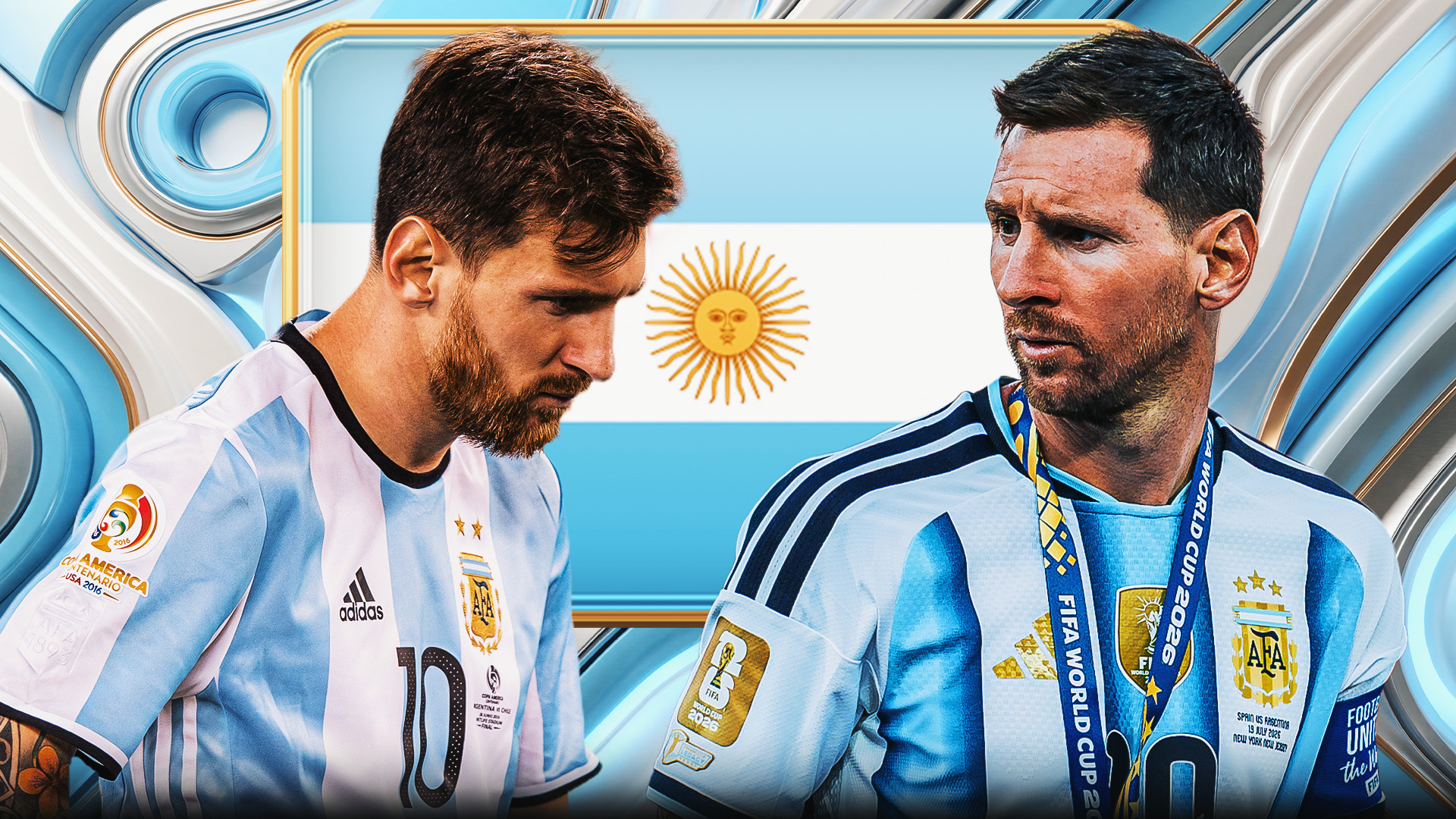
Ronaldo Or Messi? Mbappé Picks Who’ll Score More World Cup Goals This Summer

Real Madrid’s star Kylian Mbappé has set the stage for a thrilling 2026 World Cup by making a series of bold predictions regarding the tournament’s top marksmen. The France captain, who is looking to banish the memories of a painful final defeat in Qatar, has weighed in on the eternal debate between Cristiano Ronaldo and Lionel Messi while asserting his own dominance. Mbappé tips Ronaldo to edge out Messi before backing himself In a series of rapid-fire choices during a football challenge with content creator Finn Agostinelli and Sorare, the 27-year-old superstar was tasked with predicting the most prolific scorers for the upcoming tournament in North America. When the ultimate question arrived — choosing between the two greatest players of the modern era — Mbappe opted for his idol Ronaldo to outshine Messi in front of goal. While Messi has been the more influential figure on the world stage recently, leading Argentina to glory in 2022, Mbappé believes the Al-Nassr frontman will have the more clinical touch in 2026. However, when the final comparison pitted the Portuguese icon against the Frenchman himself, Mbappé did not hesitate to back his own ability to finish as the tournament’s top scorer. Picking the next generation of stars Before reaching the final showdown, Mbappé was asked to filter through the current crop of elite European and South American talent. He showed great faith in Spanish teenage sensation and his Barcelona rival Lamine Yamal, picking him over the likes of Florian Wirtz, Memphis Depay, and even the prolific Erling Haaland. Mbappé also showed loyalty to his Real Madrid colors, backing his clubmate Vinícius Jr to outscore Yamal and England’s captain Harry Kane. Eventually, the Frenchman leaned toward the pedigree of the veteran legends, placing Messi ahead of the Brazilian winger before finally crowning Ronaldo as the biggest threat among his peers — second only to himself. Defiant stance against ‘demons’ of the past The 2026 World Cup carries significant emotional weight for Mbappé, who suffered the ultimate heartbreak in Lusail despite scoring a hat-trick in the 2022 final. In a candid admission, the Real Madrid forward revealed that revisiting the match scenario might “awaken some demons”, leading him to avoid rewatching the showpiece entirely. Historical records at stake in North America The stakes for the 2026 edition are unprecedented, as both Ronaldo and Messi are expected to feature in a record-breaking sixth World Cup. Ronaldo heads into the tournament with eight career World Cup goals but faces the lingering statistic of never having scored in a knockout round match. In contrast, Messi boasts 13 goals and eight assists in the competition’s history. France will begin their campaign in Group I against Senegal, Iraq, and Norway, starting at the MetLife Stadium on June 16. For Mbappe, the tournament represents a chance to add to his staggering tally of 12 goals in just two tournaments, as he chases the all-time record of 16 held by Miroslav Klose and aims to fulfill his own prediction of outperforming the legends of the game.​Latest Sports News from FOX Sports