Categories
Politics

Kamala Harris is wading into the midterms. Red state Dems want her to stay away.

Former Vice President Kamala Harris is revving up her involvement in the midterms. While some Democrats are eager to embrace her, others want her to steer clear.

Harris is planning to attend a canvass launch with Nevada Attorney General Aaron Ford for his gubernatorial bid next month in Las Vegas, his campaign told POLITICO.

“As anyone who is interested in 2028 should do, Kamala Harris will be coming through. We are a pivotal state in the presidential election,” Ford said in an interview in Las Vegas on Tuesday. “2028 starts right now in 2026.”

Harris’ plans to visit Nevada signal yet another step into the fray of the midterms — and the national political stage. On Tuesday, she publicly backed Rep. Chris Pappas in his Senate bid in New Hampshire, a must-hold seat for the party in a state that Harris narrowly won in 2024. And she waded into three House races, two Democratic-leaning districts in her home state and a solidly Republican one in Tennessee.

Harris had kept a relatively low profile so far on the campaign trail. Some Democrats prefer it that way.

Iowa’s two most prominent Democratic candidates have said they do not want Harris to campaign for them. Alaska’s Democratic Senate nominee rejected a fundraising solicitation Harris sent on her behalf. And a swing-district Democrat in Wisconsin and a long-shot Senate hopeful in Kansas both told POLITICO they would prefer Harris keep her distance.

“I received 9,000 more votes than Harris in 2024,” Rebecca Cooke, the Democratic challenger to Republican Rep. Derrick Van Orden in western Wisconsin, said in a statement when asked by POLITICO. “I don’t need anyone to come and campaign with me in my district. I do the work of building relationships — including across the aisle — on my own.”

The arm’s-length treatment isn’t necessarily surprising: red-state and rural Democrats have long been hesitant to tie themselves to national Democratic figures. They are increasingly distancing themselves now as polls show the Democratic brand remains underwater even as President Donald Trump’s own standing with voters continues to drop. Trump’s approval hit a weak 36 percent in a recent poll conducted by The Economic and YouGov, while a separate survey from the pollster showed over 56 percent of registered voters disapproved of the Democratic Party.

Harris’ favorability numbers at the end of last year only stood at 42 percent. As the party’s most recent presidential nominee, she is one of its most prominent avatars.

A Cooke campaign aide, granted anonymity to discuss internal conversations, said Cooke’s team has turned down campaign offers from other national Democrats as she focuses on making a personal case to voters in one of the party’s top target districts this fall.

Cooke hasn’t warded off everyone, however: During her primary she leaned heavily into support from Sen. Bernie Sanders (I-Vt.), featuring him in campaign ads; his team also sent texts to help turn out voters. She also has accepted endorsements from potential 2028 candidates like former Transportation Secretary Pete Buttigieg and Sens. Mark Kelly (D-Ariz.) and Elissa Slotkin (D-Mich.).

Other high-profile Democrats, like California Gov. Gavin Newsom, have similarly stayed relatively low-key with their own endorsements so far. He’s faced some Democratic distancing himself: Stefany Shaheen, who is running for a House seat in New Hampshire, emphasized her support from Granite Staters when asked about a fundraising email the governor sent on her behalf last month.

Harris, like other potential presidential candidates, needs to build a network of friends and favors — much of which she has already developed from her own runs for Senate, the White House and her four years as vice president — while staying relevant. She retains a powerful fundraising network that can help down-ticket Democrats, too.

But in many parts of the country where she lost, her involvement could be a drag for Democrats otherwise facing strong political tailwinds in the midterms.

“It’s all good,” Eduardo Negrón, a spokesperson for Harris, said in a statement. “Vice President Harris will continue to raise money and travel on behalf of candidates in races where she can help make a difference. With Trump so unpopular and our deep bench of strong candidates, we are now seeing deeply red states in play this cycle. The Vice President believes we should be ruthless about competing everywhere and that means giving candidates in tough races the space to do whatever it takes to win.”

Harris’ recent ramp-up marks a shift from what had been an otherwise quiet midterms strategy that has focused primarily on standing by close preexisting relationships. It’s strikingly different from other potential 2028 presidential candidates who’ve endorsed more widely and been more prominent on the campaign trail.

One of the few times she did weigh into a contested primary was for Rep. Jasmine Crockett (D-Texas) — a co-chair of her 2024 presidential campaign — in her bid for Texas Senate. The vice president’s support came in the form of a robo-call released just days before the primary rather than an in-person appearance, and she quickly backed James Talarico shortly after he won the nomination. She also threw her support behind Michigan Democratic nominee Abdul El-Sayed after a bruising primary that has left Democrats scrambling to project unity heading into the general election.

Red-state Democrats have been particularly pointed in their calls to keep Harris out of their races.

“In Kansas, you’re trying to reach 45 percent of the state who are Republicans and a lot of really good people who are Republicans, but their vantage point or their worldview may be a bit different than Kamala Harris’,” Kansas Democratic Senate nominee Adam Hamilton told POLITICO. “What I’m looking at is I’m really mounting a very Kansas-centered campaign, and I’m out speaking, I tell people I’m running as an independent-minded Democrat.”

Hamilton is running an uphill battle in a state that hasn’t sent a Democrat to the Senate since 1932. The state is seen as potentially somewhat in play amid the ongoing war in Iran, trade wars with close allies and a persistent cost of living crisis that have cut especially deep in agricultural territory.

But that doesn’t mean a coastal Democrat like Harris would play well in the conservative heartland.

“Having somebody from California come in and try to tell Kansans who they should vote for is a pretty bad idea,” Hamilton said. Harris has not endorsed in the race.

Other Democrats have taken similar tones toward Harris in recent days. In an interview with POLITICO, Iowa State Auditor Rob Sand said he would not want the former vice president to appear with him as he runs for governor, adding that the country needed “new leadership.”

State Rep. Josh Turek, speaking with reporters after an event for his Senate campaign in Cedar Rapids, broadcasted an even more blunt answer to the same question: “No,” he said flatly, letting out a laugh.

A similar scenario played out in Alaska last month. After Harris’ team sent a fundraising email for Senate candidate and former Rep. Mary Peltola (D-Alaska) on the eve of the state’s primary election, a spokesperson for Peltola’s campaign told a local Alaska television station that she “isn’t seeking endorsements from anyone from the Lower 48.” Peltola’s campaign did not respond to POLITICO’s questions on the matter.

Campaign spokespeople for several battleground Senate Democrats locked in high-profile races, including El-Sayed in Michigan, Troy Jackson in Maine and Roy Cooper in North Carolina — who have all received her support — declined to respond to requests for comment about how involved they would like the former vice president to be in their races.

Harris’ support isn’t an albatross for all Democrats, however. For some, her endorsement is welcome — and they want her out on the trail.

One key battleground Democrat (and a potential 2028 rival), Georgia Sen. Jon Ossoff, embraced Harris’ support with open arms. “Senator Ossoff is grateful for Vice President Harris’ help and support in his re-election campaign,” campaign spokesperson Ellie Dougherty said in a statement, adding that he would welcome her to Georgia to campaign alongside him or on his behalf.

Harris lost Georgia, but the rightward swing in the state was the smallest of any battleground — in large part because of a population boom in metro Atlanta and the large share of Black voters.

And in deep-blue Massachusetts, former Biden White House aide Dan Koh won an open House primary on Tuesday after running aggressively on support from Harris and President Joe Biden. Koh sought their support and featured them prominently in a campaign ad and in social media videos. He said scheduling didn’t work out for them to hit the trail, though.

“I will never run away from two people I admire greatly, who I believe did a lot of good for this country,” Koh said last week.

Jessica Piper contributed to this report.

​Politics

Categories
Politics

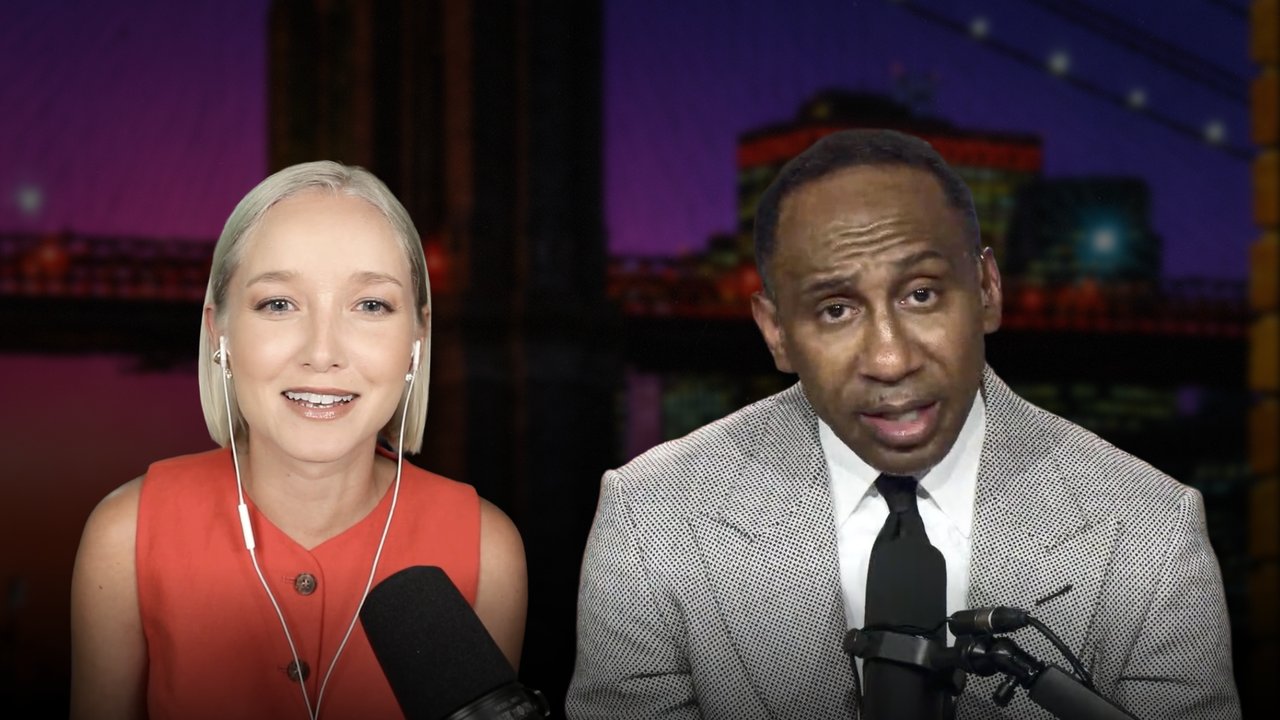
Stephen A. Smith has some words for Democrats as he makes his 2028 plans clear

Sports broadcaster Stephen A. Smith has been bouncing around cable TV but insists he’s staying out of one arena: the political one.

The outspoken ESPN personality isn’t staying away from talking politics — far from it. But Smith told POLITICO in an interview airing Thursday that he’s not running for president in 2028 in his firmest rejection yet of speculation that has surrounded him for the past year.

“The minute I announce that I’m running, I would be taken off the air,” Smith said in an interview on The Conversation with Dasha Burns. “I wouldn’t be able to work, and I would lose a contract that I worked my entire career for, you know, and I’m not giving that up.”

He left no wiggle room: “As long as the rules are what they are and they can’t be circumvented, it’s not something that I’m going to think about.”

That didn’t mean Smith, who is famous for his brash takes, didn’t have a few about Democrats and Republicans.

Smith, who has repeatedly doled out criticism of both parties, offered blunt advice for Democrats seeking a path back to power: Purge the Democratic Socialists of America and restrain the party’s progressive flank.

The Democrats, he said, should only welcome people who “march lockstep” with the party. “We should never want to hear anything about the Democratic Party being a ‘big tent,’” he said.

Asked how Democrats should handle the progressives, Smith said: “Tell them to sit their ass down and get with the program.”

He also warned that Democrats’ association with left-wing streamer Hasan Piker would “come back to haunt” the party. Smith said he would have Piker on his show “if necessary,” and then “grill him about the things that he said and why.”

Smith’s remarks come as Democrats have been distancing themselves from Piker, who played an active role in supporting Abdul El-Sayed for Senate in Michigan and has come under fire for commentary that has included suggesting that American Jewish support for Israel could lead someone to “take action” against Jews in the U.S.

The ESPN star also had some praise for President Donald Trump, crediting him for recognizing “that most voters believe our politics and our politicians are full of shit” in a way that Democrats have been unable to articulate as well.

“He speaks a language that the electorate, no matter who they are or what side of the aisle they are on, can relate to, even if they despise him,” Smith said, adding that there are millions of voters out there who “want chaos” and “the evisceration of rules and decorum and regulations.”

Looking ahead to 2028, Smith named Pennsylvania Gov. Josh Shapiro as his top prospect for Democrats, calling him “big time,” and saying “[his] record is head and shoulders above anybody right now.”

Smith also praised Maryland Gov. Wes Moore, but thinks electing him could be a challenge following Barack Obama’s presidency.

On the Republican side, Smith dismissed a potential run by media personality Tucker Carlson, noting he doesn’t think the former Fox host could secure enough support from independents.

On the other hand, Smith argued that Secretary of State Marco Rubio would be a stronger candidate than Vice President JD Vance.

Vance is “an individual that tries to be too like Trump,” Smith told POLITICO. “And I don’t think there’s — the level of authenticity that you’re wishing to see from candidates; I don’t think he’s that guy. I think that Marco Rubio is an authentic individual.”

Smith even noted he would consider voting for Rubio himself, saying it depends “on the candidate on the left.”

Watch the whole interview on the latest episode of “The Conversation.”

​Politics

Categories
Politics

Stephen A. Smith on Trump, Democrats and the politics of chaos

Stephen A. Smith on Trump, Democrats and the politics of chaos

lead image

​Politics

Categories
Politics

Elon Musk unleashes first wave of spending on key races in the midterms

Elon Musk’s super PAC disclosed its first independent expenditures of the 2026 general election in a filing released late Wednesday, detailing roughly $800,000 across key House and Senate races.

Musk’s America PAC targeted several key Senate contests, including races in Texas, Maine, Ohio, New Hampshire, Iowa, Michigan and Alaska.

The largest amount went to Texas — over $247,000 — where Republicans are expected to deploy a wave of party resources to bolster Attorney General Ken Paxton against Democrat James Talarico.

Musk’s super PAC also put nearly $90,000 into eight House races:

Rep. Derrick Van Orden in Wisconsin; Rep. Mike Lawler in New York; Rep. Jen Kiggans in Virginia; Rep. Tom Kean Jr. in New Jersey; Rep. Scott Perry in Pennsylvania; Rep. Rob Bresnahan in Pennsylvania; Rep. Ryan Mackenzie in Pennsylvania; and Scott Singer in Florida.

The independent expenditures — Musk’s first of the general election — were disclosed days after he met with Speaker Mike Johnson in Texas last week.

Republicans already hold a significant fundraising advantage over Democrats, buoyed by President Donald Trump’s roughly $400 million in his MAGA Inc. super PAC. Trump is under growing pressure from Republicans to tap into that money as the midterms near. A major investment from Musk would further widen the GOP’s financial edge heading into November.

Musk has reportedly considered spending at least $100 million for the GOP through America PAC to help Republicans in this year’s midterms, but the full scope of that effort remains unclear.

A spokesperson for America PAC declined to comment.

Musk spent roughly $290 million to support Trump and the GOP during the 2024 cycle, predominantly through his super PAC, making him the largest individual donor to any political committee that cycle, before he took on a major role in the White House’s DOGE effort.

​Politics

Categories
Politics

Trump invites battleground Republicans to Rose Garden dinner

President Donald Trump has invited a group of GOP lawmakers including Republicans in competitive races to dine with him Wednesday night at the White House as many in the party press the president to unleash his massive war chest ahead of the November elections, according to five people with direct knowledge of the matter.

They, like others, were granted anonymity to discuss private planning. Wisconsin Rep. Derrick Van Orden confirmed the event in a brief interview with POLITICO.

“Of course,” Van Orden said when asked if he would go to the dinner.The White House plans to hold the dinner in the Rose Garden, according to two of the people who know about the invitation.

Other House Republicans in tough races who were invited and plan to attend include Rep. Tom Barrett (R-Mich.) and Georgia Senate nominee Rep. Mike Collins, along with a wider group of GOP lawmakers.

The White House invited at least several dozen lawmakers, according to two people familiar with the invitation list. The dinner also comes ahead of next week’s GOP midterm convention in Dallas, though attendance from Republican lawmakers is expected to be mixed. Barrett, for example, said in an interview Tuesday he is not planning to attend the convention and will instead campaign and spend time with his family. A White House spokesperson did not immediately respond to a request for comment.

Republicans are facing mounting electoral headwinds from the war in Iran, higher gas prices and new tariffs as they fight to hold onto their narrow congressional majorities in November.

GOP incumbents are also eager for new infusions of resources to help dull Democrats’ attacks over voters’ cost-of-living concerns. Speaker Mike Johnson recently met with GOP megadonor Elon Musk, who has said he will spend millions to back the GOP again this cycle.

Trump’s political operation, MAGA Inc., has used little of its $400 million war chest to support GOP lawmakers. But he recently helped boost Sen. Darline Graham over the line in her heated primary, with the group spending more than $800,000 on phone calls and texts for the political newcomer.

Senate Republicans are eager for Trump to start spending for Ken Paxton in Texas as he has thus far been outspent on the airwaves by Democrat James Talarico and his allies.

The scheduled dinner comes the same day Securing American Greatness, the nonprofit arm of Trump’s operation, is launching its first major ad buy of the general election.One ad features UFC President Dana White praising Trump along with a clip from Trump’s State of the Union address in February.Another ad touts the tax cuts passed through Republicans’ domestic agenda bill last year, including “no tax on tips.” The ads are part of a nearly $1 million national TV reservation running over the next two weeks, per data tracking firm AdImpact.Both ads come as Trump advisers are reportedly planning to use his political organization to try and boost the president’s approval ahead of the midterms.

Erin Doherty, Aaron Pellish and Andrew Howard contributed reporting to this article.

​Politics

Categories
Politics

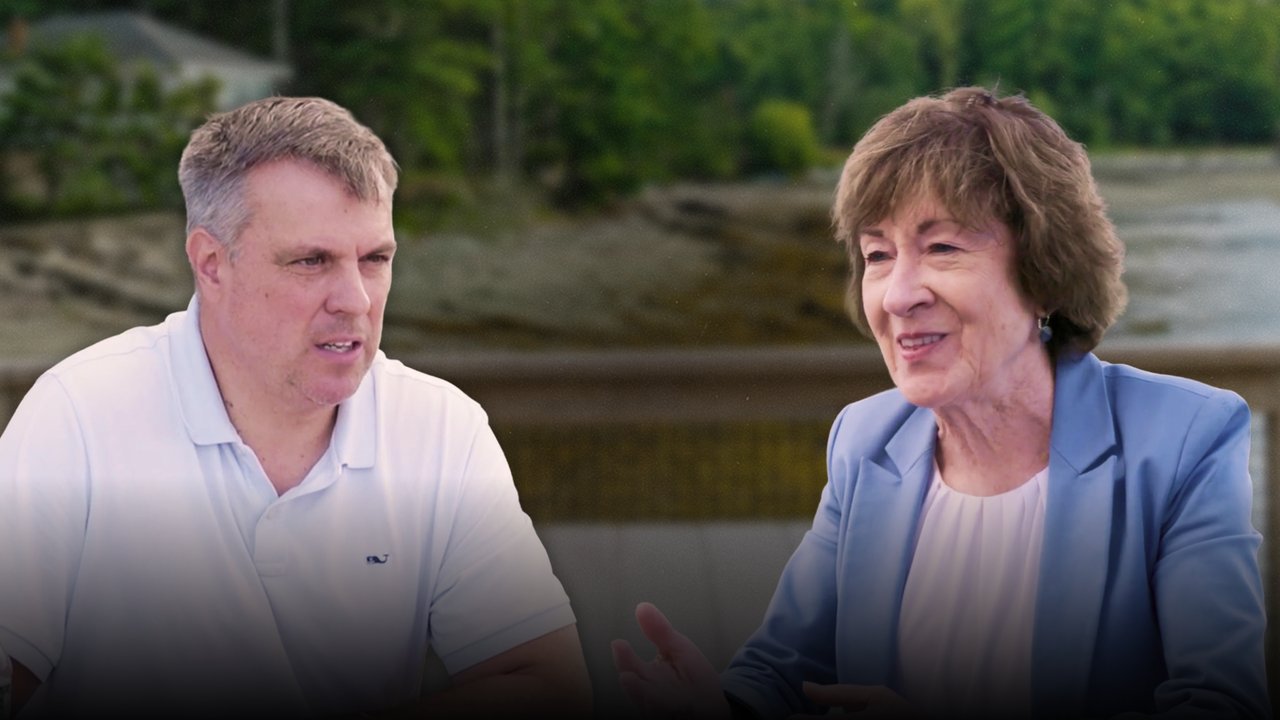
Susan Collins on Trump, tariffs and the state of her senate race over Maine lobsters

Susan Collins on Trump, tariffs and the state of her senate race over Maine lobsters

lead image

​Politics

Categories
Politics

Republicans aren’t exactly flocking to Trump’s midterm convention

President Donald Trump has a vision for next week’s GOP convention in Dallas: a televised spectacle putting Republican candidates in front of midterm voters and top party donors just two months before the Election Day — with Trump himself headlining the show.

But a POLITICO survey of more than 70 GOP candidates and members revealed that most either do not plan to attend or are still weighing whether to go. Dozens more declined to share their plans.

The 45 Republicans cited a variety of reasons for skipping the first midterm convention put on by a major party in more than four decades. Some cited prior obligations such as fundraisers or events in their districts that were planned before the convention was scheduled in June. Others had personal conflicts, like weddings and family events, and still others raised qualms about the five-figure-minimum fees that party officials want attending lawmakers to pony up.

And some Republicans in tough races are steering clear of the gathering — which has come to be called “Trump-a-palooza” in some GOP circles — as they face growing hesitation about associating themselves with the polarizing president so close to the election.

“I just felt I’d be more useful in my district,” said Rep. Tom Barrett, who is facing a tough campaign to keep his central Michigan seat. “I travel a lot for this job and if I can be back home and see my family and do the job back home as well, then that’s sort of what I lean toward doing.”

Asked if the president’s remarks might cause him problems back home, Barrett said: “I can’t control what the president’s going to say at the convention, but I can control where I’m at, what I’m doing.”

Several other Republicans in key races targeted by Democrats said they weren’t committing to attend.

“I’m going to be in my district,” Rep. Zach Nunn (R-Iowa) said when asked about his plans, while Rep. Rob Bresnahan (R-Pa.) said, “I’m not sure yet.” Rep. Jeff Hurd (R-Colo.) isn’t planning to go, according to people granted anonymity to describe his decision. And Rep. Nick LaLota (R-N.Y.) said he instead plans to visit colleges with his daughter.

Trump will be the headline speaker of the two-day convention inside the American Airlines Center, with Vice President JD Vance also set to address Republicans.

Most top House and Senate GOP leaders will be in attendance, including Speaker Mike Johnson and Senate Majority Leader John Thune. Some potential 2028 presidential contenders, including Sen. Ted Cruz (R-Texas), will also be in attendance, as will some Senate Republicans from marquee battleground races.

Former Rep. Mike Rogers, who is trying to flip retiring Democratic Sen. Gary Peters’ seat in Michigan, and Sen. Jon Husted, who is working to fend off a challenge from former Sen. Sherrod Brown in Ohio, will both attend, according to their campaigns. Sen. Bernie Moreno (R-Ohio), who is expected to be the next Senate GOP campaign chair, is also planning to be there.

Johnson said he has been “promoting this everywhere” as an important event for the party but also acknowledged it’s a crucial time for some of his members to spend time in their districts.

“They’ve got to all make their own individual decision … but the people that do come are going to have a great time,” Johnson said in an interview, adding that he expects high attendance during the convention. He acknowledged in a news conference Tuesday, however, that some members will need to be in their districts because “it’s critical time right before early voting begins nationwide.”

With Trump front and center at the convention, some Republicans are privately fretting about slipping presidential approval ratings in their districts amid the ongoing conflict in Iran, a trade war with Canada and rising prices from both. Other moves by the administration, such as a deal tackling beef imports to address affordability, have angered other key GOP constituencies.

One House Republican not attending the convention who was granted anonymity to speak candidly called the event “a waste of time” and said the planning has been “a mess.”

“You shouldn’t be having to rally your base at this point,” the member said. “You should be trying to convince independents. Independents are not attending nor watching the midterm convention.”

RNC national press secretary Natalie Baldassarre said in a statement responding to those claims that “the outreach and enthusiasm to attend, participate, and speak at this historic midterm convention has been incredible.”

“Republicans across the country are rallying behind President Trump’s America First agenda that’s brought lower drug prices, lower taxes, and a secure border, and this convention will provide the momentum needed to expand our majorities in November,” she added.

But even some Republicans who might benefit from campaigning with Trump said the costs members are being asked to pay to attend were getting in the way. Another House Republican granted anonymity to speak candidly pointed to the $25,000 minimum attendee donation suggested by the National Republican Congressional Committee, which is distributing RNC-provided tickets to members.

“I didn’t want to go anyways. That made it easier,” the member said.

According to an NRCC memo obtained by POLITICO, that donation gives a member the right to book one hotel room in the committee’s block as well as two tickets to a welcome reception and the convention itself. Higher tiers of giving up to $100,000 come with access to additional rooms, tickets and events. An NRCC spokesperson declined to comment.

Rep. Tim Burchett (R-Tenn.) cited the price tag in explaining why he is still “not sure” whether he would attend.

“It’s $25,000, apparently — I just got a bill,” said Burchett.

With the convention being seen inside the party as a key late fundraising opportunity, several GOP lawmakers who intend to be there, including some committee chairs, plan to give much more than $25,000, according to three people familiar with the planning for the event.

But other powerful members are taking a pass, including two of the most senior members of the powerful House Energy and Commerce Committee. Ohio Rep. Bob Latta, who chairs the panel’s Energy subcommittee, said he had events back in his district, and Virginia Rep. Morgan Griffith, who chairs the Health subpanel, said he preferred to be home campaigning.

“I should be safe,” Griffith said in an interview. “But no member of Congress from the 9th Congressional District of Virginia has left voluntarily since 1952.”

House Appropriations Chair Tom Cole said he is not attending because he has a dove-hunting event back home in Oklahoma.

Several northeastern members, including Reps. Chris Smith of New Jersey and Andrew Garbarino of New York, said they have commitments in their districts related to the 25th anniversary of the 9/11 attacks.

Less surprising are the alternate plans being made by moderate Republicans who are facing tough elections in the fall and don’t necessarily benefit from being associated with the president.

A campaign spokesperson for Sen. Susan Collins of Maine said she will not be in attendance, citing a “long standing practice of not going to conventions while she is in cycle.”

“I’m not a party guy,” said Rep. Brian Fitzpatrick (R-Pa.) said in an interview Tuesday, explaining why he won’t be in Texas next week. “I believe in ending the two-party system. Get back to our roots as a country.”

Riley Rogerson, Kelsey Brugger, Katherine Tully-McManus and Calen Razor contributed to this report.

CORRECTION: An earlier version of this article incorrectly described Rep. Morgan Griffith’s committee leadership post. He is chair of the Energy and Commerce subcommittee on Health.​Politics

Categories
Politics

JD Vance courts Jewish Republicans. Tucker Carlson still looms.

LAS VEGAS — Vice President JD Vance tried to make inroads with Jewish Republicans. Not everyone is sold.

Vance’s closed-door speech at the Republican Jewish Coalition’s annual leadership summit Monday night went a long way in alleviating top pro-Israel donors’ concerns about his support for the U.S.-Israeli relationship, and it cemented their view that Vance would be a preferable choice to whomever the Democratic Party nominee is in 2028.

But some attendees still have questions for Vance — particularly around his relationship with conservative pundit Tucker Carlson, who has long drawn ire from the Republican Jewish leaders for his criticism of Israel and outraged many when he hosted the antisemite Nick Fuentes for a lengthy podcast interview last year.

“He allayed a lot of concern, but he failed to address his relationship with Tucker Carlson, and that left a lot of people wondering why,” said Josh Katzen, a real estate developer and member of the RJC board, speaking in his personal capacity.

Vance, the current front-runner for the Republican nomination in 2028, has long faced skepticism from Jewish Republicans who question his commitment to the U.S.-Israeli relationship and his response to antisemitism within the GOP. In his speech Monday, he took both issues head-on, and largely appeased the skeptical crowd with his answers, declaring that “Jew-hatred is corrosive to the soul” and saying Republicans need to articulate to young Americans why an alliance with Israel is in the best interest of the U.S.

But his meandering response to a question about Carlson and other podcasters left some in attendance yearning for more.

“A few names: Tucker Carlson, Megyn Kelly, Joe Rogan, Nick Fuentes. They have platformed antisemites,” former Sen. Norm Coleman (R-Minn.), the RJC’s board chair, asked Vance. “How do you draw the line, in terms of … the platforms that you appear on?

“I recognize a lot of people in this room may disagree with things that Tucker Carlson or Megyn Kelly or Joe Rogan have said,” Vance said, before pivoting to discuss Rogan and Fuentes, saying those are “two very, very different categories of people” and suggesting people like Rogan should be reasoned with, even when there are disagreements.

The answer was not sufficient to some, who wonder about his longtime relationship with Carlson. Vance was a regular on Carlson’s Fox News show and creditedCarlson for helping carry him to victory in his 2022 U.S. Senate primary in Ohio. In 2024, Carlson pushed for Trump to pick Vance as his running mate.

“JD Vance allying himself with an individual who has called for Trump’s immediate removal from office will make it harder for many of us Jewish conservatives to consider his candidacy,” said Shabbos Kestenbaum, a pro-Israel campus activist who spoke at the Republican National Convention in 2024 and spoke at last year’s RJC conference. “We hope this issue is resolved quickly so we can focus on policy, not personality.”

Eric Levine, a major GOP donor and member of the RJC board, said Vance could’ve had “an incredible Sister Souljah moment” if he took on Carlson.

“In my view, on the issue of Jews and Israel, there is no difference between Hasan Piker, Zohran Mamdani, Abdul El-Sayed and the DSA writ large on the one hand and Tucker Carlson, Nick Fuentes, Marjorie Taylor Green and neo-Nazis on the other hand,” said Levine, speaking in his personal capacity. “That is why I wish the vice president had unambiguously separated himself and condemned Tucker by name.”

Conservative radio host Sid Rosenberg also wasn’t satisfied. Just hours after urging RJC attendees in a speech onstage to “give Vance a chance,” he was critical of how Vance handled that opportunity.

“He had a chance to hammer @TuckerCarlson and @megynkelly but instead spent all his time defending @joerogan over Nick Fuentes,” Rosenberg wrote on X. “Look, he’s still better than any Democrat candidate but I don’t think he wowed the STRONG Jews in the room tonight.”

Carlson, in a text message, said, “An organization that promotes and defends genocide is continuing to insist that they’re the real victims? I can’t imagine who buys this nonsense anymore.”

Human rights groups have accused Israel of genocide over its conduct in the war in Gaza, which the country’s leaders vehemently deny. Vance’s office did not respond to a request for comment for this story.

An individual close to Vance, granted anonymity to describe sentiment within the vice president’s orbit, said there was no illusion Vance would win over every person in attendance, “or that every single person would love every single answer.”

“The goal was to lower the temperature, extend an olive branch, and make clear that the vice president is an ally, not an enemy,” the person said, arguing that goal was “achieved.”

Sam Markstein, spokesperson for the RJC, emphasized that the organization is a coalition.

“There will always be many opinions within the organization,” Markstein said. “In an hour when too many public figures are walking away from the Jewish community and the U.S.-Israel relationship, the Republican Jewish Coalition will always stand with the leaders who show up. Vice President JD Vance shows up — and received multiple standing ovations with thunderous applause.”

Vance, who was elected to the Senate in 2022, faces a fundamental disadvantage among potential Republican 2028ers: He’s still a relative newcomer to the Republican political scene.

Others, like Secretary of State Marco Rubio and Sen. Ted Cruz (R-Texas), have developed relationships with pro-Israel Republicans in both the Jewish and evangelical Christian communities for years, going well back before their respective 2016 presidential runs. Rubio has pushed to revoke visas from individuals accused of promoting antisemitism or supporting terrorism. Cruz has publicly sparred with Carlson, criticizing him of antisemitism. A Cruz-aligned nonprofit recently launched to take on right-wing antisemitism.

Vance’s speech was his first at an RJC leadership summit, though he attended in 2022. It was the first time since 2019 a sitting president or vice president attended the conference, which draws some of the country’s most influential Republican donors.

Not being a favorite among RJC leaders wasn’t an impediment to Donald Trump’s political outsider 2016 presidential bid. During that campaign, he was accused of invoking antisemitic stereotypes during a speech to the RJC and in a social media post. But upon taking office, he formed a strong relationship with Israeli Prime Minister Benjamin Netanyahu, culminating in the Abraham Accords and moving the U.S. embassy from Tel Aviv to Jerusalem. Speakers at the RJC’s two-day summit this week frequently referred to Trump as the most pro-Israel president in U.S. history.

But Rubio and Cruz have been fixtures at past iterations of the RJC’s annual leadership summit, and they maintain strong ties with the group’s leadership. (None have announced whether they’ll seek the presidential nomination, though Rubio has stated he will not run if Vance does.)

Many attendees said Rubio is still the favorite amongst the crowd.

“Every time Marco Rubio’s name is mentioned in this conference, there’s a spontaneous round of applause,” said Katzen, the RJC board member. Indeed, when Rosenberg urged attendees to welcome Vance in a speech Monday, he mentioned the hypothetical, “If Marco Rubio was here tonight—” and was drowned out by applause.

Should Rubio not run for the nomination against Vance, other observers think Cruz will have the inside lane among the RJC crowd.

“Ted Cruz is loved here, and he deserves to be loved here,” said Levine, prior to Vance’s speech. “Look, if it’s Cruz and Vance, I expect that this crowd would be 90 percent Cruz.”

Ari Fleischer, an RJC board member and a former White House press secretary, said Vance made inroads — but building a relationship with the pro-Israel community takes time.

“It’s fair to say hearts and minds are changing, but I think it’s also fair to say that when you come before the Republican Jewish Coalition, it’s like when you come to New Hampshire to campaign,” Fleischer said. “After the third or fourth time, we let you know how you’re doing.”

​Politics

Categories
Politics

Vance offers olive branch to pro-Israel Republicans in closed-door speech

LAS VEGAS — Vice President JD Vance has faced skepticism from some in the Jewish Republican community. He waded directly into the fray Monday — and was met with raucous applause.

In a closed-door appearance at the Republican Jewish Coalition leadership summit, Vance addressed what he called the “elephant in the room”: Israel’s plummeting favorability among young Americans, according to one person in the room for Vance’s speech, granted anonymity to describe an off-record conversation, and audio of the event obtained by POLITICO. Vance also discussed rising antisemitism.

“There is a growing suspicion among, I would call it, under-40s of the U.S.-Israel relationship,” Vance said in a moderated conversation with former Sen. Norm Coleman (R-Minn.), chair of the RJC board. “I think my view is, what we have to do is articulate why this is in the best interest of the United States of America, and actually get out there and talk about the ways in which it is in the best interest of the United States of America.”

Vance noted that Republicans must “talk about the concrete alignment of interest and to hook a relationship on that, rather than something that may have made a lot of sense rhetorically 30 or 40 years ago, but just doesn’t have … the same purchase as it did 30 or 40 years ago because the country is different and because young people are looking at this in a different way.”

Vance’s appearance at the annual RJC confab — hosted at the Venetian Resort, developed by the late GOP megadonor Sheldon Adelson — came as a surprise to many in the pro-Israel community, with which Vance has shared a sometimes tumultuous relationship. Vance, the current frontrunner for the Republican presidential nomination in 2028, will likely need to shore up support from the community to succeed Trump.

The hesitancy toward Vance among some in pro-Israel circles boiled up in recent months over Vance’s dovishness on the Iran war and his criticism of Prime Minister Benjamin Netanyahu’s Israeli government. But other concerns go back further, centered on his longtime relationship with Israel-skeptical pundit Tucker Carlson and the way he’s addressed antisemitic incidents or statements.

Some pro-Israel megadonors, like billionaire hedge fund manager Ken Griffin, have already signaled they’d support Secretary of State Marco Rubio in 2028 over Vance. (Neither Vance nor Rubio have announced whether they’ll seek the presidential nomination, though Rubio has stated he will not run if Vance does.)

But Vance’s speech was met with applause inside the cavernous convention hall where it was delivered, and praise outside of it.

“He hit a home run with the crowd,” Sen. Jim Banks (R-Ind.) told reporters after the speech, noting Vance received “several standing ovations.”

The Jewish community has “a great ‘bullshit detector,’ to understand when they’re being pandered to,” said Matt Brooks, CEO of the RJC. “And I don’t believe that anybody will come away from this meeting thinking that they were pandered to. I think they will come away from this conversation with a sense that the vice president really gets it and gets us.”

Last year, the RJC’s leadership summit was centered on combatting antisemitism within the Republican Party, and leaders took aim at Carlson and others. Vance has been an ally of Carlson’s, and when Coleman asked Vance about podcasters like Carlson, Vance gave a winding answer.

“I recognize a lot of people in this room may disagree with things that Tucker Carlson or Megyn Kelly or Joe Rogan have said,” Vance said, before focusing on Rogan and Fuentes, saying they are “two very, very different categories of people.”

“I think it’s a mistake to sort of say we’re going to write Joe Rogan off because he said something that we don’t like,” he said. “I think the best approach is to actually go in there and talk to him and make the argument as best as you can.”

Vance directly condemned some antisemitic theories like blood libel, saying it is the exact opposite of the Christian gospel. He said that Jew-hatred is “corrosive to the soul.”

And echoing other speakers at the two-day RJC summit, Vance declared that former Rep. Mike Rogers (R-Mich.) is the most important Senate candidate this cycle, and urged those in attendance to support him in his race against Democratic nominee Abdul El-Sayed.

Earlier Monday, Vance rallied alongside Rogers at a Michigan event hosted by MAGA Inc., Trump’s super PAC, before flying to Nevada. His cross-country itinerary signaled his seriousness in courting the Jewish donor community, suggested Robert Schostak, an RJC board member.

“I think it’s great that he’s here. This is not easy,” said Schostak, the former Michigan GOP chair. “He cares about the fight of antisemitism, and the support for Israel. If this was secondary to him, he wouldn’t be here.”

Ari Fleischer, an RJC board member and a former White House press secretary, agreed. “Today is not primary day,” he said. “But I think today was progress day for JD Vance with the Jewish community.”

​Politics

Categories
Politics

Paxton allies launch $15 million ad campaign

Allies of Texas GOP Senate hopeful Ken Paxton are planning a $15 million ad campaign starting Tuesday, the first major ad buy on behalf of Paxton in his battleground matchup with Democrat James Talarico.

Two new ads from Lone Star Liberty PAC, the pro-Paxton super PAC, will air across 18 markets across Texas over the ensuing two weeks. They mark Paxton’s first significant foray on to the airwaves, jolting a campaign that has been clouded by concerns over Talarico’s massive cash advantage and Paxton’s electability.

One of the new ads will lean into Paxton’s record as attorney general, highlighting Texas’ recent agreement with Kellogg’s to remove certain food dyes from cereals and the state’s billion-dollar settlements with Meta and Google over privacy and safety concerns.

“When they come after Texans, he comes after them,” a voiceover says in the ad.

The other new advertisement accuses Talarico of aiding China’s growth at the expense of Texas residents, pointing to the Democrat’s vote against restrictions on Chinese investments, and argues that a Chinese billionaire’s ownership of land near Laughlin Air Force Base presents national security concerns.

“China’s got Talarico. Texas needs Ken Paxton,” the ad says.

“[James Talarico] voted to sell Texas land to China, pushed a Texas Green New Deal that would gut our oil and gas jobs, and stood with criminals over cops as the most pro-criminal member of the Texas House,” Lone Star Liberty spokesperson Sam Cooper said. “That record is too extreme for Texas. Between now and Election Day, voters are going to hear it.”

In a statement, Talarico’s campaign refuted Paxton’s claims and accused him of being weak on China.

“Paxton is the only candidate in this race that has cozied up to the Chinese Communist Party, going on a lavish all expenses paid trip to China and meeting with CCP officials while he was supposed to be serving us,” Talarico campaign spokesperson JT Ennis said in a statement. “James has voted to support Texans’ security, privacy, and first amendment protections from foreign government influence.”

The multimillion-dollar campaign comes as Republicans look for ways to negate Talarico’s war chest. The latest Federal Election Commission filings from July show Talarico with $21.5 million in the bank, dwarfing Paxton’s $1.8 million in reserves.

That advantage, along with Paxton’s drawn-out primary runoff that forced him to focus on beating Sen. John Cornyn, has allowed Talarico to dominate the general election messaging battle on television. He’s spent $39 million on TV since the March primary, according to data tracking firm AdImpact.

On Saturday, Talarico launched his first negative ad against Paxton, spotlighting his impeachment and labeling him “the most corrupt politician in Texas.”

Although Republicans have traditionally been favored in Texas statewide elections, Democrats are optimistic Talarico can defeat Paxton. A Texas Public Opinion Research poll released Thursday found Talarico leading Paxton — 48 percent to 42 percent.

Concerns about a potential Paxton defeat have prompted some Republicans to implore President Donald Trump to invest some of the gargantuan MAGA Inc. war chest in the Texas race. MAGA Inc. has over $400 million in cash on hand, and Trump publicly pledged to support Paxton financially.

​Politics