Categories
Music

Country Splash Unveils Daily Lineup for Labor Day Weekend in Cabo San Lucas

Country Splash, the first-ever multi-day country music festival held directly on the beach in Cabo San Lucas, Mexico, has unveiled its daily lineup for the highly anticipated event taking place over Labor Day weekend.

Country Splash Daily Lineup Revealed

The weekend will kick off on Friday, Sept. 4 with a headlining performance from Tucker Wetmore, joined by Dasha, Blake Whiten, and Jacob Hackworth.

On Saturday, Sept. 5, Jon Pardi and Diplo will keep the party going, with additional performances from LOCASH, Zach John King, and ADHD.

The beachside weekend will wrap on Sunday, Sept. 6 with a headlining set from Riley Green, alongside performances by Cameron Whitcomb, Lauren Watkins, and Vavo.

The lineup also includes Dee Jay Silver, who will serve as the official DJ throughout the entire weekend.

Country Splash Daily Lineup

Festival Pass Options

Guests can choose from three different access tiers, GA, VIP Splash, and Members Private Club, along with the option of purchasing 3-day or single-day passes.

General Admission (GA)

GA Passes include access to the main stage beach performances, select sunset acoustic sets, and the Food Village.

  • 3-Day GA Passes start at $499
  • Single-Day GA Passes start at $199

VIP Splash Pass

VIP Splash Passes include all GA benefits, plus premium perks throughout the weekend. Guests will enjoy access to an open bar, poolside sets on Saturday and Sunday, premium restrooms, and enhanced access across the festival grounds.

  • 3-Day VIP Splash Passes start at $899
  • Single-Day VIP Splash Passes start at $349
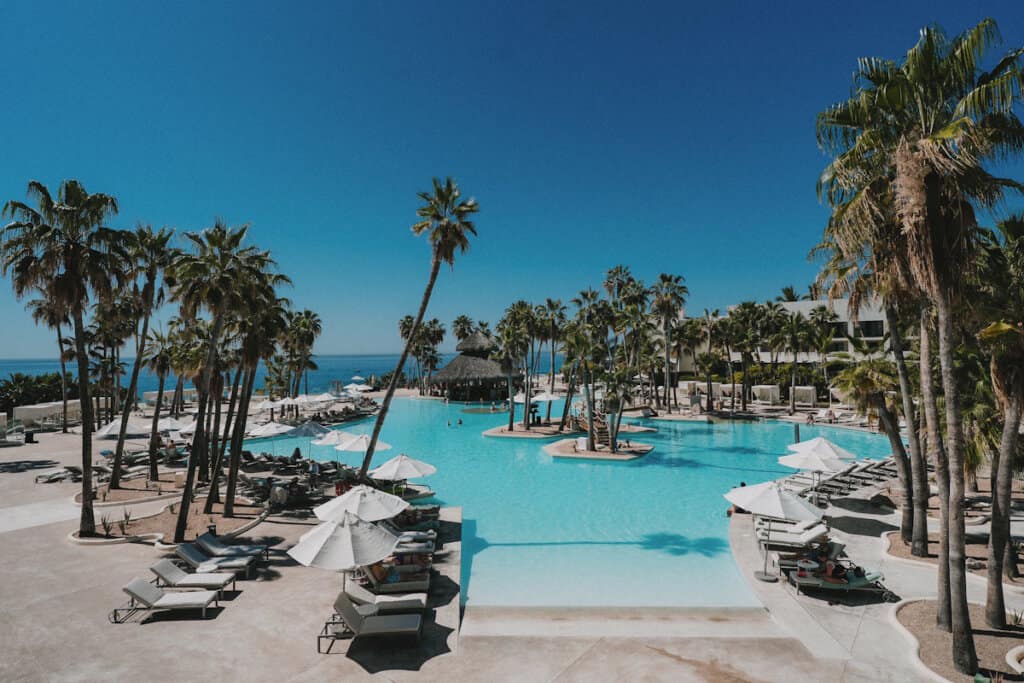
CABO; Photo by @daniel.pressplay

Members Private Club

The Members Private Club offers the most elevated experience, including all VIP Splash benefits along with exclusive access to a private skydeck and lounge with a poolside setting. Additional perks include curated food offerings throughout the day and night, lounge seating, elevated viewing areas for headline performances, an ultra-premium open bar, dedicated restrooms, cocktail service, and expedited entry.

  • 3-Day Members Private Club Passes start at $2,799

Hotel Packages

Hotel packages include two (2) 3-day VIP Splash Passes along with a four-day, three-night stay, roundtrip airport transportation, and shuttle service to and from the festival grounds.

Paradisus Los Cabos will serve as the host resort and festival site, with additional accommodations available at Las Ventanas al Paraíso (A Rosewood Resort), Montage Los Cabos, Dreams Los Cabos, Marquis Los Cabos, and Hilton Los Cabos.

CABO; Photo by @daniel.pressplay

Villa Packages

Villa packages offer all the benefits of hotel packages, along with VIP Splash Passes for up to the villa’s maximum occupancy. Guests will also enjoy private chauffeured transportation, a dedicated villa concierge, and luxury amenities tailored to each property, such as chef and butler service, plus a limited-edition premium arrival gift box.

For more information on hotel and villa packages, visit CountrySplash.com.

Add-Ons & Experiences

Guests can further customize their experience with add-ons available for purchase alongside festival passes or packages. Options include VIP tables and cabanas, Saturday and Sunday morning wellness activities, exclusive Country Splash flight options, and festival after-parties.

Concierge Services

All guests will have access to festival concierge services, offering assistance with booking off-site experiences such as restaurant reservations, golf outings, private yacht charters, fishing excursions, and more, ensuring a seamless and elevated festival experience.
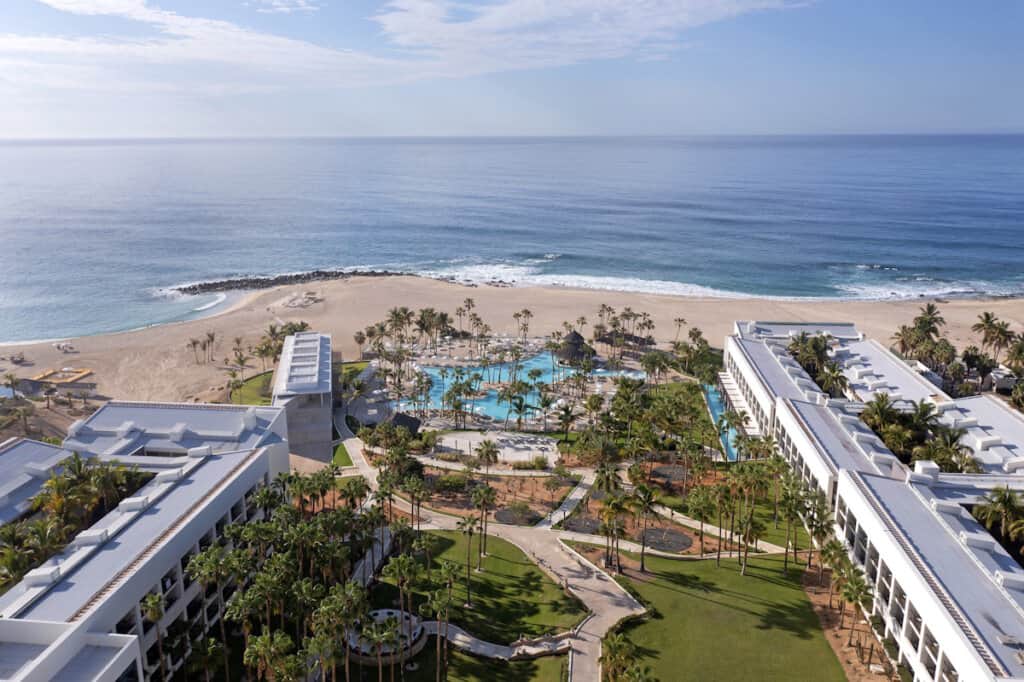
Paradisus Los Cabos; Photo Provided

Where Country Music Meets Luxury Beachfront Escape

During a recent conversation with Country Splash co-founder Robert Fried, he explained that the festival’s main goal is to make every guest feel like a VIP while striking the perfect balance between live music and a luxury travel experience.

“It’s a beachfront destination. Going down to the beach and relaxing on the sand is something that I think is undervalued in just having a destination that you can enjoy yourself at, relax, and also have a fun party experience,” he shared, adding, “I think all of it is equal parts, country music, destination, and the guest experience.”

Fried also noted that the setting allows fans to experience their favorite artists in a much more intimate way.

“One of our slogans is no fields, no fences, no distance stages. And we really want to make sure that everyone who comes feels like they’re up close and personal in an intimate environment where they’re not watching their favorite performer from a screen half a mile away. They’re watching it up close and personal and they’re really getting the full experience of their favorite country artists.”

For more information, visit the official Country Splash website. 

The post Country Splash Unveils Daily Lineup for Labor Day Weekend in Cabo San Lucas appeared first on Country Now.

​Country Now

Categories
Alaska News

Royal Caribbean Janitors Frantically Cleaning Glaciers Before the Start of Cruise Season

A herring on a background of herring with the caption "Fake news from a real town"
Fake news from a real town

Ricardo Mop has been part of the custodial crew at Royal Caribbean for six years, but this spring was his first time working anywhere on the Alaska route.

“I guess you could say I was pretty surprised,” said Mop, pulling down a scarf. “I was used to wiping sunscreen spills off deck chairs and picking up margarita glasses off the lido deck. Now here I am in a parka and ice-climbing gear with a vacuum cleaner.”

Mop and a dozen other janitors from Dystopia of the Seas, a 2,000-foot Royal Caribbean cruise ship, were cleaning the Sawyer Glacier in Tracy Arm fjord before the start of cruise season in Southeast Alaska. Most cruise companies that regularly include glacier viewing in their itineraries contract janitors to spruce up the ice, but only Royal Caribbean has an entire crew dedicated to the task. Geraldine Swiffer, Chief Spick n’ Span Officer aboard Dystopia, stated “Royal Caribbean is dedicated to giving its guests the best possible cruise experience and we are legendary for our ships’ cleanliness. To that end, we also tidy up the glaciers before showing them off to visitors.”

The crews consist of teams of dirt sweepers and vacuumers, high-powered leaf blowers, tanzanite graders, ice-worm exterminators, as well as custom-built four-wheel-drive Zambonis. Driver Brice Scate told reporters that the valley glaciers were usually the dirtiest. “Medial moraines are like dirt-central. Very unsightly. Imagine if you came all the way up here and all the nice white ice was covered in rock and dirt. And all the katabatic winds kicking up silt, rockslides and glacial retreat—it’s a complex janitorial environment.”

When asked how long they were at the glaciers, Ricardo Mop replied, “What? Can’t hear over the cracking sounds. We’re at Sawyer Glacier now, still got Dawes Glacier, the Hubbard, the Mendenhall. It’s a lot of vacuum bags. There’s that cracking sound again, what’s that? A tree falling?”

The post Royal Caribbean Janitors Frantically Cleaning Glaciers Before the Start of Cruise Season appeared first on Chilkat Valley News.

Categories
Alaska News

Museum opens redesigned main gallery

The redesigned main gallery at the Haines Sheldon Museum. Monday, April 27, 2026. (Will Steinfeld/Chilkat Valley News)

The main gallery of the Sheldon Museum has gotten its first overhaul in nearly a decade, and the new look debuts Friday. 

Residents accustomed to the previous gallery exhibit will find a re-arranged space with a higher density of information and objects. Some large centerpieces remain, including a display case of Chilkat blankets and Eldred Rock lighthouse’s  Fresnel lens. But most of the exhibit has not been on display, including a new collection on loan from Excursion Inlet’s cannery museum. 

As for the space itself, the previously open-floor look has been replaced by standing panels arranged with an eye toward a more intentional flow, museum director Brandon Wilks said. 

The new exhibit is the product of a year-and-a-half’s work from lead curator Andrea Nelson and Blythe Carter. 

Nelson, an on-again-off-again museum contributor over the past two decades, said her goal was to “home in on what makes this place different from other places in Southeast Alaska, other places in Lingít territory.”

Nelson focused on the physical topography of the land and the trade routes that ran up corridors into the interior. 

“I felt like (the exhibit) needed some kind of grounding narrative, instead of just peppering the audience with facts about the place,” Nelson said. 

From the gallery entrance, viewers first see a large canoe carved by Wayne Price. The canoe is meant to orient visitors in a historical landscape before highways, where water-based travel was often the quickest and easiest route. 

From there, visitors walk out into the center of the floor, which includes panels on Lingít trade empires, with porcelain originating in China on display. 

“Even people who feel like they know Chilkat Valley history might not realize the extent of Lingít trade, that they had one of the largest trade empires in the Americas,” Wilks said. 

Wilks and Nelson described the museum’s limited space as a challenge in displaying the valley’s historical breadth. 

“Recalling history is a really botched process, no matter how careful you are,” Nelson said. “A story can be told in so many ways from so many different perspectives.” 

Part of Nelson’s approach to that problem, she said, was to let the museum’s collection lead the narrative, “letting the objects speak,” as she put it. At the same time, she added, the approach introduces other challenges. For instance, the fact that the museum’s collection is determined by what can be acquired or donated, not necessarily what has the most historical significance. 

For his part, Wilks said he invites visitors to provide feedback on the history and is leaving open the possibility of adjusting the exhibit in the coming months.  

Alongside older art and archaeological artifacts, the museum will display a significant amount of work from renowned contemporary carvers, like Price and Ed Kasko, as well as a new retrospective on late Chilkat Valley painter Carol Clifton. 

Wilks said the museum has hosted art students in the past year to see the work, including high schoolers participating in this week’s regional Art Fest. 

The Clifton exhibit, curated by Donna Catotti and on display in the museum’s Elisabeth Hakkinen gallery, shows a range of Clifton’s local landscapes and portrait work. Starting Friday, the paintings will be up for silent auction, with 60% of proceeds going to the Clifton family and 40% going to the Haines Sheldon Museum.  

The post Museum opens redesigned main gallery appeared first on Chilkat Valley News.

Categories
Alaska News

Carol Clifton leaves legacy of creativity, quick wit

Barbara Pardee last saw her friend Carol Clifton around August 2025. 

Clifton hadn’t left her Dusty Trails apartment in months. She needed oxygen at that point and was self-conscious about the size of her tank. But once inside Pardee’s car, she didn’t want to go home. As they drove, Clifton pointed out old homes, old stories, old neighbors from 56 years of living in the Chilkat Valley. 

They went out to Mud Bay and passed by John Svenson’s art studio. 

“He saw me and we’re friends. But then he saw Carol and he just came right over,” Pardee said. “She rolled down her window and those two talked for at least 30 minutes. They just talked up a storm. She was just that way with everybody. If you were her friend, you were always her friend.” 

Clifton died Feb. 27 in Juneau after doctors discovered an advanced lung mass following a January fall.  She was 88 years old.  

Clifton and her twin brother were born Aug. 15, 1937, in Los Angeles. She was one of five children born to Finnish immigrants Emil William Hakkila and Frances Lavalle Hakkila. 

After high school, she moved to Fairbanks to work as a waitress in a cafe run by the mother of her childhood best friend, Gail Hay. 

“Alaska had just become a state and it seemed safe enough,” her son, Kim Clifton, said. “So off she went. And I’m sure it was quite the journey in 1959.” 

There, she met her future husband Jerry Clifton, and the couple eventually settled in Haines in 1969. They raised six children: Jerry, Kim, Van, Christine, Kelly, and Ralph. 

Kim said Carol worked at, and loved, being a good mom. With six children, the inevitable fight would break out and she would referee the situation to get everyone to calm down and make peace with one another. 

Clifton was always reaching for positivity, which, when combined with her quick humor, was a powerful tool. “Now I understand it to be something where … it was like a daily practice for her,” he said. 

The family  eventually bought three acres across from Portage Cove where Jerry built a three-story home overlooking the campground. Carol set up an easel in the corner of the house. 

“She was always painting something,” Kim said. “She’d get out her little palette and with all the colors and it was just part of where we were living. Part of the decor you might say.”

Pardee said when she first became aware of Clifton, it was from the paintings on small pans hanging at a local cafe. 

Pardee said it was fun to watch Carol’s artistic talent grow from small gold pans to large murals on the wall at the Captain’s Choice Motel. 

“She really studied it,” Pardee said. “Once she took me into the back bedroom and she had every art magazine and all of her art books. She said, ‘This is my college education right here.’”

Pardee said she will miss the depth that Carol brought to their friendship. Her intellectual curiosity led to constant reinvention. 

“She loved to learn. She never stopped, ever,” Pardee said. “You always admire somebody like that.” 

Clifton’s paintings often started with a trip up the Haines Highway, where she photographed  landscapes and wildlife. Eventually she became known for those photos as well, said longtime friend, Teresa Land. Land met Clifton in 1973 when asked to play piano in her home studio. 

“She thought I was going to play a two-bit thing, but … I just let loose,” playing a concerto by Felix Mendelssohn, Land said. 

It was the beginning of a lifelong friendship built on music, art and gardening.  

Friends say creativity spilled into every corner of Clifton’s life, from towering nasturtiums at her Beach Road home, to handmade Christmas cards, embroidery and carved fishing corks she gifted to family. 

She seemed to find joy in using her talents to make life brighter for others, her son said. And, for many in Haines, that included creations that emerged from her kitchen. 

“She loved making cream puffs and dropping by and surprising folks,” Kim said. “They were always little masterpieces, her cream puffs are just legendary.” 

Over time, Clifton became Haines’ de facto cake maker — something nearly every friend mentioned. Friends described them as  fluffy, textured, highly stylized: they could have flowers, pearls, ribbons, you name it. She also made puff pastries and a special almond bread for Christmas. 

“That stuff that people don’t like to make themselves but they like to eat,” Pardee said.

Alongside all of that creative energy Clifton used humor to connect with her friends, teasing them, making them laugh. 

“She called it loving on them,” Pardee said. “She would tell you the truth and she was not afraid to give you a barb if she thought you needed it.’ 

She also took great joy in telling people about her faith, something that deepened immensely in spring 1981, according to Kim. 

The family spent much of their early time in Haines attending the Presbyterian Church but toward the end of her life, she attended the Haines Christian Center — Assembly of God church. Kim, who is a pastor in the Houston area, said the two bonded over their spirituality. 

“She shared her faith freely with anyone and everyone,” Pardee said. “If you knew Carol Clifton, you knew where she came from, what she believed and what she stood for.” 

In her immediate family Carol was preceded in death by her husband, Jerry, and brothers, Don, Carl and Ralph Hakkila. 

Carol is survived by her six children—Jerry, Kim, Van, Christine (Clifton-Thornton), Kelly and Ralph Clifton — as well as her sister, Pennie Peterson, eight grandchildren and four great grandchildren.

A memorial service will be held July 3, 2026 at 6 p.m. at the Haines Christian Center. 

A retrospective showing of her paintings at the Haines Sheldon Museum with an opening reception is scheduled for Friday, May 1. 

The post Carol Clifton leaves legacy of creativity, quick wit appeared first on Chilkat Valley News.

Categories
Alaska News

Assembly Briefs: ADUs, severance tax, and an extra meeting

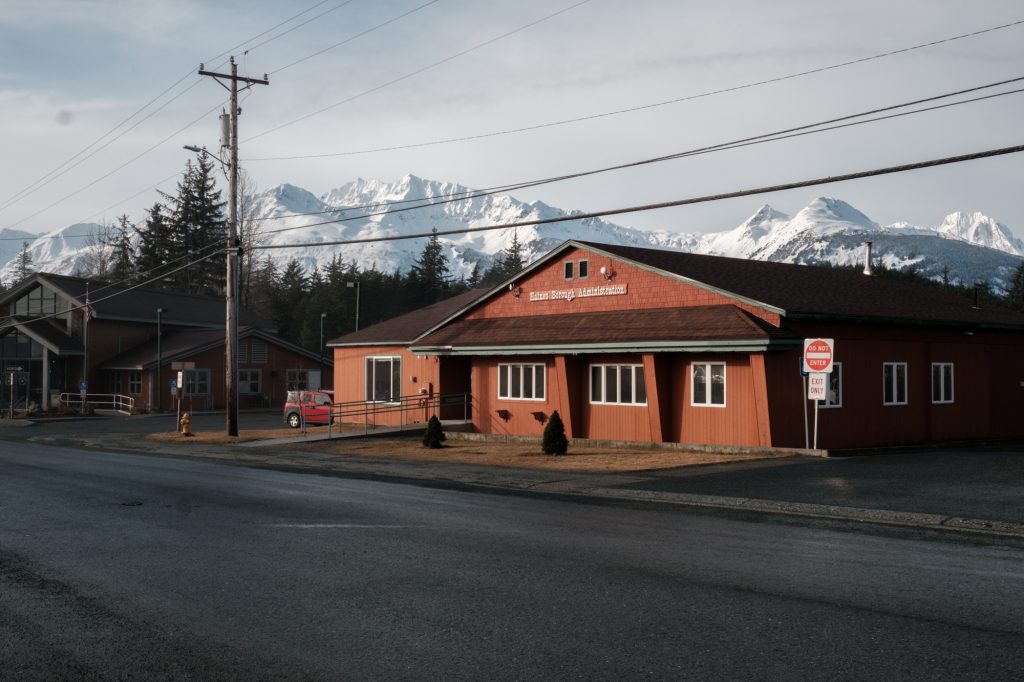
The Haines Borough Administration Building, March 3, 2025. (Will Steinfeld/Chilkat Valley News)

ADUs

After a year of consideration and reconsideration, accessory dwelling units have officially been voted down by the assembly. 

The arguments on each side are well worn at this point, and Tuesday was no different. 

There was some talk of amendments to make the proposal more amenable to skeptical assembly members and residents. 

One was a set of recommendations from the planning commission to increase minimum lot sizes for ADUs in Mud Bay. That failed to get support from assembly members.  

Another possibility came after assembly member Gabe Thomas named a number of changes he wanted to see in the proposal. Thomas’ ideas included aesthetic guidelines, a requirement that the property owner live on the property, and a limitation on use as short-term rental. 

But when asked by mayor Tom Morphet if he wanted to propose any of those suggestions as amendments, Thomas declined. 

After assembly member Kevin Forster went ahead and proposed one of those changes, a requirement that property owners live on the property, Thomas voted against it. 

“I’m not going to vote for this, period, the way it changes zoning,” Thomas said. 

In a final vote on allowing ADUs, Eben Sargent and Forster were the only votes in favor. 

The vote might be the end of ADUs in code for now, but not in practice.

Borough planner Chen Wu said at the meeting ADUs were widespread in the borough, rented out illegally. 

Residents get permits to build structures on their property as sheds or carports — both allowed uses — before later adding kitchen and bathroom facilities and renting them out without borough permission, Wu said. 

Wu said he’s seen evidence of the practice in permit applications, Facebook groups advertising rentals, and in conversations with residents who had previously lived in such structures. 

Planning commissioners this month said they agreed with Wu’s assessment.

Severance Tax 

The assembly agreed unanimously to reintroduce a severance tax ordinance after it failed to pass last meeting. It was a long road to get there. 

The main complication was Sargent asking for a commitment from assembly members that they wait to take a final vote on the proposal until all assembly members were present at a meeting. 

That came after last meeting, where assembly members voted down the ordinance with only four members present. Sargent said he was frustrated by the action given how much time had gone into developing the proposal.

“What I heard last meeting from Gabe (Thomas) was ‘I’m gonna kill it,’ after we asked to postpone,” Sargent said during discussion Tuesday. 

Not everyone was amenable to being asked to make such a commitment, namely Thomas and Smith. “Why wouldn’t we have that agreement for everything?” Smith said. “This is classic projection.” 

The lengthy and loud back and forth ended with middle-ground proposals from Forster and Stickler. Forster proposed a version of the tax structure roughly splitting the difference between the two proposals brought to the meeting: the previously-considered version, from the commerce committee, and a new version from Smith. 

Stickler proposed scheduling the proposal for two public hearings, with two more to follow if necessary. 

The amendments carried unanimously. 

Unfortunately, the discussion on procedural issues didn’t resolve any of the stickier questions about the actual tax structure — a question to be ironed out in coming public hearings. 

In numerous public hearings and committee meetings in the past year, as well as hearings in past assemblies, the severance tax has failed to reach a consensus to pass. 

Still to come

The assembly voted to close its Tuesday meeting at 10:30 p.m., with some of the agenda left for a Wednesday night addendum. Here’s what was bumped over to that meeting:

The cost of playing ball

The borough has received a $34,000 check from telecommunications company GCI for improvements at the Oslund Park baseball fields. 

The payment comes as the company considers applying for a cell-tower project, calling into question whether the borough can ethically accept the donation.

The GCI cell towers have for over a year faced strong opposition from residents.  

Tanani Bay sewer outfall

The assembly will vote whether to authorize a sewer maintenance service area for residents at a Tanani Bay development. 

The development’s sewer outfall is out of compliance with state regulations, and there’s debate over who’s responsible for addressing the issue. Developer Don Turner Jr. says the borough agreed in principle to assume ownership of the sewer system decades ago but never followed through. The borough’s attorney said the borough does not currently own the development’s sewer system. 

What is clear is that residents who have built new houses connected to the outfall want a solution fast, as the sewer issues are preventing them from moving in. 

If the assembly votes to approve the new service area, residents connected to the development’s sewer system who are registered to vote in Haines will then vote on establishing the service area. 

Seasonal sales tax and plastic bag ban

More discussion will come on two familiar topics. The assembly will consider a citizens’ petition to lower the seasonal sales tax rate for coming months in response to high fuel prices and elevated cost of goods downstream of those fuel prices. 

Also up for discussion is re-introduction of legislation to fully ban plastic bags in the borough, such as the ones used at Olerud’s. Identical legislation was voted down last assembly meeting, notable with only four members present, and has been brought back at the start of the legislative process. If introduced, it will need to go through a fresh round of public hearings before being eligible for another vote. 

The post Assembly Briefs: ADUs, severance tax, and an extra meeting appeared first on Chilkat Valley News.

Categories
Alaska News

Borough to pursue encapsulation for Lutak Dock

The Lutak Dock is more than 50 years old, but efforts to repair and improve it have taken decades to come to fruition. (Lex Treinen/Chilkat Valley News)

The assembly has thrown its support behind encapsulation for the Lutak Dock, the design concept most similar to that of previous dock contractor Turnagain Marine. 

The concept calls for building a steel retaining wall to stabilize some of the existing dock face, with the rest of the existing dock demolished. Winning out over two other options, including one floating-dock option that had been favored by some residents, the choice seems all but final; borough consultants from engineering firm Moffatt & Nichol Tuesday warned a decision to change course down the line would be “catastrophic.” 

The assembly nearly-unanimously endorsed the operational benefits of encapsulation, but some questioned whether the concept — described by Moffatt & Nichol as the most expensive — could be built large enough given limited funds. Engineers have not yet said how much of the dock can be encapsulated in budget, just that it will be enough for grocery and fuel deliveries. 

Moffatt & Nichol will now further develop the plans for the encapsulation concept, targeting the end of July to put the concept out for bid. A new firm will then be chosen from the bidding process to finalize engineering and build the dock. 

Tuesday’s meeting saw proponents of the encapsulation design highlight specific advantages: assembly member Cheryl Stickler pointed to easier federal permitting for the concept, and assembly member Gabe Thomas pointed to reduced changes to fuel deliveries over the dock. 

“I don’t like taking that risk of moving the fuel shed. Being innovative costs money,” Thomas said. “If I have to cut (the design) down to half the size but don’t have to move the fuel shed, that’s what I’ll do.” 

Assembly member Mark Smith said he thought other designs were liable to “break faster” and were less safe, which Stickler said was one of her main concerns as well.  Moffatt & Nichol engineer Paul Wallis had pushed back on both of those assessments earlier in the meeting and at the previous planning commission meeting. 

Delta Western president Henry Palmer endorsed the encapsulation option in a letter sent to the assembly just before its meeting on Tuesday. 

Skeptics acknowledged the operational benefits of the encapsulation design but questioned its viability given the project budget — roughly $22 million, including contingency funds. 

The borough last year considered an encapsulation design from Turnagain downsized to fit within the $22 million budget. But ultimately even that was deemed impossible for the money, and a further downsized design likely too small to be “useful.” 

“It’s hard to pick one of these if we’re going to right-size it later,” assembly member Kevin Forster said. “If it shrinks later the level of service changes. I buy that (encapsulation) is probably the superior product, but is it attainable for us for what we’ve got?” 

In some ways, Wallis validated Forster’s concerns. 

“I wrote 15 years ago that encapsulation (for the Lutak Dock) was a great idea, and I still think it’s a great idea,” Wallis said. “But you know what it’s a good idea for? A dock you can fully encapsulate. You can’t afford that.” 

All courses of action at this point involve demolishing much of the existing dock, Wallis said. 

Forster asked for “some kind of assurance” that a still-functional encapsulated dock could be built with the money, but the assurance Forster was looking for doesn’t seem to exist. 

The concept drawings thus far don’t specify how large the final dock will be; Wallis said his firm will “right-size” the dock once the design is further developed. Right-sizing, in theory, will mean a design that is within cost while maintaining the ability to deliver fuel and groceries over the dock — the performance requirements the assembly has asked for. 

Even once Moffatt & Nichol’s work on the project is finished, the resulting design won’t have any solid price-tag associated with it. The margin of error on cost estimates at that point will be 30% below and 50% above, Moffatt & Nichol vice president Shaun McFarlane told assembly members. 

“There is no cost certainty that is achievable at this point,” he said. “Thus is our challenge.” 

What is there is the engineering firm’s assurance that it can be done. 

In many ways, the assembly and the public have ceded control to Moffatt & Nichol — one of the features, benefits even, of the current procurement process, the firm has said. 

In November, McFarlane said the current arrangement, compared to procurement with Turnagain, reduced the number of windows the borough had to directly weigh in on the design process. 

“There’s often an appetite that develops to go back and rethink things that could’ve and should’ve been put to rest at the concept development stage,” he said at the time. “I think given the different ideas that you have with the community, a more straightforward design-build is the best way forward.” 

With that process in place, assembly choice Tuesday was limited to broad concepts, leaving Moffatt & Nichol to handle “scope, scale, and budget” concerns, Wallis said. Despite public debate over those very concerns, they’ve largely been locked in by previous assembly decisions. That includes the call to have Moffatt & Nichol budget and design for grocery and fuel delivery, not larger dock operations. 

When it came time to make a final call, the assembly went 4-2 in favor of encapsulation, with Forster joining Smith, Stickler, and Thomas in the majority. 

Assembly member Eben Sargent voted against it, saying he preferred one of two options: waiting to confirm encapsulation until it was more certain the funding could build a large-enough encapsulated dock, or choosing a cheaper option and using any excess money to add further uplands. 

Assembly member Craig Loomis did not participate in the debate, saying only in comments after that “our grandkids are going to be paying for maintenance on that thing for the next 100 years,” and that the borough “would not get what (it) expects” from the design. 

As for Forster, given his reservations, he said his yes vote didn’t come easily. He remained frustrated by uncertainty over price and viability.

“I don’t think anybody who’s a decision maker sees this from all the perspectives: permitting, dock use, financial, long-term,” he said. “Am I confident in that vote? no. But my intention all along has been to get us to a place where we have a municipal freight dock that will last into the future.”

There was an audible sigh of relief – even some applause – from many in the assembly chambers following the vote. 

That’s not wholly new; there was also applause and relief last year after the assembly agreed to rework its contract with Turnagain, but that deal later fell through. 

If this time is different, more solid indication will come later in the timeline: the project is scheduled to go out for bid in the summer and construction is estimated to be complete late 2029. 

Moffatt & Nichol will stay onboard at least through the project going out to bid, and potentially longer if the firm is retained as advisors during the construction process.

The firm’s project leads, Wallis and McFarlane, have become familiar characters in recent months. The two have been a constant presence on Zoom during borough meetings, Wallis the more front-facing figure, with long monologues and colorful metaphors, including one that has come up a number of times about painting polka-dots on the dock.

In November, harbormaster Henry Pollan had described their firm as “the most equipped in the region” for the job. 

But during debate recently, some residents questioned their leadership, including Fred Gray, who sits on the borough’s Ports and Harbors Advisory Committee and was formerly Delta Western’s Haines terminal manager. 

Gray, citing his experience working hundreds of barges “from Dutch Harbor to Wrangell,” said the engineers had given bad advice to decision makers and the public on the merits of  one of the design concepts, the floating-dock option.

Gray at a Ports and Harbors meeting this month said the engineers were understating the future maintenance costs of a floating dock given that, according to his assessment, it would have structurally vulnerable hinges. 

At the same meeting, Gray also said it was “obvious (Moffatt & Nichol) have never had barge operations, because you wouldn’t say catwalks are standard procedure in the marine industry in Alaska.” 

The non-encapsulation designs were slated to have dock operators working off catwalks more than they do currently, which Gray said was a safety risk. 

Gray attributed those alleged errors to political pressures. Wallis generally said they weren’t errors, but rather that Gray was operating on incorrect information. As evidence of the floating dock’s viability, he pointed to the Moffatt & Nichol-designed floating cruise-ship dock at Icy Strait Point in Hoonah. 

“We’ve heard ‘we’ve never seen it done that way,’” he said. “Well, we may have done things people haven’t seen done that way.”

The post Borough to pursue encapsulation for Lutak Dock appeared first on Chilkat Valley News.

Categories
Alaska News

Alaska lawmakers consider strengthening civics education requirements for high schoolers

A copy of the Alaska Constitution is seen on Thursday, July 28, 2022. (Photo by James Brooks/Alaska Beacon)

A proposal to create civics education requirements for all Alaska high school students is advancing in the Legislature, amid a deepening decline in public trust in government nationwide. 

Senate President Gary Stevens, R-Kodiak, sponsored Senate Bill 23, which would require high school students to take a semester of civics curriculum, pass a civics exam or complete a project-based assessment in order to graduate. The bill is under consideration in House committees after it passed the Senate in March.

Senate President Gary Stevens, R-Kodiak, talks to fellow legislators shortly before the Alaska Senate adjourned for the year on Tuesday, May 20, 2025. (Photo by James Brooks/Alaska Beacon)

Stevens, a longtime legislator and former University of Alaska professor, told House members at a hearing on March 18 the goal is to inspire students to be more engaged with their government and civic affairs. 

“What we hope to do is to rekindle the spirit within our education system to help foster citizenship and voting and community engagement, which is really a fundamental purpose, I think, of public education,” Stevens said.

Civics education is the study of how local, state and federal government works in the constitutional democracy of the United States. That includes our government’s laws and history, the rights of citizens and structures of power. 

Stevens said in an interview Wednesday that he sees expanding civics education as a way to combat growing distrust or misunderstanding of government. 

“Certainly, I think there’s just a lack of understanding. I have talked to a lot of kids who just have no idea that there is a state government and there is a federal government. There’s a difference between the two,” he said, adding that each governments’ roles and responsibilities are important to understand. 

Stevens said Alaska’s students should know that, states are responsible for administering public schools and running elections. “I think kids need to know that, and I think they’re interested in it.”

The bill would direct the Alaska State Board of Education to provide open access, no-cost educational resources to districts covering 14 areas of government, politics and public affairs. Those 14 areas include the founding principles of the United States, the Alaska and U.S. Constitutions, federalism, civil liberties and civil rights, political parties, campaigns and elections, comparative systems of government including by Alaska Native tribes, and others.

If enacted, students would have three options to fulfill the graduation requirement: take and pass a semester-long comparative government and civics course, pass a civics exam — with an option e-take the exam if they did not pass — or opt to complete a civics-related project. 

In the second term of the Trump administration, public distrust and political polarization has continued to decline in the U.S. A survey completed in September by the Pew Research Center found public trust in government at one of the lowest points since 1958 — just 17% of respondents said they trust the federal government to do what is right. That’s down from 22% in 2024, and reported trust in government has not been higher than 30% since 2007. 

Another 2025 survey by the center found that 8 in 10 U.S. adults said that on important issues facing the country, Republican and Democrat voters not only disagree on policy and plans, but also can’t agree on basic facts.

Shawn Healy with iCivics, a nonpartisan advocacy organization founded by former Supreme Court Justice Sandra Day O’Connor to promote civics learning, testified in support of the bill. He said many states across the country are taking steps to bolster civics education.

“Just since 2021, 33 states have adopted at least 51 policies to strengthen civics education, and just this spring, we’re following 218 bills in 40 states, including Senate Bill 23, that seek to strengthen civic education,” he said.

Healy told lawmakers that often people do not understand where to go to solve problems in their communities. He said supporting civics education in schools and dialogue on public issues — across political divides — can help address polarization.

“What we know actually, is when we have conversations across difference, that that’s actually a moderating force, that brings us close together, at least creates an opportunity for us to compromise and develop consensus. And classrooms are great venues for that.” he said. 

Researchers with iCivics found that young people who experience civics education are more likely to vote, go to college, be confident in public speaking and volunteer and work on community issues. He said the growing interest in advancing civics education is an investment in future generations.

“We’re not sentenced to this current predicament in our country, where there’s widespread civic ignorance, there’s deep distrust of institutions and one another, and toxic levels of political polarization,” he said. “States across the country are embracing civic learning as a means of strengthening and sustaining our constitutional democracy.”

Many Alaska school districts, including Cordova, Haines, Kodiak and the Aleutian Region School District reported they already offer civics education, according to a survey conducted by the Alaska Council of School Administrators on the impacts of the bill. 

Other districts, including Nome, Lower Kuskokwim and Petersburg school districts noted that implementation would require costs for training teachers and purchasing curriculum. As a result, the bill was revised to require Alaska Department of Education and Early Development to develop open, no-cost curriculum resources for districts. 

Susan Nedza, superintendent of Hoonah City School District, testified to lawmakers she was initially concerned about the cost and now supports the revised bill. 

“While there is often much debate about the reason schools exist and what schools should teach, it is my opinion that civics education is vitally important in preparing youth for the future as community members and citizens,” she said. “I have in the past been concerned about cost and about tests creating a barrier for school and students. The version before you offers pathways that eliminate my concerns.”

The revised bill now estimates a state cost of $40,000 for educator stipends to support a working group to evaluate the curriculum and education resources for districts to list on the DEED website. It estimates $12,000 for the initial design, printing and shipping of a civic education seal for all high school graduates, and $5,000 each year going forward. 

Stevens has sponsored previous bills to strengthen civics education that were approved by the Senate in 2024 and 2022, but they were unsuccessful in gaining support and stalled before reaching a vote on the House floor. 

Stevens said some of the past opposition was related to a concern the state would be imposing an unfunded mandate for schools, but that is addressed in the current bill, which requires the state to provide with the open, no-cost educational resources. Other concerns were related to what critics called a “high stakes” test requirement to graduate. He said those are addressed by having three options for meeting the requirement in the bill. 

The civics education bill was advanced by the House Education Committee earlier this month and is now referred to the House Finance Committee for consideration. It has not yet been scheduled. 

Civics curriculum in SB 23 would include: 

  • the founding history of the United States, including foundational documents and the principles of government of the United States;
  • federalism, including the role and operations of local, state, and national governments;     
  •  the institutions of the United States government, including the responsibilities of the executive, legislative, and judicial branches;
  • the rights and responsibilities of United States citizenship;
  • civil liberties and civil rights;
  • the Constitution of the State of Alaska and the Constitution of the United States;
  • political parties and interest groups;
  • campaigns and elections;     
  • the United States Congress;
  • domestic policy; 
  • foreign policy;      
  • comparative systems of governments used globally and by Alaska Natives;                                                              
  • international relations; and  
  • major issues facing local, state, and the United States governments.

SUPPORT: YOU MAKE OUR WORK POSSIBLE

Categories
Food

Here’s Who Actually Owns Texas Roadhouse

Texas Roadhouse is officially the most popular restaurant in the United States, but who, exactly owns the company since the founder and CEO passed?

​Food Republic – Restaurants, Reviews, Recipes, Cooking Tips

Categories
Sports Fox

‘All In’ Examines Pato O’Ward, Nolan Siegel And McLaren’s Lofty INDYCAR Goals

How would you respond if your bosses told you to finish the year among the top 10 best in your industry, or look for a new job? Many might fold under pressure, but those are the kind of expectations racing legend Tony Kanaan, Zak Brown and Arrow McLaren outlined for relative INDYCAR newcomer Nolan Siegel. And make no mistake: The pressure to win in INDYCAR — and win for one of the most successful and recognizable teams in motorsports — is gigantic. But Siegel doesn’t have to chase that goal by himself. A deep dive into Arrow McLaren’s INDYCAR team, the latest episode of “All In” — a real-time docuseries from FOX Sports, INDYCAR and Shadow Lion — explores the team’s lofty expectations for drivers Pato O’Ward, Christian Lundgaard and Siegel in the fastest series in the world. “When you’re putting together a three-car lineup, you really want to be P1, P2, P3,” McLaren Racing CEO Zak Brown said in the latest “All In” episode. “So anything short of that is frustrating.” In the fourth episode titled, “The Third Seat,” the series examines Arrow McLaren’s three-car team, how Kanaan and Brown lead execution and how the organization found Siegel, following years-old messy contract litigation over Alex Palou potentially joining the team. Currently the clear INDYCAR driver to beat, Palou almost switched from Chip Ganassi Racing to Arrow McLaren after the 2022 season. Well, depending on who you ask. “You can see the immense talent that he is, so you can see why his team fought so hard to keep him, and you can see why we fought so hard to get him,” Brown explains in “All In.” “The way that landed, I felt it was very important to protect our reputation. It was a difficult, expensive experience for everyone. We move on.” After ending up in court, Palou was ultimately ordered in January to pay McLaren $12 million for breach of contract after he backed out of a deal to switch teams. Instead of Palou, McLaren’s third INDYCAR seat went to Siegel, who’s now in his second full season in the series. “For Zak, having lost the best that there is in the sport, he’s now searching for the guy who can be the next Palou,” INDYCAR on FOX broadcaster Will Buxton explains on “All In.” “Does he have that already in Pato? Does he think he’s found it in Christian?” Or maybe it’s Siegel. And Kanaan — the 2004 INDYCAR champ and the 2013 Indianapolis 500 winner — is pushing hard. “Last year, Nolan had some good races, had some bad races,” INDYCAR on FOX analyst James Hinchcliffe says in the latest episode. “But McLaren shows up to win. And when Tony Kanaan says, ‘Top 10, or you’re out,’ you either rise to the occasion and perform or you don’t.” The newest “All In” episode is set against the backdrop of INDYCAR’s Long Beach race weekend earlier this month, focusing on McLaren’s three drivers. [INDYCAR: ‘All In’ Episode Dives Into Team Penske’s 2026 Rebound] “I wasn’t expecting to be a team principal,” Kanaan says in “All In.” “It was not my intention. I was an INDYCAR driver for 26 years. … Zak put a challenge in front of me to come in as a consultant just to help the drivers on the race weekends, and that developed to coming in full time.” Long Beach is a uniquely challenging track — technically, it’s a street course — as Hinchcliffe recently explained. And unfortunately for McLaren, Palou ended up at the top of the podium. Now, INDYCAR looks ahead to the Indianapolis Motor Speedway road course, followed by the iconic Indy 500, a race win for which many in the sport would argue O’Ward is long overdue. “He’s going to win the Indy 500 and win a championship — or two,” Brown says in “All In.” Featuring INDYCAR drivers and insiders — along with INDYCAR on FOX’s Hinchcliffe, Buxton and Townsend Bell — “All In” examines the biggest challenges, the pressure points and the high-speed competition of racing in the series. But each episode features its own focus on a driver, team or series storyline. Watch “All In” on the INDYCAR On FOX YouTube page, FOXSports.com and the FOX Sports App, FOX One, as well as INDYCAR and INDYCAR on FOX social channels.​Latest Sports News from FOX Sports

Categories
Music

Kid Rock’s Thoughts On David Allan Coe Underline Twisted Legacy

Kid Rock wants fans to know how he understood David Allan Coe but it’s not that simple. Continue reading…​Country Music News – Taste of Country