So, you just bought some strawberries from your local supermarket, and you want make sure they stay fresh: Learn if cinnamon will do the trick.

Mashed – Fast Food, Celebrity Chefs, Grocery, Reviews









So, you just bought some strawberries from your local supermarket, and you want make sure they stay fresh: Learn if cinnamon will do the trick.
Mashed – Fast Food, Celebrity Chefs, Grocery, Reviews

When Benji Madden and Cameron Diaz welcomed their third child, social media users were immedately critical. However, our writer isn’t having it.

Health Digest – Health News, Wellness, Expert Insights
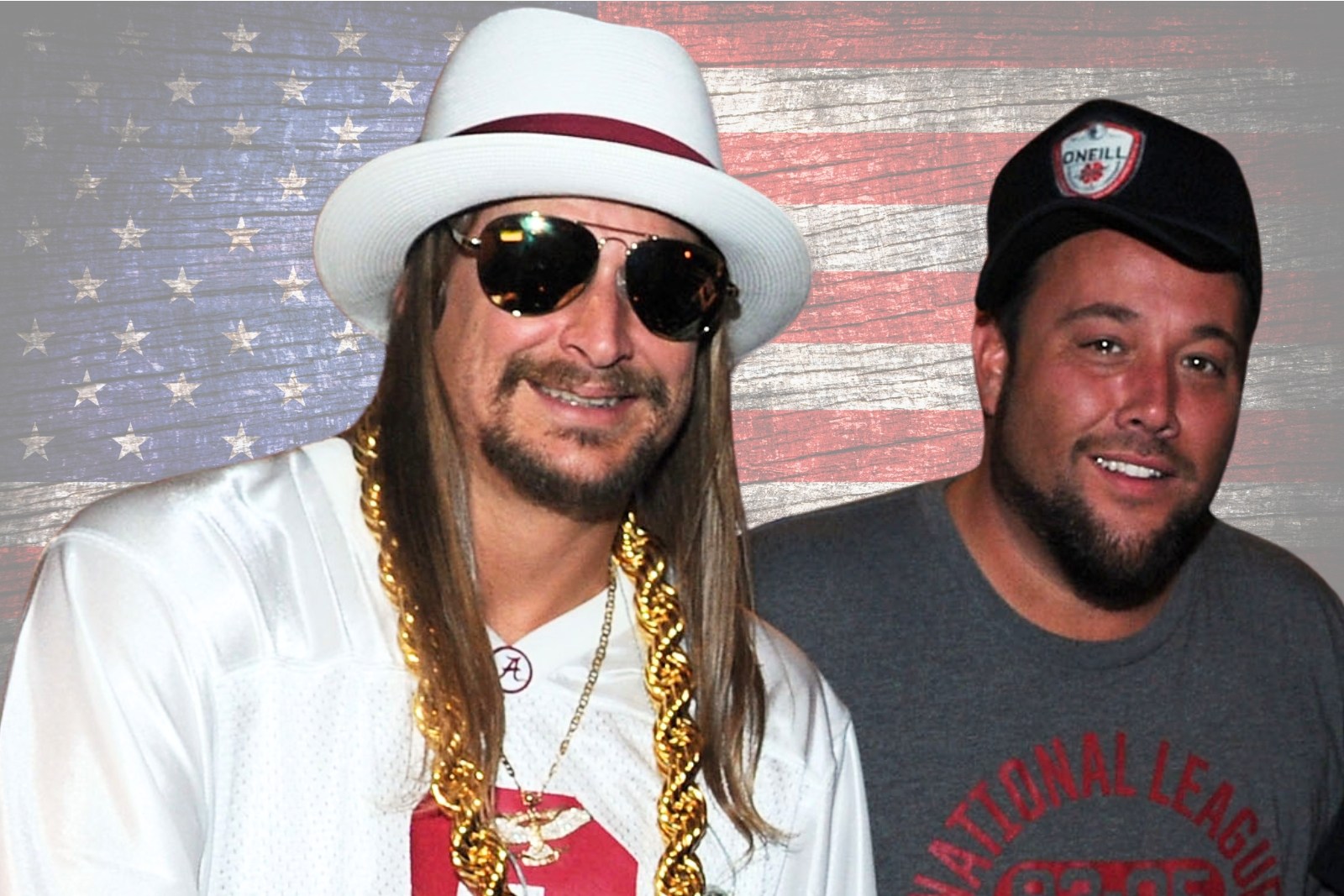
‘I remember everyone in my immediate circle making fun of me because it was so poppy sounding,’ Uncle Kracker says. Continue reading…Country Music News – Taste of Country
‘I remember everyone in my immediate circle making fun of me because it was so poppy sounding,’ Uncle Kracker says. Continue reading…The Boot – Country Music News, Music Videos and Songs

Alaska Attorney General Stephen Cox, with Goov. Mike Dunleavy, speaks at a Feb. 12, 2026, news conference in Anchorage about drug enforcement. (Photo by Yereth Rosen/Alaska Beacon)
State lawmakers raised concerns in a series of legislative hearings while they considered the confirmation of Gov. Mike Dunleavy’s attorney general designee Stephen Cox. At issue were controversial legal actions Cox took in his first eight months in office.

Cox is an attorney and has served in various roles in federal law enforcement, including as U.S. Attorney for the Eastern District of Texas and other roles in the U.S. Departments of Justice and Homeland Security, as well as in private industry in Texas and Alaska, according to his resume. Cox is a member of the Federalist Society, a national conservative and libertarian legal organization. Prior to being appointed, he worked as legal counsel for Bristol Bay Industrial, LLC, a holding company and investment subsidiary of the Bristol Bay Native Corporation, since 2021.
Dunleavy appointed Cox to the Attorney General’s office in August, after Treg Taylor resigned to run for governor. Cox appeared before lawmakers in Senate and House confirmation committees ahead of a joint session to vote on his appointment next week.
While in Alaska’s top legal post, Cox has taken several controversial actions lawmakers questioned. He defended handing over Alaska’s private voter information at the request of the U.S. Department of Justice, which has prompted a lawsuit by civil rights groups. Cox and the Alaska Department of Law also joined over 110 amicus briefs, or “friends of the court briefs” on a wide variety of federal and state cases, including U.S. Supreme Court cases.

Some lawmakers raised concerns that Cox has taken legal positions with amicus briefs that were highly politicized, aligned with the Trump administration and in some cases contrary to Alaska law and unrelated to Alaskans interests.
That included joining Alaska in cases opposing birthright citizenship, supporting a Christian baker declining to bake a cake for a same-sex wedding, and supporting the most recent case where the U.S. Supreme Court ruled that Louisiana’s congressional maps cannot be drawn based on race — a decision critics say effectively limits the Voting Rights Act.
Senate President Gary Stevens, R-Kodiak, asked why Cox had signed Alaska on to challenge birthright citizenship, which the U.S. Supreme Court is scheduled to decide in June. Stevens became emotional, saying it was a fundamental value to provide refuge to people fleeing war and poverty, or seeking better opportunities — like his own ancestors who escaped the Irish famine.
“It just baffles me. How can you or your department or anyone in the administration argue against birthright citizenship? It’s in our Constitution. It’s a moral issue,” Stevens said.

Cox said he believes that birthright citizenship should not be granted for children of those visiting or temporarily in the United States, but only for those who intend to stay.
“My view of the Constitution under the 14th Amendment is that it is not simply birth on the territory, that you also have to be not subject to the foreign jurisdiction, and that there has to be some kind of allegiance,” Cox replied.
“But I also recognize, like everything, I could be wrong,” he added. “But again, we will hear what the US Supreme Court decides on that issue.”
Lawmakers in the Senate Judiciary and State Affairs Committees pressed Cox on his reason for signing on to cases that they said would be contrary to Alaskan’s interests.
Sen. Matt Claman, D-Anchorage, asked if Cox would sign on to cases challenging abortion rights in another state, while Alaska’s Constitution protects the right to abortion within the right to privacy.
“What is your perspective with respect to filing amicus briefs and requests for amicus briefs regarding the right to abortion, that the courts have found is specifically protected in Alaska?” Claman asked.
After several minutes of back and forth, Cox finally said he would have to consider the specific case and consult with the governor.
“I would look hard at the law. I would consult the experts within the Department of Law. I would get their expertise. If I felt that the state of Alaska did not have an interest, I wouldn’t bring it,” he said. “If I thought that there was an interest in that the state of Alaska did have, notwithstanding what the Alaska Supreme Court has ruled in in its prior cases, I would have a conversation with the governor.”
Sen. Bill Wielechowski, D-Anchorage, questioned Cox on why he didn’t oppose a lawsuit before the U.S. Supreme Court that would require mail-in ballots to be received by Election Day, which would be a challenge for many rural Alaska precincts. Alaska law currently allows ballots to be received within 10 days, or 15 days if mailed overseas.

“Why didn’t you stand up for Alaska and say to the court: this is a bad law for Alaska. We want you to strike this down. We want you to say no to this,” Wielechowski said.
Cox defended the decision to submit an amicus brief declaring no support for either party as a “strategic choice.”
“I actually like briefs in support of neither party that are very fact-based. And I think, and again, I realize people might disagree, but I think sometimes they get noticed the most, but that was a strategic choice,” he said.
Lawmakers also questioned the time and resources expended by the Alaska Department of Law on amicus briefs, versus prosecutions and law enforcement in Alaska. “Why would we spend that money when we have this crisis on domestic violence and sexual assault, when that money is better spent on prosecution in state?” Claman asked.
Cox defended the initiative, and the creation of a new Alaska State Solicitor General role focused on multistate litigation in October. He said his goal in office is to pursue more amicus briefs.
“Going forward, I’d like Alaska to take more of a leadership role, offering more of our own briefs, and shaping the arguments directly, as opposed to just being a joiner,” he told lawmakers.
Several senators questioned Cox on his role in the Dunleavy’s administration’s decision to share confidential voter information at the request of the U.S. Department of Justice last year. Critics and plaintiffs in new lawsuit against the state say the sharing of voter information — including full name, birth dates and partial social security numbers — was a violation of voters’ privacy. The state also signed an agreement to remove voters the DOJ flags as ineligible.

Cox said he believed the request was lawful, and noted the federal government had threatened to sue.
“One, was there a statute that authorized disclosure of confidential information? There was, for lawful government purposes,” Cox said. “And two, we took the posture of cooperation. Alaska has a long standing history of cooperating with the U.S. Department (of Justice) Civil Rights Division.”
“And I will be candid with you,” he added. “I have a disposition of cooperating with law enforcement.”
Sen. Scott Kawasaki, D-Fairbanks, pressed Cox on the decision to share the voter information, which he and other lawmakers stressed is protected by Alaska’s Constitution.

“The state also has a constitutional right of privacy. It’s one of the, I think, bedrocks and one of the most important things I think some people recognize in the state constitution,” Kawasaki said. “Why was that not your first thought, is that Alaska has got a constitutional right to privacy. Let’s take a pause before we do anything more that the Department of Justice has requested?”
Cox defended the decision as lawful: “I will concede I am learning about the right to privacy. And the Legislature has far better expertise on the right to privacy,” Cox said. “And the law department’s position is that that statute is a valid statute and that it is not unconstitutional.”
Sen. Jesse Bjorkman, R-Kenai, also questioned the purpose of sharing Alaska’s voter information, which Cox defended as under “lawful government purpose” in the agreement. But Bjorkman raised doubts that the reasons the federal government may deem voters to be ineligible is clear.
“If we are releasing the data for a lawful purpose, but we can’t positively identify what the purpose is, and then judge that according to whether or not it is indeed lawful,” Bjorkman said. “I have a concern about that.”
Cox told lawmakers that while in the Attorney General’s office his priorities include a new “quality of life” initiative working with the municipality of Anchorage to prosecute retail theft and public disorder infractions.
“We’ve cross-designated prosecutors so that state and municipal attorneys can use each other’s authorities. We’re looking at civil tools like abatement actions to go after drug houses or even using data from retailers to identify patterns and repeat offenders,” he said.
Cox said prosecuting violent crime like domestic violence and sexual assault is always the No. 1 priority of the office, and added he’s focused on resource development and consumer protection as well.
“Alaska has some of the strongest consumer protection laws in the country, and I think we can be enforcing them more aggressively,” he said.
“At bottom, this job is about the rule of law, what the law requires, how it is applied and how we exercise the state’s power within those limits. I’ve spent much of my career in law enforcement settings where the stakes are real. Decisions affect liberty, public safety and public trust. That experience shapes how I approach this office,” he said.
Cox is scheduled to appear before the House Judiciary Committee on Monday. A joint session on state appointments was scheduled for May 7 but was postponed and likely will be set for early next week.

Costco also has a variety of frozen desserts to choose from, but one of its selections unfortunately leaves a lot to be desired – namely, any pizzazz.

Food Republic – Restaurants, Reviews, Recipes, Cooking Tips

Here’s the scoop on this famous TV personality’s pro tip from his grandmother that keeps his brisket extra juicy and flavorful from the barbecue to the plate.

Mashed – Fast Food, Celebrity Chefs, Grocery, Reviews

Imagine the moment when a hit song slips through your fingers — that’s how Luke Bryan felt about Jason Aldean’s ‘Big Green Tractor.’ Continue reading…Country Music News – Taste of Country
Imagine the moment when a hit song slips through your fingers — that’s how Luke Bryan felt about Jason Aldean’s ‘Big Green Tractor.’ Continue reading…The Boot – Country Music News, Music Videos and Songs

Two years after young voters swung to the right in 2024, helping return Republicans to unified control of Washington, economic concerns are pushing 18- to 34-year-olds back to the left for the midterms, according to a new national survey of more than 1,000 young Americans.
The poll from nonpartisan outfit Generation Lab, shared exclusively with POLITICO, amounts to a flashing warning sign for Republicans. It shows young Americans planning to vote Democratic in November by a margin of 52 percent to 19 percent. Broken down by party, the data indicates that the GOP has a significant base problem: Just 58 percent of young Republicans say they’ll vote GOP — with nearly a third selecting “neither” or “won’t vote.” By contrast, 85 percent of young Democrats intend to show up for their party at the ballot box.
Just as in 2024, deep discontent with the state of the economy is driving anger at the party in power. Now, 81 percent of young Americans rate U.S. economic conditions as bad or terrible — including 68 percent of Republicans. The younger the age bracket, the more optimism diminishes.
President Donald Trump shoulders most of the blame among respondents, with 41 percent who rate the economy negatively naming him as the top culprit, plus 9 percent who select congressional Republicans. But it’s not just the GOP: Another 31 percent finger corporate greed/large companies. Just 6 percent blame Joe Biden or congressional Democrats.
In many ways, the polling looks like an inverse of Democrats’ struggles in the 2024 cycle, when surveys showed that voters didn’t personally experience the positive economic image projected by the Biden administration.
“We tie this really closely to what people can see and feel and touch in terms of their own personal economic situation,” Cyrus Beschloss, Generation Lab’s founder and CEO, told POLITICO. “Saying that affordability is a ‘line of bullshit’ is definitely not helping — to the extent that young people are clued into that.”
But a caveat remains. “Young people are voting at just obscenely low rates,” Beschloss said. Insofar as this demographic might swing to or from Republicans, “their power’s a lot more concentrated in social force” — as cultural barometers and pace-setters — “than it is electoral force.”
Young people’s social force on GOP politics looks highly negative right now, and not just over concerns about inflation, housing, jobs and gas prices. The survey also finds mass blowback to the U.S.-Israel war with Iran: Seventy-seven percent of young Americans say the U.S. made the wrong decision in striking Iran, and 75 percent say they disapprove or strongly disapprove of Trump’s handling of the military action.
Republicans are keenly aware of voters’ cost-of-living and economic concerns — but they argue that they’re positioned to sway Americans here with a message focused on lower government spending, new tax breaks and blaming Democrats.
The GOP is also addressing bad economic feelings head on by telling voters that they’re cleaning up messes created by Democrats. And following on Trump’s 2024 strategy, Republicans have doubled down on TikTok and other social-media content/branding that reaches young people where they are. Candidates speaking to voters directly works well, the party has found, as does pro-America content that can go viral organically — think Artemis II or the semiquincentennial.
“After years of skyrocketing costs and economic uncertainty under Joe Biden and Democrats, combined with the left’s alienating, out-of-touch rhetoric, young Americans are fed up with empty promises,” said RNC national press secretary Kiersten Pels. “They want real results, and Republicans are speaking directly to them in a way that resonates.”
The strong GOP push could yet pay dividends. “I really … would not discount how much the Republican world has been focused on running a really tight operation in terms of not only getting more young men into their camp but keeping them there,” Beschloss said.
But Democrats have built out their own infrastructure to compete, including creator networks for candidates to work with and new resources devoted to communicating via YouTube, podcasts, social media, influencers and Substacks.
And the economic concerns are a lay-up for Democrats’ midterms messaging writ large, they say, which puts affordability front and center — the kind of laser-focused approach that scored the party big wins in 2025. “Young voters’ top concern is affordability, and we’ve been beating the drum on that issue all cycle,” said DCCC spokesperson Aidan Johnson. “Many don’t think they will ever be able to buy a home, or are graduating out of high school and college with not nearly the same kind of opportunities that their parents had.”
Looking beyond the midterms: The Generation Lab also asked young Americans about the 2028 presidential race — and at this early stage, name recognition seems to be paramount.
Democrats like Kamala Harris and Rep. Alexandria Ocasio-Cortez (D-N.Y.) best, at 31 and 23 percent respectively. Republicans pick Vice President JD Vance (25 percent) and then HHS Secretary Robert F. Kennedy Jr. (13 percent). And tied for seventh overall, at 4 percent each among all young Americans: Jon Stewart, Mark Cuban and Tucker Carlson.
Like this content? Consider signing up for POLITICO’s Playbook PM newsletter.
Politics