Sam’s Club shoppers adore its Member’s Mark pinot grigio wine, but who produces this light, crisp, apple-forward vino? Here’s a likely candidate.

Mashed – Fast Food, Celebrity Chefs, Grocery, Reviews









Sam’s Club shoppers adore its Member’s Mark pinot grigio wine, but who produces this light, crisp, apple-forward vino? Here’s a likely candidate.
Mashed – Fast Food, Celebrity Chefs, Grocery, Reviews

Putting new music into the world can feel unusually personal for Miranda Lambert. She explains what makes album release time so emotional — and why this one felt different. Continue reading…The Boot – Country Music News, Music Videos and Songs
Putting new music into the world can feel unusually personal for Miranda Lambert. She explains what makes album release time so emotional — and why this one felt different. Continue reading…Country Music News – Taste of Country
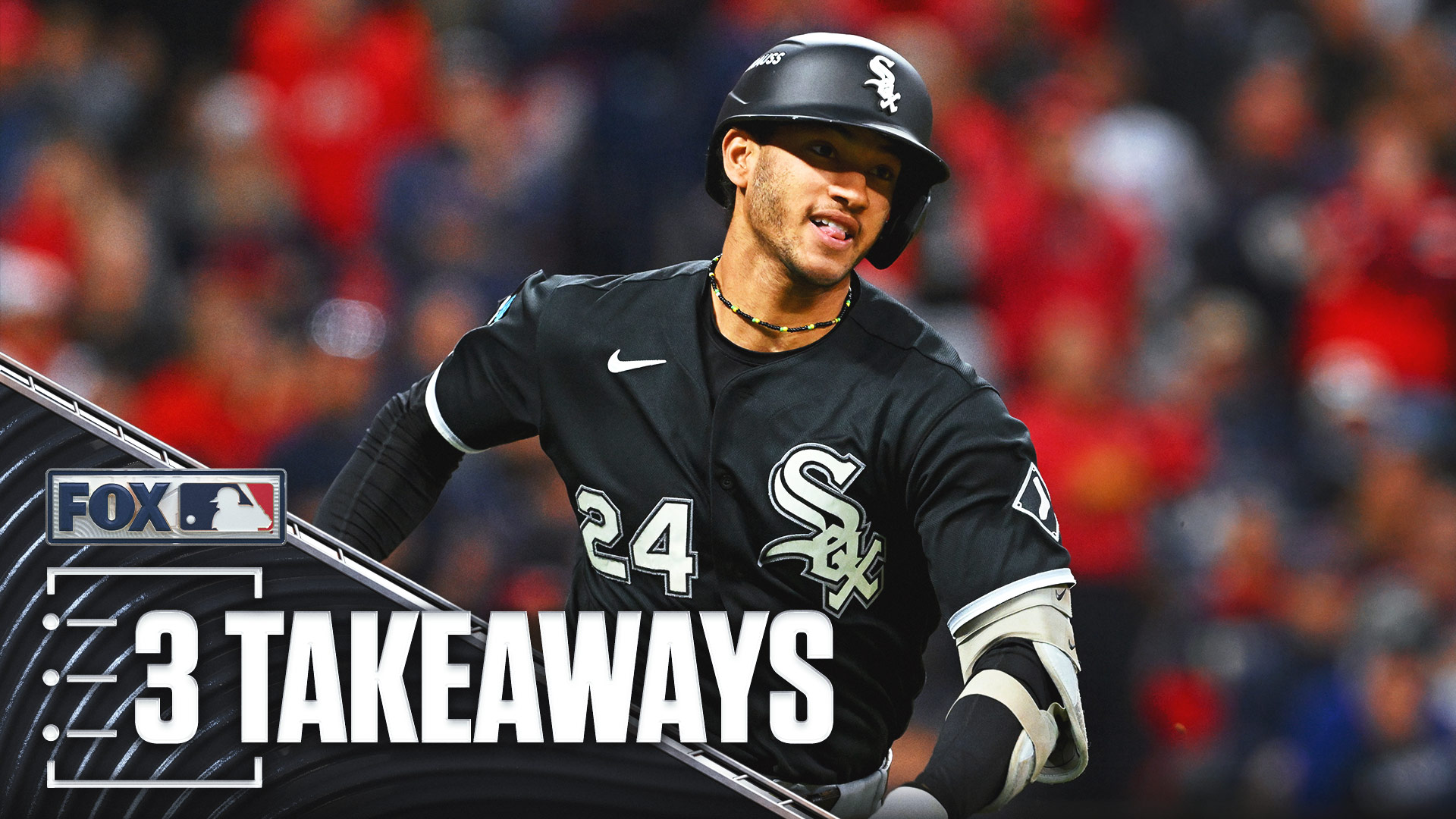
Two years ago, the White Sox set a modern-day record with 121 losses. Last year, they suffered through a third straight 100-loss season. Now, they’re one win away from advancing to the American League Championship Series for the first time since winning the World Series in 2005. Here are my takeaways from Chicago’s 4-3 Game 2 ALDS win over the Guardians: After dropping the first game of the series with their Rookie of the Year and Cy Young contender on the mound, the Guardians took solace in knowing that Gavin Williams would follow Parker Messick in Game 2. Williams, who led the American League in strikeouts this year, did his job. The burly right-hander struck out 11, tied for the second-most ever for a Guardians pitcher in a playoff game behind only Charles Nagy’s 12 strikeouts in the 1996 ALDS, and then watched his lead immediately disappear from the dugout on Monday night. After a leadoff single by White Sox third baseman Miguel Vargas to start the sixth inning, Williams — who threw 99 pitches or more 10 times this season — was pulled at 98 pitches. “We couldn’t have asked anything more from Gavin tonight,” said Guardians manager Stephen Vogt. “He did his job and then some.” After his departure, Chicago’s hitters seemed to breathe a sigh of relief. A Cleveland bullpen that ranked third in the American League in ERA and first in MLB in strikeout rate this season was unable to build a bridge to star closer Cade Smith. Erik Sabrowski, who allowed an RBI double to Colson Montgomery in Cleveland’s Game 1 loss, entered the game and got a groundout before walking a batter, throwing a wild pitch, getting a flyout and then surrendering a go-ahead, two-run, two-out double to rookie Braden Montgomery. Vogt then turned to reliever Hunter Gaddis, who promptly surrendered an RBI single to Chase Meidroth for an extra — and, ultimately, vital — White Sox insurance run. Cleveland seemed to hold the obvious bullpen advantage entering the series, but it hasn’t played out that way. The ball chopped in front of home plate and hovered in the air for what had to feel like hours to White Sox pitcher Sean Newcomb, who corralled the first-inning grounder from Nathaniel Lowe behind the pitcher’s mound, turned, then pulled his throw so far down the line that first baseman Munetaka Murakami couldn’t even muster an effort to stretch for it. This was “Guards Ball” in action, an encapsulation of a Cleveland team that has won three straight division titles despite an offense that routinely ranks among the league’s least powerful. But it’s a dangerous way to live in October, and a Cleveland offense that has mustered just three runs and seven hits through two games could again be its undoing. Game 2 began with White Sox starter Anthony Kay allowing two of the first three Guardians batters to reach, first on a seeing-eye single from Steven Kwan and then on a free pass. Newcomb entered and failed to extinguish the threat. He got behind on Jo Adell, eventually intentionally walking the Guardians outfielder to load the bases, before inducing the grounder he was seeking from Lowe. But his errant throw sailed into right field and allowed two runs to score and gave life to a meager Cleveland offense that was held scoreless in Game 1 and a Guardians home crowd that, to that point in the series, had little reason to get involved. Sean Burke, the bulk pitcher in yet another White Sox bullpen game, would restore order. Burke allowed just one run over 5.1 innings, at one point retiring 13 straight, buying time for the White Sox offense to dig its way out of an early hole. Then Grant Taylor, two days after throwing 42 pitches in a career-high four shutout innings to finish off the Guardians in Game 1, returned for more. Taylor allowed an RBI triple to Jo Adell in the eighth inning then shut the door on the Guardians, recording the final four outs to send the series back to Chicago with his team up 2-0. In Game 1 of the ALDS, Murakami had the two hardest-hit balls of the day. The first was a single. The second was a two-run, 440-foot tank to start the scoring off Messick, who had allowed just three home runs over the final eight starts of his sensational season. In Game 2, Murakami picked up where he left off, starting the scoring again for the White Sox. This time, he turned on a 99.5-mph fastball from Williams, lacing it 106.4 mph off the bat to right field for an RBI single that cut the deficit in half. Murakami has now knocked in at least one run in three of his first four playoff games, an auspicious sign for a White Sox team that needs him to be a difference maker. But the 26-year-old former NPB standout is far from the only young White Sox hitter contributing to Chicago’s stellar start to the postseason. Meidroth, 25, is hitting .400 with five RBI through four playoff games. Colson Montgomery, 24, has homered and doubled. Rookie Braden Montgomery, 23, delivered the big knock on Monday, and 26-year-old All-Star Miguel Vargas has already reached base six times in the ALDS. This is obviously a nightmare scenario for the Guardians, not only because they dropped both games at home but also because they couldn’t secure a win with either of their two best starters. Now, they’ll have to turn to Tanner Bibee, deadline addition Foster Griffin — who had a 3.06 ERA with the Nationals and a 5.19 ERA in nine starts with the Guardians — or a combination of bullpen arms to save their season. If they can’t find a way to generate some offense, though, it won’t matter who’s throwing. “Backs against the wall, this is where this team thrives,” Vogt said. “You don’t want to be in this position. I’m not going to sugarcoat it. We’ve backed ourselves into a corner. We know that. If there’s anything I know about this group of guys, it’s that we love challenges like this. We are going to embrace it.”Latest Sports News from FOX Sports

Fried chicken chains may have rocked the ’90s, but this chain became known for its rotisserie chicken instead. Unfortunately, all U.S. locations closed in 2011.

Mashed – Fast Food, Celebrity Chefs, Grocery, Reviews

A high-voltage power line is seen on Sept. 4, 2018, in Alaska. (James Brooks photo/Alaska Beacon)
The U.S. Department of Energy said on Monday that it has approved $150 million to partially fund a second electrical intertie between Southcentral Alaska and the Interior.
When built, the Beluga-Healy Transmission Project would result in a redundant power link between Fairbanks and Anchorage, increasing the ability of power companies to use the cheapest electricity possible, even if it’s coming from the opposite end of the railbelt.
Construction isn’t expected until after 2030.
The project is expected to cost $418 million altogether, with the new federal money likely going toward engineering, planning and permitting, said Curtis Thayer, executive director of the Alaska Energy Authority.
The remaining $268 million could come from other federal grants, the state, or even AEA itself, through loans.
AEA has been planning the second intertie for almost five years as part of a broader campaign of electrical upgrades across the state but didn’t intend to go ahead until other parts of that campaign — including high-voltage links to support a newly renovated Bradley Lake hydroelectric project — came online.
On Monday, Thayer said the announcement came as a surprise. He had heard last week that the state was in the running for a large grant through a Department of Energy program intended to benefit defense readiness, but he didn’t know until Monday that AEA had won.
Alaska’s existing intertie was built in the 1980s and is used primarily for shipping lower-cost hydropower and natural gas power north to Fairbanks. In recent years, it has also been used to ship coal-fired power south to Anchorage amid natural gas shortages.
Adding a second intertie increases the amount of power that can flow north or south, something that could encourage the development of wind or solar power plants that could provide cheaper power, albeit intermittently.
A second link also means that when the first intertie is upgraded and replaced — something intended in a separate project — power will continue to flow across the railbelt.
Monday’s grant comes from the Defense Production Act and $1 billion approved by Congress and President Donald Trump for energy-related projects deemed critical to national security.
Most of Alaska’s military bases use energy that flows through the intertie, and the state’s Congressional delegation emphasized that fact as it lobbied for federal funding.
On Monday, the three members of the delegation — Rep. Nick Begich III and Sens. Lisa Murkowski and Dan Sullivan, all Republicans — issued statements in support of the new grant.
Sullivan and Begich are running for re-election this year, and on Monday, Vice President J.D. Vance was scheduled to travel to Fairbanks in order to campaign for both men, as well as other Republicans seeking office in November’s general election. According to Reuters, Vance was expected to speak about the grant during a rally at Fairbanks International Airport.
AI safety groups aren’t buying OpenAI CEO Sam Altman’s shifting stance on political spending in the midterms.
They’re wary of his concession that campaign cash from industry-aligned groups, like the OpenAI-aligned Leading the Future super PAC, may have inadvertently backfired. Instead, they’re pushing for stronger commitments to downsize the flood of money — and for candidates to reject any support from pro-AI groups.
“I won’t believe that they are actually changing their strategy, or their goals I should say, unless and until they do,” said Democratic New York assemblymember Alex Bores, who emerged as a key voice among AI regulation advocates after Leading the Future and other groups spent $8 million to tank his House campaign. He launched a $30 million effort to unify Democrats on AI policy last month.
Altman’s stark acknowledgement to POLITICO follows a New York Times report that revealed OpenAI President Greg Brockman backed out of injecting more cash into Leading the Future earlier this summer, calling the super PAC’s efforts a “distraction” from the company’s mission. The pause is notable as Americans grow increasingly anxious about the risks the technology poses, and lawmakers scramble to figure out how to approach the emerging tech.
Still, some critics are not taking Altman’s concession or Brockman’s pullback as a sign of a fundamental change in the industry’s campaign strategy — at least not yet.
“What I read it as is they are no longer — or Greg Brockman in particular is not — going to fund Leading the Future,” said Bores. “Does that mean that the industry is not going to spend hundreds of millions of dollars trying to influence policy and get benefits on their way? No.”
Bores insisted that candidates should think twice before accepting financial support from Leading the Future specifically: “An elected official of either party taking money from Leading the Future should be viewed with incredible suspect.”
Guardrails Alliance political director Charlie Blaettler agreed, saying OpenAI leadership deciding to distance themselves from Leading the Future should be the final straw for Democrats backed by the group.
“If it’s too toxic for Sam Altman and Greg Brockman, why are Democrats still taking their money?” he said.
Leading the Future and rival super PAC network Public First — which advocates for AI regulation and is largely funded by OpenAI competitor Anthropic — together spent over $70 million through super PACs this cycle, according to FEC data.
Other pro-regulation advocates have jumped in with their own political spending, with groups like the Guardrails Alliance — a nonprofit and super PAC that launched in June — raising $5 million and spending hundreds of thousands of dollars to support Bores. Some of Guardrails Alliance’s money came from OpenAI employees pushing back against Leading the Future, which is funded in large part by OpenAI president Brockman, his wife Anna, early OpenAI investors Marc Andreessen and Ben Horowitz, and their venture capital firm a16z. They have contributed a combined $75 million to Leading the Future.
Leading the Future and a16z declined to comment.
Some Democrats who were backed in their primaries by Leading the Future — like Reps. Ritchie Torres and Joe Morelle of New York and Jared Moskowitz of Florida — declined to say whether they would disavow the Leading the Future cash that boosted them in their races.
“An outside AI PAC spent money in the 4th district during the primary, but they didn’t donate directly to my campaign,” Rep. Val Hoyle (D-Ore.), who was backed by a nearly $300,000 investment from Leading the Future, said in a statement to POLITICO.
She did not address whether she would disavow the group and its spending: “I’ve been working with labor leaders and advocates to put workers first when it comes to AI. We need clear federal guardrails to protect workers, safeguard our planet, prevent utility rate spikes and give consumers a voice.”
Even if candidates decide to further distance themselves from the industry’s spending, some pro-guardrails advocates said the onus still lies with figures like Altman to put a stop to — or significantly decrease — the influx of money altogether.
“[Altman was] basically saying, ‘These are the rules of the game, and I can’t really change them, and it’s not in my job description,’” said Brendan Steinhauser, who leads AI safety group The Alliance for Secure AI Action. “Of course he’s saying that, but they could do a unilateral disarmament or encourage the other labs to stop giving, and maybe it’d be just like pacing the frontier — maybe people could pace political giving.”
Former Democratic Rep. Brad Carson, who co-founded Public First, said he would be open to engaging in talks with Leading the Future about pacing or scaling back the industry’s political spending — but only if so-called AI “accelerationists” are serious about backing off. He called out Andreessen and Horowitz who have emerged as the biggest known spenders in this year’s midterm elections and were early investors in OpenAI.
“As long as these accelerationists have a desire to spend tens and tens, if not hundreds of millions of dollars, there is probably a need for a Public First,” said Carson, who also leads the nonprofit group Americans for Responsible Innovation. “So even if Brockman drops out, Andreessen and Horowitz can just drop another 50 million if they felt like it, and I wouldn’t want to be disarmed against that.”
Brendan Bordelon contributed to this report.
Politics
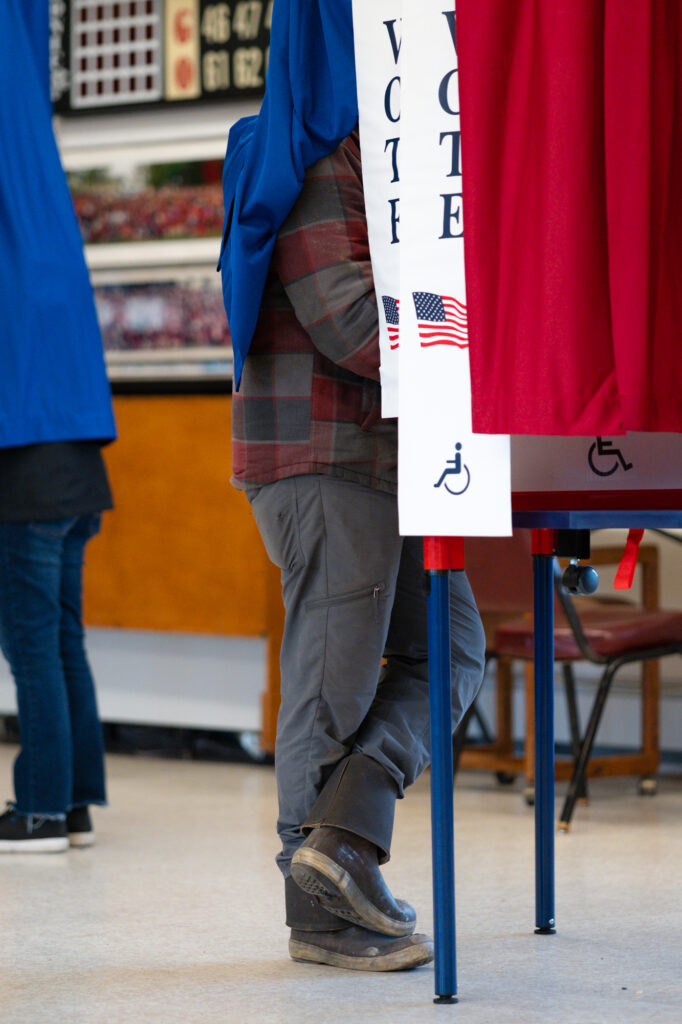
Nearly 380 people voted in-person at the borough office in advance of Tuesday’s municipal election day.
Polls will open at 7 a.m. on Tuesday and close by 8 p.m. People can vote in person in two locations. For those who live in Haines #1 which encompasses the former city limits of Haines and areas to the south and east, the polling place is at the Alaska Native Brotherhood/Alaska Native Sisterhood hall at the corner of…

Some restaurants are less defined by a specific cuisine and more by the creative expression of the people behind the food. This Portland spot is one example.

Mashed – Fast Food, Celebrity Chefs, Grocery, Reviews

Amid the revelry inside the bowels of Petco Park last Wednesday after their wild-card sweep, Padres stars Manny Machado and Jackson Merrill stood in the middle of their clubhouse shirtless with sunglasses covering their face, the only obstacle standing between the Budweiser bottles pouring all around them and the burn in their eyes. From the side of the room, shortstop Xander Bogaerts surveyed the scene, unpacking everything that had just transpired during the Padres’ decisive victory over the Cubs. The Cubs entered the series with the best offense in baseball and the presumptive National League MVP. They ended it with just one run scored, stifled by Padres starter Michael King in Game 1 and a cavalcade of San Diego bullpen standouts in Game 2 and smothered by a crowd of more than 47,000 towel-waving fans each night. “It had a real impact,” Padres president of baseball operations A.J. Preller told me. “You can feel our players raising their level up, and their focus and intensity up, just by feeling the crowd’s intensity.” This is why the Padres, who now face a daunting 2-0 deficit in the National League Division Series and needing three straight wins to keep their season alive, can’t be counted out as they return home with the odds stacked against them. In the wild-card series, even the veteran Padres players felt their Petco Park advantage had gone to places previously unseen. Machado is a 15-year MLB veteran who has played in 55 career playoff games and has been in San Diego since 2019. This is his fifth playoff run with the Padres, a stretch that has included multiple battles against the rival Dodgers. And yet what he experienced last week against the Cubs — in front of 47,084 rowdy fans in Game 1 and another 47,513 raucous fans in Game 2 — stood out from the past. “Playing here these last two days, I’ve never felt anything like it,” Machado told me after sealing the sweep. “I never have.” It helped that the home team gave its fans immediate reasons to ignite both nights. Game 1 began with a three-pitch strikeout of Cubs center fielder Pete Crow-Armstrong in the top of the first inning, followed by a first-pitch home run from Padres outfielder Fernando Tatis Jr. to start the bottom of the frame. Eight runs from the San Diego offense instantly had San Diego’s Gaslamp Quarter celebrating. The home lineup didn’t explode quite the same way one night later, but another strikeout of Crow-Armstrong — this one complete with a failed ABS challenge — to begin the evening again turned up the decibels. Then, with the crowd chanting “Ho-ly Sheets,” pinch-hitter Gavin Sheets delivered the decisive blow with a two-run shot. “To get in front of these fans — and I think it’s the best fanbase in baseball, the best ballpark — they brought it,” Sheets said. “Obviously, we fed off of it.” The Sheets hit reminded Bogaerts of the San Diego offense and role players from their 2024 run, a time when many — including the eventual champion Dodgers — considered the Padres one of MLB’s top title contenders. A similar energy, arguably an even more electric one, filled Petco Park last week. At one point, Bogaerts recalled peeking over at the Cubs’ dugout. He thought he saw a team visibly shaken by the surroundings. “I might be wrong,” Bogaerts told me, “but I felt like they were like, ‘Damn, this is a tough place to play.’ They probably won’t admit it, but seeing some of the faces over there, and the yellow flags — it gets loud with the flags — it can be intimidating for the other side.” With the Padres suddenly facing elimination, they will need it to be. “Definitely a task, unfortunately, down 2-0,” Machado said. “Not the ideal position you want to be in. But these boys, this group, we’ve been up against the wall all year. A lot of people didn’t think we would be in this position to begin with, and here we are.” On July 23, the Padres were 50-53, counted out as contenders, left for dead with just 7.4% odds to make the postseason. Their offense was among the worst in the sport, their starting rotation not playoff caliber. They were in third place in the National League West, 15 games back of the Dodgers, four games back of the Diamondbacks and four games back in the wild-card race. And then something magical happened. They won eight of their next nine games to convince their front office to buy at the deadline and finished the year with MLB’s best record over the season’s final 60 games, sparked by an offense that transformed into one of baseball’s best. At home, they were virtually unstoppable. In 30 games at Petco Park after the break, they went 24-6. Including the wild-card series, they’re 53-30 at home this year. Now, their toughest test awaits following two brutal losses in Milwaukee, one in which a potential go-ahead home run ricocheted off a roof cable and another in which the most dominant closer in baseball was unable to hold a lead and even the series. Only 10 MLB teams have ever come back from a 2-0 deficit in a best-of-five format. The 2017 Yankees were in the same boat as the Padres are now. They lost each of their first two games on the road, then stormed back with three straight victories, in part by suffocating the opposing offense back at home. That is now the Padres’ formula, as they try to keep the party alive with a team they feel is as equipped as any to make a deep run. “Since I’ve been here, we’ve been to the playoffs four times,” Padres pitching coach Ruben Niebla told me after the wild-card sweep. “It feels like, for the first time, we’re actually all jelling — offense, defense, bullpen, starting pitching. Everything’s kind of jelling. This is the first time I feel like, ‘Damn, we really do have a complete team right now.’” It looked that way throughout the last two months for the Padres, who displayed their resiliency by rewriting the final chapters of a season that once seemed cooked. As the NLDS shifts to San Diego, can they do it again? “We can,” Machado said Monday. “And we’re going to do it again.”Latest Sports News from FOX Sports