Nadav is tired, frustrated and haunted, yet he smiles when we meet. For 690 days, he has been waiting for the world to change, and he’s still waiting, and hoping.The Latest News from the UK and Around the World | Sky News
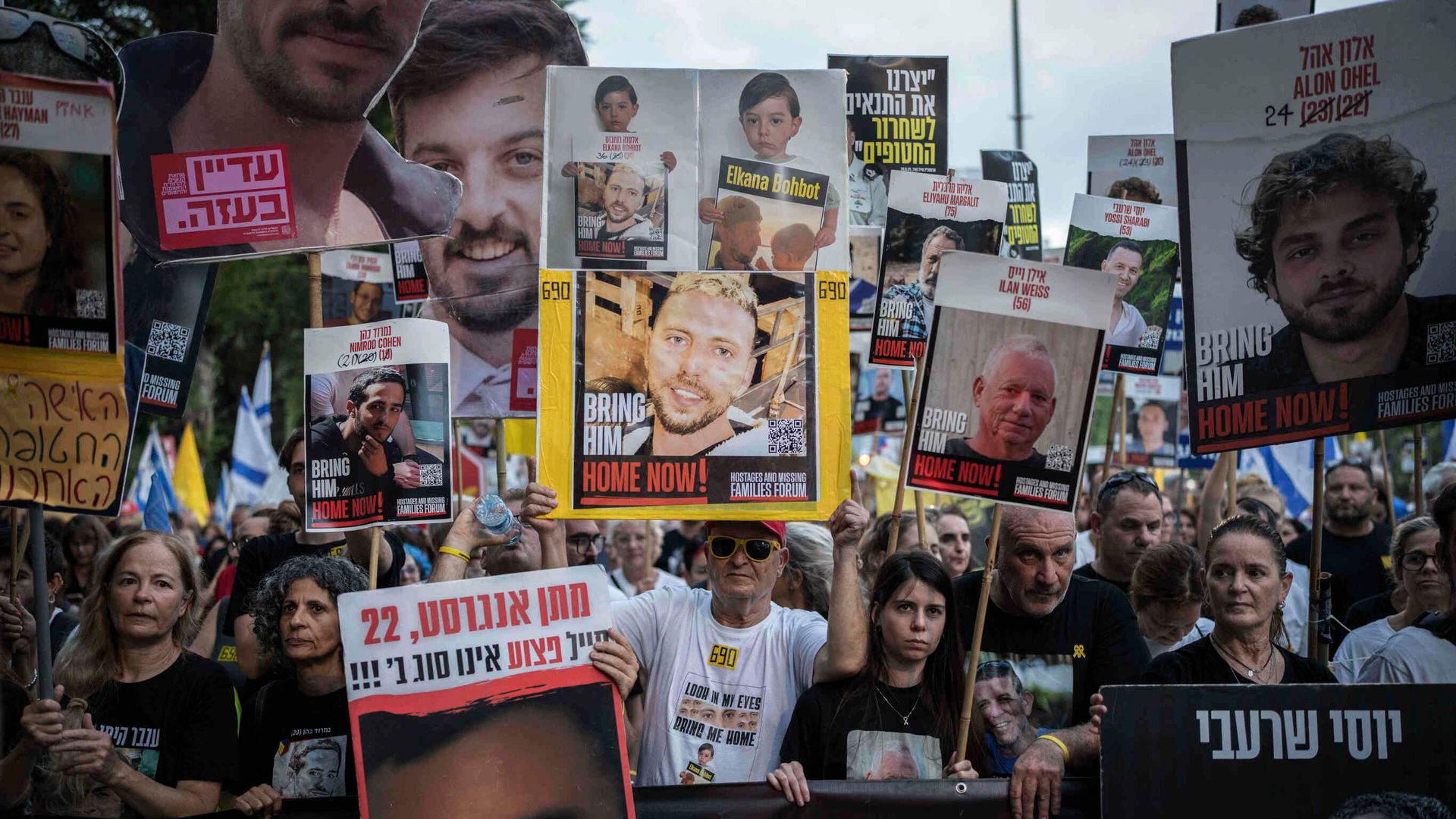









Nadav is tired, frustrated and haunted, yet he smiles when we meet. For 690 days, he has been waiting for the world to change, and he’s still waiting, and hoping.The Latest News from the UK and Around the World | Sky News

SpaceX has successfully launched its biggest ever rocket, named Starship, from Texas after a year of mishaps.The Latest News from the UK and Around the World | Sky News

“Our world has fallen apart, and we want justice,” says Nehal, her eyes welling up.The Latest News from the UK and Around the World | Sky News

More than six million new cancer cases could be diagnosed in England between now and 2040, according to leading charities.The Latest News from the UK and Around the World | Sky News
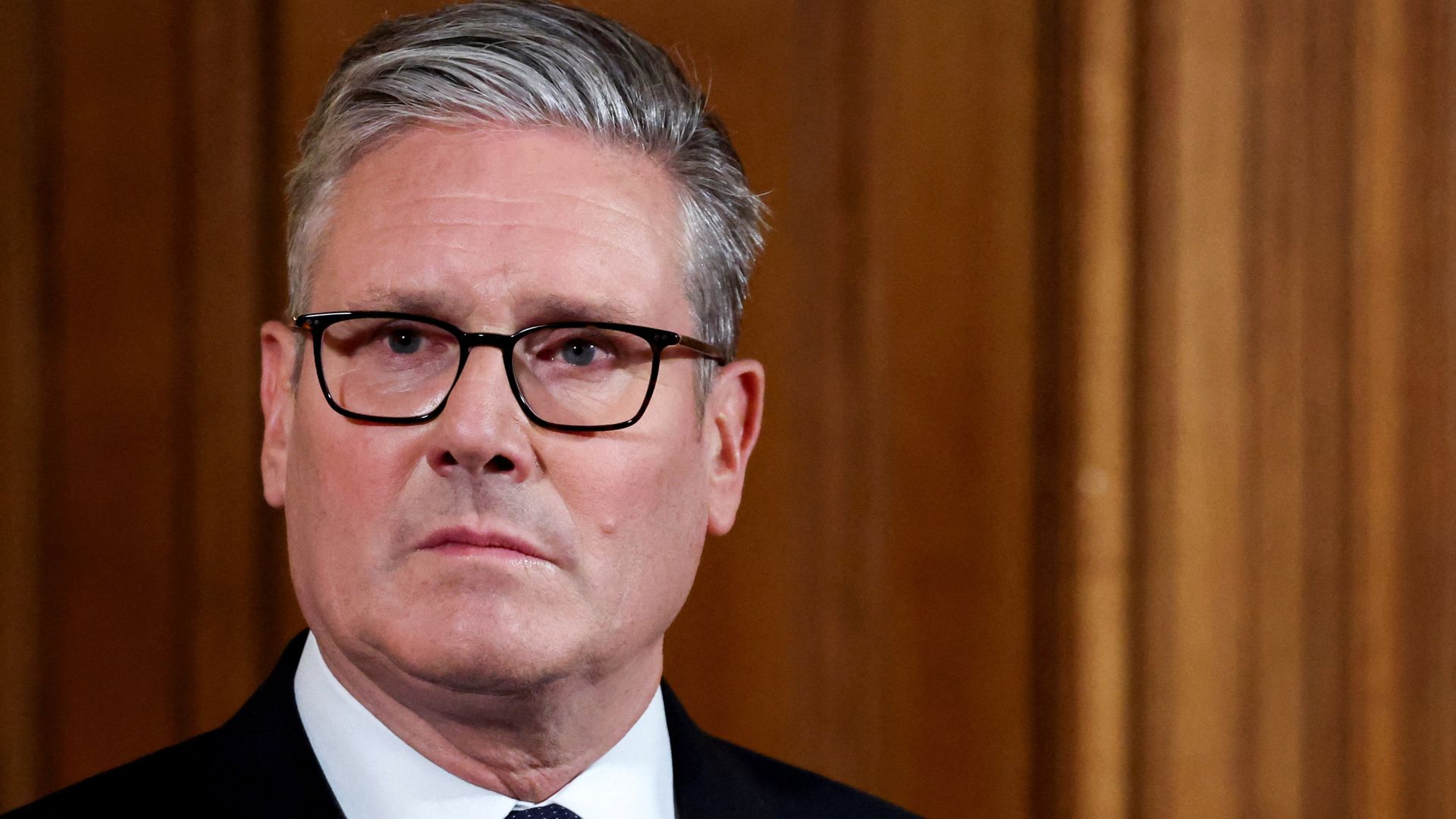
Labour has sunk to its lowest approval rating for this parliament, according to a fresh YouGov poll for Sky News.The Latest News from the UK and Around the World | Sky News

NOTN- A community panel will gather today at Centennial Hall to discuss sweeping federal health care changes that could significantly affect Alaskans’ access to coverage.
The event, hosted by AK Advocates, will run from 5:30 to 7:30 p.m. and will focus on the impact of recent federal legislation on Medicaid, Medicare, and the Affordable Care Act’s Health Insurance Marketplace.
Medicaid is a state and federal partnership that provides health care to people who do not have the income to purchase their own health insurance.
Panelists said Alaska faces unique challenges because of its high costs and limited workforce. The new federal law requires Medicaid eligibility checks every six months instead of annually, adds work requirements for recipients, and lets temporary premium tax credits for Marketplace plans expire at the end of 2025.
“We are a very expensive state to provide healthcare in, said Kim Champney, executive director of the Alaska Association on Developmental Disabilities, “you have to travel to see specialists, workforce is very limited, so our state has really struggled, I think, to keep up with the cost of Medicaid.”
In Alaska, where the Division of Public Assistance is still struggling with post-pandemic backlogs in food stamp and Medicaid processing, officials warn the added workload could further strain the system.
“These policy changes are going to result in fewer people having health insurance,” said Teri Tibbett, the panel’s coordinator and moderator, “So what are we as a community, what are we going to do when we have so many people that are going to be uninsured, the people who are going to not have Medicaid anymore, the people that are not going to have health insurance through the Marketplace? What are we going to do as a community to help those folks get their health care?”
Anton Rieselbach, a program associate with the Juneau Economic Development Council, warned that ending the expanded tax credits could cause Marketplace premiums to expand. “The big takeaway here is that a lot of individuals are going to see their monthly premium costs balloon significantly, especially those individuals who fall in their income level above 400% of the federal poverty line, essentially, in 2021 the eligibility for premium tax credits was expanded to higher income earners, and that is going away. So a lot of individuals are going to be seeing their premiums balloon by over $1,000 per month, potentially, which is going to have devastating effects on the health care.”
Panelists said they hope the discussion will help Alaskans understand the changes, prepare for rising costs, and organize advocacy efforts. “The bill has passed, we can’t stop that,” Champney said. “Now we can really influence implementation. And so I think talking through that as a community, how do we partner and collaborate and advocate so that we make sure people get what they need.”
The panel is free and open to the public.

George Orwell’s dystopian novels “Animal Farm” and “1984” have remained popular in the U.S. ever since their initial publication in the 1940s.
What’s less well known is that in the years before the publication of “Animal Farm” and “1984,” Orwell’s writing often focused primarily on other themes including work, poverty, anti-imperialism and democratic socialism.
In fact, Orwell remained a committed democratic socialist until his death in 1950.
“Animal Farm” tells the tale of a group of farm animals who take ownership of their farm from their human master by means of rebellion, but who eventually end up re-enslaved by the farm’s pigs. “1984” tells the story of one man’s failed attempt to resist totalitarian rule in a hypothetical future dictatorship set in Orwell’s home country of England.
Part of these books’ initial appeal came from their critiques of Soviet communism as the U.S. was entering the Cold War. Part of why the books seem to have remained popular are their anti-totalitarian and pro-freedom messages, which have been praised by people across the U.S. political spectrum.
Orwell, who died of tuberculosis at age 46, is a writer famous for the ideas that preoccupied him in the final years of his life. His journey to those ideas via his thinking about work, poverty and democratic socialism, among other themes, may surprise those familiar with only his dystopian fiction.
Orwell’s democratic socialism may surprise some Americans for at least two reasons.
First, when many Americans talk about politics, they often treat communism and socialism as interchangeable terms. How could Orwell, the great satirist of Soviet communism, have been a socialist?
The answer is that communism and socialism are not synonymous.

Orwell denied that Soviet communism was a form of socialism. Instead, he saw Soviet communism as totalitarianism merely masquerading as socialism.
Orwell claimed in his 1937 book, “The Road to Wigan Pier,” that “Socialism means justice and common decency” and a commitment to “the overthrow of tyranny.” Elsewhere in the same book, he maligned communism’s anti-democratic behavior as like “sawing off the branch you are sitting on.”
A second reason that Orwell’s commitment to democratic socialism may surprise some is because in the U.S., democratic socialism is often associated with the nation’s most left-leaning political figures, such as Sen. Bernie Sanders, Rep. Alexandria Ocasio-Cortez, and New York City mayoral candidate Zohran Mamdani. And Orwell is often not viewed in popular imagination as a political progressive.
Yet, by American standards, Orwell was very politically progressive. He argued in “The Lion and the Unicorn” that his home country of England ought to nationalize mines, railways, banks and major industries. He also argued for limits on income inequality. Some of these policies run to the left of even most U.S. democratic socialists.
For Orwell, such left-leaning economic policies were not only compatible with, but required, a strong commitment to the central pillars of democracy, such as intellectual freedom, free speech, a free press and genuine rule by the people.
I think the best way to understand how these aspects of Orwell’s political views came together is to look at the evolution of his writing.
Two of the most important themes in Orwell’s first decade as a professional writer, the 1930s, are work and poverty.
These are what he focused on most in his first book, the autobiographical “Down and Out in Paris and London,” published in 1933. There he recounts his experiences living among the poor and unemployed in France and England in the late 1920s and early 1930s.
The book is full of pithy insights, such as “poverty frees people from ordinary standards of behavior, just as money frees people from work,” and “the average millionaire is only the average dishwasher dressed in a new suit.”
The latter quote highlights one of the key ethical and political messages of “Down and Out”: It is primarily social and political circumstances, and not moral character, that separates the rich from the poor.
Another key theme in “Down and Out” is that without a certain amount of leisure, people are incapable of doing certain kinds of thinking.
For example, Orwell argued that the reason the kitchen staff in French restaurants had not gone on strike or formed a union was because “they do not think, because they have no leisure for it; their life has made slaves of them.”
Orwell blamed the owners of such establishments for exploiting their workers. As he saw it, at most upscale restaurants “the staff work more and the customers pay more” and “no one benefits except the proprietor.”
In multiple novels and works of nonfiction in the 1930s, Orwell continued to explore the idea that social and political circumstances robbed people of the time they needed to engage in tasks like serious thinking and writing.
One of Orwell’s earliest and most enduring political commitments was anti-imperialism – opposition to extending national power by means of colonialization or military force.
Orwell was of English and French descent. He was raised in England, but born in India in 1903. His father worked for the British Civil Service, which at the time exercised administrative control over India as a British colony.
Following his father’s footsteps, he spent five years working for the Imperial Police in Burma, now Myanmar. He came away from that experience with a deep hatred of imperialism. He drew upon this in his novel “Burmese Days” and his essays “A Hanging” and “Shooting an Elephant.”
In “The Road to Wigan Pier,” he wrote, “I hated the imperialism I was serving with a bitterness which I probably cannot make clear.”
“Wigan Pier” also displays Orwell’s commitment to democratic socialism. In the book’s first half, he reports on the dismal working and living conditions of the poor and unemployed in northern England. In the second half, he uses that material to make a case for democratic socialism.
In Orwell’s view, in deciding whether to embrace democratic socialism one had “to decide whether things at present are tolerable or not tolerable.” He concluded that present conditions were not tolerable and that democratic socialism was the way to make things better.

Orwell developed into a sharp critic of Soviet Russia after witnessing how they used propaganda to mislead much of Europe about the Spanish Civil War. He discussed this in his book “Homage to Catalonia,” which recounts his time during the Spanish Civil War as a volunteer soldier fighting with the Spanish left against Gen. Francisco Franco, who would go on to become the country’s longtime dictator.
From Orwell’s perspective, communism highlighted the risks of how socialist revolution could go wrong. He thought that, without care, attempts at socialist revolution could create opportunities for a new form of oppression through totalitarianism.
He saw that totalitarianism was not limited to either the political left or right. Soviet communism represented left-wing totalitarianism, while Nazi Germany and Fascist Italy represented right-wing totalitarianism.
Thus, a major preoccupation in his final years was trying to warn people about the risks of falling into totalitarianism during times of political upheaval. Orwell wanted radical political change, but the change he wanted was in the service of increasing freedom and democracy, not decreasing it.
“Animal Farm” is a story about falling into autocracy. “1984” is a story about just how much autocracy can take from us.
But the things Orwell wanted to preserve, such as freedom of the mind, were also things that he thought were at risk from circumstances like poverty, oppressive working conditions and imperialism.

Research for this article was supported by a faculty fellowship from the Douglas A. Fraser Center for Workplace Issues at Wayne State University.
Politics + Society – The Conversation
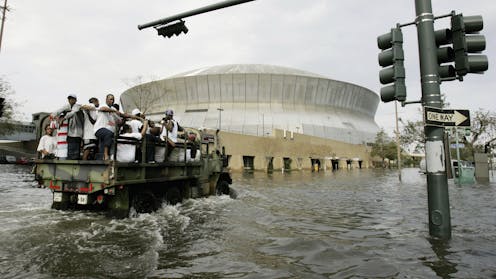
Hurricane Katrina looms large in the history of American emergency management, both for what went wrong as the disaster unfolded and for the policy changes it triggered.
As the nation looks back on the disaster 20 years later, I believe as a crisis and emergency management specialist that it is more important than ever to remember Katrina’s lessons to avoid repeating past mistakes.
When Katrina hit New Orleans on Aug. 29, 2005, its storm surge broke through levees protecting the city. Water quickly poured into low-lying neighborhoods, flooding houses up to their rooftops and inundating an estimated 80% of the city. People who could not evacuate before the storm and were lucky enough to escape to their roofs were stranded for days in some cases.
Once the water had receded and the death toll counted, it became clear that nearly 1,400 people had died as a result of this devastating storm. The hurricane did more than $100 billion in damage, equivalent to about US$170 billion today when adjusted for inflation.

While there were many unsung heroes during Katrina, the tragic missteps and missed opportunities at all levels of government emergency management are what no emergency manager ever wants to repeat. The response failed in many areas, from broken communications among federal, state and local agencies to the reported horrors in the Superdome as 16,000 evacuees faced failed generators, poor security, dwindling supplies and overflowing toilets.
Three lessons from Katrina stand out today as the Trump administration talks about dismantling the Federal Emergency Management Agency and putting more responsibility for disaster management on local and state agencies.
FEMA took the brunt of the criticism after Hurricane Katrina. However, serious analyses of what went wrong recognize that good disaster response requires effective governance at all levels.
Before FEMA could spend significant money to deploy people and aid, the state of Louisiana had to request a presidential disaster declaration. However, tensions between the state and federal governments reportedly delayed President George W. Bush’s approval, according to a Senate committee report assessing the response. The committee also found that New Orleans Mayor Ray Nagin’s decision to first issue a voluntary evacuation and not issue a mandatory order until a day before the storm cost precious time.

Once the storm hit, communication and coordination fell apart.
Vehicles badly needed for the disaster response were damaged by the storm. Problems with communication systems and a breakdown in situation reporting from local law enforcement and rescue services left state and federal government decision-makers flying blind, without up-to-date reports of conditions on the ground. Media reports of a “war zone” in New Orleans exaggerated the extent of public disorder and threats to responders. That further delayed the arrival of federal military and National Guard assistance – and hindered some local efforts – because it required additional precautions for coping with a hostile security environment.
As challenging as the information environment was during Hurricane Katrina, it is more difficult now. Social media, hyper-partisanship and deliberate misinformation attempts complicate emergency response and recovery efforts.
If the federal government now proposes to push more responsibility for disaster relief to the state and local levels, emergency managers at those levels will be taking on highly complex disasters in a potentially toxic information environment with less support.
States, counties and cities vary greatly in their readiness to shoulder this responsibility.
An enduring image of Hurricane Katrina was the plight of residents who lacked transportation and took shelter at the New Orleans Superdome, where conditions quickly deteriorated.
Another was the harrowing tales of gravely ill patients and exhausted medical staff stranded at Memorial Medical Center for five days without power as temperatures rose and the lower floors flooded.

These extreme predicaments and the deaths of people trapped in flooding homes in the Lower Ninth Ward were powerful reminders of the vulnerability of many low-income, elderly and ill residents who were unable to get out ahead of the disaster.
A few years after Katrina, Obama administration FEMA Administrator Craig Fugate and his team placed a new focus on forging a “whole community” emergency management strategy. It is designed to include marginalized populations in emergency planning and ensure that those who aren’t able to evacuate due to disability or financial limitations are not forgotten during disasters.
Government guidance now states that emergency mass care shelters be in buildings that people who have trouble walking can navigate easily. Emergency information is typically distributed in multiple languages, accessible for people with impaired hearing or vision, and written in ways adapted to the cultures and circumstances of minority groups.

However, many of these advances are in jeopardy today as the Trump administration seeks to eliminate initiatives that might be considered DEI – diversity, equity and inclusion. The misery and death caused by Hurricane Katrina should serve as vivid reminders of why many existing emergency management programs emphasize the needs of socially vulnerable populations.
The face of the federal government’s shortcomings in responding to Hurricane Katrina was then-FEMA Administrator Michael Brown. Initially, he was publicly praised by President Bush, who declared: “Brownie, you’re doing a heck of a job!”
But Brown was not a professional emergency manager. His prior on-the-job experience in the role did not prove sufficient in this extreme situation. As the problems with the response to Katrina became increasingly evident, Brown proved unable to provide effective leadership in the crisis and was forced out.

Part of the legislative legacy of Katrina is the Post-Katrina Emergency Management Reform Act of 2006. It requires that FEMA chief administrators have extensive knowledge of emergency management and substantial relevant executive leadership experience. All of the subsequent confirmed heads of FEMA were once state emergency management directors or had been in charge of emergency management in major cities.
However, those requirements do not always apply to acting administrators. In his second term, President Donald Trump has had two acting FEMA administrators – Cameron Hamilton and David Richardson. Both lacked prior experience managing major disasters on a statewide or comparable basis. Hamilton was abruptly fired after suggesting to Congress that FEMA should not be eliminated. Richardson’s leadership was quickly tested during the Texas flash flood tragedy on July 4, 2025, that killed more than 135 people.
The shortcomings of the response to Hurricane Katrina also led to wider adoption of the National Incident Management System, which helps all levels of government, nongovernmental organizations and the private sector work together in an emergency.
If more responsibility for emergency management devolves to states in the future, they will need to cultivate the ability to coordinate and collaborate effectively to respond to disasters.
Leaders and organizations such as FEMA have learned from crises such as Hurricane Katrina.
However, political priorities come and go, staff turns over, and generations pass the torch to their successors. Leaders and organizations can forget critical lessons from the past.
As efforts to reform – and possibly rebalance – the U.S. emergency management system continue during the Trump administration, it is essential to remember and heed the costly lessons of Hurricane Katrina.

Eric Stern has recently received funding from DHS Science and Technology for an extreme weather informatics project and from NOAA for work on extreme heat events. He has lectured at the National Emergency Management Executive Academy and many similar programs around the country and the world.
Politics + Society – The Conversation

Reading Time: 3 minutes
Is North West a walking, talking indictment of Kim Kardashian’s parenting?
Some critics think that Kim is dressing her eldest daughter like a living doll.
Others believe that she’s being too permissive, letting North dress age-inappropriately.
Just about everyone seems to be angry, however. Is this outfit too much (or too little) for a tween?
Kim Kardashian brought her 12-year-old daughter, North West, with her on a family trip to Rome.
Stepping out with her mom, the tween is wearing vibrant green-and-blue hair. She’s sporting a black corset with a silver-and-black miniskirt.
She’s also wearing a necklace.
Perhaps the most eye-catching part of the ensemble is North’s thick black boots.
Kim Kardashian and North West were spotted out and about in Rome. 🩵 📸: Cobra Team/@BackgridUS pic.twitter.com/QhOMqnzGRm
— Page Six (@PageSix) August 25, 2025
Next to North, Kim was actually dressed in a sheer gown that strongly resembled a nightdress.
The influencer and businesswoman’s outfit boasted a plunging neckline and the very visible lace of a bra.
Kim’s outfit would have been very inappropriate on a 12-year-old.
But, critics, say, so was North’s ‘fit.
What 12 year old wears a corset ???? Kim really doesn’t know how to be a sensible parent https://t.co/PrY0CyiC2S
— Daddy whats good (@lkshmoney3456) August 25, 2025
“What 12 year old wears a corset ????” tweeted one outraged social media user. “Kim really doesn’t know how to be a sensible parent.”
“Kim is a terrible mother. Knowing her family, a 12yo in these sort of outfits isn’t good,” wrote another. “I pray north finds a better mother figure, at least, and isn’t infected by her mother and succubus family.”
“North being 12 is insane to me,” admitted another user.
That remark may have simply been marveling at someone whom most of us remember being born now being a tween.
Kim is a terrible mother. Knowing her family, a 12yo in these sort of outfits isnt good. I pray north finds a better mother figure, at least, and isnt infected by her mother and succubus family.
Kanye is wack, kim is a skank, kris is bad. Poor girl. pic.twitter.com/rV1lBAemyj
— EiMeiNei. (@Aine65000) August 25, 2025
Others seemed to speculate that North West did not choose her ensemble, with one writing: “Why they make North look so grown?”
“I swear north only dresses hyper femme like this when she’s with Kim,” another wrote. “Normally she’s in oversized baggy clothes.”
It is true that North has appeared in comfy clothing around the house.
For the record, she has also dressed that way around Kim.

Just for the record, the condemnation was not universal.
Many pointed out that it’s great to see North West choosing her own outfits. Kim isn’t trying to make her daughter a mini-me and seems to be letting her express herself.
Others also reasoned that, actually, North’s outfit makes sense for an affluent middle schooler.
There are adults who wear similar outfits, but when they do, they are essentially dressing like dolls.
It’s a very adolescent look and North really pulls it off.
North West Outfit Draws Condemnation Against Kim Kardashian: Age-Inappopriate or Peak … was originally published on The Hollywood Gossip.
The Hollywood Gossip

Reading Time: 3 minutes
The news just keeps getting worse for Lil Nas X.
As we previously reported, Nas was arrested last week after he was spotted wandering around nude on LA’s Ventura Boulevard.
The rapper and singer was initially hospitalized for a possible overdose. He was then transferred to a holding center, where he’s remained ever since.
According to TMZ, Nas will be arraigned later today, at which time he’ll be permitted to post bail.
But that bail might wind up being rather costly, as the 26-year-old is now facing four felonies.
Police say Nas charged at them and inflicted multiple injuries ahead of his arrest.
TMZ speculates that three of the felony charges are related to specific injuries to individual cops.

It’s unclear when the case might go to trial or what sort of penalties Nas is facing, but more information should emerge at his arraignment.
According to an earlier report, Nas — whose real name is Montero Lamar Hill — “punched an officer twice in the face during the encounter.”
Reached for comment, a spokesperson for the LAPD told Page Six, “There is no further information to disseminate.”
Sadly, this is not the first report of troubling behavior from Nas in recent months.

Nas was spotted engaging in bizarre behavior in the lobby of a Los Angeles hotel just hours before his arrest.
Hill — who was not a guest at the hotel — reportedly entered the lobby for no apparent reason and was spotted on a security camera removing his shirt before heading back out onto the street.
Obviously, that wasn’t as strange as the behavior that would follow, but it may have been an early sign that the rapper was out of sorts.
In April, Nas was hospitalized for partial facial paralysis.
In February, he confessed that his “last few years” had been “pretty difficult.”

“I’m just now arriving to this place of feeling confidence in myself and what I’m doing, and I’m trying to make sure I put intention towards my music and my vision and the creativity of it all,” he told fans in a livestream.
Nas also told People that he stepped away from the spotlight in order to experience a “mundane life” after
“I jumped straight into adulthood with extreme fame around me, so it was really nice to be just outside walking and meeting people in the streets and eating at restaurants, just even alone, spending a lot of alone time in solitude,” he told the outlet.
We’ll have further updates on this developing story as new information becomes available.
Lil Nas X Charged With Four Felonies After Allegedly Attacking Cops While Nude was originally published on The Hollywood Gossip.
The Hollywood Gossip