Ukraine has struck a Russian tanker in the Mediterranean Sea for the first time, a Kyiv intelligence source has said.The Latest News from the UK and Around the World | Sky News










Ukraine has struck a Russian tanker in the Mediterranean Sea for the first time, a Kyiv intelligence source has said.The Latest News from the UK and Around the World | Sky News

New photos of the people in Jeffrey Epstein’s circle are among thousands of documents released by the US Department of Justice.The Latest News from the UK and Around the World | Sky News

NOTN- Santa Claus will come to Juneau this weekend aboard a Capital City Fire/Rescue engine.
According to Capital City Fire/Rescue the Santa Run will take place tonight from 5:30 to 7:45 pm and tomorrow from 4:00 to 7:55 pm.
There has been adjustments due to the weather, instead of walking the routes, CCFR is inviting residents to join Santa at one of the designated stops throughout Juneau.
On Saturday, Santa will stop at Gruening Park, the Tram parking lot and will conclude his visit at Gastineau Elementary schools.
Firefighters say Santa will be accompanied by the Grinch, and candy canes will be handed out to children throughout the evening.
Event details and stop information are available on the Capital City Fire and Rescue Facebook page.
Reading Time: 3 minutes
It was a year that started with Kate Middleton in hiding.
And it’s ending with the Princess rocking a huge smile for the entire world to see.
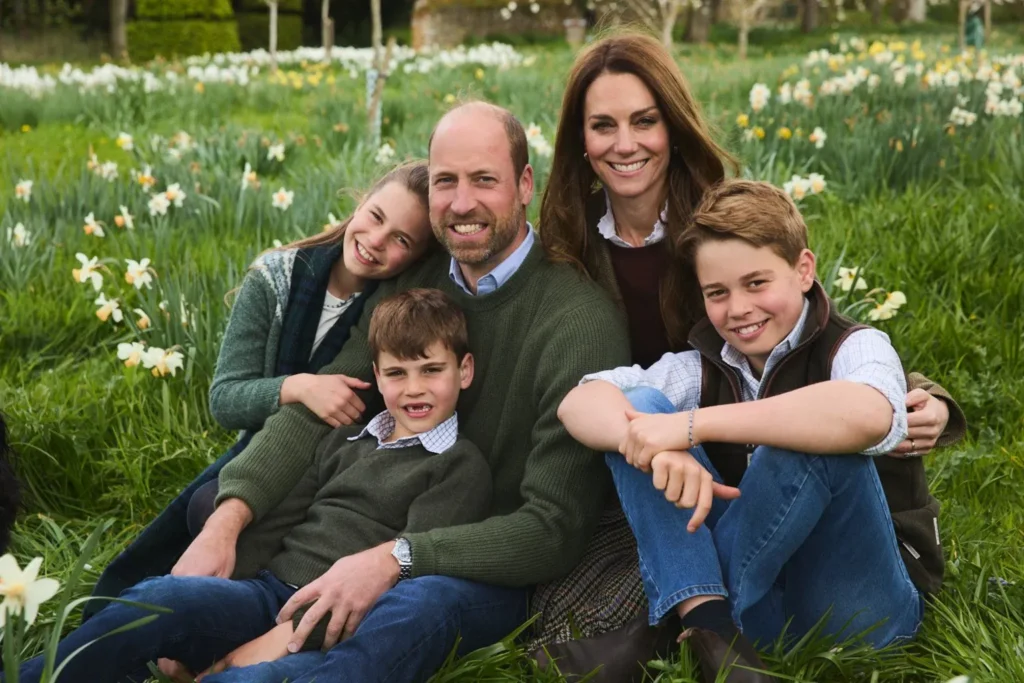
Late this week, Middleton, husband Prince William and the couple’s three kids (Prince George, 12, Princess Charlotte, 10, and Prince Louis, 7) got together for the family’s annual Christmas card.
You can take a look at it here:
The accompanying caption to this upload simply reads: “Wishing everyone a very Happy Christmas.”
As you can see, the adorable family is featured in a field filled with daffodils as they cozy up for the camera.
William and Louis match in dark green sweaters and blue jeans, while Charlotte, who rests her head on her father’s shoulder, also wears a green Fair Isle sweater and scarf.
The image was reportedly snapped back in April by photographer Josh Shinner.
The Christmas card, of course, marks another step in Middleton’s gradual return to public life… as she continues her recovery from cancer and chemotherapy treatment.

“You put on a sort of brave face, stoicism through treatment. Treatment’s done, then it’s like, ‘I can crack on, get back to normal,’ but actually, the phase afterwards is really, really difficult,” Middleton told reporters outside of Colchester Hospital in Essex this past July.
She hasn’t spoken a lot about her experience over the past year and a half or so.
And rarely has she admitted to this sort of (very understandable) struggle.
Middleton issued this message about two weeks after concerns grew over the star’s well-being over the summer.
In mid-June, Middleton suddenly canceled a planned appearance at the second day of the Royal Ascot thoroughbred races.
Back then, Kensington Palace did NOT give a reason behind this cancellation.
“One minute she was going, and the next she wasn’t. This is one of the biggest days of the year in the royal calendar; you don’t just miss Ascot on a whim, so there was a real sense of panic,” said an anonymous former courtier who retains good links with serving staff to The Daily Beast.
“The chaotic nature of the announcement was eerily reminiscent of the dark days of last year. People were bewildered and worried.”

By accounts at this point, Middleton is feeling better than she has in a long time.
The Prince and Princess of Wales and their kids were last seen together at Kate’s fifth annual “Together at Christmas” carol service on Friday, December 5.
George, Charlotte and Louis attended with their parents, as they have in recent years, to support their mother’s holiday event.
They will likely step out again with the royal family on Christmas Day, keeping with their annual tradition of walking to church for the holiday mass.
Royal Christmas Card Released: Look at Cancer-Free Kate! was originally published on The Hollywood Gossip.
The Hollywood Gossip
Are Americans about to be led again into a war based on misrepresentations and lies? It’s happened before, most recently with the wars in Iraq and Vietnam.
President Donald Trump and his administration have presented the country’s growing military operations against Venezuela as a war against drug trafficking and terrorism. Trump has designated the government of Venezuela President Nicolas Maduro as a foreign terrorist organization, the first country to ever receive that designation.
The U.S. military has killed at least 99 crew members of small boats that Trump claims, without presenting evidence, were carrying illegal drugs destined for the U.S. The New York Times reports, however, that “Venezuela is not a drug producer, and the cocaine that transits through the country and the waters around it is generally bound for Europe.”
Trump’s administration has justified the bombing of these boats by declaring they are manned by combatants. U.S. Sen. Jack Reed, a Democrat from Rhode Island, told the Intercept news outlet that the administration “has offered no credible legal justification, evidence or intelligence for these strikes.”
There is no war. Yet.
On Dec. 12, 2025, Trump said, “It’s going to be starting on land pretty soon” and announced four days later a “total and complete blockade of all sanctioned oil tankers going into, and out of, Venezuela.”
As Trump increasingly sounds like he is preparing to go to war against Venezuela, it might be helpful to examine the run-ups to the wars in Iraq and Vietnam – two wars based on lies that led, together, to the deaths of 62,744 Americans.
As an investigative journalist who has written about the vast, secret operations of the FBI and the man who ran it for decades, I am well aware of the dangerous ability the government has to deceive the public. I also covered the opposition to the Vietnam war and the release of information years later that revealed that lies were at the heart of the start of both the Vietnam and Iraq wars.
Consider the run-up to the Iraq War.
Fear was the main tool used to convince the public that it was essential for the U.S. to go to war in Iraq. The manufacturing of fear was evident in a speech by Vice President Dick Cheney in August 2002 to a convention of the Veterans of Foreign Wars.
Cheney said, without evidence, that Iraq’s Saddam Hussein was planning to use weapons of mass destruction against the United States and its allies. If the U.S. did not go to war against Iraq, he said, it might experience another Pearl Harbor.
President George W. Bush chose Secretary of State Colin Powell to make the administration’s most prominent public case for going to war in Iraq in a televised speech at the United Nations. Powell was perhaps the most respected official in the Bush administration.
The White House provided Powell with a draft speech. But Powell pressed the CIA regarding what he thought were unsupported claims in the White House draft. Despite his efforts, his speech on Feb. 5, 2003, contained significant unsupported claims, including that Hussein had authorized his military to use poison gas if the U.S. invaded.
“Leaving Saddam Hussein in possession of weapons of mass destruction for a few more months or years is not an option, not in a post-September 11th world,” Powell solemnly declared that day.
He later expressed regret for making the case for war.
“I’m the one who presented it on behalf of the United States to the world,” Powell later said. By then, he said, the speech was “painful” for him personally and would forever be a “blot” on his reputation.
No weapons of mass destruction existed in Iraq, nor was Hussein connected with al-Qaida, as the Bush administration had said it was. And Iraq did not release poison gas when the U.S. invaded the country. Early postwar assessments of how the U.S. could have invaded Iraq on the basis of serious false claims suggested it happened because the CIA and other intelligence agencies gave President Bush false or inadequate intelligence.
But as extensive official records of pre-war deliberations became available to journalists and others in response to Freedom of Information Act requests, a different explanation emerged.
John Prados, historian at the National Security Archives, discovered an explanation in hundreds of official records that meticulously document the run-up to the war.
They revealed that U.S. intelligence agencies had let themselves be used, he wrote, as “a tool of a political effort, vitiating the intelligence function … They all yielded intelligence predictions of exactly the kind the Bush administration wanted to hear … The intense focus on achieving the conditions for war instead of solving an international problem led to crucial faults in military planning and diplomatic action.”
The administration did not attempt to engage in diplomacy before deciding to go to war. There never was a serious effort, even within the administration, to consider alternatives to war.
George J. Tenet, director of the CIA at the time, later wrote that “based on conversations with colleagues, in none of the meetings can anyone remember a discussion of the central questions: Was it wise to go to war? Was it the right thing to do?”
A dearth of serious reporting contributed to the public being ill-informed.
Dan Kennedy, professor of journalism at Northeastern University, recently wrote that only one news organization, the Washington bureau of Knight Ridder – later known as McClatchy – exposed the Bush-Cheney “administration’s lies and falsehoods during the run-up to the disastrous war in Iraq.”
Other reporters relied on the public relations push for war being made to journalists by high-level political appointees in the military, foreign service and intelligence agencies. But Knight Ridder journalists relied on expert, longtime career officers in those agencies who were “deeply troubled by what they regarded as the administration’s deliberate misrepresentation of intelligence, ranging from overstating the case to outright fabrication.”
Lies to Congress and the public also were at the heart of the run-up to the war in Vietnam.
Of the two attacks on a destroyer that the administration of President Lyndon Johnson said required an immediate vast buildup of troops in August 1964, one was provoked by the United States and the other one never happened.
Few if any questions were asked when the House and Senate voted – with only two no votes – on the request for what would be known as the Gulf of Tonkin Resolution. The resolution was used by Johnson and his successor, President Richard Nixon, to keep expanding the war for nearly a decade. By mid-1969, there were 543,400 American troops in Vietnam.
It may seem obvious that the most important lesson to be learned from those wars is that the president and all who contribute to decisions to go to war should tell the truth. But, as shown by the presidents who led the U.S. into wars in Iraq and Vietnam and from Trump’s daily remarks, truth is a frequent casualty.
That increases the need for Congress, the public and the press to demand to be fully informed about these decisions that will be carried out in their name, with their money and with the blood of their sons and daughters. That’s necessary to prevent a president and Congress from making decisions that lead to consequences like these:
In the Iraq War, 4,492 American military members were killed and approximately 200,000 Iraqi civilians were killed. In the Vietnam War, 58,252 American military members were killed, 1.1 million Vietnamese military members were killed, and a staggering 2 million Vietnamese civilians were killed.

Betty Medsger does not work for, consult, own shares in or receive funding from any company or organization that would benefit from this article, and has disclosed no relevant affiliations beyond their academic appointment.
Politics + Society – The Conversation
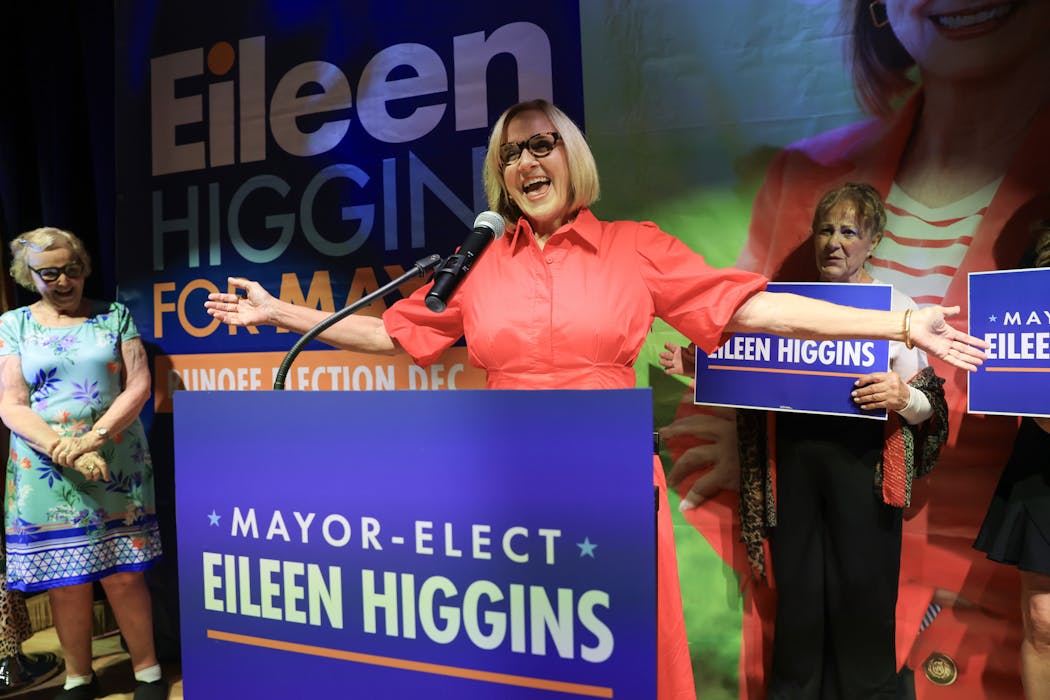
After its first competitive mayoral election in 20 years, the city of Miami has a new mayor: former Miami-Dade County commissioner Eileen Higgins.
During the heated campaign, both national political parties were active in organizing voters and providing resources. Many high-profile politicians weighed in with endorsements and visits. Notably, Republicans President Donald Trump and Gov. Ron DeSantis endorsed Higgins’ opponent, Emilio Gonzalez. Meanwhile, Democrats Ruben Gallego – a senator from Arizona – and former Transportation Secretary Pete Buttigieg supported Higgins.
Still, Miami’s mayoralty is officially a nonpartisan position. And as the saying goes, there are no Democratic or Republican potholes; they are all of local concern.
I’m a political scientist with a particular interest in local government, and I’ve lived in the Greater Miami area for 30 years.
So what are the “potholes” confronting Miami’s new mayor?
Former Mayor Francis Suarez has a charismatic persona, but was not a forceful presence on the dais. During his tenure, City Commission meetings turned into spectacles, with shouting matches, name-calling,
and allegations of corruption.
Higgins, a bilingual, soft-spoken policy wonk, has promised to set a new tone, leading with civility and compassion. The day after the election, she reiterated that promise: “The era of commissioners yelling at one another and threatening to punch one another is going to stop.”
Affordability and the cost of living were the major substantive campaign issues, with the cost of housing topping the list.
For the second year in a row, the financial services firm UBS lists Miami as the city at highest risk for a housing bubble. Another study ranked the Miami metro area as the least affordable housing market nationally.

The good news: This rise in price appears to be fueled by a strong employment market. But the shortage of housing priced for middle- and working-class families is unsustainable.
While housing supply and prices are largely determined by market forces, government officials can set conditions to promote targeted investments. Higgins has suggested forming a city-run housing trust fund, similar to Miami-Dade County. She has also proposed dedicating city-owned land to affordable housing projects and reforming the city’s permit process.
Charter reform issues, including moving city elections from odd to even years to align with national elections, are on the agenda. Though a court deemed the City Commission’s attempt to move this year’s election invalid, Higgins said she supports moving the election date, pledging to cut her term short to facilitate. This change would require commissioners to hold a referendum and voters to support it.
There also is a debate about changing the size of the City Commission from five to seven or nine commissioners. Higgins supported this idea, noting that other Florida cities the size of Miami have larger commissions. This charter change would also require voter approval, but needs the commission to act or for citizens to initiate the process. The mayor’s role would be to advocate for the need for greater representation of neighborhoods and government responsiveness.
In a city where nearly 60% of the population is foreign-born, immigration issues loom large.
In June 2025, after a contentious meeting, the commission voted 3-2 to approve a 287(g) agreement with Immigration and Customs Enforcement, or ICE, to aid Trump’s enforcement measures.
While Higgins cannot remove the city from the agreement, she plans to minimize Miami’s involvement with immigration enforcement. “There’s no reason in the city of Miami that our police department should be in the job of federal immigration enforcement,” she told the press.
Municipal budgets have been squeezed by state policies and state Department of Government Efficiency efforts. Recent federal cuts to social service and transportation grants have exacerbated the problem.
Now, state leaders are proposing to eliminate property taxes in 2026, further straining local coffers. Public spending will need to be reduced, or revenues replaced. The mayor makes budget proposals, but it is commissioners who approve them. Higgins will need to lead through persuasion and clear explanations.

Sean Foreman does not work for, consult, own shares in or receive funding from any company or organization that would benefit from this article, and has disclosed no relevant affiliations beyond their academic appointment.
Politics + Society – The Conversation

Colorado passed first-in-the-nation legislation requiring warning labels on gas stoves in June 2025. These warnings are similar to what is required by cigarette labeling laws.
The required labels urge consumers to educate themselves about the air quality implications of indoor gas stoves and direct consumers to the Colorado Department of Public Health and Environment for information on the health impacts. This could have a substantial impact, as government agencies estimate that about one-third of Colorado’s households use gas as their primary cooking source.
The law went into effect on Aug. 6. The Association of Home Appliance Manufacturers is now suing Colorado and is asking a federal court to temporarily block the law from being enforced while the case proceeds. The parties are awaiting a hearing on this request.
I’m a legal scholar with expertise in First Amendment law. I research and publish papers focusing on laws, such as the new Colorado statute, that compel businesses to disclose information to consumers.
In my opinion, in opposing warning labels, the gas industry and its trade association are weaponizing the First Amendment to undermine a commonsense regulation that aims to keep residents safe and informed.
Walk down an aisle in any toy store and you’ll see tags alerting parents to the risk of choking. Flip over your prescription medication and you can read its side effects and interactions with other drugs. In the grocery store, food products have labels bearing information about calorie and sugar content to help consumers make healthier decisions.

Often taken for granted, these warning labels provide critical information to protect Americans’ health and safety. Perhaps the most recognizable warning labels can be found on cigarette packages, required in the U.S. since 1965, to inform customers about the health harms of smoking. Despite the fact that warning labels on cigarettes have saved millions of lives, the tobacco industry fought tooth and nail against them to keep consumers in the dark. Since that time, federal, state and local laws requiring businesses to make truthful factual disclosures about their products have become commonplace.
In its lawsuit, the gas industry invokes the First Amendment’s compelled speech doctrine. This doctrine prohibits the government from forcing people to make ideological statements they don’t actually believe, such as reciting the Pledge of Allegiance.
In 2018, in National Institute of Family and Life Advocates v. Becerra, the U.S. Supreme Court greatly expanded this rule and opened the door for challenges to government efforts to require businesses to disclose truthful statements of fact. The court held that the government cannot compel businesses to disclose factual information if it is “controversial.”
Of course, it would be hard to find a manufacturer who does not think such disclosures are controversial, given that businesses are likely to disagree that their products are dangerous. If a subjective claim that a disclosure is controversial is all it takes to strike a law down, many such laws are vulnerable to legal attacks.
Interest groups representing the tobacco industry, the gas industry and others have seized on this opportunity to dismantle what most people understand to be routine labeling requirements. For example, companies have filed lawsuits challenging federal laws requiring companies to disclose that they use “conflict minerals” and local laws requiring beverage manufacturers to disclose that drinking sugar-sweetened drinks “contributes to obesity, diabetes and tooth decay.”
In its lawsuit, the Association of Home Appliance Manufacturers, a trade association that lobbies on behalf of the home appliance industry, argues that Colorado’s law compels gas stove manufacturers to place warning labels on their products that it believes contain “scientifically controversial and factually misleading” information around gas stoves.
However, abundant evidence shows that cooking with a gas stove releases pollutants that harm human health. Multiple studies have shown that burning methane gas produces nitrogen oxide, carbon monoxide, formaldehyde and benzene that can worsen respiratory illnesses such as asthma and increase the risk of cancer.

Furthermore, in 2022, the American Medical Association recognized that gas stove use can increase household air pollution, the risk of childhood asthma and asthma severity. The same year, the American Public Health Association recommended putting warning labels on gas stoves as an official policy position.
Public health advocates contend that the gas industry has known about the health harms of gas stoves for decades, but that the industry has repeatedly attempted to paint its products in a better light.
A 2023 expose by The New York Times, for example, revealed that the gas industry paid toxicologist Julie Goodman to downplay the health impacts of gas stoves. Just eight years earlier, Goodman provided testimony on behalf of tobacco companies. A judge described her testimony on tobacco as “contrary to consensus of the scientific community.”
If the Association of Home Appliance Manufacturers’ claim succeeds in court, it could, in my analysis, make it much easier for companies to fund biased research or bring in experts to argue that something is not well-established science.
For example, a drug manufacturer could hire an expert to dispute the side effects of a drug. Food producers might claim their experts disagree with the science underlying nutrition and calorie information required by government regulation. Even manufacturers of everyday items such as lawnmowers or toasters could hire experts and proclaim that their products pose no safety harms.
Everyday people would bear the brunt of harm from the invalidation of warning label laws. These people currently have the right to know critical health and safety information before buying any product. If we let corporate interests undermine regulations such as warning labels, I believe we will no longer be able to inform the public about commonsense steps they can take to protect their health.
Read more of our stories about Colorado.

Alan K. Chen does not work for, consult, own shares in or receive funding from any company or organization that would benefit from this article, and has disclosed no relevant affiliations beyond their academic appointment.
Politics + Society – The Conversation

A group of college students braved the frigid New England weather on Dec. 13, 2025, to attend a late afternoon review session at Brown University in Providence, Rhode Island. Eleven of those students were struck by gunfire when a shooter entered the lecture hall. Two didn’t survive.
Shortly after, a petition circulated calling for better security for Brown students, including ID-card entry to campus buildings and improved surveillance cameras. As often happens in the aftermath of tragedy, the conversation turned to lessons for the future, especially in terms of school security.
There has been rapid growth of the nation’s now US$4 billion school security industry. Schools have many options, from traditional metal detectors and cameras to gunshot detection systems and weaponized drones. There are also purveyors of artificial-intelligence-assisted surveillance systems that promise prevention: The gun will be detected before any shots are fired, and the shooting will never happen.
They appeal to institutions struggling to protect their communities, and are marketed aggressively as the future of school shooting prevention.
I’m a criminologist who studies mass shootings and school violence. In my research, I’ve found that there’s a lack of evidence to support the effectiveness of these technological interventions.
Implementation has not lagged. A survey from Campus Safety Magazine found that about 24% of K-12 schools report video-assisted weapons detection systems, and 14% use gunshot detection systems, like ShotSpotter.
Gunshot detection uses acoustic sensors placed within an area to detect gunfire and alert police. Research has shown that gunshot detection may help police respond faster to gun crimes, but it has little to no role in preventing gun violence.
Still, schools may be warming to the idea of gunshot detection to address the threat of a campus shooter. In 2022, the school board in Manchester, New Hampshire, voted to implement ShotSpotter in the district’s schools after a series of active-shooter threats.
Other companies claim their technologies provide real-time visual weapons detection. Evolv is an AI screening system for detecting concealed weapons, which has been implemented in more than 400 school buildings since 2021. ZeroEyes and Omnilert are AI-assisted security camera systems that detect firearms and promise to notify authorities within seconds or minutes of a gun being detected.
These systems analyze surveillance video with AI programs trained to recognize a range of visual cues, including different types of guns and behavioral indicators of aggression. Upon recognizing a threat, the system notifies a human verification team, which can then activate a prescribed response plan.
But even these highly sophisticated systems can fail to detect a real threat, leading to questions about the utility of security technology. Antioch High School in Nashville, Tennessee, was equipped with Omnilert’s gun detection technology in January 2025 when a student walked inside the school building with a gun and shot several classmates, one fatally, before killing himself.

This demonstrates an enduring problem with the school security technology industry: Most of these technologies are untested, and their effect on safety is unproven. Even gunshot detection systems have not been studied in the context of school and mass shootings outside of simulation studies. School shooting research has very little to offer in terms of assessing the value of these tools, because there are no studies out there.
This lack is partly due to the low incidence of mass and school shootings. Even with a broad definition of school shootings – any gunfire on school grounds resulting in injury – the annual rate across America is approximately 24 incidents per year. That’s 24 more than anyone would want, but it’s a small sample size for research. And there are few, if any, ethically and empirically sound ways to test whether a campus fortified with ShotSpotter or the newest AI surveillance cameras is less likely to experience an active shooter incident because the probability of that school being victimized is already so low.
Existing research provides a useful overview of the school safety technology landscape, but it offers little evidence of how well this technology actually prevents violence. The National Institute of Justice last published its Comprehensive Report on School Safety Technology in 2016, but its finding that the adoption of biometrics, “smart” cameras and weapons detection systems was outpacing research on the efficacy of the technology is still true today. The Rand Corporation and the University of Michigan Institute for Firearm Injury Prevention have produced similar findings that demonstrate limited or no evidence that these new technologies improve school safety and reduce risks.
While researchers can study some aspects of how the environment and security affect mass shooting outcomes, many of these technologies are too new to be included in studies, or too sparsely implemented to show any meaningful impact on outcomes.
My research on active and mass shootings has suggested that the security features with the most lifesaving potential are not part of highly technical systems: They are simple procedures like lockdowns during shootings.
Nevertheless, technological innovations continue to drive the school safety industry. Campus Guardian Angel, launched out of Texas in 2023, promises a rapid drone response to an active school shooter. Founder Justin Marston compared the drone system to “having a SEAL team in the parking lot.” At $15,000 per box of six drones, and an additional monthly service charge per student, the drones are equipped with nonlethal weaponry, including flash-bangs and pepper spray guns.
In late 2025, three Florida school districts announced their participation in Campus Guardian Angel’s pilot programs.
There is no shortage of proposed technologies. A presentation from the 2023 International Conference on Computer and Applications described a cutting-edge architectural design system that integrates artificial intelligence and biometrics to bolster school security. And yet, the language used to describe the outcomes of this system leaned away from prevention, instead offering to “mitigate the potential” for a mass shooting to be carried out effectively.
While the difference is subtle, prevention and mitigation reflect two different things. Prevention is stopping something avoidable. Mitigation is consequence management: reducing the harm of an unavoidable hazard.
This is another of the enduring limitations of most emerging technologies being advertised as mass shooting prevention: They don’t prevent shootings. They may streamline a response to a crisis and speed up the resolution of the incident. With most active shooter incidents lasting fewer than 10 minutes, time saved could have critical lifesaving implications.
But by the time ShotSpotter has detected gunshots on a college campus, or Campus Guardian Angel has been activated in the hallways of a high school, the window for preventing the shooting has long since passed.

Emily Greene-Colozzi receives funding from the National Institute of Justice.
Politics + Society – The Conversation
PHOENIX — Members of the MAGA faithful gathered here Thursday to kick off Turning Point USA’s America Fest, the largest meeting for the organization since its founder, Charlie Kirk, was shot to death on a Utah college campus in September.
Despite that somber backdrop, the event quickly devolved into a spectacle of MAGA infighting.
Ben Shapiro, the first speaker after widow Erika Kirk, ripped into those who would take the same stage in the coming hours and days. He called out conservative commentators, blasting Candace Owens, Tucker Carlson, Megyn Kelly and Steve Bannon as “frauds and grifters.”
“The conservative movement is in serious danger,” Shapiro said, arguing the danger is not just on the left, but “from charlatans who claim to speak in the name of principle but actually traffic in conspiracism and dishonesty.”
He called Bannon “a PR flack for Jeffrey Epstein” ahead of the imminent release of files related to the late convicted sex offender, while praising President Donald Trump and his administration’s handling of the issue. Trump pushed to stop Republicans in Congress from voting to release the files, though he signed the legislation once it was passed. Both Bannon and Trump appear in photos with Epstein that were released by House Democrats.
Shapiro particularly focused on Carlson — both for elevating Owens’ conspiracy theories about Kirk’s murder and for his recent interview with far-right influencer Nick Fuentes, a Holocaust denier who has repeatedly pushed antisemitic tropes. Carlson, a former Fox News host, now hosts his show on X and routinely garners millions of views.
“The people who refused to condemn Candace’s truly vicious attacks — and some of them are speaking here tonight — are guilty of cowardice,” Shapiro said, adding later: “If you host a Hitler apologist, Nazi-loving, anti-American piece of refuse like Nick Fuentes … you ought to own it.”
Both the Fuentes interview and Owens’ conspiracies have embroiled the party in recent weeks. On Wednesday, Shapiro called on the Heritage Foundation, the powerful conservative think tank whose president defended the interview, to change its tune about Carlson’s elevation of Fuentes.
Carlson responded with heat of his own from the stage Thursday.
“That guy is pompous,” Carlson said, saying he “laughed” while watching clips of Shapiro’s speech backstage. “Calls to deplatform at a Charlie Kirk event? That’s hilarious.”
Carlson went on to rail against cancel culture, and promised the crowd that he was not antisemitic. “Antisemitism is not just naughty, it’s immoral,” he said.
Erika Kirk addressed the MAGA movement’s fractures, while casting her late husband as a rare unifier and pleading with the crowd to embrace disagreement. “You won’t agree with everyone on this stage this weekend,” she said. “And that’s okay. Welcome to America.”
The event wasn’t entirely heated. Actor Russell Brand — who spoke between Shapiro and Carlson — focused on Christianity, while sprinkling attacks on vaccines and the pharmaceutical industry into his remarks. And earlier in the day, attendees danced to upbeat music, repeatedly chanted “USA” and celebrated Trump’s return to the White House at the Phoenix Convention Center, which is plastered with imagery of Charlie Kirk. More than 30,000 people gathered for the event.
Kirk’s influence on young people was particularly evident, with thousands of high school and college attendees, some of whom posed for photos in front of a tent that resembled the one Kirk was speaking in front of when he was shot during “The American Comeback Tour.”
Erika Kirk — who now serves as Turning Point’s CEO — said 80 percent of attendees had never been to America Fest before, and one-third of them were students. More than 140,000 people have submitted requests to join the organization since Kirk’s death, bringing the membership to over 1 million people across 4,000 chapters at high schools and colleges, she added.
While the group has welcomed speakers from across the conservative movement, it made clear choices about which politicians to welcome to the stage, providing a glimpse into how the organization hopes to shape the future of the GOP. Texas Attorney General Ken Paxton and GOP Rep. Mike Collins, both candidates for Senate, and gubernatorial hopefuls Andy Biggs of Arizona and Byron Donalds of Florida, were given slots on the main stage.
Erika Kirk also made a point of promising to elevate Vice President JD Vance — who will close the event on Sunday — to the White House in 2028. Vance leads early polls of the likely GOP field.
“We are going to get my husband’s friend JD Vance elected for 48 in the most resounding way possible,” she said.
Politics
PHOENIX. Arizona — Turning Point USA CEO Erika Kirk has endorsed Vice President JD Vance for president, an early sign of influential support for a likely leading candidate in 2028.
Kirk, who took over leadership of Turning Point after her husband, Charlie, was killed in September, announced her decision during a speech Thursday at the organization’s America Fest conference in Phoenix.
Vance is scheduled to speak at the conference on Sunday.
“We are going to get my husband’s friend JD Vance elected for 48 in the most resounding way possible,” Kirk said.
Vance has not yet committed to running in 2028, but as vice president he is widely expected to seek the White House. TPUSA — founded by Charlie Kirk — holds major influence for the MAGA movement, particularly among young conservatives, and the early endorsement could give an early lead among the Republican hopefuls.
“My attitude is the American people elected me to be vice president,” Vance told the New York Post in October. “I’m going to work as hard as I can to make the president successful over the next three years and three months, and if we get to a point where something else is in the offer, let’s handle it then.”
Kirk made the endorsement in front of a crowd of thousands of people, many of whom are ardent supporters of President Donald Trump — and they responded with resounding applause.
Vance and Charlie Kirk were particularly close before Kirk’s death.
Politics