A 62-year-old Western New York resident had already pled guilty to murdering two women when he shocked police by confessing to a third crime.
In 1976, a woman named Beatrice Meabon was stabbed to death in her home.
Earlier this week, police in the town of Brant, NY reavealed that Richard Fox, now claims he was responsible for the stabbing.
He would have been just 13 years old at the time.
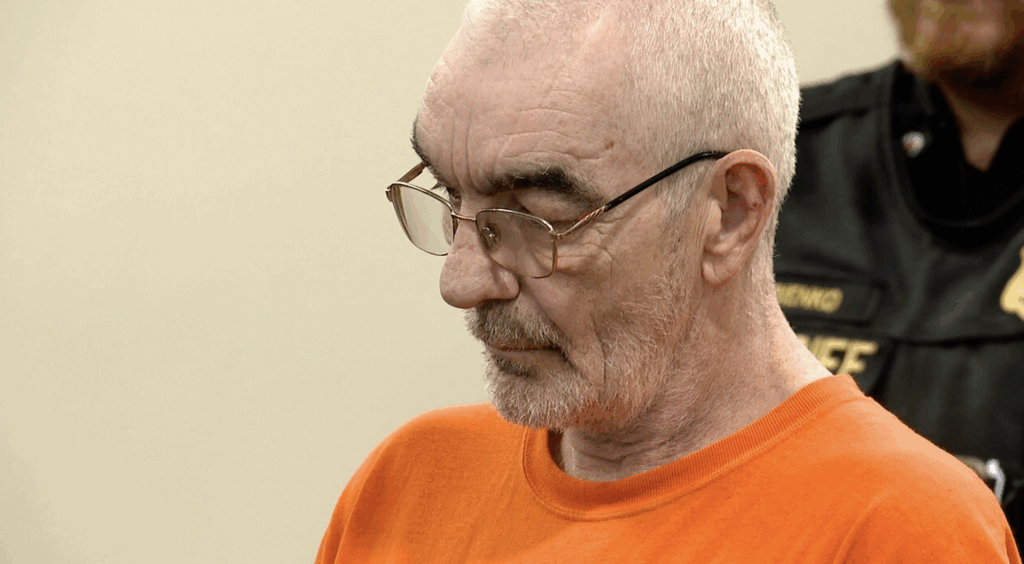
Alleged serial killer Richard Fox claims he killed his grandmother when he was just 13. (YouTube)
Fox was arrested in January 2025 in connection with the murders of Marquita Mull and Cassandra Watson.
The women were murdered nearly 20 years apart, and Fox confessed to killing them and spreading their remains along a hiking trail.
He was recently sentenced to 40 years in prison for those crimes.
In May of 2025, police searched a home where Fox once lived. They found remains that were later identified as those of a 32-year-old woman named Crystal Curthoys.
Fox has been arraigned on second degree murder charges in connection with Curthoys’ death, but the case has not yet gone to trial.
Perhaps realizing that he’ll spend the remainder of his life behind bars, Fox has now confessed to the stabbing death of his grandmother.
For reasons that are not entirely clear, the Brant Police Department says Fox will not be charged with Meabon’s murder. But they vowed that the matter will be thoroughly investigated.
“Although no charges will be filed regarding the murder of Mrs. Meabon, the victim, family and public deserve the truth of what happened 49 years ago,” Brant police said in a statement (per WKBW).
“Law enforcement is committed to pursuing justice and holding those accountable, no matter how great the passage of time.”
Members of Meabon’s family have not yet spoken publicly about this shocking development.
We will have further updates on this developing story as new information becomes available.
The style of that performance is part of the substance, not just its packaging. On Jan. 4, 2026, on ABC’s This Week, that style shifted abruptly for the U.S.
Anchor George Stephanopoulos pressed Secretary of State Marco Rubio to explain President Donald Trump’s declaration that “the United States is going to run Venezuela.” Under what authority, Stephanopoulos asked, could such a claim possibly stand?
Rubio dodged the question. He just said that the United States would enact “a quarantine on their oil.” Venezuela’s economy would remain frozen, unable “to move forward until the conditions that are in the national interest of the United States and the interests of the Venezuelan people are met.”
Rubio’s point presumed authority rather than pausing to justify it. It was a diplomacy of dominance – coercion dressed up as concern. The unspoken assumption was pure wishful thinking: that “national interest” would immediately prevail, flowing smoothly in all directions.
As a historian of the early republic and the author of a biography of George Washington, I’ve been reminded these days of how Washington – amid harsh storms unlike anything the country faces today – forged a vision that treated restraint, not self-justifying unilateralism, as the truest measure of American national interest.
ABC’s George Stephanopoulos interviewed Secretary of State Marco Rubio on Jan. 4, 2026.
The young nation was humiliated before it was strong. George Washington understood that humiliation intimately. Independence had freed America from Britain, but not from the world.
“Would to Heaven we had a navy,” he confessed to the Marquis de Lafayette in 1786, longing for ships “to reform those enemies to mankind, or crush them into nonexistence.” But such a fierce wish never became Washington’s foreign policy. Visibility invited peril; peril required composure.
In 1785, two American merchant vessels – the Maria of Boston and the Dauphin of Philadelphia – were captured by Algerian cruisers. Twenty-one sailors were chained, stripped and sold into slavery. Their families begged the government to pay ransom. Negotiators proposed paying tribute, a kind of protection-in-advance payment system. The price kept rising.
President Washington refused to be rushed by either pity or anger. Paying the extravagant sum, he warned his cabinet in 1789, “might establish a precedent which would always operate and be very burthensome if yielded to.”
Precedent mattered to Washington. A republic must measure not only what it can afford, but what it will be forced to feel tomorrow because of what it pays today.
Washington feared that habit of nearsightedness in foreign affairs precisely because he believed it corrupted empires – and could corrupt republics as well.
Neutrality as ‘emotional discipline’
The storms soon multiplied.
By 1793, Europe was already “pregnant with great events,” Washington wrote to Lafayette. The French Revolution, welcomed at first as a triumph of “The Rights of Man,” slid into terror and general war.
Citizen Genet, the French envoy to the United States, landed in Charleston, South Carolina, and proceeded to enlist American citizens’ help in France’s war with Britain by commissioning privateers in U.S. ports to prey on British ships. Genet did not request permission to do this from Washington.
Gratitude to France – indispensable ally during the Revolution, provider of fleets, soldiers and hard-to-forget loans – clashed with alarm at her new demands. A single misstep could have dragged the United States into another catastrophic conflict.
And yet, Washington responded to Genet not with rashness and bravado but with restraint made public law.
President Washington knew that the road to successful pursuit of national interests was paved with international credibility.
Washington wanted America “to be little heard of in the great world of Politics,” preferring instead “to exchange Commodities & live in peace & amity with all the inhabitants of the earth.”
The first president pitched the republic’s voice toward ordinary people rather than rival powers. He spoke of “inhabitants,” not foreign enemies. He treated restraint – not self-justifying unilateralism – as the truest measure of national interest.
At his presidency’s end, George Washington wrote to fellow statesman Gouverneur Morris, ‘My policy has been, and will continue… to be upon friendly terms with, but independent of, all the nations of the earth.’ Library of Congress
On March 4, 1797, he would leave the presidency. His final creed was simple and devout: “My policy has been, and will continue … to be upon friendly terms with, but independent of, all the nations of the earth.”
For Washington, friendliness was a strategy, not a concession. The republic would treat other nations with civility precisely in order to remain independent of their appetites and quarrels.
Yet foreign policy has never been only a ledger of advantage. It is also a civic mirror: the emotional register of a government that tells citizens what kind of nation is acting in their name, and whether it tries to balance national interest with responsibilities to others.
Washington believed America’s legitimacy abroad depended on patience and respect for the autonomy of others. The current approach to Caracas announces a different imagination: a power that boasts of quarantines, sets conditions – and calls the result partnership.
A republic must still defend its interests. But I believe it should also defend the temperament that made those interests compatible with independence in the first place. Washington’s America learned to stand among stronger powers without demanding to run them.
The question asked on “This Week,” then, is only the beginning.
The deeper question remains whether the United States will continue to perform power with the discipline of a constitutional republic – or surrender that discipline to the easy allure of what seems to only serve national interest, but fails to build credibility or relationships that endure.
Maurizio Valsania does not work for, consult, own shares in or receive funding from any company or organization that would benefit from this article, and has disclosed no relevant affiliations beyond their academic appointment.
Block Communications, the company that owns the Post-Gazette, says the paper has lost “hundreds of millions of dollars” during the past two decades. The shuttering of the Post-Gazette comes after a three-year strike by newspaper employees who were asking management for better wages and working conditions. The strike ended in November 2025 after an appellate court ruled in favor of the union workers. The Post-Gazette was found to have violated federal labor law by cutting health care benefits and failing to bargain in good faith. Then, on Jan. 7, the U.S. Supreme Court ruled against the paper, stating that the Post-Gazette was required to adjust its health insurance coverage for union members. Hours later, Block Communications announced that the paper would shut down.
Victor Pickard, an expert on the U.S. media and its role in democracy, was born and raised just outside Pittsburgh. He talked to Cassandra Stone, The Conversation U.S. Pittsburgh editor, about what the closing means for local journalism and democracy.
Newspapers have been in decline for decades. How significant is this closure?
The Pittsburgh Post-Gazette has long been a vital part of the local community throughout western Pennsylvania. This would be the first major metropolitan newspaper closing since the Tampa Tribune shut its doors in 2016, and it’s a devastating blow to residents in that entire area of the state. Block Communications also closed down the Pittsburgh City Paper, which is an alt-weekly newspaper in Pittsburgh, in January 2026. The loss of the Post-Gazette will likely create a major gap in local news coverage.
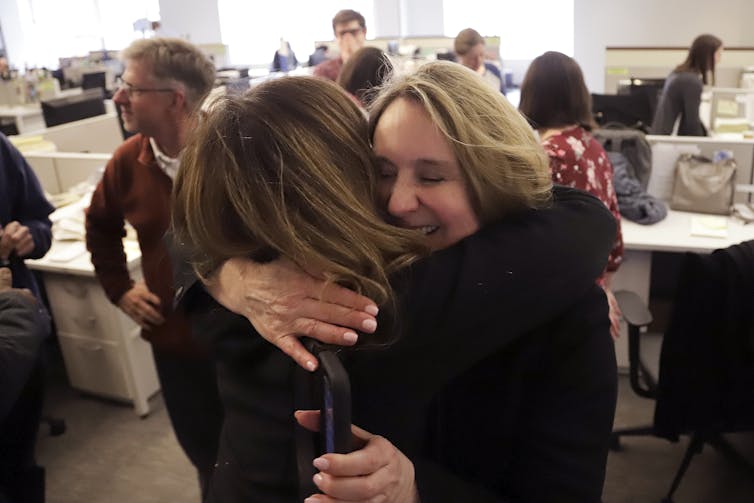
Pittsburgh Post-Gazette employees celebrate in 2019 after it was announced that the paper’s staff coverage of the shooting at the Tree of Life Synagogue was awarded the Pulitzer Prize for Breaking News Reporting. AP Photo/Gene J. Puskar
How much did the labor strike from 2022-2025 affect the newspaper’s profitability?
I wouldn’t pin the Pittsburgh Post-Gazette’s loss of profitability on the strike – which was legitimate and did have a profound impact – as much as on the structural forces affecting nearly all local newspapers at this time.
Since the early 2000s, the U.S. has lost about 40% of its local newspapers and about 75% of the jobs in newspaper journalism, according to a 2025 report from the Medill School of Journalism at Northwestern University. A study published last year by Rebuild Local News and Muck Rack shows that in 2002, there were roughly 40 journalists per 100,000 people in the United States. Today, it’s down to about eight journalists.
This evisceration of local journalism leads to ever-expanding news deserts across the country, where tens of millions of Americans are living in areas with little or no local news media whatsoever.
How might this affect local civic engagement and democracy in Pittsburgh?
Without local news outlets, people often turn to national news or even “pink slime” news sites. These sites masquerade as official local media institutions but in fact are often propagandistic outlets that amplify misinformation and disinformation.
With the retreat of newspapers, people are receiving less high-quality news and information. This means that people living in these areas are less knowledgeable about politics. They often don’t know who’s running for office in their communities, or what their political platforms are, and there’s just less civic engagement in general.
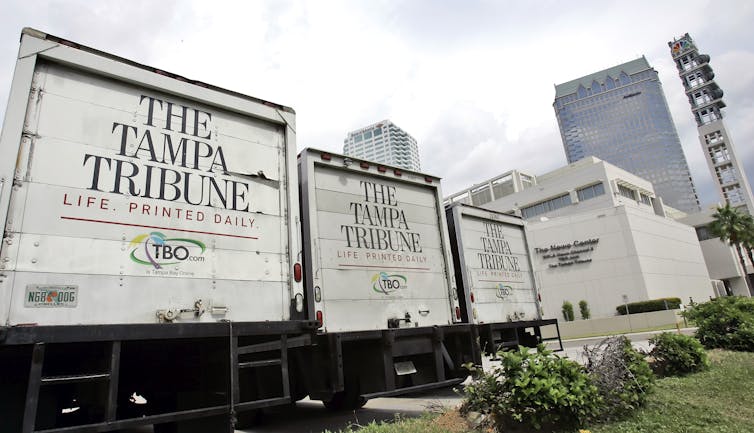
The Tampa Tribune closed abruptly on May 3, 2016, after covering the city for 123 years. AP Photo/Chris O’Meara
Most Americans have 24/7 access to unlimited news and information through their social media feeds, including local news influencers. Does this counteract the loss of local reporting?
I think an important distinction needs to be made between carefully reported and fact-checked articles and what seems like a glut of information at our fingertips at all times. Beyond the surface-level appearance of countless news sites, social media reports offer relatively few new facts that have been borne out of rigorous reporting.
You could say that Americans are living in a new golden age of political discourse, where we constantly see a churn of social media-based forms of expression. But that’s not necessarily journalism.
When we’re talking about the collapse of newspapers and fewer newspaper journalists working their beats, it would be an entirely different story if that journalism were being replaced by other institutions, by influencers, by podcasters. But many of those outlets are amplifying opinion-based commentary and punditry.
That’s not the same thing as reporting that adheres to journalistic norms and introduces new information into the world. Losing this kind of knowledge production hurts communities everywhere – from small towns and rural areas to major cities like Pittsburgh.
Victor Pickard does not work for, consult, own shares in or receive funding from any company or organization that would benefit from this article, and has disclosed no relevant affiliations beyond their academic appointment.
That’s the legal question at the heart of Watson v. Republican National Committee, the mail-in ballot case the U.S. Supreme Court took up in November 2025. The court will most likely hand down a ruling before the midterm elections in 2026.
Mississippi law, similar to that of 15 other states, allows for mail-in ballots postmarked by Election Day to be received by election officials up to five days later, then counted.
But the Republican National Committee is arguing in the Watson case, which was brought against the state of Mississippi in January 2024, that this procedure is not legal. An election, the argument goes, includes the receipt of ballots; therefore, all ballots must be in hand at the close of Election Day – the congressionally established “Tuesday after the first Monday” in November.
President Donald Trump’s March 2025 executive order 14248 similarly calls for ballots to be received no later than Election Day if they are to be counted, saying that doing otherwise “is like allowing persons who arrive 3 days after Election Day, perhaps after a winner has been declared, to vote in person at a former voting precinct, which would be absurd.”
The Supreme Court’s decision on mail-in ballots could have major consequences for the 47.6 million Americans who voted by mail in 2024, as well as more than 900,000 overseas military and civilian voters covered under the Uniformed and Overseas Citizens Absentee Voting Act. More than 28 million of the 47.6 million domestic mail-in votes and nearly 800,000 of the 900,000 votes cast and counted under the uniformed and overseas citizens act were from states that allow for return of mail-in ballots after Election Day.
Currently, 16 states plus the District of Columbia allow domestic absentee ballots that are postmarked by Election Day to be counted if they arrive after Election Day; 29 states extend that right to military and civilian voters living overseas, recognizing that international mail often delays ballot return.
The Supreme Court will decide whether federal law overrides state election administration in determining whether ballots that are postmarked by Election Day but arrive later can be counted.
A 250-year history
The history of absentee, or mail-in, ballots in U.S. elections stretches back 2½ centuries.
Pennsylvania passed the first law allowing soldiers to vote absentee in the War of 1812, a right expanded in the Civil War when 19 Union and seven Confederate states allowed soldiers to vote absentee.
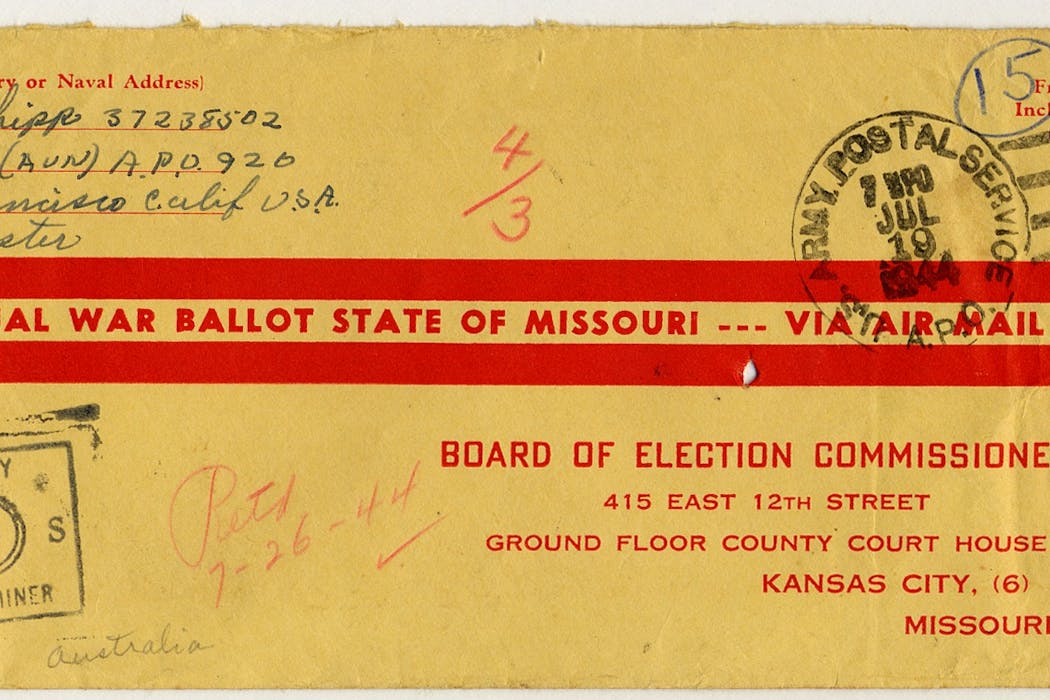
Civil war soldiers who were away from their home state during the 1864 Ohio state election voted on tally sheets that were mailed in envelopes like this one. National Postal Museum, Smithsonian Institution
Some civilians residing overseas, including civilian government employees and spouses and dependents of military and civilian employees, gained absentee ballot voting rights with the 1955 Federal Voting Assistance Act. All overseas U.S. citizens were enfranchised with the 1975 Overseas Citizens Voting Act. The 1986 Uniformed and Overseas Citizens Absentee Voting Act consolidated military and civilian voting rules. Later laws addressed electronic communications.
Over 1,000 military service members requested an absentee ballot in Mississippi’s 2024 election, along with nearly 1,000 civilian overseas voters. Nationally, more than 900,000 people voted in 2024 under the uniformed and overseas citizens act.
Many of these U.S. citizens would be affected by a ballot receipt deadline on Election Day. Their votes, coming from around the world, are often not able to be counted because of late arrival.
Overseas absentee military and civilian ballots came to widespread notice in Florida in the 2000 presidential election. That election – and ultimately the presidency — centered on state election law being waived by canvassing boards under pressure from the Republican Party to count military and civilian absentee ballots received after Election Day.
The Supreme Court decided in December 2000 to stop further counting of mail-in ballots received after Election Day because of tight certification deadlines, with the Electoral College meeting just six days later.
Congress was concerned about the unequal treatment of ballots at home and abroad in the 2000 election. To move toward addressing these concerns, Congress passed the Help America Vote Act in 2002, which includes measures to facilitate overseas voting.
The Federal Voting Assistance Program is charged with making it easier for overseas voters to vote. It continues to find obstacles, including problems in returning ballots on time. Meanwhile, Florida election supervisors in November 2025 requested that Florida officials reinstate a checkbox that was dropped from Florida absentee ballots in 2021. The checkbox allowed the voter to request an absentee ballot for the next election.
Mail-in ballot security
Following concerns about the security of mail-in ballots in the 2000 election in Florida, the 2002 Help America Vote Act required that all states have a minimum security requirement.
Amanda Klekowski von Koppenfels does not work for, consult, own shares in or receive funding from any company or organization that would benefit from this article, and has disclosed no relevant affiliations beyond their academic appointment.
Now, however, plenty of observers around the Internet are wondering if she and this man have also made their relationship official.
Which is to say a lot more clearly: Did Kate Gosselin get married?!?
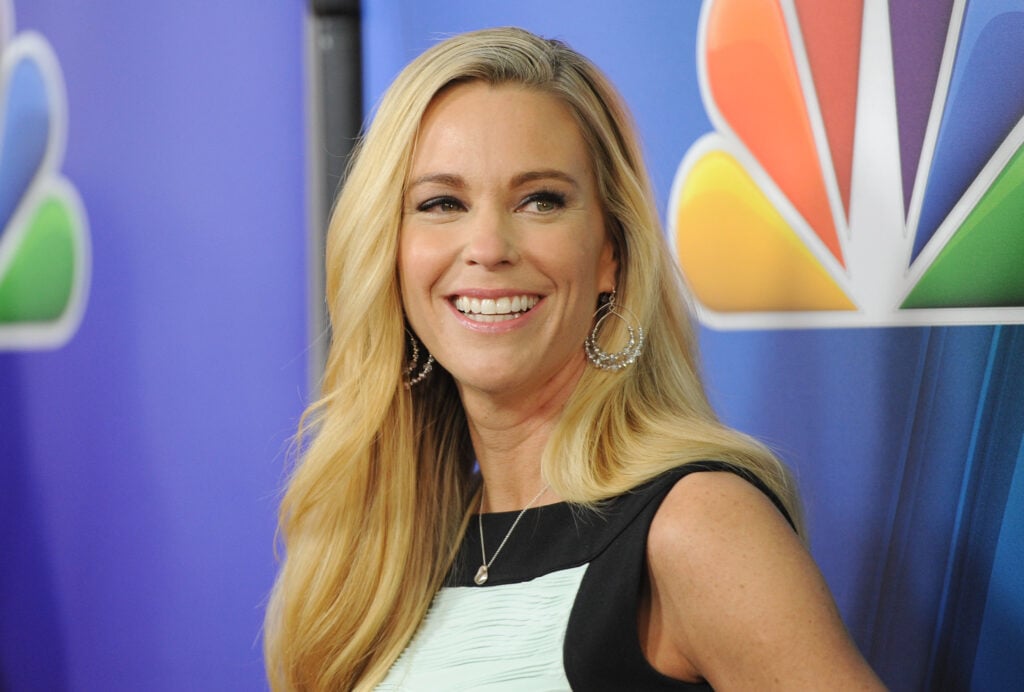
Kate Gosselin arrives at NBCUniversal’s 2015 Winter TCA Tour – Day 2 at The Langham Huntington Hotel and Spa on January 16, 2015 in Pasadena, California. (Photo by Angela Weiss/Getty Images)
The mom of eight stirred up speculation that she exchanged vows with her boyfriend and former bodyguard, Steve Neild, in a TikTok post on January 7.
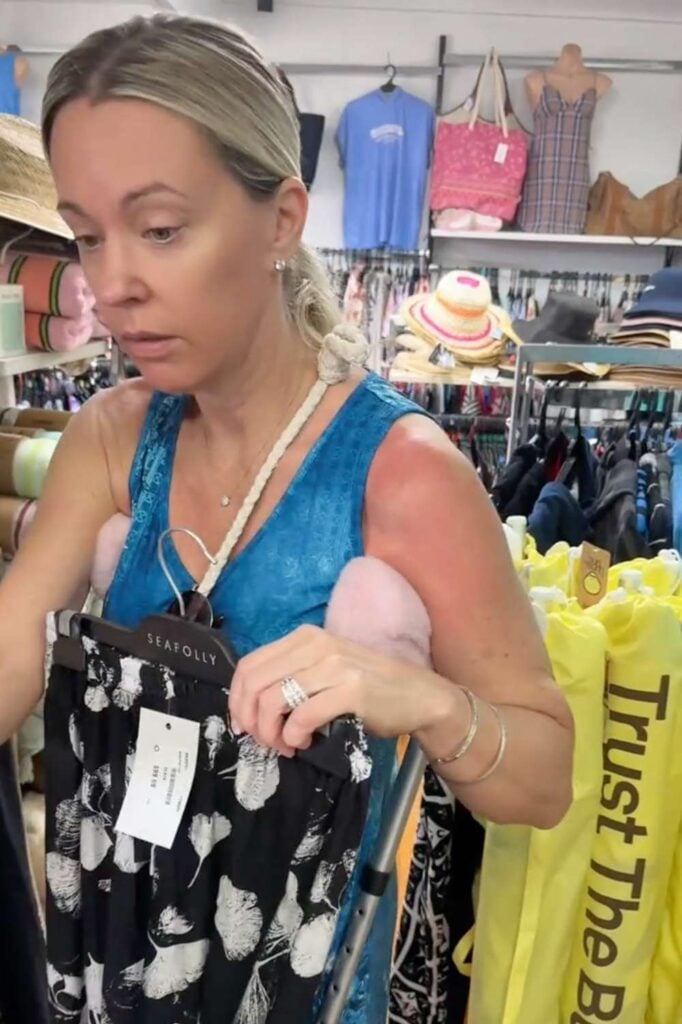
In the footage, which Neild recorded, she’s looking through a shop in New Zealand and has a ring that resembles a wedding band on her ring finger.
A bunch of followers took note and came right ask to inquire over the piece of jewelry.
“Whooaaaa. Did you get married?” one person asked very simply.
(Instagram)
As it turns out, these same followers were in for a disappointment.
“No lol,” the polarizing personality responded. “That’s just my regular jewelry.”
Gosselin concluded the video by telling her followers that she spent the equivalent of over $170 in the store.
“And my GoFundMe, Steve, treated me to a few items,” she said. “But he also got a t-shirt and a pair of shorts. It’s really rare that he buys himself any clothing, so I’m really happy and proud of him.”
“Now we’re going to the beach!” she said as the video wrapped up.
Kate Gosselin of the television show “Kate Plus Date speaks during the HGTV segment of the 2019 Winter Television Critics Association Press Tour at The Langham Huntington, Pasadena on February 12, 2019 in Pasadena, California. (Photo by Frederick M. Brown/Getty Images)
This past fall, Gosselin revealed that she was in a relationship, as she told fans in a TikTok she was “super, super happy” and had been dating the mystery man for “a little over a year.”
Her son, Collin, and ex-husband, Jon, fired back shortly after this announcement, though, claiming that Kate has cheated on Jon way back in the day with this same person.
Collin, for his part, alleged that his mom “had an affair with our bodyguard way back in 2009 and for years would share hotel rooms with him while we went on family vacations” via his Instagram Stories.
(Photo Credit: Thos Robinson/Getty Images for Discovery)
“I feel very strongly on the matter of cheating and then blaming someone else for your own actions,” the 21-year old wrote. “Everyone says my dad and I are hung up on my mom. We are not. We have suffered the damage of a narcissist and cried together.”
Jon, meanwhile, remarried in November 2025, saying “I do” to Stephanie Lebo in Pennsylvania. His daughter Hannah, along with Collin, were in attendance.
Collin told Entertainment Tonight he was “very happy,” adding to this outlet:
“With everything he’s been through, it just highlighted even more for me that he’s really deserving of this.”
But this, unfortunately, is a bigger deal than having to postpone a Vegas residency.
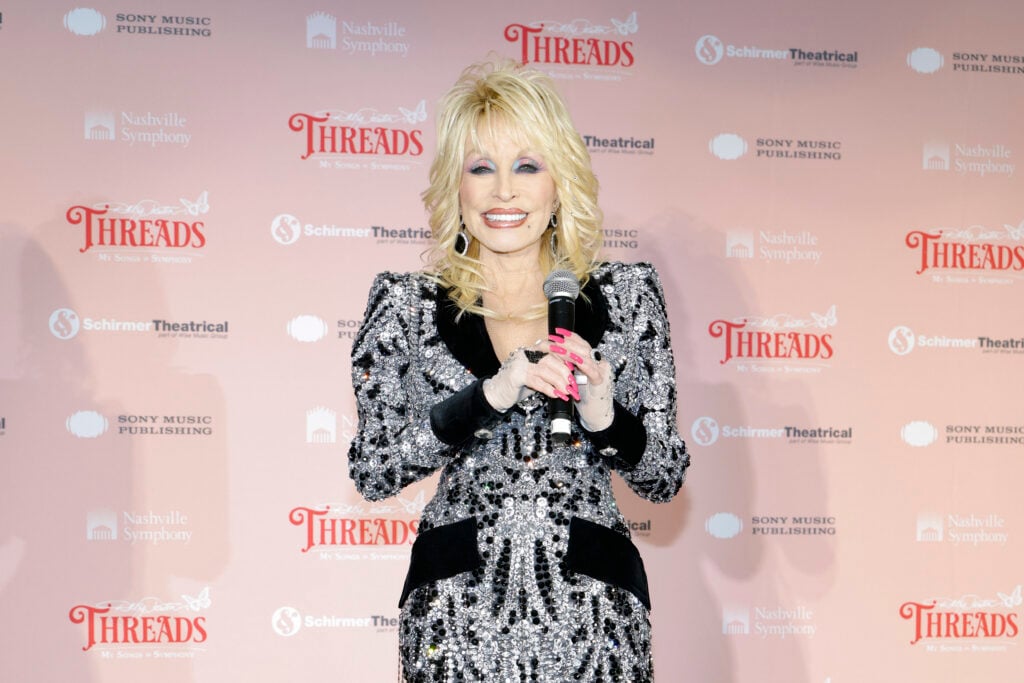
Dolly Parton attends Dolly Parton’s Threads: My Songs In Symphony World Premiere at Schermerhorn Symphony Center on March 20, 2025. (Photo Credit: Jason Kempin/Getty Images)
Where is Dolly?
On Wednesday, January 7, living legend Dolly Parton appeared on the Instagram page of the Grand Ole Opry.
“Well hey there Grand Ole Opry family,” she began the health update video.
“I just wanted to say how much it means to me that you’re all coming together again this year,” she expressed.
Dolly loves that fans are eager “to celebrate my big ol’ birthday with some of my songs.”
The event to which she refers is Saturday, January 17 — though her birthday will be on the following Monday, the 19th.
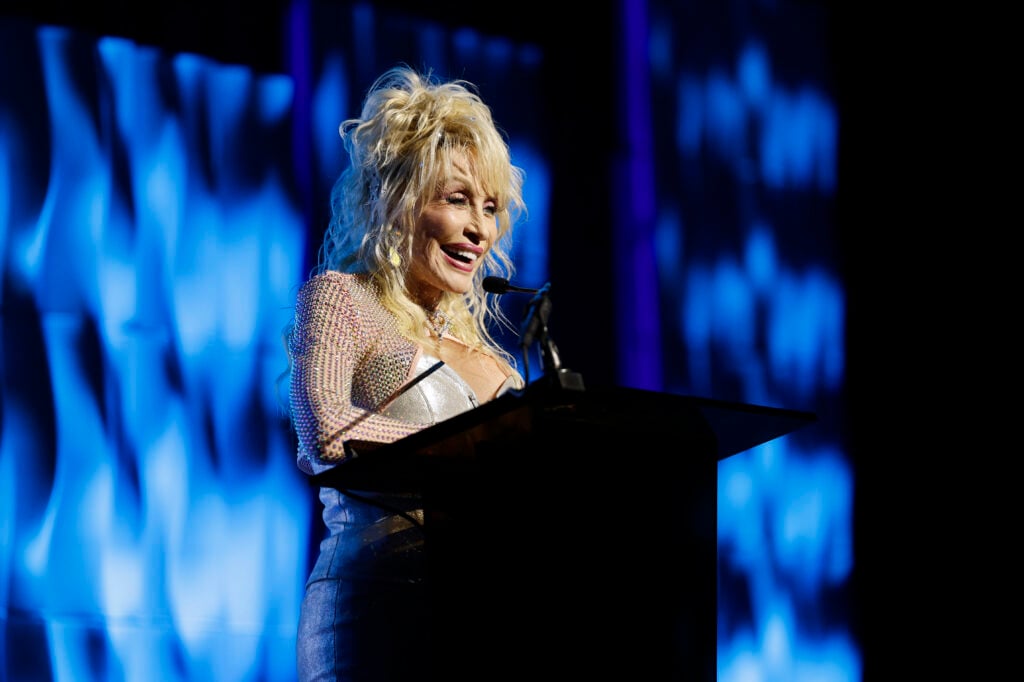
Dolly Parton speaks onstage at the 53rd Anniversary Nashville Songwriters Hall of Fame Gala at Music City Center on October 11, 2023. (Photo Credit: Jason Kempin/Getty Images)
“Some of my favorite memories happened right here on stage at the Grand Ole Opry,” Dolly gushed in her video.
“And I wish I could be there in person,” she affirmed.
“But,” Dolly assured her fans and followers, “I’ll be sending you all my love, for sure.”
Just because she won’t be there in person doesn’t mean that people shouldn’t celebrate in style, however.
Dolly urged her fans to attend and “have the best night ever.”
Despite the grim news, Dolly was quick to crack jokes at her own expense.
In particular, she alluded to how much cosmetic surgery she has had over the years.
This time, she told her fans, it wasn’t just a tune-up on her face and body. She’s having health issues.
Dolly Parton attends “Dolly: An Original Musical” fireside chat and press conference at The Fisher Center for the Performing Arts on January 28, 2025. (Photo Credit: Jason Kempin/Getty Images)
All along, Dolly has projected an optimistic outlook.
Whatever ails her, she doesn’t believe that it will be terminal.
Instead, she has framed this as “slowing down” for a while so that she can have many more years of fun and laughter.
It is of course important to note that Dolly’s husband died late last winter. That was ten months ago. He was 82.
Sometimes, a spouse passes away and the widow or widower keeps their memory alive for years or decades to come. But, other times, the heartbreak leads one spouse to follow the other sooner than anyone would like.
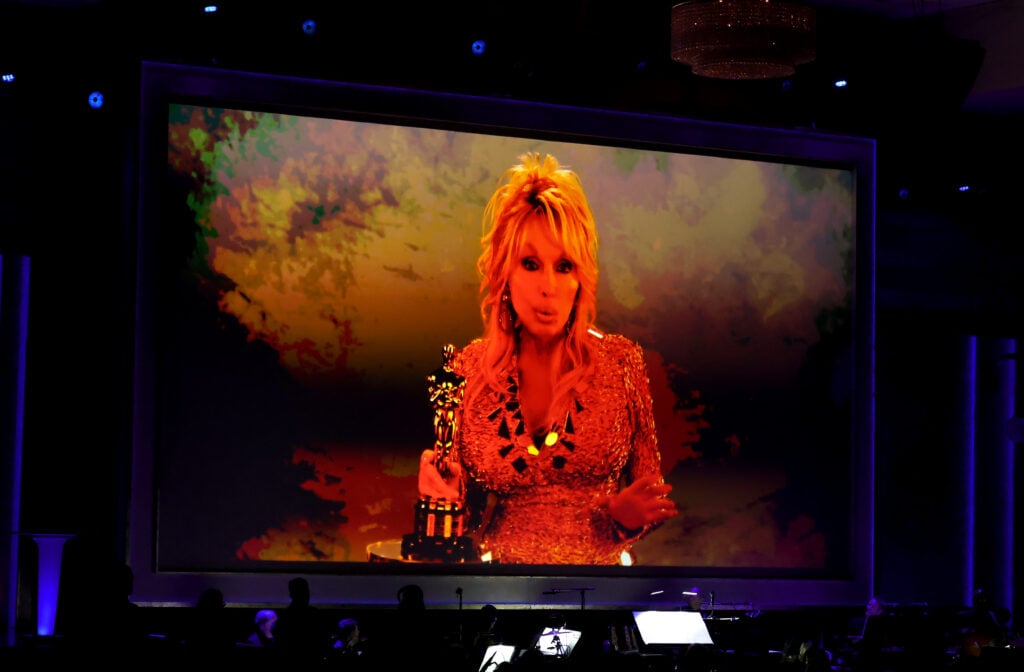
Dolly Parton accepts an Academy Honorary Award via video during the 16th Governors Awards on November 16, 2025. This was one of multiple appearances that she made remotely amidst “health issues.” (Photo Credit: Kevin Winter/Getty Images)
What’s making her sick?
One of Dolly’s ailments was a kidney stone. We know that much.
However, it’s clear that there is some sort of broader health issue that she and her medical team are addressing.
It would be irresponsible to speculate wildly on what it might be until we have more information.
Instead, we will simply wish her the best.
Happy early 80th birthday, Dolly. You’re a treasure, and we wish you many many more.
Looking beautiful as always, Kendall Jenner addresses the confessional camera on The Kardashians. (Image Credit: Hulu)
Though Kendall is in many ways the most relatable of the Kardashian-Jenner clan, many of her fellow Millennials (and Zoomers like her elder niblings) might not relate to this.
She’s not gay. She’s not bi. She’s not ace. Kendall does not identify as any part of the LGBTQ+ community — and promises that she’d come out if she were.
“I understand that coming out is not an easy thing for anybody, if not most people,” she acknowledged.
“And I’m not saying that’s an easy thing, but knowing, and I can speak for myself here,” Kendall noted.
She added: “And knowing myself, I think at this point in my life I’d be out if I was.”
She knows that she’d have a much easier time than most
To be clear, Kendall acknowledged that coming out is not necessarily “an easy thing.”
But then, neither is being closeted. Our homophobic society doesn’t make life easy.
“Knowing me and knowing how I would want to live my life, I would be” out, she affirmed.
Which is why the “narrative” that she’s gay or bi and is “hiding this thing” from her fans bothers her.
“I’ve seen really f–ked up things that are like, ‘It’s bad for business,’ and I’m like, ‘What? How?’ I don’t understand it,” Kendall expressed.
On a 2022 episode of The Kardashians, Kendall Jenner sits down with her famous mom to chat. (Image Credit: Hulu)
It’s difficult to pinpoint exactly where this speculation about Kendall’s sexuality originates. Probably because there are different things.
For some, it’s that Kendall is tall, likes sports, and has certain features that just feel a little sapphic. A combination of stereotypes and gaydar.
Others may unfairly be roping anyone who’s ever been a close friend of Cara Delevigne into the LGBTQ+ umbrella. Folks, Cara is a real person, not a velociraptor. She has friends who are just her friends.
Also, one of Kendall’s most widely relatable characteristics is that she is the only one of Ker-Jenner siblings who doesn’t have kids. That’s normal for Millennials, but some have turned this into “evidence” of her sexuality.
As for Kendall, she believes that it’s because she’s kind of private about her dating life — when you compare her famous liaisons to those of her sisters. She’s photographed on dates, they showcase their men on social media.
Speaking to the confessional camera on The Kardashians, Kendall Jenner shares her thoughts. (Image Credit: Hulu)
‘But I don’t know! Who knows?!’
“All’s to say, as of today, I am not [gay],” Kendall affirmed.
She then amended: “I don’t think I will be, but I’m not closing doors to experiences in life.”
Kendall later elaborated: “I don’t think I have a bisexual or gay bone in my body, but I don’t know! Who knows?!”
She added: “I’m all down for experience — not against it whatsoever — but I’ve never been there before.”
Presumably, she’ll let us know if that changes. This is a very solid answer, particularly from a straight woman who has every right to feel annoyed at the rampant speculation about her sexuality.
In the two days since Renee Good was shot and killed by an ICE agent, the incident has sparked one of the most contentious nationwide debates in recent memory.
Millions have reacted with outrage at the sight of a federal agent shooting an unarmed American citizen in broad daylight.
Others have attempted to justify the killing of a 37-year-old mom by claiming that the agent, Jonathan Ross, feared for his life and had no choice but to fire his weapon multiple times.
We’ll leave it up to you to decide if a new video angle helps or hurts that argument.
In footage obtained by TMZ, Ross can he heard saying, “It’s fine, dude. I’m not mad at you” as Ross circles her vehicle.
Her wife, Rebecca Good, encourages the officer to “go get some lunch” and assures him that they have no intention of changing their license plates or other.
At that point, Ross repeats, “Get out of the f–king car” (but, crucially, does not present a badge, identify himself, or cite any reason for his demand).
Good responds by reversing her car and then driving away from the scene (previous footage seems to indicate that her tires were pointed away from Ross).
At that point we hear multiple shots fired, followed, seemingly, by Ross uttering, “F–king b-tch.”
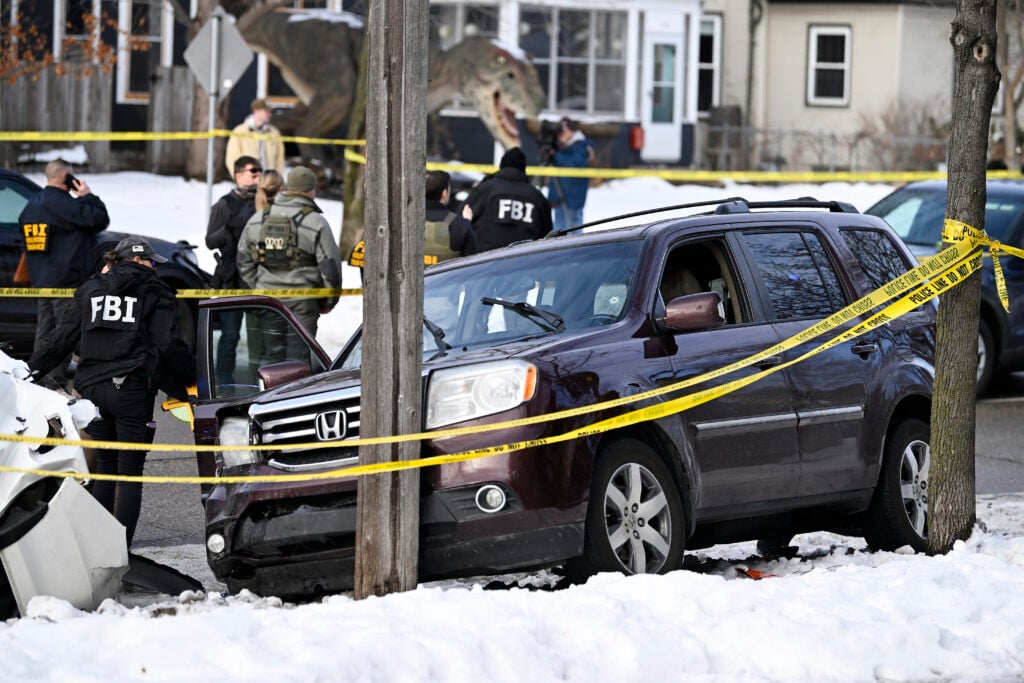
Members of law enforcement work the scene following a suspected shooting by an ICE agent during federal law enforcement operations on January 07, 2026 in Minneapolis, Minnesota. (Photo by Stephen Maturen/Getty Images)
Ross seemingly shot the footage himself and therefore does not appear on camera at any point.
As a result, we don’t see him pull the trigger or curse at Good, but the voice we hear in the final seconds of the footage appears to be the same as the one that previously issued the commands.
The new footage has prompted heated reactions across social media:
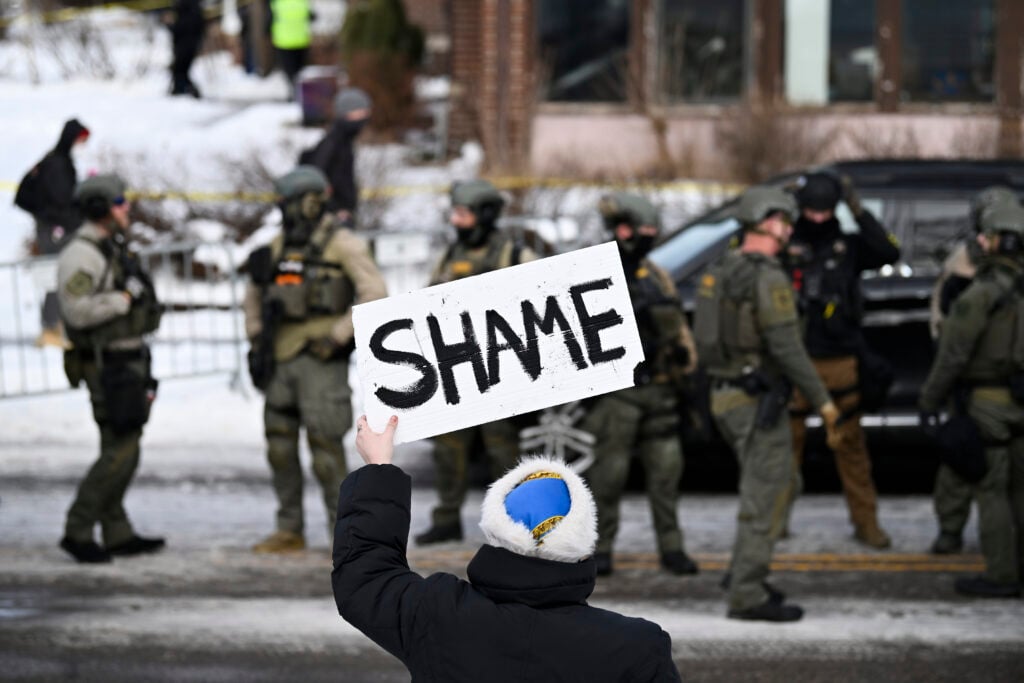
An onlooker holds a sign that reads “Shame” as members of law enforcement work the scene following a suspected shooting by an ICE agent during federal law enforcement operations on January 07, 2026 in Minneapolis, Minnesota. (Photo by Stephen Maturen/Getty Images)
“Good’s last words to Ross: ‘That’s fine dude, I’m not mad at you. Ross after shooting and killing her seconds later: ‘F–kin’ b-tch,” wrote one user on X (formerly Twitter).
“JESUS CHRIST, HE CALLS HER A ‘F–KING B-TCH’ AFTER MURDERING HER,” another added.
“This video (like the others) does not demonstrate the need for lethal force,” a third pointed out, adding:
Stepping out of the way (which the officer was already doing) and allowing two unarmed civilians to leave the scene is a better outcome than firing three shots at close range to kill one of them.
It remains unclear if Ross will face any criminal charges or even disciplinary action from within his organization.
We will have further updates on this devleoping story as new information becomes available.
If you have a veritable Everest of clutter in your kitchen, then turn that mountain into multiple molehills. This nifty approach makes it more manageable.
Mashed – Fast Food, Celebrity Chefs, Grocery, Reviews
When you prepare this classic comfort food, you don’t expect unpleasant textures and unsatisfying flavors. However, multiple Costco shoppers experienced both.
Mashed – Fast Food, Celebrity Chefs, Grocery, Reviews