Categories
Hip Hop

Best Peabo Bryson Songs: Afro-Optimism Anthems

Peabo Bryson

It was more than a simple love song. When Peabo Bryson unabashedly proclaimed “I feel like reaching for the sky/…I’m so inspired/I wanna reach a lil’ higher,” he was offering a message to Black America embedded, like many R&B songs of the time, in a tune about romance. “Reaching For The Sky,” Bryson’s 1977 debut major-label single, spoke to an age of audacious Black achievement.

Set off by the passage of the Civil Rights Act of 1964, it was an era that saw Black people rack up achievements likely beyond the most fanciful imaginings of the Africans who were brought to this continent in chains, as property, to work the land and build the country’s infrastructure from scratch: Former NAACP National Defense Fund lawyer Thurgood Marshall became the first African American to sit on the U.S. Supreme Court in 1967; model Beverly Johnson, in 1974, was chosen to be the first Black woman on the cover of American Vogue; and one year before the nation celebrated its 200th birthday, baseball’s Henry “Hank” Aaron, who started playing on Negro teams, broke the record for most home runs in the once-segregated major leagues.

With “Reaching For The Sky,” Bryson offered an inspirational anthem, not just for those whose accomplishments made headlines, but for the everyday Black people who braved entrenched racism in pursuit of opportunities to improve their lives and those of loved ones.

YouTube Video
Click to load video

Bryson’s empathetic connection to the plight of other African Americans came to him by way of his humble raising. He spent his youth in a rural Greenville, SC flat with no running hot water. As he once put it, “some people try to put a greater distance between the early part of their lives and the point of success they’ve reached. I grew up a country boy and my grandfather’s farm of 100 acres was the country. I plowed with a mule, picked cotton, and planted everything that grows. I even washed toilets bowls for a living.” Even at a point in which he was gracing the cover of Jet magazine in 1982, Bryson’s down-home roots were evident: “…he enjoys a plate of grits, salmon, and biscuits just as much as he does an eight-course meal featuring filet mignon and Dom Perignon.”

Listen to the best Peabo Bryson songs on Apple Music or Spotify.

Bryson’s identification with the struggles and workaday heroism of ordinary Black people even impacted his early career choices. Despite wide opposition to the Vietnam War from such Black luminaries as the late Dr. Martin Luther King Jr. and boxer Muhammed Ali, Bryson – then an aspiring singer who was lucky enough to avoid the draft – chose to perform for the troops, which comprised a socially disproportionate number of African Americans. The experience irrevocably transformed the singer: “My values changed. Things that I thought were important didn’t seem very important anymore after I saw what was going on over there.”

Bryson didn’t make overt protest music in response to the racial inequities he witnessed and experienced. Instead, he crafted songs that reflect what writer/radio personality Ayana Contreras calls Afro-Optimism, a form of Black expression that is “imbued with buoyant hopes” as a response to “crippling injustice.” Afro-Optimism defines the first phase of Bryson’s career and provides the emotional foundation for his phenomenal crossover success as an all-purpose balladeer, lending his voice to an eye-popping range of pop culture phenomena from animated Disney flicks to the theme for the afternoon soap opera One Life To Live. Bryson can see artistic potential in both challenging social circumstances and the most mainstream-skewing pabulum.

With a force powered by his abiding Southern Baptist faith, Bryson sings in such a way that makes almost anything seem within human reach, whether it’s the social, cultural, and political advancement of Black people or escapist Disney fantasies about whole new worlds. As he belted on 1981’s “Ballad For D.,” a tribute to multi-instrumentalist/crooner Donny Hathaway: “When you wish upon a star/It’s not all in your mind/It’s getting closer.” Bryson’s conviction comes from a belief in what is possible.

Here’s a guide to some of the best of Peabo Bryson’s early songs.

Afro-Optimism Anthems

“Reaching For The Sky” is not the only Peabo Bryson song to reflect the striving post-Civil Rights-era consciousness of many African Americans. Also included on his major-label debut is the soaring “Hold On To The World,” on which he prompts: “Don’t you know…that old universe is calling your name?” Similarly, on the secularly-titled “Love Is Watching You,” from his 1978 album Crosswinds, Bryson makes it clear that his sense of the possible is divinely inspired: “Don’t you know that heaven is watching you?”

He told Blues & Soul in 1979: “I always acknowledge the presence of God in everything I do. After all, that is the source for all the creativity. And He is the only power greater than anything, so I don’t look at other people in awe. I realize that I can do all the things that the Creator has given me the ability to do.”

YouTube Video
Click to load video

Love & Heartbreak

Almost all of Peabo Bryson’s songs are rooted in themes of enduring love and dealing with heartbreak when things don’t work out for whatever reason, including – as he sings on the Doobie Brothers-esque “When Will I Learn” – when “it was the right thing at the wrong time.” He promotes emotional openness in pursuit of romance, an approach that’s summed up in the title to one of his biggest early hits: “Let The Feeling Flow.” As Bryson once told Blues & Soul: “I’m not afraid of being vulnerable. There’s nothing wrong with admitting that you’ve loved and lost, that you’ve been hurt, felt pain. The most important thing is that you survive and that’s something to be proud of.”

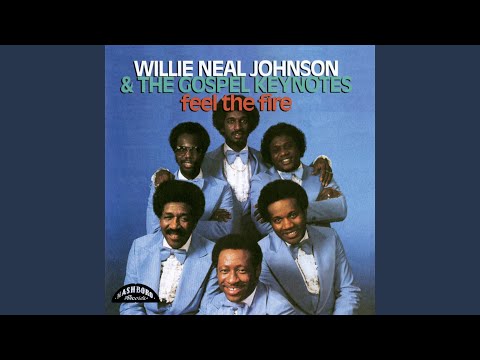
Bryson is a gentle moralist, concerned with his own conduct throughout the ups and downs of a relationship. He sings on the tender slow jam “Feel The Fire,” once boldly covered by R&B vocalist Stephanie Mills: “And if I should lose your love/For any reason, any reason at all/Then let my record show/I gave you all the love I know.”

Bryson’s forte is heart-to-heart connection, as opposed to private parts bumping under blue lights in the basement. This made him a throwback in the erotically liberated ‘70s. “When I was a teenager, I thought you had to be in love to seriously consider sex,” he once told an interviewer. “That was the way I was brought up and it just stuck.” The tender “Don’t Touch Me” exemplifies Bryson’s ethos and how he was concerned about issues of consent way before the #MeToo era: “If you think I should/Girl, I’m gonna love you/’Til the feeling is right/…And let’s not make love/Until you mean it.”

YouTube Video
Click to load video

The Duets

Like a discerning lover, Peabo Bryson wants duets to yield satisfaction for all parties involved. This is likely why his pairings with women vocalists (Regina Belle, Celine Dion) are such a notable part of his canon. His most frequent early mic partner was Roberta Flack, the gifted musician who began exploring her talents at the Lomax African Methodist Episcopal Zion Church in Black Mountain, North Carolina, and later refined them at Howard University, where she received a full scholarship and graduated at 19. Flack was known throughout the 70s for her exquisite collabs with Howard classmate Donny Hathaway. Bryson stepped in to stand by Flack’s side after Hathaway’s tragic death.

Flack and Bryson made an ideal pair because of the similarities in their backgrounds and sense of purpose in music. Flack lives by the words of an old Methodist hymn (“Shun not the struggle/’tis God’s gift”) and infuses her music with racial pride: “I think everything you do as a Black person in this country represents a struggle for survival.” Their sweet “Tonight I Celebrate My Love” – an adult contemporary mainstay that hit the pop Top 40 and sold more than a million copies – rises above the saccharine because of the implicit subtext that it’s wondrous for Black folks to be able to focus on love and nothing more.

Another of Bryson’s early duet partners was Natalie Cole, the wild-hearted daughter of showbiz legend Nat King Cole, with whom he did an entire album, We’re The Best Of Friends. Their duets are notable for their tender soulfulness. “This Love Affair,” penned by Cole and her then-husband Marvin Yancy, is a brilliant showcase for Bryson and Cole’s contrasting vocal styles. She opens the song almost conversationally, singing, “This love a-ffair…” Then she pauses for a breath as if coming up with the words on the spot, before she continues, “…of ours…” When it’s Bryson turn on the record, he digs deep and issues a soaring declaration: “This harrrrr-mo-nyyyyy weeeee share is something wonderful.” Bryson and Cole have two different, but complementary, ways of bringing drama and emotional truth to a song.

YouTube Video
Click to load video

Another gem from the album is the rhythm-driven “Love Will Find You,” written by Bryson. Cole’s vocals recall both the smoothness of her father and the undeniable gospel-soul influence of Aretha Franklin. When her voice joins with Bryson’s, the effect is inspirational in its sheer power.

For as great as these other duets are, none have the sentimental value of the slow-jam-groove “Here We Go,” which saw Bryson lend his vocals to the first posthumous single by the beloved Minnie Riperton, who died from breast cancer in 1979 at age 31. Although Bryson never met Riperton in person, he was thrilled by the opportunity to work on the song, calling it “one of the greatest honors of my life.” Bryson lends a vitality to the record that makes it nearly impossible to hear it as maudlin. As he and Riperton harmonize about the highs of love and “never coming down,” “Here We Go” becomes nothing less than a toast to one of life’s many joys.

YouTube Video
Click to load video

Finger-snappers

Bryson’s first solo single, on the independent Shout Records, was called “Disco Dancer.” But after that, he turned his focus away from music designed to make your body move. “After you’ve been dancing at a disco all night long, you’re not going to go home and continue to play disco music,” he told the Associated Press in 1979. “If you think about it, you don’t want to hear disco in bed.”

As a result, Bryson’s best uptempo joints progress at an easy foot-tappin’, finger-snappin’ pace. “A Fool Already Knows” is a mean shuffle about how “a wise man will never fall in love,” therefore he knows less about life than someone who follows his heart. “Crosswinds” recalls the Philly-steeped soul of Hall & Oates’ “She’s Gone,” as Bryson seems to issue an actionable appeal to anyone within earshot: “Love…is calling out your name.”

YouTube Video
Click to load video

On other songs, Bryson uses the faster tempo as a way to cut directly to inspirational Afro-Optimistic messages. He sings, on the rhythm-guitar-driven “Go For It,” “Whether I’m your friend or your lover/I want to see you make it to the top somehow.” On “Spread Your Wings” – the closest he comes to making space-funk – he has a verse that offers advice to the young, gifted, and Black: “Born one of the chosen few/Heaven shined her glory/Pay your dues…/Keep your faith/And never be afraid to try.” Then he references his breakthrough hit: “You can reach, reach the sky.”

All of these songs speak directly to the reason Bryson makes music. As he once said, “…people need to hear [my songs] to know that they’re still alive.”

Browse Peabo Bryson’s music on vinyl here.

​Discover more about the world’s greatest R&B artists | uDiscover Music

Categories
Hip Hop

‘A Girl Like Me’: How Rihanna Set Her Sound In Motion

Rihanna A Girl Like Me album cover

When looking at Rihanna’s career trajectory, most people point to her 2005 debut single, “Pon De Replay,” or her 2007 international smash hit “Umbrella,” as her starting point. But it was her second album, A Girl Like Me, that set Robyn Rihanna Fenty’s future in motion.

The dancehall “chune” “Pon De Replay” displayed the Bajan icon’s ability to combine her native musical roots with commercial appeal; but at the start of her career it often left her unjustly pigeonholed by critics. Yet while “Umbrella” found her reaching new heights as a superstar-gone-bad-gal, her previous two albums often went overlooked.

A Girl Like Me started with a radio hit that sampled Soft Cell’s 1981 synth-pop cover of Gloria Jones’ Northern soul hit “Tainted Love.” “SOS” – and its respective “la la la” hook – reached No.1 on the Billboard Hot 100 and Dance Songs chart. This nicely followed the unexpected success of “Pon De Replay,” continuing Rihanna’s genre experimentation.

More than your average 18-year-old

Released on April 10, 2006, A Girl Like Me proved that the Def Jam star and Jay-Z protégé was more than your average 18-year-old. By the time of its release, she’d already adopted the one-name moniker (a true sign of divadom), and she would notch two more Top 10 singles on the back of “SOS.”

YouTube Video
Click to load video

The first of these was the Evanescence-inspired “Unfaithful,” a dark piano ballad that starts out with a “story of my life” opener that manifests into a tale of unrequited love penned by Ne-Yo and produced by Stargate. The second, “Break It Off,” was a dancehall hit that recalled the riddims of her debut album, Music Of The Sun, and featured Sean Paul. A Girl Like Me’s third single, “We Ride,” brings the spirit of 90s-centric hip-hop soul into the mid-00s. While the song didn’t garner the same commercial success as its immediate predecessors, her diehard fanbase still regard it as an underappreciated cult favorite.

Outside of these singles, listeners get to experience the truest indications of Rihanna’s emerging music persona. Though her follow-up album would initiate the Good Girl Gone Bad phase, songs like “Selfish Girl” would lay out her “by any means necessary” nature. Hidden beneath a bubbly reggae-pop arrangement, “Selfish Girl” implies that Rihanna’s willing to venture to the dark side if that means pleasing her crush. It’s the underlying premise of A Girl Like Me. If the album doesn’t quite go so far as the whips and chains of “S&M,” it’s certainly an indicator of what was to come.

YouTube Video
Click to load video

Laying the template for cultural dominance

While her next album, Good Girl Gone Bad, was straightforward in its titling, A Girl Like Me walks the fine line between overt sexuality and radio-friendly pop, as evidenced on the rocksteady jaunt “Kisses Don’t Lie.” The album strikes a perfect balance between the star-making hits that would propel Rihanna to superstardom and her own musical identity as inspired by her native roots and personal artistry. For every pop and R&B ballad on the record, there’s an equal amount of dancehall and soca tracks.

Rihanna wasn’t the first artist to incorporate patois slang into pop music. Everyone from Bob Marley to Shabba Ranks and Sean Paul had been doing it for years. But Rihanna was certainly one of the first solo female artists to do it on a massive scale, speaking to an entire generation in the process. From “Dem Haters” (featuring fellow Barbados native Dwayne Husbands) to “Crazy Little Thing Called Love” (which takes its cues from Marley, Barrington Levy, and Dawn Penn), Rihanna proudly wears her influences on her sleeve and puts the spotlight on Caribbean music.

A Girl Like Me not only introduced the world to an emerging pop force to be reckoned with, but an artist serious about her craft, laying the template for her complete cultural dominance in the near future.

Buy A Girl Like Me on vinyl.

​Discover more about the world’s greatest R&B artists | uDiscover Music

Categories
Hip Hop

‘Club Classics Vol. 1’: Soul II Soul’s Debut Album Changed The Game

Soul II Soul Club Classics Vol. One album cover

The year 1989 was a momentous one for London’s Soul II Soul, who took the world by storm with their unique and distinctive mash-up of Caribbean-tinged soul, funk, reggae, hip-hop, house, and jazz flavors. A collective of singers, instrumentalists, rappers, and DJs led by the MC and producer Jazzie B (AKA “The Funki Dredd”), the group were hugely successful in their home country and even made a huge impact in America, where they topped Billboard’s R&B singles charts twice within the space of three months: first with the infectious “Keep On Movin’” and then with its equally appealing follow-up, the UK No. 1 “Back To Life (However Do You Want Me),” both showcasing the exquisitely soulful vocals of Caron Wheeler.

YouTube Video
Click to load video

Those two chart-topping singles were plucked from the group’s debut album, Club Classics Vol. 1, a landmark release that altered the landscape of R&B at a time when the brash, hip-hop-influenced swingbeat sound had been America’s dominant sound. After Soul II Soul’s arrival, many R&B records aped the distinctive drum loop and string arrangements that had defined the group’s two biggest singles; and Jazzie B and his partner in crime, the band’s keyboardist Simon Law, were also in demand as producers and remixers, working on tracks for a variety of artists, ranging from US house music queen Kym Mazelle to R&B star Jody Watley, and even the reggae group Ziggy Marley & The Melody Makers.

Listen to Soul II Soul’s Club Classics Vol. 1 now.

Offering an assortment of different musical styles, Club Classics Vol. 1 reflected the musical eclecticism of British club culture and stayed true to the band’s motto: “A happy face, a thumpin’ bass, for a lovin’ race!” Its tracks ranged from minimalist electro-funk (“Fairplay,” featuring vocalist Rose Windross) to bubbling house music (“Holdin’ On”), sampladelic hip-hop (“Feelin’ Free”), and jazz-infused dance cuts (“African Dance”). Though it covered a lot of different musical bases – and sometimes sounded like it featured several different bands – the LP was given a sense of cohesion by Jazzie B’s groove-conscious production that gave each track an addictive dance pulse.

YouTube Video
Click to load video

On its release in April 1989, Club Classics Vol. 1 (which was retitled Keep On Movin’ for the US market) rocketed to the summit of the UK albums chart during an incredible 60-week stay in the hit parade. It also topped the US R&B charts and rose to No. 14 in the Billboard 200. In 1990, two tracks from the album brought the group a couple of Grammy awards: “Back To Life” won Best R&B Performance By A Duo Or Group With Vocal, while “African Dance” grabbed the Best R&B Instrumental Performance. Quite an achievement for a debut album that more than lived up to its title.

Listen to Soul II Soul’s Club Classics Vol. 1 now.

​Discover more about the world’s greatest R&B artists | uDiscover Music

Categories
Hip Hop

Sekou Returns With New Single ‘Dangerous Lover’

Sekou album cover

Sekou has returned with his new single “Dangerous Lover,” marking his first new release since last year’s In A World We Don’t Belong Pt. 1. The British singer-songwriter unveiled the track on April 3 as he builds momentum ahead of his upcoming UK and EU headline tour, which includes dates in Brussels, Amsterdam, Paris, Manchester, and London.

On “Dangerous Lover,” Sekou leans further into his R&B influences, shaping a sleek, modern record rooted in honesty and self-reflection. In a statement shared with the release, he described the song as an escape as well as a personal reckoning, explaining that he was focused less on perfection in the studio and more on truth. That perspective carries into the single itself, which arrives as another confident step forward in his evolution as both a vocalist and songwriter.

YouTube Video
Click to load video

The new single follows the release of In A World We Don’t Belong Pt. 1, the five-track mixtape that showcased Sekou’s ability to blend familiar melodies with a fresh, contemporary edge. The project included highlights such as “Catching Bodies” and “Never Gunna Give You Up,” helping further establish his sound and deepen his connection with listeners. Next month, Sekou will bring that material and more to the stage when he launches his In A World We Don’t Belong UK and EU Tour. Demand for the run has already been strong, with additional dates added, and the itinerary includes a London stop at EartH Hackney on April 20.

Sekou has also stayed busy in recent months with a series of high-profile appearances and milestones. He played a pop-up show at London’s Rough Trade with Kevin Abstract, opened for Sam Smith during the To Be Free: San Francisco residency, and made his BBC Radio 1 Live Lounge debut with performances of “Catching Bodies” and Justin Bieber’s “Yukon.” He also earned his first MOBO Awards nomination for Best Newcomer.

Listen to “Dangerous Lover” here.

​Discover more about the world’s greatest R&B artists | uDiscover Music

Categories
Hip Hop

2BYG Return With New Single ‘Be Mine’

2Byg Be Mine

2BYG have shared their new single “Be Mine,” along with an official video, marking the latest release from the rising Texas R&B quartet. Out now via Waystar Records/Def Jam Recordings, “Be Mine” also arrives as the group prepares to unveil a deluxe edition of their 2025 debut mixtape, The Yearbook: 2nd Semester, in the near future.

On “Be Mine,” 2BYG lean into a classic-minded R&B approach, pairing the song’s lovestruck lyrics with warm harmonies and a sleek arrangement. The track finds the group singing about building up the nerve to tell someone how they feel, giving the single an easy, immediate hook. The newly released visual extends that mood, putting the spotlight on the quartet’s chemistry as performers and continuing the strong visual presentation they have established across recent releases.

YouTube Video
Click to load video

The new release follows a string of milestones for the Dallas-Fort Worth group. Earlier this year, 2BYG appeared on Netflix’s Star Search, where they performed *NSYNC’s “It’s Gonna Be Me” for a panel that included Jelly Roll, Chrissy Teigen, and Sarah Michelle Gellar. Before that, they closed out 2025 with the holiday song “One Christmas Wish,” which they also performed live on FOX 4 News Dallas-Fort Worth. Their recent single “Someone Like You” also earned outside attention, with outlets including VIBE and HOT 97 highlighting the group’s momentum.

That momentum has been building since the arrival of The Yearbook, which introduced listeners to 2BYG’s blend of R&B, soul, hip-hop, pop, and gospel across songs including “Oh Yeah,” “Twin,” and “Someone Like You.” Made up of Matt Brown, Tourè, Nixx, and KD, the group has also grown a major following on TikTok through viral covers and behind-the-scenes content, helping establish them as one of the young acts to watch in contemporary R&B.

Listen to “Be Mine” here.

​Discover more about the world’s greatest R&B artists | uDiscover Music

Categories
Hip Hop

Best Of 2026

Best of 2026 playlist cover

This is your essential collection of 2026 hits, bringing together the songs that have defined the year across charts, streaming and beyond on Spotify and Apple Music. From global chart-toppers to standout album cuts, Best of 2026 captures the breadth of contemporary music at a moment when genres continue to blur and evolve. Spanning pop, hip-hop, R&B, rock and more, the playlist reflects the diversity of today’s musical landscape. Alongside some of the year’s biggest names, including Sabrina Carpenter, Olivia Dean, and Kacey Musgraves, Best of 2026 also highlights breakthrough voices making their mark for the first time.

It’s this balance, between the established and the emerging, that gives a clearer picture of what 2026 sounds like. Rather than focusing on a single scene or style, Best of 2026 follows the energy of the year itself. Big, culture-shaping singles sit alongside deeper cuts that have resonated with listeners, offering a more complete view of how music is being heard and shared. Whether driven by streaming, live performance, or word of mouth, these are the tracks that have connected with audiences in real time.

We’ll be updating this playlist regularly as the year unfolds, so it will offer an evolving snapshot of 2026’s defining sounds. Whether you’re revisiting the biggest moments so far or catching up on what you’ve missed, be sure to check out Best of 2026 as your go-to destination for the music shaping the year.

Click Here For More Playlists


​Discover more about the world’s greatest R&B artists | uDiscover Music

Categories
Hip Hop

Jeremih & Mick Schultz Revisit The Smash Single “Birthday Sex”

Jeremih’s “Birthday Sex” is still as recognizable as the day that it dropped. As far as bedroom bangers of the last decade, it’s a staple, and as far as birthday songs go… well, it’s certainly up there too.

The concept of “Birthday Sex” proved to be the game-changing record that Jeremih needed to catapult his budding music career from studios in Chicago to the bright lights of Def Jam Records. Since his debut in 2009, Jeremih has gone on to earn multi-Platinum plaques, Grammy nominations, ASCAP awards, and while he’s gone on to have bigger hits, none of this seems conceivable without the kick-in-the-door record that is the many-times Platinum “Birthday Sex.”

Listen to Jeremih’s “Birthday Sex” now.

The song was officially released on February 25, 2009 through Def Jam Records, but the song’s genesis reaches back to late 2008. We reach back in time with Jeremih and Grammy-nominated producer Mick Schultz to talk about the song’s creation, its immediate surge in popularity, and its legacy years later.

‘Birthday Day Sex”s beginnings

Curtis Mayfield, Chaka Khan, and Donny Hathaway are just a few of the reasons why Chicago has carved out a history as an epicenter for incredible R&B. In 2008, Jeremih attempted to embark on his own path to music stardom. Growing up in a musically-inclined family, teaching himself how to play instruments, and even dabbling as a producer early in his career, Jeremih eventually met his now-frequent collaborator and producer Mick Schultz while they were both enrolled at Columbia College. The sessions together, as Schultz would describe, showed “instant” chemistry between the two and it would be in those sessions that “Birthday Sex” would be conceived.

Mick Schultz: “I had moved to Chicago from St. Louis to go to Columbia College. I was basically making music 24/7. I was working with anyone that I could meet at the school, just to collaborate to make a song. Jeremih came one day to work with another artist that I was working with, and that’s how we met. It was very random. The chemistry, at least in my head, was instant.”

Jeremih: “When I started working with Mick, I had to tap into another skill I never thought I would pick up, which was writing. I want to say ‘Birthday Sex’ was one of the fourth or fifth songs that I actually wrote. I brought in one of my childhood friends, Keith James, and we actually created that song in one day together. At the time, we didn’t know exactly what we were making, but it was probably the fourth or fifth song we created together.”

YouTube Video
Click to load video

The power of ‘Birthday Sex’

Some songs just capture your ear and through the latter part of 2008 into the beginning of 2009, “Birthday Sex” started to grow organically throughout Chicago. The song began to expand beyond the borders of the R&B epicenter and started to get nationwide spins from radio stations. The Internet played a role, too, which eventually led to a deal with Def Jam to release Jeremih’s first album, the self-titled Jeremih.

Mick Schultz: “We put some records together, we tried to do the label thing, but we had nothing going on… We probably did, like, 15 songs. What ended up being the album was those 15 songs. One of those songs was ‘Birthday Sex’ which we made in the summer of 2008. ‘Birthday Sex’ and maybe five other favorites of my manager’s, at the time, were taken up to the local radio station, Power 92. He had a strong relationship there because he did radio promo. He took the records up there and played it for the music director, Bam. From what he told us, Bam asked if we could leave ‘Birthday Sex’ with her, because she loves the record. I said ‘Of course!’ I think she played it on literally Halloween, back to back, at 5:00 PM, which is prime time.”

Jeremih: “I remember [the first time hearing it on the radio], I was riding down Michigan Ave – which is crazy because it was conceived [in a studio] on Michigan Ave and I blast that shit so loud on the radio.”

Mick Schultz: “Honestly, it’s like the most organic story ever. Like, it literally just went viral. At least in Chicago, it just took off. I remember I was running Jeremih’s MySpace at the time and once it played on the radio, that thing just blew up. Then we put a YouTube together, and it started blowing up. It got millions of hits. It was organic. The song really started buzzing after that.”

Jeremih: “You know what’s crazy? I shot two different videos for ‘Birthday Sex.’ I shot one version of the video… and it reminded me of a video that I swore I just seen The-Dream do… I wanted to recut it, and we recut it to another version with a little bit more taste. The first video was shot in New York, and y’know, girls hopping out the cake, bitches dancing around me. After the second video in LA, it got people to see my face. At that point, the song was so big anyway, but I had to put something out for the people.”

YouTube Video
Click to load video

The legacy of the song

Years later, “Birthday Sex” still lives, breathes, and thrives. On YouTube, the video has hundreds of millions of views (probably due to a birthday every day). With playlists powering old songs and the allure of nostalgia, “Birthday Sex” is now a Hall of Fame-caliber slow jam of the 2000s. Its concept will never expire and its influence can still be heard today in the sound of budding R&B acts. 

Jeremih: “[‘Birthday Sex’] was definitely a stepping stone for me. [It’s wild] for me to even hear it this year playing on the radio, just how much of a classic it was… It changed my life and it actually brought a bunch of new lives to the world. As much as they call me Jeremiah, I seen a lot of baby Jeremihs born within the last 10 years.

“In hindsight, a lot of people counted me out. Everyone does when you have such a huge record. They say ‘Top that! What you gonna do next?’” But I can easily say that every year, I’ve had something that I knew – whether it was mine, or someone else’s, that had a similar sound that I created with ‘Birthday Sex.’ Not only are there a lot of baby Jeremihs, but there’s a lot of people that have emulated my sound for the last couple of years. We’ve made that much of an impact on the game, that I scroll down the timeline, and think I’m hearing myself.

“That song doesn’t make me as an artist as much as people wanted it to. To look back at it, to get in the game. Luckily, it’s a birthday every day. When I think about why I created it, looking back, I think it was probably one of the most creative, timeless songs of this last decade.”

Listen to Jeremih’s “Birthday Sex” now.

Editor’s note: This article was originally published in 2019.

​Discover more about the world’s greatest R&B artists | uDiscover Music

Categories
Hip Hop

The Viral 100: Best Trending Songs

The Viral 100 Playlist Cover

If you’re looking for the best viral and trending songs right now all in one playlist, Viral 100: Trending Songs offers a definitive guide to what’s shaping music culture today. Available on Spotify and Apple Music, this playlist brings together the most talked-about tracks across streaming platforms, charts, and global listening trends. Designed as a real-time reflection of what’s popular, Viral 100 captures the full spectrum of modern music discovery. You might find Sabrina Carpenter delivering a standout pop hit, The Weeknd continuing to define contemporary R&B, or even a timeless Marvin Gaye classic finding its way back into the spotlight.

Click Here For More Playlists

​Discover more about the world’s greatest R&B artists | uDiscover Music

Categories
Hip Hop

Pharrell Williams: From Music N*E*R*D To Pop’s Top Producer

Pharrell Williams Press Photo

Pharrell Williams’ reach seems to extend in all directions. To say he’s an icon of hip-hop, pop, art, fashion, and film would dilute his influence. There’s no one else like him. When he’s not collaborating with Chanel, scoring hit movies, or sporting a Vivienne Westwood hat that launched a thousand memes, he’s an in-demand producer for the biggest artists in music.

After spending the early years of his career creating hits for other artists, Pharrell and his cohorts The Neptunes began to mastermind entire careers. Pharrell would push the envelope of his own success further with his involvement in streetwear labels Billionaire Boys Club and Ice Cream. And if all that wasn’t enough, he experienced unprecedented success a few years later with some of the biggest collaborations of the decade.

Teddy Riley’s protégée

Pharrell’s career began long before skated onto the scene with N*E*R*D. Pharrell and his Neptunes partner, Chad Hugo, were “discovered” by New Jack Swing pioneer Teddy Riley back in Virginia Beach. Riley took the duo under his wing and they became acolytes of the Teddy Riley school of production. Pharrell earned one of his earliest production credits for Wreckx-N-Effect’s 1992 hit “Rump Shaker,” writing Riley’s verse and helping out with production. From then on out, Pharrell would lend his touch to many of Riley’s biggest productions including SWV’s “Right Here” (those are his backing vocals on the Human Nature Radio Mix) and Blackstreet’s “Tonight’s The Night.”

YouTube Video
Click to load video

Imbued with intrigue

Pharrell’s career was imbued with intrigue from the moment it began. N*E*R*D’s debut album, In Search Of…, is an influential and genre-bending classic. Yet there are two distinct versions of the album – one with electronic production, the other with a rap-rock full-band sound. For obsessives and completists (Tyler, The Creator among them), the ball was already rolling: both were essential to unlocking Pharrell’s genius. At the time of the album’s release, Pharrell and The Neptunes were also helping to establish the careers of other future legends, including Kelis and Clipse.

In the early part of the new millennium, Pharrell would also work with Scarface, Noreaga, and Britney Spears. He continued to foster relationships with other titans. When Jay-Z was recording his would-be-retirement record, Black Album, he tapped The Neptunes to produce its lead single, “Change Clothes,” featuring Pharrell’s now-classic vocals on the track. The production duo would also spawn one of the biggest hip-hop records of the early-00s, Nelly’s infectious “Hot In Herre,” helping to usher in the Dirty South sound in the process. The summer jam went No.1, making The Neptunes became the hottest production team of the era.

YouTube Video
Click to load video

Fly-or-die hitmakers

N*E*R*D’s second album, Fly Or Die, received a warm reception from both critics and fans, but the group’s own singles never charted as high as their efforts for other artists. That didn’t stop 2004 from being The Neptunes’ biggest year ever.

Listen to the best of Pharrell Williams on Apple Music and Spotify.

This meant more exposure for Pharrell, as fellow producer Chad Hugo always preferred to maintain a low profile. Months after Fly Or Die, Gwen Stefani released her debut solo studio album, Love.Angel.Music.Baby, finding her creative muse in Pharrell. After suffering from writer’s block during the recording process, the former No Doubt frontwoman heard material from Pharrell’s forthcoming solo record and was motivated to create something with more attitude. The resulting No.1 single “Hollaback Girl,” co-written by Stefani and Pharrell, was a career-defining moment for them both, and proved Gwen wasn’t going anywhere.

YouTube Video
Click to load video

Neither was Snoop Dogg. Ten years after the release of his debut album, Doggystyle, Snoop was a veteran. A lot of rappers get dismissed after a decade, but for Snoop, that wasn’t the case. This was surely thanks to his larger-than-life persona, but he also had a big assist from Pharrell. Snoop’s R&G (Rhythm & Gangsta): The Masterpiece album included four Neptunes-produced tracks. Among them was the legendary “Drop It Like It’s Hot,” which became Snoop’s first No.1 single, 12 years after being in the game.

Like “Hollaback Girl,” “Drop It Like It’s Hot” became a cultural staple and another notch in Pharrell’s championship belt. The song would also be Pharrell’s biggest for almost another ten years, even as he continued on his upward trajectory.

YouTube Video
Click to load video

Going solo

In 2005, Pharrell released his long-awaited solo debut, In My Mind. he had been teasing the album for years, and even released a prequel mixtape, In My Mind: The Prequel, a few months prior, Pharrell’s solo effort failed to make the same impact as the Neptunes-produced singles that established him as a kingmaker.

Over the years, however, the album would develop a cult following, and reveal itself as perhaps more influential than anyone, even diehard fans, had suspected. Self-proclaimed Pharrell superfan Tyler, The Creator has established himself not just as Pharrell’s heir apparent (if such a thing exists), but he’s enhanced Pharrell’s influence through his own work.

For the next few years, Pharrell and The Neptunes would work with everyone under the sun: Kings Of Leon, Lupe Fiasco, Beyoncé, 50 Cent, and Gorillaz among them. Coursing through pop music’s 21st-century history, it’s near impossible to trace his full range of influence. During this era, Pharrell didn’t have the same cultural clout as he did during the early 00s, but he continued to reshape the future sound of pop, hip-hop, R&B, and everything between, quietly behind the scenes.

Stealing the spotlight

Then in 2013, after creating more music in under two decades than most artists do in a lifetime, Pharrell went from being the man pushing buttons behind the scenes to standing front and center, thanks to a trio of career-defining singles.

Daft Punk’s “Get Lucky” wasn’t just a comeback single for the French electro-pop duo, but a cultural phenomenon with cross-generational appeal. It would never have been possible without the talent involved, including Nile Rodgers’ disco bona fides and Pharrell’s smooth vocals and production flair. Then came “Blurred Lines,” with TI and Robin Thicke. Pop culture was enjoying a very specific wave of nostalgia, and the sound of “Blurred Lines” was a perfect follow-up to Pharrell’s Daft Punk collaboration.

With this groundswell behind him, Pharrell finally scored a hit of his own with the smash success of “Happy.” The omnipresent earworm became the biggest hit of 2014 and earned Williams a career first: an Oscar nomination for Best Original Song.

YouTube Video
Click to load video

Still shaping the future

It’s safe to say that Pharrell is the only person beloved by both the godfathers of hip-hop and the little kids buying plush Minions at Target. He hasn’t slowed down since his 2013 hat-trick – which, fittingly, he celebrated by wearing a giant hat for most of the following year.

Whether it’s mentoring new singers on The Voice or designing collections for Chanel and Adidas, Pharrell is still helping to mold the careers of the biggest musicians on the planet. You wouldn’t have Ariana Grande’s culture-shifting Sweetener without him, nor Beck’s 2019 retro-futuristic reinvention, Hyperspace. The former helped turn Grande into the most dominant figure in pop; the latter took Beck in brand new directions even he had yet to explore. For Pharrell, decades into being a creative mastermind, it’s just business as usual.

Browse N.E.R.D.’s music on vinyl here.

​Discover more about the world’s greatest R&B artists | uDiscover Music
Categories
Hip Hop

‘This Is How We Do It’: Montell Jordan’s R&B Classic

The title track to singer Montell Jordan’s 1995 debut album This Is How We Do It reigns as one of the decade’s most anthemic R&B moments. Settling somewhere between a sample and an interpolation of iconic golden era rapper Slick Rick’s cautionary “Children’s Story,” Jordan’s upbeat calling card captures a moment when the hip-hop and R&B worlds intertwined in a mutually appreciative way.

YouTube Video
Click to load video

Singing in a honeyed and nimble lilt of a voice, Jordan lavishes the song’s bumptious production with an ode to a Friday night in his native South Central Los Angeles. “It feels so good in my ‘hood tonight/ The summertime skirts and the guys in Kani.” The song takes on extra resonance when you remember that this was a locale so often associated with internecine gang-related activity at the time. “All the gangbangers forgot about the drive-by/ You gotta get your groove on before you go get paid.” Nodding to the hip-hop heritage of the song’s sample source, Jordan breaks out into a brief rap at one point that’s based on the structure and tone of Slick Rick’s original narrative.

The runaway success of “This Is How We Do It” naturally casts a triumphant shadow over much of Jordan’s career. The track topped the Billboard charts and earned the singer a Grammy nomination. But there are plentiful other moments on Jordan’s debut that point to his knack for songs that exude a relaxed, feel-good atmosphere. The project’s second single, “Somethin’ 4 da Honeyz,” is a carefree slice of summertime bliss hooked around Jordan’s search for a romantic tryst. The song also highlights the singer incorporating cocksure hip-hop braggadocio into his lyrics. “While the beat is bumping/ From South Central to Compton, a little somethin’ somethin’,” trills Jordan, before casually comparing himself to soul music royalty: “Could very well be the next Aaron Neville/ Sounding like nobody ’cause I’m on another level.”

Listen to Montell Jordan’s This Is How We Do It now.

YouTube Video
Click to load video

Jordan shows a fondness for infusing similar MC-style personal brags into his lyrics across the album, but key moments on This Is How We Do It also gesture toward the broader influence of hip-hop on the R&B scene at the time. “Payback” takes the form of a relationship revenge plot that drafts in Coolio for an extended verse; “Introducing Shaunta” is effectively a showcase for the rapper Shaunta (who’d go on to sign with Dr. Dre’s Aftermath Entertainment imprint); and deep album cut “Comin’ Home” resonates like a slice of bluesy G-funk with sinewey synth lines twisting around lonesome plucks of electric guitar. “No matter where I go/ I will always let you know/ That I’m singing this South Central LA style,” beams Jordan towards the track’s climax, conveying a hip-hop chest-out regional pride. It’s a testament to Jordan’s skill that nods like this never sounds anything less than natural.

Montell Jordan’s This Is How We Do It can be bought here.

​Discover more about the world’s greatest R&B artists | uDiscover Music