By: Yereth Rosen, Alaska Beacon
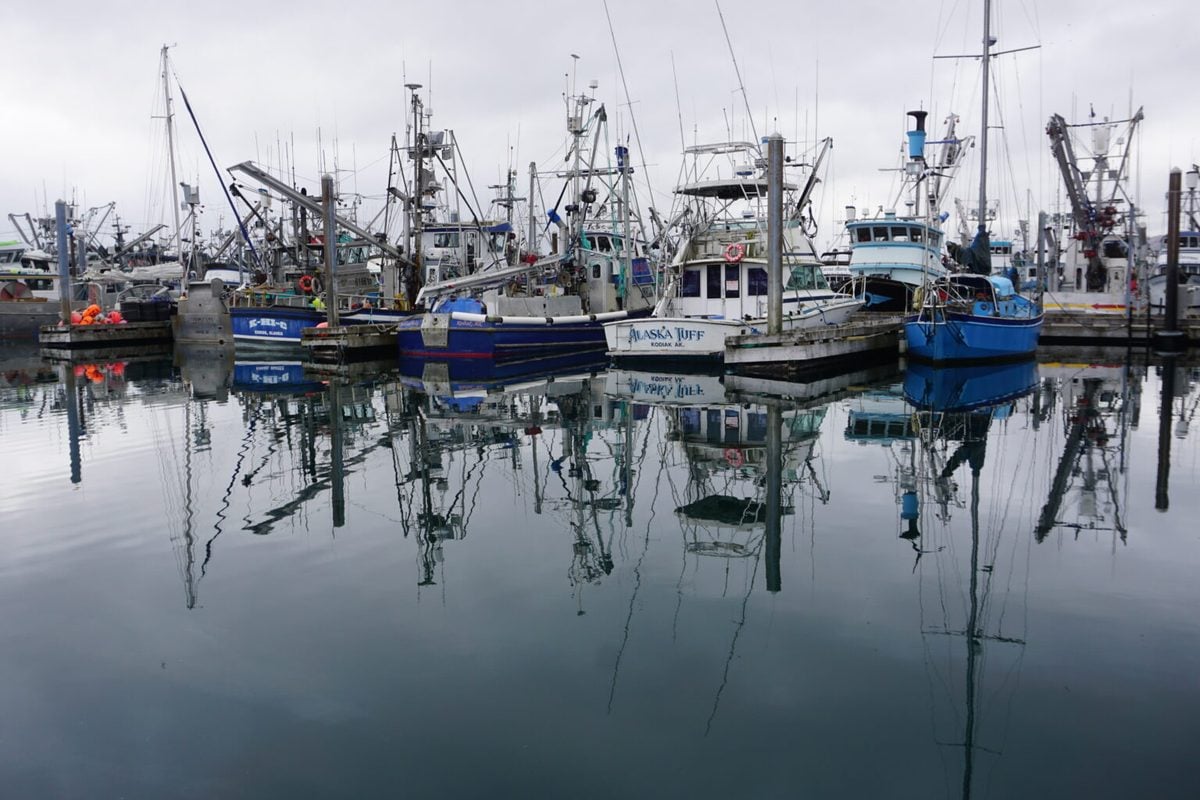
Fish are central to Alaska’s economy, Indigenous cultures and identity.
With critical salmon runs in Alaska rivers struggling, commercial operators squeezed by higher costs and stiffer market competition, fish are now at the center of the hard-fought campaign for Alaska’s U.S. Senate seat.
For Democratic challenger Mary Peltola, who is seeking to unseat incumbent Republican Sen. Dan Sullivan, the fishing issues are deeply personal.
She is Yup’ik, grew up in rural Western Alaska on the Kuskokwim River and, as she has explained many times, has been fishing since she was 6 years old.
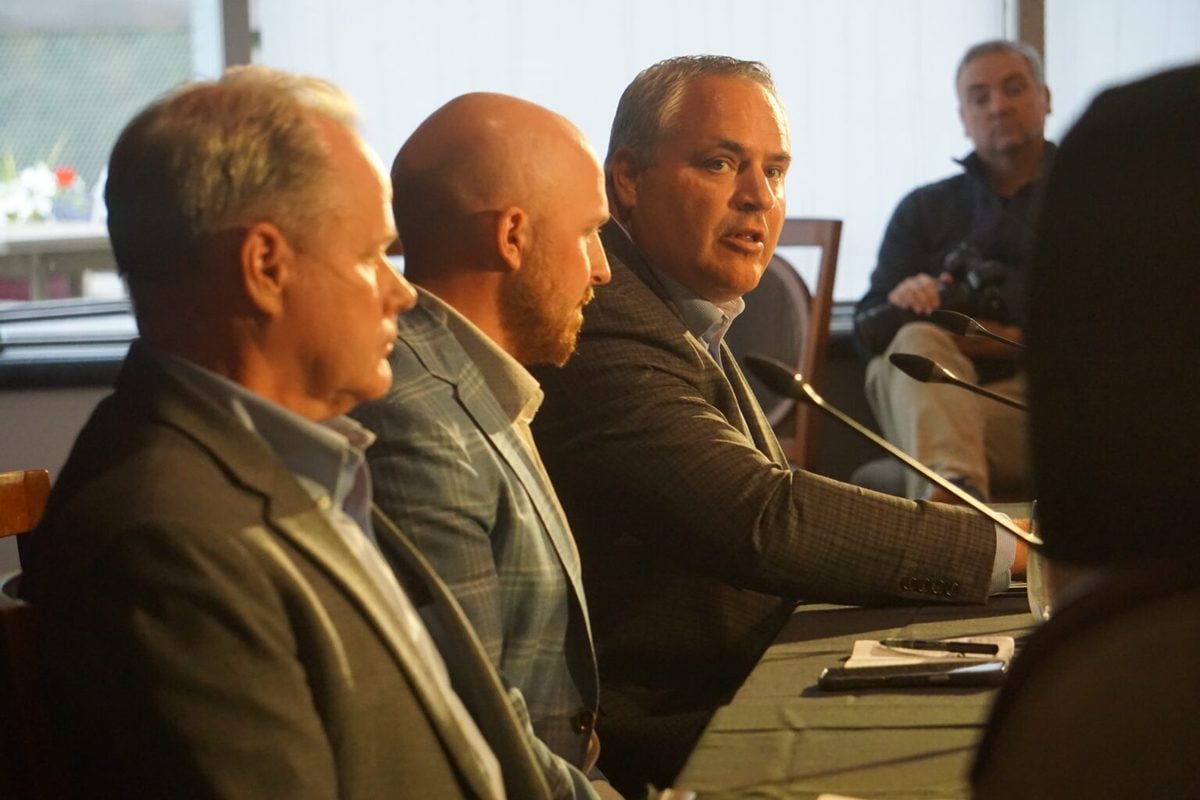
“I’m the only candidate on this stage who’s an Alaskan fisherman. Fish is in my blood, earned over generations on the water,” she said at the Sept. 12 fisheries-focused debate held by the Kodiak Chamber of Commerce.
Sullivan is emphasizing his record after 12 years in the Senate, which he said resulted in 63 bills signed into law so far, many of which concern fisheries, and has secured generous appropriations for agencies that support the industry, like the U.S. Coast Guard.
“Our fishermen deserve relentless focus and action, not just talk,” he said at the Kodiak debate.
According to the information clearinghouse govtrack.us, Sullivan was the prime sponsor on 31 bills that have been signed into law during his tenure. Over his career in the Senate, he has been a cosponsor of more than 1,800 pieces of legislation, according to congress.gov, the online database for the nation’s legislative branch.
In comparison, Peltola was the prime sponsor of two bills that were enacted during her two years in the House, though her bills were converted into provisions that passed as parts of larger legislation, according to govtrack.us. During her tenure, which started with a special election victory in 2022, she was a cosponsor of 348 pieces of legislation, according to congress.gov.

Battle over bycatch
At the top of the Peltola-Sullivan fish fight is the hot-button issue of bycatch, or the interception of salmon and other nontarget species in the nets deployed by the huge trawling vessels that harvest pollock and other groundfish species in the Bering Sea and Gulf of Alaska.
Many in Alaska blame the poor conditions of certain salmon runs and declines in halibut and crab stocks, at least in part, on trawler bycatch. The issue has divided fishery sectors and regions.
For Peltola and Sulivan, the fight over trawl bycatch has been particularly bitter, with attacks on each others’ characters.
As Peltola and her supporters describe it, Sullivan is in the pocket of out-of-state industrial fishing corporations that contribute to his campaign but hurt Alaskans.
“CASHING IN. . .WHILE ALASKANS PAY THE PRICE,” says the website of a political action committee backing Peltola. “Dan Sullivan is looking out for his rich donors – and it’s costing us.”
As Sullivan and his supporters describe it, Peltola, is dishonest, unaccomplished and, despite her Yup’ik heritage, has sold out to Lower 48 liberals.
“When you don’t have a record to run on, YOU BUILD YOUR CAMPAIGN ON LIES,” says a special Sullivan campaign website called peltolalies.com. It features images of two prominent New York Democrats, U.S. Rep. Alexandria Ocasio-Cortez and Senate Minority Leader Chuck Schumer.
The prominence of the fish debate in this year’s Senate race is unusual, said Brett Watson, a University of Alaska Anchorage economist and natural resource expert.
Watson, affiliated with UAA’s Institute of Social and Economic Research, has been working on Alaska natural resource issues for about a decade. “I don’t recall a time over that period where these issues have played such a central role in a statewide or federal campaign,” he said.
He believes that the intensity of the fight over trawlers and bycatch may reflect larger social trends that go beyond fish.

There is widespread skepticism of large corporations, sentiment that coincides with specific concerns of people like Indigenous subsistence fishers on the Yukon and Kuskokwim rivers and some broader concerns about the environment, he said.
“It’s been kind of an emerging theme in populist-type politics maybe over the last 10 years or so that combined with, obviously, issues related to bycatch: subsistence harvest, sport harvest, commercial harvest, etcetera,” he said. “It has increased that issue’s salience to the level that we see it at today. I wonder if that’s maybe the secret sauce here.”
Gunnar Knapp, a retired UAA economist and emeritus ISER professor who is considered the dean of Alaska fishery economics, said he has also been struck by the role the issue is playing in the campaign.
“I think everybody agrees, certainly including these two candidates, that bycatch is undesirable, particularly of halibut and salmon,” Knapp said.
But in the heat of the campaign, “it’s harder to hear what either candidate is specifically saying,” he said.
Peltola, who is reviving her past “Fish, Family, Freedom” campaign slogan, is using some tough rhetoric.
She calls for full ban on factory trawlers, ships that combine harvests with onboard processing at sea, though she has also been careful to distinguish between out-of-state operators, not small Alaska-based operators.
“Our fight is not against small and mid-size boats that keep communities like Kodiak strong. It’s against the out of state corporate greed that leads to wanton waste and damage to our sea floor,” she said at the Kodiak debate this month.
Sullivan has been touting his official actions over the years, most prominently a bill he introduced this year that cleared the Senate Commerce Committee on Wednesday.
In one of his trademark “Hey Alaska” videos, posted Wednesday on social media, Sullivan called his Bycatch Reduction Act “the most comprehensive trawl bycatch reduction bill, really, ever.”

“This is a really important issue we’ve been working on for a long time in different areas,” Sullivan said in the video, which shows him exiting a hearing room and talking as he walks — similar to his other “Hey Alaska” videos. “This bill I think’s going to have a hugely positive impact for Alaskan communities for our fishermen, for our Native populations.”
The bill is among several actions that Sullivan points to as his work to reduce bycatch.
He also takes credit for the first-ever numerical caps on chum salmon bycatch in the Bering Sea pollock fishery that the North Pacific Fishery Management Council approved in February. He “went to the council last year to get the Western Alaskan chum bycatch limit implemented,” he said at the Kodiak debate. “That was another area where I was leading.”
Peltola sponsored her own bycatch bill. Two years ago, she introduced the Bycatch Reduction and Mitigation Act of 2024, which Sullivan did not support at the time.
There are areas of overlap between the Sullivan and Peltola bills, notably financial support for bycatch-reducing technology. But Peltola’s bill prioritized smaller operators, with vessels under 65 feet qualifying for the funding. Sullivan’s bill has no such priority.
Peltola’s bill drew opposition from trawling associations, indicating that it was tougher on the industry than Sullivan’s bill, which has drawn no significant industry opposition.
Much of Peltola’s advocacy for bycatch limits focused on her efforts to update the Magnuson-Stevens Fishery Conservation and Management Act, the main law that governs seafood harvests in the nation’s federal waters.
Those efforts predate her election to Congress, and they have been largely from the perspective of subsistence harvesters in Indigenous communities in Western Alaska — like her own family — rather than the commercial industry.
As executive director of the Kuskokwim River Inter-Tribal Fish Commission, she articulated those concerns at a 2021 subcommittee hearing of the U.S. House Resources Committee.
“We are only trying to feed our own families. We’re down to 20% of what we historically harvested. We do not contribute anything to the gross domestic product or ex-vessel value. We’re just trying to feed our families,” Peltola said at the hearing.

Peltola led the Kuskokwim River Inter-Tribal Fish Commission from 2017 until 2022. The organization focuses on tribal comanagement, research, rural advocacy and fish conservation. At the time Peltola testified in 2021, House members were considering bills sponsored by the late U.S. Rep. Don Young, R-Alaska, and U.S. Rep. Jared Huffman, D-California, to update and reauthorize the Magnuson-Stevens act.
The act passed initially in 1976. It established the 200-nautical mile exclusive economic zone in which foreign-flagged vessels are prohibited from harvesting fish. It has been periodically updated through reauthorization, including with a name change that honors the late U.S. Sen. Ted Stevens, R-Alaska. But the last time that happened was 2006.
When Peltola was in the House, she joined with Huffman to try to pass reauthorization bills. Their legislation had provisions to protect subsistence users.
One such provision would have added tribal seats to both the North Pacific Fishery Management Council and the Pacific Fishery Management council, which has jurisdiction over U.S. West Coast waters. Her approach, as detailed in past bills, would also enshrine protection of subsistence — the traditional harvests for personal consumption — as a duty of the councils. On bycatch, there were provisions in the bill she cosponsored for expanded use of salmon-protection technology and for removal of the phrase “to the extent practicable” in the wording concerning bycatch controls.
Sullivan, however, has warned that an election victory by Peltola would, by helping Democrats take control of the body, elevate the power of senators from Washington state, where the trawling industry is based. He referred obliquely to Sen. Maria Cantwell of Washington, the ranking Democrat on the committee that oversees fishery policy.
“My opponent would empower a Seattle, Washington-based senator to be the next chairman of the Commerce Committee. Any opportunity to get bycatch bills passed, including mine, would be automatically undermined if you had the chairman of the Commerce Committee being from Washington State,” he said at the Kodiak debate.
Knapp said the logic of Sullivan’s argument “cuts a little each way.”
If Democrats win a majority in the Senate, “Alaska might want to have a Democrat in there, influencing how that works, rather than somebody who’s shut out from it,” Knapp said.
Regardless of who is in leadership, bycatch is a concern in all coastal states. In areas from New England to Hawaii, bycatch is described as a major problem. Fishery managers, fish harvesters and conservationists are engaged in numerous projects to prevent incidental harvests of different types of fish, birds, mammals and sea turtles.

Even in Washington, where large trawling companies are based, there are conflicts over bycatch occurring in the West Coast groundfish harvests. Bottom trawling, the practice of using nets at the sea floor, is banned in internal Washington state waters and in most of the federal waters off Washington, Oregon and California. In Alaska, where bottom trawling does occur in a small percentage of state waters a bill that would have banned the practice in state waters failed to pass the Alaska Legislature this year.
International issues
Sullivan and Peltola also clash on the international aspects of Alaska’s fisheries.
Sullivan is a Marine veteran who has made national defense a major focus of his 12-year tenure in the Senate.
At the Kodiak debate, he took full credit for keeping Russian fish out of U.S. markets, saying his achievement in office included “single-handedly banning Russian seafood imports.”
Knapp said Sullivan deserves some credit for the import ban on Russian seafood that competes with Alaska seafood.
“There have been several issues that are related to Russia, and that, certainly Sullivan has worked hard to address these,” Knapp said.
But the import ban was a group effort, and it was rolled out in stages.
In 2014, President Barack Obama, along with the European Union, imposed sanctions on Russia because of that country’s annexation of Crimea. In 2022, after Russia invaded Ukraine, President Joe Biden issued an executive order banning all imports of Russian seafood into the U.S. In 2023, Bident used a follow-up executive order to close a loophole that had allowed Russian-origin fish to get to U.S. markets through third-party countries, mostly China, where that fish was processed.
The executive order achieved goals spelled out in legislation sponsored by both candidates. Sullivan and Sen. Lisa Murkowski, R-Alaska, sponsored a bill in the Senate that would close the China-processing loophole, and Peltola joined with Rep. Garret Graves, R-Louisiana, in sponsoring a House version.
Alaska’s seafood industry has been battered in recent years by several forces that put it into a “tailspin,” as one state legislative leader put it in 2024. Among the contributing factors have been glutted markets for salmon and other fish, low prices, high costs, climate change-related stock declines and other problems, including problems with salmon markets. The industry lost an estimated $1.8 billion from 2022 to 2023, according to a National Oceanic and Atmospheric Administration analysis.
Russia played only a small part in that, Knapp said.
“What you might call ‘Gunnar’s Rule No. 1 of Salmon Markets’ is that, any given time, there’s about a dozen different factors affecting the salmon market,” he said. That includes exchange rates, tariffs, farmed fish production, the size of runs in Bristol Bay and other Alaska sites and myriad other factors, he said.

Sullivan has also singled out China as a threat to Alaska because of what he described as unsustainable fishery practices.
At the Kodiak debate, he cited his work on illegal and unreported fisheries occurring in international waters. A bill Sullivan cosponsored with Sen. Sheldon Whitehouse, D-Rhode Island, Sen. Lisa Murkowski, R-Alaska, and numerous members from both parties addresses what is known as “illegal, unreported and unregulated” fishing, or IUU.
The Fighting Foreign Illegal Seafood Harvest Act, or FISH Act, passed the Senate in March. It is awaiting final action in the House.
But to Knapp, who listened closely to the Kodak debate, Sullivan’s attacks on China were a bit surprising.
“I was puzzled by what he was referring to,” Knapp said.
Unlike Russia, which is a direct competitor to Alaska, China is a “major market opportunity for all kinds of seafood.”
Watson had similar observations.
China is “not just a place where we send our fish to be reprocessed. That is an opportunity for a new final demand market,” he said. Incomes in China are rising, making Alaska seafood potentially attractive to consumers there, he said.
President Donald Trump’s tariff war with China has disrupted efforts to achieve that, however.
“It’s really when China retaliates against us that causes the most acute pain for the industry,” Watson said.
China in 2023 and 2024 was the largest buyer of raw Alaska fish by volume, but almost all of that was for processing and shipment elsewhere, according to the most recent annual seafood industry report by the McKinley Research Group.

Tariffs pose big problems for the Alaska seafood industry, the report said. “Alaska seafood’s reliance on global markets leaves the industry acutely vulnerable to the direct consequences of new U.S. import tariffs and, even more so, the indirect consequences of retaliatory actions by trade partners,” it said.
So far, Sullivan has steadfastly supported Trump on tariff policies, even diverging on that subject from Murkowski, his Alaska colleague.
He continues to align himself with Trump. On his campaign website is a photo of himself standing with the president and giving a thumbs-up sign. And Trump is planning to travel to Alaska to campaign for the incumbent senator.
Peltola and the Alaska Democratic Party have faulted Sullivan for his support of both tariffs and the U.S. war in Iran. Those international actions have jacked up costs of fuel and other necessities, pinching fish harvesters and all Alaskans, she argues.
“We are being priced out of petroleum, and we’re being priced out of our lives in Alaska, because of the war in Iran,” she said at the Kodiak debate.

Budgets, jobs and climate change
The Peltola campaign and the Alaska Democratic Party are tying Sullivan to another Trump policy that has been unpopular among fishing-dependent Alaskans: slashes to fishery science and the federal workforce that performs it.
At the Kodiak fisheries debate, Peltola criticized Sullivan for supporting “draconian” cuts to NOAA through an initiative led by billionaire Elon Musk.
The “Department of Governmental Efficiency,” or DOGE, imposed cuts that compromised NOAA’s ability to gather information needed to manage fisheries sustainably, she said.
“We are flying blind without the surveys and the research that NOAA does,” she said at the Kodiak event.
The cuts also affect the National Weather Service, putting Alaskans in danger, she said.
“We live and die by federal agencies and the federal employees who keep those agencies going,” she said. Sullivan “went right along with all these DOGE cuts, mowing down federal employees that we rely on.”
As of the end of 2025, Alaska had lost 101 NOAA employees, according to the state Department of Labor and Workforce Development. That was part of a Trump administration purge that resulted in a federal workforce in Alaska that was about a tenth smaller at the end of 2025 than it had been at the start of the year, according to the department’s analysis.
Watson, who has partnered with NOAA experts for several years, said he has felt the impacts personally. “Many of my contacts that I had prior to 2025 no longer work at the various NOAA offices for which I collaborated with,” he said.
NOAA is not the only fishery-related federal agency in Alaska sustaining deep cuts.

The U.S. Forest Service, which is also responsible for fishery research and habitat-protection work, suffered deep cuts as well, according to the state analysis. In recent years, the Tongass and Chugach National Forests provided habitat for about a quarter of Alaska’s commercial salmon harvests, as well as habitat for sport and subsistence harvests, according to a Forest Service study. But the agency lost 180 employees in 2025, according to the state analysis.
In March, Sullivan spoke favorably about the DOGE initiative at his annual speech to the Alaska Legislature. In that address, he said the DOGE cuts were “making some noble progress” in reducing the national debt.
Musk, through his political action committee, is supporting Sullivan’s re-election campaign and those of other Republicans in close Senate races in other states.
While Sullivan’s critics have blasted him for his strong allegiance to Trump, the senator has repeatedly characterized his ties to the president as beneficial to Alaska.
When it comes to fisheries, that resulted in the Trump administration creating an Office of Seafood in the U.S. Department of Agriculture, Sullivan said at the Kodiak event. That seafood office was created in connection with a 2025 Trump executive order aimed at achieving “American seafood dominance.” Much of the executive order directs federal agencies to loosen environmental protections to allow for bigger commercial seafood harvests.
A plan to enshrine the Office of Seafood in the Agriculture Department is proposed in a wide-ranging farm bill pending in Congress, Sulivan said. He took credit for that: “I wrote a lot of this to help our fishermen,” he said.
Sullivan has also defended his record on NOAA funding.
At the Kodiak debate, he said he is “a strong supporter of our surveys” and was able to help secure an additional $10 million in the last budget for NOAA to conduct those. He spoke about supporting over $100 million over the years for NOAA’s ocean acidification research.
He said he “provided pushback on the Trump administration on surveys as it related to the Oscar Dyson,” a NOAA research vessel.
DOGE-related firings put Oscar Dyson operations in jeopardy last year. But the ship managed to conduct its 2025 surveys and is operating again this year. It will go on hiatus after this season and be upgraded through a $95.4 million contract awarded by NOAA in June of 2025, for which Sullivan, at the Kodiak debate, took credit.

The Trump administration has consistently sought to make deep cuts to NOAA, but Congress as a whole has resisted those.
The Congressionally approved budget for the current fiscal year includes $6.17 billion for NOAA, $1.67 billion above what the Trump administration had requested. That total was about the same as the previous year’s appropriation, though a reduction from the year before, according to Congressional records.
The Trump administration is still pushing for deep cuts at NOAA.
The administration’s request for the coming fiscal year proposes a $4.54 billion budget for the agency, with elimination of several programs important to Alaska fisheries and coastal communities. Among those are the National Estuarine Research Reserves System, which operates in Kachemak Bay, and the national Sea Grant program, which is important to the University of Alaska. The administration is seeking to cut spending on several other programs related to fisheries, including the marine observer program and a 20-year-old program that provides funding for technology to reduce fishery bycatch.
The Trump administration’s plans for NOAA reflect the president’s approach to climate change. He has repeatedly dismissed it as a “hoax.”
In contrast, both Sullivan and Peltola indicated in a lightning round during the Kodiak debate that they believe climate change is a problem for Alaska fisheries.
To Knapp, Trump looms over the Peltola-Sullivan contest.
“At stake in this election are vastly different ideas about the direction of the country and, and in particular, about the direction that President Trump is taking us,” Knapp said.
Even though he finds the debates about fishing interesting, Knapp said he hopes voters will consider more pressing issues.
That is true in the gubernatorial race, where there are stark differences in candidates’ approaches to budgets, education and other broad subjects. And it may be even more so in the Senate race, which could tip the national balance of power, he said.
“The issues are so much bigger than our Alaska fisheries,” he said.