(The Center Square) – During President Donald Trump’s first term, one policy that united Pennsylvania lawmakers on both sides of the aisle was the effort to replace the North American Free Trade Agreement, known as NAFTA.









(The Center Square) – During President Donald Trump’s first term, one policy that united Pennsylvania lawmakers on both sides of the aisle was the effort to replace the North American Free Trade Agreement, known as NAFTA.
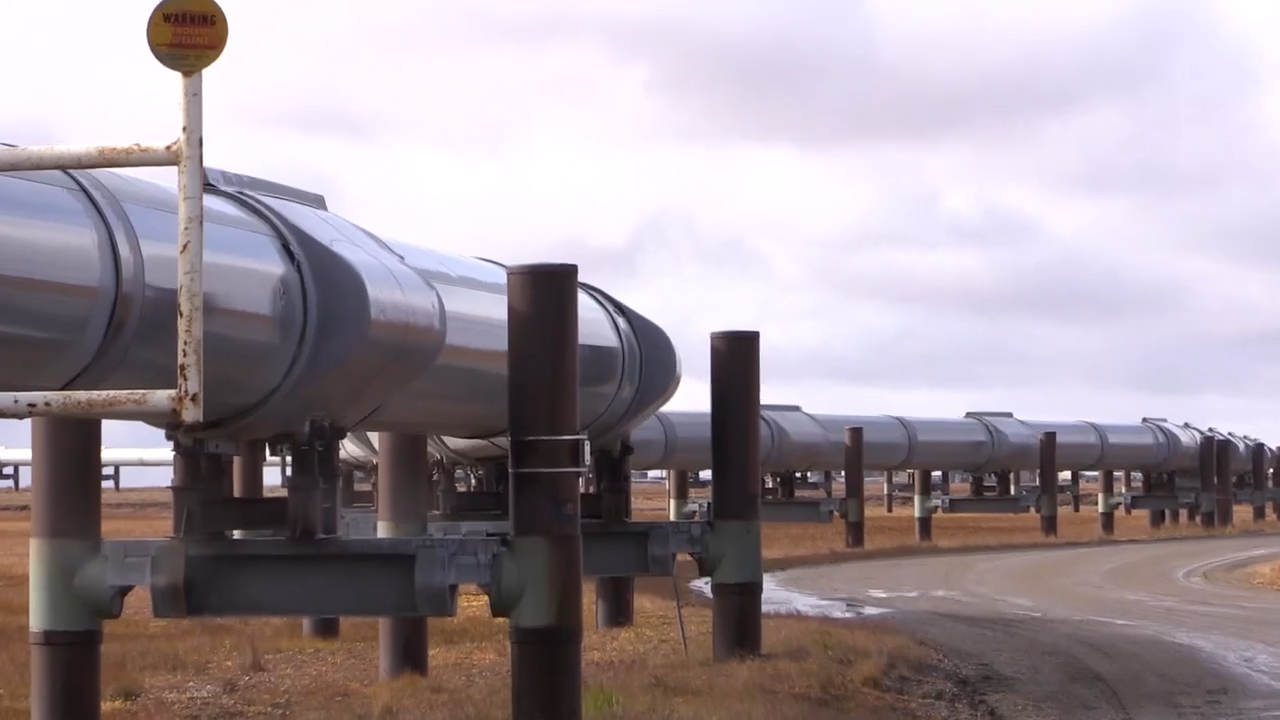
The Alaska House approved a bill creating a volume-based tax structure for the proposed Alaska LNG Project. The measure now advances to the Senate.
(The Center Square) – California is suing U.S. Immigration & Customs Enforcement and other federal agencies to stop construction of what plaintiffs say is an ICE holding facility near an agricultural city.

Post Content


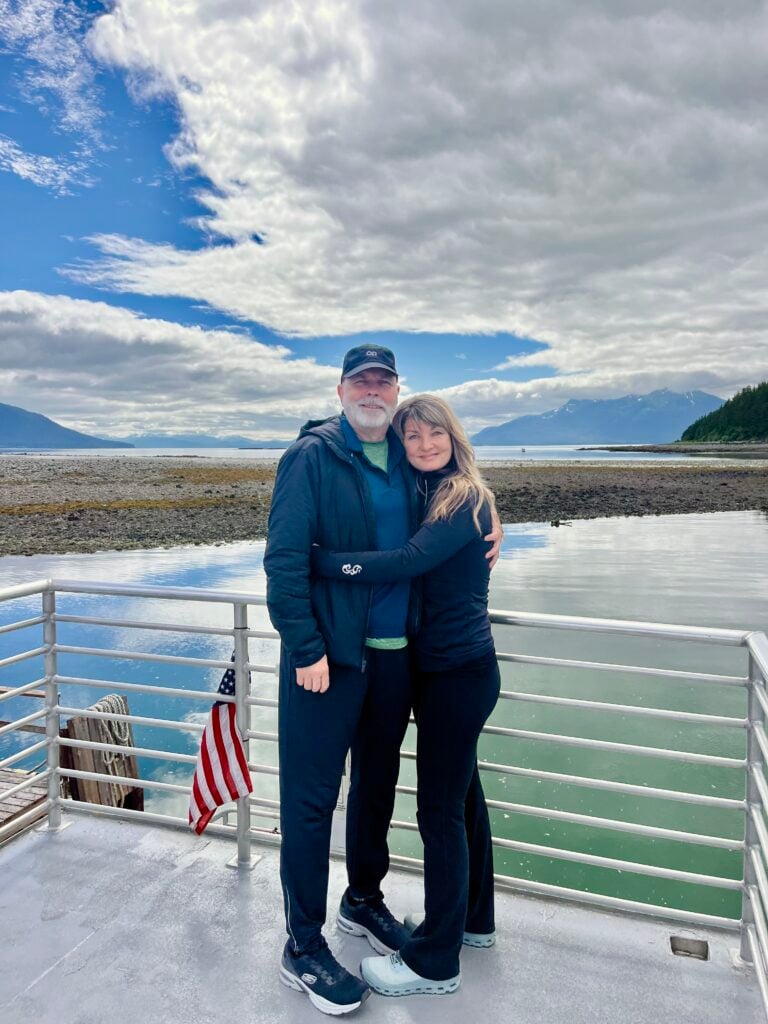
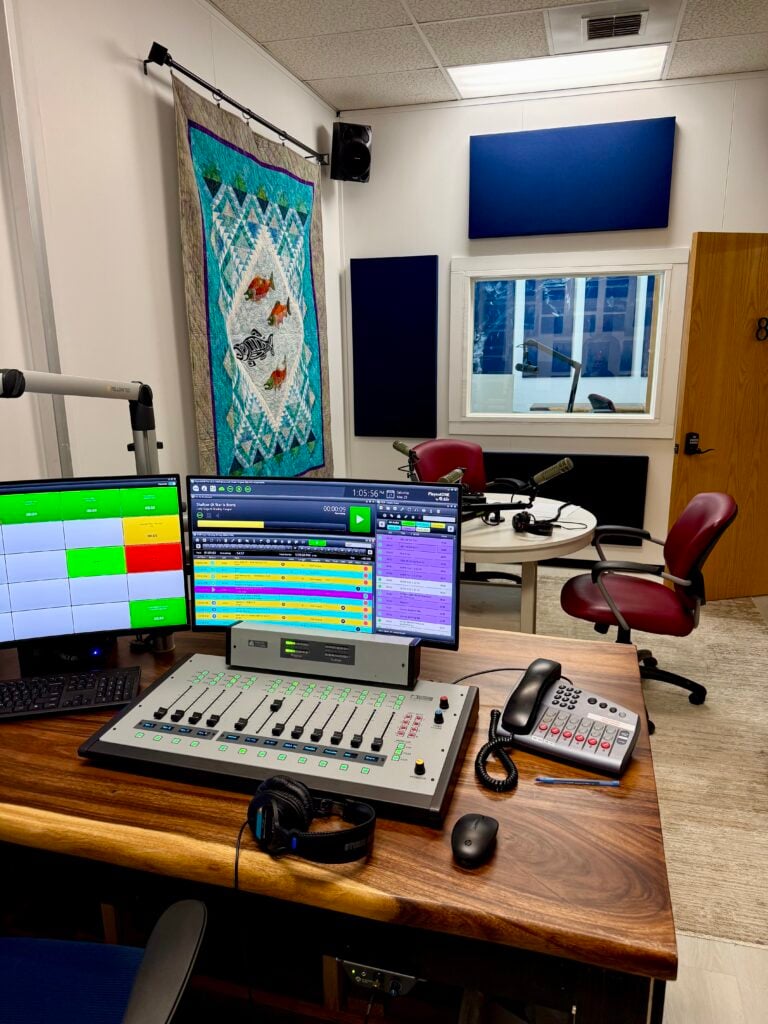
Thursday night, the Juneau Chamber of Commerce hosted a ribbon-cutting ceremony at the new address of a local tradition, the Juneau Media Center (formerly known as the Radio Center on Channel Drive). Now, six new studio spaces, including a dedicated newsroom, a recording studio, and an open-air office space, are housed in the annex section of the Mendenhall Mall.

Under the ownership of Juneau’s own Cliff and Lisa Dumas, the move marks a renewed investment in local radio, local news, and the communities served by Alaska First Media across Southeast Alaska.

For Cliff Dumas, the transition represents both a continuation and a new chapter. Dumas has been part of the Juneau radio scene for eight years, hosting the TAKU 105 morning show under the previous ownership group. His broader career includes recognition as a Radio Personality of the Year winner from the Country Music Association, the Academy of Country Music and the Canadian Country Music Association. He is also a Hall of Fame broadcaster with decades of experience as a radio host, and television writer and producer.

Lisa Dumas also brings an award-winning media background to the company, including her work as a host and television writer. Together, the couple, who met at a Toronto radio station thirty years ago, bring a deep understanding of broadcasting, storytelling, and community connection to the future of Alaska First Media. They instantly felt at home in Juneau, invested in a house on Douglas and quickly created community. When Lisa’s not on the radio, you might find her teaching a class at Auke Bay Yoga, or hiking a trail with friends she met through her work on the Juneau Symphony Board or the Glacier Valley Rotary Board.

When the Dumas’ stepped into ownership roles, they recognized improvements needed to be made to ensure the sustainability of the product and to continue to serve Southeast Alaska in a meaningful way. The new location features brand new studios furnished with state-of-the-art broadcast equipment designed to improve sound quality, reliability, and daily operations for the company’s Juneau stations, including KINY, MIX 106, TAKU 105, KXJ, KJNO, and The Hawk-Juneau’s Sports Station.
The Dumas’ say the intention of the investment in new equipment and processes is to offer listeners a cleaner, more consistent sound and a commitment to local talent. The new space includes modern tools to support live interviews, local news, music programming, sports coverage, emergency information, and community service.
The relocation also includes the integration of brand-new robust music libraries across the company’s formats. From country and adult contemporary to classic hits, rock, news, talk and sports, each station is getting refreshed with updated music resources and programming tools designed to keep the stations current, familiar and connected to the community.
The investment extends beyond the studio walls.

Alaska First Media has improved its broadcast infrastructure, including new equipment and transmitter upgrades for TAKU 105, KINY, KJNO, and the HAWK, as well as other stations in the Juneau group. Additional improvements are underway across the company’s transmitter sites, including Douglas and Heintzleman Ridge, with continued upgrades at the company’s stations in Ketchikan and Sitka.

The Juneau Media Center’s new location creates a more visible and welcoming home for local radio. Cliff and Lisa hope it offers listeners, business owners, civic leaders, nonprofit organizations, coaches, athletes, musicians, and community voices a place to be part of the conversation.

At a time when many media companies are cutting, Alaska First Media is investing in studios, equipment, music, transmitters, and most importantly, the people who make up their local team.

Cliff and Lisa say that last night’s New Location Celebration was a chance to open the doors and share a vision that has finally come to fruition. They hope it is a feel-good home for local radio, where a valued and talented team of local professionals work hard to support local businesses, non-profit organizations and community events and share a commitment to Southeast Alaska and a broadcast center designed for the future.

Dr. Mehmet Oz, administrator of the federal Centers for Medicare & Medicaid Services, speaks at the Department of Health and Human Services in Washington, D.C., in December. CMS this week released guidance on how states should implement new Medicaid work requirements. (Photo by Alex Wong/Getty Images)
The Trump administration has issued final rules on how states should ensure that millions of Medicaid enrollees prove they’re working or completing other activities, such as job training, volunteering, or being enrolled in an educational program.
The Centers for Medicare & Medicaid Services released the rules on June 1. That deadline was set last year in the GOP tax-and-spending law known as the One Big Beautiful Bill Act, which established a work requirement for certain people enrolled in Medicaid, the state-federal health insurance program for people with low incomes or disabilities.
Medicaid agencies are scrambling to rework IT systems and make sure they have staff to effectively enforce the rules, while also keeping enrollees from losing coverage for administrative reasons, such as difficulty navigating state eligibility portals.
The newly announced regulations offer a clearer picture of what roughly 18.5 million Medicaid enrollees will have to do to prove they qualify for benefits.
Jim Torres, who helps people enroll in health coverage at the Samuel U. Rodgers Health Center in Kansas City, Missouri, said a “very small percentage” of his clients have heard of the changes coming to Medicaid.
“These folks have very busy lives. They’re doing the best they can to get by,” he said. “It’s just not a top-of-mind thing for most of them.”
Health policy researchers and consumer advocates said enrollees should keep a few things in mind as the Jan. 1, 2027, rollout approaches in most states.
1. The work rules won’t apply to everyone.
The new rules will apply to people covered through what’s known as Medicaid expansion. Since 2014, more than 40 states and the District of Columbia have decided to allow more people into their Medicaid programs, generally low-income adults without dependents. Georgia and Wisconsin offer coverage to some people in this group, so they’ll be subject to the rules.
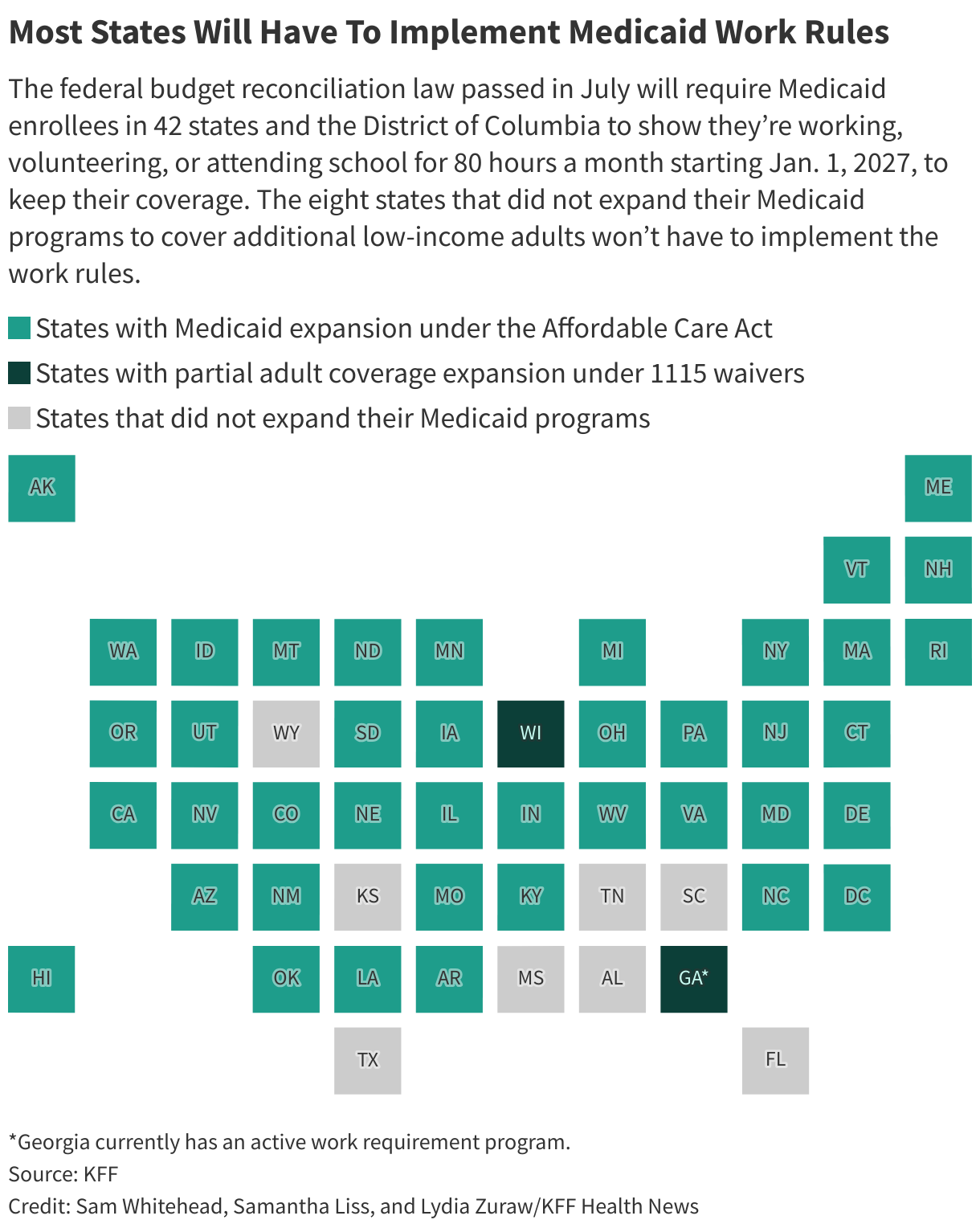
Children and pregnant people, as well as individuals with disabilities who receive Social Security payments — all groups that already qualify for Medicaid — won’t be subject to the rules. Nor will people determined to be “medically frail,” or too sick to work.
People subject to the work rules are “crowding out” people in the Medicaid program who are “truly in need,” CMS Director Mehmet Oz claimed during a June 1 press call. “Work requirements are going to turn this around, we hope.”
The rules are set to take effect in most places in January. Nebraska started enforcing them in May. Montana plans to start in July but won’t kick people off until October. Arkansas will do a “soft” launch in July — it will start enforcing the rules but with no penalties until next year.
2. States will take your word that you’re too sick to work. For now.
Federal officials have stressed that states should make the process of reporting hours and requesting exemptions as simple as possible for Medicaid enrollees by creating automated systems and using existing data sources, such as unemployment and education records.
If states cannot determine you’re performing 80 hours of qualifying activities a month using those data sources, you may be allowed to “self-attest” to that in 2027, health policy researchers said.
People will also be allowed to “self-attest” that they are too sick to work in 2027, and do so one time in 2028. Then states will start asking for proof, if they can’t find it through available data.
But after the initial rollout, the burden of proof is likely to still fall on many enrollees, said researchers and consumer advocates.
People may need to dig up pay stubs, medical records, and doctors’ notes and submit them for state review, said Morgan Henderson, who has studied Medicaid work programs in Georgia and Arkansas at The Hilltop Institute, a research center at the University of Maryland-Baltimore County.
“The higher this manual reporting burden, the less people are going to do it,” he said. “That means that we’re going to see coverage drop-offs.”
3. The rules are tougher than expected for people too sick to work.
One of CMS’ primary goals has been to “protect vulnerable populations” through “strong exemptions to make sure people who can’t reasonably be expected to work are not subject to the requirements,” Dan Brillman, a deputy administrator at the agency, said during the June 1 press call.
Consumer and patient advocates, however, said the final rules’ exemptions are more restrictive than expected. Enrollees will eventually have to provide documentation, such as a statement from a medical professional, to prove that a health condition keeps them from working. And each individual state will have to determine the severity of beneficiaries’ medical conditions.
“Someone could be medically frail in Nebraska but not medically frail in Delaware,” said Carolyn Sheridan, associate director of state policy for the National Organization for Rare Disorders, which lobbies for patients with rare diseases. She said her group had hoped the rules would offer a standardized definition of who counted as medically frail and not leave the decision up to states.
Trump administration officials have publicly crusaded against fraud in government health programs, such as Medicaid, and states could face financial penalties for incorrectly granting people exemptions from the work rules, said Jennifer Tolbert, who researches Medicaid at KFF, a health information nonprofit that includes KFF Health News.
“States may be more cautious,” she said. “That will likely lead to people losing coverage who may still be eligible.”
4. Only certain qualifying activities count.
Enrollees can satisfy the rules by working 80 hours a month. They can also be enrolled in college courses, volunteer through a community organization, or do “in-kind” work that doesn’t result in pay.
The rules set out, in detail, how many academic credit hours translate to 80 hours a month — students need to be enrolled in six credit hours per semester to meet the “half-time” requirement. An unpaid internship can count toward the 80 hours.
People can also prove they’re volunteering with “a document from a community service organization.”
Consumer advocates say it might be hard for people to obtain proof they’re performing these kinds of informal activities. But supporters of the rules say volunteerism can already be tracked.
“If you run into trouble with the law and the judge says, ‘Hey, you need some volunteering and community service to serve your time,’ there are already ways that we verify that,” said Niklas Kleinworth, who works on state health policy for the conservative Paragon Institute.
5. You have time to prepare.
Make sure your state Medicaid agency has your current mailing address and keep your eye on your mailbox, said researchers and consumer advocates. State Medicaid agencies must inform you in two ways if you’ll be subject to the rules — by either regular mail or email, and by one other form of communication, such as a text or phone call or by posting a notice online.
“The important stuff comes by mail,” Henderson said.
And check in with your state Medicaid agency, said researchers and advocates. Some states, including Arkansas, California, and Wisconsin, have already posted information about the work rules on their websites. If you can’t find what you’re looking for there, visit or call a local office. A caseworker should be able to tell you whether you’ll be subject to the rules.
“Get ahead of this,” said Joan Alker, executive director of the Georgetown University Center for Children and Families and studies Medicaid. “So that you don’t end up going to the pharmacy one day and they say, ‘Oh, you’re not insured anymore’ when you’re trying to get your prescriptions refilled.”
KFF Health News correspondent Samantha Liss and senior correspondent Rachana Pradhan contributed to this report.
Have you tried to prove your eligibility for Medicaid under new rules that require people to show they are working, going to school, or participating in another qualifying activity? Click here to contact KFF Health News.
KFF Health News is a national newsroom that produces in-depth journalism about health issues and is one of the core operating programs at KFF—an independent source of health policy research, polling, and journalism. Learn more about KFF.
This article first appeared on KFF Health News and is republished here under a Creative Commons Attribution-NonCommercial-NoDerivatives 4.0 International License.
SUBSCRIBE: GET THE MORNING HEADLINES DELIVERED TO YOUR INBOX.

Legislative discussion of Alaska’s system of oil production taxes gained increasing traction this year, as the state grapples with a structural deficit.
Legislative leaders say they’ve had conversations about hiring consultants that could review the tax system, which has in the past been a key revenue source for the state. Late in this year’s legislative session, Senate leaders unveiled a proposal that would have eliminated some key, company-friendly provisions in the existing law. It didn’t pass, but the topic is likely to generate substantial debate next year.
This week, Alaska’s gubernatorial candidates weigh in on whether they’d change the current production tax system — the foundation of which was put into place by a major 2013 tax rewrite, Senate Bill 21.
We also ask them which musical album they’d take to a remote Bering Sea island, St. Matthew.
Republicans Bernadette Wilson and Treg Taylor did not respond to this edition’s questions; we sent them multiple requests. New entrants into the governor’s race since the survey was circulated include Bill Walker and Lesil McGuire; we’ll add them to our next edition.
Previous surveys include: climate change, schools funding, Alaska’s LNG project, the s-corp tax loophole, the PFD and ferries, and health care costs.
Have suggestions for future survey questions? Email nat[at]northernjournal[dot]com. If you value public interest journalism like this, please consider a voluntary paid membership to Northern Journal.
Question 1
Alaska’s oil and gas production tax is projected to generate $464 million for the state in the next fiscal year, while companies will produce some $12.3 billion worth of taxable oil, according to the Department of Revenue.
Should the oil and gas production tax structure be changed? Please explain your answer.
Question 1.1
If yes, do you have a target for how much more or less production tax revenue you think the state should be generating? And which aspects of the production tax would you propose changing? Some examples are contained in the latest version of Senate Bill 227, which would reduce the overall production tax level, limit carried-forward annual losses and eliminate per-barrel tax credits and the gross value reduction.
Question 2
To Northern Journal’s knowledge, Alaska doesn’t have many desert islands. It does, however, have St. Matthew Island in the Bering Sea, which is one of the most remote places in the state.
If you were marooned on St. Matthew, which record, CD, tape or digital music album would you want to keep you company, and why?
Republican podiatrist Matt Heilala
Current considerations and the proposals being discussed are generally threatening projects from moving forward. They create uncertainty, reduce competitiveness, and discourage companies from committing capital here.
This last week in Florida, governors from 11 states in the south and southeast convened at the Boom Belt symposium discussing their basic principles that have created a boom for their respective states, among them low and stable tax regimes for industry. There is no excuse that Alaska is not a Boom Belt-type state as we have far more assets, resources, and energy opportunities than all of those 11 states combined.
Our responsibility is clear: get our state to genuine prosperity so our young adults choose to live, work, and raise families right here in Alaska.
1.1. I have no target for how much more or less production tax revenue the state should be generating. Our focus must be on creating the conditions that attract major new investment and increased production.
Blanket limits on carried-forward losses or elimination of credits should be approached carefully if they introduce new uncertainty that could still deter projects.
Current proposals are threatening forward momentum by keeping Alaska less attractive than competing jurisdictions. We must fix that so companies choose Alaska first, delivering the high-wage jobs that keep our families and our young people here.
Democratic former state Sen. Tom Begich
1.1. I lay out those changes in the answer above. Since SB21 we have received $4.5 billion in revenue, but paid out $5.6 billion in production tax credits. That just doesn’t make sense. It’s welfare for multinationals. We should also “ring fence” — that is to say, ensure that we don’t apply tax incentives and production cost write-offs for new production against revenue generated from older production. Incentivize development where appropriate, but don’t give credits to fields that are already mature. These are Alaska’s resources and should be used for Alaska’s future.
Click Bishop, Republican former state senator
Just last week, we celebrated the first oil production from Pikka, and we are seeing Willow start to come online too. These projects took literally billions of dollars of upfront investment to accomplish. To keep more projects moving forward, our state needs to provide fiscal stability for this kind of investment to help bring production from other new fields.
Any changes in oil and gas taxes must be made in a way that makes sense and recognizes that we have industry partners to develop the resource and increase production. We see that happening today, as the Legislature is currently in a special session to consider a proposal by Gov. Dunleavy to change the property tax laws related to the development of North Slope natural gas.
1.1. Alaska has a long history of changing its oil tax policy, often every seven years or so. This is one of the longest periods without a major change. Rather than setting an arbitrary target for production tax revenue, my goal is a stable, predictable tax structure that encourages investment, supports new production, and ensures Alaskans receive a fair return. As governor, I would bring together industry leaders, lawmakers, and the administration to review the system before proposing changes. Through a collaborative process, we can develop durable policies that provide certainty for investors, taxpayers, and Alaska’s future.
Dave Bronson, Republican and former mayor of Anchorage
Equally important is the need for stability and predictability in Alaska’s tax and fiscal policies. Oil and gas projects require enormous upfront investments and often take years, if not decades, before companies realize a return on investment. Investors make decisions based on the rules in place when those commitments are made. So in short: No. Continually changing the tax structure or altering the economic playing field in the middle of the game creates uncertainty, discourages investment and undermines long-term development. Sound business policy requires consistency so companies can confidently invest, create jobs and develop Alaska’s resources while providing sustained revenue to the state.
1.1. Sound business policy depends on consistency and predictability. Companies are more willing to invest, create jobs, and develop Alaska’s resources when they can rely on a stable business environment. These investments generate long-term economic benefits and sustained revenue for the state. Altering the tax structure risks undermining the strong partnerships that currently exist and could discourage future investment by creating concerns about an unpredictable and constantly changing regulatory landscape.
Democratic state Sen. Matt Claman
Alaskans want a strong industry, a reasonable tax structure that encourages continued investment and a fair share for the state. Alaska’s tax structure is among the most complex in the world. We should work to modernize and simplify that structure to better support industry and better protect the state’s fair share, including when oil prices are low.
As governor, I will lead an effective, collaborative process with the Legislature, industry, and Alaska stakeholders to modernize and simplify our oil and gas production tax. The work will include review of the minimum tax floor (currently 4%), the per-barrel credits, and other key provisions. While this effort will take time — two years or more — the outcome will be less risk for the state in low price environments and a simplified system that reduces administrative burden.
1.1. N/A
Former Alaska revenue commissioner Adam Crum, Republican
I disagree with the premise of the question because it focuses on only one component of the revenue Alaska receives from oil and gas. While the production tax is projected to generate about $464 million next fiscal year, that is only part of the state’s petroleum revenue stream.
According to the state’s spring forecast, Alaska is expected to receive $1.883 billion in unrestricted petroleum revenue and another $549.8 million in designated or restricted petroleum revenue, for a total of roughly $2.433 billion from the industry. Looking only at the production tax significantly understates oil and gas’s contribution to revenue.
Just as importantly, Alaska is projecting an increase in oil flowing through the trans-Alaska pipeline system for the first time in many years. That is the result of private-sector investment made possible by a stable and predictable tax system.
Alaska has spent decades changing oil taxes and creating uncertainty. We are finally seeing the benefits of stability. My focus is not on changing the tax structure but on increasing production, attracting investment and putting more oil in the pipeline. More barrels mean more jobs, more economic activity and more revenue for Alaska.
1.1. As stated above, I oppose changing Alaska’s oil tax structure. We are finally seeing the benefits of stability through record investment, strong lease sales, major new developments, and renewed global interest in Alaska’s resources. Companies make investment decisions on projects that span decades, not election cycles. Constantly changing the rules creates uncertainty and discourages investment.
Because I do not support changing the tax structure, I do not have a target for increasing or decreasing production tax revenue. My goal is to increase production. More barrels moving through the trans-Alaska pipeline system generate more jobs, more economic activity, and more revenue for Alaska under the current system.
Traditional healer Meda DeWitt, independent
We can do better, and we can do it without punishing working families. I support moving toward a simpler, gross-based structure that is predictable for companies and honest with Alaskans, and closing the corporate income tax loophole that lets a major North Slope operator pay no state corporate tax at all. Maximum benefit is not anti-development. It is the deal our founders wrote down, and Alaskans deserve to see it honored.
1.1. My target is the constitutional one: a fair share for the people who own the resource. As a benchmark, the gross-tax approach in SB 227 was projected by its sponsor to roughly double current oil production revenue, moving us from about $464 million toward the $900 million range, with no new tax on residents. I would eliminate the per-barrel credits and the gross value reduction that erode the 4% floor, and tighten the carryforward of losses so deductions cannot wipe out our take in high-price years. I favor a transparent gross-based rate paired with our royalty, with the precise rate set through open modeling with the Legislature rather than behind closed doors.
Mat-Su borough mayor Edna DeVries, Republican
Simplify the system so Alaskans and the production payers have a more transparent system. So all can see what we’re actually getting.
Modestly increase the state’s share at higher prices while preserving competitiveness at lower prices.
Prioritize stability and predictability over special‑interest carve‑outs and opaque credits.
In short, we should change the structure to secure a fairer, more transparent share for Alaskans while keeping investment viable. In many ways, the state has been a very greedy animals.
1.1. I am interested in perusing the following sections of committee substitute for Senate Bill 227: Section 2: Reduces production tax from 35% to 17%. Section 4: Creates a new subsection for a payment schedule. Section 12: Creates a new subsection to establish a production tax value for oil produced on and after January 1, 2027. Section 14: Limits carry-forward annual loss language to 40% of annual tax liability.
Shelley Hughes, Republican former state senator
Alaska’s oil and gas production tax cannot be evaluated in isolation. The state collects oil revenue by four methods: royalties, production taxes, property taxes and corporate income taxes. Using only one of these — the production tax, especially the 4% minimum by itself — misrepresents what companies pay.
Alaskans should keep in mind:
• Alaska’s total effective government take is 10.6%, 2.5 times the 4% average in other oil producing states.
• In FY25, the industry paid roughly:
• $1B+ in royalties
• $700M in property taxes
• $600+M in production taxes
• $130+M in corporate income taxes
• Alaska is a costly and often risky operating environment with long timelines from discovery to first oil, making cost recovery critical.
Before changing our production tax, policymakers must study the actual tax numbers alongside global competitiveness, and whether Alaska is deterring new investment. Stability, predictability and competitiveness matter if the goal is more production, more jobs, and more revenue long term.
1.1. Any changes to production taxes should focus on one goal: increasing long-term state revenue by encouraging sustained production, not short-term gains that discourage investment.
Rather than setting an arbitrary revenue target, Alaska should focus on policies that increase throughput in the trans-Alaska pipeline system, because higher production also grows royalties, property taxes and corporate income taxes.
Any reform should preserve the ability to deduct legitimate operating and capital costs, avoid making Alaska an outlier at the top of the global cost curve, and evaluate limits on losses or credits only in the context of competitiveness and project economics.
The best way to grow production tax revenue is to grow production.
Jonathan Kreiss-Tomkins, Democratic former state representative
Most urgently and obviously, the S-corp loophole that lets one large producer (Hilcorp) skip the corporate income tax that others (e.g., ConocoPhillips) pay makes no sense. The loophole must be closed and the playing field must be leveled.
I am also the only candidate for governor who voted against SB 21 back in 2013. While I felt that the pre-2013 tax structure (ACES) needed to be amended in various ways, I felt SB 21 was a substantial overcorrection. More specifically, I felt that Alaskans conceded too much revenue upside in high price environments with SB 21 (such as this year, when North Slope crude has sold for well north of $100/bbl).
More broadly, I would like to see a fair, durable structure. We’ve relitigated oil taxes every few years for a generation. Sometimes industry has agitated for changes to our tax structure (as was the case with SB 21); sometimes it’s been Alaskans concerned the state is not getting its fair share. Ideally, we settle on a structure that is fair for all parties, and that can last for decades.
1.1. SB 227 raises important policy questions. Carried-forward losses, per-barrel credits, and the gross value reduction are all policy levers that need a serious look. Whether each is trimmed, capped, or left alone is a broader conversation for legislators, producers, and the Department of Revenue.
I will commit to championing a transparent oil tax reform process that results in a tax structure that is fair for Alaskans and also continues to promote North Slope investment.
This story was originally published by the Northern Journal.
The post Alaska governor’s race survey: how much should companies pay in oil taxes? appeared first on Chilkat Valley News.
Alaska school districts that have grown to rely on international teacher hires are likely to do without them this year, even after a federal judge blocked the Trump administration’s fee hikes for highly skilled worker visas on Monday.
The Trump administration raised the fee from $5,000 to $100,000 last September, which put Alaska school districts’ international teacher hiring on hold. Districts have increasingly relied on international hiring to fill an ongoing teacher shortage across the state, particularly in rural and remote districts. The nearly 2,000% cost increase put the visas out of reach for districts that are already facing severe budget deficits and school closures.
Lisa Parady, executive director of the Alaska Council of School Administrators, a non-profit leadership and advocacy group that supports districts in hiring, said the court ruling was welcome news. However, she said there is concern the federal government could appeal and reinstate the fee.
“So that puts us in a really hard place. We are thrilled because we believe this is the right interpretation of the law, and we really hope that it will be sustained, and that the government will not be able to get a stay or would lose in an appeal, but in the meantime we’re still a little bit in limbo,” she said.
She said that school districts are unlikely to hire through the H-1B visa program now, due to the risk of losing tens of thousands of dollars of application processing fees if the federal government appeals the court decision successfully.
“The chance of taking a risk of losing those fees, if they could submit now, is just a risk. And I think our districts are largely risk averse because they don’t have those kinds of funds to take risks with,” she said.
Jennifer Schmitz, director of the Alaska Educator Recruitment and Retention Center, a division of the Alaska Council of School Administration, said some districts previously lost processing fees and even new international hires from the Philippines when the Trump administration enacted the increased visa fee last fall.
“Most districts are going to want to wait and watch over the next month or two and see what happens, and then maybe move forward,” she said.
Currently, roughly 570 international teachers are working in Alaska via the visa program. And there are over 1,200 teacher and staff openings in Alaska posted on a job board run by the Alaska Educator Retention and Recruitment Center.
The H-1B visa is valid for six years. As those Alaska-based teachers’ visas expire in the next several years, Parady said Alaska schools will reach a crisis point for hiring.
“We’re going to be in a full-blown crisis, because we don’t have people standing in line to fill those positions,” she said. “We have been operating in the largest crisis and educator shortage in America, and at the local level in Alaska’s the worst crisis we’ve ever seen. And so while we aren’t feeling the full effect of those not being available to districts, we’re going to. Unless this terrain changes.”
The Alaska Legislature unanimously passed a resolution in May that urges the Trump administration to waive the steep visa fee to allow the continued recruitment and hiring of international teachers.
Last year, Republican U.S. Sen. Lisa Murkowski introduced legislation to create an educator exemption from the increased fee. After the Monday ruling, her office said she will continue to work with the U.S. Secretary of the Department of Homeland Security, Markwayne Mullin to create an administrative waiver from the fee to help bring teachers to Alaska.
“I will continue working to eliminate this fee permanently so that Alaska’s students are receiving the best education possible, regardless of the outcome of future legal challenges,” she said in a social media post on Monday.
The post Court keeps international teacher visa fees affordable for Alaska districts, but it may be too late appeared first on Chilkat Valley News.
Abortion-rights advocates filed a lawsuit in Alaska Superior Court on Thursday to overturn a state ban on telehealth for abortion services.
The lawsuit was filed in Anchorage by Planned Parenthood Great Northwest, Hawaiʻi, Alaska, Indiana and Kentucky.
It targets an element of state law that requires patients receiving abortion services to be treated on-site in hospitals or other facilities approved by the Alaska Department of Health or in federal government hospitals.
That requirement bars the use of telehealth for the prescription of abortion-inducing medicine, which advocates say is a breach of the Alaska constitution’s guarantees of privacy and equal protection.
Alaskans are allowed to use telehealth for numerous other medical services, so the ban on its use for abortion services violates patients’ rights to equal protection, the lawsuit argues.
Past court rulings have confirmed that Alaskans have the right to abortion under the state constitution’s privacy provisions, but the telehealth ban compromises privacy rights by taking away the option for medical abortions at home, which many patients prefer, the lawsuit also argues.
In Alaska, where a significant percentage of the residents live off any connected road system, the telehealth ban is particularly onerous, the lawsuit says.
“Planned Parenthood’s patients often must travel significant distances to have an abortion in Anchorage or Fairbanks, sometimes at great expense and difficulty, including due to weather conditions,” the lawsuit says.
Filed with the lawsuit was a motion for an injunction barring enforcement of the telehealth ban while the case is pending.
“The restriction creates unnecessary barriers that fall hardest on people in rural and remote communities, survivors of violence, and those already facing economic hardship — sometimes barring patients from care entirely. Simply put, this telehealth ban is yet another unnecessary barrier to abortion access, and Alaskans deserve better,” Rebecca Gibron, president of Planned Parenthood Great Northwest, Hawaiʻi, Alaska, Indiana and Kentucky, said in a statement.
The Alaska Department of Law was not prepared to comment Thursday on the new Planned Parenthood arguments, said Acting Attorney General Cori Mills.
“We will have to review the complaint and have no comment on the specific allegations. As a general matter, the department will defend the law, which carries a presumption of constitutionality and represents state policy validly enacted by the legislature and the governor,” she said by email.
The lawsuit comes at a time when a legal battle is being waged nationally over access to mifepristone, a medicine commonly used to induce abortions. Some states are seeking to outlaw use of mifepristone, though Alaska is not among them.
Planned Parenthood has already won a related case at the Superior Court level with the same arguments about the state constitution’s privacy and equal protection guarantees.
In that case, Superior Court Judge Josie Garton in 2024 struck down a portion of state law that allowed only licensed physicians to perform abortions. The ruling broadened the availability of abortion services, allowing advanced practice clinicians – such as nurse practitioners, physician assistants and certified nurse midwives – to provide the services. Garton had issued an injunction in 2021 that allowed advanced practice clinicians to perform abortions, temporarily blocking enforcement of the physician-only rule while the case played out.
The state appealed Garton’s ruling, and the Alaska Supreme Court heard oral arguments in the case in October.
The post Planned Parenthood sues to overturn Alaska ban on telehealth abortion services appeared first on Chilkat Valley News.
The Alaska House of Representatives is planning to vote as soon as Friday morning on a proposal to cut state taxes in order to encourage construction of the proposed trans-Alaska natural gas pipeline.
On Wednesday, the House Finance Committee voted unanimously to advance a bill that would effectively cut taxes on the project by about 85% for 30 years.
Project developers have said the tax break is necessary to keep the project economically competitive in global markets, and the reduction would reduce the cost of natural gas for Alaskans across the Railbelt.
The finance committee — four Democrats, two independents and five Republicans — voted unanimously to advance the bill, indicating a broad level of support for the proposal.
Rep. Will Stapp, R-Fairbanks and a member of the committee, said on Thursday morning that he expects the bill to pass by a “wide, bipartisan margin” on Friday.
Rep. Andy Josephson, D-Anchorage, said he expects the bill to pass the 40-person House by a 3:1 margin.
“The fight in at least one chamber is over,” he said.
The bill’s fate is less certain in the Senate, where leading lawmakers have repeatedly expressed concerns about possible risks to the state and Alaska natural gas consumers.
“The bill still has a long way to go. I think we can do better,” said Sen. Bill Wielechowski, D-Anchorage, on Facebook.
The legislature is currently in a 30-day special session that ends June 19, which puts a strict timeline on action.
Under a draft schedule discussed by House lawmakers on Thursday, the House would pass the bill on Friday or Saturday, allowing the Senate to formally receive it on Monday.
The Senate Finance Committee would have a few days to examine the bill and amend it before sending it to the full Senate for a vote. There would be no time for the House and Senate version to be negotiated further: The Senate is expected to present the House with a straight up or down vote on Friday to determine whether legislators in the House agree with the Senate’s changes.
“The way this is going to play out … is that the Senate is going to have the last touch,” said Rep. Calvin Schrage, I-Anchorage.
The version of the bill that passed out of the House Finance Committee on Wednesday does have the support of Dunleavy and Glenfarne.
In a written statement, the governor thanked the committee for its work.
“Alaska has a tremendous opportunity before us, and this bill is a critical step toward making the Alaska LNG Project a reality,” he said on social media.
Glenfarne also praised the committee’s work in a written statement.
“The hard work by committee members produced a thoughtful bill that, if passed by the legislature, will enable Alaska LNG to go forward and unlock the long-awaited benefits of Alaska’s North Slope natural gas resources while protecting the state’s interests,” said Glenfarne Alaska President Adam Prestidge.

A $54 billion project from North Slope to Cook Inlet
As currently proposed, the Alaska LNG project would involve constructing an 807-mile pipeline from the North Slope to a port on the Kenai Peninsula.
At the northern end would be a multibillion-dollar industrial plant needed to strip carbon dioxide from natural gas produced on the Slope. That carbon dioxide would be injected deep underground to keep it from being released into the atmosphere and contributing to climate change.
If the gas were left untreated, the carbon dioxide would create carbolic acid within the pipeline, destroying it.
At the southern end of the pipeline would be another multibillion-dollar industrial facility that takes the gas and prepares it for shipping via specialized tankers to customers in Asia and elsewhere around the world.
Prestidge has said that tax incentives are “critical” in order for Glenfarne to obtain loans and attract investors for the project.
Under new cost estimates published June 3, Glenfarne expects the project to cost between $44.5 billion and $54.5 billion altogether. The high end of the developer’s cost estimate has gone up by almost $10 billion.
Alaska currently levies a 2% tax on oil and gas property. The pipeline and associated facilities would be exempt from taxation during construction, but Glenfarne is proposing to build the project in two phases: First, the pipeline, which could transmit gas to Southcentral Alaska as soon as 2029, and second, the associated processing plants, which are expected to be online by 2033.
That schedule, coupled with the setup of the property tax, means Glenfarne would be required to start paying taxes before it begins selling profitable amounts of gas.
In March, Dunleavy introduced a bill that proposed a 90% tax cut for the project by replacing the property tax with a tax on gas shipped through the pipeline.
Legislators held dozens of hearings on the proposal and House legislators even considered a consequential pipeline-for-pensions trade, but no bill passed during the regular session, which ended May 20.

Dunleavy immediately called a 30-day special session on the issue, and the finance committees in the House and Senate continued holding hearings.
Those continued discussions helped move the needle, Schrage said.
“I think more time to talk, time to move it through the committee process, really has been very helpful, and will help to produce a different outcome than last time,” he said, referring to the failed pipeline-for-pension arrangement.
Josephson said Glenfarne’s willingness to offer new cost estimates also helped convince legislators, as did the revelation that Glenfarne was willing to cap the cost of natural gas to Alaska consumers, preventing Alaskans from shouldering any cost overruns.
John Sims, president of Southcentral Alaska’s largest natural gas utility, told lawmakers that the utility is already in negotiations with Glenfarne on a 30-year contract for gas at no more than $16 per mmBtu.
That’s above current prices but below the expected cost of imported gas.
Glenfarne’s Adam Prestidge said the company would be open to a cost cap on similar terms for Alaskans in general.
Members of the House Finance Committee adopted that proposal and others in close consultation with Glenfarne. During frequent breaks, legislators would duck into a hallway connected to the committee room to talk with company officials and lobbyists.
Under the draft of the bill finished Wednesday, Glenfarne would pay no taxes for five years after the first gas begins flowing down the pipeline.
For the following 30 years, Glenfarne would pay 6 cents per thousand cubic feet of gas that flows through the pipeline, 13 cents per thousand cubic feet through the North Slope plant, and another 13 cents per thousand cubic feet through the gas liquefaction plant on the Kenai Peninsula.
Ken Alper, an aide to Josephson and adviser to the Finance Committee during its deliberations, said that roughly amounts to an 85% tax cut when compared to the current property tax rate.
Of the collected taxes, 93% would go to boroughs along the route of the pipeline. The remaining 7% would stay with the state.
The new tax rate is conditional. Glenfarne would have to sign labor agreements with local unions, agree to construct a pipeline spur to Fairbanks, and pay $80 million into an impact fund.
That fund would be used to compensate borough governments for costs they incur to deal with as many as 12,000 temporary workers who would be employed building the pipeline.
Only six communities are eligible for the money in the fund: the North Slope Borough, Fairbanks Borough, Denali Borough, Matanuska-Susitna Borough, Anchorage and the Kenai Peninsula Borough.

Even if the current bill passes the Legislature and is signed into law, it doesn’t guarantee a pipeline.
In presentations to the finance committees, various consultants and experts from the Alaska Department of Revenue have said that the forecast cost of natural gas exported by Alaska LNG is very close to the cost of gas available from other sources internationally.
If the project costs more than anticipated, if natural gas from the North Slope costs more than expected, or if buyers aren’t willing to pay as much as forecast, the pipeline is uneconomical and doesn’t get built.
“I think there is a broad belief that it’s going to be a difficult project to pull off, but we want to give them a chance, and we wish them the best in doing so, because I think most Alaskans do want to see our natural gas brought to be able to benefit Alaskans,” Schrage said.
Stapp, sitting in the halls of the Capitol on Thursday and awaiting the final draft of the bill, said he believes that without the bill, there is a “zero percent chance of a pipeline.” With the bill, “there’s a 10% chance.”
Tomaszewski is more optimistic.
“I’m looking forward to the groundbreaking ceremony,” he said.
The post Alaska House appears likely to pass 85% tax cut for proposed gas pipeline appeared first on Chilkat Valley News.