 You don’t need to break the bank to treat yourself to gorgeous and glowy skin for spring.
Amazon’s Big Spring Sale is going on right now, with major discounts on some of our favorite products and…
E! Online (US) – Top Stories











You don’t need to break the bank to treat yourself to gorgeous and glowy skin for spring.
Amazon’s Big Spring Sale is going on right now, with major discounts on some of our favorite products and…
E! Online (US) – Top Stories
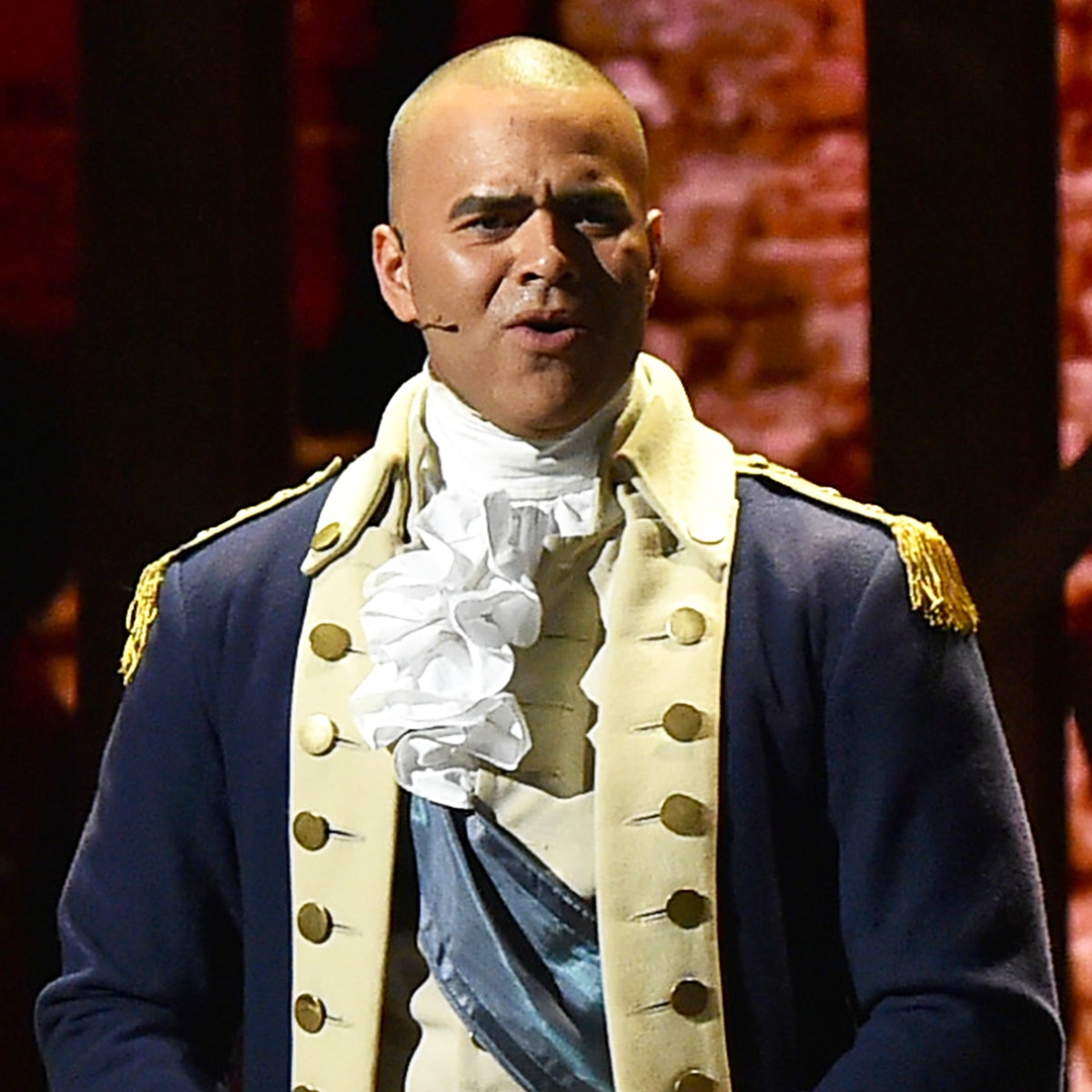
 History The baseball community has its eyes on Christopher Jackson.
As MLB’s Opening Day kicked off across the country on March 26, New York Mets fans took notice after the Hamilton star flubbed…
E! Online (US) – Top Stories

 Are you ready for it?
These celebrities were as they hit up the iHeartRadio Music Awards inside the Dolby Theatre in Los Angeles on March 26 for a celebration of music.
This year’s most nominated…
E! Online (US) – Top Stories

Despite being known for singing songs about patriotism and the red, white, and blue, there’s one domestic beer this crooner prefers not to drink.

Mashed – Fast Food, Celebrity Chefs, Grocery, Reviews

Ryan Jordan, owner of the Broken Oar Oyster Bar on the Homer Spit, holds fresh locally grown oysters on Oct. 23, 2025. Oyster growers and sellers in Alaska now take protective measures against Vibrio parahaemolyticus, a type of bacteria that thrives in warmer conditions and can make people sick. (Photo by Yereth Rosen/Alaska Beacon)
A pesky type of bacteria called Vibrio parahaemolyticus presents a textbook example of the ways that climate change creates health risks in Alaska.
Vibrio parahaemolyticus is the world’s leading cause of seafood-related foodborne illnesses. Until recently, Alaska waters were considered too cold for the bacteria to pose a threat to fish-eaters in the state.
That changed in 2004.
That summer, 62 cruise ship passengers were sickened after eating raw oysters provided by a shellfish farm in Prince William Sound, in the Southcentral part of the state. At the time, it was North America’s northernmost known case of vibrio-caused human illness — by a vast distance. Up to then, the most northern case involving oysters had been about 600 miles to the south in British Columbia.
Every year since then, there have been a handful of cases reported to state health officials, though some cases undoubtedly go unreported, said Dr. Joe McLaughlin, Alaska’s state epidemiologist and lead author of the New England Journal of Medicine study that described the 2004 event. In 2024, the most recent year for which data is available, there were seven reported cases, according to the Alaska Department of Health.
Vibriosis, the disease caused by Vibrio parahaemolyticus infections, is characterized by vomiting, diarrhea and similar symptoms broadly associated with what people term food poisoning.
The reported Alaska incidents in 2004 and subsequent years had common origins. “The vast majority of cases that we see nationally are food consumption of raw oysters. That’s certainly true here in Alaska,” McLaughlin said.
The link to warming conditions is also clear.
Vp, as the bacteria is known, thrives in warmer waters. It generally needs temps of 15 degrees Celsius, or 59 degrees Fahrenheit, to be active, though it can survive in colder temperatures in a dormant state.
Prince William Sound, like the rest of Alaska, has been warming over the past decades, and additionally has been subjected to repeated marine heatwaves that have wreaked havoc for fisheries, birds and marine mammals.
The warming trends were apparent during the summer of 2004, when mean daily water temperatures at the shellfish farm that provided the oysters to the cruise passengers never dropped below the 15-degree Celsius threshold during July and August.
Though infections are unpleasant, the presence of Vp poses only a minor health problem in Alaska. That is largely because the Alaska Department of Environmental Conservation’s food-safety program responded quickly to the 2004 cruise ship case by setting up a new system that requires shellfish farmers to keep their products properly chilled.

“It requires water temperature monitoring at oyster harvest sites and rapid post-harvest cooling and temperature controls for all oysters harvested between June 15 and September 15 every year,” McLaughlin said. “That’s when ocean waters warm up to concerning levels. And the plan has been highly effective in reducing outbreak.”
The department has the authority to take enforcement actions to keep farmed oysters safe. In 2018, for example, it temporarily shut down operations at two oyster-rearing operations in Southeast Alaska when outbreaks that year were traced to those sites. The farms reopened after they took corrective actions, as directed by DEC. The department also worked with the organizations distributing and serving the oysters to reinforce safety standards.
There have been no lab-confirmed cases in Alaska connected to seafood other than raw oysters, but that does not rule out the possibility, McLaughlin said. Elsewhere, people have gotten infected from different types of fish, he noted.
“In general, the risk for Alaskans — anybody who is not consuming raw oysters — your risk is extremely low of getting Vibrio parahaemolyticus infection. It’s not zero,” he said.
Alaska’s expanding shellfish-growing industry is taking the threat seriously.
At this year’s annual Mariculture Conference of Alaska, shellfish farm operators listened intently during a workshop on food safety. At the event, experts from Washington state described steps to keep oysters and mussels safe, including protection of the “cold chain” distribution system and some innovations that have been used in southern regions where heat-related challenges are more entrenched.
Any vibriosis case can impact consumer perceptions about the industry, said Shannon Boldt, a biologist with the Pacific Shellfish Institute, a research and educational organization based in Olympia, Washington.
“We all know when an outbreak happens, everyone is affected,” Boldt said at the March 10 workshop.
She recommended that operators be forthcoming with customers as well as employees about steps to avoid Vp infection risks.
“I know it’s a little scary for growers to talk about bacteria,” she said. But it is important, she said. “It goes a long way in boosting confidence that people know what you’re doing.”
The growth of shellfish farming in Alaska is itself another link between vibrio and climate change.
As warming temperatures and ocean acidification put pressure on established fisheries and fishing-dependent communities, Alaskans have turned to mariculture as an adaptation. Governments from the federal to tribal levels and nonprofit organizations have encouraged farming of oysters, blue mussels and kelp as ways to diversify and strengthen what is commonly called the “blue economy.” The term refers to the sustainable use of marine resources.

Farmed oyster production increased from 4.5 million in 2000 to 7 million in 2022, according to the National Oceanic and Atmospheric Administration, though most of the oysters were sold within the industry rather than to the public. Each year since at least 2019, applications for new aquaculture permits have been fielded by the Alaska Department of Natural Resources, which manages state tidal and submerged lands where such activities operate. And research is underway to expand shellfish growing beyond the oysters and mussels that are currently sold, including projects exploring abalone farming and hatchery enhancement of natural clam beds.
Alaska shellfish and kelp farmer and state officials have long-term ambitions of expanding the mariculture in the state into a $100 million-a-year industry, an exponental increase from current revenues, reported at about $1.5 million in 2024.
McLaughlin said it is logical to assume that as more oysters become available on the market, the chances for vibriosis will increase.
“Fortunately, this DEC program, the control plan, the Vibrio parahaemolyticus program, has been really successful in curbing cases,” he said.
While oyster-eating people are largely protected by the Alaska Department of Environmental Conservation protocols, the same is not true for other voracious consumers of raw shellfish: sea otters.
Otters can be sentinels of ocean conditions, and studies by veterinarians in California and Alaska have used tests of otters to trace the movement of Vp through the environment.
“Sea otters likely acquire the bacteria through their local prey, their natural food source, which include filter feeders that can concentrate bacteria,” Dr. Carrie Goetz of the Alaska SeaLife Center in Seward, a coauthor of the studies, said by email.
A 2013 study led by Goetz found Vb not only in sea otters but in a harbor porpoise and a beluga whale, with infection cases coming from Homer, Seward, Cordova, Cook Inlet, Kachemak Bay, Kodiak and Dillingham — well beyond the initial geographic scope identified in 2004.
More recently, Goetz and her colleagues have been using genetic analysis to examine the virulence of Vb strains that affect sea otters, which vary a lot, they discovered. Some are apparently mild. Most of the Vb-positive otters they examined during their research were actually asymptomatic, Goetz said.
In a study published in December, the veterinarian team found signs that the most virulent strains — those causing sickness among people as well as otters — appear to be spreading geographically.
The study contains a warning for Alaska: As warming continues and marine heatwaves become more common, those virulent strains could become more dominant, posing more risks to otters and humans.

This article was produced as a project for USC Annenberg’s Center for Health Journalism and Center for Climate Journalism and Communication 2025 Health and Climate Change Reporting Fellowship.
SUBSCRIBE: GET THE MORNING HEADLINES DELIVERED TO YOUR INBOX

Reading Time: 3 minutes
We have another Bachelorette-related scandal to report.
And unlike most of the recent controversies, this one has nothing to do with Taylor Frankie Paul’s assault video.
But it’s still bizarre and troubling, and Paul is still indirectly involved (it was still her season, after all).
We now know that one of the men who courted Taylor during her canceled season of The Bachelorette was involved in the car crash that left former congressman Madison Cawthorn paralyzed from the waist down.
Brad Ledford, now 29, was just 17 when he and Cawthorn headed to Florida for spring break in 2014.
Ledford fell asleep behind the wheel on the ride home, leading to a crash that left Cawthorn confined to a wheelchair.
Shortly after Cawthorn became the youngest person ever elected to Congress, Ledford shared his version of events with People.

“The situation was getting worse and worse,” he recalled, adding:
“I remember his leg was pretty badly cut from the accident, and we were sitting on the side of the interstate.
“So, I took my shirt off and wrapped it around his leg and then just kind of stayed with him until the paramedics got there.”
“If it wasn’t for him, Madison would’ve died,” Cawthorn’s father later told a North Carolina media outlet.
But in a 2017 chapel speech, Cawthorn alleged that Ledford had left him “to die in a fiery tomb.”
“He was my brother, my best friend,” Cawthorn said in the speech, adding:

“He runs to safety deep in the woods and just leaves me in a burning car as the flames start to lick my legs and curl up and burn my left side.”
“That statement he made was false,” Ledford later alleged. “It hurt very badly that he would say something as false as that. That is not at all what happened. I pulled him out of the car the second that I was able to get out of the car.”
Ledford was vindicated by a 2017 sworn deposition, in which Cawthorn admitted he had “no memory from the accident.”
Shortly after Cawthorn was sworn into Congress in 2021, Ledford told People that he did not know why his former friend still hadn’t walked back the version of events that he had shared publicly.
“I’m still thinking about it, and trying to figure out how I feel about that, or the best way that I think that should be handled,” Ledford said.
“Obviously, I know what he said to me, and that’s what really matters, right? He’s apologized for that a number of times, and it seems very genuine.”
In a TikTok recorded last month, Ledford added that he harbors no ill will toward Taylor following her string of scandals.
“I will say that I could care less about a TV show not airing right now. There’s real kids involved, real family involved, and I want the best for them. I want the best for Taylor’s kids. I want the best for Taylor,” Ledford said, adding:
“God’s love has no bounds; it knows no boundaries. He’s forgiven me for many things, and he’s already forgiven Taylor.
“I want Taylor to find that peace, and I want her kids to have that peace in the future more than anything, and I think they can, you know, it’s there for them if they want it.”
We will have further updates on this developing story as new information becomes available.
Brad Ledford: Taylor Frankie Paul ‘Bachelorette’ Suitor Was Driving Car That … was originally published on The Hollywood Gossip.
The Hollywood Gossip

There is a pall over the Make America Great Again, or MAGA, movement. Donald Trump overpromised. His public support has fallen. Some “America First” die-hards now openly criticize him.
Amid war, economic challenges, democratic backsliding, the Epstein files and Americans shot dead in the street by government agents, Trump’s support is softening and his vow to bring a “golden age of America” is looking more like a political winter for Trump and his MAGA movement.
This is my big takeaway from this year’s annual Conservative Political Action Conference, or CPAC. The event, organized by the American Conservative Union, launched with an international summit on March 25, 2026, and runs through March 28 in Grapevine, Texas.
Don’t get me wrong. The attendees are decked out in red, white and blue MAGA merch: sequined “Trump” purses and jackets, USA flag bags, ties and headbands, and, of course, iconic red MAGA caps. As always, they chant “USA,” even if not as often or as loudly as before.
Starting with the first talk by Rev. Franklin Graham, speakers here are still singing Trump’s praises. They underscore what they regard as major Trump 2.0 accomplishments: combating illegal immigration, cutting taxes, a budding economic boom, deregulation, U.S. gas and oil output surging, administrative state winnowing, pro-Christian policies and pulling the plug on the “woke” agenda.
These issues are foregrounded in sessions with titles like “Walls Work,” “Don’t Let Woke Marxists Raise Your Children,” “MAGA vs. Mullah Madness,” “Commies Go Home” and “Cancelling Satan.” In between, pro-Trump advertisements checklist Trump’s accomplishments.
This rose-tinted view is to be expected. After all, CPAC – a cross between a political rally, networking mixer and MAGA Comic-Con – is all about galvanizing the conservative base. Beneath the surface, however, MAGA is churning.

An anthropologist of American political culture and author of the book “It Can Happen Here,” I have been studying MAGA for years and attending CPAC since 2023. Attendees at last year’s CPAC, held a month after Trump’s inauguration, were jubilant, with nonstop talk of “the comeback kid” and “the golden age.”
Why is the mood at this year’s CPAC more subdued?
Enthusiasm for Trump is dampened because some of his supporters feel he has betrayed America First principles, failed to fulfill key campaign promises and been unable to supercharge the economy. Here are their major grievances:
“America First” is the guiding principle of MAGA. It encompasses border security, prioritizing the U.S. economy and ensuring rights such as free speech. It also means avoiding unnecessary wars.
This is why Trump’s support of the June 2025 “12-day war” on Iran led Tucker Carlson, Marjorie Taylor Greene and other MAGA influencers, who have tens of millions of followers, to criticize Trump. The conflict, they contend, served Israel’s interest – their phrase is “Israel First” – not those of the U.S.
Their criticisms became even more pronounced after the U.S. again began bombing Iran on Feb. 28, 2026. The criticism is part of a growing MAGA fissure with pro-Israel stalwarts such as conservative activists Mark Levin, Laura Loomer and Ben Shapiro, who support U.S. intervention in the Middle East. Things got so bad that after Levin called his fellow conservative media personality Megyn Kelly “unhinged, lewd and petulant,” she dubbed him “Micropenis Mark.”

But the MAGA unease with the war extends well beyond the “America First” influencers.
It includes figures from the fringe far right such as provocateur Nick Fuentes, center-right “brocaster” Joe Rogan, and even the Trump administration itself – as illustrated by an intelligence officer whose resignation stated, “Iran posed no imminent threat to our nation, and it is clear that we started this war due to pressure from Israel and its powerful American lobby.”
Notably, none of the main Trump critics have been scheduled to speak at this year’s CPAC. Some now call it “TPAC,” or the Trump Political Action Conference.
MAGA also has a strong populist and anti-elite streak of conspiracy thinking.
Large numbers of Trump supporters, for example, believe there is an elite plot to what they call “replace” the white population with nonwhites through mass immigration. Many also bought into the QAnon conspiracy theory, which centers on the idea that Trump is fighting Satanic, deep state elites who are running a child sex trafficking operation.
On the campaign trail, Trump vowed to take down political, deep state and global elites. He also promised to release the Jeffrey Epstein files, which QAnon conspiracists and others believe prove elite debauchery, including pedophilia.
Trump didn’t deliver. He backtracked and stonewalled on the release of the Epstein files, raising MAGA suspicion that Trump himself is implicated or is protecting elites. Remarkably, one recent poll found that roughly half of Americans, including a quarter of Republicans, believe the Iran war was partly meant to distract from the Epstein files.
Trump is also facing headwinds on the bread-and-butter issues of the 2024 election: the economy and immigration.
At CPAC, speakers have repeatedly given him kudos for shutting down the border. Acknowledging the MAGA in-fighting, conservative commentator Benny Johnson said he wanted to “white pill” – or buck up – the audience by reminding them that Trump had stopped an “invasion” and brought “criminal alien border crossings down to zero.”
As a photo of Trump’s bloodied face after the assassination attempt in Butler, Pennsylvania, on July 13, 2024, was displayed, Johnson claimed, “Our God saved President’s Trump’s life for this moment.”
But fewer Republicans approve of his handling of immigration compared with a year ago. Like many Americans, a growing number have misgivings about the strong-arm tactics used by government immigration enforcement agents in places such as Minnesota.
For many, the economy remains a serious worry. A recent poll, conducted before the Iran war, found that the vast majority of Americans, including large numbers of Republicans, are concerned about inflation, jobs and the cost of living. Health care, including the lost Obamacare subsidies, is also a source of consternation.
Few people believe the economy is “booming” – let alone that a “golden age” has arrived – as Trump and his allies often proclaim. The war with Iran, which has led to stock market declines and gas pump hikes, has only added to the unease.
Amid the recent MAGA in-fighting about the Iran war, conservative podcaster Tim Pool proclaimed, “The MAGA coalition is shattered.”
Not exactly. Despite the many challenges Trump is facing, the vast majority of his MAGA base voters still support him – including almost 90% backing his war with Iran.
But Trump’s support has eased in several ways. First, even his hardcore supporters worry about the economy, and they want him to declare victory and exit the war. And second, Trump has lost support on the edges. Many people in the key groups with which he made crucial inroads in the last election – such as young men and nonwhite voters – have turned from him. The same is true for independents and other Trump voters who don’t identify as MAGA.
Trumpism isn’t dead, as the MAGA-merched crowds here at CPAC make clear. But Trump is struggling through a political winter that could signal the early stages of his MAGA movement’s decline.

Alex Hinton receives funding from Alex Hinton receives funding from the Rutgers-Newark Sheila Y. Oliver Center for Politics and Race in America, Rutgers Research Council, and Henry Frank Guggenheim Foundation.
Politics + Society – The Conversation

To their fans and many players around the league, the Dodgers are the blueprint, an ideal model of the success and synergy that’s possible when a willing ownership group supports an adept front office. To the 29 other fanbases, they represent a different kind of poster child, a quintessential example of everything wrong with the sport’s economic system and competitive imbalance. The narrative hasn’t changed as they embark on a new season, certainly not after adding the best free agent on the market and the best closer available to their championship core. Only now, they’re looking to become the first team in a quarter-century to win three World Series in a row. The pressure of that task does not appear to intimidate a veteran group that is already coming off of one triumphant title defense. “It’s going to be weird to say, but this year feels, to me, almost a little more relaxed,” Max Muncy told me last month, attributing the ease he felt this spring to the Dodgers’ normal build-up after starting the 2024 and 2025 seasons early in Seoul and Tokyo, respectively. “With that, you don’t even think about, ‘Oh, we’re trying to three-peat.’… You can’t focus on October yet. “Obviously we know that’s our goal, and we expect to be there, but you can’t go about your work with that in mind. You’ve got to go about your work thinking, ‘How am I getting better today? How are we getting better today as a team? What are we doing as a team today?’ That’s the message we’ve always tried to preach here.” Dave Roberts relayed similar thoughts to his group in February when the Dodgers reconvened for the first time as a full group this spring. On paper, he knows this is probably the best roster he has ever managed, no small feat for a team that has won three championships in the last six years and 12 division titles in the last 13 seasons. But Roberts, like Muncy, doesn’t feel any added pressure compared to recent years. In the midst of the Dodgers’ golden era, winning the World Series has become the annual expectation, and the Dodgers are returning all the core pieces from an experienced squad that already demonstrated its resolve last season. “I thought we did a very good job of keeping our eyes looking forward at our goal versus looking to the side and looking at who’s around us, who’s chasing us,” Roberts said. “Knowing you have a target — as we should if we’re the defending champions — but to still focus on yourselves and what’s forward, that’s what we do a good job of.” So the goal, and his message, remain largely the same. Had the Dodgers stood pat this offseason, they still would have been the favorites to win it all again in 2026. Instead, they targeted “needle-movers” and kept pushing, addressing the two biggest concerns on their roster by adding four-time All-Star outfielder Kyle Tucker and three-time All-Star closer Edwin Diaz. Both could have signed a longer deal elsewhere, but both chose the Dodgers on lucrative shorter-term pacts. The three-year, $69 million deal for Díaz set a record for average annual value for a reliever. The staggering four-year, $240 million deal for Tucker set a record for present-day average annual value for any player. “We’ve built something really special around here,” said Freddie Freeman, “and everybody wants to be a part of it.” The Dodgers aren’t concerned about complacency, but the injection of new talent helps in that regard. – MLB Team-By-Team Season Preview- MVP? Cy Young? Making Our Picks- 30 MLB Breakout Stars for 2026 When Roberts gathered his team together for the first time in February, he discussed the 2025 championship run and the little things that got the Dodgers back to baseball’s apogee. Then he handed the floor to newcomers Tucker and Díaz, who shared their views of the Dodgers’ organization from the outside. “It was just more about what made the Dodgers attractive to them,” Roberts explained, “and I think it’s powerful for our guys to hear it from the other side, from somebody who hasn’t been here.” For Díaz, who has yet to make it to a World Series in his nine-year career, he felt this move gave him his best shot to win. For the Dodgers, this winter’s spending was just the latest example of their desire to cement their place atop the sport’s pedestal, regardless of the staggering cost, the tax penalties incurred or the simmering hostility around the league as they operate in a different financial stratosphere. “When you see your front office go out and add more guys, saying, ‘We’re not done,’ it just kind of creates a message of we have to keep winning,” Muncy said. “It’s very invigorating for the players to know the organization wants to keep winning. They’re not just set with one win. They want to keep going, and that creates a hunger in itself.” Building A Juggernaut The Dodgers have built their juggernaut, and become the envy and epicenter of the sport, for a multitude of reasons. They’ve chosen their long-term deals carefully, they’ve drafted and developed well internally and they’ve spent exorbitantly, using their many revenue streams to invest back into the product unlike any team before. The result is back-to-back World Series championships and a team that is the overwhelming favorite to win a third straight, something that hasn’t been done since the 1998-2000 Yankees. Prior to that, it was the 1972-74 Oakland Athletics. Baseball Prospectus’ PECOTA standings project the Dodgers to win 103 games, nine more than the next closest team. FanGraphs gives the Dodgers a 19.7% chance to win the World Series, 10% higher than the next closest team. “You always have to have somebody that teams and fans enjoy disliking,” Roberts said, leaning into the villain role. “That’s good for fans and sports, I think. I was one of those guys that didn’t like the Yankees but saw their value to the sport, certainly…when you can get put in that vein of the Yankees of the ‘90s, you’re doing something right.” Whether or not the Dodgers win it all again, the acrimony felt by fans and owners of other teams is certain to bleed into the upcoming labor negotiations. Most of the players on those 29 other teams, however, don’t see any problem with the way the Dodgers operate. Last month, Manny Machado and Fernando Tatis Jr. of the rival Padres both praised the way the Dodgers built their team. So did Bryce Harper, whose Phillies came up short against the Dodgers in last year’s NLDS. “They pay the money, they spend the money, they run their team like a business,” Harper said. “They run it the right way. They understand where they need to put their money into but also, people don’t look at this either, their draft and their development is unbelievable.” Those supporting pieces make it feel inevitable that the Dodgers could sleepwalk their way to the 2026 postseason, even with Blake Snell, Tommy Edman, Kiké Hernández and a plethora of talented relievers starting the season on the injured list and Roki Sasaki coming off an ominous spring. For most teams, those obstacles could derail a season. The Dodgers, however, are not most teams. They’ve built a roster seemingly deep enough to provide an answer for any problem that might arise. And yet, despite the fan vitriol, they are not an indomitable force. Getting to the playoffs hasn’t and shouldn’t be a problem. Once there, though, they know that nothing is guaranteed. In 2024, the Padres had two chances to knock off their rivals in the NLDS and came up short both times, despite the Dodgers needing to patch together bullpen games to survive the gauntlet. The Dodgers have harkened back to that series victory as a turning point for the franchise. In 2025, the additions of Snell and Tanner Scott seemingly pushed them to heights unseen. Many projected them to shatter the all-time wins record. Instead, they won 93 games, their fewest in a full season since 2018. They treated the regular season like a dress rehearsal, carefully handling their pitching staff so their best arms could be available when needed most at season’s end. And still, they needed to use their starters in relief to survive October. The Blue Jays came two outs away from conquering Goliath before falling victim to an unlikely protagonist. It was Miguel Rojas, not Shohei Ohtani, Mookie Betts or Freeman, who was the Game 7 hero with a game-tying, series-altering, life-changing home run. “I waited 20 years in professional baseball to have that moment, and it happens to me at the end of my career,” Rojas said last month. “In Italy, I’m walking around Rome and I’m seeing Dodgers fans over there saying, ‘Thank you for hitting that home run.’ It’s crazy. It’s overwhelming.” The ninth-inning blast from Rojas, who had just one home run the final two months of the season, and a back-and-forth World Series for the ages demonstrated the unpredictability of postseason baseball. The result made the target on the Dodgers’ back even bigger entering 2026. “It’s a challenge, but it’s something we get to look forward to,” Muncy said. “We get to embrace it. That’s what makes it fun.” In Touching Base, we check on which are the biggest topics in baseball and what comes next for the players and teams involved.Latest Sports News from FOX Sports

Reading Time: 2 minutes
A tragic story out of Spain has left social media users sharply divided.
A 25-year-old Barcelona resident named Noelia Castillo has been granted legal permission to die by euthanasia.
The decision comes after a yearslong court battle in which her father attempted to prevent her from doing so.
Noelia told the court that she had been coping with crippling depression for years, ever since she was rape by three men at a state-supervised center for vulnerable youth.
The attack was so traumatic that Noelia attempted to end her life by leaping from a fifth-story window.
She survived the fall, but it left her confined to a wheelchair.
Euthanasia has been legal in Spain since 2021, and Noelia tells the outlet Leading Britain’s Conversation that she sees no other way of alleviating her pain.
“I want to go now and stop suffering, period. None of my family is in favor of euthanasia. But what about all the pain I’ve suffered during all these years?” she said, adding:
“I don’t feel like doing anything: not going out, not eating. Sleeping is very difficult for me, and I have back and leg pain.
“I’ve told them how I want it to be. I want to die looking beautiful. I’ve always thought I want to die looking good. I’ll wear my prettiest dress and put on makeup; it will be something simple.”
As for her father’s opposition, Noelia says he “hasn’t respected my decision and he never will.”
“Why does he want me alive? To keep me in a hospital?”

Noelia’s mother, Yolanda Ramos, told Marca that she disagrees with her daughter’s decision, but will support her until the end.
“I do not agree, but I will always be by her side.”
Obviously, this is a very complex issue. Euthanasia was legalized for the purpose of enabling people to put a dignified end to unendurable suffering.
But it’s an option that’s usually pursued by terminal cancer patients, not people who are experiencing profound emotional pain.
Many have been critical of Noelita’s decision for obvious reasons. But at the same time, many of those critics likely could not fathom the pain that this young woman has endured.
We will have further updates on this developing story as new information becomes available.
Noelia Castillo: Gang Rape Victim Left Paralyzed By Suicide Attempt to Die By Euthanasia was originally published on The Hollywood Gossip.
The Hollywood Gossip
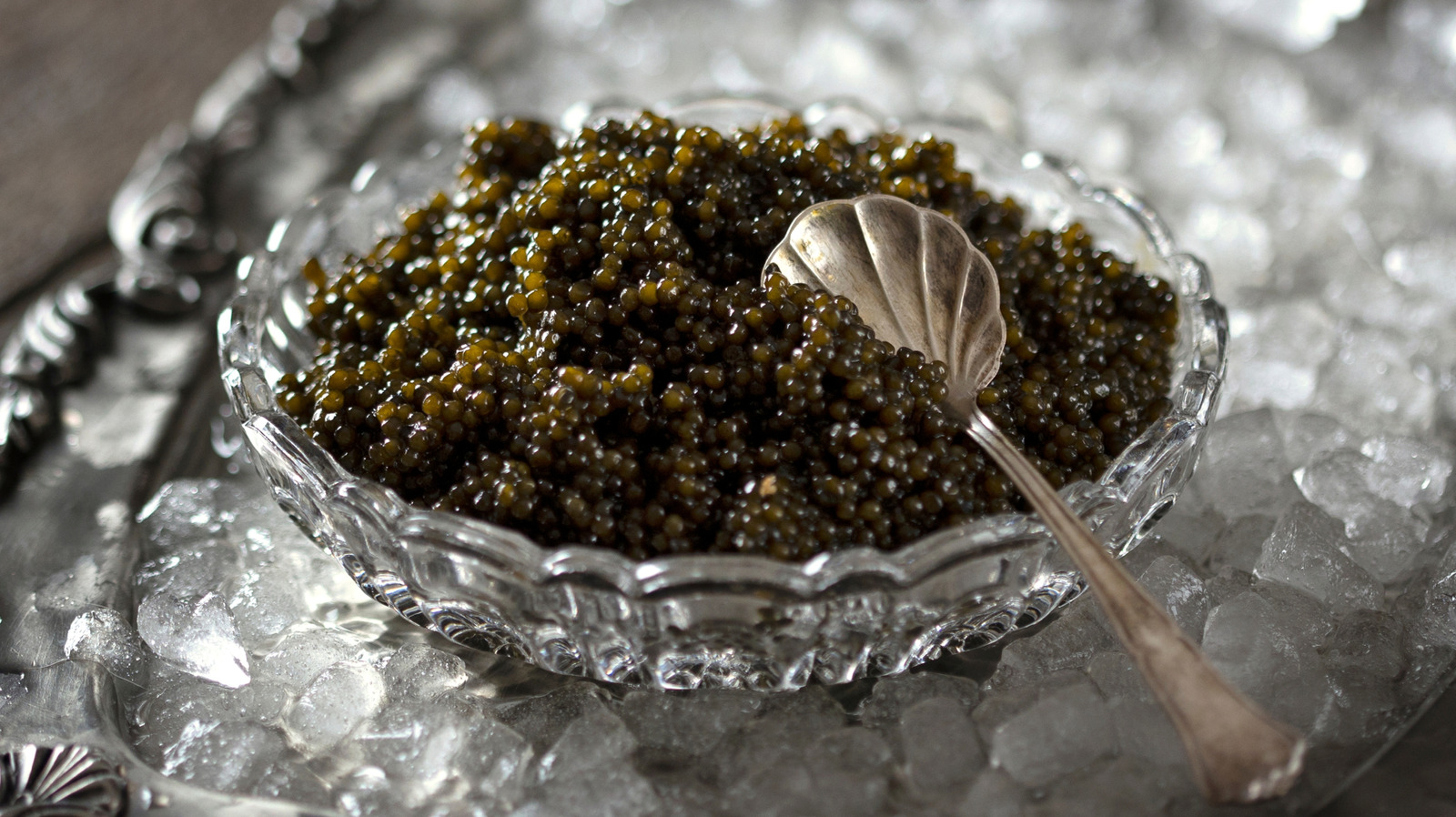
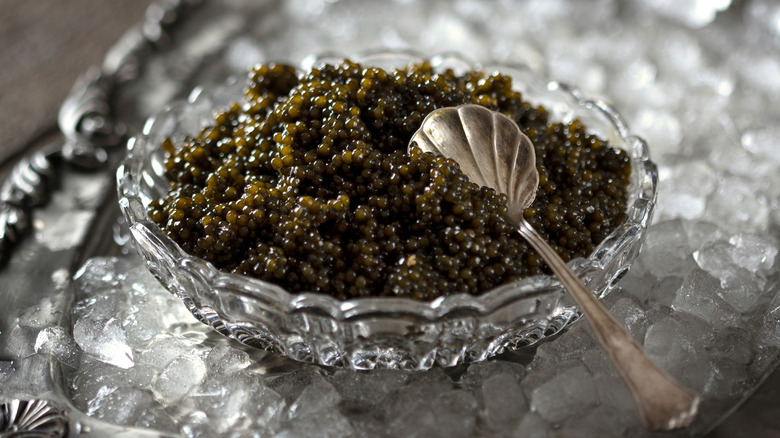
Caviar is a fancy food, so making sure it tastes the way it should is important. If you’re wondering whether caviar goes bad, we’ve got all the details here.
Mashed – Fast Food, Celebrity Chefs, Grocery, Reviews