The moment marked yet another milestone in what has already been a monumental year for the East Tennessee native. Just a few months ago, Chesney stood in the very same building celebrating his induction into the Country Music Hall of Fame. Now, fans can experience a career-spanning exhibit that celebrates the moments that shaped his career.
Located just down the hall from the museum’s iconic rotunda, the exhibit gives fans a front-row seat to Chesney’s journey, from his childhood in East Tennessee and college years to his early days chasing a dream in Nashville. It also highlights his record-breaking stadium tours and the unforgettable live experiences he’s created for his legion of fans who proudly call themselves No Shoes Nation.
Kenny Chesney at the Country Music Hall of Fame and Museum; Courtesy of the Country Music Hall of Fame and Museum
After touring the exhibit, Chesney joined his team, family, friends, and members of the music industry for a reception celebrating its opening, where he took a moment to reflect on what the experience meant to him.
Country Music Hall of Fame and Museum CEO Kyle Young welcomed guests before introducing Chesney to the stage, applauding the superstar’s hands-on approach to every aspect of his career.
“Kenny Chesney may be a hillbilly rockstar, but he’s always in control,” Young pointed out. “His is the kind of spirit that combines exceptional musical talent and insatiable creativity, mixes them with a tried and true work ethic and inexhaustible drive and realizes a benchmark country music career like the world has seldom seen.”
Kenny Chesney: Living in Fast Forward; Courtesy of the Country Music Hall of Fame and Museum
Upon taking the stage, the “Carry On” singer admitted it felt a bit “strange” to see his life and career displayed behind glass, but he also shared how proud he was of the finished exhibit and how grateful he felt to have had the opportunity to create it alongside the Country Music Hall of Fame and Museum.
Like everything he takes on, Chesney approached the exhibit with the same dedication that has defined his career. He was deeply involved in the creative process, helping curate the artifacts and stories that bring his journey to life. After seeing it all come together, Chesney said what stood out most wasn’t a particular award, accomplishment, or milestone, it was remembering the incredible amount of fun he’s shared with his band and crew since they first hit the road together in November 1993.
“It’s really interesting to see your life laid out like that, like this, because I lived it once, but to see it again is really strange. But I’m very proud of it. The thing that I saw when I first walked in, and I see a lot of my band and crew here tonight, is the amount of fun that we’ve had. I went on the road, I can’t even believe I’m saying this. I went on the road the first time in November of 1993. It’s crazy to think about. And we are having just as much fun today as we did then. Just ask my band,” he said with a laugh.
“We all went to Maui last week for a video shoot and that was a lot of fun being had. So I’m really proud of that because music is supposed to be fun. And I truly believe that to go out there on stage every night and give energy and get that energy back is one of the most amazing feelings in the world. And the fact that we get to do that at the level that we’re doing it is one of, I think I speak for all my band and crew here. It’s one of the highlights. It is the highlight of my life. And to stand here in front of you guys tonight and to see all that displayed, all the color, all the energy, all the love that you’re going to see in this exhibit is everything that we have lived for 30 something years. And I’m very proud of it.”
Chesney thanked the people in the room who have supported him since the beginning. Before wrapping up his remarks, he once again reflected on the joy of life on the road and expressed his gratitude for everyone who has been part of the ride.
Kenny Chesney: Living in Fast Forward; Courtesy of the Country Music Hall of Fame and Museum
“I keep going back to it, but you get to see exactly how much fun we have had over the years on the road. And that is a lot of fun. Back before phones, it was great,’ He laughed. “But we’ve still found a way to have an absolute blast out there and to take what God has given us, which is the gift of music and creativity and spread that and share that with the world. And that has been one of the biggest gifts of my life. And the fact that you guys are here to see it and be a part of it, I really appreciate it.”
Kenny Chesney: Living in Fast Forward is now open at the Country Music Hall of Fame and Museum. The career-spanning exhibit is included with regular museum admission and will remain on display through June 2027, giving fans nearly a year to explore Chesney’s journey.
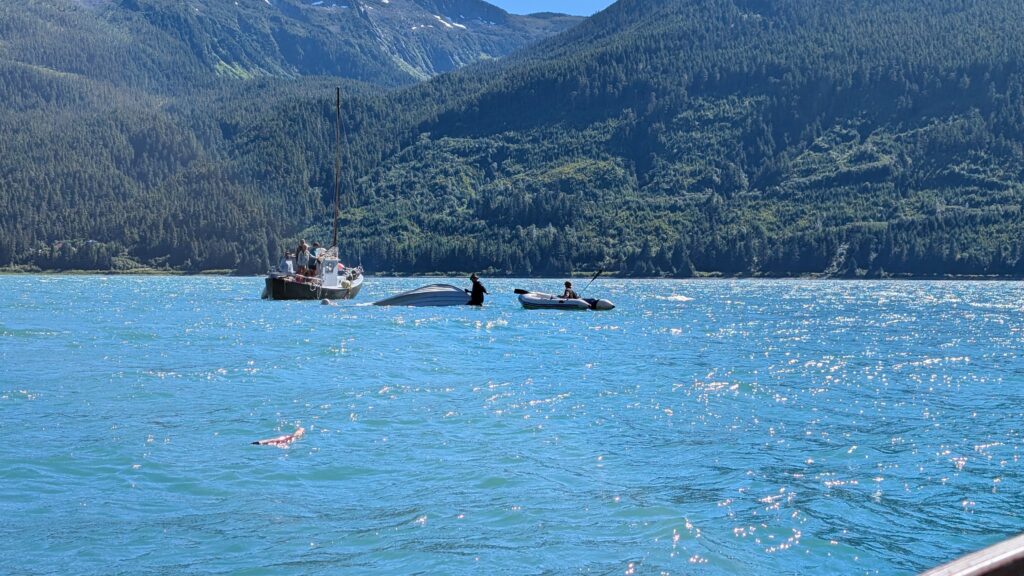
The George family assists an overturned boat Sunday afternoon in Lutak Inlet. Sunday, July 19, 2026. (Courtesy/Kerry McIver)
The Chilkoot River sockeye run arrived in a large surge last weekend, bringing the fish count at Alaska Department of Fish and Game’s Chilkoot Weir to nearly six-times what it had been just 48 hours before.
As of Friday evening, roughly 3,000 sockeye had passed through the weir since it was installed at the end of May, a number below the historical average for mid-July.
When 6 p.m. hit, the start of the Friday evening shift for Fish and Game staff at the weir, that all changed. Over the three-hour counting period, an average of over 30 sockeye per minute came through the weir, totalling 6,500 fish, department salmon researcher Shelby Flemming said this week. A similar influx of fish continued the next day, with a small lull around midday.
All told, from Friday through Sunday, department staff counted 16,820 sockeye passing through the weir.
News of the sockeye arrival brought anglers and subsistence fishermen out in numbers. Fish and Game’s area sportfish biologist, John Whitinger, reported “hot” fishing around Letnikof Cove. “People pulling their subsistence nets out had sockeye bigger than I’ve ever seen,” he said. “People were telling me they had more fish than they even really needed.”
Amid the fishing frenzy, at least two boats capsized. One of the boats overturned Saturday and sank in Lutak Inlet. A second boat that capsized the next day was salvaged by borough staff. No one was hurt.
The first boat overturned Saturday mid-morning in Lutak Inlet, said Joanne Waterman, who was fishing from a nearby vessel.
Waterman said that while wind and seas were picking up, she and fishing partner Dean Heard saw a small skiff nearby sitting low in the water and a lone boater beginning to bail with a bucket.
Waterman and Heard assisted the other boat, which they found without power due to a subsistence net tangled in the prop.
“The boat took a couple of good waves over the back and it started to sink,” Waterman said. “(Boat owner Linda Huber) was hanging onto the boat and we got her into our boat and then backed off, because the wind was bumping our boats together.”
Huber was the lone person in the vessel, joined only by her dog, who Waterman said was wearing a personal flotation device and also was saved.
Haines Volunteer Fire Department chief Zak Overmyer said the department sent an ambulance to the scene, but Huber declined medical attention. Huber did not return calls seeking more information.
The second boat capsized Sunday afternoon in Lutak Inlet.
Haines resident Michael George said he was boating nearby when he saw the overturned skiff with a man hanging off.
George’s son, Siyel George, piloted a Zodiac his family had been towing toward the overturned boat and hoisted the stranded boater, who was not wearing a personal flotation device, out of the water. Another crewmember of the overturned boat had already swum to shore.
Michael George said the capsized boaters, who he did not know, told him they had rapidly taken on water over the stern of their boat. When he arrived at their boat, George said their subsistence net was underwater and snagged on their outboard motor.
Haines harbormaster Henry Pollan said he towed the empty boat on Sunday afternoon from the mouth of the Chilkoot River to the Lutak launch ramp.
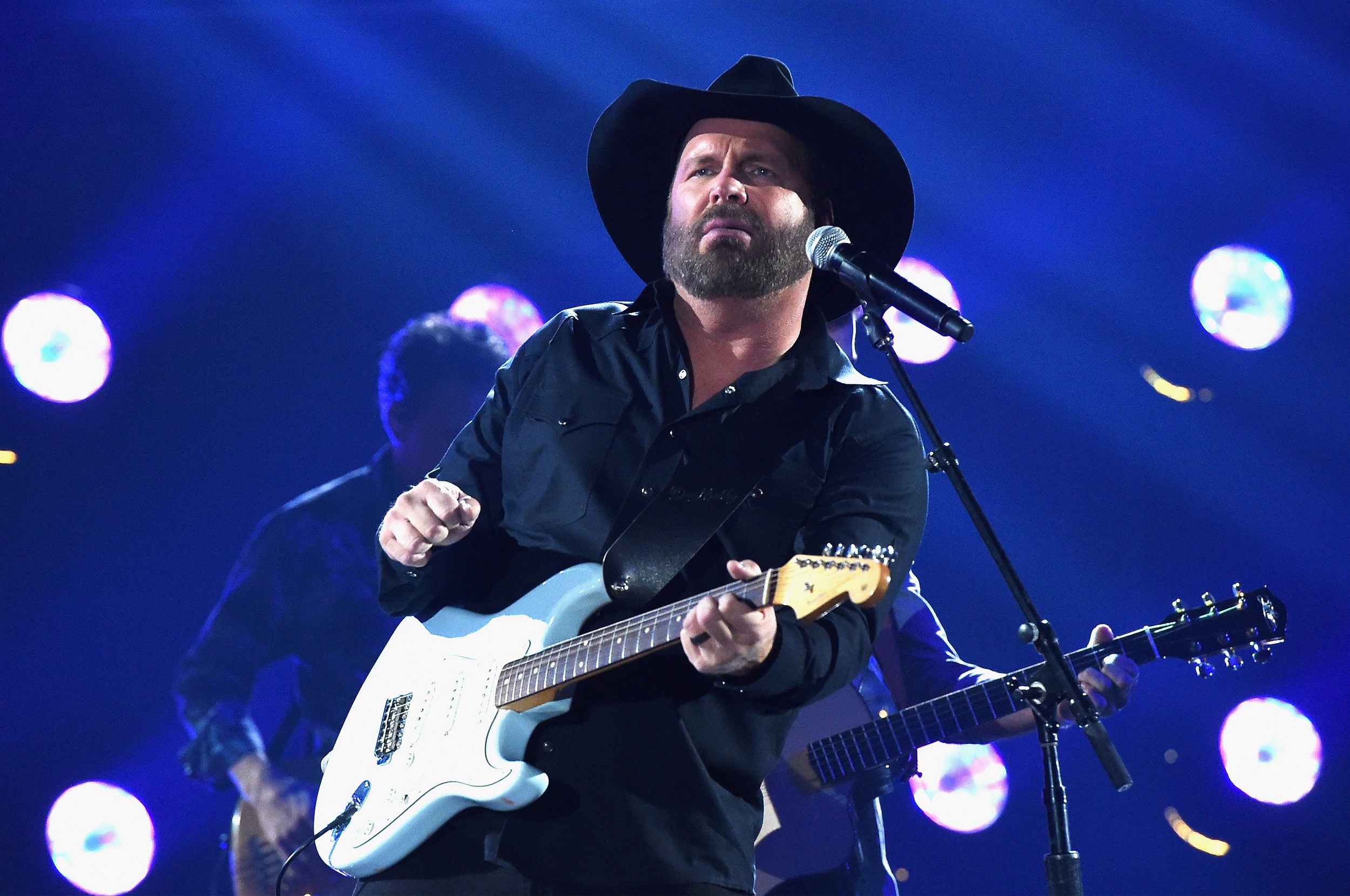
Garth Brooks is adding another city to his highly anticipated return to the arena stage. The “Blame It All On My Roots” Arena Tour set to launch next month in Indianapolis and then the country music icon will head to Denver, Colorado, for the tour’s second stop.
After seeing an overwhelming demand for the tour’s opening four-night run in Indianapolis, Brooks is expanding the “Blame It All On My Roots” Arena Tour with a newly announced stop in Denver.
Photo Courtesy of Garth Brooks
Fans will first get to experience the show at Indiana’s Gainbridge Fieldhouse from August 20-23, followed by two nights at Denver’s Ball Arena on Friday, September 4, and Saturday, September 5.
The show will feature both end-stage and in-the-round seating, with all seats reserved. It’s important to note that in order to maintain Brooks’ mission of keeping ticket sales fair at a set price, there will be no presales or early box office opportunities. Instead, all tickets will become available at the same time.
Brooks has made the decision to oversee ticket prices himself, ensuring that every one of his supporters, regardless of their financial situation, will have the option to come see his show at an affordable price.
“We have always chosen to do the one overall ticket price simply based on this thought: Where you sit in the arena shouldn’t depend on how much you can afford,” he says. “It should be all just luck of the draw.”
Purchases will be limited to eight tickets per transaction, and fans are encouraged to log into their Ticketmaster accounts ahead of time to ensure they are ready when tickets go on sale.
General on sale begins Friday, July 31 at 10:00 AM/MT HERE or through the Ticketmaster App. Every seat in the house will be priced at $155.25 ($140 ticket price + $5.25 Facility Fee + $10.00 Service Charge).
The “Blame It All On My Roots” Arena Tour will bring Garth Brooks’ biggest hits back to the rooms where it all started. These highly anticipated shows will also introduce Killer Live, a groundbreaking new approach to live recording that continues Brooks’ tradition of capturing major moments in real time.
“BLAME IT ALL ON MY ROOTS” ARENA TOUR DATES:
Thursday, August 20 – Indianapolis, IN – Gainbridge Fieldhouse
Friday, August 21 – Indianapolis, IN – Gainbridge Fieldhouse
Saturday, August 22 – Indianapolis, IN – Gainbridge Fieldhouse
Sunday, August 23 – Indianapolis, IN – Gainbridge Fieldhouse (Matinee)
Friday, September 4 – Denver, CO – Ball Arena [JUST ANNOUNCED]
Saturday, September 5 – Denver, CO – Ball Arena [JUST ANNOUNCED]
Now, Amy says that she’s open to a dialogue with some of her cousins. But there are conditions.
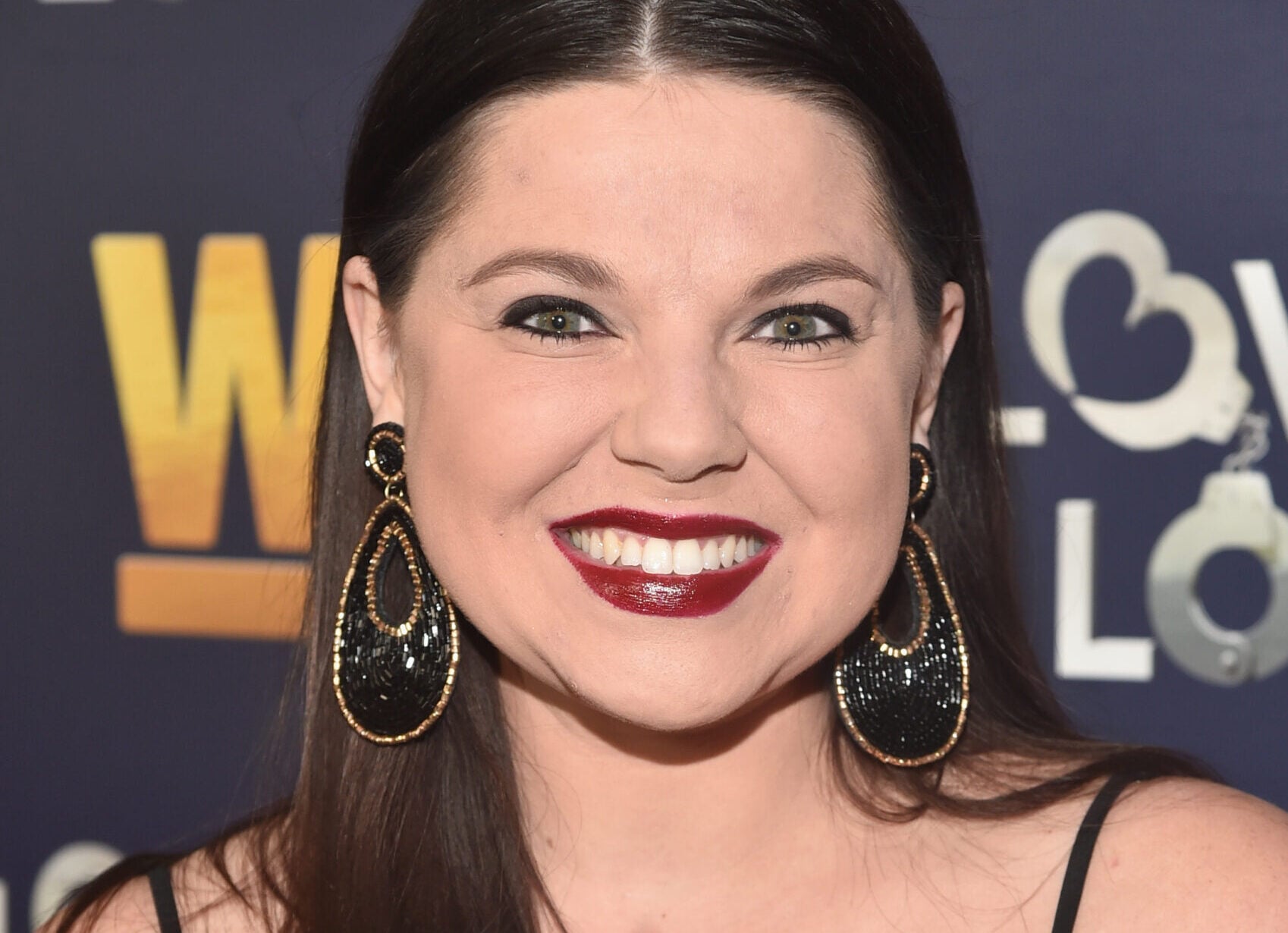
Amy Duggar attends WE tv celebrates the return of “Love After Lockup” with panel, “Real Love: Relationship Reality TV’s Past, Present & Future,” at The Paley Center for Media on December 11, 2018 in Beverly Hills, California. (Photo by Alberto E. Rodriguez/Getty Images for WE tv)
‘There is no contact’
During an interview with Oxygen, the infamous Duggar cousin revealed that she is not in touch with Jim Bob, with Michelle, or with most of her cousins.
“I have heard nothing from them,” she confirmed.
“Absolutely, there is no contact,” Amy emphasized.
There are many reasons to go no contact with family who were once important to you. How the Duggars have responded to Josh and now Joseph’s arrests and related scandals is only one of them.
She added: “That is just something that I have put boundaries in place.”
Amy Duggar King exclusively told Oxygen she recently reached out to Joseph Duggar’s alleged victim to offer support. Joseph Duggar plead not guilty to all charges. https://t.co/kvRVyZ4xafpic.twitter.com/fRlJANVxk8
“I don’t know what they’re thinking,” Amy admitted with a bit of resignation.
“I don’t know really what’s going on on that side of the family,” she added.
“From what I see in the news that I’ve gathered, it’s heavy,” Amy assessed. “It’s really heavy.”
Beliefs among the Duggars likely range from denial to horror to, as we have mentioned in the past, the belief that sinister supernatural forces are attacking their family.
With that in mind, Amy remains in close contact with her cousin, Jill. Not so with Jill’s parents or most of her siblings.
She’s open to contact again, but only under certain conditions
“I would be open to a conversation with any of my cousins that are free and good people,” Amy clarified.
“I would love to connect with maybe some of the girls,” she expressed.
Amy set the condition: “However, they have to be able to have an open and honest conversation with me.”
“If you wanna get to know the real me, the door is open,” Amy reiterated. “but I’m gonna protect my son no matter what, from anyone and everyone I possibly can that I think might have some issues.”
She admitted: “So far, no one has really walked through it except for Jill. Jill and I are so extremely close.”
Joseph Duggar has been arrested for the alleged molestation of a 9-year-old girl. (Washington County Sheriff’s Office)
“Jill and I were in communication the second we found out,” Amy said of Joseph’s arrest for child sexual abuse of a 9-year-old girl.
“I can’t describe the amount of pain that she has felt through all of the different scandals and all the different horrible things that have happened in our family,” she expressed.
Amy added: “My heart just goes out to her.”
She did clarify that she does not feel hatred towards her extended family. She wishes that they were healthy and good, but knows that they are not.
“I feel like the truth has always been so hard to find in my family,” Amy lamented. It seems unlikely that that cycle will break with most of her cousins any time soon.
When dining at a restaurant, it can be tempting to ask a server what their favorite meal is or what’s popular, but there is a better question you can ask.
‘I think that we should normalize people that truly know they don’t wanna have kids,’ Pearce reflects. Continue reading…The Boot – Country Music News, Music Videos and Songs
‘I think that we should normalize people that truly know they don’t wanna have kids,’ Pearce reflects. Continue reading…Country Music News – Taste of Country
Migrating summer chum and chinook salmon swim on July 7, 2007, below the U.S. Bureau of Land Managment’s fish weir on the Tozitna River, Alaska. The Tozitna is a tributory of the Yukon River. (Photo by Jason Post/U.S. Bureau of Land Management)
When 26-year-old Tirzah Bryant was a kid, she knew how to watch the cottonwood trees along the Yukon River for the sign that it was time to fish for salmon.
“We know that the fish are coming when the cotton’s flying from the cottonwood,” she said.
But run collapses and successive fishing closures along the river have rendered the cottonwood signal meaningless.
“I remember that first summer that we couldn’t fish, watching the cotton flying and being like …what it felt like, I was drifting. I’m like, ‘What am I doing?’” she said. That drifting feeling includes interactions with members of her extended family who had moved to cities but used to gather in Galena during fishing season. “They don’t have a reason to come home now,” she said.
Bryant described that odd feeling during a presentation in March at an Anchorage tribal environmental conference. A 2025 graduate of the University of Alaska Fairbanks’ Center for One Health Research master’s degree program, which focuses on the human-animal-environmental health connections in Alaska and the Arctic, she described the One Health concept as fitting perfectly with her family’s traditions.
“Everything is related. So a healthy environment equals healthy animals, which equals healthy humans,” said Bryant, who also holds a biology degree from UAF and is now the environmental and education coordinator for the Louden Tribe, the Galena-based tribal government.
That makes the collapse of runs in the Yukon River — where Indigenous residents’ culture is tied to communal salmon harvesting, preparation and eating — “very detrimental to our people,” she said.
On the Yukon River, salmon runs that used to support a thriving and lucrative commercial harvest have collapsed. The runs of Chinook, also called king salmon, that have been in steady decline since the early 2000s, took a nosedive in recent years; by 2022, Chinook abundance was down 81% below its long-term average, according to fishery biologists. Harvest closures that began in 2020 were extended, and in 2024 an Alaska-Canada agreement established a seven-year moratorium on Chinook salmon fishing in the river to preserve Canadian-origin stocks.
Runs of chum salmon, a species that is generally more abundant in the river, suffered a similar but more sudden crash. A series of chum-harvest closures, even for subsistence purposes, started in 2020, and by 2022 abundance had fallen 92% below the long-term average.
Several factors, working in combination, are blamed for the declines. Scientists cite multiple climate change effects in both the ocean and freshwater bodies used by salmon. Those changes have not only affected the raw numbers of fish but also contributed to the shrinking size of salmon, resulting in smaller egg loads carried to spawning grounds by females.
Tirzah Bryant of Galena and elder Betty Huntington after giving a presetnation on One Health issues on March 25, 2026, at the Alaska Tribal Conference on Environmental Managmeent in Anchorage. Bryant is the environmental and education coordinator for the Louden Tribe, the Tribal govenrment in Galena, a community on the middle Yukon River. Huntington is also from Galena. (Photo by Yereth Rosen/Alaska Beacon)
Other factors cited are interceptions at sea by trawlers targeting groundfish species like pollock, changes forced by increasing loads of Asian hatchery fish in the ocean, past fishery management practices and the parasite Icthyophonus, which thrives in warmer conditions and has a more detrimental effect on Yukon Chinook than on any other type of salmon.
Salmon-protection activists say there is not much that can be done in the short term in Alaska to address those factors, other than to adjust fishery management to cut down on at-sea interception, also known as bycatch.
‘We are truly fish people’
Tribal representatives have made that argument repeatedly to fishery managers. Among them was Brian Ridley, chairman of the Tanana Chiefs Conference, a consortium of Interior Alaska tribal governments.
Ridley, in testimony to the North Pacific Fishery Management Council at its February meeting in Anchorage, spoke about salmon-related health issues in terms similar to those Bryant used. He discussed Athabascan salmon traditions that go back millennia — as far back as 10,500 years ago, according to archaeologists’ discoveries of Yukon River fish camps.
“So we are truly fish people,” he said. The approximately 20,000 people who live in the Texas-sized area covered by the Tanana Chiefs Conference need more protections to repair the Yukon River’s weak salmon runs, he said. “I’ve got to do the best I can for them, and that’s why we’re fighting so hard to try to get our fish back,” he told the council.
A dietary staple, salmon had — until recently — been the main source of protein for Indigenous people who live along the Interior Alaska river systems. Traditionally, salmon has made up about a third of the wild food that rural Alaskans eat, according to the state Department of Fish and Game, and along the Yukon River basin, the percentage was much higher, at least in the past.
Store-bought substitutes, in addition to being expensive and of limited availability in rural Alaska villages that lack any outside road access, do not provide the same quality proteins and vitamins, minerals and omega-3 fatty acids, tribal organizations say.
The Tanana Chiefs Conference says effects of salmon shortages are seen in medical records. In October 2024, it said there had been a 24.6% increase in diabetes and a staggering 70% increase in prediabetes among tribal members since 2019.
Concerns in Alaska about adverse health impacts from reduced salmon consumption fit into a larger pattern of problems around the circumpolar North as wild and nutrient-rich foods traditional in Indigenous diets have been gradually replaced by less-healthful store-bought foods.
In Western Siberia, for example, climate change has shortened the seasons in which the Indigenous Nenets people harvest fish and reindeer, resulting in less overall consumption of those dietary staples and higher rates of hypertension, according to a 2021 study by researchers from Russian and Chinese institutions.
In Arctic Canada, a long-term transition away from what in local vernacular is called “country food” — wild foods such as fish, marine mammal meat and berries — has coincided in Inuit populations with rising obesity and related chronic conditions like cardiovascular disease, high cholesterol, high blood pressure and diabetes, according to a Canadian report published online in 2020 that summarized the findings of 162 studies.
Subsistence fishing on the Yukon River (Photo provided by the Alaska Department of Fish and Game)
A 2024 Canadian study calculated the expected increases in heart attack risks over the coming decades for First Nations members in British Columbia.
A traditional foods comeback
Despite challenges around the Arctic, there have been successes in resurrecting traditional diets, which experts say are important for both physical and mental health.
At the Alaska Native Medical Center in Anchorage, for example, traditional Native foods are served regularly, with supplies donated by community members. Traditional foods are “healing, nourishing medicine for our people,” says the hospital’s website. Donated traditional foods are served at other tribal health care facilities, too, such as the Maniilaq long-term care center in Kotzebue.
Count last summer’s culture camp organized by Eva Burk and other tribal leaders in the Interior Alaska community of Nenana as part of the healing process. Burk is a scientist, local food activist and Indigenous representative on the North Pacific Fishery Management Council’s advisory panel. Nenana is located on the Tanana River, a Yukon River tributary.
Burk and other members of the Nenana Native Association gathered local kids to teach them how to harvest and prepare salmon in the traditional Tanana Athabascan ways, along with other Indigenous skills.
For their activities, they used a smattering of locally caught chum salmon, also known as dog salmon because it was traditionally fed to sled dogs, that was available through a very limited harvest opened last summer specifically for cultural camp purposes. In all, they used 25 locally caught chum and 25 locally caught coho salmon for the camp, Burk said.
Camp activities relied mostly on sockeye salmon sent from the Bristol Bay region, where runs remain abundant. The Bristol Bay fish are not as much to Burk’s liking as the fish that used to be plentiful in the Nenana River and other Yukon tributaries. Bristol Bay salmon tastes a bit different, and the traditional smoking techniques she learned from her family don’t work quite as well, she said.
While they were grateful for the donations, they were especially grateful for the ability to harvest salmon from their own river, Burk said.
As she described it, catching, preparing and eating the local salmon was something of a healing process. Special care was taken to serve some of it to appreciative elders, she added.
“We scored them and smoked them for a day and cooked them over a fire and served them at a potlatch,” she said. “Fish that we would have normally cut for dog fish we were treating with the utmost care and respect, and savoring every last bit.”
The Nenana Native Association has scheduled another culture camp this summer to start in late July, and there is another special allowance for culture camp harvesting this year, Burk said.
Eva Burk cuts salmon during a culture camp held by the Nenana Native Association in August of 2025, (Photo provided by Eva Burk)