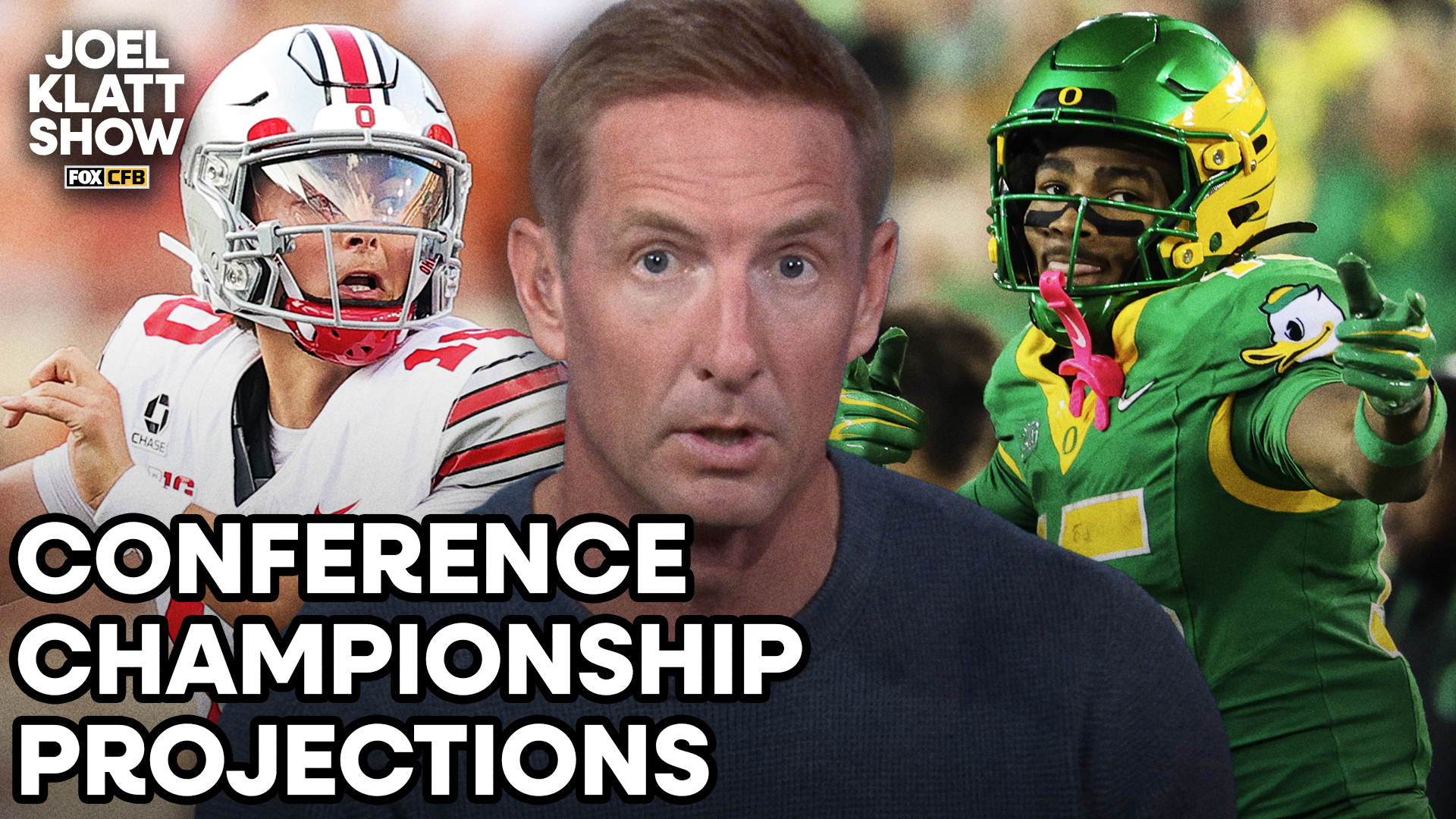
Before the College Football Playoff, there are conference championship games to be played. Will Georgia go back-to-back in the SEC? Can Oregon march its way back into the Big Ten title game for the first time since 2024? In this week’s edition of “The Joel Klatt Show,” FOX Sports’ Joel Klatt made his October projections for conference championships. Here are Klatt’s projected conference championship matchups and winners for the Power Four. Big Ten Championship Game Klatt’s thoughts: “Here’s how I see it right now. With the injuries that Indiana is having – and now kind of a resurgent Oregon team with all that talent – we hope QB Dante Moore comes back, but they’re plenty serviceable with their backup [Dylan] Raiola. I think Oregon makes the Big Ten Championship. Obviously, they have some tough games ahead, in particular that game in Columbus. But I like Oregon to make it to Indianapolis. I like Ohio State. Their schedule is not going to be easy. But they’ve got wide receiver Jeremiah Smith, and they’ve got QB Julian Sayin.” Winner: Ohio State SEC Championship Game Klatt’s thoughts: “Georgia and Alabama. I think Georgia is the best team in the SEC. I know Texas is technically the No. 1 team in the country. But if you look at their schedule and the way that they’ve played outside of those 18 minutes against Ohio State, I think that they’re going to be susceptible to getting beat. Because of that, I think Alabama actually passes them, wins the tiebreaker and goes to the SEC Championship game.” Winner: Georgia Big 12 Championship Game Klatt’s thoughts: “This one is going to be an interesting one. Here are two games I want you to pay attention to. I think the participants in the Big 12 championship game are going to be the winners of these games. The winner of BYU vs. Utah game in Salt Lake, and the Texas Tech vs. Oklahoma State game in Stillwater. I think it’s tough to win on the road. I’m taking both home teams, and I think it’s Utah vs. Oklahoma State Big 12 championship game in Dallas.” Winner: Utah Klatt’s thoughts: “In the ACC, we know Miami is going to be there, I think we all understand that. With Louisville’s loss a week ago, I got a little more gun-shy. But when you actually look at their schedule and the fact that I don’t see any other team running the table, I certainly believe that Louisville is going to get themselves back into a position to play Miami for the ACC Championship game.” Winner: MiamiLatest Sports News from FOX Sports
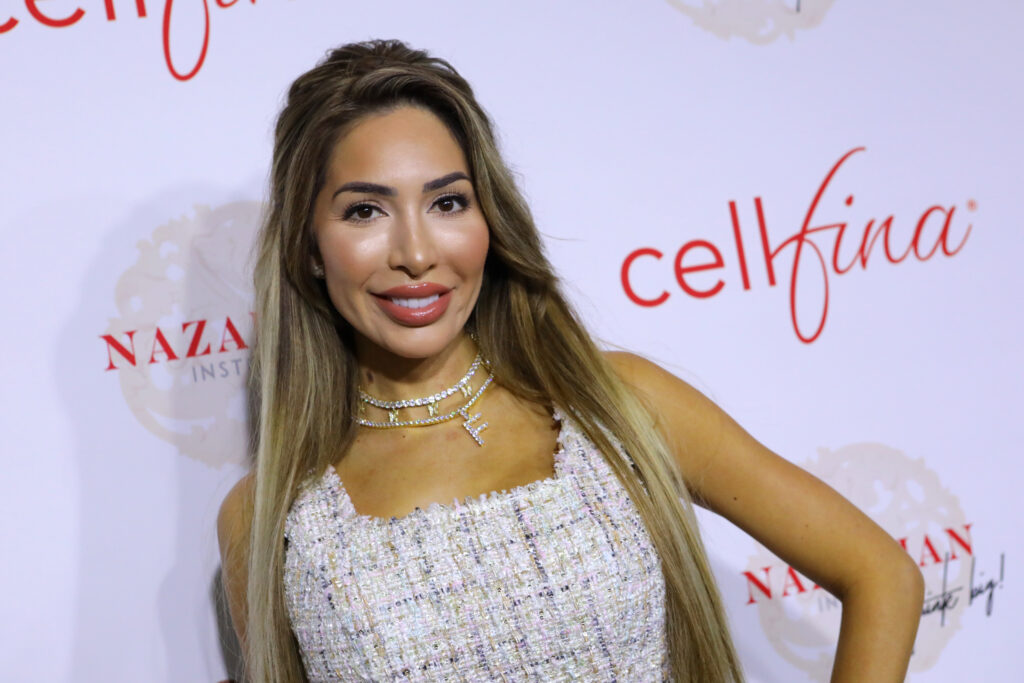
Despite no longer being a reality star and her still-technically-happening run for Austin City Council (please do not let that happen, people of Austin), Farrah still has a manager, Chrissy Johnston.
“Farrah cannot speak because her jaw is wired shut, and her face is extremely swollen,” Johnston explained to The Daily Mail.
“She’s in a severe amount of pain and is really struggling,” she detailed. “Both physically and mentally.”
According to Johnston, the surgery also resulted in Farrah having “lost hearing in her right ear.”
Their hope, she added, is that her hearing “returns to normal over time.”
Appearing on her daughter’s account, Farrah Abraham used a white board to explain why she cannot speak.
Merriam-Webster officially added “cuffing season” to the dictionary last month, finally giving the annual autumn search for connection some real legitimacy. Singles will spend the … Read moreThe post Cuffing season earned its dictionary entry, and the best first date…
Aubrey Plaza is back on the carpet.
The Parks and Recreation alum made her first public appearance since she and Christopher Abbott welcomed their baby this summer, stepping out for the premiere… E! Online (US) – Top Stories
Instead, the 50-year-old, who was convicted of murder at the age of 18, was hospitalized after surviving two lethal injections.
The horrific situation has resulted in confusion as to how authorities will proceed.
A mug shot of convicted killer Christa Pike. (Tennessee Department of Correction)
Sadly, this turn of events is not entirely unexpected.
In recent interviews, Pike warned that there’s reason to believe her execution might be badly botched.
“Tonight the State of Tennessee once again failed to carry out a lawful execution,” her lawyers said in a statement issued to the media (via Yahoo! News).
“We take no pleasure in being right, but the concerns raised by Ms Pike proved to be true: difficult vein access, blown veins, degraded pentobarbital, no emergency medical care available when things inevitably go wrong, all under a protocol that remains veiled in secrecy.”
Governor Bill Lee also issued a statement, in which he revealed that the state’s remaining scheduled executions will be postponed and will not be carried out in 2026.
“Carrying out a lawfully imposed sentence is among the state’s most serious responsibilities, and the people of Tennessee expect it to be done in a manner that is not only legal and constitutional, but is effective,” Lee told the press.
According to witnesses, Pike remained awake following the initial dose of phenobarbital, which was supposed to be fatal.
At one point, she reportedly raised her hand and expressed concern to prison officials.
Witnesses reported that the second dose of pentobarbital had been administered by 8:26 pm.
Pike was heard snoring behind the closed curtain until the microphone was cut off at 8:53 pm, and the media figures were escorted from the area.
State execution guidelines stipulate that a secondary set of drug syringes should be administered “if the inmate is not deceased” after the first set.
The guidelines do not specify what happens if the subject is still alive after the second set, thus it is unclear what will happen in Pike’s case.
“I’m going to leave this world the way I spent most of my life, and that is in love,” Pike said Wednesday in what were supposed to be her last words.
As of this writing, Pike is reportedly still in the hospital, and specifics about her condition are unknown at this time.
We will have further updates on this developing story as new information becomes available.
Gil Bates is recovering after a major health scare.
The Bringing Up Bates alum—father to 19 children with wife Kelly Jo Bates—was hospitalized after experiencing a heart attack Sept. 28.
“Once… E! Online (US) – Top Stories
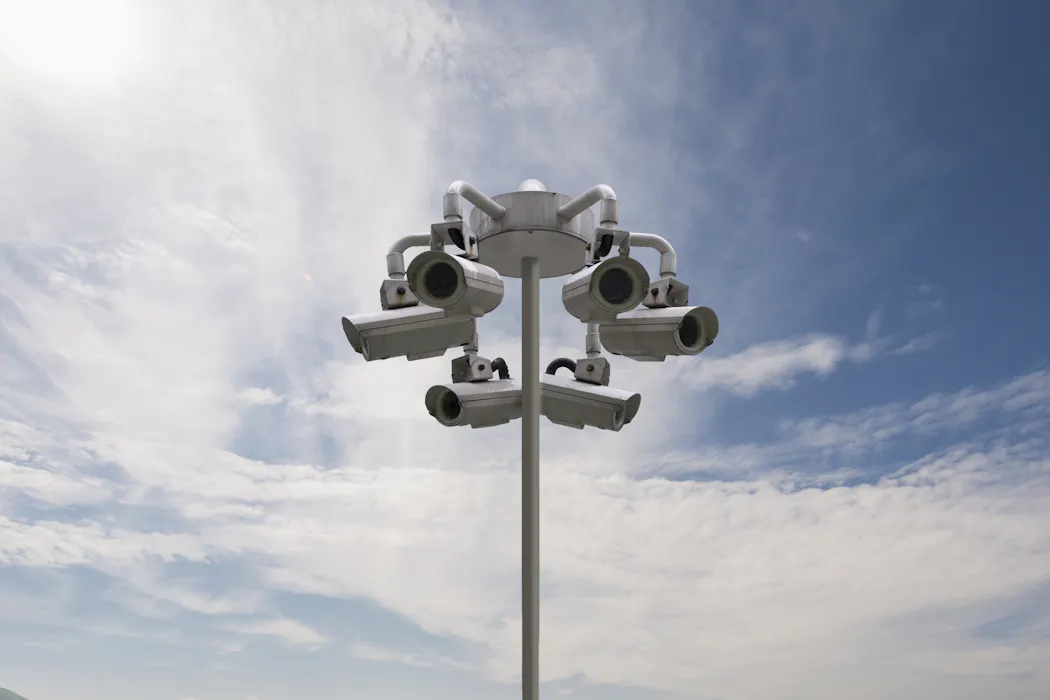
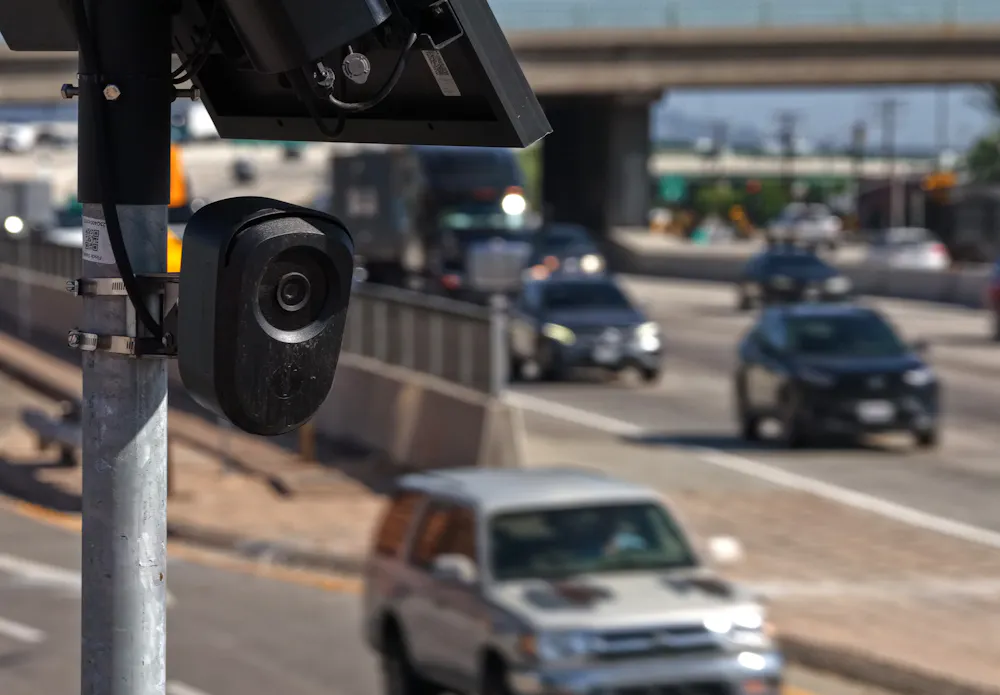
Flock cameras capture a vehicle’s license plate, location and distinguishing marks down to dents or a bumper sticker.Buena Vista Images/Getty Images
Wherever Marci Bakely went, her ex-boyfriend seemed to know. When the Georgia single mother drove to the grocery store or a date, he often texted within minutes.
According to a Washington Post investigation, Bakely’s ex-boyfriend, Braselton Police Chief Michael Steffman, searched her license plates and those of her teenage daughter roughly 600 times through Flock Safety, a company that makes and operates networks of automated license plate readers, or ALPRs.
Bakely’s case is not unique. The Post identified at least 50 officers accused of misusing ALPRs, including 26 who used Flock’s cameras to spy on current or former partners or people they hoped to meet. Its investigation has since identified at least 100 police department employees charged with or accused of misuse.
Flock says these people represent a tiny share of its more than 140,000 monthly users and that permanent audit logs help uncover misconduct.
But these abuses required no hacking or stolen credentials. Each user walked through the front door.
In September 2026, news outlets Wired and 404 Media analyzed data that hackers had copied from one Flock camera. About 21 days of logs contained roughly 50,200 vehicles and 1.6 million images. The software detected people and bicycles, and it even isolated an American flag patch on a motorcyclist’s saddlebag. Flock said it lacked enough information to assess the hackers’ technical claims about security vulnerabilities in the camera.
Flock says customers control their data, yet a department that leaves sharing enabled may not know who is looking. In 2025, U.S. Customs and Border Protection accessed more than 80,000 cameras during an undisclosed nationwide vehicle-tracking pilot, including one police department’s cameras without its knowledge.
Logs record misconduct only after it happens, and only if someone reads them. Indianapolis police did not regularly audit Flock searches until The Washington Post flagged thousands of questionable inquiries by one officer. A systemwide audit found alleged misuse by four more officers. Other police departments likewise learned of officers’ misuse from reporters.
Flock’s August 2026 changes shorten recommended data retention from 30 to seven days and require misuse detection and case codes to document searches. But customers may retain data longer, emergencies may bypass case codes, and entering a case number can be done without judicial approval.
Examples of user overreach
Flock’s architecture turns local cameras into a cross-jurisdictional surveillance network that agencies that never purchased the cameras may query.
Public records from Danville, Illinois, revealed more than 4,000 searches by federal agencies, including some with a potential immigration-enforcement focus, although U.S. Immigration and Customs Enforcement had no Flock contract.
A 2026 study similarly found 11,935 immigration-related searches in partial records from eight college police departments. Federal immigration agencies sometimes accessed campus camera data without campus officials’ knowledge.
The network also enables searches in other legally contested areas. In May 2025, a Texas sheriff’s office searched more than 83,000 cameras for a woman who had self-managed an abortion. The logged reason was “had an abortion, search for female.” The search reached Illinois, where state law forbids sharing plate data to enforce another state’s abortion ban. The sheriff called it a welfare check. Whatever the motive, one deputy triggered a national dragnet without independent review.
These examples reflect more than individual misuse. The platform makes the cameras easy to use by a second party, difficult to monitor and hard to control once local cameras are connected.
Why the Fourth Amendment matters
The law remains unsettled on ALPR use.
In October 2025 a Virginia appeals court held that police officers needed no warrant to retrieve three images spanning seven minutes from Norfolk’s 172-camera network because they showed vehicles, not people. But later findings about Flock’s people-detection capabilities weaken that distinction. Analysis of the hacked camera showed that its software could identify a person and record that person’s location within an image.
In January 2026 a federal judge held that Norfolk’s then-176-camera network did not violate Fourth Amendment protections. The system did not capture anyone’s entire movements, the court reasoned, although it photographed two plaintiffs’ vehicles 475 and 325 times over four and a half months. The ruling is being appealed.
In 2018 the Supreme Court held in Carpenter v. United States that acquiring seven days of historical cellphone location records generally requires a warrant because they can reconstruct someone’s past movements. Flock’s architecture raises a related but unresolved question: Its database can also reconstruct movements, yet police officers may search it without a warrant.
Both Norfolk rulings predate the Supreme Court’s June 2026 decision in Chatrie v. United States, which held that police conducted a search under the Fourth Amendment when they obtained two hours of stored Google location history. The court did not decide whether the search was lawful. Instead, it returned the case to the lower court to determine whether the warrant satisfied the Fourth Amendment’s requirements.
That did not make the access automatically unconstitutional: The Fourth Amendment prohibits unreasonable searches, not all searches. But the police generally need a warrant supported by probable cause once their conduct is classified as a search.
The Chatrie decision distinguished vehicles exposed to public view from phone-location data that can follow someone into a home or other sensitive place. But it also expressed concern about comprehensive archives that can be searched retroactively. A license plate reader network can create a similar archive of a driver’s public movements.
The constitutional question in Norfolk, therefore, turns not only on the seven minutes retrieved, but also on the surveillance power of the 172-camera network.
Enforceable limits
The Indianapolis cases expose the limits of internal controls in Flock’s system. Marion County Prosecutor Ryan Mears said many proposed guardrails would not have prevented the conduct. He pointed to the need for independent or judicial oversight.
I believe five safeguards could preserve Flock’s benefits while curbing abuse:
Flock’s new safeguards show that the company concedes that design matters, but private settings cannot substitute for laws. It’s not a matter of making sure officers follow the rules. It’s about creating enforceable limits.
Henry F. Fradella does not work for, consult, own shares in or receive funding from any company or organization that would benefit from this article, and has disclosed no relevant affiliations beyond their academic appointment.
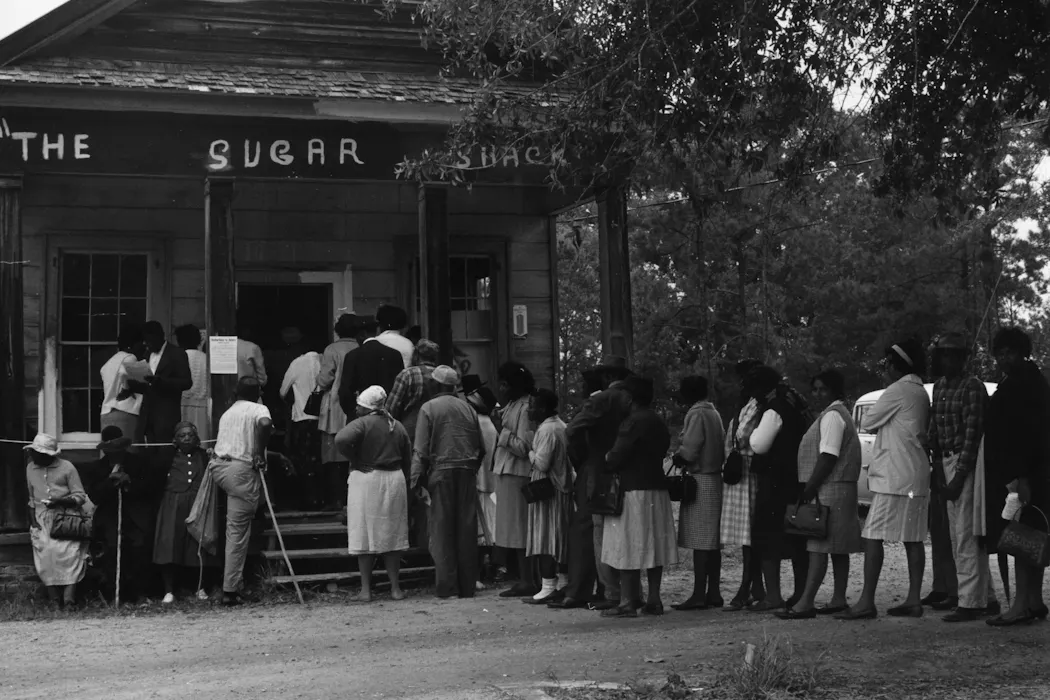
A group of voters lining up on May 3, 1966, outside the polling station in Peachtree, Ala., after the Voting Rights Act was passed the previous year. MPI/Getty Images
As the 2026 midterm elections approach, the U.S. Supreme Court has been busy with voting rights cases.
In late September, the court ruled that the Trump administration could continue with a plan for various federal agencies to use a controversial database to identify and cull ineligible voters on the voter rolls.
These decisions highlight the long history of struggles in the United States over who can vote, how votes are counted and who sets the rules that govern elections.
As scholars of elections and Southern politics, we have selected 10 important moments in U.S. voting history. The point is not to identify the definitive 10, but rather to underscore that battles over the franchise are long-standing and do not move in a single direction.
The 15th Amendment
Passed by Congress in 1869, the 15th Amendment was the final Reconstruction-era amendment. It said that “the right of citizens of the United States to vote shall not be denied or abridged by the United States or by any State on account of race, color, or previous condition of servitude.”
This amendment helped bring about widespread participation by Black men and the election of many Black candidates to key positions in Southern states. In South Carolina, over 250 African American men were elected during Reconstruction, and South Carolina’s Joseph H. Rainey became the first African American to serve in the U.S. House.
An 1870 print celebrating the ratification of the 15th Amendment, which sought to protect the rights of formerly enslaved people. MPI Images/Getty
The amendment’s language was clear and permanent, but much of the progress that followed was short-lived. During the Jim Crow era, Southern states used literacy tests, grandfather clauses and other barriers to deny Black citizens the vote.
The 17th Amendment
Aiming to provide a check on the popular will, the framers of the U.S. Constitution specified that U.S. senators should be elected by state legislatures. But problems with this system emerged. Disputes within legislatures sometimes led to deadlocks, and many states opted to select senators in partisan primaries or a general election.
As a result, Congress sent the 17th Amendment to the states in 1912. Ratified in 1913, it transferred the selection of senators from state legislatures to direct election by the people.
The 19th Amendment
The result of a long struggle for women’s suffrage, the 19th Amendment was first introduced in Congress in 1878 but did not pass over many years and subsequent introductions. Support increased after President Woodrow Wilson changed his position in 1917 to support it. Congress passed the amendment in 1919, and the states ratified it in 1920. It dramatically expanded the potential electorate.
Because of the lingering effects of Jim Crow laws and racial discrimination, however, many Black women were still denied the franchise.
Voting Rights Act
The Voting Rights Act of 1965 dramatically reduced barriers to voting and created a process under which localities with a history of discrimination were required to obtain federal approval, known as “preclearance,” before making changes to voting rules.
According to one analysis, “Prior to the adoption of the Voting Rights Act, the median proportion of Blacks who had registered (in the southern states) stood at 39.4 percent. Just a couple of years after adoption of the legislation the median figure had increased to 58.9 percent.” The law was reauthorized in 1970, 1975, 1982 and 2006, transforming Southern politics and altering representation by increasing the voice and representation of African Americans in the region.
McGovern-Fraser Commission
The tumultuous 1968 Democratic National Convention, marked by riots, violence against protesters and dissent over the Vietnam War, led to the establishment of the McGovern-Fraser Commission by the Democratic Party, which proposed new procedures for selecting delegates to the national convention. Most notably, the changes opened the process to greater public participation and reduced the power of party leaders to choose delegates behind closed doors.
McGovern-Fraser helped produce the modern primary system by changing the way presidential candidates are selected and shifting power from party leaders to primary voters.
The 26th Amendment
This amendment, ratified in July 1971, lowered the voting age from 21 to 18. The argument was simple — a person who is old enough to be drafted for military service is also old enough to vote. Support for lowering the voting age emerged during World War II, but the amendment was passed and ratified in 1971 in record time as support for the Vietnam War declined. It was the last constitutional amendment to expand the franchise.
The National Voter Registration Act
Also called the “motor voter bill,” the National Voter Registration Act of 1993 marked an important step in moving elections in America toward greater standardization by requiring state driver’s license offices to provide a way for people to register to vote. It also mandated other rules about how states must implement voter registration and how they must maintain voter registration databases.
Bush v. Gore
Following a closely contested 2000 presidential election in Florida, the Florida Supreme Court ordered a hand recount of contested ballots from Miami-Dade County. In the legal case Bush v. Gore, the U.S. Supreme Court stopped the recount, leaving Republican George W. Bush ahead of Democrat Al Gore in Florida and securing his election as president.
The case focused attention on the administration of elections, as problems with what were known as “hanging chads” on the ballots as well as voting equipment and the “butterfly” ballots themselves became central to discussion of elections in America. It also led to the passage of the Help America Vote Act in 2002 that set federal requirements for polling place accessibility, voting systems and voter registration.
On Nov. 15, 2000, observers and official ballot counters start a hand recount of Broward County, Fla., ballots. Najlah Feanny/Corbis via Getty Images
Shelby County v. Holder
In this 2013 case, the U.S. Supreme Court ruled that the formula used to determine which localities were required to have their voting policies reviewed and approved by the Department of Justice no longer reflected current conditions and therefore was unconstitutional.
Although Congress could create a new formula, it has not done so, and as a result the Shelby County decision effectively gutted the preclearance process created by the Voting Rights Act.
Recent research shows that this decision has resulted in several racially discriminatory voting policies.
Louisiana v. Callais
In late April 2026, the U.S. Supreme Court issued a 6-3 ruling that a Louisiana congressional map devised to create a majority Black voting district was an unconstitutional racial gerrymander and that the Voting Rights Act did not require the state to draw it.
In addition to affecting the specifics of the Louisiana map, Louisiana v. Callais made it much more difficult for plaintiffs to prove racial vote dilution claims under the Voting Rights Act. Many analysts believe that this may result in far fewer minority members of Congress.
Not a straight line
As is clear in this abbreviated tour of history, as well as in more extended treatises of the subject, the history of voting and elections in America doesn’t follow a steady path toward progress or retreat. It is marked by intense struggles, monumental victories and devastating losses. And many of the events on this timeline may represent all three, depending on a person’s experience and perspective.
Another set of 10 events might provide different examples, but they would be unlikely to bring us to a different conclusion.
The authors do not work for, consult, own shares in or receive funding from any company or organization that would benefit from this article, and have disclosed no relevant affiliations beyond their academic appointment.










 Aubrey Plaza is back on the carpet.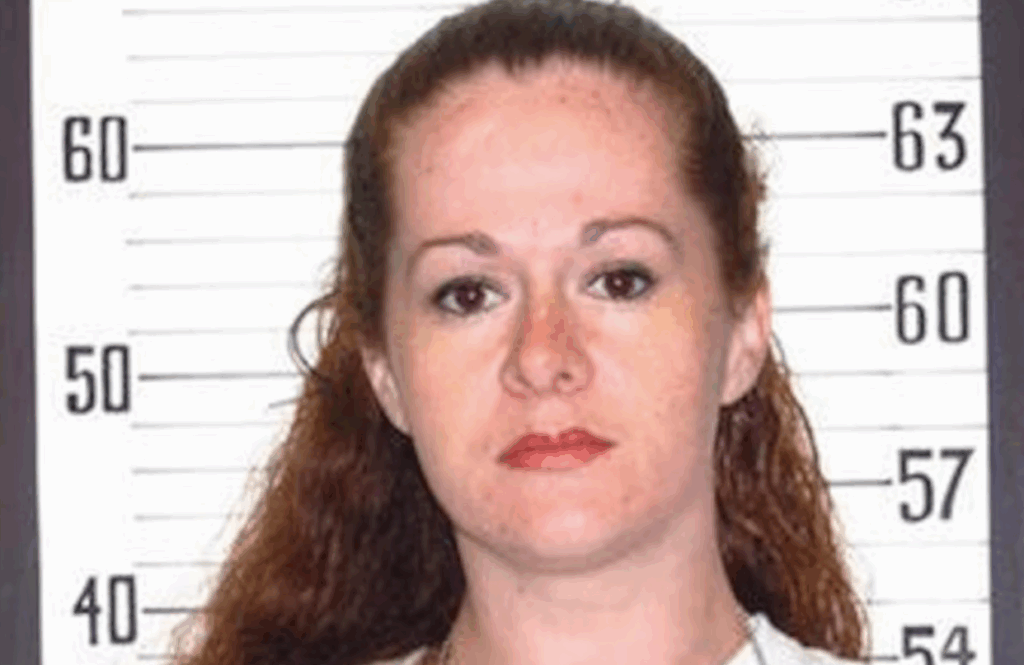

 Gil Bates is recovering after a major health scare.