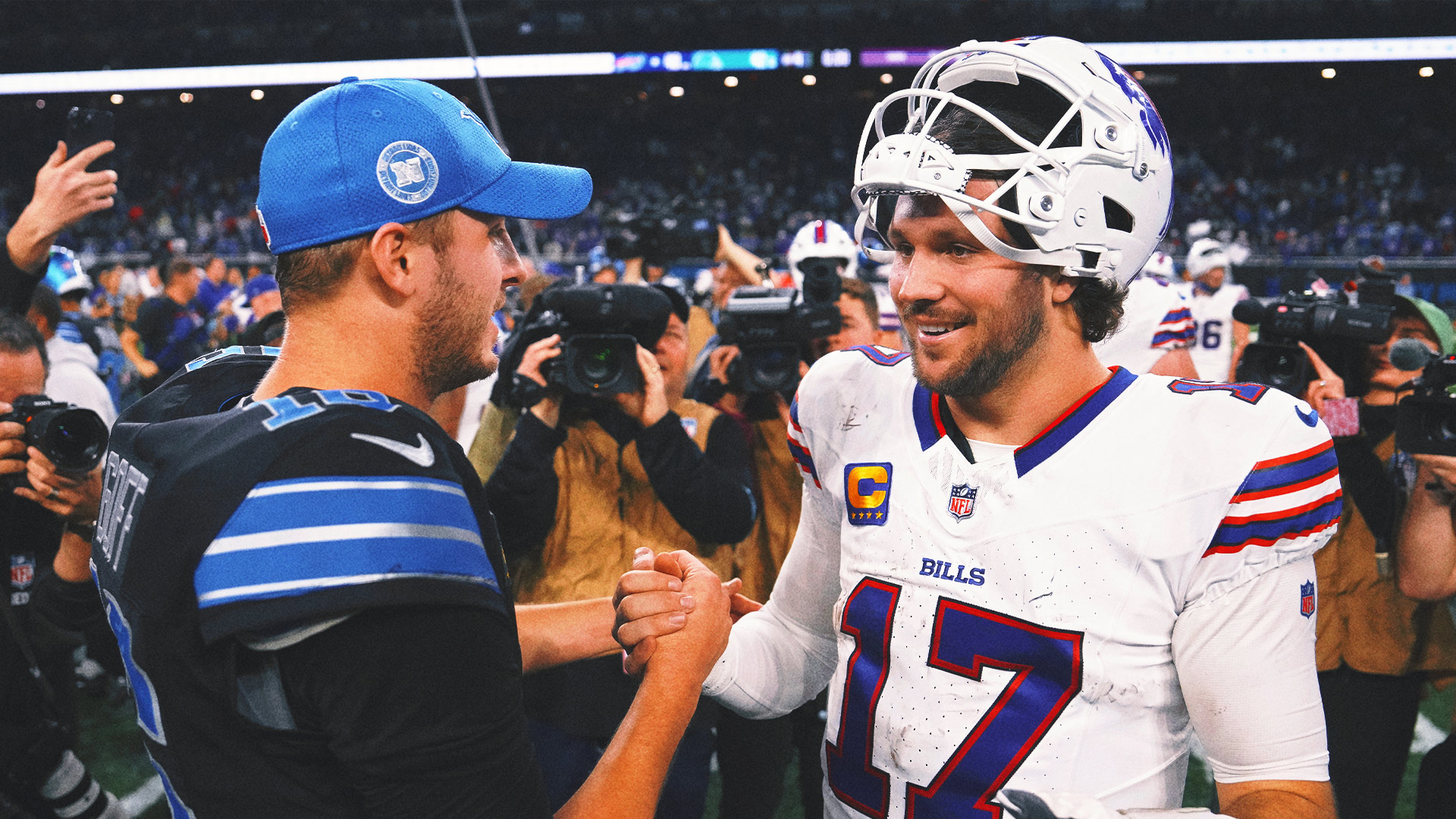
We’ve known for several months who each NFL team will play in the 2026 season. But this week, we’ll learn when all 272 games will be played in the upcoming regular season. The NFL will unveil the entirety of the 2026 regular-season schedule on Thursday. However, the league is announcing the dates of several games before then, like marquee matchups in Week 1. So, as you get your calendars out to prepare for what you’ll be doing this fall, here’s a look at which games we know will be played and when ahead of Thursday’s schedule release. The Seattle Seahawks will open the 2026 season on a Wednesday, marking the first time the NFL has opened a regular season on a Wednesday since 2012. Still, it marks the continuation of the tradition of the defending champion playing in the game’s season-opener. As of Monday morning, there are five potential opponents the Seahawks could face in the season-opener. One of those includes the New England Patriots, which would be a rematch of Super Bowl LX. The other potential opponents for the Seahawks are the Kansas City Chiefs, Chicago Bears, Los Angeles Chargers and Arizona Cardinals. The Los Angeles Rams and San Francisco 49ers will play their opener on Sept. 11 in Melbourne. The game is expected to kick off at about 10:35 a.m. that Friday in Australia, which is 8:35 p.m. ET on Thursday night (Sept. 10) in the United States. The Dallas Cowboys are set to visit the New York Giants in the first Sunday night game of the 2026 NFL season on Sept. 13. It’ll mark the eighth time in the past 15 years that the Cowboys and Giants are opening the season against each other. Dallas is always a national television draw as “America’s Team,” and New York could get more prime-time exposure with Super Bowl winner John Harbaugh coaching and Jaxson Dart established as the franchise quarterback coming off his eventful rookie year. It is set to be Harbaugh’s Giants debut. If healthy, it would also be the first meaningful game between Dart and Dak Prescott. While each started the season finale on Jan. 4, the teams were eliminated from playoff contention by then. This also could be the NFL debuts for a pair of former Ohio State teammates: Giants linebacker Arvell Reese, taken with the fifth pick, and Cowboys safety Caleb Downs, drafted not long after at No. 11. The Buffalo Bills’ first game at the new Highmark Stadium will be against the Detroit Lions on a Thursday night in Week 2. It’ll mark the start of a new era in Buffalo, as the Bills played the vast majority of their home games from 1973 to 2025 at the stadium previously nicknamed The Ralph. It’ll also mark the start of a new era for the Bills on the field, as it’ll be Joe Brady’s first home game as their head coach. The Baltimore Ravens have been chosen to play the Dallas Cowboys in the NFL’s inaugural game in Rio de Janeiro this season. That game will be played on Sunday, Sept. 27. The NFL previously made a multi-year commitment to bring at least three regular-season games to Rio de Janeiro over the next five years. The NFL has previously played two games in Brazil — Packers-Eagles in 2024 and Chiefs-Chargers in 2025 at São Paulo’s Corinthians Arena — but this will be the first in Rio. One of the NFL’s best rivalries will be featured on Thanksgiving Day and will air on FOX. The Philadelphia Eagles will meet up with the Cowboys in Dallas on the holiday this year as the two NFC East rivals go head-to-head on Thanksgiving for the first time since 2015. Here are five storylines to know ahead of the matchup. The Associated Press contributed to this report.Latest Sports News from FOX Sports
The outrage was swift and severe when the U.S. Supreme Court, by an ideologically divided 6-3 vote, recently struck down Louisiana’s majority Black congressional district as an unconstitutional racial gerrymander. Critics lambasted the court for gutting the Voting Rights Act, the federal law that had until recently garnered strong bipartisan support and had ensured Black political representation in the South for more than half a century.
Whether Louisiana v. Callais will wreak this kind of havoc remains to be seen, although some Southern states have already begun to redraw their legislative districts, aiming to ensure Republican control. Several Black legislators – all Democrats – are expected to lose their seats in the upcoming midterm elections. Democrats are threatening to retaliate with their own redistricting plans.
Because of a 2019 decision by the court, such political gerrymanders, where a legislative district is crafted to ensure partisan control, cannot be challenged under federal law. Both parties had taken full advantage of that ruling.
Prior to the Callais ruling, however, legislators had to be sure that when they sought partisan control of a district, they did not excessively dilute the voting power of minority residents. Multiple lawsuits had challenged political gerrymanders on exactly these grounds.
After Callais, that guardrail is gone. Indeed, lest they provoke the same type of litigation faced by Louisiana, state legislators must now ignore the race of voters altogether. From here on out, gerrymandering is fine, but only if it’s race-neutral.
This does not mean, however, that the race-blind mapmaking process envisioned by the Supreme Court majority will manifest. Based on our recently published research, it may, in fact, be just the opposite.
Race, we found, is – at least in the South – a more reliable predictor of how someone will vote than their party identification. And that makes race, we believe, a potentially irresistible lure for those designing congressional districts.
In 1972, Andrew Young, left, was the first Black person to be elected to Congress from the deep South since Reconstruction. AP Photo
Race a more reliable predictor
We are both political scientists – one of us an expert on Congress and national elections and the other a constitutional law and Supreme Court scholar. In Southern states, race and political party overlap significantly, with the vast majority of Black voters favoring Democrats and most white voters favoring Republicans. And in our study, we document that in this region, mapmakers actually have an incentive to take race into account when conducting a political gerrymander.
Political gerrymandering is the process of drawing electoral districts to favor one party over another. In most states, the responsibility for drawing districts rests with the state legislature. Thus, the party that controls state legislatures very often controls elections – at both the state and congressional level.
The goal of partisan redistricting is to maximize the chance that candidates from that political party will win elections. Our study shows that using both the race and party of voters to redraw districts, rather than just party alone, better ensures partisan advantage.
The research we conducted was motivated by a claim made by Justice Samuel Alito in another recent racial gerrymandering case decided by the Supreme Court, Alexander vs. South Carolina NAACP. He argued in the court’s majority opinion that when drawing districts to favor one party, mapmakers would need to look only at voters’ party affiliation – their race would be irrelevant to ensuring partisan control.
It is a straightforward, seemingly sensible claim. It is also wrong.
Our study uses an original dataset of precinct-level election results in South Carolina from 2010 to 2020 to explore how well a precinct’s racial and partisan composition before redistricting predicts how it votes over the following decade.
What we found reveals a more complicated picture than Alito – and the subsequent Callais decision – presumes.
A precinct’s Democratic and Republican vote share prior to redistricting was the strongest predictor of future election results. But there are two problems with relying on only such partisan data when gerrymandering a district.
First, our analysis showed that roughly a quarter of a precinct’s voters in the next election did not follow what the partisan data predicted – a sizable amount, given the supposed ease of gerrymandering by party.
Second, precinct election results are surprisingly volatile. Our analysis shows that the effect of preredistricting partisanship varies with election cycles, national conditions, gradual changes in party coalitions and other factors. A precinct that leaned Republican in the election before redistricting may vote very differently in a midterm wave year when the president is unpopular, precisely the type of election coming in November.
By comparison, the analysis shows that voters’ race is a more reliable predictor than their party of how they will vote in the next election. Consequently, it seems that, at least in Southern states, legislators have a genuine, data-driven incentive to use racial data when drawing partisan districts.
Republicans in South Carolina want to draw a new congressional map, and it could eliminate the district that has for decades elected Democrat Jim Clyburn. Kevin Wolf/AP Photo
Will race still affect political gerrymanders?
Consider this redistricting scenario: South Carolina’s Republican-led legislature wants to flip the state’s lone Democratic congressional seat – long held by prominent African American U.S. Rep. Jim Clyburn – for the 2026 midterms. A simple approach is to identify those who voted for Donald Trump in 2024 and then just redraw the district to add enough of those voters to ensure Republican control.
The plan backfires, however. Not only does Clyburn hold his seat, but a neighboring district also elects a Democrat. What went wrong?
Simply put, the legislature failed to realize that past partisan returns are an imperfect predictor of future voting behavior.
A heavily Democratic area that is predominantly Black will vote Democratic far more consistently than a heavily Democratic area that is predominantly white. Two precincts that look identical on a partisan map can behave very differently at the ballot box. And a legislature that fails to take this into account has taken an unreliable route to partisan advantage.
If Republican legislators want to oust Democratic officials, the most reliable route is to oust from a district the minority Democratic voters who would have elected them.
This is not to suggest that legislators should use race in this way. It certainly smacks of racism and echoes the type of electoral machinations used during Jim Crow. But that analogy is not exactly on point. The approach we identified targets the power of Black voters not because they are Black, but because they are such reliable Democrats.
To many, that may be a difference that makes no difference. More litigation over gerrymanders is inevitable. If litigants can demonstrate that race was a “predominant” factor that “drove” redistricting, or that mapmakers purposefully attempted to diminish the power of Black voters because of their race, legal liability can still follow.
Voting rights advocates should be aware of the temptation legislators may have to let race affect their political gerrymanders.
Perhaps minority voters are as free from invidious discrimination as Alito’s majority opinion in the Callais case suggests. This does not mean, however, that those charged with ensuring all voters are fairly represented in American democracy will be colorblind. Our findings show that race could easily remain embedded in the political gerrymandering landscape, despite vehement claims to the contrary.
Jordan Ragusa has served as an expert witness in racial gerrymandering litigation, most notably in Alexander v. South Carolina State Conference of the NAACP. He also serves on the advisory board of Charleston Civil Rights and Civics (C3), an educational non-profit that fosters civic engagement and civil rights awareness among high school students
Claire B. Wofford does not work for, consult, own shares in or receive funding from any company or organization that would benefit from this article, and has disclosed no relevant affiliations beyond their academic appointment.
Here’s what’s happening this week Inside The Garage: Watkins Glen International (Watkins Glen, N.Y.) — Ryan Preece admitted he was surprised when NASCAR penalized him for wrecking Ty Gibbs at Texas Motor Speedway. And he wasn’t the only one. Preece will appeal his penalty of 25 points and $50,000 fine. And his appeal will center on the same May 3 race where Kyle Busch appeared to retaliate against John Hunter Nemechek but didn’t get penalized. NASCAR spokesman Mike Forde, speaking on a NASCAR podcast, said the telemetry data showed that Busch’s car likely was damaged, that he had his steering wheel turned left and his car went straight. So they couldn’t penalize him. The fact that Preece had said “When I get to that 54 [of Gibbs], I’m done with him” was enough to signal to NASCAR some premeditation. Preece is hopeful he can show on appeal that he didn’t wreck Gibbs on purpose as he indicated he just didn’t cut Gibbs a break. The one thing that could be tough for him is that NASCAR changed its appeal rules a couple years ago to where the appeals panel, if they find the rule was violated, can’t eliminate any portion of the penalty issued and can only adjust in the range specified. The 25 points and $50,000 are the lowest for the range of points and money for an intentionally wrecking penalty, so the appeals panel can’t wipe out the points and just increase the fine as has been done in the past. No date has been set yet for the appeal. “I’m a bit surprised,” Preece said at a news conference in Watkins Glen this past weekend. “I’m thankful that NASCAR has an appeals process.” The RFK Racing driver has been encouraged by team leadership to be himself and be bold. So Preece has to weigh that request with not wanting to be penalized if he vents a little on the radio. “At the beginning of the season, we were encouraged to be ourselves,” Preece said. “I’m not going to change being myself, but what I can say is that I’m excited for the appeals process, and I look forward to going through that.” His boss, Brad Keselowski, has been through a few appeals and “generally, I feel like they’re a pretty fair process.” Keselowski is one of two full-time owner-drivers in the sport. The other, Denny Hamlin, could give a view that wouldn’t impact an appeal. Hamlin said he thought Busch would get penalized and Preece would not. Which sparks the question of whether two people can look at the same SMT data and come up with different determinations. “No matter what, common sense has to be the first rule of thumb,” Hamlin told me. “And then you go from there, then you use data to either back up or deny common sense.” Drivers certainly will be watching to see how the NASCAR appeal panel rules. Keselowski said, somewhat in jest, that the line is always moving on what is acceptable and what is a penalty. “I would like to see NASCAR have race stewards,” said Keselowski, referring to other series that have former drivers who make those determinations on the spot in race control. “I think it would probably make it easier on them when calls like that are so difficult.” As far as the two drivers involved, they haven’t spoken. Preece said he would wait until after the appeal. “We got destroyed there and obviously that was last week, and we’ll let NASCAR figure that out,” Gibbs told me and other reporters. “But we got a wrecked race car and lost a lot of points for going three-wide bottom, and not making any contact [with Preece initially].” More Push-To-Pass Drama INDYCAR drivers certainly had something to say over the push-to-pass controversy at Long Beach, where INDYCAR did not disable the system for the restart. Twelve drivers used the system, which gives them a boost of 50 extra horsepower. INDYCAR didn’t penalize anyone because the rule never said they couldn’t use it at the time, just that INDYCAR would disable it for the start and restarts. INDYCAR changed the rule to just apply to the initial start of the race, but also put the onus on the drivers that if they do push the button and it works when it’s not supposed to, the drivers will get penalized. “I’m surprised I didn’t press it more,” said four-time series champion Alex Palou, who used it for 15 seconds, according to an INDYCAR release of who used it. “I’m very surprised as well that they pinpointed at every single car that used it when it was not our fault, it was INDYCAR’s fault.” Kyle Kirkwood told Palou that he must have had an indicator to know that it was on because nearly all the Ganassi and Ganassi affiliate cars used it. “Everybody would have used it if they’d known it was active,” Kirkwood said. To that, Pato O’Ward said he was told it was active but didn’t use it. Why? “You know the rule,” he said. Blaney Re-Ups With Penske Ryan Blaney signed a contract with Team Penske that likely keeps him with the NASCAR organization at least through 2030. The 2023 Cup Series champion has spent his entire 13-year Cup career with the organization and said he didn’t look anywhere else. It’s been no secret that overall, Team Penske hasn’t had its best season. “I’m happy where I am,” Blaney told me and other reporters Saturday. “I have been happy where I am for a long time now. Roger [Penske] has been an unbelievable person to me. What he’s done for me and my career, I’m extremely grateful for. “No matter where your team’s at — if you’re top of the world, if you’re struggling to find speed, you’re working together to get where you want to be. There was never a moment where, like, ‘Man, I could do this and that somewhere else.’ That just doesn’t ever cross my mind. I work with the people I work with, and we try to all together to be the best we can.” His teammate, Joey Logano, told me he urged his team to get an extension done for Blaney, who at 32 years old with 18 Cup wins would be attractive to other organizations. “Ryan’s probably one of the best, if not the best driver on the racetrack right now,” Logano said. “So it’s a no-brainer to lock him in. That was my suggestion” Don’t be too late on this one. … Having some consistency helps. “Anytime there’s a driver change, you’ve got a year of learning what they’re like right at each track, what’s kind of their trends, and what do they want in their car versus yours. And when you’re looking at their notes versus what you’ve got, or their setups and those type of things, it’s not real clear. The picture is not clear for a couple of years.” In The News –Watkins Glen’s May race weekend was a one-and-done as the Cup Series will have its race at the track in the 2027 Chase sometime in September. The track did not say which support series would be part of that weekend. –The Joe Gibbs Racing-Chris Gabehart-Spire trial over whether Gabehart gave Spire any trade secrets in his move from JGR to Spire will be in January. JGR asked for November; Gabehart and Spire asked for April and the judge pretty much set it in the middle. Huge Winning Weekend Kaden Honeycutt won four races in two days in two states. In a wild Friday and Saturday, Honeycutt won the ARCA Series race at Watkins Glen and then followed it up with his first career NASCAR Truck Series victory with an upset on the road course. He went to Ace Speedway on Saturday and won the CARS Tour pro late model and late model stock events on the North Carolina short track. Social Spotlight Just Being Honest Christian Lundgaard won an INDYCAR race for the first time since 2023 when he captured his second career victory Saturday on the Indianapolis Motor Speedway road course. “I hope that it doesn’t take another three years for another one,” he said. They Said It “Speechless. This is so cool.” — Shane van Gisbergen after his Cup Series win Sunday at Watkins Glen.Latest Sports News from FOX Sports
Tony’s Chocolonely has a lineup of excellent chocolate bars, but which one is actually the best? To find out for ourselves, we tried a bunch and ranked them.
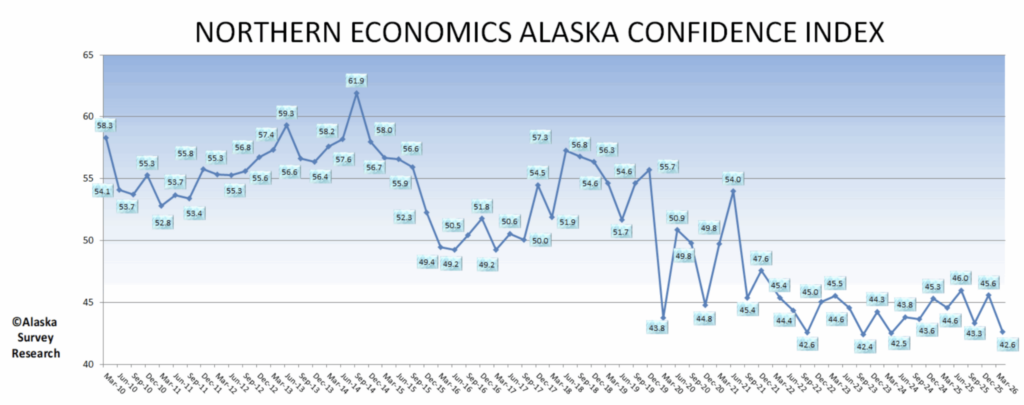
This chart by Alaska Survey Research shows Alaskans’ views of the economy, as based on a 0-100 point scale, over the past 16 years. (Graphic/Courtesy by Alaska Survey Research)
New statewide polling shows Alaskans have near-record negative views of the state’s economy, with opinions more pessimistic than they were during the 2020 COVID-19 pandemic emergency.
On a scale of 0-100, Alaskans give the state economy a score of 42.6, two-tenths of a point above a record low recorded in fall 2023.
Moore has been asking Alaskans the same six economic questions regularly since spring 2010.
“I wish that we were living up right now to the old adage that how the economy goes in the United States, we do the reverse,” he said on Thursday when asked about the results.
The survey’s score peaked in 2014, when Alaska oil prices were near record highs, government spending was up and the Permanent Fund dividend was large.
When oil prices plunged in 2014 and 2015, so did public opinion. Opinions rebounded in late 2017 and early 2018 but tumbled again during the COVID-19 pandemic emergency, then fell again when inflation spiked after the emergency ended.
“In the 3.5 years since, even though Covid is reasonably a thing of the past, and the inflation rate is back to normal, the index has not recovered,” Moore wrote in his latest analysis. “Alaskans are as pessimistic about economic conditions in Alaska today as they were in the depths of the worst winter Covid months.”
Speaking by phone, he said that “even though the inflation rate is back to normal, it doesn’t mean that things aren’t still shockingly expensive. The war in Iran is creating uncertainty. The price of gas has gone through the roof.”
National surveys report similar findings. Last month, the University of Michigan — which measures American consumer sentiment monthly — reported results on par with 2022, when opinions were at their lowest in decades.
Moore isn’t the only person who’s finding low opinions among Alaskans about the economy.
At Dittman Research, Matt Larkin regularly polls state residents on behalf of the Alaska Chamber of Commerce and other clients.
“I’ve been doing this 15 years,” Larkin said. “In my opinion, I’ve not seen the economic concern worse than it is now.”
This year’s survey, conducted in March, found 60% of respondents saying Alaska’s economy was either pretty bad or “not too good.”
That was an increase of eight percentage points from 2025.
Two-thirds of respondents said the state of Alaska is on the wrong track, continuing a streak that began in March 2016. The last time more Alaskans said the state was headed in the right direction than the wrong direction was in January 2015.
Larkin also said that his survey found that many Alaskans were likely to believe that even if economic conditions improve, the improvements would not benefit them personally.
While both Moore and Larkin said their polls are a good barometer to check on public opinion, they also said that the results may be an indicator for this fall’s election campaigns.
“It strikes me that, with all the political races this year, I think the candidates that can best understand and appear to be offering real solutions are going to likely do well in that environment,” Larkin said.
“I think that’s the challenge for all these campaigns: How do they speak to a voter base that’s very, very down right now about the economic prospects for their personal lives, but also the state in general?”
After four years of effort, the Alaska Legislature has passed a bill offering additional support for the underfunded organization that offers free legal help to Alaskans facing civil lawsuits.
“We’re so excited,” said Maggie Humm, executive director of the Alaska Legal Services Corporation.
ALSC is the state’s largest provider of free legal assistance for survivors of domestic violence and abuse. It generally supports Alaskans who are unable to afford an attorney on their own.
Under state law, Alaska must provide criminal defendants with a defense attorney. No such mandate exists in civil cases, so the work falls to the ALSC, a nonprofit that lacks the budget to take on every request for help.
On Wednesday, the state Senate voted 17-3 to pass House Bill 48 and give the corporation 25% of all state court filing fees, up from 10%. The change is worth an extra $400,000 to the corporation.
The change does not affect funding for the Alaska Court System; the fees are otherwise used for general purposes, not the courts specifically.
Humm said earlier this year that ALSC provided legal help to roughly 6,200 Alaskans in 2024. By email on Wednesday, she said she expects another 800-850 people will be helped by the additional money.
Because the House passed HB 48 on a 27-13 vote in February, the Senate’s action on Wednesday will send the bill to Gov. Mike Dunleavy for final approval or veto.
Sen. Forrest Dunbar, D-Anchorage, proposed an identical bill in 2023, and while that bill passed the Senate, it never received a vote in the House before the 33rd Alaska Legislature expired in 2024.
That left Sara Hannan, D-Juneau, to reintroduce the bill last year and restart the legislative process.
By email, Humm said that if signed into law, the bill “helps to ensure that more low-income Alaskans facing issues such as domestic violence, elder fraud, and access to earned benefits receive the legal help they need to protect their safety, stability, and dignity. Investing in legal services benefits all Alaskans by helping resolve problems early, before they become more serious and costly challenges for both individuals and our communities.”
ALSC has been trying since 2011 to pass a bill that reserves 25% of the state’s court fees for the corporation. In 2018, the Legislature passed a measure allocating 10%.
With a few gourmet ingredient swaps and some homemade flair, our copycat McDonald’s Big Arch burger is a truly deluxe, fully-loaded burger masterpiece.
Mashed – Fast Food, Celebrity Chefs, Grocery, Reviews
Yellow cedar trees are seen in this Creative Commons-licensed photo by Richard Droker on Oct. 24, 2015. (Courtesy/Richard Droker)
A commercial fisherman in Kodiak will plead guilty to stealing 16 yellow cedar trees from the Tongass National Forest in Southeast Alaska.
Mitchell Keplinger, charged with theft of government property in April, was scheduled to appear in U.S. District Court for the District of Alaska on Wednesday for his formal arraignment.
Keplinger signed a plea deal the day after he was charged. Under the terms of the deal, he will avoid jail time but will pay $85,682.17 in restitution and be on probation for three years, a term that may later be reduced to no less than 18 months.
That would be significantly lower than the maximum penalty for theft of government property, which can be punished by up to 10 years in prison and a fine of up to $250,000.
Keplinger’s attorney did not return a phone call seeking comment on Wednesday.
According to the text of the plea deal, Keplinger and his boat, the 54-foot seiner Alinchak, were working in the Sitka herring seine fishery in late March and early April 2024. After the fishery closed, Keplinger used his boat and crew “to harvest Alaska yellow cedar trees on U.S. Forest Service lands near Sawmill Creek, Sugarloaf Mountain and in and around Sitka Sound.”
The plea deal states that Keplinger knew that a permit was required to cut the trees and knew that he did not have that permit.
“Keplinger’s crew, who were cutting the trees at his direction, had covered one of the stumps with moss to conceal the theft,” the plea deal states.
Paul Robbins, a spokesman for the U.S. Forest Service in the Tongass, said by email that yellow cedar “is important culturally, ecologically, and economically. Its strength is seen in durable wood products from canoe paddles to engineered timber frames and the unique rot-resistant chemistry of its heartwood allows it to live for over 1000 years and to persist long after death as sequestered carbon.”
The 16 trees allegedly taken by Keplinger yielded 22 logs, “belonging to the United States, with a market value of $4,476.25,” according to the plea deal.
Keplinger then used his boat to take the logs to Kodiak, the plea deal states. The restitution required under the plea deal includes the cost of transporting the logs back to Sitka and the Forest Service.
“Timber theft by individuals is not common on the Tongass National Forest,” Robbins said.
Court documents do not state why Keplinger took the trees or how the theft was discovered. A spokesperson for the U.S. Attorney’s Office in Alaska declined to talk about anything not covered by public court documents, as did Robbins with the Forest Service.