Categories
Alaska News

What happens when corporate obligations conflict with Alaska Native values?

The tundra in the Yukon-Kuskokwim Delta is seen in the evening sun on Oct. 11, 2023. (Photo by Claire Stremple/Alaska Beacon)

The tundra in the Yukon-Kuskokwim Delta is seen in the evening sun on Oct. 11, 2023. (Photo by Claire Stremple/Alaska Beacon)

Supporters of the Donlin Gold project often frame it as a matter of Alaska Native self-determination and fiduciary responsibility because the Alaska Native regional corporation Calista owns the mineral rights. However as Calista shareholders, we believe the deeper question is: What happens when corporate obligations directly conflict with Alaska Native values?

The Alaska Native Claims Settlement Act created Native corporations to use a Western corporate model focused on growth, investment and fiduciary return. Our peoples’ relationship to the land was never built around maximizing profit or exclusion. For thousands of years, the Yukon-Kuskokwim Delta sustained our Tribal nations through salmon, moose, berries, clean water and intergenerational stewardship. Those values did not disappear when ANCSA was signed.

Our lives and identities are still defined by the lands and waters we come from. The remoteness of the Yukon-Kuskokwim region is not a weakness — it is part of what has allowed our people to retain language, subsistence traditions and a way of life rooted in reciprocity with the natural world. We understand that we are stewards of our environment. Especially in an era of climate instability and fragile supply chains, the land itself remains our security. That is a form of prosperity no dividend can replace.

Yet for decades, many shareholders have watched Calista increasingly prioritize corporate standards over the traditional cultural and subsistence values of our people. Fiduciary responsibility is important, but there are moments when corporate boards must recognize that their responsibility extends beyond financial return. When decisions could permanently alter salmon systems, water quality, or the safety of traditional foods, shareholders have every right to ask whether corporate law is being elevated above the very people the corporation was created to serve.

That tension is at the center of the Donlin debate.

The Donlin partnership was entered into decades ago without meaningful consultation with our Tribes nor a shareholder vote. Since then, many shareholders have expressed concerns about impacts to subsistence, salmon and the long-term survival of our Tribal nations. Too often those concerns have been minimized, ignored or treated as obstacles to development rather than legitimate expressions of Native stewardship and governance.

But dissent is not anti-Native. Wanting a meaningful voice in decisions that could transform our homelands is not opposition to self-determination. It is our inherent right and expression of self-determination.

ANCSA may have imposed a corporate structure on our communities, but that does not mean Native corporations cannot evolve to better reflect Indigenous values. Alaska Native Corporations operate under a confusing and archaic system and are not based on the beliefs we uphold as Native Peoples. Shareholders are asking an important question: Should Native corporations operate solely according to Western corporate expectations, or should they also be guided by Native responsibilities to land, culture, subsistence and future generations?

For many of us, this is not simply a debate about economics or mining. It is a debate about what prosperity means.

Prosperity is not only measured in revenue, contracts or shareholder dividends. Prosperity is also healthy salmon runs, safe drinking water, the ability to harvest and share traditional foods, and knowing our grandchildren will inherit a living culture tied to an intact homeland.

Calista’s responsibility is not only to corporate growth. Their responsibility is also to its people. And many shareholders believe protecting the lands and waters that sustain us is part of that duty.

Both women work with Mother Kuskokwim Tribal Coalition, Ashlynn serves as the deputy director and Gloria is a co-founder and advisor. These views are their own and not MKTC’s. 

Categories
Alaska News

Skepticism looms as an obstacle over Alaska Legislature’s special gasline session

The House Finance Committee meets Thursday, May 21, 2026. (James Brooks photo/Alaska Beacon)

The Alaska Legislature on Thursday opened a 30-day special session on a proposal to cut taxes on the proposed trans-Alaska natural gas pipeline in order to encourage its construction.

Gov. Mike Dunleavy called the session, but one of the first challenges facing him and other tax-cut proponents is convincing skeptical legislators that a tax break is needed at all. 

During the just-concluded regular session, lawmakers were unable to pass any version of a Dunleavy-backed bill.

While Dunleavy and pipeline developer Glenfarne have called the tax break a critical step toward construction, senior legislators have reason for skepticism.

To date, Glenfarne has not released an updated estimate for how much the pipeline will cost. The last public estimate is more than a decade old. It also has not released estimates for the price of gas to be carried by the pipeline.

“There’s that whole thing about buying a pig in a poke,” said Senate President Gary Stevens, R-Kodiak. “That’s the problem we’re facing. The farmer buying a pig in a bag has never seen the pig, never known how healthy it was. And that’s what we’re being asked to do. We’ve got to see the pig, we’ve got to know the details, and that’s what I think you’ll be seeing in our finance committee this coming special session.”

The pipeline project, formally called Alaska LNG or AKLNG, envisions an 800-mile pipeline from the North Slope to Cook Inlet. 

At the northern end would be a gas treatment facility that collects gas from feeder pipelines connected to oil and gas wells across the North Slope.

That facility would strip carbon dioxide from the raw natural gas, allowing the gas to be shipped down the pipeline. The carbon dioxide would either be released into the atmosphere or injected deep underground.

At the southern end of the pipeline would be an export terminal on the Kenai Peninsula. The gas would be kept super-cooled and loaded onto tankers for shipment to Asia and other users.

Glenfarne envisions construction in two phases. The pipeline and a small North Slope gas treatment plant would be built between 2027 and 2029 during the first phase. That would allow limited amounts of gas to be shipped south for in-state use.

The second, more expensive, phase would involve constructing the export terminal on the Kenai Peninsula and the full-scale processing plant on the North Slope.

The state-owned Alaska Gasline Development Corp., which owns 25% of the project, has previously estimated that both phases will cost a combined $46 billion, but that prediction is more than a decade old. 

During the just-completed legislative session, legislators heard estimates in excess of $65 billion, and Glenfarne officials said the first phase alone will cost in the “mid teens” of billions of dollars.

In a presentation to the House Finance Committee on Thursday, the Alaska Department of Revenue estimated that under the state’s current petroleum property tax system, AKLNG gas would have to sell to international buyers for at least $7.63 per thousand cubic feet (mcf) in order for the project to make financial sense.

Southcentral Alaskans would expect to pay at least $4.09 per mcf. 

The governor has proposed cutting the property tax and partially replacing it with a tax on gas through the pipeline. That cuts expected state revenue by $7 billion through 2063. Cities and boroughs who collect the bulk of the property tax revenue would lose out on another $13 billion during that period.

The Department of Revenue expects that the tax breaks would cause the break-even price for the pipeline to fall to $7.13 mcf for exports and $3.73 for Alaskans. 

In 2024, Canadian consulting firm Rystad Energy conducted a study of planned LNG projects in North America. The break-even prices for Canadian projects ranged between $7.18 and $8.64 per mcf, it found. 

While AKLNG fits in that range under Glenfarne’s stated pipeline cost, it becomes more expensive if the pipeline construction is more expensive than Glenfarne has publicly stated.

Demand for Cook Inlet natural gas is beginning to surpass available supply, and Southcentral Alaska could begin importing gas soon to fill the gap.

Dan Stickel, chief economist for the Department of Revenue, told legislators Thursday that the department’s estimate for the cost of imported gas in 2033 — AKLNG’s planned completion date — “came to about $17 per thousand cubic feet price range.” 

He said the department based that figure on an estimate compiled by ENSTAR in 2023, extrapolated to 2033.

Even if the pipeline is significantly more expensive than planned, in-state gas prices would be cheaper with AKLNG than without it, those estimates show.

But that’s only if the pipeline project is built to completion, effectively allowing exports to subsidize the cost of in-state gas.

The risk is if only Phase 1 is built. In that scenario, the Department of Revenue estimates, Southcentral Alaskans could end up paying more than $27 per mcf under current law and almost $23 per mcf under the governor’s proposal.

Last year, Mike Chenault — a former Speaker of the House and now a member of the board for AGDC — advised legislators that they should not take any action on legislation for the pipeline.

Uncertainty would deter investors, he said. 

“I believe that if the Legislature gets involved, that this project will go away,” he said. “I believe that if we start changing the terms of the statutes, then that creates indecision and that will cause the project to possibly go away.”

In a news conference with reporters on Wednesday, Sen. Bill Wielechowski, D-Anchorage, said he recalls a Glenfarne representative saying last year that no tax breaks were needed.

Wielechowski could not provide a source for that comment, nor could five other legislators who recalled a similar position.

Speaking Thursday during the Alaska Sustainable Energy Conference, Glenfarne CEO Brendan Duval offered conflicting statements about the pipeline’s financing.

At one point, he said that he had sufficient investments to construct the first phase without any tax break.

“I can confirm I’ve received enough proposals of private financing on terms and conditions that once we convert that into long form documentation, we can build the domestic pipeline, and that’s very exciting,” he said.

Speaking about the project as a whole, he said that once he finishes finalizing the terms of some agreements, “I can make a final investment decision here.”

The agreements “possibly” include “this tax bill out of Juneau.”

Later, talking with Dunleavy, he said the tax bill is “a critical condition” for pipeline construction, as is a gas-purchase agreement with ENSTAR, the middleman that supplies most of Southcentral Alaska with natural gas. 

“Please talk to your, your mayors, your elected officials, your legislators, your community leaders, your union leaders, and get them behind (this) to call to arms. Let’s get this thing over the line, and we can get this state the gas that it needs right now,” he said. 

SUBSCRIBE: GET THE MORNING HEADLINES DELIVERED TO YOUR INBOX.

Categories
Sports Fox

Top 10 QBs Of All-Time: Where Does Aaron Rodgers Rank Ahead Of Final Season?

After years of retirement rumors, Aaron Rodgers made it official on Wednesday. The Pittsburgh Steelers quarterback announced that the 2026 season will be his last. While the last few seasons haven’t been kind to Rodgers, he sealed his place as one of the greatest players in pro football history well before his time with the Green Bay Packers came to an end. He is a lock to be a first-ballot Hall of Famer, and he may eventually get a street named after him in Green Bay. And Rodgers’ name will come up whenever a discussion is held on the greatest quarterbacks of all time. The only debate will be about how high on the list he should rank. So, with Rodgers entering his 22nd and final NFL season, where does he fit on the all-time quarterbacks list? Here are my top 10 quarterbacks to ever play the game. Easily the greatest quarterback to never win a Super Bowl. Dan Marino did lead the Miami Dolphins to one appearance, though, in his spectacular second season. That year, he became the first quarterback to ever top 5,000 passing yards and 40 passing touchdowns in a single season and was the NFL’s MVP. Known for his lightning-quick release, he was the most prolific passer of the 1980s and early ‘90s. He still ranks 10th all-time in passing yardage (61,361) and eighth all-time in passing touchdowns (420). Ernie Accorsi, the long-time NFL general manager who worked for the Baltimore Colts during the Unitas era, once told me, “The definition of leadership was watching Johnny Unitas get off the team bus.” Unitas had an aura and confidence about him at a time when quarterbacks were just beginning to be superstars in the league. In fact, he helped set up the modern passing era with his golden right arm, leading the Colts to three championships and winning three MVPs. His numbers may pale in comparison to the modern stars, but in the late ‘50s and early ‘60s, he dominated the league. Drew Brees might be the most prolific, high-volume passer of all time. He was one of only two quarterbacks ever to top 80,000 career yards (80,358) and he led the NFL in passing seven times in his 20 seasons. He is also second all-time with 571 passing touchdowns. Despite being just 6-feet tall, he had remarkable accuracy, completing 67.7% of his career passes. He led the NFL in that category six times, topped 70% in seven of his seasons and set the all-time record when he completed 74.4% of his passes in 2018. He went to 13 Pro Bowls and was the Super Bowl MVP when the New Orleans Saints won their only championship. John Elway wasn’t as prolific as some of his counterparts in the 1980s and ‘90s, but he did lead the Denver Broncos to five Super Bowls. And when he capped his career with back-to-back Super Bowl championships, his place in the top 10 was secured. Elway won an MVP, too, and he finished with impressive career numbers. His 51,475 passing yards ranked second all-time when he retired and currently sit in 12th, while his 300 passing touchdowns ranked third when he retired and still rank 14th. Those are impressive marks considering the rise of the passing game since Elway retired. More importantly, Elway retired as the winningest quarterback in NFL history with 148 victories — a number that still ranks seventh all-time. Brett Favre was the definition of a “gunslinger. The Green Bay Packers icon was one of the most prolific passers in NFL history … and is still the all-time leader in interceptions (366, including the playoffs). But Favre was a master of the broken play, with the ability to turn scrambles into dazzling, highlight-reel throws. He was an 11-time Pro Bowler and a Super Bowl champion. He is also the only player in NFL history to win three straight MVP awards (1995-97), a remarkable feat. Favre’s 71,838 passing yards still rank fourth all-time, and his 508 touchdown passes are still the fifth-most. What might have made Favre different, though, was his Iron Man status. He set a position player record with 297 consecutive starts in his career — 321 straight when the playoffs are included. Now entering his final season, Aaron Rodgers is 42 and still putting up respectable numbers at quarterback. But while there’s always a chance for a late-career miracle, his best days are behind him and his legacy is very secure. Rodgers is a four-time NFL MVP — one of only two players to ever win that many, and one of just five players to ever win the award in back-to-back seasons. He also took the Packers to a Super Bowl in 2010 in only his third season as a starting quarterback, while making Green Bay a playoff mainstay as he led it to four NFC Championship Games in 11 seasons. Ahead of the 2026 season, Rodgers is fifth all-time in passing yards (66,274), fourth all-time in passing touchdowns (527), with a chance to finish third. But what’s made Rodgers elite is his efficiency. He currently has the best touchdown-to-interception ratio in NFL history and is also the all-time leader in passer rating (102.2). Sure, Rodgers is also the most-sacked quarterback of all time (600), but you can look past that when he’s put up the numbers he’s had and the amount he’s won. Rodgers is sixth all-time in wins with 163, and is just one last 10-win season away from finishing fourth. The scary part about Patrick Mahomes is that he’s still only 30 years old and has played just nine NFL seasons, including the year he was Alex Smith’s backup. But that means his career might only be half over, and look what he’s done already: 35,939 passing yards and 267 passing touchdowns — including two seasons over 5,000 yards and one season with 50 touchdowns. He’s a three-time Super Bowl champion (and Super Bowl MVP), has been to two other Super Bowls, and before he got hurt last season, he had led the Chiefs to the AFC Championship Game in each of his first seven years as their starter. He’s got a 17-4 record in the playoffs and has thrown 46 postseason touchdown passes. Only Tom Brady has thrown more and won more in the playoffs, and he might have another decade to add to a résumé that almost no one else can match. In many ways, Peyton Manning was the prototype of the modern quarterback, making him easily the most anticipated quarterback prospect ever. And Manning more than lived up to his considerable hype. He’s the only five-time MVP in NFL history and led two teams to Super Bowl championships (Indianapolis Colts, Denver Broncos) and played in four. He might have made a couple more, too, if he hadn’t kept running into Tom Brady and the New England Patriots in the playoffs. He’s third all-time in passing yards (71,940) and passing touchdowns (539) and tied for second in wins (186). He also arguably had the best season for a quarterback in NFL history, throwing for a record 5,477 yards and 55 touchdowns with Denver in 2013. Before Tom Brady came around, “Joe Cool” was the undisputed king of NFL quarterbacks. Joe Montana set the standard in the 1980s and early ‘90s, running the Bill Walsh West Coast offense to perfection. He was a four-time Super Bowl champion, a three-time Super Bowl MVP, and didn’t throw a single interception in his 122 Super Bowl passes. Montana’s Super Bowl passer rating of 127.8 is a record that still stands, and his 45 playoff touchdown passes and 16 playoff wins rank him third all-time. His career numbers aren’t dazzling (40,551 yards and 273 touchdowns), but they were a product of a different era and the fact that he was only a starter for 12 seasons. But he made the most of those dozen years, taking his teams to the playoffs 11 times. There is no debate about who is No. 1, and no one is even close. The 199th pick in the 2000 draft, Tom Brady won seven Super Bowls (more than any single franchise has ever won), five Super Bowl MVPs and three NFL MVPs. A 15-time Pro Bowler, he is the NFL’s all-time leader in passing yards (89,214), passing touchdowns (649) and wins (251). He’s also the all-time playoff leader in those categories (13,400 yards, 88 touchdowns, 35 wins). But Brady was unparalleled as a winner. With him leading the way, the Patriots won 17 division titles, including 11 in a row, and went to 13 AFC Championship Games, including eight in a row. He took the Patriots to nine Super Bowls, winning six, and then won one in his first year with the Tampa Bay Buccaneers, too. In case you need more, Brady was the oldest NFL MVP (40), the oldest Super Bowl MVP (43) and the oldest quarterback to receive a Pro Bowl nod (44). Brady played an astonishing 23 seasons in the NFL, which was long enough to land him on the all-decade teams for both the 2000s and the 2010s.​Latest Sports News from FOX Sports

Categories
Entertainment

Inside Kyle Busch’s Family Life With Wife Samantha Busch, 2 Children

Samantha Busch, Kyle BuschKyle Busch and Samantha Busch had seemingly been through it all together.

“Samantha and I share a lot of respect and love for one another,” the two-time NASCAR Cup Series champion told ESPN in…
​E! Online (US) – Top Stories

Categories
Entertainment

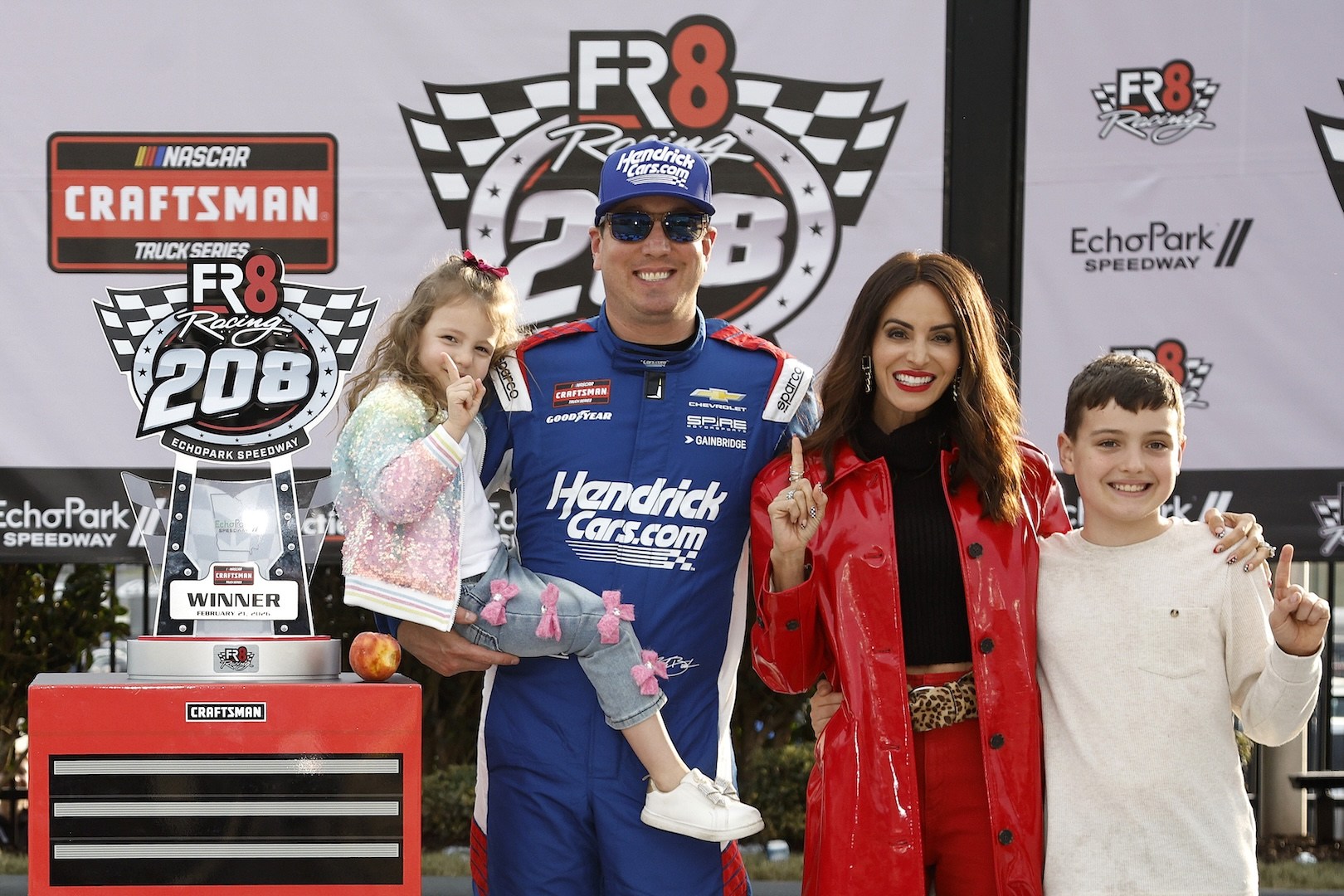
NASCAR’s Kyle Busch Celebrated His Kids’ Birthdays Days Before Death

Kyle Busch, Samantha Busch, Brexton Busch, Lennix Busch, family pics, February 2026Kyle Busch honored his children shortly before his passing.
Days before the legendary NASCAR driver died May 21 at the age 41, he celebrated his and wife Samantha Busch’s son Brexton, 11, and…
​E! Online (US) – Top Stories

Categories
Entertainment

The Chick-Fil-A Controversy That Will Always Haunt The Franchise

Chick-fil-A is known for its chicken, humorous commercials, being closed on Sundays, and ongoing controversial takes. This fast-food chain has quite the legacy.

​Mashed – Fast Food, Celebrity Chefs, Grocery, Reviews

Categories
Entertainment

Bath & Body Works Candles Are Buy 1 Get 1 FREE All Weekend Long

BBW MDW Sale Thumb.jpgIt’s time to stock up on summer scents at Bath & Body Works!

The brand just released several new scents that will have you dreaming of a summer vacation, and we’re definitely obsessed. Even…
​E! Online (US) – Top Stories

Categories
Music

Kyle Busch’s Wife and Children: Meet Samantha, Brexton + Lennix

Kyle Busch leaves behind his wife, Samantha, and their two young children after his death at age 41. Continue reading…​Country Music News – Taste of Country

Categories
Music

Kyle Busch’s Wife and Children: Meet Samantha, Brexton + Lennix

Kyle Busch leaves behind his wife, Samantha, and their two young children after his death at age 41. Continue reading…​The Boot – Country Music News, Music Videos and Songs

Categories
Entertainment

Amazon Quietly Slashed Prices on Internet-Famous Beauty for MDW

viral thumbnail.jpgIf you’ve been tempted to try out one of the many TikTok viral beauty trends you’ve seen all over your FYP, consider this your sign to finally take the plunge. Amazon’s quietly slashed prices on…
​E! Online (US) – Top Stories