Chinese ingredients aren’t solely limited to Chinese cuisine. They can upgrade your cooking, no matter where your culinary inspiration lies.

Food Republic – Restaurants, Reviews, Recipes, Cooking Tips









Chinese ingredients aren’t solely limited to Chinese cuisine. They can upgrade your cooking, no matter where your culinary inspiration lies.
Food Republic – Restaurants, Reviews, Recipes, Cooking Tips

When it comes to liquid pick-me-ups, the options today go far beyond coffee or tea. Caffeinated beverages come in a variety of unique flavors.

Mashed – Fast Food, Celebrity Chefs, Grocery, Reviews
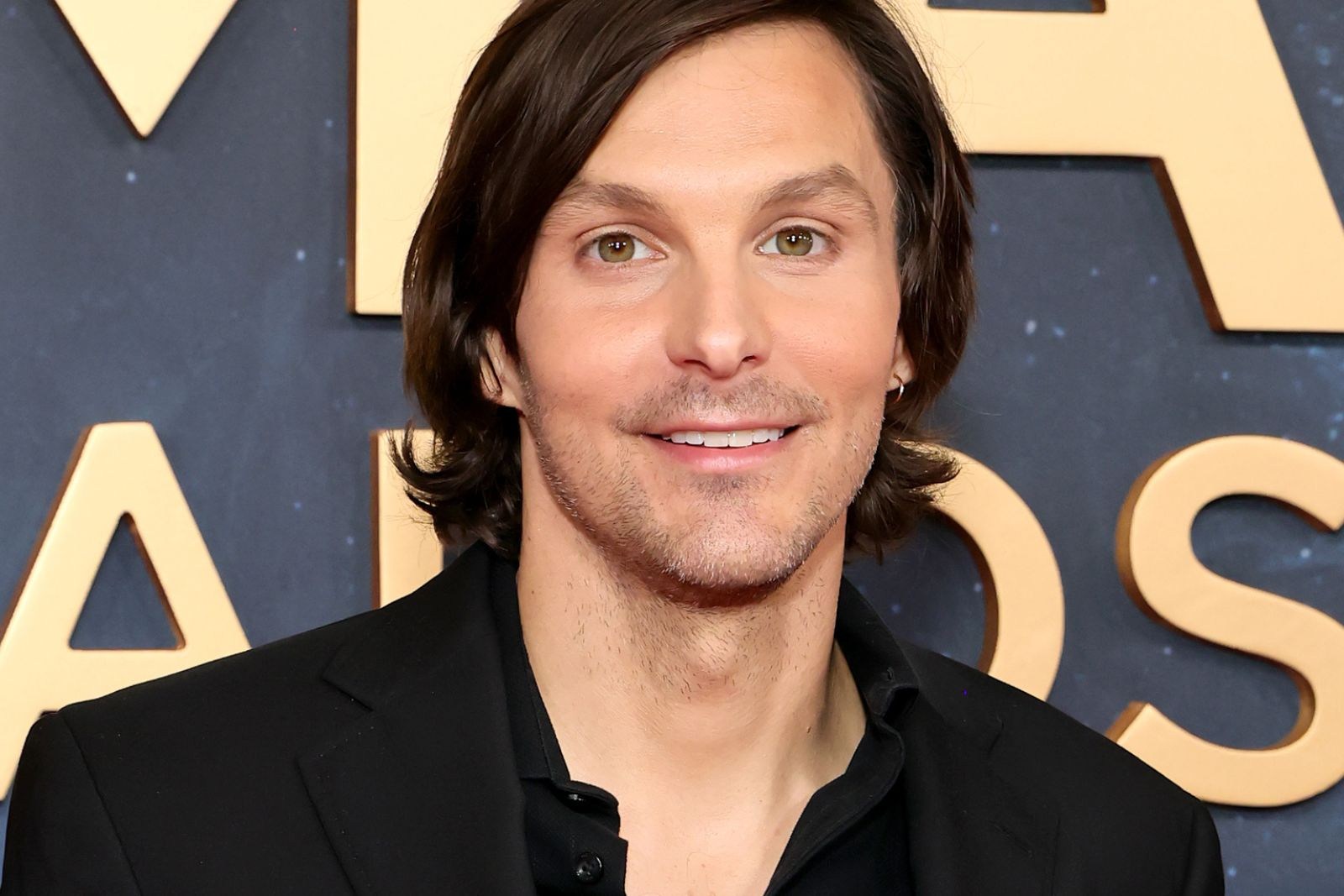
‘There’s a peacefulness and an acceptance that was hard-earned, that is a part of this record’s narrative,’ Worsham reflects. Continue reading…Country Music News – Taste of Country
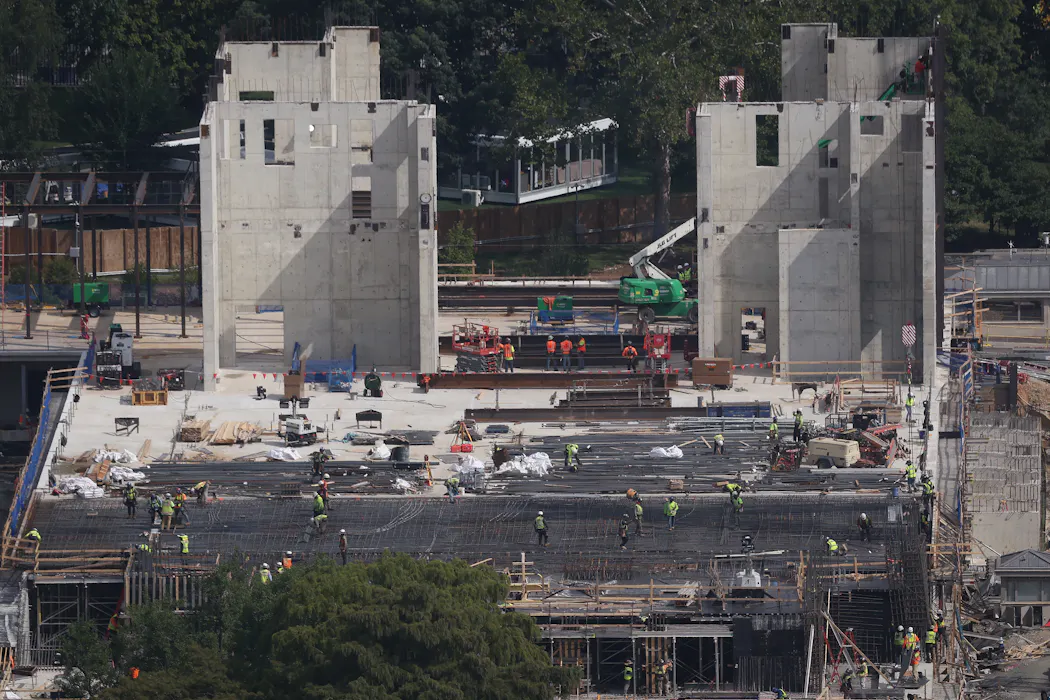
The fate of President Donald Trump’s estimated US$400 million White House ballroom may hinge on the little-known and somewhat surprising rules as to when the federal government and its agencies can accept privately donated funds.
That’s because Trump’s is using the fact that he’s been accepting private donations to pay for at least some of the project’s cost as a justification for not needing Congress’ explicit authorization.
A federal appeals court on Aug. 7, 2026, disagreed and left in place a lower court’s injunction that’s slated to halt construction on Aug. 21, barring Supreme Court intervention.
As a scholar of nonprofit and tax-exempt law who has studied for decades how the law governs deductible charitable contributions, including those to the government, I find that this appeals court decision calls for an explanation of the role that such private donations may play in any federal government project or activity. An intricate statutory dance is required for taxpayers to make donations to particular government agencies or for particular government purposes.
You may not realize that you can make potentially tax-deductible contributions to the federal government itself. An official website lists almost two dozen programs, including the National Endowment for for the Humanities, the National Arboretum and AmeriCorps, to which U.S. citizens can donate.
But such donations are allowed to government agencies only if Congress has granted the agency statutory authority to receive those funds.
In this context, according to the reasoning of the majority in the appeals court case, that means spending donated funds to preserve the East Wing would have been automatically allowed because it stood on a national park and the National Parks Service is an agency that individuals can donate to; spending those funds to build something new to replace that structure would not be allowed unless Congress had authorized the project.
But the Trump administration has failed so far to obtain congressional authorization and appropriations for the ballroom.
The federal government has accepted donations voluntarily made by Americans since its founding.
What’s more, the Bureau of Fiscal Services – the central bank account and financial manager for the federal government – explains that it “may accept gifts donated to the United States Government” and that the account for such gifts, which dates back to 1843, was established “to accept gifts, such as bequests, from individuals wishing to express their patriotism to the United States.” Such gifts, however, are subject to restrictions.

Since 1982, a provision of the United States Code, the official codification of all the nation’s general and permanent federal statutes, has required that these “patriotic” donations be devoted exclusively to reducing the national debt.
By law, federal agencies cannot augment congressional appropriations. The Miscellaneous Receipts Act requires that “an official or agent of the Government receiving money for the Government from any source shall deposit the money in the Treasury as soon as practicable without deduction for any charge or claim.”
Despite this seemingly absolute language, government agencies are permitted to accept gifts of money or other property when – and to the extent – they are given explicit statutory authority.
Agencies with the authority to accept gifts include the Justice Department, the State Department and the Library of Congress.
But this money must be spent only as Congress directed in establishing the mission of the National Park Service, which is the conservation and preservation of the land and structures under its jurisdiction.
In contrast, the White House does not have this authority. Its own website states that it “is unable to accept cash, checks, bonds … or other monetary equivalents” as gifts from private citizens.

That’s in part why the U.S. Court of Appeals for the District of Columbia Circuit held on Aug. 7 that Trump could not build the ballroom on the site of the former East Wing building.
The two judges in the majority concluded that neither the National Park Service, which is the steward for the national park on which the White House stands, nor Trump himself had satisfied all the statutory requirements needed to undertake building of the above-ground ballroom. It did not block work on an underground military bunker the Trump administration began renovating after it demolished the East Wing in October 2025.
That some, most or even all the funding comes from private donations does not protect the administration’s right to proceed with construction of the 90,000 square-foot (8,361 square-meter) ballroom because it has failed so far to obtain congressional authorization and appropriations for this project, the majority explained.
Crucial to this conclusion was a statute declaring, “A building or structure shall not be erected on any reservation, park, or public grounds of the Federal Government in the District of Columbia without express authority of Congress.”
“We are aware of no instance in American history in which a President unilaterally and using privately collected funds demolished substantial portions of the White House that Congress authorized to be built and American taxpayers paid
for,” the majority opinion says. “Until now.”
The Trump administration has pointed to two possible statutes it says provides the necessary authority to do that.
One involves the purposes for which the National Park Service can spend its funds, including privately donated funds. The other grants the president the ability to spend funds for, among other items, “the care, maintenance, repair, alteration, refurnishing, [and] improvement” of the executive residence at the White House – funds that “are authorized to be appropriated each fiscal year.”
The majority explained that authority for the president to construct the ballroom requires satisfying both of those statutes; neither alone suffices.
And it rejected the reliance on the National Park Service provision alone. That statute limits use of the service’s funds, in the words of the majority, to “the identified purposes of conservation and preservation.”
In particular, the majority ruled, the provision does not authorize the construction of a new building. Further, it held, the National Park Service provision cannot authorize the president to lead the project; only the provision related to the executive residence can do that.
As to the executive residence provision, the majority opinion explains that it “does not expressly grant the President any independent authority.”
Instead, the majority held, the president must rely on “an accompanying appropriation.” The court found no such accompanying appropriation.

Ellen P. Aprill does not work for, consult, own shares in or receive funding from any company or organization that would benefit from this article, and has disclosed no relevant affiliations beyond their academic appointment.
Politics + Society – The Conversation

You might think whiskey is whiskey, but is it? There may be many similarities across types, but there’s a big difference in distillation, grains, and barrels.

Mashed – Fast Food, Celebrity Chefs, Grocery, Reviews

The short message reminds people that police saw no signs of foul play. Continue reading…Country Music News – Taste of Country
The short message reminds people that police saw no signs of foul play. Continue reading…The Boot – Country Music News, Music Videos and Songs

Bill Sherwonit’s tent near Summit Lake in Alaska’s Brooks Range. (Photo courtesy of Bill Sherwonit)
Like many modern humans, especially those of us who are regularly bombarded by various technologies, I spend way too much time being distracted by “stuff” that doesn’t really matter, from news feeds to emails and text messages and what we’ve come to call social and streaming media—not to mention more traditional forms of the entertainment industry.
Fed by all these distractions, along with the details and concerns of busy lives, our minds are often filled with internal chatter that disconnects us from the real world we inhabit.
Long ago, I discovered that trips into “the wild” help to take me out of my head and ground me in the present moment; to be more mindful, more aware of my surroundings, my relationships with place and people and the other life forms with whom I share the world. At the same time, I become more attuned to what my physical senses and emotional body are experiencing.
This can be true even on short walks into the “nearby wild,” for instance local parklands. But the effect is deepened by longer stays in more remote wilderness, particularly on solitary sojourns.
I was recently reminded of all this during a 10-day solo adventure in Alaska’s Brooks Range wilderness, within Gates of the Arctic National Park.
Dropped off by floatplane at a place called Summit Lake, I chose to explore the Arctic landscape in modest fashion. Instead of backpacking or river-running many miles, I set up a base camp and did day hikes in assorted directions.
With an aging body and arthritic shoulders, this approach made sense. It also allowed me to move more slowly across the tundra and pay closer attention to my immediate surroundings and the multitude of life forms with whom I shared my temporary home.
Several days into my adventure, one experience in particular helped me to realize just how deeply I’d moved into a different—and I would say healthier—state of being.
It began with tiny creatures that are commonly called “springtails.” In certain circumstances, notably northern winters when the ground is covered by snow, these relatives of insects are also known as “snow fleas.”
There’s good reason for that: dark in color, and not much bigger than grains of ground pepper—small enough to fit on the head of a pin—springtails from a distance resemble fleas. And, like fleas, they hop around, though the mechanism of their movement differs.
I should also mention that while fleas have flattened and hard-shell bodies, springtails have more rounded, softer bodies that are easily crushed. And they don’t bite.
There’s considerably more to be shared about the nature of springtails, but for now I’ll end with this: when threatened, springtails jump away from the perceived danger by using a rigid, forked tail that folds under their body like a jackknife blade. A catch that normally holds the tail in place is released, allowing the springtail to propel itself into the air, out of harm’s way. Thus, springtail.
To see springtails leaping about the snow is an amazing—and to me, delightful—sight to behold, and this ability has contributed to my fascination with the species. But because they are dark and tiny and blend well with ground not covered by snow, I’d never noticed them in summer. Until my recent trip to the Brooks Range.
The springtails appeared following a stormy night in the mountains. Presumably seeking shelter from that storm, large numbers of them had begun crawling—or springing—from the soaked tundra onto my tent. And, eventually, into it, through a tiny slit that serves as an air vent along the tent’s bottom.
Hundreds, if not thousands, of them eventually infiltrated the tent and I wondered what the heck they could be, until I saw some of the dark forms jumping about.
Though I knew they wouldn’t bite or sting or otherwise harm me, I didn’t fancy the idea of them crawling all over my gear, not to mention my body. Softly blowing on them, I managed to keep most in the back of the tent. But some inevitably spread elsewhere.

One morning I simply sat in the tent awhile, observing the springtails and contemplating the remarkable nature of those miniscule beings, which move about the world largely ignored or unrecognized by our kind.
Eventually my thoughts turned toward the notion that all life forms have value in and of themselves, irrespective of their relationship to humans, an idea and attitude that I embrace.
I further reflected that, as far as I can tell, only one species inhabiting the Earth considers itself more important than all the rest. And as I considered the egocentric nature of Homo sapiens, Donald Trump slipped into my thoughts, he being the epitome of human narcissism, in my opinion.
And in that moment I realized I’d gone more than a week without Trump entering my thoughts. That, like the springtails occupying my tent, seemed a rather astounding—and wonderful—thing, considering his overwhelming presence in the “normal” world of American culture that I’d temporarily left behind.
I encountered many other wonders during my days in that Arctic wilderness, but the juxtaposition of springtails and Trump—or more accurately, “no Trump”—reveal, as much as anything I experienced, the marvelous nature of the real world we humans inhabit and are truly part of: the wild, wild Earth.
SUBSCRIBE: GET THE MORNING HEADLINES DELIVERED TO YOUR INBOX.
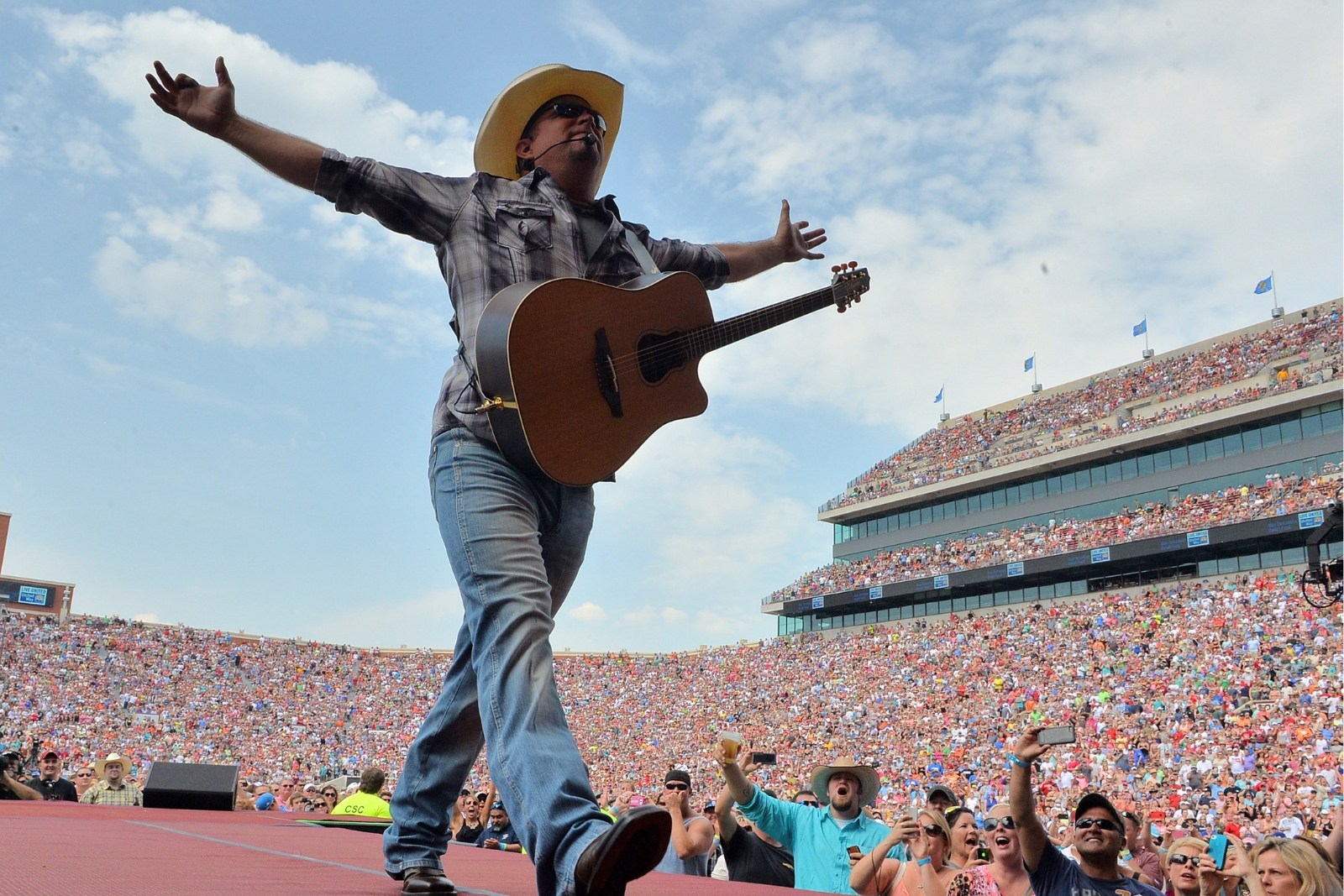
Garth Brooks is done checking the weather from his hotel room and hoping for the best. Arenas give him something stadiums never could. Continue reading…The Boot – Country Music News, Music Videos and Songs
Garth Brooks is done checking the weather from his hotel room and hoping for the best. Arenas give him something stadiums never could. Continue reading…Country Music News – Taste of Country