Riley Green is juggling touring, acting and TV coaching — but says the toughest part of his career right now is something surprisingly simple. Continue reading…Country Music News – Taste of Country
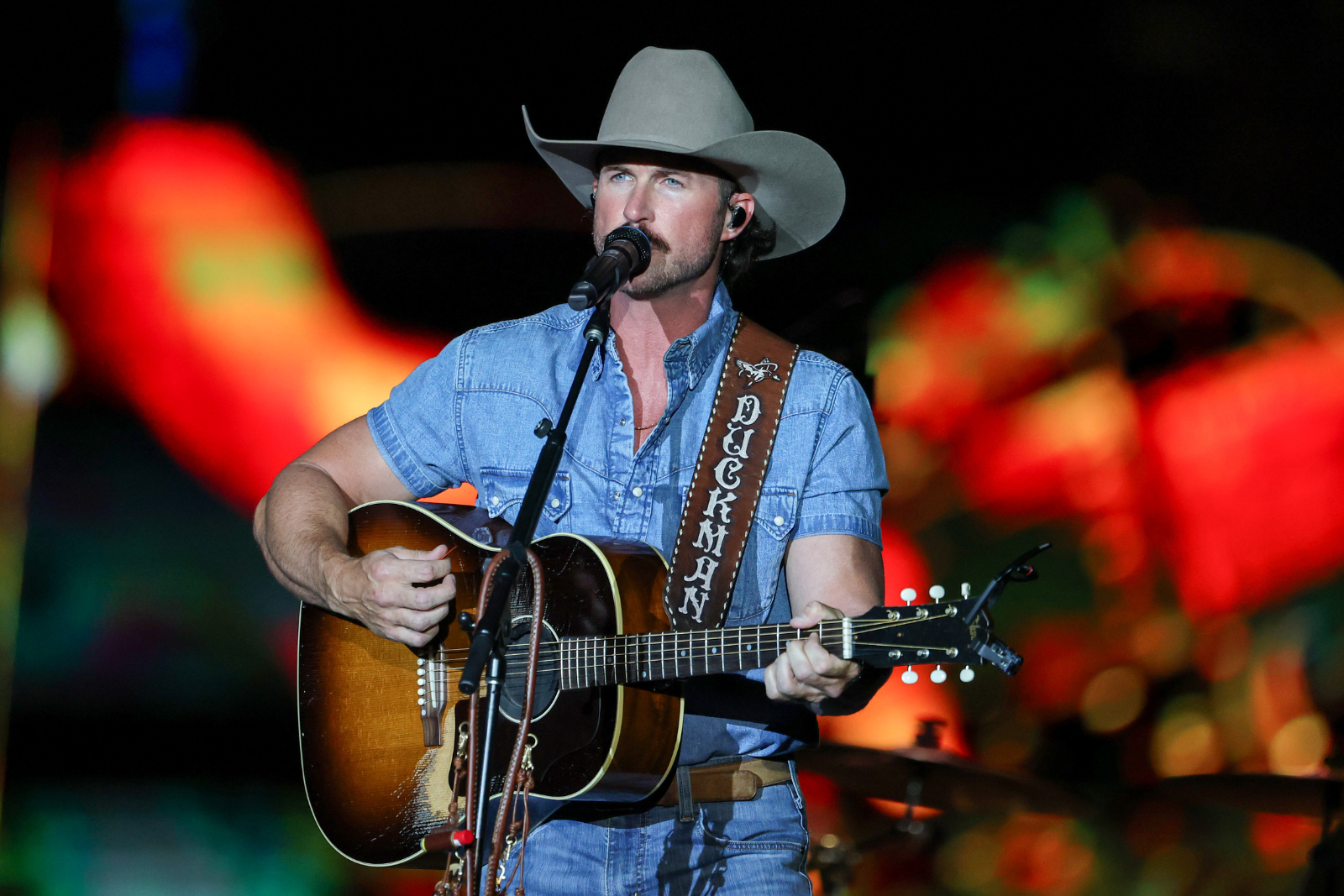










Riley Green is juggling touring, acting and TV coaching — but says the toughest part of his career right now is something surprisingly simple. Continue reading…Country Music News – Taste of Country
Riley Green is juggling touring, acting and TV coaching — but says the toughest part of his career right now is something surprisingly simple. Continue reading…The Boot – Country Music News, Music Videos and Songs
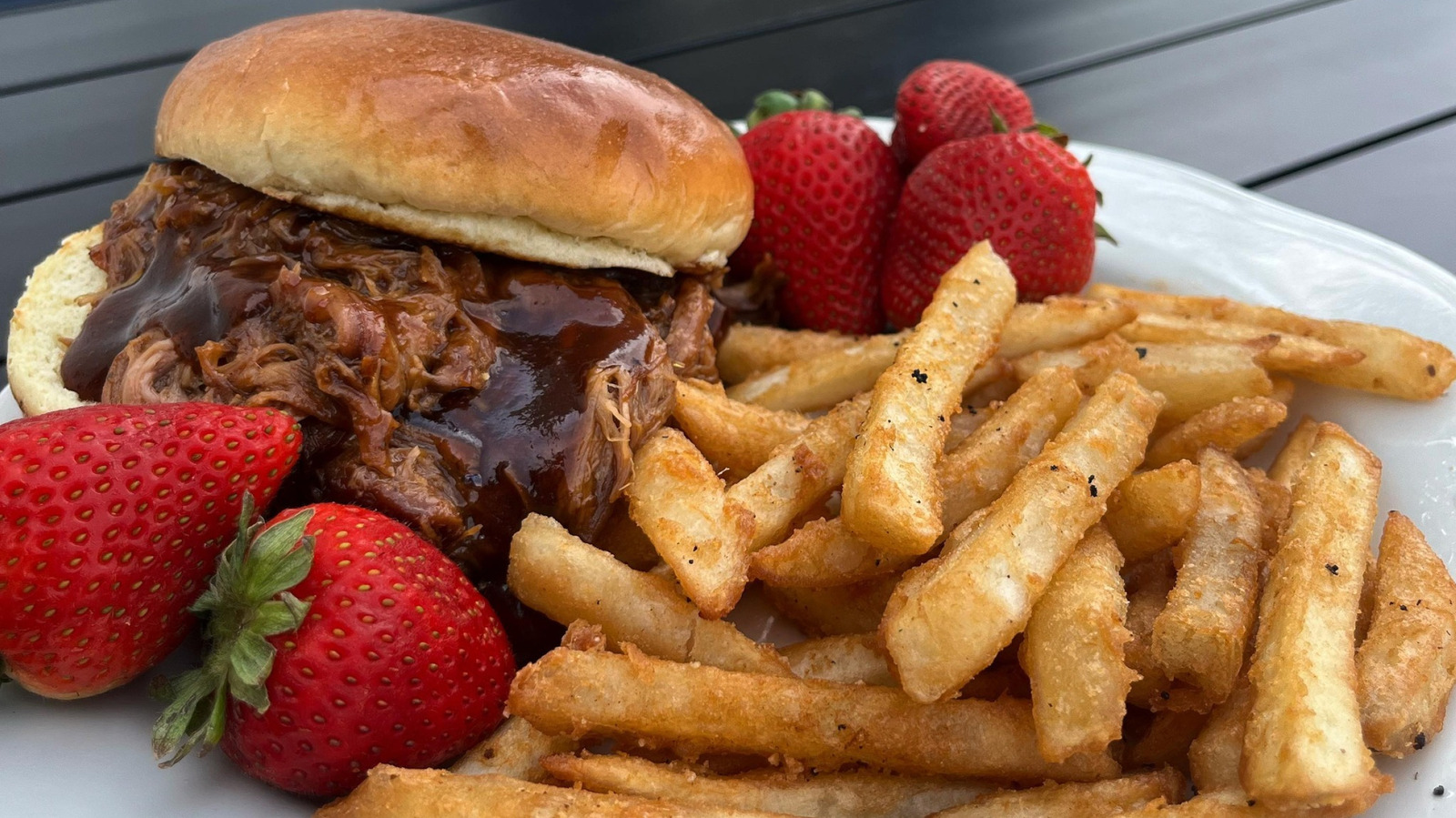
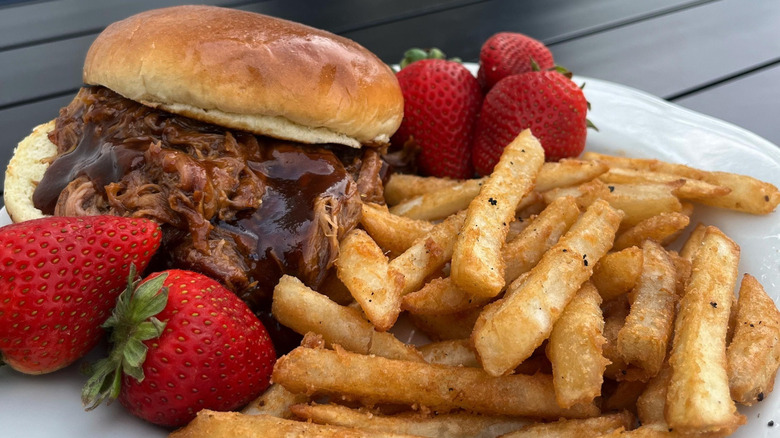
You might think that the oldest restaurant is in Chicago, and while it’s closeby, it’s in another little town, serving guests continuously since 1847.
Food Republic – Restaurants, Reviews, Recipes, Cooking Tips

Tim McGraw returns with deeply personal and patriotic new songs, including “Pawn Shop Guitar,” which looks back at his early days chasing music. Continue reading…The Boot – Country Music News, Music Videos and Songs
Tim McGraw returns with deeply personal and patriotic new songs, including “Pawn Shop Guitar,” which looks back at his early days chasing music. Continue reading…Country Music News – Taste of Country

Americans still aren’t sold on President Donald Trump’s economy — and many say the Iran war is making their financial situation worse.
Six months after The POLITICO Poll first found deep concern among voters, new results show Trump has been unable to improve their perception of the high cost of living and who is to blame.
In November, nearly half of Americans said the cost of living is the worst they can remember — as of May, 53 percent still say the same. In November, 46 percent of Americans said Trump holds full or most of the responsibility for the state of the economy — as of May, that number is virtually unchanged.
Now, a plurality say their finances have only worsened since Trump took office, including 18 percent of the president’s 2024 voters, according to the May survey conducted by Public First.
The findings underscore how Trump has struggled to find a winning midterm message on affordability, even as the economy remains healthy by many indicators. The president’s tendency to go off script, despite his allies’ urging, has further muddied GOP efforts. And the unpopular Iran war has Republicans barrelling toward November with voters’ financial fears remaining a stubborn, lingering political liability.
A majority of Americans say Trump has not done enough to protect them from the economic fallout from the war, which has caused gas, food and flight prices to spike. More than 60 percent — including majorities of both Trump voters and people who backed former Vice President Kamala Harris in 2024 — say the war has made things more expensive for them overall.
“A major challenge for [Joe] Biden was that, as prices rose and worries about inflation took hold, the response from the Biden administration was that inflation was ‘transitory,’” said Kevin Madden, a longtime GOP communications strategist.
“Trump faces a similar predicament. As prices rise due to tariff and trade policies and global conflict, the response that it’s a hoax or not true is just a very discordant message given that so many voters are feeling a budget pinch right now,” he added.
The Iran war is increasingly overshadowing the Trump administration’s domestic economic messaging, as officials often get peppered with questions about oil and gas prices and battleground Republicans grow anxious that the extended conflict could hurt their chances in key Senate and House races this November.
The survey shows that Republicans’ attempts to place the economic blame on Biden aren’t resonating: Just 28 percent of Americans say the former president holds full or most of the responsibility for the current U.S. economy, compared with nearly half who lay much of the blame at Trump’s feet.
“The sooner the war winds down, the better for Trump when it comes to prospects in the midterms because the price of gas is so intricate in the notion of affordability,” said one Florida-based Republican strategist granted anonymity to speak candidly.
White House spokesperson Kush Desai said the president “has been clear about short-term disruptions” and is focused on implementing his economic agenda.
“As traffic in the Strait of Hormuz normalizes again, Americans will again see gas prices plummet, real wages grow, inflation cool, and trillions in investments continue pouring in,” Desai said in a statement.
Trump voters are far more likely than Harris voters to say that the president has taken sufficient action to curb costs from the Iran conflict, but even his own supporters are split: 43 percent say he has done enough, while 43 percent say he has not.
It’s a stark sign that mirrors broader divides within the GOP over the war, as some conservatives, such as media personality Tucker Carlson and former Rep. Marjorie Taylor Greene, have been vocal in their opposition to the conflict.
Still, Trump voters are much more willing than Harris voters — and Americans broadly — to say the U.S. should continue its involvement in Iran even if it increases costs, highlighting the trust they maintain in the president. A 42 percent plurality of Trump voters chose this option, compared with 11 percent of Harris voters and 22 percent of all respondents.
But Thursday brought more disappointing news for the administration: Inflation has climbed to its highest level since Trump returned to office, and the economy grew at a slower pace in the first quarter of the year than previously estimated, the government reported.
Nearly half of Americans still blame inflation for the overall affordability challenges they are facing, the survey finds, even as roughly one-quarter say conflicts overseas are the main reason for their challenges.
Strong majorities of respondents say the prices of everyday items — such as gas, food and medicine — have somewhat or greatly increased in their area since Trump took office, including most of the people who voted for him.
Republican strategists argue that a resolution to the war could improve Americans’ perceptions of the economy, but the longer the conflict drags on, the more difficult it may become for the party to reverse voters’ views. Economic experts have already warned that gas prices will remain elevated for at least several more months as the global economy reels from the conflict.
“If you can get the gas prices back to pre-conflict levels, and the people in those 16 to 18 House districts that are going to decide this race, are feeling good in three or four states, then you’re in a much better shape than a lot of people think,” the GOP strategist said.
Politics
Every week political cartoonists throughout the country and across the political spectrum apply their ink-stained skills to capture the foibles, memes, hypocrisies and other head-slapping events in the world of politics. The fruits of these labors are hundreds of cartoons that entertain and enrage readers of all political stripes. Here’s an offering of the best of this week’s crop, picked fresh off the Toonosphere. Edited by Matt Wuerker.Politics

Celebration, one of the largest cultural events in Alaska, will return to Juneau next week from June 3 to 6.
The lead dance group will be Lepquinm Gumilgit Gagoadim Tsimshian Dancers (Our Own Dance in Our Hearts), a multigenerational group from Anchorage formed in 2005. The theme of the gathering organized by Sealaska Heritage Institute is “Enduring Strength.”
“This Celebration, we can rejoice in the timeless strength of our people as evidenced over the thousands of years we’ve faced adversity with resilience and fortitude,” said SHI President Rosita Ḵaaháni Worl in a prepared statement.

The Celebration 2026 art was designed by Tlingit artist Bill Pfeifer Jr. (Wéidaaká Yóodóohaa), who won with his piece “Endurance and Strength: The Power of the Clan House,” inspired by the 2026 theme.

The lead dance group is responsible for leading the Grand Entrance and Grand Exit songs, during which every participating group dances across the stage at Centennial Hall to mark the beginning and end of Celebration. More than 1,800 dancers from 34 dance groups — including two new groups from Hawaii and New Zealand — will participate this year.
Grand Entrance will begin at 5 p.m. Wednesday at the Elizabeth Peratrovich Hall along Willoughby Avenue, ending at Centennial Hall by 7:30 p.m.
The dance-and-culture festival began in 1982 as a way for Tlingit, Haida and Tsimshian people to gather and celebrate their cultural survival, according to a SHI press release.
What started as hundreds of people gathering in Juneau for the event “sparked a renaissance of Native culture that prompted people largely unfamiliar with their heritage to learn their ancestral songs and dances and to make regalia for future Celebrations.”
Now thousands of people are drawn to Juneau for the cultural event, “the largest gathering of Tlingit, Haida, and Tsimshian people in the world.” Everyone is welcome to attend.
“We have survived environmental and climate changes, the loss of our lands, public policies that nearly wiped out our cultures and epidemics that diminished our populations,” Worl said. “We have been tested, and almost erased. Yet we are still here.”
Along with traditional song and dance, Celebration has grown to include associated events: a Juried Art Show and Competition, a Juried Youth Art Exhibit, a Toddler Regalia Review, an Indigenous Fashion Show, a Native Artist Market, and food contests.
The 2026 Celebration will also feature several new events, including:
From next Wednesday to Saturday, daily admission tickets and four-day passes will be available at Centennial Hall and Elizabeth Peratrovich Hall. Four-day passes will be sold at the Sealaska Heritage Store downtown on Monday and Tuesday. Volunteers can apply here. Celebration will also be livestreamed on SHI’s YouTube channel and a statewide broadcast on KTOO.
While Celebration officially opens on Wednesday at Centennial Hall, canoe journey landings will unofficially kickstart the event at Auke Recreation Area and downtown on Tuesday.

At 1 p.m. on Tuesday, the Áak’w Kwáan will welcome canoes ashore at Auke Rec. Parking is limited for elders, volunteers, nearby residents and those with handicap permits. Parking will also be available at the University of Alaska Southeast with shuttle transportation available between 11 a.m. and 3 p.m. It’s advised to bring a camp chair, food and water.
Community members are invited to watch the downtown landing and Tʼaaḵu Ḵwáan cultural ceremony at 2 p.m. at the Huna Totem Corp. lot next to the U.S. Coast Guard station at 345 Egan Drive.
The post Juneau welcomes canoes ashore Tuesday ahead of 2026 Celebration’s opening appeared first on Chilkat Valley News.
The state of Alaska has the right to make public data from exploration wells drilled by ConocoPhillips in the National Petroleum Reserve in Alaska, an appeals court has ruled.
The 9th Circuit Court of Appeals ruling, issued Wednesday, overturns a 2023 decision by U.S. District Court Judge Sharon Gleason that allowed well data to remain under wraps.
At issue is a collection of wells drilled in the reserve, which is federal territory. ConocoPhillips argued that data confidentiality is explicitly guaranteed in federal law and that federal law supersedes state law, but the appeals justices disagreed.
On the National Petroleum Reserve, “Alaska has its own authority to gather — and disclose — data collected from oil and gas exploration, authority that it exercised even before Congress opened the Reserve to private exploration,” the appeals court ruling said.
The Indiana-sized National Petroleum Reserve is of keen interest to energy companies. It is underlain by a formation called the Nanushuk, the source of oil for ConocoPhillips’ huge Willow project, which is under development, the Santos-operated Pikka project, which recently started production, and other prospects. A lease sale held in the reserve in March, the first since 2019, drew a record $163 million in high bids.
Under state law, data from exploratory oil and gas wells is to be disclosed publicly after those wells are completed. State law provides for a 24-month period of confidentiality, after which the AOGCC is to make the data publicly available, unless the Department of Natural Resources commissioner grants an exemption to keep the information confidential for a longer period.
After ConocoPhillips’ request for a DNR exemption was denied, the company in 2022 sued the Alaska Oil and Gas Conservation Commission to keep the data confidential.
ConocoPhillips argued that the federal Naval Petroleum Reserves Production Act expressly prevents the AOGCC and Gas Conservation Commission from disclosing data from the wells, which were drilled on federal leases.
Gleason’s March 8, 2023, ruling came to a slightly different conclusion that nonetheless backed ConocoPhillips. She found that the federal law implicitly protects data confidentiality, despite state law.
The appeals court judges agreed that the federal law has no explicit restriction on state release of well data, but they drew a different conclusion from that finding than Gleason did.
For the state, the appeals court ruling is a victory that is good for future development, Acting Attorney General Cori Mills said in a statement.
“Alaska relies heavily on our resources and resource development. We are also stewards of those resources for the citizens of Alaska. Alaska’s law both allows resource development now, and encourages further development and exploration in the future. We’re pleased that the Ninth Circuit recognized that federal law has not overridden Alaska’s balanced approach,” Mills said.
ConocoPhillips is still considering its next steps, a company spokesperson said. “ConocoPhillips Alaska, Inc. has received the court’s decision and is evaluating it. ConocoPhillips Alaska, Inc. has not decided on whether to appeal the decision,” company spokesperson Megan Olson said by email.
The well data that is the subject of the case remains confidential, according to court documents. Confidentiality has been maintained all the time that the court case has been active.
The post Appeals court says Alaska has the right to make ConocoPhillips oil well data public appeared first on Chilkat Valley News.
Legislators are being held after school this month and the state is paying for the extra time because the governor did not do his homework.
If that seems backward, you’re right.
Gov. Mike Dunleavy ordered lawmakers to stay late after the regular legislative session ended because he insists that they approve major big-time relief from property taxes for the owners of the proposed, possible, maybe someday Alaska North Slope natural gas pipeline and export project.
The governor believes the multi-multibillion-dollar project will go ahead if the state House and Senate approve a tax relief package during a special legislative session. That’s all it needs, he keeps telling Alaskans. Cut the property taxes and all the parts will fit together and construction can start.
He talks as if building and paying for the most expensive oil or gas project ever in the history of North America is as simple as snapping together an Erector Set, Lincoln Logs or Lego model.
Dunleavy’s instructions booklet includes his salesman’s vision of the finished project, telling Alaska’s population center around Anchorage and the Matanuska-Susitna Borough that residents and businesses will enjoy affordable natural gas for heat and electricity for decades to come.
If it were that easy, the pipeline would have been built a long time ago. There is a lot more to do than just writing off most of the property taxes — such as developing realistic construction cost estimates and schedules, contracting customers to buy the gas and obtaining committed pledges of investment and financing totaling tens of billions of dollars.
It’s hard to see how a couple billion dollars that the governor believes is all the project can afford to pay in lieu of property taxes over 30 years can make or break a venture that could take in $300 billion in gross revenues over that same period.
Getting the gas project would be good for Alaska’s economy, no question about it, but getting there takes homework. And that’s where the governor skipped class.
It’s not like the project came as a surprise to anyone who completed the assigned reading. The state has been looking at what it could do to make the pipeline happen for a long time, most recently during Dunleavy’s six years as a state senator and all eight years of his two terms in the governor’s office.
What changed last year was that a private developer named Glenfarne Group, out of New York City, stepped up to take over management and 75% ownership of the venture from the state agency that had been unsuccessful in its efforts the past decade.
And what changed over the winter was talk of needing to escape the cost of full property taxes on the project.
But what didn’t change was the governor’s laid-back approach to work. He waited until the legislative session was half over before he introduced the tax relief bill he had promised months earlier. And even when he did turn in his work, it was inadequate on facts, numbers, analysis and disclosure.
It was the kind of homework that a teacher would mark “incomplete.” Which is what the Legislature did.
Now the governor wants lawmakers to work overtime to finish his assignment. And he figures to blame legislators if the gas project does not go ahead.
Dunleavy would have a better chance at passing the class — or passing a bill — if he would just admit he slept through the lecture on gas pipeline economics and accept the blame for a late and incomplete paper.
The post Governor failed Alaska gasline legislation homework appeared first on Chilkat Valley News.