Categories
Uncategorized

From ancient Rome to today, war-makers have talked constantly about peace

When is war peace? When someone in power says it is. Dimitri Otis, DigitalVision via Getty Images

In a week filled with news about President Donald Trump’s aggressive moves to take control of Greenland, the world got a window into his thinking about the concept of “peace.”

“Considering your Country decided not to give me the Nobel Peace Prize for having stopped 8 Wars PLUS, I no longer feel an obligation to think purely of Peace, although it will always be predominant, but can now think about what is good and proper for the United States of America,” Trump said in the message to Norway’s prime minister, Jonas Gahr Støre.

Trump has long coveted the Nobel Peace Prize. In his second term as president, he has styled himself as a peacemaker, as his message to Støre demonstrates. But as I have learned from my work as a scholar of Roman history and rhetoric, the word “peace” can mean something entirely different when used by those wielding power.

In the year 98 CE, the Roman historian Tacitus wrote, “With lying names they call theft, slaughter, and plunder ‘control,’ and when they make a wasteland, they call it ‘peace.’”

This line, said of the Romans by an enemy of Rome in Tacitus’ work “Agricola,” has had a long and varied afterlife among those commenting on imperialism.

Nearly 2,000 years after Tacitus’ time, U.S. Sen. Robert Kennedy used the phrase in a 1968 speech questioning the U.S. war in Vietnam; the Irish poet Seamus Heaney echoed it in a 1974 poem figuring his homeland’s centuries of desolation; more recently still, the HBO series “Succession” reworked the words into a critique of the show’s despotic central character.

The quotation has had staying power because it cuts to the core of how talk of peace can be used as a tool of war and power acquisition.

At the one-year mark of the second Trump administration, these words from two millennia ago speak as presciently as ever.

Time and again over the last year, Trump has branded acts of war with the language of peace. More broadly, his administration’s persistent styling of Trump as a “President of Peace” and his continuous claims of entitlement to the Nobel Peace Prize have moved in tandem with a growing agenda of military aggression, both foreign and domestic.

‘War is peace’

A large stone building that is an altar, with wide steps up to it.
The Altar of Augustan Peace, dedicated by the Roman emperor Augustus in 9 BCE after his victories in civil and foreign wars.
Andrea Jemolo, Electa / Mondadori Portfolio via Getty Images

Tacitus, who lived from c. 55 to c. 120 CE, places his critique of Roman imperial rhetoric into the mouth of Calgacus, the possibly fictionalized chief of the Caledonians in northern Britain. The words, delivered in a speech before the Battle of Mons Graupius in 83 CE, anticipated what was to come: a crushing Roman victory and the devastation of the Caledonian people.

Calgacus’ aphorism gets at something fundamental about Roman imperial propaganda, which presented the cessation of war – on their terms – as “peace.” A physical representation of this is the Altar of Augustan Peace, from 9 BCE, which was built after the warlord Augustus’ victories in foreign and civil wars. A reconstruction of one of the monument’s friezes includes the personified goddess Roma sitting atop war spoils. Peace for Rome was tantamount to victory for Rome – or, as in this case, for one of Rome’s strongmen.

And while Tacitus, an accomplished Roman politician and provincial governor, was himself no opponent of Roman imperialism, it is significant that he crafts a speech for an enemy of Rome that gives the lie to the Roman rhetoric of peace. The non-Roman’s perspective on Romans’ “lying names” cuts through the posturing of the imperialist.

Calgacus’ critique thus puts into relief the jarring juxtapositions the world has seen and heard from Trump over the last year.

On Dec. 31, 2025, Trump declared that his New Year’s resolution for 2026 was “peace on Earth.” Three days later, he invaded Venezuela and captured President Nicolás Maduro, a military action that left 100 dead and a humanitarian crisis looming. Apart from claiming control of some $2.5 billion of Venezuela’s oil reserves, Trump has provided few details about how he will personally “run the country.”

A similarly striking disconnect between rhetoric and reality came earlier in 2025 with the U.S.’s June 21 bombing of Iran, which the White House X account celebrated with the declaration “CONGRATULATIONS WORLD, IT’S TIME FOR PEACE!” Some seven months later, as the Iranian regime violently suppresses broad protests, Trump is weighing additional acts of war, saying that “the military is looking at it and we’re looking at some strong options.”

In Gaza, Trump is chairing a “Board of Peace” to oversee the ceasefire between Israel and Hamas and to implement a new government. The Israel/Hamas War is one of eight wars Trump claims credit for ending.

As with the seven other cases, the claim to have brought peace in Gaza lacks substantiation.

From the announcement of the ceasefire on Oct. 10, 2025, through Dec. 30, 2025, 414 Palestinians have been killed and 1,145 injured by Israeli attacks. That is, the war rages on.

Now Trump, apparently out of resentment at not being award the Nobel, declares that he will seize Greenland “one way or the other” and that Cuba must accept his terms on Venezuelan oil shipments “before it is too late.”

At home, Trump ramps up the presence of ICE, whose violent approach to enforcement has had deadly consequences for 32 people in custody and one woman protester.

All this as FIFA, the international governing body for soccer, awards Trump its first-ever Peace Prize; and as he stamps his name on – after defunding – the U.S Institute of Peace.

Spread of ‘peace’ rhetoric

Today’s dizzying clashes in word and deed are illuminated by Calgacus’ searing words, which show how easily the rhetoric of peace can be used to cover for or distract from acts of war.

At the same time, Tacitus points readers to the prevalence and thus the normalization and commonness of this rhetoric, which can become an inseparable corollary of a program of making war.

Indeed, Tacitus presents similar indictments of Roman imperial rhetoric twice elsewhere in his writing, again from the perspectives of those threatened by Rome.

For both the Batavians, of modern-day Netherlands, in the “Histories” and another group of Britons in the “Annals,” the great menace to their peoples is Roman “peace.”

The Conversation

Timothy Joseph does not work for, consult, own shares in or receive funding from any company or organization that would benefit from this article, and has disclosed no relevant affiliations beyond their academic appointment.

​Politics + Society – The Conversation

Categories
Uncategorized

Filming ICE is legal but exposes you to digital tracking – here’s how to minimize the risk

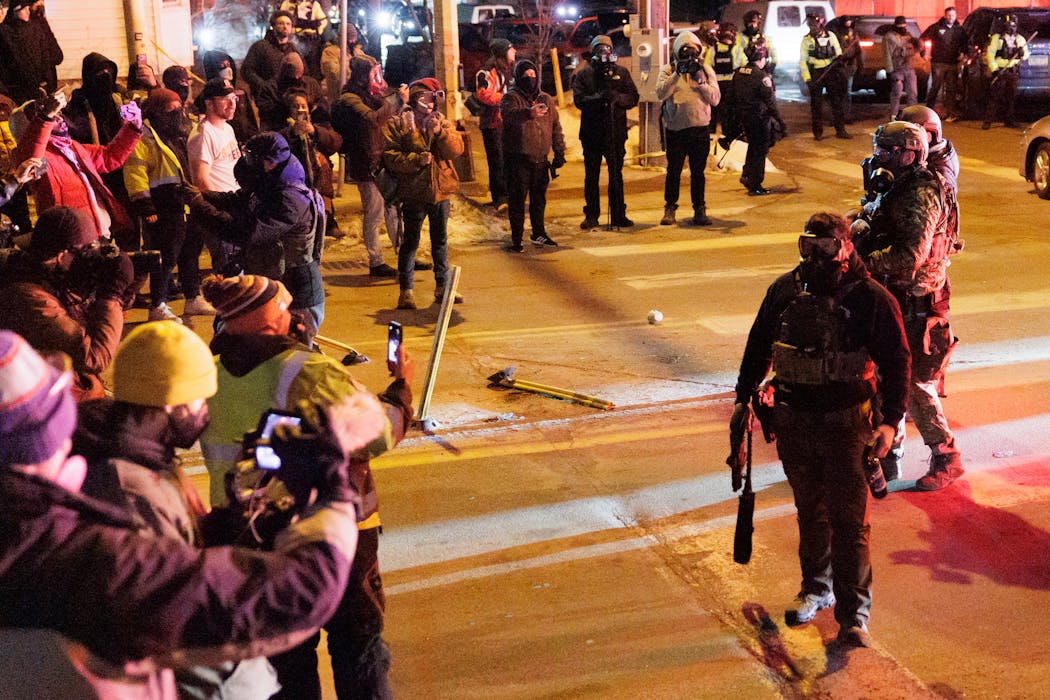
If you’re going to record ICE agents, recognize that the risks go beyond physical confrontation. Madison Thorn/Anadolu via Getty Images

When an Immigration and Customs Enforcement agent shot and killed Renee Nicole Good in south Minneapolis on Jan. 7, 2026, what happened next looked familiar, at least on the surface. Within hours, cellphone footage spread online and eyewitness accounts contradicted official statements, while video analysts slowed the clip down frame by frame to answer a basic question: Did she pose the threat federal officials claimed?

What’s changed since Minneapolis became a global reference point for bystander video in 2020 in the wake of George Floyd’s murder is how thoroughly camera systems, especially smartphones, are now entangled with the wider surveillance ecosystem.

I am a researcher who studies the intersection of data governance, digital technologies and the U.S. federal government. The hard truth for anyone filming law enforcement today is that the same technologies that can hold the state accountable can also make ordinary people more visible to the state.

Recording is often protected speech. But recording, and especially sharing, creates data that can be searched, linked, purchased and reused.

Video can challenge power. It can also attract it.

Targeting the watchers

Documentation can be the difference between an official narrative and an evidence-based public record. Courts in much of the U.S. have recognized a First Amendment right to record police in public while they perform official duties, subject to reasonable restrictions. For example, you can’t physically interfere with police.

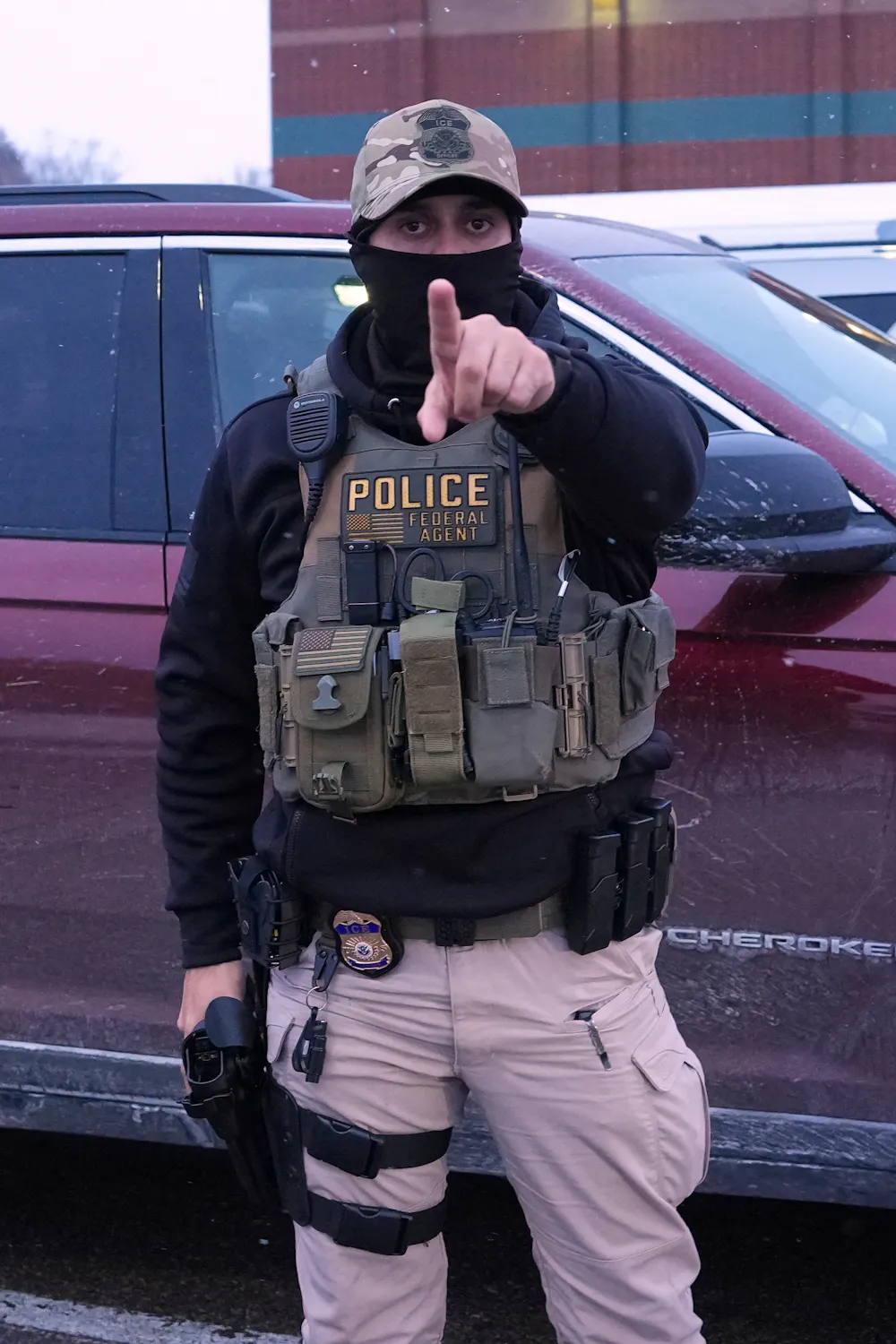
a man wearing a tactical vest and face mask points in the direction of the viewer
An ICE officer tells a photographer to back up.
AP Photo/Adam Gray

However, that right is uneven across jurisdictions and vulnerable in practice, especially when police claim someone is interfering, or when state laws impose distances people must maintain from law enforcement actions – practices that chill filming.

While the legal landscape of recording law enforcement is important to understand, your safety is also a major consideration. In the days after Good’s killing, Minneapolis saw other viral clips documenting immigration enforcement and protests, along with agents’ forceful engagement with people near those scenes, including photographers.

It’s difficult to know how many people have been targeted by agents for recording. In Illinois in late 2025, the U.S. Press Freedom Tracker, operated by advocacy group Freedom of the Press Foundation, documented multiple incidents in which journalists covering ICE-facility protests reported being shot with crowd-control munitions or tackled and arrested while filming.

These incidents underscore that documentation isn’t risk-free. There is an additional layer of safety beyond the physical to take into account: your increased risk of digital exposure. The legal right to record doesn’t prevent your recording from becoming data that others can use.

Both camera and tracking device

In practical terms, smartphones generate at least three kinds of digital exposure.

The first is identification risk, including through facial recognition technology. When you post footage, you may be sharing identifiable faces, tattoos, voices, license plates, school logos or even a distinctive jacket. That can enable law enforcement to identify people in your recordings through investigative tools, and online crowds to identify people and dox or harass them, or both.

That risk grows when agencies deploy facial recognition in the field. For example, ICE is using a facial recognition app called Mobile Fortify.

Facial recognition accuracy also isn’t neutral. National Institute of Standards and Technology testing has documented that the technology does not perform equally across different demographic groups, meaning the risk of misidentification is not evenly distributed across groups. For example, studies have shown lower recognition accuracy for people with darker skin color.

Second is the risk of revealing your location. Footage isn’t just images. Photos and video files often contain metadata such as timestamps and locations, and platforms also maintain additional logs. Even if you never post, your phone still emits a steady stream of location signals.

This matters because agencies can obtain location through multiple channels, often with different levels of oversight.

Agencies can request location or other data from companies through warrants or court orders, including geofence warrants that sweep up data about every device in a place during a set time window.

Agencies can also buy location data from brokers. The Federal Trade Commission has penalized firms for unlawfully selling sensitive location information.

Data brokers collect location data from people’s phones and sell it, including to law enforcement and federal agencies.

Agencies also use specialized “area monitoring” tools: ICE purchased systems capable of tracking phones across an entire neighborhood or block over time, raising civil liberties concerns. The tools could track a phone from the time and place of a protest – for example, to a home or workplace.

There are more pathways for tracking than most people realize, and not all are constrained by the courtroom rules people picture when they think “warrant.”

The third type of potential exposure is the risk of having your phone seized. If police seize your phone, temporarily or for evidence, your exposure isn’t just the video you shot. It can include your contacts and message history, your photo roll, location history and cloud accounts synced to the device.

Civil liberties groups that publish protest safety guidance consistently recommend disabling the face and fingerprint unlocking features and using a strong passcode. Law enforcement officials can compel you to use biometrics more easily in some contexts than reveal memorized secrets.

Digital safety when recording police

This isn’t legal advice, and nothing is risk-free. But if you want to keep the accountability benefits of filming while reducing your digital exposure, here are steps you can take to address the risks.

Before you go, decide what you’re optimizing for, whether it is preserving evidence quickly or minimizing traceability, because those goals can conflict. Harden your lock screen with a long passcode, disable face and fingerprint ID, turn off message previews and reduce the risk of what you carry by logging out of sensitive accounts and removing unnecessary apps. Even consider leaving your primary phone at home if that’s realistic.

If you’re worried about having your recording deleted, plan ahead for how you’ll secure footage. You can either send it to a trusted person through an encrypted app or keep it offline until you’re safe.

While filming, keep your phone locked when possible using the camera-from-lock-screen feature and avoid livestreaming if identification risk is high, since live posts can expose your location in real time. Focus on documenting context rather than creating viral clips: Capture wide shots, key actions and clear time-and-place markers, and limit close-ups of bystanders. Assume faces are searchable, and if you can’t protect people in the moment, consider waiting to share until you can edit safely.

Afterward, back up securely and edit for privacy before posting by blurring faces, tattoos and license plates, removing metadata, and sharing a privacy-edited copy instead of the raw file. Think strategically about distribution because sometimes it’s safer to provide footage to journalists, lawyers or civil rights groups who can authenticate it without exposing everyone to mass identification. And remember the “second audience” beyond police, including employers, trolls and data brokers.

A new reality

Recording law enforcement in public is often a vital democratic check, especially when official narratives and reality conflict, as they have in Minneapolis since Jan. 7, 2026.

But the camera in your pocket is also part of a maturing surveillance ecosystem, one that links video, facial recognition and location data in ways most people never consented to and often don’t fully recognize.

In 2026, filming still matters. The challenge is ensuring the act of witnessing doesn’t quietly become a new form of exposure.

The Conversation

Nicole M. Bennett is affiliated with the Center for Refugee Studies at Indiana University.

​Politics + Society – The Conversation
Categories
Entertainment

Meghan Trainor Welcomes 3rd Child Via Surrogate, Reveals Gender-Flexible Name

Reading Time: 2 minutes

Meghan Trainor is now a mother of three!

The pop star announced this week that she and husband Daryl Sabara have welcomed a daughter via surrogacy.

Meghan shared the news with fans on her Instagram page:

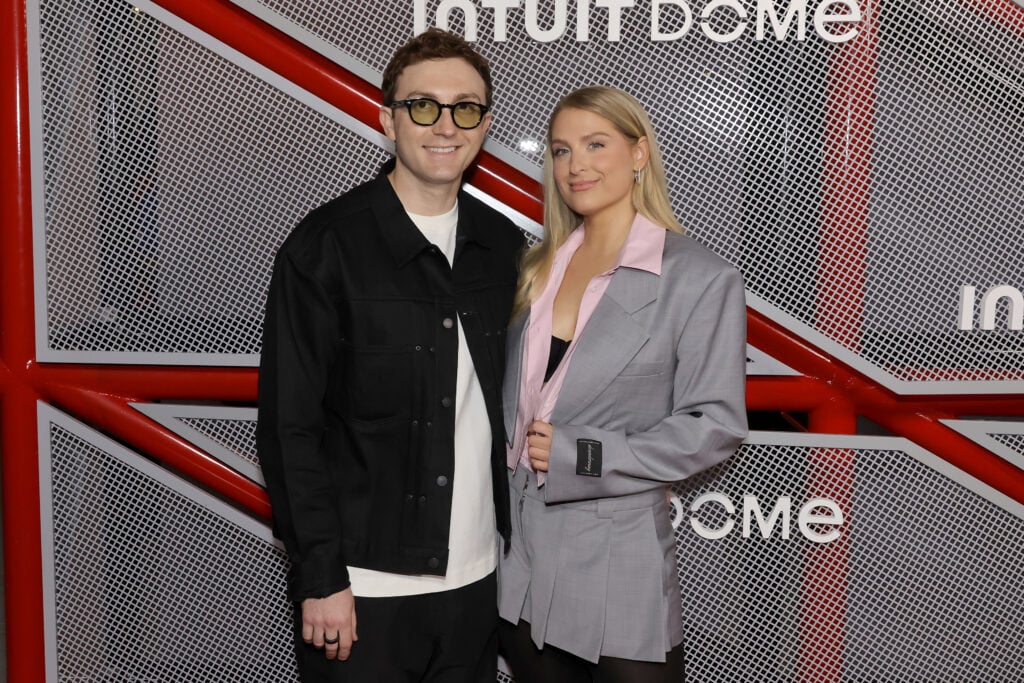
Daryl Sabara and Meghan Trainor attends the Opening Night of The Intuit Dome at Intuit Dome on August 15, 2024 in Los Angeles, California.
Daryl Sabara and Meghan Trainor attends the Opening Night of The Intuit Dome at Intuit Dome on August 15, 2024 in Los Angeles, California. (Photo by Kevin Winter/Getty Images)

“Our baby girl Mikey Moon Trainor has finally made it to the world thanks to our incredible, superwoman surrogate. We are forever grateful to all the doctors, nurses, teams who made this dream possible,” she wrote, adding:

“We had endless conversations with our doctors in this journey and this was the safest way for us to be able to continue growing our family. We are over the moon in love with this precious girl.

“Riley and Barry have been so excited, they even got to choose her middle name. We are going to enjoy our family time now, love you all.”

Naturally, Meghan quickly received a tidal wave of congratulatory comments from her many celebrity friends.

“Congratulations!!!!! So happy for you, she has the best mom!” Jimmy Fallon wrote.

“Congratulations beautiful family!” Khloe Kardashian added.

“CONGRATULATIONS!!!!!” Kris Jenner chimed in.

We don’t know if Mikey is short for anything, as is the case for actress Mikey Madison, whose first name is Mikaela.

Or maybe Mikey is the legal name, in which case it’s a very trendy choice, coming less than a year after Madison won the Best Actress Oscar for her work in Anora.

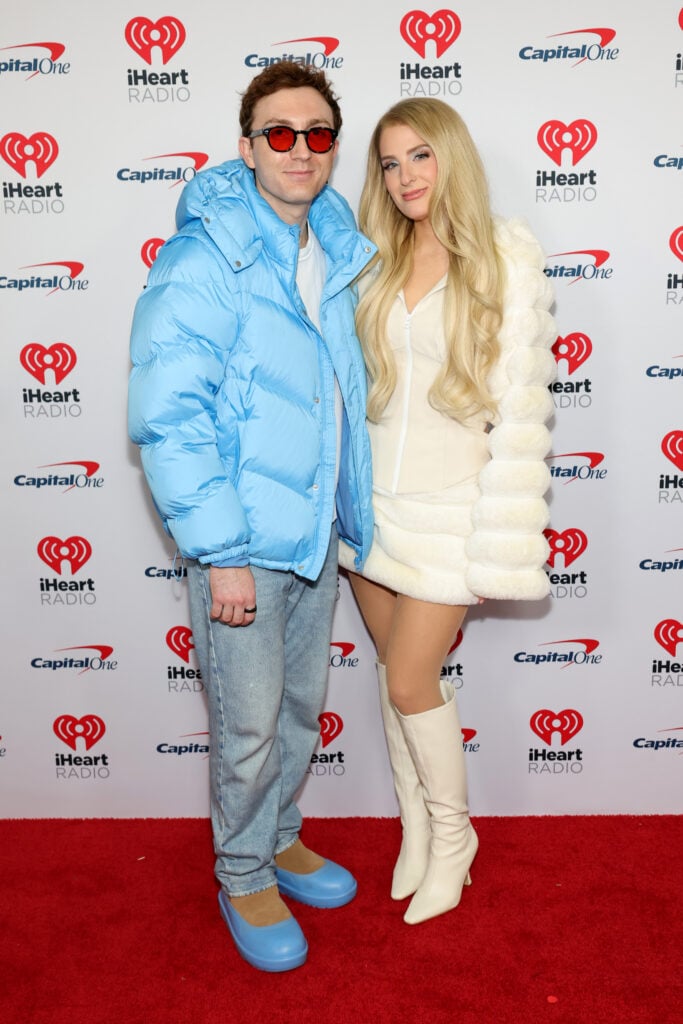
Daryl Sabara and Meghan Trainor attend iHeartRadio z100's Jingle Ball 2024 Presented By Capital One at Madison Square Garden on December 13, 2024 in New York City.
Daryl Sabara and Meghan Trainor attend iHeartRadio z100’s Jingle Ball 2024 Presented By Capital One at Madison Square Garden on December 13, 2024 in New York City. (Photo by Arturo Holmes/Getty Images for iHeartRadio)

Whatever the case, Meghan, Daryl, and their elder two children — Riley and Barry — are clearly overjoyed about the new addition to their family.

Trainor has made headlines in recent weeks for her supposed involvement in the “toxic” celebrity mom group called out by Ashley Tisdale.

But Meghan handled the situation with her usual self-deprecation and good humor.

And clearly, there’s nothing toxic about her home life these days.

We’d like to add our voice to the growing chorus of those offering their congratulations to Meghan and Daryl on their growing family.

Meghan Trainor Welcomes 3rd Child Via Surrogate, Reveals Gender-Flexible Name was originally published on The Hollywood Gossip.

​The Hollywood Gossip

Categories
Uncategorized

The only thing limiting Taylor Swift’s popularity is partisan polarization

Around the world, Taylor Swift’s fan base skews female. AP Photo/Heinz Peter Bader

Taylor Swift’s latest album, “The Life of a Showgirl,” generated a cultural whirlwind: chart-topping success, social media saturation and frenzied debate over her artistic evolution.

Nonetheless, despite this warm reception, opinions on Swift are deeply polarized by party. Democrats are far more likely to view her positively; Republicans are more likely to hold negative views. This partisan divide remains in place even after accounting for age, gender and other demographic differences.

We are political scientists who conduct research on public opinion. In our just-published study, “Mirrorball Politics,” we draw on national survey data to examine how Americans feel about Swift and what those feelings reveal about our politics. What we find is striking: Swift has become a cultural mirror, reflecting our society’s deepest social and political fault lines.

In other words, liking or disliking Swift has become yet another way Americans signal who they are politically. Young women love her, but young men don’t – and that gap matters.

This is part of a broader trend in which cultural preferences and political identity have collapsed into each other. The type of beer you drink, the kind of car you drive, the stores you shop at and now the musical artists you admire have become markers of political belonging – and difference.

Popular entertainment used to be a common space where Americans, regardless of whether they were Republicans or Democrats, could come together and have some fun. Those shared spaces are shrinking – and with them the opportunity for connection across partisan divides.

The Swifties gap

That’s why feelings toward Swift offer warning signs for the future of American politics.

One of the starkest divides we found is between young men and young women. Gen Z women – those born between 1997 and 2012 – admire Swift. Gen Z men, not so much. On a 100-point scale measuring attitudes toward Swift, young women averaged 55, while young men averaged 43 – a statistically significant difference that was not present among older Americans.

This gender gap mirrors the widening political divide among younger Americans that played a pivotal role in the 2024 presidential election. Although a modest gender gap has been a consistent, defining feature of American electoral politics since 1980, the gap among young Americans is huge.

Young women are markedly progressive in their politics. Young men, by contrast, are trending rightward.

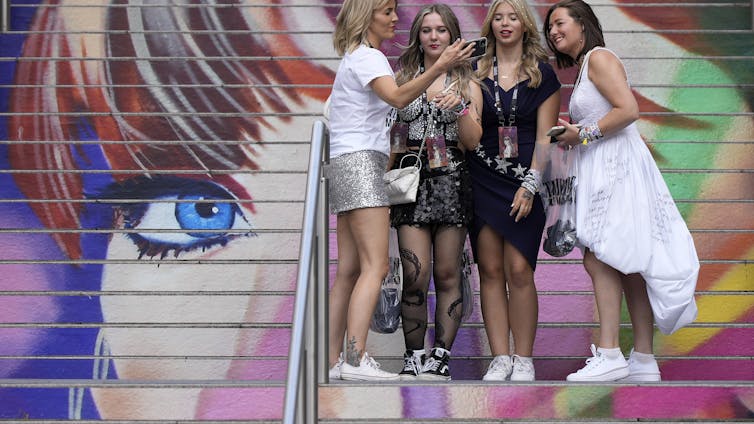
Four young women pose for a selfie in front of a mural depicting Taylor Swift.
Young women pose for a selfie in front of a Taylor Swift mural.
AP Photo/Alistair Grant

Many young men express skepticism toward feminism, discomfort with shifts in gender norms and a growing attraction to more conservative cultural messaging.

Haters gonna hate

This yawning gender gap is also reflected in views regarding Swift.

The strongest predictor of negative views of the singer, aside from partisanship, is “hostile sexism.” This is defined as negative attitudes toward women and a sense that men should dominate.

Our study finds that individuals who believe that women’s achievements come at men’s expense, or that women have too much power, are far more likely to dislike Swift. This effect is especially strong among men and particularly among Republican men.

Swift’s enormous success, artistic autonomy and cultural influence appear to trigger anxieties about women’s power in public life. The backlash is not about her lyrics or her image. It’s about what she represents: a confident, self-directed woman at the center of American culture.

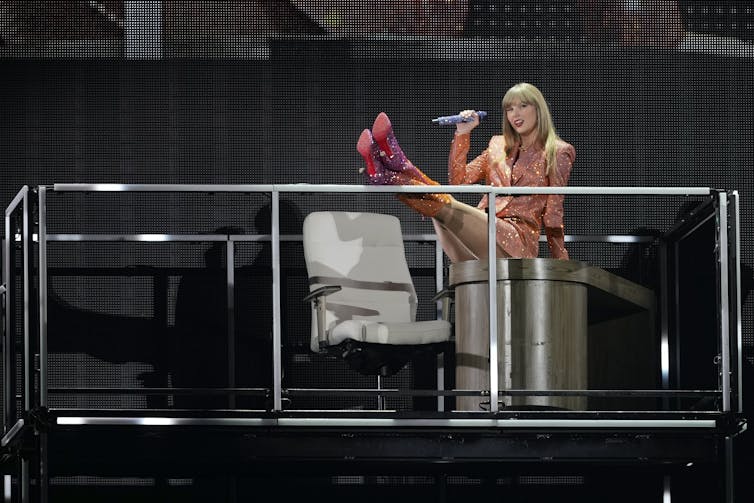
Taylor Swift swings her legs up during a concert performance.
The scope of Taylor Swift’s success may have triggered a backlash among some Americans.
Lewis Joly/AP

This dynamic reveals the broader challenges facing women in positions of authority, including in politics. Hostile sexism remains a force in American society and a formidable barrier for any woman aspiring to the presidency.

Swift as a visible symbol

Swift didn’t create these divisions – she is simply reflecting them back. But the intensity of the reaction to her success reveals how conflicted America remains about women’s power.

Our study also shows that people who scored high on hostile sexism were much more likely to hold negative views of Kamala Harris during the presidential election of 2024. This mirrors findings from earlier research showing that hostile sexism was one of the strongest reasons voters did not support Hillary Clinton in 2016.

That conflict is not abstract. It is shaping who we elect and whether women can lead without triggering backlash. As the United States marks its 250th anniversary as a democractic nation, we have yet to elect a woman as president, and women remain significantly underrepresented in high-level political positions.

Democracy depends on some measure of shared reality and common ground. When even pop stars become partisan litmus tests, that common ground keeps shrinking.

The Conversation

The authors do not work for, consult, own shares in or receive funding from any company or organization that would benefit from this article, and have disclosed no relevant affiliations beyond their academic appointment.

​Politics + Society – The Conversation
Categories
Health

How Did Piers Morgan Break His Hip? The Commentator’s Road To Recovery Is Brutally Long

In a social media update, the English broadcaster shared details about his recent injury, the surgery he underwent, and his expected recovery period.

​Health Digest – Health News, Wellness, Expert Insights

Categories
Food

How Texas Roadhouse Handles Prime Rib From Roast To The Moment It Hits Your Plate

Texas Roadhouse is meticulous regarding how it handles its steaks, but how it treats its prime rib is vastly different from just about every other cut of steak.

​Food Republic – Restaurants, Reviews, Recipes, Cooking Tips

Categories
Entertainment

Here’s What These 9 Celebs Order From Taco Bell

They may be some of the biggest stars on the planet, but these celebs love a Taco Bell as much as the rest of us. Here’s what they like to order.

​Mashed – Fast Food, Celebrity Chefs, Grocery, Reviews

Categories
Food

The Oldest Italian Restaurant In The US Is Located In California

You might expect the oldest Italian restaurant in America to be in New York or at least on the East Coast, but it actually resides in California.

​Food Republic – Restaurants, Reviews, Recipes, Cooking Tips

Categories
Entertainment

Why One Aldi Dip Totally Flopped In Our Taste Test

Aldi’s assortment of dips is extensive and delicious, but there is one flavor that we advise you steer clear of after it left our taste tester unimpressed.

​Mashed – Fast Food, Celebrity Chefs, Grocery, Reviews

Categories
Hip Hop

‘Come To Me’: Marv Johnson And The Birth Of Motown Records

Marv Johnson

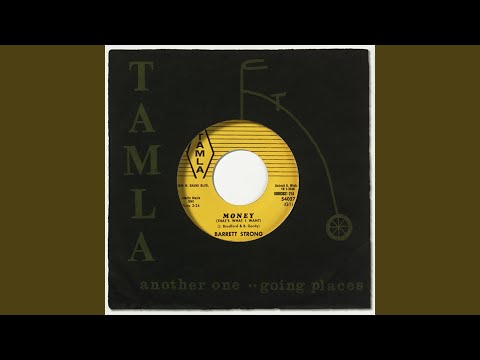
Wednesday, January 21, 1959: Cecil B DeMille, the movie mogul who directed The Greatest Show On Earth, died. It was one of a few historic events that day. Not many people noticed another one, however, which led to what could also lay claim to being the greatest show on earth: the Motown Corporation’s first single, Marv Johnson’s “Come To Me,” was released on the Tamla label.

The company had little pedigree, no distribution deal, and Marvin Earl Johnson was a complete unknown. Just six short years later, Motown sold 15 million dollars’ worth of records and was on the way to becoming America’s biggest black-owned business. This unprecedented success started with Marv Johnson’s single and was built by label founder Berry Gordy, Jr’s spirit of enterprise, and his and Smokey Robinson’s unsurpassed instinct for a great record.

YouTube Video
Click to load video

“I went into the master-making business,” said Berry Gordy of the early days of Tamla. “Some of the records we made went to other companies, we’d lease these records and we found a great deal of the profit was lost. We got very low royalty rates or did not receive royalty statements on time, and we would perhaps have gone out of business.” One of those leased records was “Come To Me,” which was licensed to United Artists after its limited release on Tamla showed commercial potential by gaining airplay around Detroit. UA pushed it to No.30 on Billboard’s Hot 100.

Listen to the best of Motown on Apple Music and Spotify.

“Come To Me” was a decent record, co-written by Gordy and Johnson. It already showed hints of the classic Motown sound in the emphasis on the tambourine-boosted dance beat, and the “Black-sounding” vocals, which contrasted strongly with the cheesy choirs deployed by the producers of some of the Jackie Wilson records Gordy had co-written in his initial foray into the business. Gordy borrowed $800 from his cautious family to get Johnson’s debut single released – and had to sign a contract agreeing on a repayment schedule to get his hands on the cash.

YouTube Video
Click to load video

In some respects, Johnson was unlucky. His beautiful voice, floating elegantly between the styles of Clyde McPhatter and Jackie Wilson, put him in at the start of the greatest soul music company of all. But UA signed him after this initial hit and continued to release his records, which Gordy still co-wrote and produced. For a while it worked, and Johnson broached the US Top 10 with the classic “You Got What It Takes” and “I Love The Way You Love,” but this hitmaking run had faded by mid-’61. Meanwhile, Motown rose: Smokey’s group, The Miracles, the youthful Marvin Gaye, the dazzling Mary Wells, and the fabulous Marvelettes all benefited from working for a label at the heart of the nascent soul scene’s creativity, while the singer who’d helped start it all could not catch a break at UA. By the time he was free to sign to Motown in 1965, he was trying to compete with a roster of established stars, and his success was limited. But credit where credit is due: Marv Johnson’s “Come To Me” was key to launching a music-business legend.

“I’ll never forget we went up to a record plant in Owosso, American Record Pressing,” says Smokey Robinson, recalling a 100-mile trip north for Johnson’s groundbreaking single. “We were going to get the first batch of 45s – about a hundred records! It was the wintertime and the highway was like glass. We went over into a ditch twice – we had to be towed out. One time it was to avoid being crushed by a Mack truck! We finally got back to Detroit with the record and the local DJs started to play it. It was really the birth of Motown records.”

Shop our Motown collection featuring limited edition vinyl and CDs here.

​Discover more about the world’s greatest R&B artists | uDiscover Music