Super Bowl Sunday is just around the corner, but one former president is skipping it, and the reasons might surprise you. Continue reading…Country Music News – Taste of Country









Super Bowl Sunday is just around the corner, but one former president is skipping it, and the reasons might surprise you. Continue reading…Country Music News – Taste of Country
Super Bowl Sunday is just around the corner, but one former president is skipping it, and the reasons might surprise you. Continue reading…The Boot – Country Music News, Music Videos and Songs

The NFL offseason is in full swing. Free agency has come and gone, with many of the top players available finding homes. But there are still some notable free agents out there who have yet to be signed, and several other players appear to be Here’s the latest look at some of the most notable rumors around the NFL. [2026 NFL Free Agency: Top 100 Players Available and Potential Fits] Odell Beckham Jr. meets with Giants’ coach John Harbaugh Amid the rumors of his return to New York, Odell Beckham Jr., reportedly, met with Giants coach John Harbaugh during the owners meetings in Arizona this week. Beckham was out of the NFL last season, after playing nine games with the Miami Dolphins in 2024. He spent time in Baltimore, Cleveland and with the Los Angeles Rams over the last five years. But before that, he was a three-time Pro-Bowler with the Giants, surpassing 1,000 receiving yards in four of his five seasons in New York. Beckham would join a wide receiver room that includes Malik Nabers, Darius Slayton, Darnell Mooney and Calvin Austin III. Klint Kubiak doesn’t want a rookie Week 1 starting QB Fernando Mendoza won’t start right away for the Las Vegas Raiders if coach Klint Kubiak has his way. The Raiders are expected to select the Heisman Trophy winner with the No. 1 overall pick in the NFL draft next month. Mendoza led Indiana to its first national championship and became the overwhelming favorite to go first. “Ideally, you don’t want him to start from day one,” Kubiak said Tuesday. “You’d love him to be able to learn behind somebody. That’s in a perfect world. It doesn’t always work out that way. Sometimes they have to play from day one and it’s our job as coaches to get them ready to go. I think it does help the player if they can sit behind a mature adult and watch how they run the show.” Aidan O’Connell is the only other quarterback currently on the Raiders after the team traded Geno Smith and Kenny Pickett. Kirk Cousins, Jimmy Garoppolo and Russell Wilson are among the veterans who remain unsigned. Kubiak, who was the offensive coordinator for Super Bowl champion Seattle, replaced Pete Carroll and aims to rebuild a franchise that hasn’t won a playoff game since the AFC championship game following the 2002 season. It starts with landing a franchise quarterback. “He’s a national champion, he’s a winner,” Kubiak said of Mendoza. “He’s quick. He’s intelligent.” Shedeur Sanders to switch jersey number Shedeur Sanders will have a new look in 2026. The Cleveland Browns quarterback will switch his jersey number to No. 2 next season, the team announced. Sanders previously wore No. 12. Sanders actually wore No. 2 during his college career, but he couldn’t wear that jersey number during his rookie season with the Browns. Wide receiver DeAndre Carter had possession of the jersey number when Cleveland selected him in the fifth round of the 2025 NFL Draft. As for on-field matters, Sanders seems in line to compete for the starting quarterback job in 2026. Browns general manager Andrew Berry previously said that Sanders, Deshaun Watson and other quarterbacks on their roster will get the opportunity to potentially win the starting job. Sanders started the final seven games for the Browns in 2025, posting a 3-4 record. He threw for 1,400 yards, seven touchdowns and 10 interceptions to go with 169 rushing yards and a rushing score last season. Safety Damar Hamlin returns to Buffalo Safety Damar Hamlin is returning to Buffalo for a sixth season after signing a one-year contract with the team on Friday. Hamlin was a free agent after his one-year contract expired. And he’s staying in Buffalo where the 28-year-old has served as an inspiration for perseverance following his remarkable comeback after a near-death experience three years ago. Hamlin has shown no signs of a setback since he went into cardiac arrest and needed to be resuscitated on the field during a game at Cincinnati in January 2023. Though he was eased back into action in being limited to playing five games the following season, Hamlin had a career-high 14 starts in 2024. He was relegated to a backup role last season and limited to just five games after landing on injured reserve because of a pectoral injury sustained in practice. Hamlin is expected to compete for a backup spot on a team and defense in transition. Jim Leonhard takes over as coordinator under new coach Joe Brady, who was promoted in January after Sean McDermott was fired. The Bills have since signed free-agent safeties C.J. Gardner-Johnson and Geno Stone, who are anticipated to compete for the starting job opposite Cole Bishop. Buffalo selected Hamlin in the sixth round of the 2021 draft out of Pittsburgh. He has two interceptions in 53 career games, including 27 starts. Tommy DeVito new backup for Patriots After QB Josh Dobbs’s release, Tommy DeVito is in line to be the New England Patriots backup quarterback under Drake Maye in this upcoming season. In 2024, DeVito was released by the New York Giants, being the odd man out in a competitive QB pool with players like Russell Wilson, Jameis Winston, and first-round pick Jaxson Dart. The season prior, he played three games, completing 70.5% of his passing attempts. After signing with the Patriots, he aims to provide support at quarterback and help support Maye. Trent Williams update The San Francisco 49ers opted not to exercise the $10 million option bonus on their star left tackle, per ESPN. Williams, who has no remaining guaranteed money on a three-year, $82.7 million deal with the 49ers past 2026, is set to count for roughly $47 million on San Francisco’s 2026 payroll, but the team reportedly plans to discuss altering the terms of his contract. Williams, a three-time All-Pro and 12-time Pro Bowler, will be 38 at the start of the 2026 season. Dolphins won’t trade Achane Multiple teams have contacted the Miami Dolphins this offseason to see if they were willing to part with running back De’Von Achane as part of a larger roster blowup, but per ESPN, Achane is not available. The fourth-year back is expected to be part of Miami’s future, assuming an extension can be worked out with the 24-year-old, as his rookie deal expires at the end of this season. Achane led the league in yards per carry, with 5.7, and set a new career-high in rushing yards with 1,350, blowing past his previous mark of 907. He finished with over 1,800 yards from scrimmage total, thanks to also making 67 receptions for 488 yards, and scored 12 touchdowns overall. [4 Takeaways: Broncos Trade for WR Jaylen Waddle from Dolphins] The Dolphins released quarterback Tua Tagovailoa earlier in March, traded five-time Pro Bowler Minkah Fitzpatrick to the Jets and, on Tuesday, dealt top wide receiver Jaylen Waddle to the Broncos. Earlier in the offseason, wide receiver Tyreek Hill was cut; all told, per ESPN, the Dolphin have roughly $175 million in dead money against the salary cap in 2026. WR Mike Evans leaving Buccaneers? Not only will Evans test free agency, but the star wide receiver could be on the move. He’ll likely have five potential suitors when free agency opens, FOX Sports’ Henry McKenna reported. Teams have offered Evans a contract worth north of $27 million per year as well, according to FOX Sports’ Greg Auman. There’s also a sense that his time in Tampa Bay could be coming to an end, NFL Media reported. Evans is the third-highest-ranked wide receiver in our top 100 NFL free agents list. He also ranks 15th in the overall ranking. WR A.J. Brown’s trade wish list Where does the Eagles’ star wide receiver want to play next if he’s traded this offseason? Brown has the Bills, Chargers, Chiefs and Patriots on his preferred list of teams to get traded to, according to Sports Illustrated. New England has been commonly linked to Brown in recent weeks as the Patriots seek to add another wide receiver following the release of Stefon Diggs. However, talks have stalled between the two sides, NFL Media reported. Chargers extend edge rusher Khalil Mack Nine-time Pro-Bowler Mack agreed to a one-year, $18 million deal to remain with the Chargers. That figure is fully guaranteed. The 35-year-old will officially return for his 13th NFL season. Mack missed time early in 2025 with a dislocated elbow but still finished the season with 5.5 sacks, 32 tackles, four forced fumbles and a safety. Eagles extend DT Jordan Davis Philadelphia has extended Davis to a three-year, $78 million deal that includes $65 million guaranteed, with the $26 million average annual value an NFL record for a nose tackle. Last season, Davis totaled a career-high in sacks (4.5), passes defended (six) and combined tackles (72). Davis hasn’t missed a game since his 2022 rookie campaign. Bills retain C Connor McGovern The Bills have re-signed McGovern on a four-year, $52 million deal, according to ESPN. The deal includes $32 million guaranteed. McGovern, a 2024 Pro Bowler, has spent the last three seasons in Buffalo (2023-25). Cowboys tender K Brandon Aubrey Dallas has placed a second-round tender worth $5.76 million on its star kicker, per ESPN. Aubrey can now sign an offer sheet with another team, but the Cowboys have the right to match any deal. If Aubrey signs a contract with another team and Dallas doesn’t match the deal, the Cowboys will receive a second-round pick. Aubrey, a one-time All-Pro and Pro Bowler in each of his three seasons in the NFL (2023-25), was 36 of 42 on field goal attempts in 2025 (85.7%), including 11 of 17 on kicks of 50 or more yards (64.7%). He holds the NFL record with six made field goals from 60 or more yards. Texans cut RB Joe Mixon, extend TE Dalton Schultz Houston is releasing Mixon in a move which saves it $8 million, per ESPN. Mixon, a two-time Pro Bowler, spent the first six seasons of his NFL career with the Bengals (2017-23) before being acquired by the Texans in 2024. In 2024, the veteran back rushed for 1,016 yards and 11 touchdowns on 4.1 yards per carry across 14 regular-season games for the Texans, while tallying 309 receiving yards. Mixon didn’t play in 2025 due to a foot injury. Meanwhile, Houston recently acquired veteran running back David Montgomery from the Lions. Meanwhile, Houston has extended its starting tight end on a one-year, $12.6 million deal. He had one season remaining on a three-year, $36 million deal. Last season, Schultz, who has spent the last three years in Houston after a five-year stint with the Cowboys, totaled a career-high 82 receptions for 777 yards and three touchdowns. Patriots trade starting center to Bears The Bears have their new center. Chicago has reportedly acquired center Garrett Bradbury from the Patriots in exchange for a fifth-round pick. Bradbury started every game for New England last season. The deal comes days after Bears center Drew Dalman surprisingly retired at 27 years old. Bradbury, 30, just finished his seventh NFL season after starting his career with six years in Minnesota. Browns alter QB Deshaun Watson’s contract Cleveland restructured Watson’s contract, clearing roughly $36 million in cap space. Watson, a three-time Pro Bowler who hasn’t played since Oct. 2024 due to injury, is entering the final season of a five-year, $230 million deal. Rams keep S Kamren Curl Los Angeles has re-signed Curl to a three-year, $36 million deal, with a maximum value of $39 million. Curl, who has spent the last two seasons with the Rams (2024-25), totaled two interceptions, 2.0 sacks and 122 combined tackles in the 2025 regular season. He then had one interception and 27 combined tackles in the postseason. Carson Wentz-Frank Reich reunion … again? Wentz is the “preferred” free agent quarterback option for new Jets offensive coordinator Frank Reich, according to SNY. Reich was Wentz’ offensive coordinator on the Eagles over his first two seasons in the NFL from 2016-17 and was his head coach on the Colts in 2021. Last season, Wentz played for the Vikings, initially serving as the team’s backup quarterback before starting five games in place of the injured J.J. McCarthy before suffering a season-ending injury to his non-throwing shoulder (left). Wentz earned his only Pro Bowl nod while being coached by Reich in 2017. Chargers sign new center Los Angeles has signed Tyler Biadasz to a three-year, $30 million deal, per NFL Media. Biadasz, a 2022 Pro Bowler with the Cowboys, was released by the Commanders last week after two seasons in the nation’s capital. Commanders to release CB Marshon Lattimore The Commanders are the latest team to make a cap-clearing move in the week ahead of free agency, releasing Lattimore. The move will clear $18.5 million in cap space for Washington, which will now have nearly $90 million available in cap space this offseason, per Over The Cap. Lattimore ranked 17th in Greg Auman’s top cap casualty candidates entering the offseason. He’s played just 18 games over the last two years, dealing with multiple injuries. Browns land RT Tytus Howard from Texans The Browns are getting some much-needed help along their offensive line, making a deal that could also have ramifications at the top of the 2026 NFL Draft. The Texans are trading Howard to the Browns for a fifth-round pick. Howard will also reportedly receive a three-year, $63 million extension as part of the deal. Cleveland’s O-line was among the worst in the league in 2025, with Pro Football Focus ranking the group the second-worst offensive line last season. Offensive tackle Dawand Jones was also the Browns’ only Week 1 starter on their offensive line who was under contract for the 2026 season. With the Browns in desperate need of O-line help, many mock drafts projected them to select an offensive tackle with the sixth overall pick. Monday’s trade, which can’t be made official until March 11, might allow the Browns to address other needs at the top of the draft, like wide receiver. Chiefs cut OT Jawaan Taylor to open up major cap space In terms of the salary cap, the Chiefs were well underwater entering the offseason. They’ve given themselves some breathing room, though, after cutting Taylor. The move creates $20 million in cap space, and Kansas City is now roughly $15 million under the salary cap, per Over The Cap. Taylor was one of the NFL’s top cap casualty candidates entering the offseason, according to FOX Sports’ Greg Auman, ranking eighth on the list. Taylor, who had been the Chiefs’ starting right tackle since 2023, led them in penalties in each of his three years in Kansas City. Von Miller the general manager? The two-time Super Bowl champion, three-time All-Pro and Super Bowl MVP reportedly spent time at the 2026 NFL Scouting Combine learning the ropes of what it takes to be an NFL general manager. The 36-year-old Miller, an eight-time Pro Bowler, spent last season with the Commanders, totaling 9.0 sacks and 26 combined tackles. Eagles LB Nakobe Dean to NFC East rival? Dean is expected to hit the open market, and the Cowboys will be among the teams that pursue him. Last season, Dean totaled a career-high 4.0 sacks, two forced fumbles and 55 combined tackles. He was limited to 10 regular-season games due to knee and hamstring injuries, respectively. This comes after Dallas created roughly $66 million in cap space by restructuring the contracts of quarterback Dak Prescott, wide receiver CeeDee Lamb and guard Tyler Smith. Prescott, a four-time Pro Bowler, is entering the second season of a four-year, $240 million deal; Lamb, a one-time All-Pro and five-time Pro Bowler, is entering the second season of a four-year, $136 million deal; Smith, a three-time Pro Bowler, begins a four-year, $96 million deal in 2027. Smith had minor surgery on his right knee after the 2025 Pro Bowl Games but is expected to be ready for OTAs. NFL salary cap number revealed The NFL announced that the 2026 salary cap will be $301.2 million. This is a $22 million increase from 2025. Agents of NFL free agents can begin negotiating contracts with teams at noon ET on March 9, with NFL free agency officially opening at 4 p.m. ET on March 11. Cowboys tag WR George Pickens Dallas announced on Feb. 27 that it has placed the franchise tag on Pickens, which is worth roughly $28 million for the 2026 NFL season. Pickens, who was set to be arguably the best wide receiver on the free agent market, is coming off a breakout season in what was his first year with the Cowboys, totaling a career high in receptions (93), receiving yards (1,429) and receiving touchdowns (nine). Pickens, who earned his first career Pro Bowl nod in 2025, spent the first three seasons of his career with the Steelers (2022-24). Commanders release OL Tyler Biadasz Biadasz had one year remaining on a three-year, $29.2 million deal, and his release will incur a $10.9 million cap hit and leave $8.1 million in dead cap. Biadasz was a key part of Washington’s NFC championship run last season. He was a Pro Bowler for the Cowboys in 2022. He’s now an unrestricted free agent. Colts QB Anthony Richardson cleared to seek trade The Colts have granted Richardson permission to seek a trade, according to ESPN. Richardson, who was selected by the Colts with the fourth overall pick in the 2023 NFL Draft, has started just 15 games in his NFL career; he suffered shoulder and head injuries in 2023, was benched during 2024 and lost his starting job to veteran Daniel Jones last summer while also dealing with an eye injury in 2025. Jets, Titans make a trade New York is sending defensive end and 2022 first-round pick Jermaine Johnson to Tennessee for nose tackle and 2024 second-round pick T’Vondre Sweat, per NFL Media. Johnson, a 2023 Pro Bowler, totaled three sacks and 43 combined tackles in 14 games in 2025. Meanwhile, over the first two seasons of his career (2024-25), Sweat has averaged 1.5 sacks and 42.5 combined tackles per season. Bears’ Tremaine Edmunds trade on the horizon? The Bears have granted Edmunds permission to seek a trade, according to the Chicago Tribune. Edmunds, a two-time Pro Bowler, is entering the final season of a four-year, $72 million deal. Last season, he totaled 1.0 sacks, four interceptions, nine passes defended and 112 combined tackles across 13 regular-season games. The 27-year-old, who spent the first five seasons of his NFL career with the Bills (2018-22), missed four games in 2025 due to a groin injury but returned for the postseason. Edmunds has totaled 100-plus combined tackles in each of his eight seasons. 49ers contract dispute? Star left tackle Trent Williams and the 49ers are “struggling to find a contractual solution,” per ESPN. Williams, a three-time All-Pro and 12-time Pro Bowler, is entering the final season of a three-year, $82.7 million deal. Williams played through a hamstring injury down the stretch of the 2025 season, which ended for San Francisco at the hands of the eventual Super Bowl-champion Seahawks in the NFC divisional round. Falcons cutting QB Kirk Cousins Falcons general manager Ian Cunningham revealed that the team will release Cousins on the first day of the new league year (March 11). The 37-year-old Cousins, who has two seasons remaining on a four-year, $180 million deal which included $100 million guaranteed when the deal was inked, was benched for Michael Penix Jr. with three games remaining in the 2024 regular season, with Penix opening 2025 as the Falcons’ starter. A season-ending knee injury for Penix put Cousins back under center, with the veteran posting 1,721 passing yards, 10 passing touchdowns, five interceptions and an 84.8 passer rating, while completing 61.7% of his passes across 10 appearances (eight starts). Chiefs targeting RB Travis Etienne? Jaguars running back Etienne has interest in joining the Chiefs this offseason, The Kansas City Star reported. Etienne is set to become a free agent on March 9 when his rookie contract expires. After an up-and-down start to his career, Etienne closed out his rookie deal on a high note. He rushed for 1,107 yards on 4.3 yards per carry, adding 292 receiving yards as he scored 13 total touchdowns. Chiefs running backs Kareem Hunt and Isiah Pacheco are both set to become free agents this offseason as well. So, the Chiefs certainly have a need for a running back this offseason. Etienne is ranked 20th in FOX Sports’ top 100 NFL free agents list, placing third among the running backs on the list. Eagles RT Lane Johnson coming back Philadelphia’s longtime right tackle will return for a 14th NFL season, Johnson told The Philadelphia Inquirer. Johnson, a two-time All-Pro and six-time Pro Bowler, missed the Eagles’ past eight combined games in 2025 (seven regular-season games and one playoff game) due to a foot injury. Following its Super Bowl LIX triumph, Philadelphia won the NFC East at 11-6 last season but lost to the San Francisco 49ers in the wild-card round. Chiefs restructure QB Patrick Mahomes’ deal Kansas City has restructured Mahomes’ contract, bringing his 2026 salary down from $78.2 million to $34.65 million and creating $43.56 million in cap space. The Chiefs are currently over the cap. Mahomes’ 2025 campaign ended in Week 15 after he tore both his ACL and LCL, but the three-time Super Bowl MVP is targeting a Week 1 return. Dolphins release edge rusher Bradley Chubb The Dolphins are already making some roster moves, releasing veteran edge rusher Chubb, NFL Media reported on Feb. 16. Chubb, who’ll turn 30 in June, had a productive season in 2025, logging 8.5 sacks. However, he was set to have a cap hit of over $31 million in the 2026 and 2027 seasons. Miami was also over the salary cap when the offseason began, and cutting him cleared $7.34 million in cap space, per Over The Cap. NFL wins grievance, bans “team report cards” An arbitrator determined that the NFL Players Association violated the Collective Bargaining Agreement with the NFL by distributing annual “team report cards” and ordered the union to stop making public any future reports, per ESPN. “We are pleased with the decision from the arbitrator, upholding the parties’ collective bargaining agreement and prohibiting the NFLPA from disparaging our clubs and individuals through ‘report cards’ allegedly based on data and methodologies that it has steadfastly refused to disclose,” NFL spokesman Brian McCarthy said. “We remain committed to working in partnership with the NFLPA and an independent survey company to develop and administer a scientifically valid survey to solicit accurate and reliable player feedback as the parties agreed in the CBA.” Decision looming on Dolphins QB Tua Tagovailoa General manager Jon-Eric Sullivan provided somewhat of an update on the future of the team’s current starter. “I don’t know what the future holds right now, and I told Tua that,” he revealed on Feb. 12. “We’re working through some things. What I can tell you is that we’re going to infuse competition into that room — whether Tua is part of the room [or not]. … Tua knows where we are. We’ve been very honest and upfront, and Tua also knows that he will be the first to know when we make a decision. … We’re getting close to a decision, and when we do, we’ll let Tua know whether he’s going to be part of this or not, and we’ll move forward.” Tagovailoa is entering the second season of a four-year, $212.4 million deal with the Dolphins, who have a new general manager in Sullivan and a new head coach in Jeff Hafley. Last season, Tagovailoa, a 2023 Pro Bowler, threw a career-high 15 interceptions in 14 starts, while posting an 88.5 passer rating, his lowest mark since 2020. If the Dolphins release Tagovailoa, they would incur an NFL-record $99.2 million dead cap hit. Browns TE David Njoku leaving Cleveland Njoku, who spent the first nine seasons of his NFL career with the Browns (2017-25) and is set to become a free agent, posted on Instagram that “the time for [him] to find a new home has come.” Last season, Njoku totaled 33 receptions for 293 yards and four touchdowns across 12 games; he missed five games due to a knee injury. Njoku, who Cleveland selected with the No. 29 overall pick in 2017 out of Miami (Fla.), was a Pro Bowler in 2023 in a season that saw him total a career-high in receptions (81), receiving yards (882) and receiving touchdowns (six). He’s third in Browns history with 384 receptions, sixth with 34 touchdowns and 12th with 4,062 receiving yards. Rams extend HC Sean McVay, GM Les Snead McVay and Snead have agreed to multiyear extensions to stay with the Rams, the team announced on Feb. 2. The pair have led the Rams through one of the longest stretches of success in franchise history. The Rams are 92–57 in the regular season and 10-6 in the playoffs since Snead and owner Stan Kroenke hired a then-30-year-old McVay in 2017, one year after the franchise returned home from St. Louis. The Rams immediately ended a 12-year playoff absence and reached the Super Bowl one year later before winning the franchise’s second Super Bowl title in February 2022. Los Angeles has had eight winning seasons, seven playoff berths and four NFC West titles in nine years under McVay, the youngest coach to reach the Super Bowl and to win it. The Rams went 12-5 this season before winning two road playoff games to reach the NFC championship game, where they lost to the Seahawks. McVay said the Rams are optimistic that quarterback Matthew Stafford will return for an 18th NFL season, but the team will wait for the quarterback to make his own announcement. McVay said the Rams would love to stick with Stafford if he wants to come back after his MVP-caliber season in 2025. McVay also confirmed he has hired Bubba Ventrone as his new special teams coordinator. He hasn’t decided who will become his offensive coordinator after Mike LaFleur left to become the Cardinals’ head coach. Packers add former HC as DC Ex-Cardinals head coach Jonathan Gannon is joining the Packers’ staff as defensive coordinator, the team announced on Feb. 2. Gannon will take over for Jeff Hafley, who left after two seasons when the Dolphins hired him to be their next head coach. “He possesses tremendous experience as an NFL coordinator and head coach,” Matt LaFleur said in a statement. “I am confident that he will be an outstanding addition to our organization, as well as a strong leader of our defense.” The Cardinals fired Gannon the day after their season ended with a ninth consecutive loss. Gannon went 15-36 in three years, including a 3-14 record this past season. Gannon had been the Eagles’ defensive coordinator for two seasons before Arizona hired him. In his second season in Philadelphia, the Eagles ranked second in the NFL in total defense and won the NFC championship before losing 38-35 to the Chiefs in Super Bowl LVII. The Eagles had a franchise-record 70.0 sacks — 15 more than any other NFL team — in 2022. They also had 27 takeaways that season to rank fourth in the league. Gannon takes over a defense that ranked 12th in yards allowed per game (311.8), ninth in yards allowed per play (5.0) and 11th in points allowed per game (21.2) this past season. Green Bay’s defense ranked higher earlier in the season but struggled after season-ending injuries to All-Pro pass rusher Micah Parsons and defensive lineman Devonte Wyatt. Eagles DC Vic Fangio considered retirement The Eagles nearly had to make two coordinator changes this offseason. Fangio informed the team shortly after their season ended that he planned to retire before the Eagles convinced him to return, PhillyVoice reported on Feb. 1. If Fangio had held firm in his decision to retire, the Eagles were planning to contact former Arizona Cardinals head coach Jonathan Gannon and Browns defensive coordinator Jim Schwartz, according to PhillyVoice. Gannon was the Eagles’ defensive coordinator for two seasons (2021-22) before leaving for Arizona in 2023. Fangio has been widely regarded as one of the top defensive minds in the NFL for several years. The Eagles’ defense has also been one of the game’s top defensive units since Fangio joined the team in 2024, ranking in the top five in scoring in each of the last two years. The Eagles hired Packers quarterbacks coach Sean Mannion to be their next offensive coordinator after parting ways with Kevin Patullo. Packers extend coach, multiple executives Packers general manager Brian Gutekunst and executive vice president/director of football operations Russ Ball have joined coach Matt LaFleur in signing multi-year contract extensions. Packers president/CEO Ed Policy announced the extensions for all three on Friday. The extensions come after the Packers went 9-8-1 and made their third straight playoff appearance, and sixth in the last seven years. A 31-27 loss at Chicago in the NFC wild-card playoff round capped a five-game skid that ended Green Bay’s season, though one of those defeats came when the Packers rested their starters in their regular-season finale. “We are excited to extend our commitment to Brian, Matt and Russ as the leaders of our football operations,” Policy said in a statement. “Their steadfast dedication, passion and collaboration have remained constant in our drive to compete at the highest level. While we are all disappointed with the way this season ended, we remain aligned in purpose and have spent considerable time over the past weeks collaborating on a path forward. “I am exceedingly confident we have the right people to achieve our goal. The entire Packers organization looks forward to supporting every effort to bring our community and fans another championship that they very much deserve.” LaFleur owns a 76-40-1 regular-season record and has led Green Bay to the playoffs in all but one of his seven years on the job. That includes NFC championship game appearances in the 2019 and 2020 seasons. Green Bay has been the NFC’s seventh and final playoff seed each of the last three seasons. The Associated Press contributed to this report.Latest Sports News from FOX Sports

Guy Fieri made headlines when he revealed that he was in a wheelchair due to splitting his quad muscle in half. However, his outlook is just as you’d expect.

Health Digest – Health News, Wellness, Expert Insights

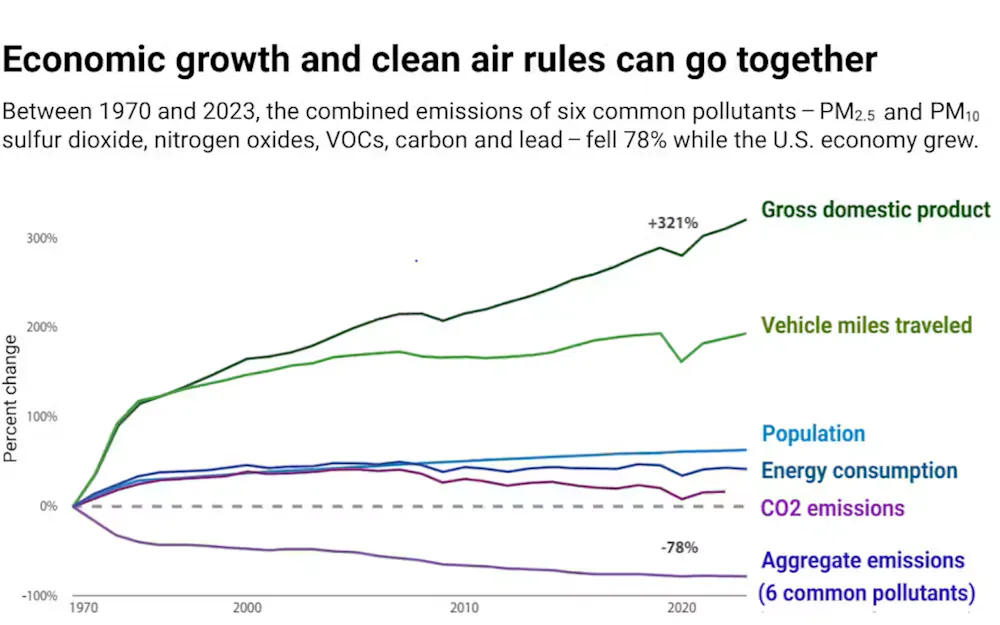
When I worked for the Environmental Protection Agency in the 2010s as an Obama administration appointee, I helped write and review dozens of regulations under the Clean Air Act. They included some groundbreaking rules, such as setting national air quality standards for ozone and fine particulate matter.
For each rule, we considered the costs to industry if the rule went into effect – and also the benefits to people’s health.
Study after study had demonstrated that being exposed to increased air pollution leads to more asthma attacks, more cardiovascular disease and people dying sooner than they would have otherwise. The flip side is obvious: Lower air pollution means fewer asthma attacks, fewer heart problems and longer lives.
To use this information in making decisions, we needed to have a way to compare the costs of additional pollution controls to industry, and ultimately, to consumers, against the benefits to public health. A balanced approach meant putting a dollar value on health benefits and weighing them against the seemingly more easily, though not always accurately, predicted costs of complying with the regulations.
We were able to make these decisions because environmental economists since the 1980s have developed and continually improved robust methodologies to quantify the costs to society of air pollution’s effect on human health, such as workdays lost and hospital visits.
Now, however, the Trump administration is dropping one whole side of that cost-benefit equation. The EPA wrote in January 2026 that it will stop quantifying the health benefits when assessing the monetary impact of new pollution regulations and regulation changes involving pollutants that contribute to ozone, or smog, and fine particulate matter, known as PM2.5.
The result leaves government decision-makers without a way to clearly compare regulatory costs to health benefits. It will almost certainly lead to an increase in harmful pollution that America has made so much progress reducing over the decades.
The requirement that agencies conduct a thorough cost-benefit analysis dates back to President Ronald Reagan’s efforts to cut regulatory costs in the 1980s.
In 1981, Reagan issued an executive order requiring cost-benefit analysis for every economically significant regulation. He wrote that, to the extent permitted by law, “Regulatory action shall not be undertaken unless the potential benefits to society for the regulation outweigh the potential costs to society.”
In 1993, President Bill Clinton issued another executive order, EO 12866, which to this day governs federal agency rulemaking. It states: “In deciding whether and how to regulate, agencies should assess all costs and benefits of available regulatory alternatives. … Costs and benefits shall be understood to include both quantifiable measures (to the fullest extent that these can be usefully estimated) and qualitative measures of costs and benefits that are difficult to quantify, but nevertheless essential to consider.”
In response to these directives, environmental economists have generated rigorous, peer-reviewed and data-driven methods and studies to inform both sides of the cost-benefit equation over the past four decades.
Estimating costs seems like it would be relatively straightforward, even if not always precisely on the money. Industry provides the EPA with predictions of costs for control technology and construction. Public review processes allow other experts to opine on those estimates and offer additional information.
For a system as complex as the power grid, however, it’s a lot more complicated. Starting in the 1990s, the EPA developed the Integrated Planning Model, a complex, systemwide model used to evaluate the cost and emissions impacts of proposed policies affecting power plants. That model has been improved and updated, and has repeatedly undergone peer review in the years since.
On the health benefits side, in 2003, EPA economists developed the Environmental Benefits Mapping and Analysis Program, which uses a wide range of air quality data to assess changes in health effects and estimates the monetized value of avoiding those health effects.
For example, when the EPA was developing carbon pollution standards for power plants in 2024, it estimated that the rule would cost industry US$0.98 billion a year while delivering $6.3 billion in annual health benefits. The benefit calculation includes the value of avoiding approximately 1,200 premature deaths; 870 hospital and emergency room visits; 1,900 cases of asthma onset; 360,000 cases of asthma symptoms; 48,000 school absence days; and 57,000 lost work days.
The EPA has used these toolsets and others for many regulatory decisions, such as determining how protective air quality standards should be or how much mercury coal-fired power plants should be permitted to emit. Its reports have documented continual refinement of modeling tools and use of more comprehensive data for calculating both costs and benefits.
Not every health benefit can be monetized, as the EPA often acknowledges in its regulatory impacts assessments. But we know from years of studies that lower levels of ozone and fine particles in the air we breathe mean fewer heart attacks, asthma cases and greater longevity.
The U.S. EPA upended the practice of monetizing health costs in January 2026. In a few paragraphs of a final rulemaking about emissions from combustion turbines, the EPA stated that it would no longer quantify the health benefits associated with reduced exposure to ozone and PM2.5.
The agency said that it does not deny that exposure to air pollution adversely affects human health, including shortening people’s lives. But, it says, it now believes the analytical methods used to quantify health benefits from reduced air pollution are not sufficiently supported by the underlying science and have provided a false sense of precision.
As a result, the EPA decided it will no longer include any quantification of benefits, though it will consider qualitative effects.
Understanding the qualitative effects is useful. But for the purposes of an actual rule, what matters is what gets quantified.
The new decision hands a sledgehammer to deregulators because in the world of cost-benefit analysis, if an impact isn’t monetized, it doesn’t exist.
Under this new approach, the EPA will be able to justify more air pollution and less public health protection when it issues Clean Air Act rules.
Analysis of new or revised rules under the Clean Air Act will explain how much it would cost industry to comply with control requirements, and how much that might increase the cost of electricity, for example. But they will not balance those costs against the very real benefits to people associated with fewer hospital or doctor visits, less medication, fewer missed school or workdays, and longer life.
Costs will easily outweigh benefits in this new format, and it will be easy for officials to justify ending regulations that help improve public health across America.
I know the idea of putting a dollar value on extra years of human life can be uncomfortable. But without it, the cost for industry to comply with the regulation – for reducing power plant emissions that can make people sick, for example – is the only number that will count.

Janet McCabe worked in the U.S. EPA Office of Air and Radiation from 2009 to 2017 and was EPA’s deputy administrator from 2021 to 2024. She is a volunteer with the Environmental Protection Network.
Politics + Society – The Conversation

If your Valentine happens to be a foodie, but you need to stick to a budget, fear not. Aldi comes in clutch with delicious offerings all under $10.

Food Republic – Restaurants, Reviews, Recipes, Cooking Tips

Only 33 of Colorado’s 64 counties have an emergency shelter program specifically for survivors of domestic violence. In the greater Denver area, which includes Adams, Arapahoe, Broomfield, Denver, Douglas and Jefferson counties, there are only five shelter programs for survivors.
I study the policies and programs that serve survivors of domestic violence. In 2020, I created the most up-to-date registry of domestic violence shelter programs in the U.S. These programs are hugely impactful for their clients, but not every survivor in need is able to find an open shelter bed. In fact, most U.S. counties lack a specific shelter for victims of domestic violence.
One in three women in the United States experience intimate partner violence in their lifetime. Every day, thousands of survivors are not able to get the housing assistance they need at existing programs due to funding and resource limitations, according to the annual Domestic Violence Counts Report.
Domestic violence survivors regularly cite safe and secure housing as one of their most pressing needs. Women who experience intimate partner violence are four times as likely to be housing unstable as women who have not been abused by a partner.
Yet, housing-insecure survivors face a startling lack of options for safe places to turn. One of the most well-known and longest-standing service options are what are known as emergency domestic violence shelters. These front-line service providers can house survivors safely for between 30 and 60 days. In addition to emergency housing, shelter programs often offer complementary services such as counseling and legal aid. But these shelters are limited, and so is affordable housing.
The biggest arm of the federal social safety net for long-term housing is the Housing Choice Voucher, often called Section 8. These vouchers help low-income, disabled and elderly beneficiaries to rent housing up to a predefined fair market amount.
With a voucher, households pay about 30% of their income in rent, and the voucher covers the remainder. For domestic violence survivors who need long-term housing, subsidized housing vouchers can provide support beyond a short-term shelter stay. Long-term housing helps set up survivors for successful and affordable independent living.
In many U.S. communities, however, demand for vouchers is far greater than supply. Roughly half of people who ultimately receive a voucher wait at least two years to get one. In Colorado, the average wait time was 14 months as of 2024. Most public housing authorities in Colorado open their waitlists for only a few days each year, leaving potential applicants waiting months just to get in line.
Even when service providers such as shelter advocates or housing navigators have access to money, it can be difficult to spend on behalf of their clients. High housing costs and landlord bias against survivors can make it challenging to place survivors in long-term housing that survivors can afford in the long run, even when they do have a Housing Choice Voucher.
In Denver, the fair market rent defined by the Department of Housing and Urban Development for a two-bedroom apartment is US$2,089. In order to afford that apartment independently without being rent burdened – defined by the U.S. Census Bureau as spending no more than 30% of total household income on rent – a survivor would need to earn $6,963 per month, or more than $83,000 per year. For a single-income household, this would mean earning more than $40 per hour while working full time.
For housing-insecure victims of domestic violence, many of whom are fleeing with children, this is an untenable housing cost. In a survey of 3,400 residents at 215 emergency domestic violence shelters conducted by researchers at the University of Connecticut and the National Resource Center on Domestic Violence, 78% had a child under age 18 and 68% had a child with them in the shelter. The same survey found that the majority of sheltered residents had, at most, a high school education.
When there isn’t an emergency shelter in their area, or if the local shelter is full, many domestic violence shelter programs are still able to offer survivors nonresidential services such as legal assistance and safety planning. Nonshelter programs like the Rose Andom Center in Denver also support survivors who need help connecting to resources, but their ability to support victims at risk of homelessness beyond a few days is limited.
Other types of housing supports introduce new problems for survivors. Emergency homelessness shelters often have restrictions to entry. The restrictions include not allowing clients to bring all of their belongings or requiring sobriety. Many of these organizations, including the Denver Rescue Mission, are open only to men or women without children and operate only overnight, leaving folks with nowhere to go during the day.
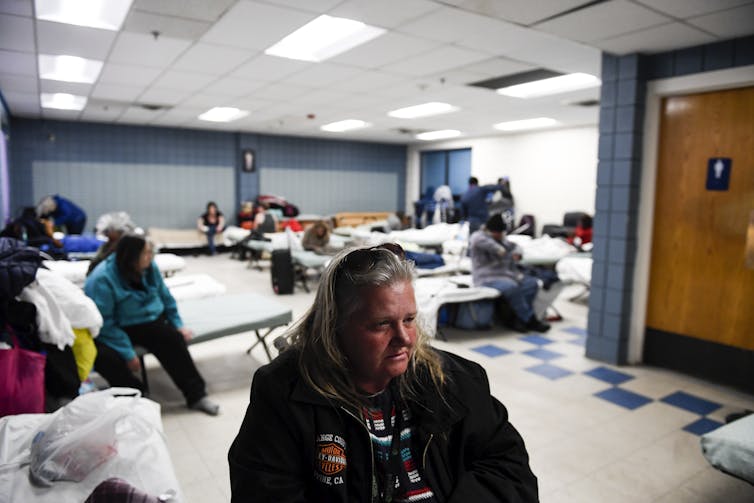
Domestic violence service providers may be able to pay for a survivor to stay in a hotel for a few days, but hotels can be unsafe, unclean and retraumatizing. For example, hotels lack the kinds of security systems and cameras that are common at emergency domestic violence shelters to prevent abusers from contacting survivors staying there.
Survivors of domestic violence also face the same general housing challenges as those not fleeing violence: an affordability crisis in rentals, necessary time to find a place, and security deposits and moving costs. Yet the nature of domestic violence means these challenges are more intractable.
For example, survivors who share custody of children with their abusers must get permission from the child’s other parent, and often the court, in order to move. Domestic violence makes it more likely that survivors will have a history of evictions, making finding housing even more challenging.
With limited shelter availability and long waits for long-term housing assistance such as Section 8, housing-insecure survivors of domestic violence can find themselves with few safe, stable options. This can mean that survivors looking to separate from their abusers are not able to leave – subjecting them, and their children, to further violence.

Kaitlyn M. Sims receives funding from the Wisconsin Department of Children and Families, the Arnold Ventures Foundation, and the Institute for Humane Studies.
Politics + Society – The Conversation

In January 2025, Seema received an email from the International Organization for Migration saying that her flight from Pakistan to the United States, which she and her family were booked on after months of extensive interviewing and background checks by U.S. Citizenship and Immigration Services, had been canceled.
“We had sold our TV and refrigerator,” her husband, Samir, told me during an interview for my dissertation project on Afghan migration to America after the 2021 U.S. military withdrawal from Afghanistan. “We had told our landlord that we were vacating our apartment. Then it was all canceled.”
The U.S. withdrawal in August 2021 triggered a rapid political collapse that left millions of Afghan civilians in limbo. As the Taliban swept across the country and reclaimed power, Afghans who had worked alongside U.S. forces and international NGOs faced immediate danger.
Women, minorities and human rights advocates feared the loss of basic freedoms and possible Taliban reprisals. With evacuation pathways unclear and protections unevenly applied, panic spread as families tried to escape before they were cut off entirely.
Seema, Samir – pseudonyms to protect their identity – and their children are among tens of thousands of Afghan refugee families who immediately fled to neighboring Pakistan in late 2021 on the U.S. government’s recommendation for Afghans to process their immigration cases in third countries. However, many Afghans soon encountered Pakistan’s mass deportation campaign, underway since 2023, as they awaited U.S. resettlement.
Following the fall of Kabul in 2021, President Joe Biden directed the federal government to launch Operation Allies Welcome and other immigration pathways in an effort to resettle Afghans who had worked for U.S. forces and were at risk of being targeted by the Taliban. Beginning in early 2025, however, the U.S. refugee system retreated from the commitments U.S. leaders once made to protect Afghan civilians.
Until recently, some Afghans waiting in Pakistan hoped they would eventually be resettled in the United States through the few humanitarian pathways still open to them. However, that hope has dimmed.
The suspension of U.S. refugee resettlement during the first days of Donald Trump’s second presidency, along with additional immigration restrictions issued after the November 2025 shooting of National Guard personnel in Washington, D.C., have frozen the processing of all Afghan cases – including those already approved.
The Trump administration has justified these measures as necessary to protect U.S. safety and national interests.
For families like Seema’s, U.S. policy decisions have left them insecure and abandoned. As a scholar focused on international migration, I believe Seema’s story highlights a common thread among many Afghans stranded in Pakistan: Many of those who supported the U.S. are questioning the worth of the U.S.’s decades-long mission for promoting security, democracy and human rights in Afghanistan.
Exposed to the Taliban’s retaliation, regional deportation regimes and a collapsing refugee protection system, Afghans are holding the U.S. and other international governments responsible for abandoning them.
Trained as a gynecologist, Seema worked at a private clinic in Afghanistan. And alongside her husband Samir, she served as managing director of an organization that led U.S.-funded projects for women and children.
“We took two projects from the U.S. Embassy,” she told me. “We established a resource center, bought computers, gave girls internet access and trained them in digital literacy.”

That work, funded and promoted by the U.S. government, made Seema and Samir targets. Even before 2021, they received threats from the Taliban. After the Taliban takeover in 2021, the threats escalated.
Fearing for their lives, they fled their home and attempted but failed to enter the Kabul airport multiple times during the chaotic U.S. evacuation in 2021. They ultimately escaped to Pakistan.
In Pakistan, a former colleague at the U.S. embassy recommended Seema for a Priority 2 visa – an immigration pathway created specifically for Afghans who supported U.S.-funded programs.
But when she and Samir tried to follow up with the U.S. Embassy in Pakistan in 2022, they received no response. A few months later they learned that changes to the U.S. Refugee Admissions Program in early 2022 likely caused their referral to be lost.
As U.S. processing stalled, Pakistan’s stance toward Afghan refugees hardened. Since late 2023, the Pakistani government has accelerated deportations under its “Illegal Foreigners’ Repatriation Plan” that targets both undocumented Afghans and those who once held legal refugee status. More than 1 million Afghans have already been deported.
Human rights groups warn that these removals violate the principle of nonrefoulement, which prohibits returning people to countries where they face serious harm. Under Taliban rule, women’s rights, employment opportunities and personal safety in Afghanistan have been systematically diminished.
Yet while Pakistan deports, the U.S. and other countries where Afghan refugees had once been able to resettle, including Germany, continue to close their doors.
In 2024, the U.S government accepted Seema’s refugee resettlement case, which she submitted in late 2022 with the assistance of SHARP, a local organization in Pakistan that works to protect Afghan refugees amid the country’s intensifying immigration crackdown. After several rounds of interviews, background checks, biometrics and medical exams, she and her family were told they would soon leave for the U.S.
Then the cancellation email arrived.
Seema and her family fear for their safety and their children’s future. Their children can no longer go to a school in Pakistan, as many Pakistani schools refuse to enroll Afghan students.

Police raids across major cities have also forced Afghan families to stay indoors, afraid to work or move freely. With no stable income, Seema and Samir struggle to meet basic needs.
“When I came to Pakistan, I was 40 years old,” Samir said. “Now I’m 44. Four years of my life have gone waiting for the U.S. case.” His voice hardened with anger. “We worked with the U.S. for 20 years. We fought terrorism. We supported democracy. What was the benefit?”
For decades, the U.S. government relied on the critical leadership of Afghan civilians like Seema and Samir to promote peace, security and women’s empowerment.
These partnerships were not symbolic. They were deeply embedded in everyday Afghan life.
With a smile on her face, Seema said that before 2021 “it never crossed my mind to leave Afghanistan because we were helping people in our country.”
Seema now fears being forced to return to Afghanistan, where her work and identity place her at grave risk of being targeted by the Taliban. Her request is modest. “At least let those whose cases were approved, whose flights were booked, resettle in the U.S.,” she said.
Her plea echoes across Pakistan, where thousands of Afghan families remain stranded.
Their lives now hinge on policy choices that will determine whether the United States honors the obligations it made during two decades of intervention that reshaped Afghan lives and livelihoods.

Mehr Mumtaz receives funding from the Russell Sage Foundation Dissertation Grant, and the Mershon Center for International Security’s Graduate Research Grant.
Politics + Society – The Conversation

If you’re struggling to recreate the moistness of Nothing Bundt Cakes, you might wonder if the secret ingredient is magic. It’s actually a creamy dairy product.

Mashed – Fast Food, Celebrity Chefs, Grocery, Reviews

It’s easy to spend over your budget when you’re shopping for whiskey. We got advice from whiskey experts about the best bottles under $50 that will satisfy.

Mashed – Fast Food, Celebrity Chefs, Grocery, Reviews