As the British weather turns colder and wetter, many children will be spending less time outdoors. But for some, it’s not just the rain that’s keeping them indoors, it’s poverty.The Latest News from the UK and Around the World | Sky News











As the British weather turns colder and wetter, many children will be spending less time outdoors. But for some, it’s not just the rain that’s keeping them indoors, it’s poverty.The Latest News from the UK and Around the World | Sky News
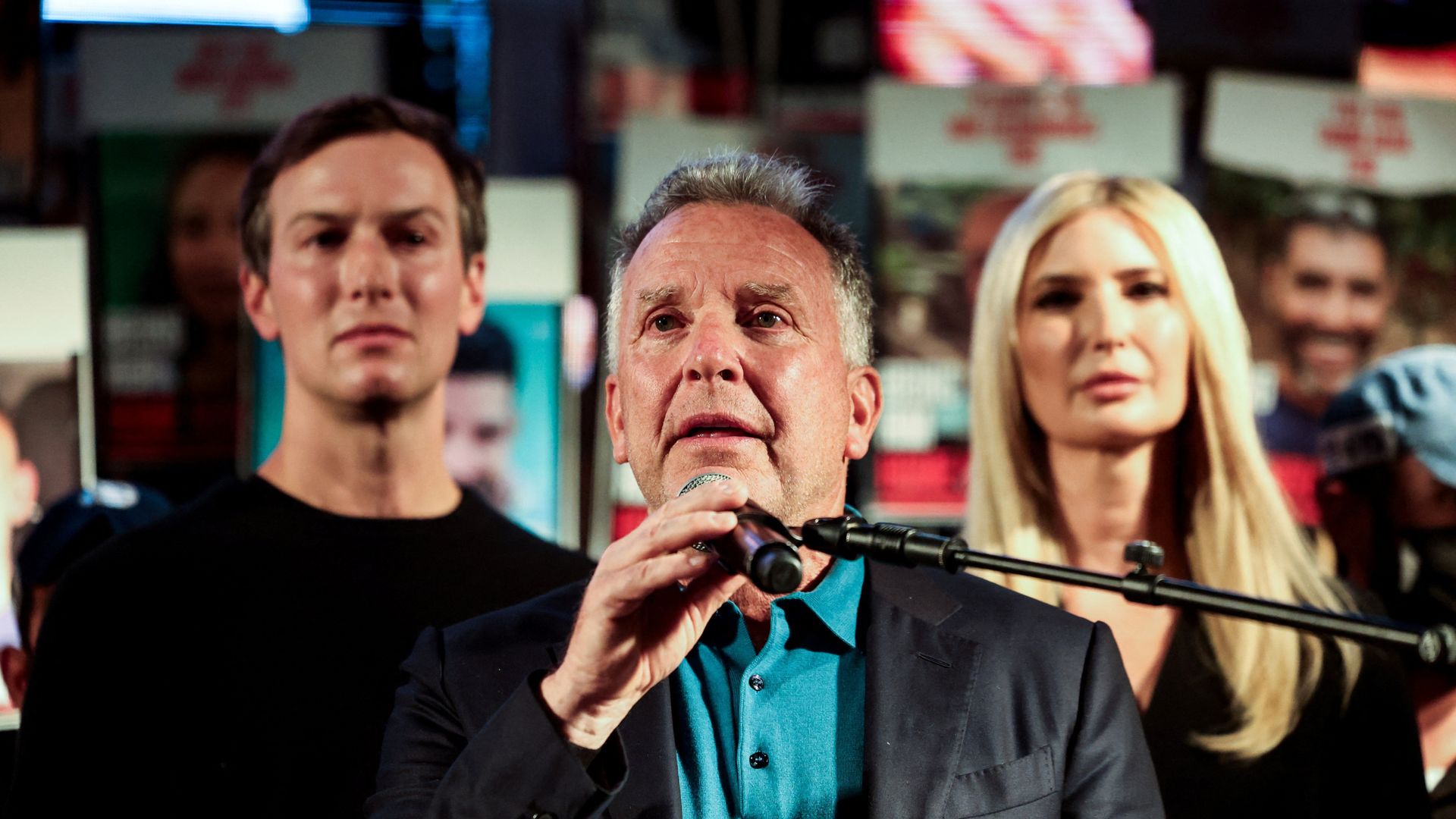
Donald Trump’s special envoy, Steve Witkoff, has reassured the remaining Israeli hostages held in Gaza that they will soon be reunited with their families, saying that “miracles can happen”, as the country prepares for a momentous reunion.The Latest News from the UK and Around the World | Sky News

Drones have been a common sight in Gaza for a long time, but they have always been military.The Latest News from the UK and Around the World | Sky News
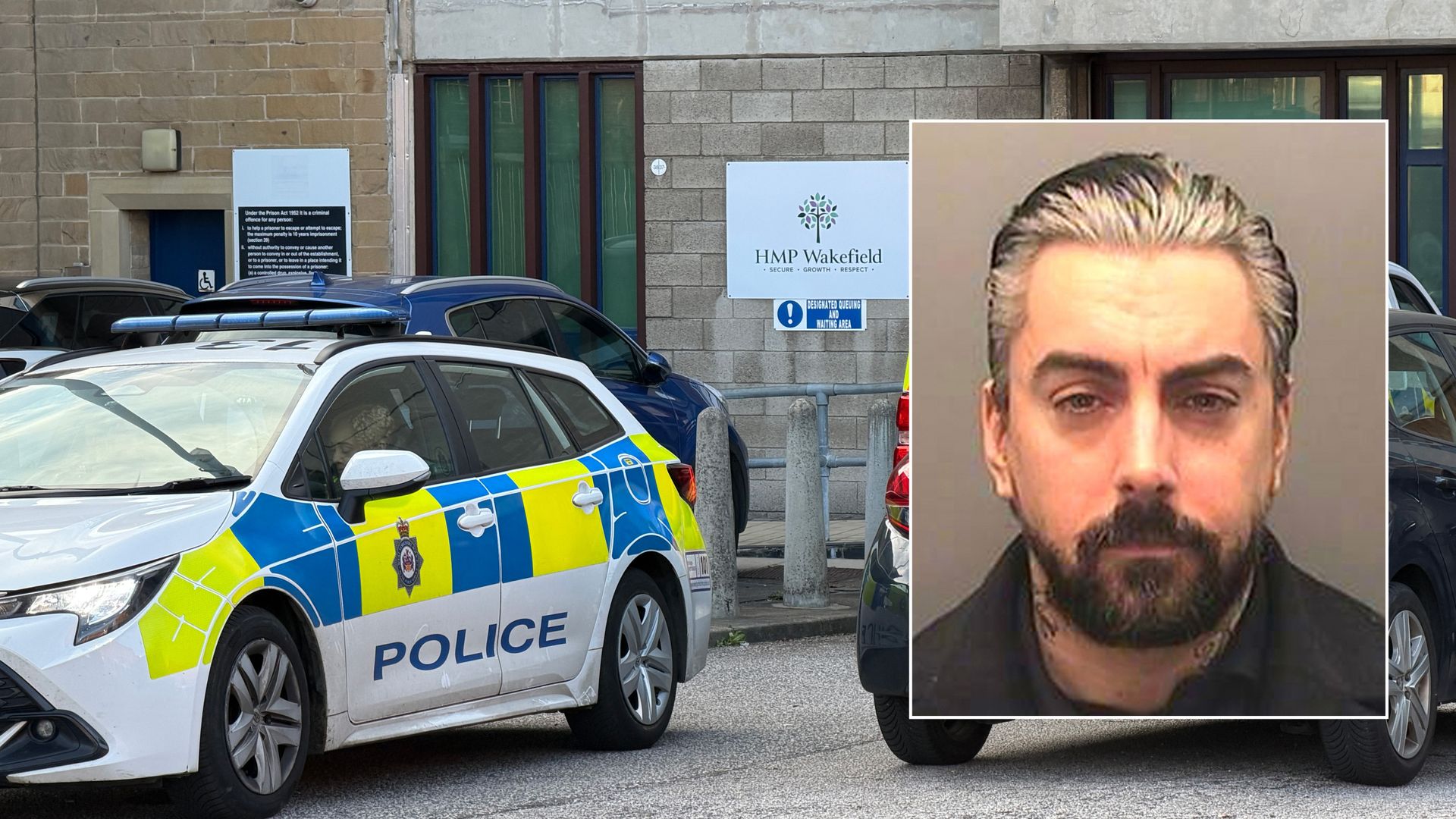
Two men have been arrested after paedophile Lostprophets singer Ian Watkins died after being attacked in prison.The Latest News from the UK and Around the World | Sky News

A 43-year-old woman has been arrested on suspicion of murder after the death of two children in Stafford.The Latest News from the UK and Around the World | Sky News

An Irish start-up is hoping to have the UK’s first food drone delivery pilot scheme operating in 2026, subject to regulatory approval.The Latest News from the UK and Around the World | Sky News
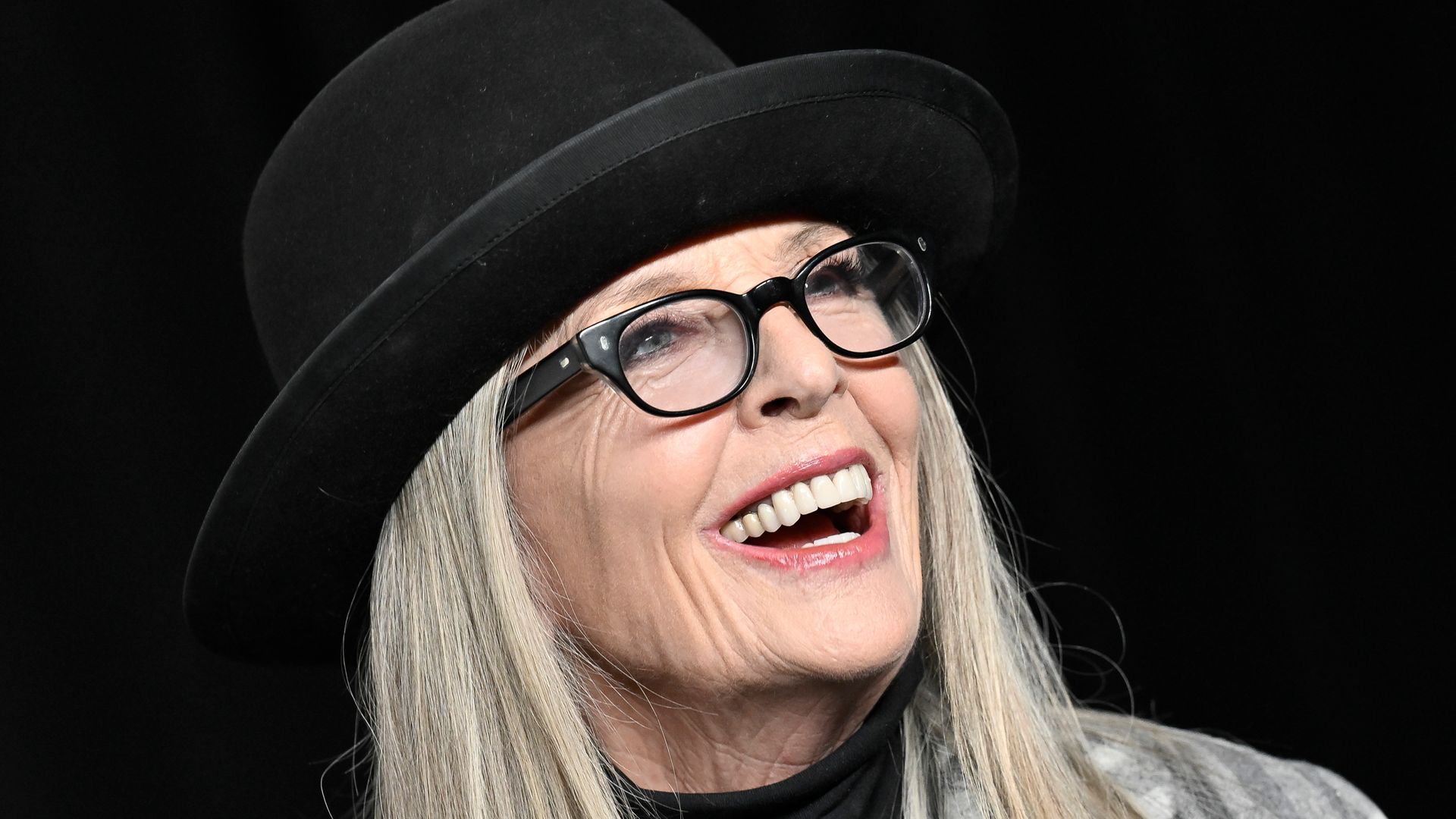
Actress Diane Keaton, who starred in films including The Godfather and Annie Hall, has died aged 79.The Latest News from the UK and Around the World | Sky News

The assassination in September 2025 of conservative activist Charlie Kirk has heightened attention on the relationship between political rhetoric and political violence.
Even before police had identified a suspect, President Donald Trump blamed the shooting on the “rhetoric” of the “radical left.” The Trump administration has since acted to silence left-leaning speakers and is threatening to intensify its attacks on left-wing political speech.
But my decades of studying free speech law have convinced me that suppressing political rhetoric, even through social norms rather than law, undermines the discussion, debate and constructive disagreement essential for a healthy democracy.
Gun proliferation complicates the problem by making political violence much easier to carry out.
Political violence – by which I mean any physical attack on people that aims to achieve a political goal – harms democracy by shifting the field of political disagreement from debate to aggression.
Under the U.S. constitutional system of limited government and individual rights, political violence by the government – for example, government assaults on anti-government protesters – is among the gravest threats to liberty.
But political violence committed by private individuals or groups also corrodes constitutional democracy. In the United States, acts of private political violence against members of government and against ordinary people have both increased dramatically in recent years.
Political assassinations are the most vivid form of political violence. The Kirk assassination is only the latest example.

In June 2025, a shooter with a “hit list” of left-liberal targets assassinated Minnesota Democratic Rep. Melissa Hortman and her husband. In December 2024, a shooter angry about health insurance costs killed United Healthcare CEO Brian Thompson. In July 2024, a shooter wounded Trump at a campaign rally in a failed assassination attempt.
Political violence also includes bias-motivated murders. In 2022, a white supremacist murdered 10 Black patrons at a grocery store in Buffalo, N.Y. In 2019, an anti-immigrant racist murdered 23 mostly Latino shoppers at a Wal-Mart in El Paso, Texas. In 2018, an antisemite murdered 11 congregants at a Pittsburgh synagogue.
In those incidents and numerous others, extreme political ideas appear to have motivated the attackers. The linkage of extremist speech to lethal violence has prompted calls to legally restrict or punish extremist speech.
The First Amendment, however, protects extremist speech, including advocacy of violence. Violent rhetoric must actually incite or threaten violence to lose the First Amendment’s shelter.
If law cannot curb the sorts of speech that may inspire political violence, what about social norms – widely shared beliefs about what speech is socially acceptable or appropriate?
Much speech that the First Amendment protects from government regulation eventually disappears from public discourse. That happens through a process I call “cultural editing”: popular and institutional rejection of outmoded or repellent ideas. For example, no serious medical conference discusses treating hay fever with cocaine, and no respectable political science panel includes Nazis.
The Trump administration’s blaming of the Kirk assassination on “radical left” rhetoric points toward a deeper level of cultural editing.
Trump and other conservatives have not cited speech that advocated violence against Kirk. Instead, some conservative activists, spurred on by Trump administration officials, called for harassing and punishing critics of Kirk’s statements and actions.
But such criticisms of Kirk, whatever their merits or lack thereof, fall within the scope of ordinary political debate.
Kirk was not a government official, but he had strong influence in the Trump administration. Robust democratic discourse requires space for people to criticize such powerful figures. Large-scale cultural editing of those criticisms, amounting to suppression of left-leaning views, would hurt the public’s ability to discuss and resolve political disagreements.
However, Trump and others who push for suppressing harsh political rhetoric might argue that the stakes of verbal attacks have increased. They might say that U.S. political culture can no longer indulge political invective because political violence has become more common.
That argument for suppressing harsh political speech ignores an independent cause of political violence: gun proliferation.
Most political violence in the U.S. involves guns. Guns make political violence easier by erasing the distance between extremist ideas and lethal action. Hate or fanaticism can end a life in an instant, hundreds of yards from the victim.
The U.S. has by far the highest number of civilian guns and rate of civilian gun ownership in the world. Since 2008, when the Supreme Court declared an individual Second Amendment right to keep and bear arms, annual U.S. gun purchases have increased from about 9 million to about 16 million.
Governments often find regulating speech easier, even though less effective, than tackling underlying problems. At times, federal and state governments have addressed political violence by regulating guns. The 1994 federal assault weapons ban exemplifies regulatory efforts to curb overall gun violence.
But the Supreme Court’s Second Amendment cases now appear to bar strong gun regulations.
People in a democratic society need freedom to make harsh, even extreme political statements with a minimum of cultural editing. The Second Amendment protects access to lethal weapons. This combination of free speech and gun rights makes the growing problem of political violence much harder to solve.

Gregory P. Magarian does not work for, consult, own shares in or receive funding from any company or organization that would benefit from this article, and has disclosed no relevant affiliations beyond their academic appointment.
Politics + Society – The Conversation

Reading Time: 4 minutes
Mandy Moore has fans scratching their heads.
This isn’t about her GoFundMe controversy earlier this year. It also isn’t about her lashing out politically.
Is there a nice way to say that it’s about her face? Probably not.
To be blunt, Moore’s longtime fans are saying that she’s “unrecognizable.” Whatever this is, it’s happened in the span of months.
Recently, Mandy Moore attended Step Up’s 2025 Inspiration Awards in Los Angeles.
The September 26 event was not exactly the Oscars.
As a result, it has taken a couple of weeks for red carpet pics to filter into the public consciousness.
Moore wore a gorgeous white silk blouse with a black mini skirt.
As is often the case, she opted for a bold red lipstick. Her outfit was incredible. But that’s not what set tongues wagging.
To be blunt, Moore’s face looks distinctly different.
She is only 41 years old. But this isn’t merely a case of people marveling at how she looks dramatically unlike her look when she first rose to fame 25 years ago.
(We have included a photo of the singer and actress circa 2000, for reference)
Rather, this is about how drastically her face has changed since last year.
Again, this isn’t a “human beings age” reaction. No one expects her to look like she’s still in her “Candy” era.

You don’t have to wade into the social media equivalent of sewage on “X,” the platform previously known as Twitter, to see people discussing Mandy Moore’s new face.
“I’ve been genuinely confused by Mandy Moore’s deal for days. I can’t place WHAT she did, but she looks like a whole different person,” one person confessed on Bluesky.
Another called the actress “literally unrecognizable.”
“Mandy Moore scares me,” expressed another in response to a cluster of celebrity faces. “Why do they all look like the Other Mother?”
Simply put, there are a number of actresses whose faces seem … warped. In some, the effect resembles premature aging. But many people struggle to recognize these very famous faces.

Again, we have to emphasize that this is not people reeling in shock that an actor doesn’t look how they did 10 or 25 years ago.
This is not one of those times where people on the internet get angry due to the natural changes in a celebrity’s body — particularly a woman’s — over many years.
For one thing, most assume that this change is not natural.
For another, Moore did not look like this a year ago. In fact, as many have pointed out, she did not even look like this during April 2025.
Such a rapid change in her appearance isn’t only confusing to fans. It’s also setting off alarm bells. What could have caused this?

Semaglutide medication like Ozempic and GLP-1 medication like Mounjaro have become alarmingly popular for luxury weight loss in recent years, despite known Ozempic side effects and documented shortages of these medications.
Many believe that Mandy Moore’s abruptly different face is the result of rapid weight loss. But that does not mean that she’s taking diabetes medications for funsies.
Rapid, face-altering weight loss can certainly cause the appearance of premature aging. But there can be other causes.
One potential cause could be a serious illness, like cancer. Periods of extreme stress or grief, such as over the death of a loved one, can also result in drastic changes to diet and thus to face and body.
We don’t know what has befallen Moore. We of course hope that she is okay. None of us should throw around accusations of Ozempic use until we know more. If she decides to share her story, perhaps we will understand.
Mandy Moore ‘Unrecognizable’ to Fans After Debuting New Face was originally published on The Hollywood Gossip.
The Hollywood Gossip
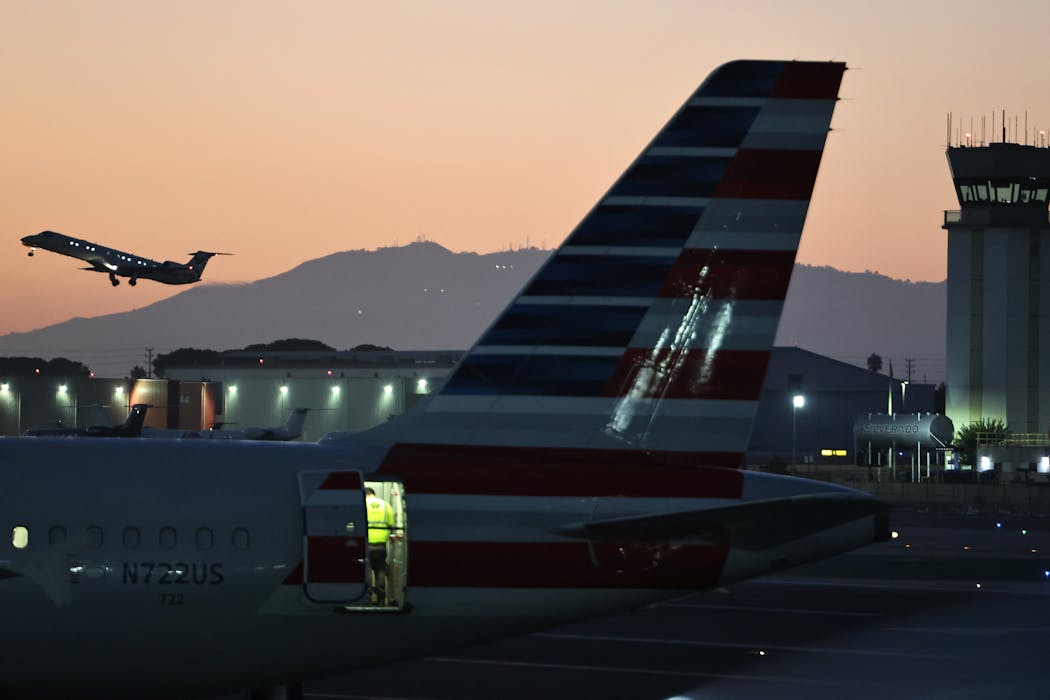
Airports across the United States have been experiencing significant flight delays recently because of a shortage of air traffic controllers, who have been required to work without pay since a government shutdown began on Oct. 1, 2025. Reports suggest employees have been calling in sick in increased numbers. And since there was already a shortage of controllers before the shutdown, the impact has been severe, with over 52,000 flights canceled ahead of the Columbus Day weekend.
The Conversation U.S. asked Brian Strzempkowski and Melanie Dickman, aviation experts at The Ohio State University, to explain how the shutdown is affecting air travel, what that means for passengers and air safety, as well as the air traffic controller shortage that has been plaguing U.S. airports for years.
Air traffic controllers are deemed essential workers, meaning they are still required to work while not receiving compensation – which they would typically then receive in a lump sum after the shutdown ends. President Donald Trump created some uncertainty around this by suggesting workers may not get their back pay without explicit authorization from Congress, despite having signed a law in his first term that makes it a legal requirement.
Working without regular pay, combined with the possibility that they won’t get paid at all, is resulting in real financial stress for air traffic controllers, who perform one of the most stressful jobs there is.
As a result, there have been reports of air traffic controllers calling in sick in large numbers. This happened in previous shutdowns as well. During the 2018-2019 shutdown, for example, sickouts started to happen around the two-week mark, roughly when the first paycheck was missed. Controllers, airport security employees, and other essential workers were calling in sick often so they could work another part-time job to pay their bills.
In the current shutdown, this appears to be happening sooner, less than a week after it began. Transportation Secretary Sean Duffy said around 10% of the controller workforce is engaging in this practice and threatened to fire these “problem children.”
Before the shutdown, there was already a critical shortage of air traffic controllers. Coupled with workers calling in sick in recent days, this has led to severe travel delays at many major airports, such as those in Atlanta and Denver, and regional ones, like those serving Burbank, California, and Daytona Beach, Florida.
A big question on travelers’ minds is whether this will affect air safety.
The air traffic control system is multi-layered and has redundancies built into it to ensure an incredibly safe environment. While controller shortages do begin to erode some of those redundancies, contingency plans are in place to help protect the system. For example, air traffic can be diverted away from affected locations or delayed, or the flight may even be be canceled before the plane leaves the gate.
As an example, Newark Liberty International Airport can accommodate approximately 80 aircraft departing or arriving per hour when the airport and airspace is fully operational. However, due to technical failures, staffing shortages and construction at the airport, capacity was limited to between 28 and 34 aircraft per hour in June 2025. Due to technology upgrades and procedural changes, that number was recently increased to between 68 and 72 aircraft per hour. By regulating the amount of traffic, the system can be protected to ensure the safety of every aircraft.
This was an example of high-level oversight in which the secretary of transportation was personally involved in seeking a solution to ensure air travel remained safe while trying to increase capacity.
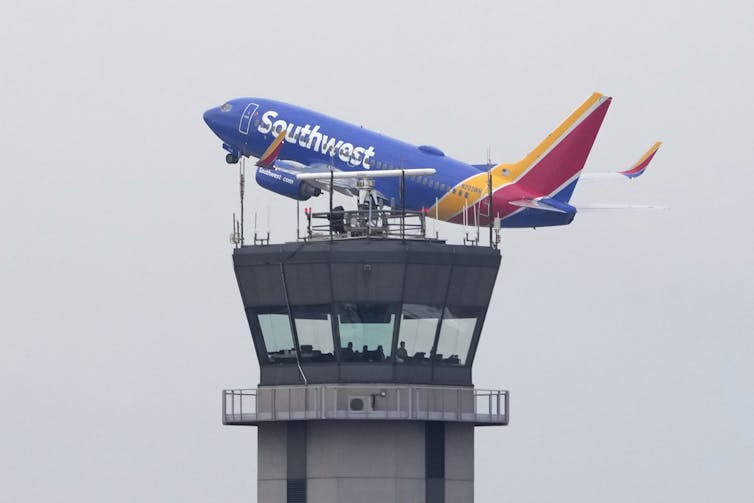
On a more day-to-day level, the Federal Aviation Administration relies on the Air Traffic Control System Command Center, located about 40 miles away from Washington, D.C. This facility oversees the entire national airspace system and essentially “controls” the controllers. Air traffic professionals monitor staffing at air traffic facilities, weather conditions, equipment failures and unexpected disruptions to the system.
When an incident arises, such as Burbank Airport recently reporting that no controllers were available, the command center issues an alert stating that any aircraft inbound to Burbank must divert to an alternate airport, and any aircraft that has not yet taken off will be held on the ground.
Staffing shortages at other air traffic control facilities may require alternate plans, such as transitioning workloads from one facility with fewer controllers, to another that is appropriately staffed. There is a wide range of tools that the Air Traffic Control System Command Center can utilize to protect the system, but it all stems from the idea of managing the capacity. Flight delays and cancellations, while disruptive to individual travelers, are actually good from a system perspective, because they prevent congestion in the airspace.
There has been a systemic problem with hiring of air traffic controllers for more than a decade.
Over the years, the FAA has fallen behind on training enough controllers to replace those who retire each year. In May 2025, we wrote about the FAA’s plan to utilize colleges across the country to provide the professional training for this career field. While it will take a little time for the students to matriculate through college and into the workforce, this plan will be a significant contributor to solving the controller shortage problem.
Meanwhile, the FAA Academy, which trains U.S. air traffic controllers, only has limited funding from the previous federal budget for current students. The shutdown means no new students can begin training. Depending on the length of the shutdown, the funding may run out as additional employees are furloughed. The ripple effects of a shutdown can remain for many months after the government reopens.
In July, Congress authorized over US$12 billion in funding to help modernize the air traffic control system.
Secretary Duffy is currently leading an effort to identify a contractor to implement the technology upgrades needed to modernize the system and make it more robust. Duffy has said an additional $19 billion investment will be needed to complete the task.

Melanie Dickman is a member-at-large of Air Traffic Controllers Association (ATCA)
Brian Strzempkowski does not work for, consult, own shares in or receive funding from any company or organization that would benefit from this article, and has disclosed no relevant affiliations beyond their academic appointment.
Politics + Society – The Conversation