Post Content








Post Content
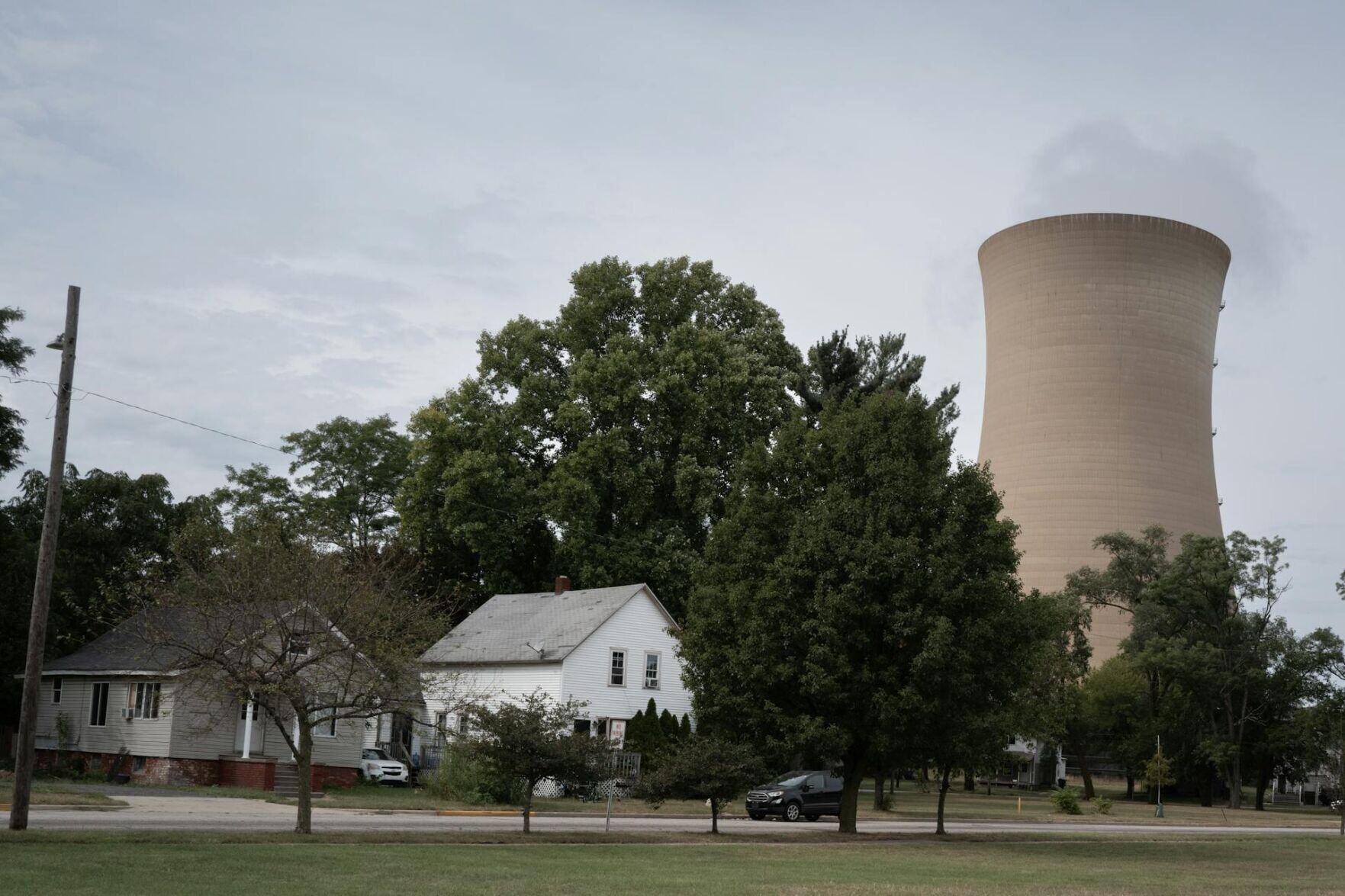
Keeping aging coal plants open, building new gas plants and choices about pollution controls affect electricity bills. Pollution adds health costs and climate damage that may not appear on those bills.

Post Content
Many children are seeing aspects of their identity portrayed as problematic. Having regular conversations about identity can armor them against future harm.

Costco’s frozen aisles are packed with desserts worth buying, but only a handful can be the very best. If you spot any of these three items, grab them.

Mashed – Fast Food, Celebrity Chefs, Grocery, Reviews
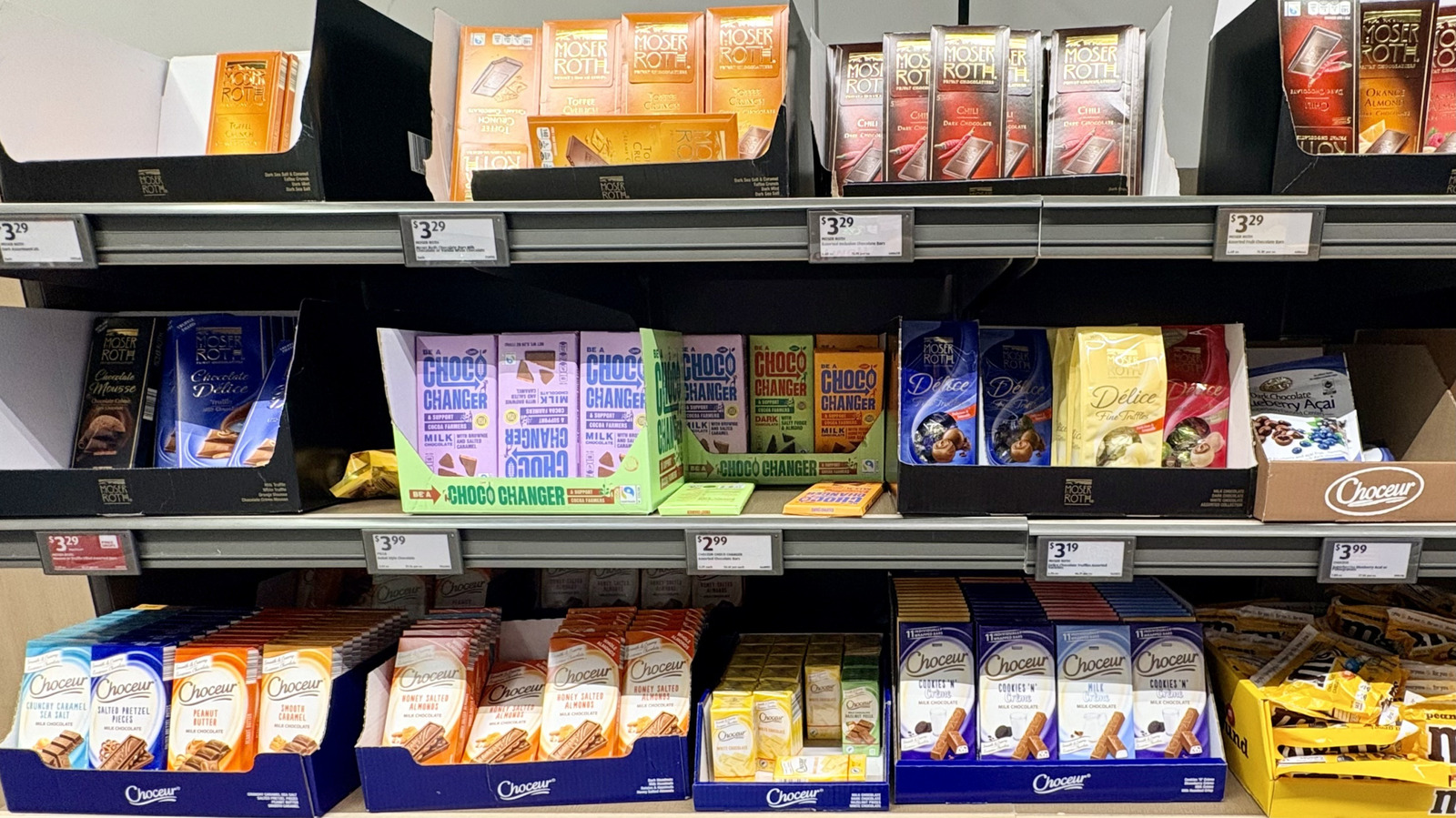
Aldi sells plenty of fun chocolate bars, but which ones are worth buying? We scanned comment threads far and wide to find out.
Food Republic – Restaurants, Reviews, Recipes, Cooking Tips

Former Anchorage Mayor Dave Bronson speaks at a gubernatorial candidate forum on Sept. 16, 2026, while former Attorney General Treg Taylor, Anchorage business owner and talk-show host Bernadette Wilson and former state Rep. Jonathan Kreiss-Tomkins listen. At the lecturn is Jared Kosin, president of the Alaska Hospital and Healthcare Association. The organization held the forum in Girdwood, and the event was focused on healthcare issues. (Photo by Yereth Rosen/Alaska Beacon)
On Tuesday, the advocacy arm of Planned Parenthood will endorse Democratic candidate Jonathan Kreiss-Tomkins to be Alaska’s next governor, according to an advance copy of the endorsement provided to the Alaska Beacon.
Planned Parenthood Alliance Advocates Alaska called JKT “a proven advocate for reproductive health and LGBTQ2S+ rights,” and labeled his three, anti-abortion Republican opponents — Bernadette Wilson, Dave Bronson and Treg Taylor — as “three extreme, out-of-touch politicians who are intent on rolling back Alaska’s constitutional rights.”
Morgan Lim, the Alaska state director for Planned Parenthood Alliance Advocates, said by phone that JKT was “a clear choice for us, and it’s a clear choice for folks who support access to abortion.”
Alaska Family Action, the most prominent antiabortion group in the state, is not making an endorsement in the governor’s race, said its president, Jim Minnery.
“Essentially they’re the same in many ways, if not most ways, in regard to our issues,” Minnery said of Wilson, Bronson and Taylor.
In place of a single endorsement, Minnery said, his group is instead urging voters to “rank the red” and choose all three Republican candidates in Alaska’s ranked choice general election system.
In Alaska, the state supreme court has repeatedly ruled that the right to an abortion is protected by the privacy clause of the Alaska Constitution.
As a result, Alaska has no legal limits on abortion, but in practical terms, access is limited. Few medical providers here offer abortion services, and public data indicates most abortions take place before the 10th week of pregnancy and are performed through medication.
In May, polling by Alaska Survey Research on behalf of Planned Parenthood found that 62% of Alaskans 18 and older believe that abortion should be legal in all or most cases.
The percentage rises to 71% among voters registered as undeclared or nonpartisan, those considered political independents.
Kreiss-Tomkins, who served in the Alaska House for 10 years, repeatedly voted against legislation and budget items that attempted to limit access to abortion.
In 2014, he voted against a law — later ruled unconstitutional — that would have restricted abortion to cases of rape, incest or medical necessity.
He has said he would continue backing the Supreme Court’s position if elected governor, stating in a May discussion on the website Reddit, “Medical privacy and reproductive freedom should be fundamental personal freedoms in America and Alaska. Our administration will treat them as such.”
Two of the three Republican candidates outlined their positions in a May forum hosted by Alaska Family Action. Bronson is a cofounder of the group, Minnery noted at the time.
“We, the state of New York and the state of California are the three worst states in the country for abortion,” Bronson said at the event.
“The important thing, the biggest tool the governor has, is a great big red pen. He vetoes any bit of money, any funding that goes towards abortion in any way,” Bronson said.
Wilson said that if elected, she would appoint a “pro-life advocate directly within the governor’s administration to monitor pro-life issues,” similar to an action taken by former North Dakota Gov. Kristi Noem.
She also said she would encourage the state to advertise the risks associated with medication abortions.
“I really think that it’s time for the state of Alaska and for the Department of Health to start running an education campaign on these matters,” she said.
She said she also would want her attorney general to create a restrictive definition for “medically necessary” abortion care and should continue to fight with the state supreme court on abortion restrictions.
Bronson also said he thinks the state’s next governor should fight the supreme court on the issue and advocated for the state to get rid of its current merit-based judge selection process, replacing it with judges appointed by election.
Taylor did not attend the May forum, but he has been open about his opposition to abortion and worked to restrict it while serving as attorney general under Gov. Mike Dunleavy.
In 2023, Taylor sought to restrict the use of Mifepristone, a common medication used for abortions in early stages of pregnancy and has defended a state policy that restricts prescriptions for the drug through telehealth appointments.
Lim of Planned Parenthood said the group believes Alaskans will be more likely to support a candidate that supports abortion care than a candidate that opposes it.
“We’re about letting folks know where people stand on the issues that they care about, and the reality is that in this race, it is three anti-abortion extremists up against a proven champion, and that’s what the people of Alaska want to know,” Lim said.

 One of Aaron Rodgers’ exes has broken her silence.
After the Pittsburgh Steelers player went viral for his eyebrow-raising comments about his past relationships with Danica Patrick and Shailene…
E! Online (US) – Top Stories
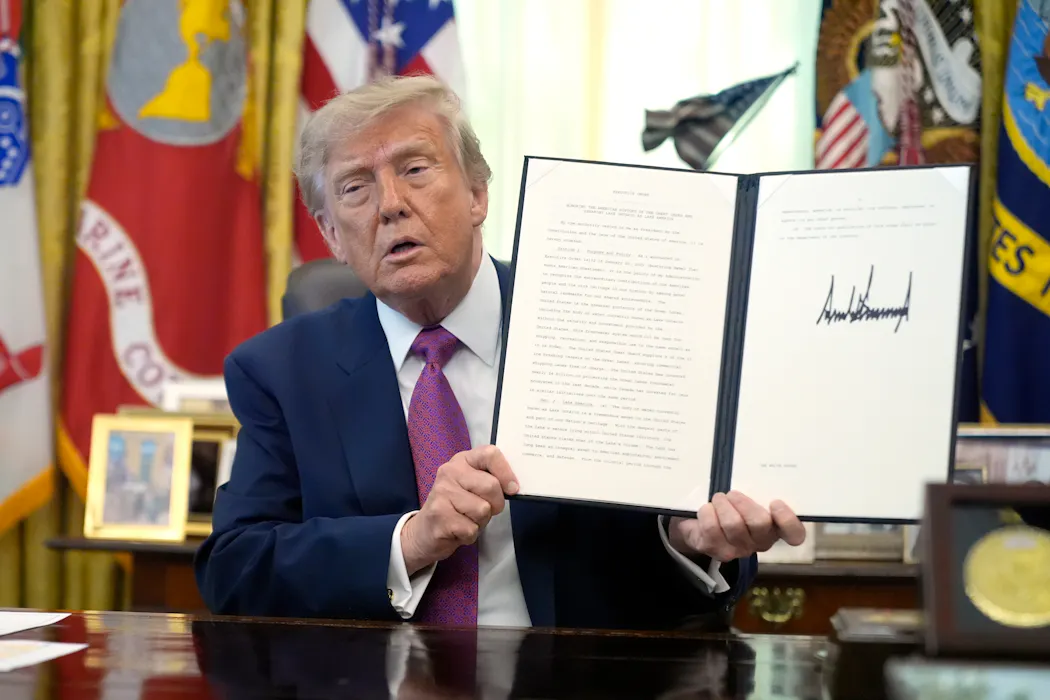
President Donald Trump loves a good pardon. His generosity is so well known, in fact, that an industry of lobbyists, lawyers and other insiders has reportedly sprung up to facilitate clemency for wealthy criminals. Clemency, meaning mercy or leniency, lets the president reduce the punishment for, or even forgive, federal crimes.
For defendants hoping to avoid jail and walk away from millions of dollars in financial sanctions, paying, say, US$600,000 to a lobbying firm to influence the president may seem like a good investment.
House Democrats recently reported that Trump’s second-term clemency – which includes both pardons, which wipe away every part of a conviction, and commutations, which typically leave convictions intact but shorten a person’s sentence – has saved convicted defendants nearly $1.7 billion in forgiven financial obligations.
Some of that amount – about $700 million – had not yet been officially imposed by courts because the clemency came through so quickly. Much of the remaining $1 billion had been ordered as restitution, meant to repay victims’ losses.
As a legal scholar researching the evolution of modern presidential clemency, I have reviewed every individual pardon and commutation granted by U.S. presidents since 1989, spanning seven administrations, from George H.W. Bush to Trump’s second term. I have found that while other presidents have canceled tens of millions of dollars’ worth of restitution and fines, none of them have come anywhere near the billion-dollar mark – until now.
The main financial penalties faced by federal defendants are fines, forfeiture – where a defendant has to give up, say, the Ferrari they bought with the profits from their drug business – and restitution.
Restitution is an order to pay back the criminal’s gains to the victims of the crime. For example, if the CEO of a company tricks people into investing $600 million into a hydrogen-powered truck that was never operational, the court may order that, if convicted, he pay back the people he defrauded.
Restitution is rarely able to return all of someone’s lost money, but it is supposed to prevent the fraudster from enjoying the fruits of their crime.
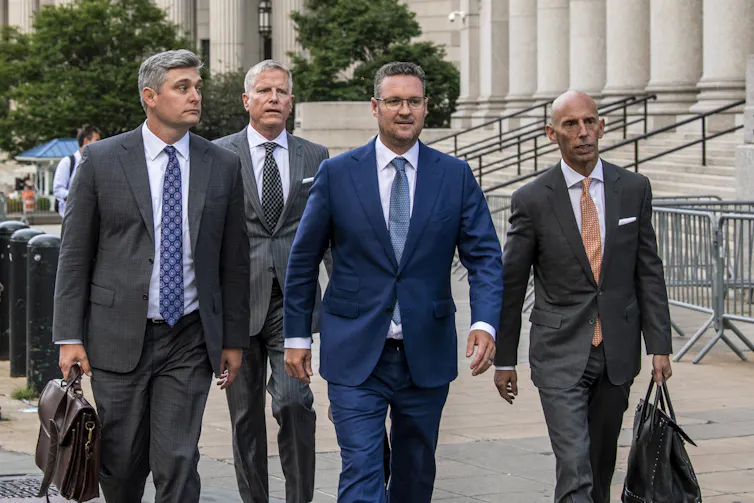
Since January 2025, Trump has granted clemency to a lengthy list of big-ticket fraudsters, including a cryptocurrency billionaire whose exchange pleaded guilty to anti–money laundering violations and CEOs convicted of payroll tax fraud.
Many of these pardons and commutations have coincided with the use of lobbying firms or generous donations to causes close to Trump’s heart: his inaugural committee, his reelection campaign or MAGA Inc. One successful pardon-seeker’s mother attended a $1 million fundraising dinner.
Clemency seekers use a variety of ways to catch the president’s attention. The end result is that victims of crime – and taxpayers, who have to pay for these huge white-collar investigations and trials – are often left with nothing.
The U.S. Constitution grants the president nearly unbounded power to pardon whomever he likes, whenever he likes and for whatever reason he likes. This is why, since 1894, the Office of the Pardon Attorney has tried to impose some guidelines on the process and decide which cases should be eligible for clemency at all.
These guidelines generally require that a clemency seeker have been released from prison for five years before they are eligible to request a pardon. If they never went to prison, the five years is calculated from the date of sentencing. Many presidents adhere to this norm: My study shows that between 94% and 100% of people pardoned by George H.W. Bush, George W. Bush and Barack Obama met this criteria. Because he gave so many preemptive pardons, Joe Biden’s percentage was lower, at around 68%, but still well over half.
In contrast, out of the 216 individual pardons granted by Trump in his second term so far, only 34 – about 15% – have gone to people who waited that long.
A look back at recent past administrations shows an erratic but increasing amount of financial obligations canceled. While some presidents have been frugal with their financial forgiveness – George H.W. Bush and George W. Bush remained under the million-dollar mark, while Joe Biden was just over it – others have been less so.
Bill Clinton erased nearly $10 million in fines and restitution through pardons, most notoriously pardoning Marc Rich, a fugitive financier whose ex-wife contributed more than a million dollars to various Democratic causes and the Clinton Presidential Library.
Obama more than doubled Clinton’s record, forgiving $23 million in financial sanctions.
But Trump surpassed them both in his first term, canceling nearly $195 million in financial obligations. The amount of money saved by convicted defendants during his second term is exponentially higher. One could even say that, as Trump likes to put it, “We’ve never seen anything like it.”
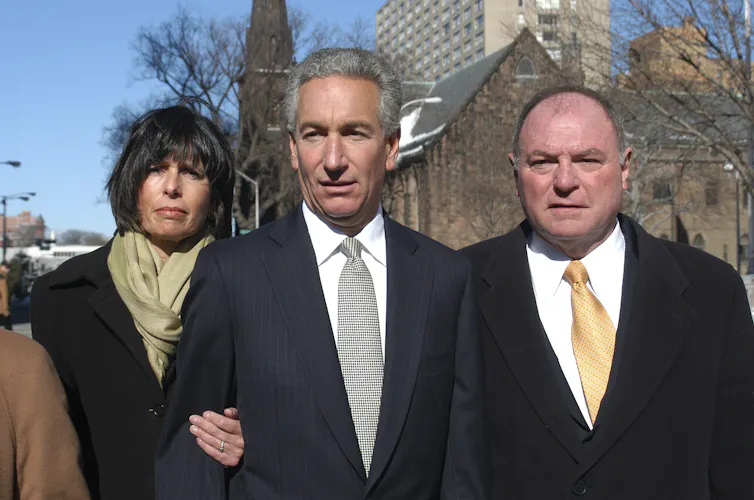
Since the main function of commutations is to let people out of prison sooner, commutations usually leave financial obligations in place. During his first term, Trump primarily granted commutations that left “intact and in effect” all conditions of a person’s sentence except for imprisonment. This let numerous defendants out of jail but kept them on the hook for nearly $3 billion in fines and restitution.
That has changed during Trump’s second term. Today, his commutations routinely cancel a recipient’s prison sentence “with no further fines, restitution, probation or other conditions.”
This is how, through commutations alone, Trump has canceled more than $300 million in penalties and restitution since he returned to office.
One figure that is unavailable in public records is whether any given defendant has started to pay, or has fully paid off, their financial obligations. So these figures for every administration represent a ceiling: the full amount of fines, restitution or forfeiture that a judge imposed on a convicted defendant. How much was actually paid down can usually only be estimated, though there are exceptions.
For example, Jason Galanis, who pled guilty to defrauding the Oglala Sioux Nation, had paid just over $2 million of his $80 million restitution before his sentence was commuted and the restitution erased in 2025. But we only know that because he unsuccessfully asked the court to return the money.
One useful indicator of how much someone may have already paid is the speed at which they got clemency. The faster they receive clemency, the less time they have to pay off their penalties. The median delay between sentencing and receiving a pardon during Biden, Obama and George H.W. Bush’s administrations was over 20 years.
During Trump’s second term, in contrast, things are moving faster. Trump has pardoned or given commutations to at least 44 recipients within a year of their sentences who together account for over $270 million in financial obligations.
This includes a nursing home executive who pled guilty to withholding his employees’ payroll taxes – which prosecutors said he spent on a yacht – and was pardoned 12 days after being sentenced, ensuring that he could avoid some $4 million in restitution. A crypto company was pardoned hours before it was due to pay a $100 million fine for violating anti–money laundering laws. A digital media founder was ordered to repay defrauded investors $36 million. His sentence was commuted, and his restitution canceled within four months of sentencing.
In these cases, clemency was issued before most of the money was able to reach the government or the victims it was owed to. The faster clemency is granted, the more likely it is that fraudsters get to walk away without paying their victims anything.

Caren Morrison does not work for, consult, own shares in or receive funding from any company or organization that would benefit from this article, and has disclosed no relevant affiliations beyond their academic appointment.
Politics + Society – The Conversation
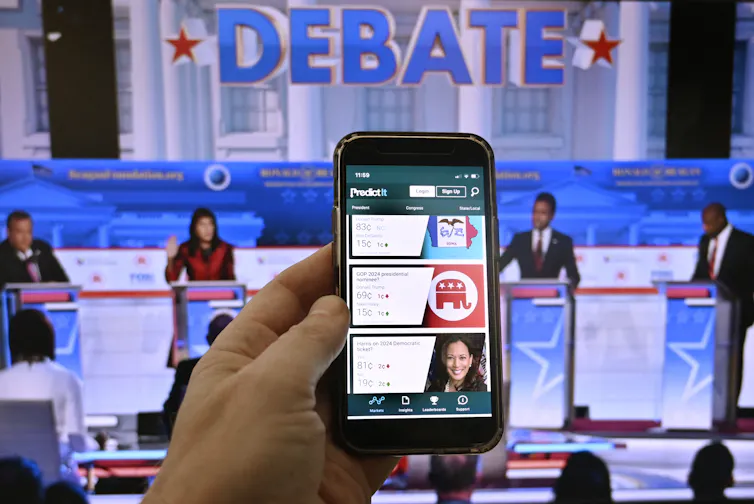
Pollsters approach this year’s midterm elections dogged by high-profile misfires in recent elections while facing challenges from brash rivals intent on reshaping the landscape of political forecasts.
There are no guarantees that polling’s troubles – and persistent popular skepticism about the dependability of election polls – will be alleviated anytime soon.
In fact, it hasn’t been very cheery for pollsters for the better part of 10 years, since Donald Trump confounded poll-based expectations to defeat Hillary Clinton for the U.S. presidency in 2016.
In 2020, pollsters turned in their worst collective performance in 40 years by overestimating margins of Joe Biden’s victory over Trump. It’s an outcome I discuss in “Lost in a Gallup,” my book about polling failure.
Polling in the 2022 midterms was more spotty than spectacular. In 2024, pollsters overall underestimated Trump’s popular support — for the third successive election. That outcome prompted The Atlantic to describe the 2024 polls as “quietly still bad.”
The succession of polling embarrassments was extended in August 2026, in the widely followed Democratic primaries for Senate in Michigan and for governor in Wisconsin. In both races, polls signaled double-digit leads that proved illusory when votes were counted. Those results inspired headlines such as “Should we ever trust polls again?”
August also brought disclosures about fabricated poll results in competitive races in Wisconsin, Nevada and Los Angeles. The bogus polling was the work of a 21-year-old recent college graduate who distributed the invented results through a website called Median Strategies. He said he sought to demonstrate how false survey data can attract wide attention.
Results of one of the sham polls, which claimed Los Angeles Mayor Karen Bass was leading by double digits in her reelection bid, were posted on social media by the mayor’s campaign. They also were the subject of newspaper and television reports before being exposed as fraudulent.
Primary elections are difficult enough for pollsters without the disruption effects of made-up survey results. Primaries typically attract low turnouts, which complicate pollsters’ efforts to estimate who is most likely to vote.
Meanwhile, pollsters face pressure from prediction markets such as Kalshi and crypto-based Polymarket, both of which allow participants to wager on election outcomes.
Betting on U.S. elections has a long if little-recognized pedigree. In 1924, The Wall Street Journal reported from New York that “[s]ome half dozen firms here make a business of receiving and placing bets,” noting that a rule of thumb had emerged that “when odds are more than two to one in a campaign the favored candidate is practically certain to win.”
Wagering on outcomes as a way to forecast election results was supplanted beginning in the 1930s with the emergence of quasi-scientific polling techniques developed by pioneers in survey research such as George Gallup and Elmo Roper. Polls at that time offered what scholars Paul W. Rhode and Koleman S. Strumpf called “a ready substitute for the betting odds, one not subject to the moral objections against gambling.”
In recent years, as polling troubles have deepened, prediction markets have returned from obscurity to become inescapable elements in election forecasting.

Their trading volume, political influence and public profiles have expanded — as have their pretensions.
Polymarket’s 28-year-old founder, Shayne Coplan, has characterized prediction markets as “the most accurate thing we have as mankind right now.” Coplan also has scoffed at traditional, interview-based surveys, declaring in 2024, “Nobody takes polling seriously anymore.”
Prediction markets can provide real-time probabilities in fluid ways that election polls cannot. But whether such markets pose existential threats to traditional polling is an unsettled question.
Data journalist Nate Silver has said he doubts whether “prediction markets can serve as a good substitute for polls.” Among the reasons for skepticism is that prediction platform bettors often rely on, and react to, results of preelection polls and poll-based forecasts.
But prediction markets hardly seemed reliant on preelection polls in the 2024 presidential election. Polymarket and Kalshi both predicted Trump’s victory, while polls in aggregate tended to give Vice President Kamala Harris a slight edge.
“Trust the markets, not the polls,” Coplan declared on the social network X soon after the election. Kalshi, meanwhile, proclaimed that its projections favoring Trump “showed how prediction markets can decisively outperform polls and traditional media.”
Wisconsin’s recent Democratic gubernatorial primary election was, however, something of a comedown for prediction markets. Betting odds on Kalshi and Polymarket gave Francesca Hong a 95% and a 96% chance of winning, respectively. Hong lost, narrowly.
Beyond the challenges from prediction markets, pollsters confront the stubborn problem of low response rates. Many people avoid answering pollsters’ overtures, a reality that makes representative samples drawn from surveys alone nearly impossible. This, in turn, obliges pollsters to apply statistical adjustments to their raw data, a process known as “weighting.”
The adjustments are intended to improve accuracy by aligning raw polling data with demographic or political characteristics such as education, race, gender, party registration and how respondents say they voted in the past. But weighting choices vary by pollster and offer no assurance of accuracy.
Josh Clinton, a political scientist at Vanderbilt University, has noted that even “reasonable choices” a pollster may make in weighting can produce marked shifts in a poll’s results.
Deepening the aggravations in survey research these days is a practice called “silicon sampling,” in which AI agents simulate humanlike poll responses.
Silicon sampling, which has gained prominence in recent months, is much faster and far cheaper to complete than conventional polling. And it has gained a toehold in survey research.
For instance, Gallup has said it is “exploring the potential of simulated responses” to determine “whether AI systems and emerging methods can help deepen our understanding of how humans think and behave.”
Silicon sampling troubles some polling traditionalists who are uneasy about ethical and other implications of simulating human responses.
The 2024 presidential election brought a modest example of silicon sampling in action. AI agents of the startup company Aaru forecast that Harris would carry four of the country’s seven critical swing states. Such an outcome would have given her sufficient electoral votes to be elected president.
Those results, however, were no better than traditional polling in the swing states conducted by CNN and The New York Times. Both organizations reported Harris leading in four states – enough to win had outcomes aligned with their polls.
Harris lost all seven swing states.

W. Joseph Campbell does not work for, consult, own shares in or receive funding from any company or organization that would benefit from this article, and has disclosed no relevant affiliations beyond their academic appointment.
Politics + Society – The Conversation