Categories
Alaska News

Alaska officials stonewall state legislators on justification for handing voter data to feds

Brian Jackson, elections program manager for the Alaska Division of Elections, holds an SD card containing results from Alaska’s Aug. 16, 2022, state primary. The cards and paper ballots from the primary are shipped to state elections headquarters in Juneau after the election. (Photo by James Brooks/Alaska Beacon)

The head of the Alaska Division of Elections will not share legal advice that led to the state’s decision to send an extended voter list to the U.S. Department of Justice.

Director Carol Beecher told state senators Wednesday that she will not waive attorney-client privilege as state lawmakers examine last year’s decision to give the Trump administration a detailed list of Alaska voters.

Alaska is one of 12 states that have either turned over their voter lists or have said they plan to comply with a nationwide request, according to records kept by the Brennan Center, a critic of the administration’s request.

Alaska and Texas are also the only states to have signed a memorandum of understanding that would allow the Department of Justice to pick individual voters for eventual removal from state lists of eligible voters.

Neither elections officials nor the Alaska Department of Law have explained why the state voluntarily complied with the request and signed the memo, or how compliance fits within the Alaska Constitution’s right to privacy.

Last week, Idaho became the latest state to reject the Department of Justice’s request for voter information, joining dozens of others.

That state’s Secretary of State said in a letter to federal officials that filings in a lawsuit showed that the department had shared sensitive information, including Social Security numbers, with “unauthorized persons,” and as a result, he could not guarantee that Idahoans’ identities would be safe.

In a pair of legislative hearings this week, Alaska lawmakers were unable to learn why Lt. Gov. Nancy Dahlstrom, Beecher, and the Alaska Department of Law reached a different conclusion.

Sen. Bill Wielechowski, D-Anchorage, grilled Beecher during a Wednesday hearing, pressing her to release the legal advice she received before the Division of Elections turned over its voter list.

“This is an issue of grave concern for hundreds of thousands of Alaskans, and you have the ability to provide us with those documents. You have the ability to waive any potential privilege. Would you be willing to do that?” he asked.

“At this point, I am not willing to waive that privilege,” she said. 

Sen. Elvi Gray-Jackson, D-Anchorage, asked Beecher whether the department made a mistake by sharing the voter data and signing the memo that would allow the federal government to single out individual Alaskans.

“I do not, at this juncture, believe that the division made a mistake in signing the MOU,” she said.

This week’s toughest questions came from Democratic lawmakers. Beecher and Dahlstrom are both Republicans, and Dahlstrom is also a candidate for governor in this fall’s elections.

Republican lawmakers were generally silent in this week’s hearings. 

Rep. Andrew Gray, D-Anchorage and chair of the House Judiciary Committee, said he was “in an awkward position” and reached out to a variety of experts in an attempt to avoid bias in a hearing he held on Monday.

During that hearing, Rep. Kevin McCabe, R-Big Lake, said he sees the state’s compliance as something like following the speed limit.

“When the federal government makes a law, we’re expected to follow it … it’s the federal government’s job, through whomever, to ensure that law is followed, and from what I understand, the federal government was merely attempting to make sure that Alaska followed the National Voter Registration Act,” he said.

The information transmitted to the Department of Justice goes beyond the publicly available voter information purchasable from the Division of Elections for $20. 

It contains personally identifying information, such as birthdates, driver’s license numbers and partial Social Security numbers.

In a legal analysis performed last month, legislative attorneys called the DOJ’s request “unprecedented” and said the division’s handover would be legal only if the federal government requested the information “in compliance with federal law” and used “the information only for governmental purposes authorized under law.”

As of Wednesday, three separate federal judges — in Oregon, California and Michigan — have ruled that the federal government’s request is not in compliance with federal law. 

Of the 48 states and the District of Columbia that have been asked for their voter lists, 29 and DC are fighting the federal government in court. The federal government has won none of those cases to date.

Legislative attorney Andrew Dunmire said he is also unaware of any federal law that allows the federal government to single out individual voters for removal from voter lists, as the MOU states.

On Wednesday, Beecher said the Department of Justice has not yet requested that any voters be removed from Alaska’s list. In addition, Dahlstrom said in December that the state would comply with the MOU only if the federal government’s actions are legal.

But with the Alaska Department of Law and the Division of Elections stonewalling legislators, it isn’t clear what the state considers a legal request. 

In September, the Justice Department told Stateline that it is sharing the voter data with the Department of Homeland Security, and the Trump administration has previously said it intends to input the voter lists into a nationwide registry to look for noncitizens.

The DHS tool for that effort has repeatedly flagged citizens in error, ProPublica reported last month.

Speaking to legislators this week, former Alaska attorney general Bruce Botelho advised lawmakers to continue searching for the legal advice given to elections officials by the Alaska Department of Law.

He also suggested that legislators consider filing a lawsuit to have the agreement with the Department of Justice declared illegal.

SUBSCRIBE: GET THE MORNING HEADLINES DELIVERED TO YOUR INBOX

Correction: The initial version of this article incorrectly listed the number of states that have provided voter lists to the federal government. Alaska is one of 12 states that has either turned over voter data or is planning to do so.


Categories
Music

Here Are the Lyrics to Bryan Andrews’ ‘Are We Great Yet?’

Bryan Andrews built his platform out of releasing politically charged songs. But will a mainstream label tone him down? Continue reading…​Country Music News – Taste of Country

Categories
Music

Here Are the Lyrics to Bryan Andrews’ ‘Are We Great Yet?’

Bryan Andrews built his platform out of releasing politically charged songs. But will a mainstream label tone him down? Continue reading…​The Boot – Country Music News, Music Videos and Songs

Categories
Entertainment

Britney Spears Fired Her Sobriety Coaches Ahead of DUI Arrest

Reading Time: 3 minutes

As you’ve probably heard by now, Britney Spears was arrested on DUI charges earlier this week.

The pop icon was reportedly pulled over for driving erratically, and she was then taken to a nearby hospital to have her blood drawn to determine her BAC.

Britney was reportedly under the legal limit, but she may still face DUI charges due to her driving.

And a new report claims that Spears fired her sobriety coaches just weeks before her latest brush with the law.

Honoree Britney Spears attends the 29th Annual GLAAD Media Awards at The Beverly Hilton Hotel on April 12, 2018 in Beverly Hills, California.
Honoree Britney Spears attends the 29th Annual GLAAD Media Awards at The Beverly Hilton Hotel on April 12, 2018 in Beverly Hills, California. (Photo by Alberto E. Rodriguez/Getty Images)

Yes, despite the huge financial windfall that came with the sale of her music catalog, Britney fired much of her support staff in recent weeks, according to TMZ.

Among those cut from the payroll were the folks who were tasked with keeping Britney sober.

TMZ reports that Britney made the decision to cut ties with several staff members — including security guards who often kept her behavior in check — after returning from a trip to Mexico.

The reasons behind her decision are unclear.

Britney Spears attends the 2016 MTV Video Music Awards at Madison Square Garden on August 28, 2016 in New York City.
Britney Spears attends the 2016 MTV Video Music Awards at Madison Square Garden on August 28, 2016 in New York City. (Photo by Jamie McCarthy/Getty Images)

It’s worth noting that Britney was restrained by a conservatorship for years, and the idea of paying people to monitor her behavior might have become repugnant to her.

So the decision to fire her sober coaches might have made perfect sense in that moment.

But much will be made of the fact that Spears cut ties with those particular employees — and then got arrested for DUI so soon after.

For the record, though fans have speculated about Britney being intoxicated in some of her Instagram videos, she has never spoken publicly about battling any sort of substance abuse issues.

Britney Spears celebrates her birthday inside The ScandinavianStyle Mansion December 1, 2007 in Bel Air, California.
Britney Spears celebrates her birthday inside The ScandinavianStyle Mansion December 1, 2007 in Bel Air, California. (Photo by Toby Canham/Getty Images)

Concerns for her mental health have been widespread in recent weeks, and according to TMZ, “Britney mostly just dances around naked all day wherever she is … and our sources say she talks to herself and is in her own world.”

Britney is due back in court in May, at which time she will presumably enter her plea.

“This was an unfortunate incident that is completely inexcusable. Britney is going to take the right steps and comply with the law and hopefully this can be the first step in long overdue change that needs to occur in Britney’s life. Hopefully, she can get the help and support she needs during this difficult time,” Spears’ manager, Cade Hudson, tells TMZ.

“Her boys are going to be spending time with her. Her loved ones are going to come up with an overdue needed plan to set her up for success for well being.”

We will have further updates on this developing story as new information becomes available.

Britney Spears Fired Her Sobriety Coaches Ahead of DUI Arrest was originally published on The Hollywood Gossip.

​The Hollywood Gossip

Categories
Uncategorized

When Washington and the states are in conflict, the ultimate winner is not always certain

Trump administration immigration policies have received pushback from leaders of sanctuary jurisdictions, as well as protesters. AP Photo/Ryan Murphy

The Trump administration’s aggressive policies on immigration are receiving pushback not just on Capitol Hill but across the country. Democratic leaders in multiple states are refusing to cooperate with immigration arrests.

In response, the federal government is refusing to share evidence with state investigators in the deaths of Renee Good and Alex Pretti, who were killed by federal officers while protesting immigration enforcement in Minneapolis.

Throughout U.S. history, there have been many moments of conflict between the federal and state governments, such as on slavery, racial segregation, school testing requirements, health care, abortion and climate change. Conversely, there has also been a long history of cooperation between the different levels of government in matters such as disaster relief, law enforcement and antiterrorism efforts.

But what happens when the various states and the federal government see the same legal issue differently? Which side wins in a dispute? This is an ongoing and open question, as evidenced by the frequent lawsuits being filed against Trump administration policies by state attorneys general.

As a legal scholar, I study issues related to constitutional law, including federalism, or the division of power between the various levels of government in the U.S. system. Ultimately, the question of who prevails when there’s a dispute depends on whether the issue is more national or local in scope. It may also matter whether the issue affects fundamental rights, which no government may justly infringe.

Layers of authority

The framers of the Constitution saw the division of power between the states and federal government as part of the U.S. system of checks and balances. Just as the judicial, executive and legislative branches check each other, so do the different levels of government. “The true barriers of our liberty in this country are our state governments,” Thomas Jefferson wrote in 1811.

Still, it’s easy to assume that the federal government has greater power. The U.S. Constitution states that federal laws are “the supreme Law of the Land.” This is a model known as vertical federalism – in essence, putting the federal government above the states and localities.

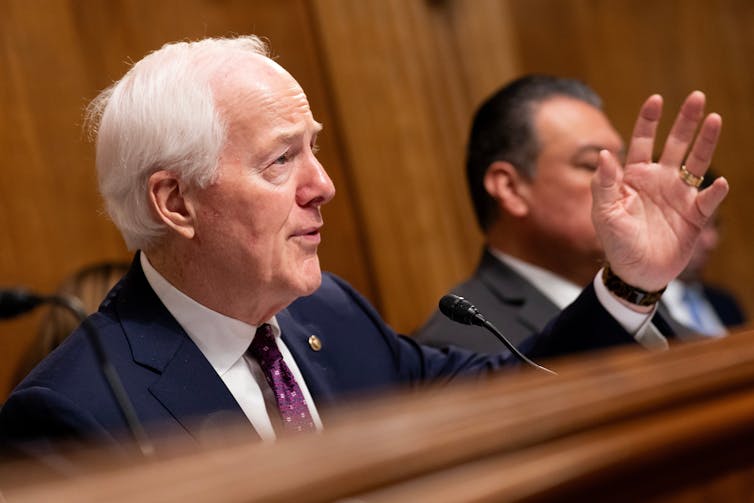
Texas Sen. John Cornyn gestures with his left hand while speaking at a committee hearing.
U.S. Sen. John Cornyn, a Texas Republican, speaks at a Senate hearing investigating fraud in the Medicaid program in Minnesota. Medicaid is a joint federal-state program.
AP Photo/Nathan Howard

There are areas of law where that framework clearly prevails. For example, immigration is an issue that the Constitution places squarely under the authority of the federal government. States cannot nullify, or invalidate, federal law. That is vertical federalism.

But the 10th Amendment says “powers not delegated to the United States … are reserved to the States respectively.” There are areas where states retain authority and the relationship between the levels of government is more horizontal, or flat or equal.

Consider cannabis. In 1996, California voters approved a ballot initiative making their state the first to allow the medical use of marijuana since prohibition started in the early 1900s. This was despite the fact that federal law viewed all cannabis as contraband. But California determines its own criminal code.

Californians could not stop the federal government from enforcing a valid federal law in their state, but that did not mean that California – or the vast majority of other states that have since passed their own medical or recreational marijuana measures – have to participate in a federal policy choice.

Federal agencies have continued occasional cannabis raids in California. But for state law enforcement officials, failing to punish a person for the medical use of cannabis is not a federal crime. In 1997, the Supreme Court ruled that the federal government cannot force a state “to enact or enforce a federal regulatory program.” That is horizontal federalism.

Constraints on all governments

The federal government is limited to its enumerated powers – which is to say, the powers spelled out directly by the U.S. Constitution. But states possess “police powers,” which is a broader authority to regulate health, safety and morality.

The federal government is responsible for foreign policy and regulating interstate commerce. But states and localities regulate vaccine mandates, police and fire services, and operate or oversee water and sewer systems, as well as taking stances on moral issues, including alcohol and gambling, due to their potential to cause harm.

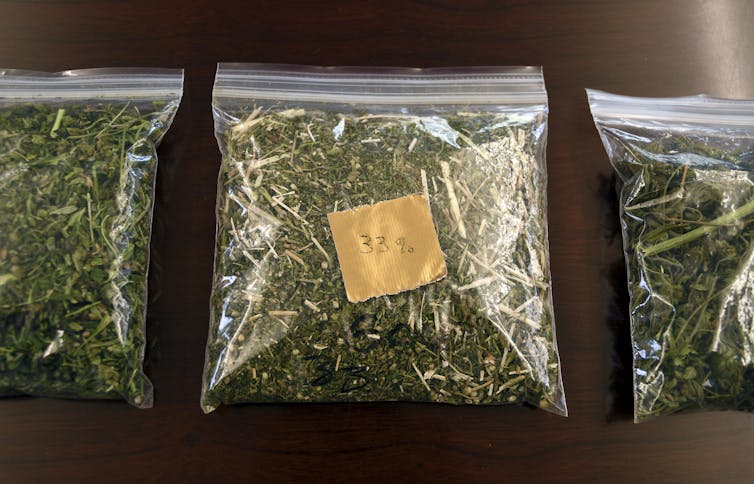
Three bags of cannabis, seized by law enforcement, are on display on a table.
Most states have passed laws legalizing marijuana for recreational or medical use, but the drug remains illegal under federal law.
AP Photo/Thomas Peipert

But both the federal government and the states are limited by the Constitution. Neither can justly violate the freedom of the press, for example, under the First Amendment.

And the reality is that, at least at this point in history, there is no neat division between federal and state authority on a broad range of issues. The federal government, for example, pays for the bulk of interstate highway construction. But those roads are actually paved by states.

When the federal government is paying a share of the cost of carrying out its policies, the Supreme Court has ruled that it can, in fact, tell states what to do, such as enforcing a legal drinking age of 21 or risk a share of federal highway funds. But it has also found that federal demands on states can be unconstitutionally excessive or “coercive,” as with a mandate under the Affordable Care Act to expand Medicaid, which the court struck down, even though Washington was paying most of the bill.

Federalism and the question of which level of government has the ultimate say is often complex and messy. But for that reason, as the framers foresaw, it remains an important safeguard of liberty, preventing too much power from residing in one place.

The Conversation

Kenneth Michael White does not work for, consult, own shares in or receive funding from any company or organization that would benefit from this article, and has disclosed no relevant affiliations beyond their academic appointment.

​Politics + Society – The Conversation

Categories
Health

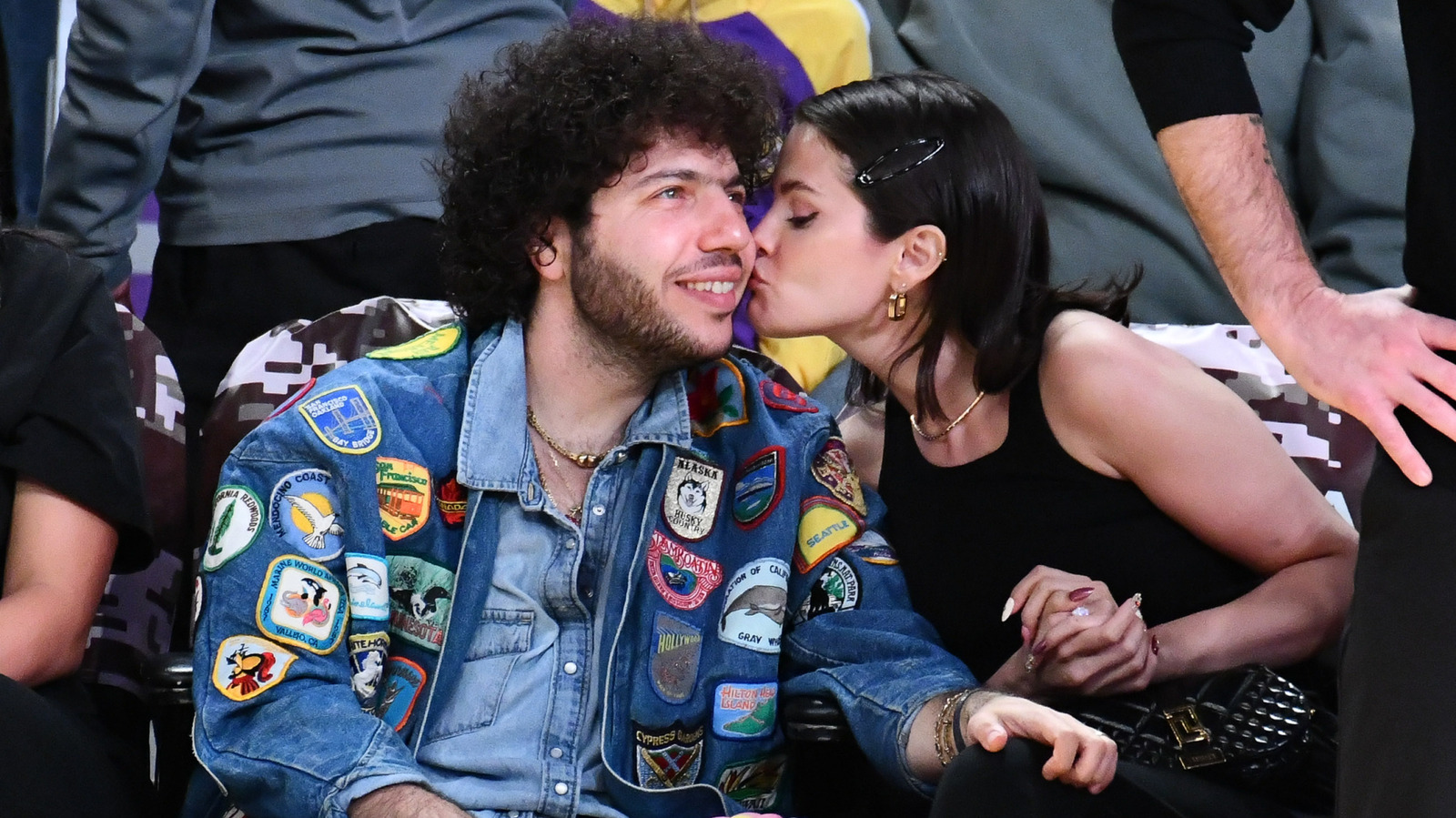
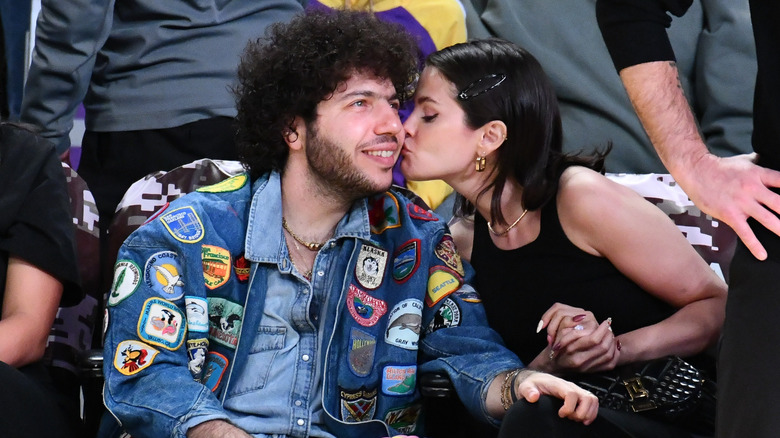
Selena Gomez Would Think Twice About Kissing Benny Blanco’s Dirty Feet If She Knew These Health Facts

Selena Gomez tenderly kissing Benny Blanco’s feet may seem like a sweet gesture, but (to no one’s surprise, perhaps), it’s not exactly a hygienic practice.

​Health Digest – Health News, Wellness, Expert Insights

Categories
Entertainment

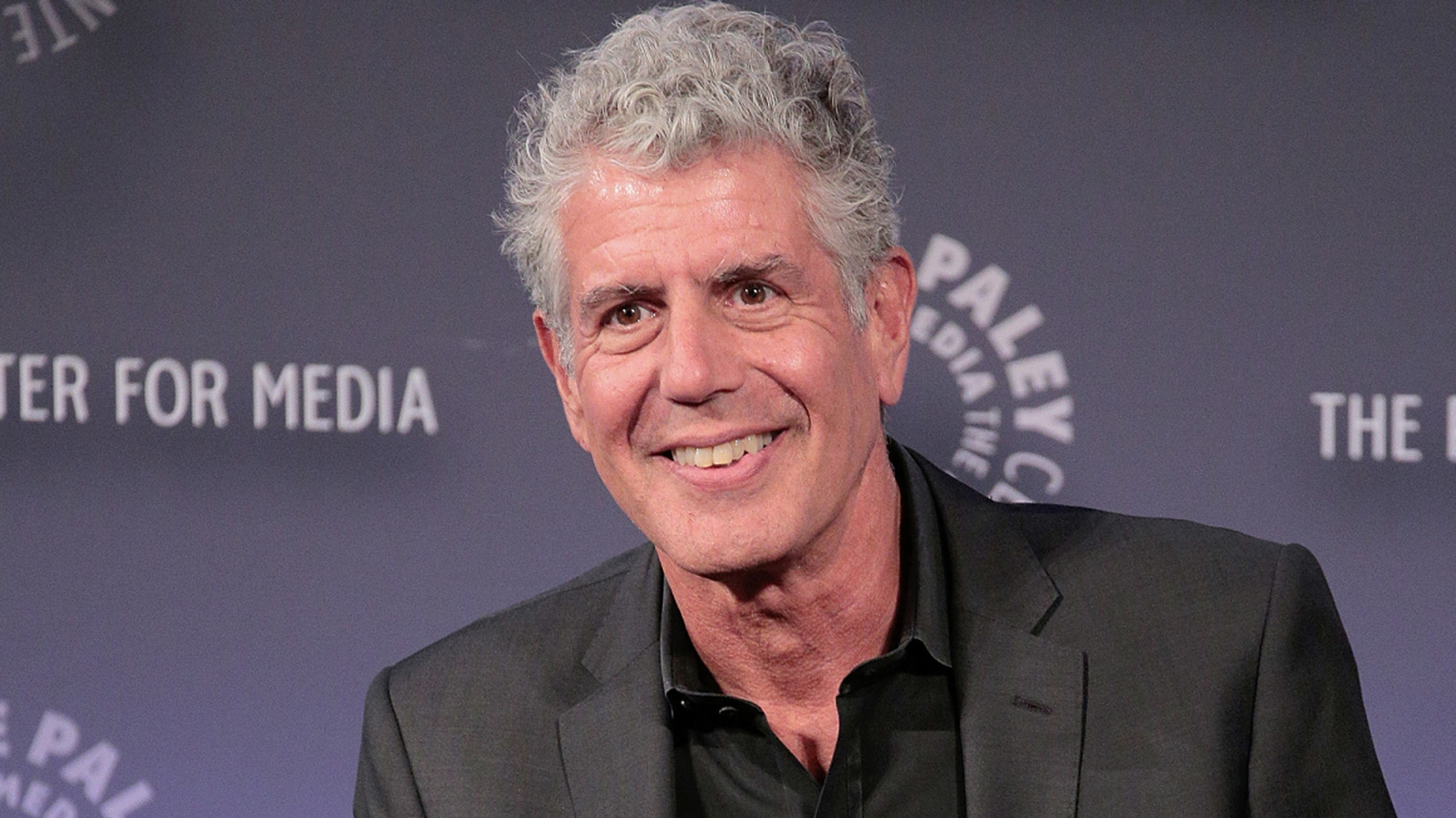
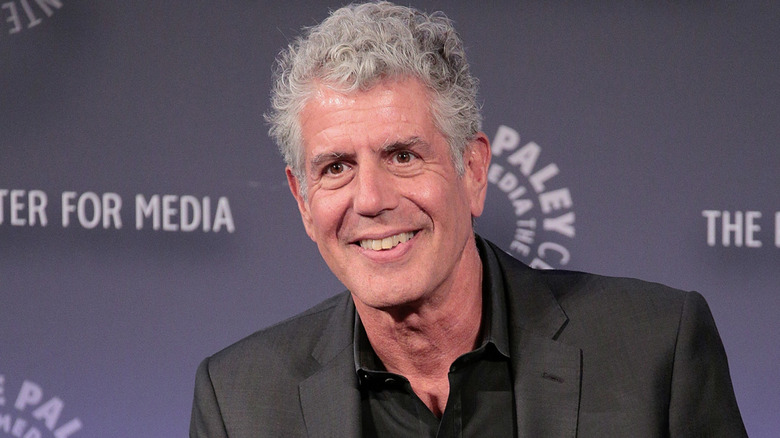
Anthony Bourdain’s 6 Elements Of A Great Bar

Say what you will of his overall style, but Anthony Bourdain believed everything he said, and these were the simple qualities he said any great bar must have.

​Mashed – Fast Food, Celebrity Chefs, Grocery, Reviews

Categories
Music

Josh Duhamel Expecting Third Child, Second With Wife Audra Mari

Josh Duhamel and wife Audra Mari are expecting their second child together — and the couple revealed they’re welcoming a baby girl. Continue reading…​The Boot – Country Music News, Music Videos and Songs

Categories
Food

60 Years Ago, This Gas Station Introduced Its Iconic Frozen Beverage

Since its 1966 launch, one chain has sold billions of this iconic beverage across locations worldwide, cementing a decades-long fondness for the drink.

​Food Republic – Restaurants, Reviews, Recipes, Cooking Tips

Categories
Entertainment

The Ruth’s Chris Steakhouse Sister Chain That Offers A High-End Seafood Experience

When you’re searching for high-end seafood establishments, consider this restaurant that shares the same parent company as Ruth’s Chris Steakhouse.

​Mashed – Fast Food, Celebrity Chefs, Grocery, Reviews