Bunnie XO, ex-wife of Jelly Roll, is embracing her new chapter as a single woman and is making it clear she’s not concerned about what anyone else thinks.
The Dumb Blonde podcast host, 46, is specifcially defending the opinions online about the 22-year age gap between her and her new romance with 24-year-old Dylan Wolf. The negative comments started to flood in in after she posted a video of her and Wolf to social media, documenting the “Malibu Cowboy” eating at Waffle House for the very first time.
“POV: It’s his first time at Waffle House,” the post read.
Photo Courtesy of Bunnie XO
Even though the video’s original sound has been replaced by Mel McDaniel’s “Baby’s Got Her Blue Jeans On,” viewers can see the pair laughing together while sitting at a table with Bunnie’s close circle of friends. She pours the syrup on his waffles, while he attempts to feed her a bite of the breakfast treat, but jokingly misses her mouth several times.
The comment section quickly filled with users pointing out that Wolf is “much younger” with some even poking fun at the age different by saying things like “He don’t even have a drivers license yet. 🤦♂️.”
Bunnie clapped back at the criticism, making it clear that she’s simply enjoying herself as she navigates coming out of a difficult time.
“Hey guys, I’m having fun & he gave me my smile back 💞 Ya girl is living her best life – let meeeee k thanks byeeeee,” she stated.
The video surfaced just a few weeks after Bunnie told TODAY’s Jenna Bush Hager and Sheinelle Jones that she loves “the streets” and is “never going back.” She also admitted she has been enjoying a “baddie Bunnie summer” after receiving countless DM’s from potential love interests, calling it a “boy buffet.”
“I’m having the freaking time of my life and I’m just thriving. And I never thought that it would turn out to be such a blessing, but it’s such a blessing and I’m so thankful,” she added.
This also isn’t the first time that the Stripped Down: Unfiltered and Unapologetic author has been spotted with Wolf. In fact, their budding romance stems all the way back to July, when they were seen kissing at her ex Jelly Roll’s bar, Goodnight Nashville.
Bunnie spoke about the moment on her Dumb Blonde podcast, saying, “I am healing out loud. So what? I got kissed under the f—ing fireworks. So, I hope I get kissed under f—ing 10 more firework shows, you know?”
Photo Courtesy of Bunnie XO
At the time, she confirmed that she was “not dating anybody” and also didn’t want to be with anybody as her heard was locked up tight following the recent heartbreak.
Coming off nearly a decade of marriage, Bunnie XO seems content to keep things fun and light as she takes on this new chapter one day at a time.
Tucker Wetmore has built his career alongside the fans who have streamed his songs, learned every word and shown up for him along the way. During his recent sold-out Chicago stop on the Brunette World Tour, he seemed determined to give that love right back.
The rising country act returned to the Windy City on Friday (September 18) and took the stage under the night sky at the Salt Shed. Whether he was behind the piano, leading a massive sing-along from center stage or tearing through his biggest songs, Wetmore’s love and appreciation for his fans, all 5,200 was impossible to miss.
Tucker Wetmore; Photo by Chase Foster
He arrived on the smoky stage around 8 p.m. and never once let his energy fade throughout the nearly 90-minute show. His larger-than-life stage presence quickly became a highlight of the night, along with his signature dance moves that made just as much of an imapct as his vocals.
Between the energy he brought to each song and the way he moved around the stage, it was impossible for the crowd not to have a good time. Knowing that Chicago is has been one of his favorite places to perform in the past, Wetmore came in with high expectations for the crowd, and it’s safe to say that they delivered all night long.
“I played a couple shows in Chicago throughout my years, and if there’s one thing I learned, this is the best damn place to do this, so let’s put that to the test, show me what you got,” he told the packed venue. “I swear every time I come up to Chicago, I end up leaving saying, ‘that’s my favorite show. That’s my favorite show I ever played.’ I just want to say thank y’all so much for showing up tonight. We’re going to have a damn good time. I could already tell that.”
If you were in the crowd that night, you’ll understand that it was truly one of the most fun nights and the perfect was to celebrate the summer season coming to an end. No matter what was going on in life, Wetmore did his best to make his concert a place to escape from the real world and all he asked was that everyone in attendance have a “damn good time” while spreading love for one another.
“Here’s how the night’s going to go down. We’re going to play some songs you might know, some songs you might not know, but before I get into any of that, I’m going to ask y’all for one thing, one thing only all night, and that is to love each other. That’s why we’re here. That’s why God put us on this big old green earth. That’s why y’all all spent your hard-earned money to buy a ticket to come to a Tucker Wetmore concert on Friday,” he explained. “We’re going to do it with love.”
That sense of togetherness showed up throughout the 18-song setlist, as he continued with a mix of classic covers and tracks from both his newest Sunburn Mixtape and debut album, What Not To, including “Break First,” “Silverado Blue,” “Wine Into Whiskey,” “Bad Habit,” and “Crazy To Yourself.”
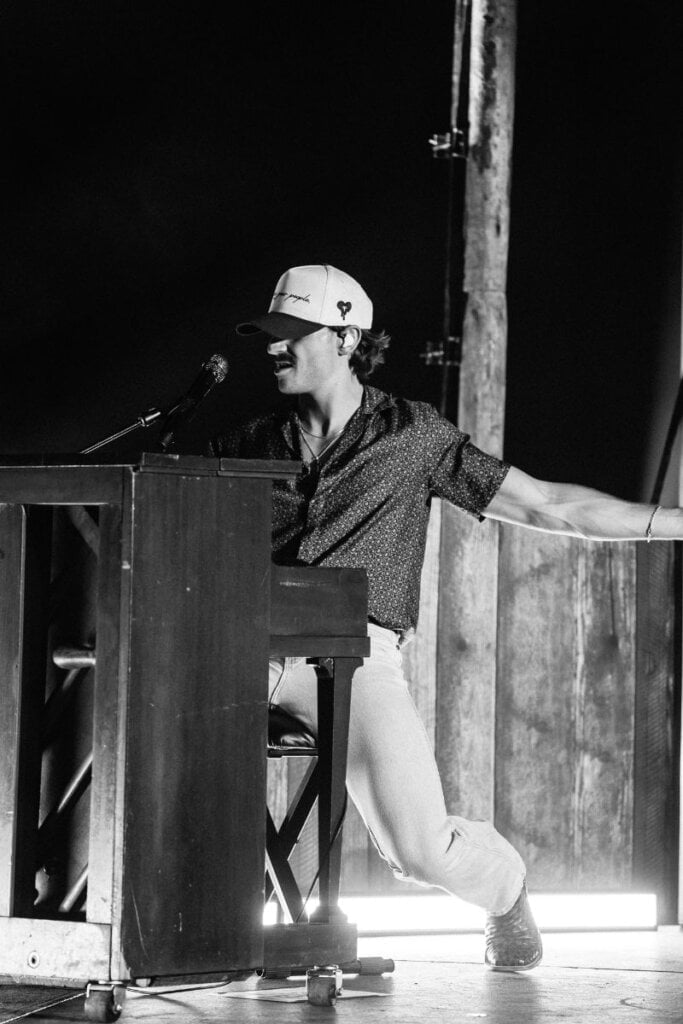
From there, the Washington native broke out into what he claims to be is his favorite song to cover, Gavin DeGraw’s “I Don’t Want To Be.” For the first time in the night, Wetmore took his seat at the piano, where he continued with renditions of Maroon 5’s “This Love,” and Train’s “Drops of Jupiter.” This allowed fans to see Tucker Wetmore not just as an artist, but as someone who is a true music lover through and through.
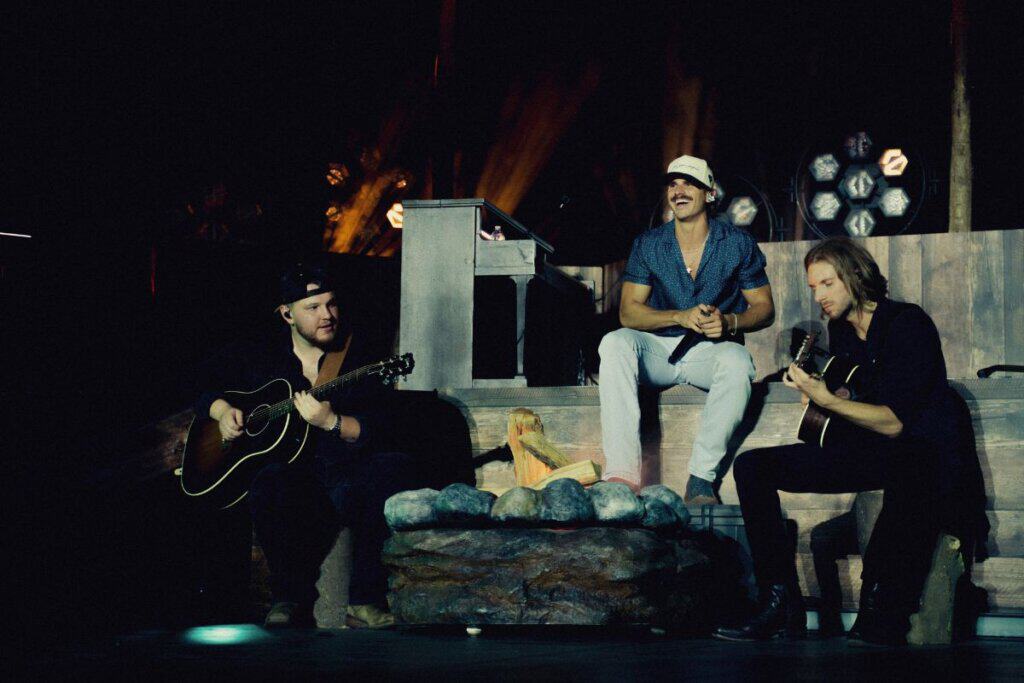
Wetmore returned to his own music for a moment with “Sunburn,” and then transitioned into a more intimate fireside moment. The stripped-back portion of the show gave the crowd a chance to settle into the storytelling side of Wetmore’s performance. Returning to his roots of hanging out with his buddies around a campfire, just playing songs for the fun of it he recreated that feeling with his bandmates for “When I Ain’t Lookin’” and “Casino.”
“I wanted a point my set this year where I kind of broke it down, brought it back to the basics of when I fell in love with music and why I fell in love with playing in front of people. And it’s just like this. It’s me and a couple buddies in the campfire, a couple songs, too many beers and a dream is all we had back in the day. And it’s crazy to think that we got a sold-out Salt Shed, 5,200…I’m still trying to wrap my head around that. Chicago, I love y’all so much,” he said honestly.
Tucker Wetmore; Photo by Chase Foster
The country star didn’t stay away from the piano for long, returning to the instrument later in the night for a performance of Journey’s “Faithfully.” Before playing the song, Wetmore opened up about his longtime connection to the piano, sharing that he fell in love with the instrument at a young age.
“I always say that piano was my first love. Up until now it’s been my only love. That’s why I came back to Chicago to maybe change that tonight…” he said, earning a roar of screams.
Naturally, Wetmore wasn’t going to let the energy die down for too long. He stood at the top of the stage and told the crowd to let off some steam by screaming after counting back from “3,2,1,” as a way to set the tone for his chart-topper.
One of the night’s biggest crowd-participation moments came during a run of country classics and southern rock anthems. Wetmore launched into The Georgia Satellites’ “Keep Your Hands to Yourself,” Hank Williams Jr.’s 1984 “All My Rowdy Friends Are Coming Over Tonight” and Tim McGraw’s signature hit, “I Like It, I Love It.”
“Some people might say I like it here in Chicago. I’d say no, I do not. I don’t. I don’t like it here in Chicago. I say I really, really love it,” he admitted while introducing the latter of the covers.
Tucker Wetmore; Photo by Chase Foster
The final stretch of the show kept the momentum up with “Bad Luck Looks Good on Me” and two more of his No. 1 hits, “Wind Up Missing You” and “Brunette,” to round out the concert. As the final notes of “Brunette” filled the Salt Shed, Wetmore closed out the night with the same energy and connection he brought to the stage from the very beginning.
He couldn’t leave before making sure his fans knew exactly how much he appreciated having them along for the ride. Wetmore thanked everyone for showing up, his band for making the show possible and for everyone behind the stage who he feels doesn’t get the recognition they deserve. His very last token of gratitude was given to “the man who deserves all the glory.”
“There’s nothing special about me other than the fact that my name’s really big right behind me or I do this every once in a while on stage. Man, I’m just a normal dude. Right after I get on stage, I’m going to go watch the football game and drink a cold beer. Everything that I’m blessed with every single day, everything I adore every day is because of one person, one person only that is my Lord and Savior, Jesus Christ. I hope you guys have had as much fun as we have,” he said.
Wetmore asked fans to sing the last song of the night so loud that it could be heard all the way back in Nashville, TN and then, after nearly an hour and a half on stage, he left Chicago with one final promise: “I swear I’ll be back… until next time.”
Lionel Richie is temporarily stepping away from the stage after undergoing a small procedure, prompting him and Earth, Wind & Fire to cancel three upcoming dates on their Sing a Song All Night Long tour.
The 77-year-old singer was hospitalized earlier this week after experiencing an irregular heartbeat. Richie’s reps informed PEOPLE that he underwent a minor procedure and “everything went perfectly.”
He was treated for AFib through Atrial fibrillation ablation, which according to Mayo Clinic is “a treatment for an irregular and often very fast heartbeat (AFib). The treatment uses heat energy, cold energy or high-energy electric pulses to create tiny scars in an area of the heart. The signals that tell the heart to beat can’t pass through scar tissue. So the treatment helps block faulty signals that cause AFib.”
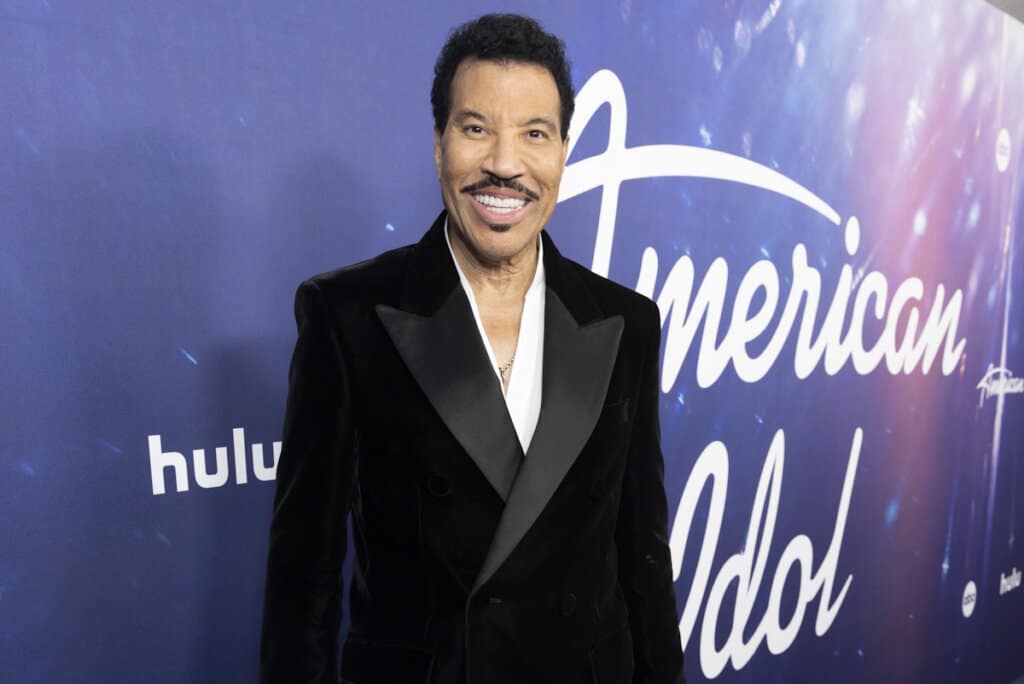
Lionel Richie; Photo by Disney/Stewart Cook
It has since been confirmed that the singer is “doing great” but will take some time to recover before returning to the stage. This marks the third time Richie has been hospitalized in three months.
TMZ previously reported that in June, Richie was taken to the hospital via ambulance after claiming to feel “dizzy” and “strange” while performing in St. Paul. Shortly after, he was back on stage and even joked about the concern surrounding his health, telling the audience, “You have no idea what I have been through in the last 24 hours, listening to my friends tell me their advice on what I should be doing.”
The American Idol judge eventually took to Instagram to thank fans for continuing to show him love and support through the health scares.
He wrote, “Thank you for every message, every kind word, and for all your love…I’m doing well, and I’m grateful for all of you.”
Then in August, he checked himself back into the hospital out of an abundance of caution and stayed for three days in the ICU while undergoing tests for cardiac issues he was experiencing following a show in St. Louis.
It seems that as of this weekend, the “Hello” singer is in better spirits and appearing to be on the mend as he was spotted at a dinner party at Mr. Chow in Beverly Hills with his girlfriend, Lisa Parigi. He was photographed with a smile on his face outside the event.
The recent hospitalization has forced changes to Lionel Richie and Earth, Wind & Fire’s Sing a Song All Night Long Tour schedule, with the next three shows in San Francisco, Chicago and Columbus being canceled. The affected dates were set for Sept. 26, Sept. 30 and Oct. 2, respectively.
As for his reoccurring gig on American Idol, it has not yet been confirmed whether Lionel Richie will return to the singing competition show in 2027 alongside the past season’s judges Luke Bryan and Carrie Underwood. While virtual auditions for Season 25 are already underway, ABC has yet to officially announce the full judging panel.
Patrick also spoke about both compassion and consequences for Lindsay.
He argued that the two can, and should, coexist.
During his ’60 Minutes’ interview, Patrick Clancy delved into the topics of grief and forgiveness in the wake of his ex-wife’s mistrial. (Image Credit: CBS)
Patrick Clancy calls for accountability and compassion to go hand-in-hand
Speaking to the once-prized 60 Minutes on Sunday, September 20, Patrick Clancy emphasized that compassion and accountability can coexist.
The deaths of the three young Clancy children were horrific.
But, despite what unhinged wingnuts trying to turn this into a culture war flashpoint would say, this was not the product of criminal intention, but of mental illness.
In this complex case, we all have to ask ourselves: what does true justice look like, and is the state equipped to give it?
Patrick has wrestled with that a lot, and had some thoughts to share.
During his interview, Patrick shared the belief that society can find a compassionate way to respond to tragedies like the one that destroyed his family.
He emphasized that “that doesn’t mean ‘no accountability.’”
Compassion, Patrick explained, involves recognizing both the suffering and stigma that surround mental illness.
At the same time, he expressed the importance of finding ways to prevent more families from suffering from tragedies like this one.
Patrick didn’t suggest that he has all of the answers. He doesn’t. It’s likely that no one person does.
Patrick Clancy views the deaths of his children with more moral clarity than a lot of very loud folks online seem to
We mentioned that some political malefactors and manosphere types have been using the tragedy of the Lindsay Clancy case as a “culture war” touchstone.
Some deeply weird men have used social media to claim that they used the case as a litmus test to evaluate their girlfriends.
(The alleged “male loneliness epidemic” seems to be, if anything, a self-inflicted situation.)
These individuals might say that an acquittal or even a not-guilty-by-reason-of-insanity (the latter of which, every reasonable juror had settled upon) would open the floodgates for other moms to kill their kids, claim mental illness, and … what, profit?
But that’s not how this works. There is no deterrent for mental illness, no way to scare someone out of postpartum psychosis.
Postpartum depression is common enough that there are old-timey, folksy names for it, such as the baby blues. Postpartum psychosis is less common, and significantly more dangerous.
Many people have shared their experiences with psychosis and psychotic episodes. For some, it meant taking off their clothes and going outside, under the delusion that this would prevent the world from ending. For others, it meant believing that all of the food in their home was poison, resulting in them throwing away hundreds of dollars in perfectly fine groceries.
As Patrick says, his ex-wife’s mental illness does not mean that she cannot be accountable for her physical actions, but both the courts and society should understand that she was not thinking rationally. She did not decide to do this.
Andrea Yates was, before Lindsay Clancy, perhaps the most famous case of postpartum psychosis resulting in the deaths of all of the sufferer’s children in living memory.
She is still in an institution. Even if Lindsay were to “go free,” she would never be free — and would always be haunted by this life-ruining moment.
For now, it’s unclear if prosecutors will even bother with another trial. It was a mistake to start with, and it backfired.
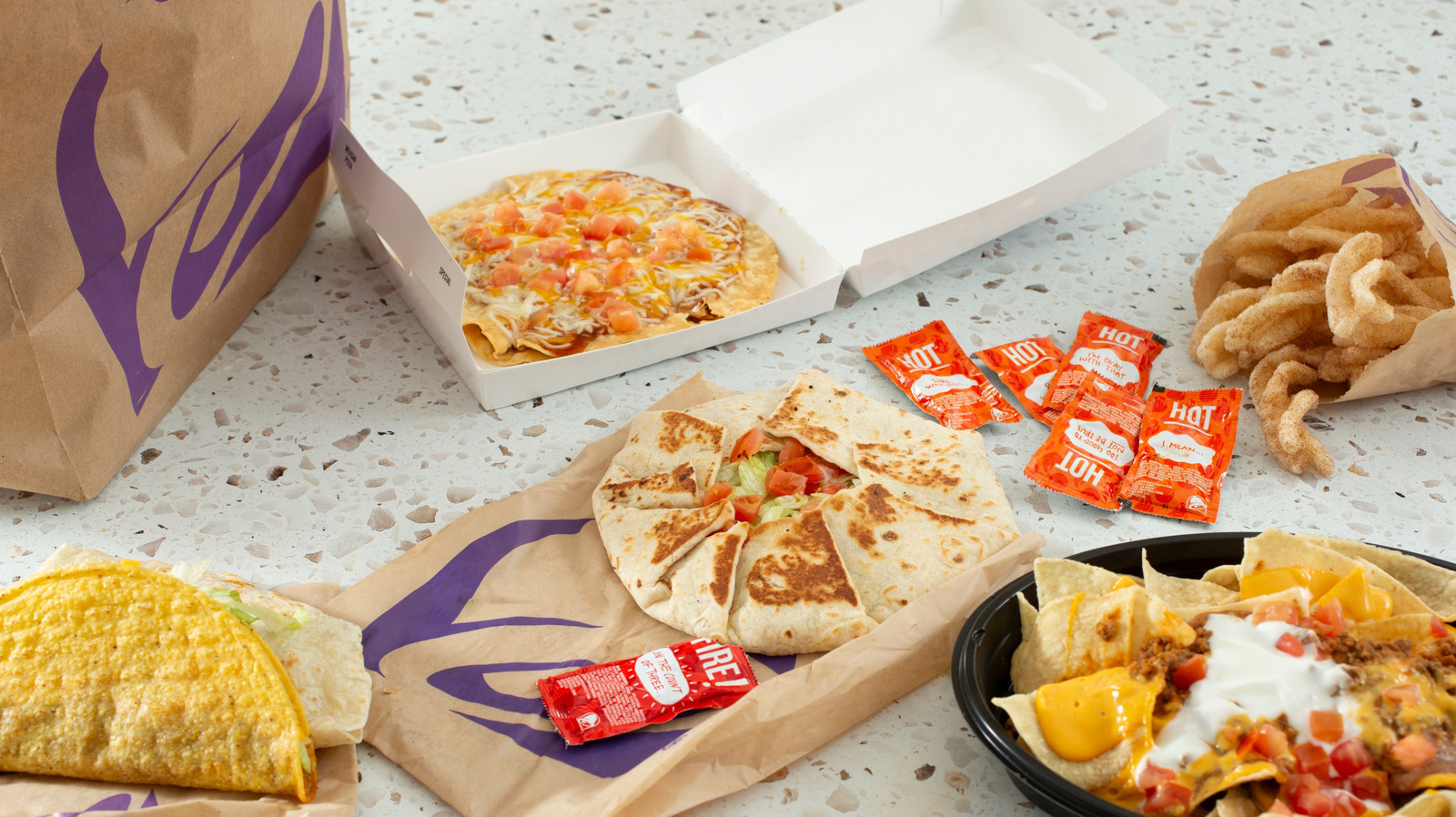
Taco Bell is well known the world over for Americanized Mexican food, but the company also boasts something called Taco Bell Cantina. Here’s the difference.
Dolly Parton’s niece and executive director of the upcoming Dolly’s Life of Many Colors Museum, Rebecca Ann Seaver, has annoinced that even more variations of the iconic country star’s new high-end collection of Dolly Dolls are set to be released in 2027.
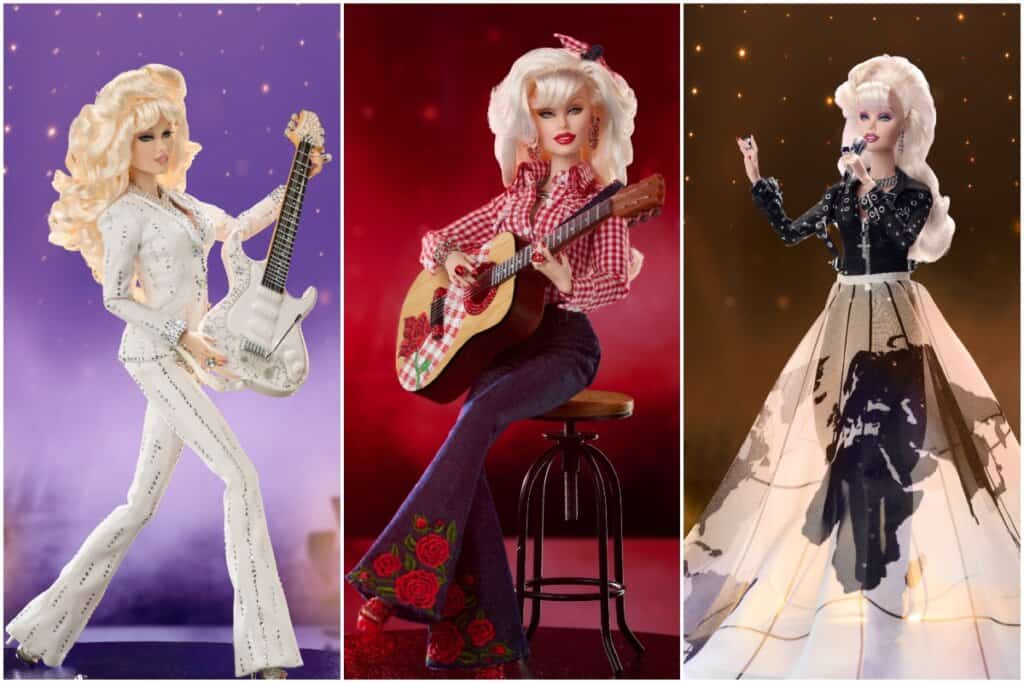
Three limited-edition Dolly Dolls launched Sept. 15 through a partnership between the Dolly Archive and Integrity Toys, giving fans a chance to celebrate Parton’s legacy in a new way. These three dolls, Dreamin’ in Gingham, World on Fire, and Diamond in a Rhinestone World, each bring some of Parton’s most memorable looks to life in a 1:6 scale.
The Dreamin’ in Gingham and World on Fire were available in limited quantities through the Life of Many Colors Museum online and sold out within just hours of the launch. However, the Diamond in a Rhinestone World doll is exclusively available to visitors who purchase it in person at the museum, which officially opens its doors on September 29.
Dolly Dolls; Photos Courtesy of Integrity Toys
After seeing the overwhelming response to the dolls and the disappointment of those who were not quick enough to secure one of their own, Seaver assures fans that there will be more opportunities to purchase a Dolly Doll.
“This one [drop] was kind of a test run to see how they were going to do, and they did great,” Seaver told PEOPLE. “I want people to know that we have more designs and we’re ready to bring more out next year.”
Along with the positivity over the initial launch also came some questions about whether the dolls actually captured Parton’s likeness. Seaver explained that they were never meant to copy the later country star’s exact look. Instead, the goal was to give the dolls a more “glamorous” feel.
“Dolly wanted to do these dolls the way they were in their very glamorous package,” she says. “That was something that she always saw in herself and maybe didn’t see in her actual package, but she was excited to see that in the doll package. We wanted to make sure that these dolls feel like Dolly, but maybe if they don’t look exactly like her, we’re okay with that.”
However, plans for another upcoming release do include “Dolly-ized versions” of the dolls.
Much like some of the earliest Dolly Dolls, dating back to 1977, this limited-edition collection was meant to capture Dolly Parton’s most current era of her career.
“We felt like with Rockstar, that was her most recent album release that had been a huge hit, and ‘World on Fire’ was such a great moment for her,” Seaver shared. “So we just felt like that one in doll form, especially with the world skirt… We felt like that one really showcased Dolly in her most glorious doll form.”
“And then Dreamin’ in Gingham, that’s just quintessentially Dolly. There are moments throughout her entire career and throughout her entire life where she’s in denim and either a gingham shirt or a red polka dot shirt or some kind of bandana shirt. And so we just really felt like that one really just had her all over it.”
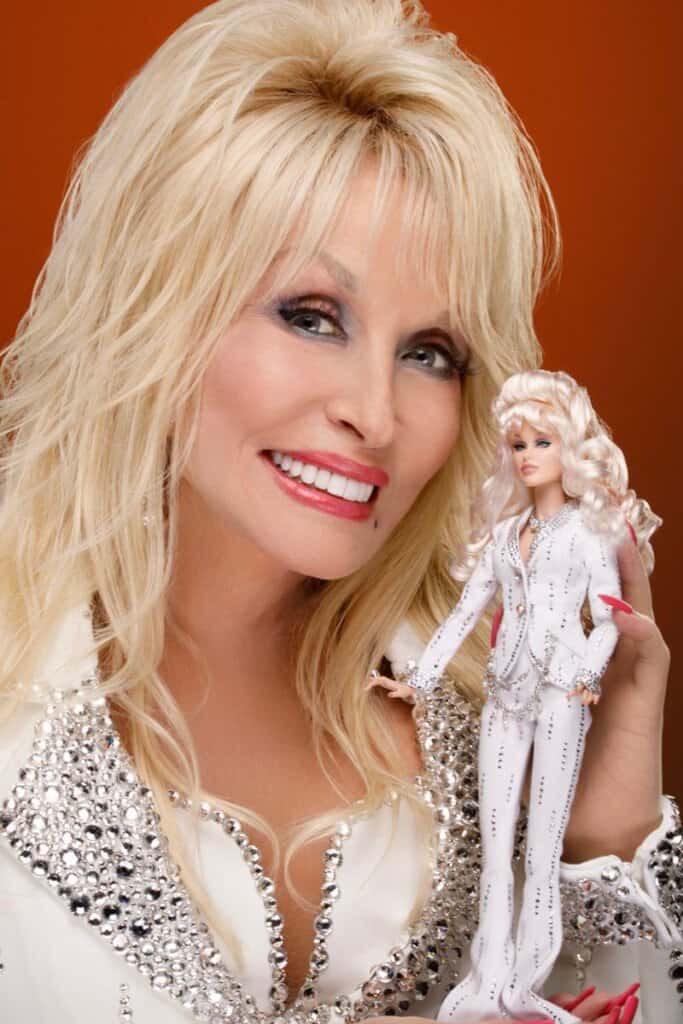
Dolly Parton, Dolly Dolls; Photo Courtesy of the Dolly Parton Estate
The third form of the doll and museum-exclusive, Diamond in a Rhinestone World, is dressed in a white suit covered in silver rhinestones that’s said to be based on a pre-recorded performance from Parton that fans have yet to see.
Once the museum doors open, visitors will finally get the chance to witness that virtual concert performance, which was filmed in the spring, prior to her passing.
“We really wanted it to be special for people that were coming to the museum so that they could take a little piece of that experience that they had there with her in that concert home with them.”
The whole idea for this era of Dolly Dolls came from Seaver herself. She explains she had previously asked Dolly if they could create a line to coincide with the museum opening and she approved.
“She obliged me and said that if that was something that I felt passionate about, that I could lead the project.”
She goes on to say that the “9 To 5” singer also got to see the dolls come to life and give her stamp of approval before she passed away on August 25. Seaver notes that getting to see Parton have a photoshoot with the dolls was “one of the most special moments of my life.”
“She’s had a Dolly Doll come out in every fantastic era of her life and career. And so, we didn’t know when we started the project that we were gonna lose her in it, but to be able to commemorate her and her joyous life and career this way is bittersweet. I’m very proud of it and I’m very proud that we got to work with her on it and have her blessing with it.”
During the grand opening of Dolly’s Life of Many Colors Museum, visitors can shop the Diamond in a Rhinestone World as well as a select number of the World on Fire or Dreamin’ in Gingham doll that were set aside specifically for the grand opening in Nashville.
Fans hoping to get their hands on future Dolly Dolls can sign up HERE for updates on upcoming releases.