Fans of the “Little House” books have long believed that Mary Ingalls became blind due to scarlet fever. However, scientists say it was likely this instead.
Health Digest – Health News, Wellness, Expert Insights








Fans of the “Little House” books have long believed that Mary Ingalls became blind due to scarlet fever. However, scientists say it was likely this instead.
Health Digest – Health News, Wellness, Expert Insights

Of course, ribeye on its own is delicious (so long as it’s prepared well), but you can zhuzh up even the best cuts of meat with this technique.

Food Republic – Restaurants, Reviews, Recipes, Cooking Tips
17-year-old Kalvin Lynch, who performed in Rock’s ‘James 1:17 (Jesus is King)’ video, has moved to hospice care, according to a Facebook page associated with his family. Continue reading…Country Music News – Taste of Country

Pretty much any McDonald’s McMuffin arguably tastes better with a little kick, and one particular sauce on the menu is tailor-made for the job.

Food Republic – Restaurants, Reviews, Recipes, Cooking Tips
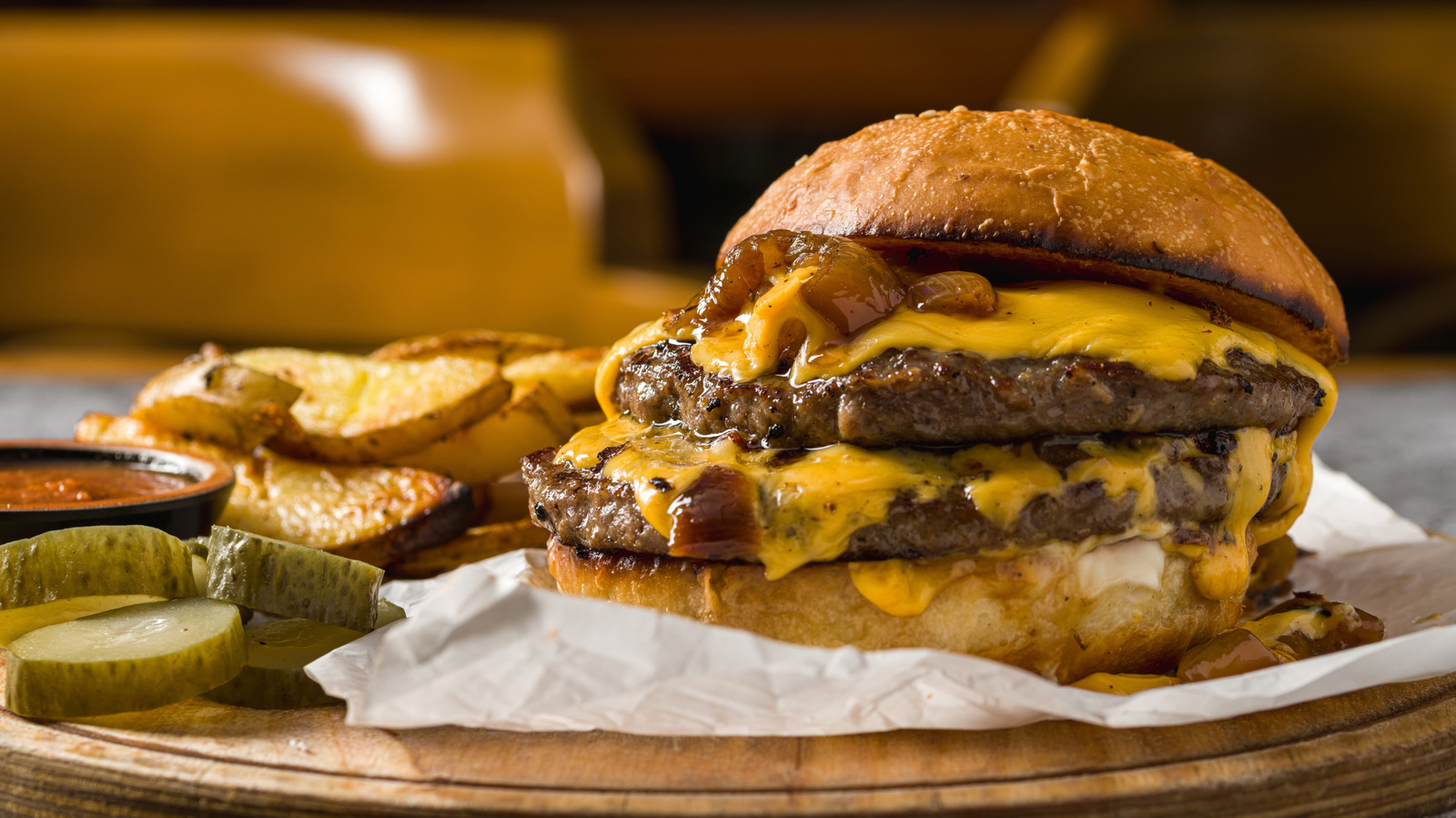
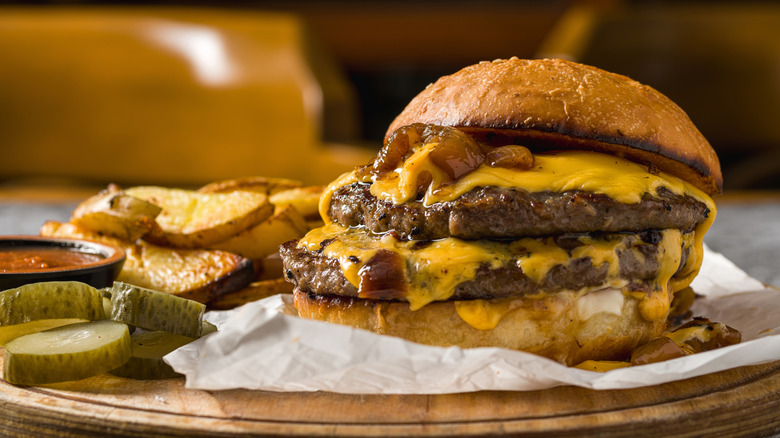
Overloading your burger patty with extra ingredients can mute that pure beef flavor, but this simple trick adds a massive boost of juiciness and umami.
Food Republic – Restaurants, Reviews, Recipes, Cooking Tips
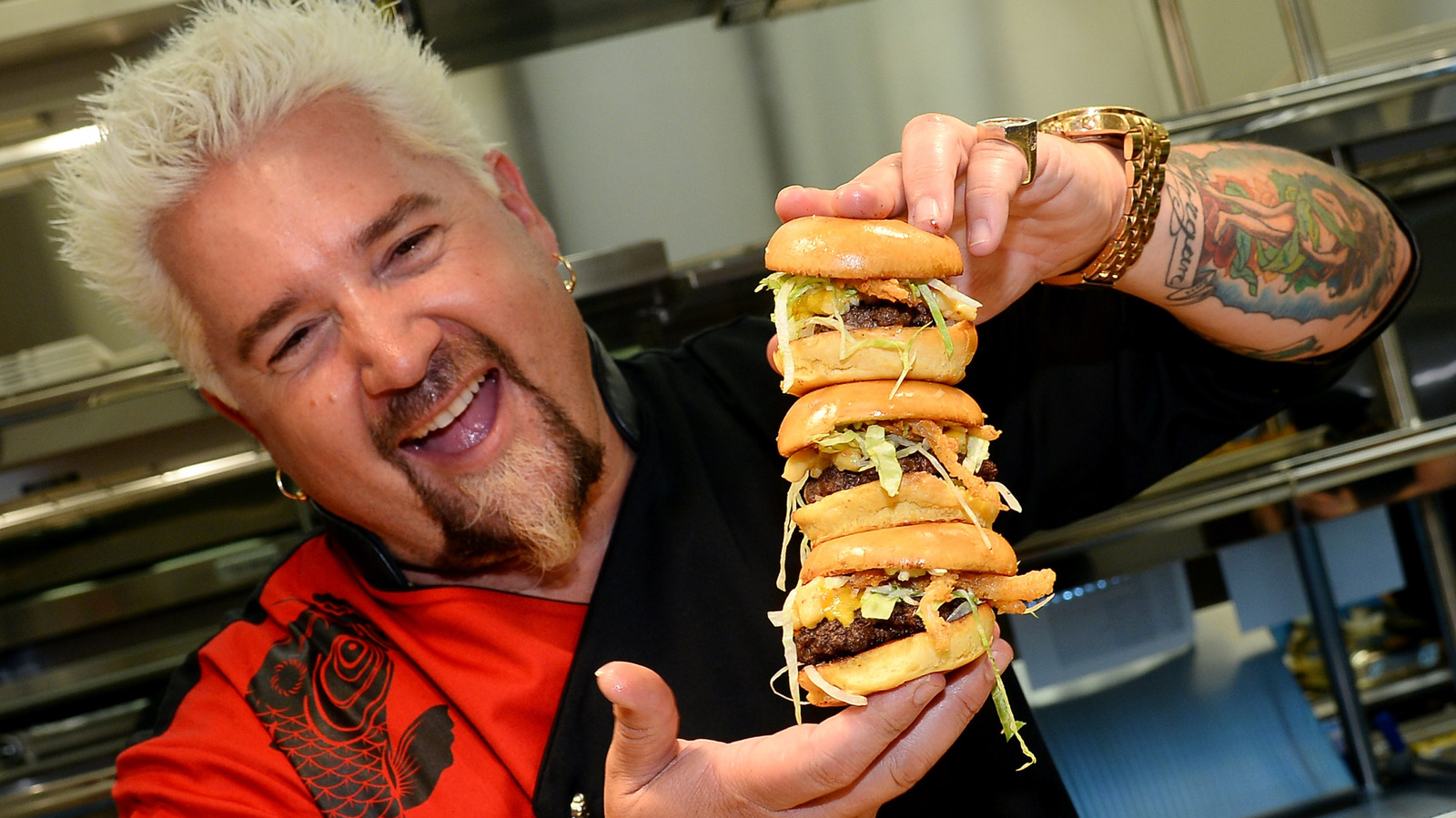
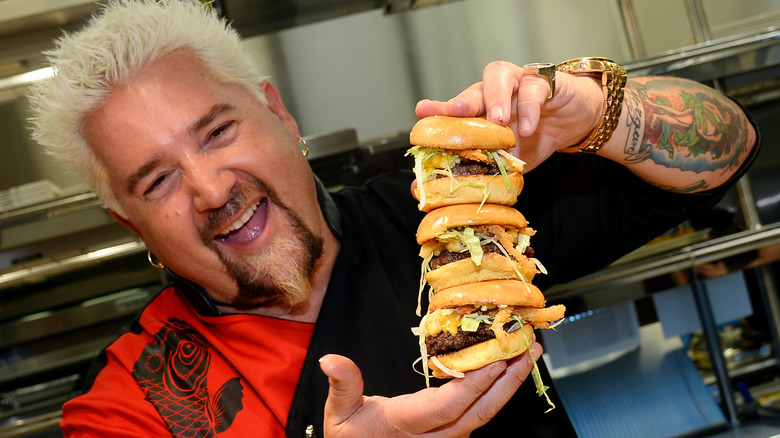
Having tried too many burgers to count on his show “Diners, Drive-Ins and Dives,” Guy Fieri knows a good burger when he tastes one. These were some he loved.
Food Republic – Restaurants, Reviews, Recipes, Cooking Tips
Reading Time: 2 minutes
Dakota Johnson was supposed to be the star of Saturday Night Live last night.
But then Taylor Swift showed up.
Dakota was kicking off her third stint as SNL host with her opening monologue when she started joking about her romantic history with musicians.
And apparently, that was all the setup Taylor needed.
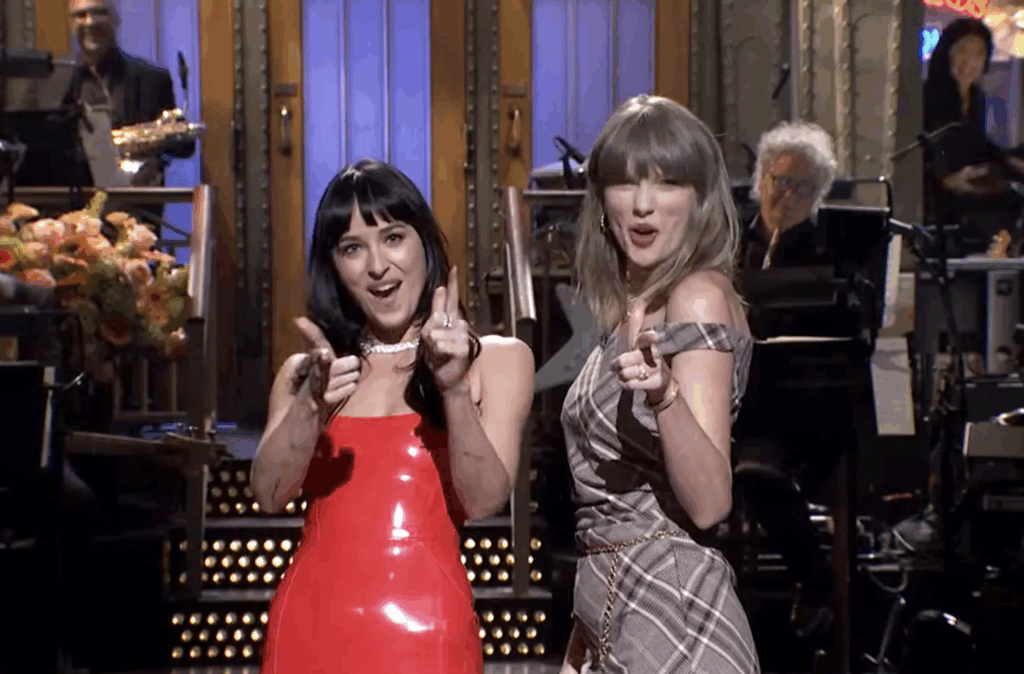
The pop superstar unexpectedly walked onto the stage, instantly turning Dakota’s big moment into a Taylor Swift appearance.
Dakota and Taylor have been friends for years, and the host introduced the pop icon as her “literal therapist.”
Taylor, however, quickly made it clear that she doesn’t exactly consider herself Dakota’s therapist. Instead, she joked about Dakota showing up at her house, drinking wine and unloading all of her problems on her.
It was a funny moment, but there was one unavoidable problem for Dakota.
Taylor Swift had just walked onto the stage.
When one of the biggest celebrities on the planet suddenly appears during your SNL monologue, there’s really no way to compete.
And Taylor certainly seemed to know exactly what she was doing.
The surprise appearance immediately became the biggest talking point from Dakota’s monologue, despite the fact that Dakota was the one hosting the show.
To be fair, Dakota has some experience with Taylor stealing the spotlight. The two have become increasingly close in recent months, with Dakota appearing in Taylor’s “Patient Zero” music video and presenting her with an award at the MTV Video Music Awards.
So perhaps Dakota should have seen this coming.
Still, there’s something wonderfully chaotic about Taylor Swift crashing her friend’s SNL monologue and essentially reminding everyone that she can turn up anywhere and become the main event.
And Dakota got the stage back eventually.
It was Dakota Johnson’s SNL night but Taylor Swift somehow managed to make it about Taylor Swift.
Honestly, what else did anyone expect?
Taylor Swift Crashes ‘SNL’: Did She Steal Dakota Johnson’s Spotlight? was originally published on The Hollywood Gossip.
The Hollywood Gossip
CONCORD, New Hampshire— Pete Buttigieg is barnstorming the nation in the final weeks before the midterms, boosting candidates in battlegrounds and even areas traditionally hostile to Democrats. And it’s helping him look beyond November.
Down the homestretch, Buttigieg is set to campaign in at least six states: North Carolina, Virginia, New Jersey, Georgia and Nevada, along with his adopted home state of Michigan, according to an itinerary shared first with Playbook by a spokesperson for Win the Era, his political group.
Buttigieg has been refining his campaign trail message as he crisscrosses the country, connecting concrete cost-of-living concerns to the more abstract need for political reform.
It’s a kind of real-world testing that helps him further define his political brand at the same time that he leverages it to “be useful,” as he so often puts it, to his party.
“I have a lot of conviction that, actually, your economic message only has credibility if you have a reform message, too,” Buttigieg said in an interview after a Rochester Opera House rally where he received a standing ovation. “Because otherwise, what you’re doing is you’re saying things that people agree with, which is great, but they might not believe that you can actually deliver it.”
He’s also building the kinds of relationships with voters and party leaders that can be useful if he runs for president in 2028, a question he was repeatedly asked. (“We’ll see,” he told one woman at the Deerfield Fair.)
“For Pete, it’s less about getting credit nationally for what he’s done for Democrats and more about building relationships in places that will be beneficial down the line,” said David Axelrod, a Buttigieg confidant.
Buttigieg’s status as an in-demand surrogate was on full display during his 48-hour swing through the Granite State, where he finished “a very, very, very close second place” to Sen. Bernie Sanders (I-Vt.) in the 2020 primary, as Buttigieg put it in Saturday evening remarks at the New Hampshire Democratic Party’s Eleanor Roosevelt Dinner in Concord.
“I couldn’t ask for a better wingman,” Rep. Chris Pappas said, introducing Buttigieg at the packed rally Friday in Rochester. “People know that he’s a trusted voice,” Stefany Shaheen, who is running for Pappas’ seat, told POLITICO after campaigning at a book store, cafe and candy shop with Buttigieg along Elm Street in Manchester.
Buttigieg has neither a battleground governorship nor a personal fortune to wire into midterm races. What he has put on offer is himself: He’s made more than 100 endorsements this cycle, campaigning in person for roughly half of them, and stops in 37 states since he left the Transportation Department.
Buttigieg was welcomed in places where candidates shunned some of his potential rivals. He campaigned with Rob Sand and Josh Turek in Iowa as they run for governor and senator, respectively. He backed Brandon Dukes in his special election effort to flip a Pennsylvania state House seat that Trump won by 18 points. He was alone among his peers in endorsing Hartford Mayor Luke Bronin in his victory over longtime Rep. John Larson in Connecticut.
“If I can help give voice to what people are after in diverse geographies, including very conservative areas,” he said, “turns out that’s my best use of time.”
Buttigieg admitted he wasn’t certain what role he would play in the party’s midterms at the start of President Donald Trump’s second term. Now he’s processing all of the data and inputs he’s receiving along his travels.
“I’m learning a lot about our country and our party as I go, and what I’m seeing is that people have a real hunger for change,” he told POLITICO. “First of all, in policy. Secondly, in the kind of politics that we have, and third, in the system itself.”
That’s developed into a core argument in his speeches connecting the cost of living to political reform: “If we want the kitchen table to be better off, we got to deal with the political system that is kicking the legs out from under the kitchen table,” Buttigieg said at the Rochester Opera House Friday evening.
It’s a message that can last long beyond the midterms, and Buttigieg is trying to point his party there.
“Part of what I’m really trying to push my party on is the need to have answers for ‘then what,’” he said. “There’s a big ‘then what’ for when Donald Trump leaves the political scene, but there’s an immediate ‘then what’ starting on Nov. 4.”
A Democratic Congress, he argued, needs “a compelling governing vision coming out of the gate” and should move quickly on tariffs, the minimum wage, tax fairness, health care, the Child Tax Credit and political reforms including gerrymandering.
Even as he sidestepped several questions from reporters about his next moves, saying he was focused on 2026, remnants of his 2020 campaign and hints of a future one piled up. People wore “Pete for New Hampshire” buttons and T-shirts. His old playlist, including Creedence Clearwater Revival’s “Up Around the Bend,” played at the Friday night rally.
At the Roosevelt dinner the next night, in front of a sold-out crowd of over 400, Buttigieg earned a standing ovation that ended in “Pete, Pete, Pete” chants.
“Pete had a great New Hampshire organization in 2020, nearly winning,” Ray Buckley, the chair of the New Hampshire Democratic Party, told POLITICO. “If anything, his popularity here has grown.”
Much has changed since then.
On Saturday evening, instead of walking out to Panic! At the Disco’s “High Hopes,” his ubiquitous anthem back then, or even Imagine Dragons’ “It’s Time,” which he road-tested last year, Buttigieg employed “You Get What You Give” by the New Radicals.
There have been deeper changes, too: Buttigieg is now the father of 5-year-old twins, Gus and Penelope. He is weighing whether he can run for president and remain a good and present father.
His husband, Chasten, is a “great dad” and “knows why I’m on the road.”
Back on the road, Buttigieg is winning over those who didn’t back him in 2020.
At the back of the room in Rochester on Friday night, the town’s Mayor Chuck Grassie wore a “Pete for New Hampshire” button as he took in the scene. Grassie, who backed Massachusetts Sen. Elizabeth Warren in 2020 and considers himself a “pragmatic progressive,” said Buttigieg could knit together the party’s moderate and progressive factions.
“He’s a guy I think would attract a lot of people,” Grassie said. “And a lot of people I talk to are saying, ‘You know, he’s looking better and better every day.’”
Added Grassie: “In New Hampshire, I think Pete may be the guy to beat.”
Politics
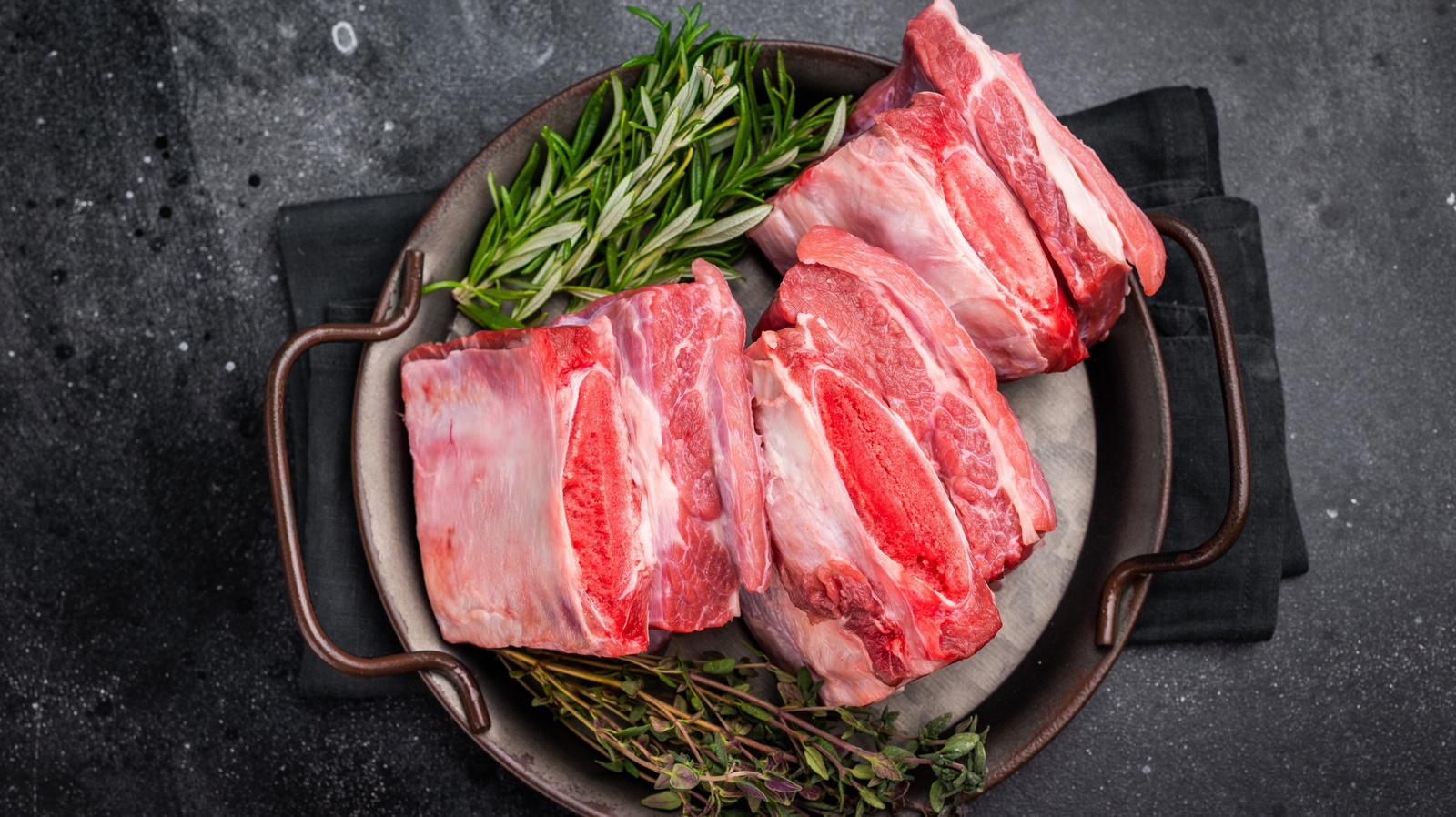
Short ribs are flavorful on their own, but to zhuzh them up and really enhance how they taste, give them a boost by adding a splash of this wine.
Food Republic – Restaurants, Reviews, Recipes, Cooking Tips

 Kim Kardashian wasn’t interested in keeping up with anyone else for a while.
Four months after the Kardashians star hard launched her romance with Lewis Hamilton, she shared insight into not…
E! Online (US) – Top Stories