Categories
Uncategorized

Irresponsible parental gun ownership could become a factor in custody disputes

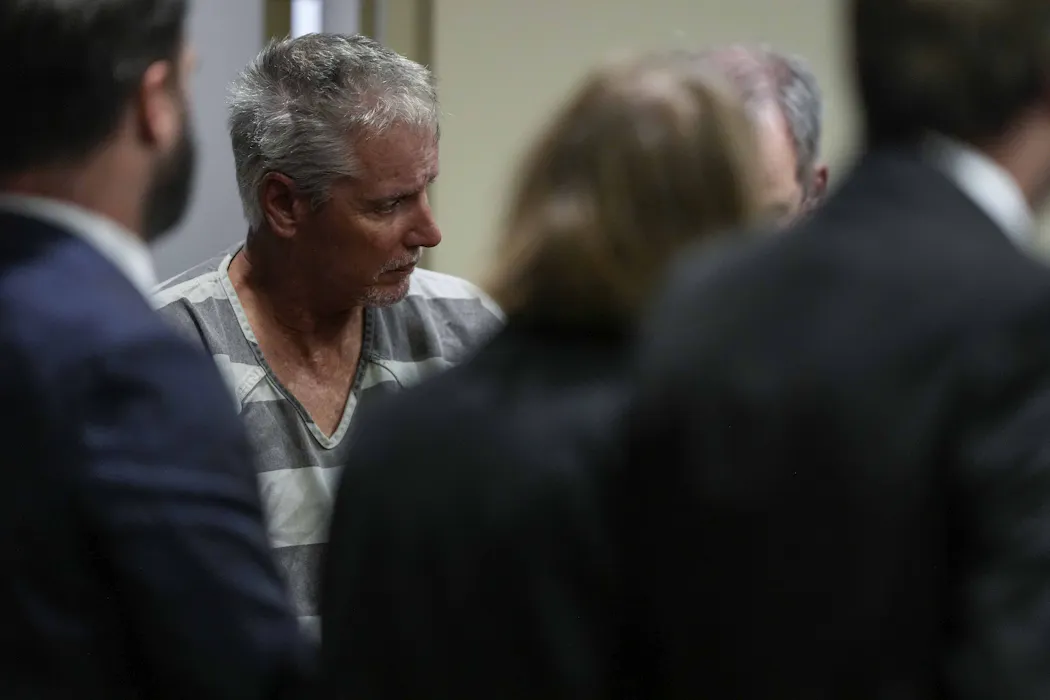
Colin Gray enters the Barrow County courthouse on Sept. 6, 2024, in Winder, Ga. AP Photo/Brynn Anderson

The first parents convicted of involuntary manslaughter for a mass school shooting committed by their child were Jennifer and James Crumbley. The Crumbleys were convicted in 2024, after their 15-year-old son Ethan killed four students at Oxford High School in Michigan in 2021.

In March 2026, Colin Gray became the first parent convicted of murder for a mass shooting carried out by his child. His son, Colt, 14, killed two students and two teachers in 2024 at Apalachee High School in Georgia.

Critics of the Crumbley and Gray decisions worry that holding parents responsible for school shootings may lead to parental accountability for a broad range of children’s actions.

This is possible, but I believe it is unlikely.

That’s because parents already have long been held liable for the actions of their children, as Baylor law professor Dyllan Taxman notes. The previous failure to find parental liability for gun dangers was the exception.

But even if the Crumbley and Gray convictions do not portend the beginning of parental convictions for a new and wide-ranging category of parental actions, they do suggest a growing belief that parents who allow their children easy access to guns are dangerous and unfit.

As a family law scholar, I think this changing view about parental gun ownership may have significant ramifications for parents in other legal contexts, most notably custody determinations.

Guns and best interests

Child custody decisions in the U.S. are based on a court’s determination regarding the “best interest of the child.” Irresponsible gun ownership can be a factor in such conclusions, but historically such considerations have been rare.

This absence is shocking given the well-documented dangers that unsecured firearms pose. Since 2020, firearms have been the leading cause of death for children between the ages of 1 and 19. The statistic includes accidental shootings as well as homicides and suicides. The vast majority of child gun deaths occur at home. And more than 4.6 million children live in a home with at least one unlocked and loaded firearm.

The failure to routinely consider parental gun practices, including gun storage and children’s access, in custody determinations is notable – not just because unsecured guns pose a significant danger to children, but because other less substantial risks regularly factor into custody decisions.

Split screen of a man and a woman dressed in prison clothes.
James and Jennifer Crumbley were convicted of involuntary manslaughter for a mass school shooting committed by their son.
Oakland County Sheriff’s Office via AP, File

Perceived moral dangers, such as a child’s exposure to profanity or a parent’s nonmarital relationship, are common factors in custody determinations. Similarly, exposure to secondhand smoke or a child’s obesity are also frequent considerations.

Consequently, while the consideration of parental gun behaviors is not entirely absent from custody decisions, its relative rarity suggests a deliberate unwillingness to link them with parental fitness considerations.

The Crumbley and Gray convictions suggest this reluctance may be waning.

Loss of custody as a deterrent

School shootings are relatively rare, but custody disputes are not.

Consequently, if irresponsible gun ownership becomes a common consideration in custody decisions, the implications for gun safety could be substantial. That’s because this approach avoids the pitfalls of previous gun control attempts.

Unlike other gun safety measures, the consideration of gun ownership in custody cases largely avoids Second Amendment concerns regarding the constitutional right to bear arms. As William & Mary law professor James Dwyer notes, in child custody cases the state operates “outside the bounds of the (Constitution) … to the extent of being freed from the restrictions ordinarily generated by the constitutional rights of others.”

The result is that constitutionally protected behaviors are frequently considered in custody decisions.

In the 2011 South Carolina case Purser v. Owens, for instance, the family court considered the mother’s abortion in its best-interest analysis and held that having an abortion demonstrated the mother was irresponsible and thus unfit.

In the 2003 Virginia case Roberts v. Roberts, a father lost custody for his statements that women cannot do what men do.

And in the 1985 Colorado case In re Marriage of Short, a court affirmed parents’ religious beliefs are a relevant factor in custody determinations.

As these cases demonstrate, the fact that some harmful parental behaviors are also constitutional rights doesn’t mean they’re excluded from custody determinations.

A second benefit of raising gun ownership in a custody dispute is that the parent raising this issue does not need to be a gun control advocate. They don’t need to dislike guns, and they can even be a gun owner themselves.

For gun ownership to become relevant, a parent simply needs to argue that the other parent’s gun practices are irresponsible compared to their own. If this increases a parent’s custody prospects, it can be assumed many parents will make this argument.

A woman in court holds a posters with images on it.
During Colin Gray’s trial, Assistant District Attorney Patricia Brooks presents evidence of a school shooter shrine that was found in Colt Gray’s bedroom, in Winder, Ga., on March 2, 2026.
Abbey Cutrer/Atlanta Journal-Constitution via AP, Pool

Parents are paying attention

For parents facing accusations of irresponsible gun practices, the potential loss of custody should provide a strong incentive for modifying their gun behavior.

Case law demonstrates that parents routinely refrain from behaviors that could hurt their custody case. And there is every reason to expect the same result with gun ownership.

Importantly, the Gray case already proved that parents are paying attention to these trends. During his trial, it was revealed that about a week before the September 2024 shooting, Gray’s estranged wife – and Colin Gray’s mother – Marcee Gray, did an internet search for “school shooter parents charged with manslaughter.”

Then, after reading articles about the Crumbley cases’ convictions, she called Colin and asked him to secure his guns. Although Colin ignored his wife’s warning, the next parent might listen, especially when the warning is coming from a divorce attorney.

Should irresponsible gun ownership become a common factor in custody disputes, parents will be advised to secure their guns, and many will heed this advice, I believe. The Crumbley conviction almost prevented Colt Gray’s access to firearms.

The Conversation

Marcia Zug does not work for, consult, own shares in or receive funding from any company or organization that would benefit from this article, and has disclosed no relevant affiliations beyond their academic appointment.

​Politics + Society – The Conversation

Categories
Uncategorized

75 years after she led a student strike that helped end school segregation, Barbara Rose Johns now stands in the US Capitol where Robert E. Lee once did

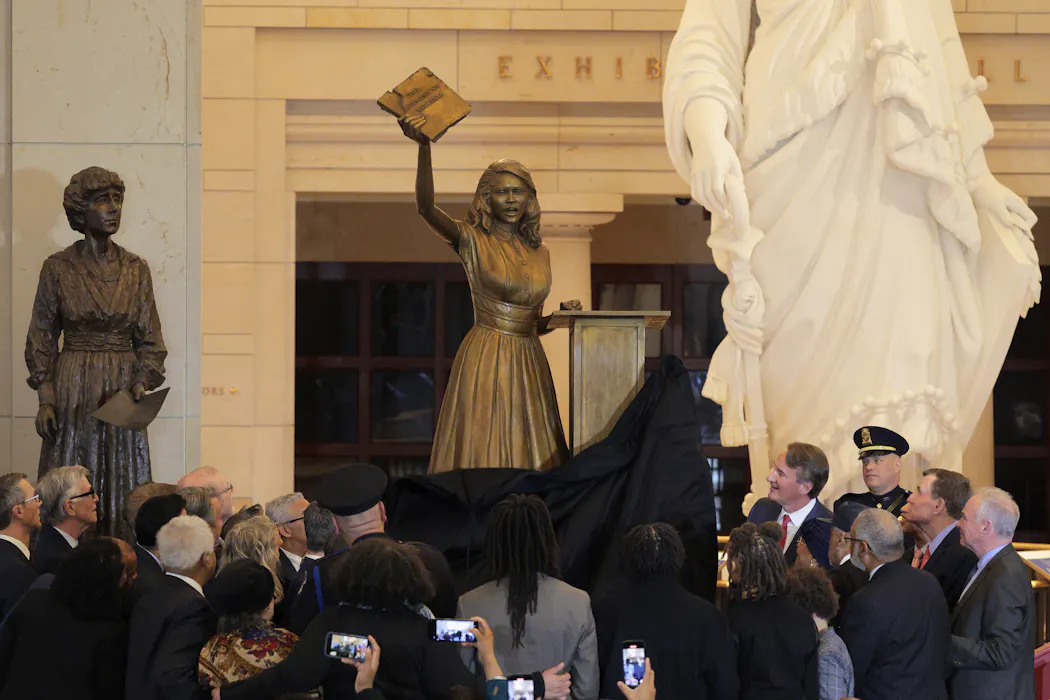
A statue of civil rights activist Barbara Rose Johns is unveiled in Emancipation Hall at the U.S. Capitol on Dec. 16, 2025, in Washington. Chip Somodevilla/Getty Images

The 250th anniversary of the Declaration of Independence isn’t the only important anniversary in 2026. This year also marks the 75th anniversary of an extraordinary case of student activism that helped lead to the Supreme Court’s decision outlawing segregated schools.

In April 1951, 16-year-old Barbara Rose Johns organized a student strike to protest the shabby conditions and inadequate education at her segregated Black high school in Prince Edward County, Virginia.

Prince Edward County is located about 65 miles southwest of Richmond and around 30 miles east of Appomattox, or 48 kilometers, in a part of Virginia known as Southside. African Americans constituted almost half the population, but they were largely prevented from voting before passage of the Voting Rights Act in 1965 and could not eat in local restaurants before passage of the Civil Rights Act of 1964. The public schools were segregated, and for decades there was no Black high school at all.

In 1939, following years of pressure by Black residents, the white authorities opened a high school for African Americans. That segregated institution was named for Robert Roosa Moton, who had been raised in Prince Edward County and served as an administrator at Hampton Institute in Virginia before being appointed as the second head of Tuskegee Institute following the death of Booker T. Washington.

The new building became severely overcrowded almost immediately. Although it was designed for a maximum enrollment of 180, attendance reached 219 the year after it opened and 377 in 1947.

The following year, the school board put up three temporary outbuildings to accommodate the overflow. Many Black residents scorned these buildings as “tar paper shacks” because of their covering and dilapidated condition. They had inefficient wood stoves that provided limited heating, and their thin walls often leaked when rain fell.

The shabbiness of these interim structures became a source of continuing tension, as negotiations between the Black community and white authorities for a more permanent facility dragged on inconclusively into early 1951.

Johns makes her move

As an 11th grader at Moton High School, Johns began talking with some of her fellow students about taking action to protest the shacks and improve their education.

On April 23, 1951, someone lured Moton’s principal, Boyd Jones, out of the building on the pretext that two students were in trouble elsewhere in town. After Jones left, Johns summoned the student body to the auditorium, where she exhorted her peers to walk out to protest the deplorable condition of their school.

Johns also sent a letter to Oliver W. Hill and Spottswood W. Robinson III, two Richmond civil rights lawyers who worked closely with the NAACP, asking for their legal assistance.

The strike went on for two weeks. During that time, Hill and Robinson met twice with hundreds of students and parents. The meetings grew out of the lawyers’ initial skepticism about litigating over school conditions in rural Prince Edward County, where they feared that plaintiffs would be subject to severe physical and economic retaliation.

Those meetings persuaded Hill and Robinson that the Black community broadly supported an effort to obtain desegregation rather than mere improvements in the separate Black schools. The lawyers therefore filed their lawsuit in the United States District Court for the Eastern District of Virginia on behalf of scores of Black students and parents, alleging that segregated schools violated the 14th Amendment.

Victory – and messy history

Johns’ initiative had both short- and long-term consequences.

In the immediate aftermath of the strike, the all-white school board fired Jones, whom they regarded as having put the students up to their activism despite his – and the students’ – insistence that the whole affair was a student initiative.

The lawsuit – and other similar suits filed in South Carolina, Delaware and Kansas – failed in the lower court. The plaintiffs appealed to the Supreme Court, which reversed those judgments and ruled in the consolidated case called Brown v. Board of Education that segregated public schools were unconstitutional.

A yellowed page from a legal decision with the name 'SUPREME COURT OF THE UNITED STATES' at the top.
The first page of the printed copy of the Supreme Court’s desegregation decision in Brown v. Board of Education, May 17, 1954.
Smithsonian National Museum of American History

Meanwhile, in the wake of the student strike at Moton, Johns’ family feared that she would be in physical danger if she remained in Prince Edward County for her senior year. They sent her to live with her uncle Vernon Johns, a minister and outspoken civil rights advocate, in Montgomery, Alabama.

Johns graduated from Drexel University and worked for many years as a public school librarian in Philadelphia before her death in 1991.

The post-Brown history of Prince Edward County is very complicated. White authorities closed the public schools for five years to avoid desegregation. For a long time afterward, virtually all the white children went to a private academy that opened when the public schools closed.

But that messy history cannot detract from the courage and impact of Barbara Johns.

In December 2025, her statue replaced that of Robert E. Lee as one of the two Virginians displayed in the U.S. Capitol. Johns is there – along with George Washington.

The Conversation

Jonathan Entin does not work for, consult, own shares in or receive funding from any company or organization that would benefit from this article, and has disclosed no relevant affiliations beyond their academic appointment.

​Politics + Society – The Conversation
Categories
Health

Christina Applegate Bought A Burial Plot Amid Her MS. Calling That Morbid? You Need A Reality Check

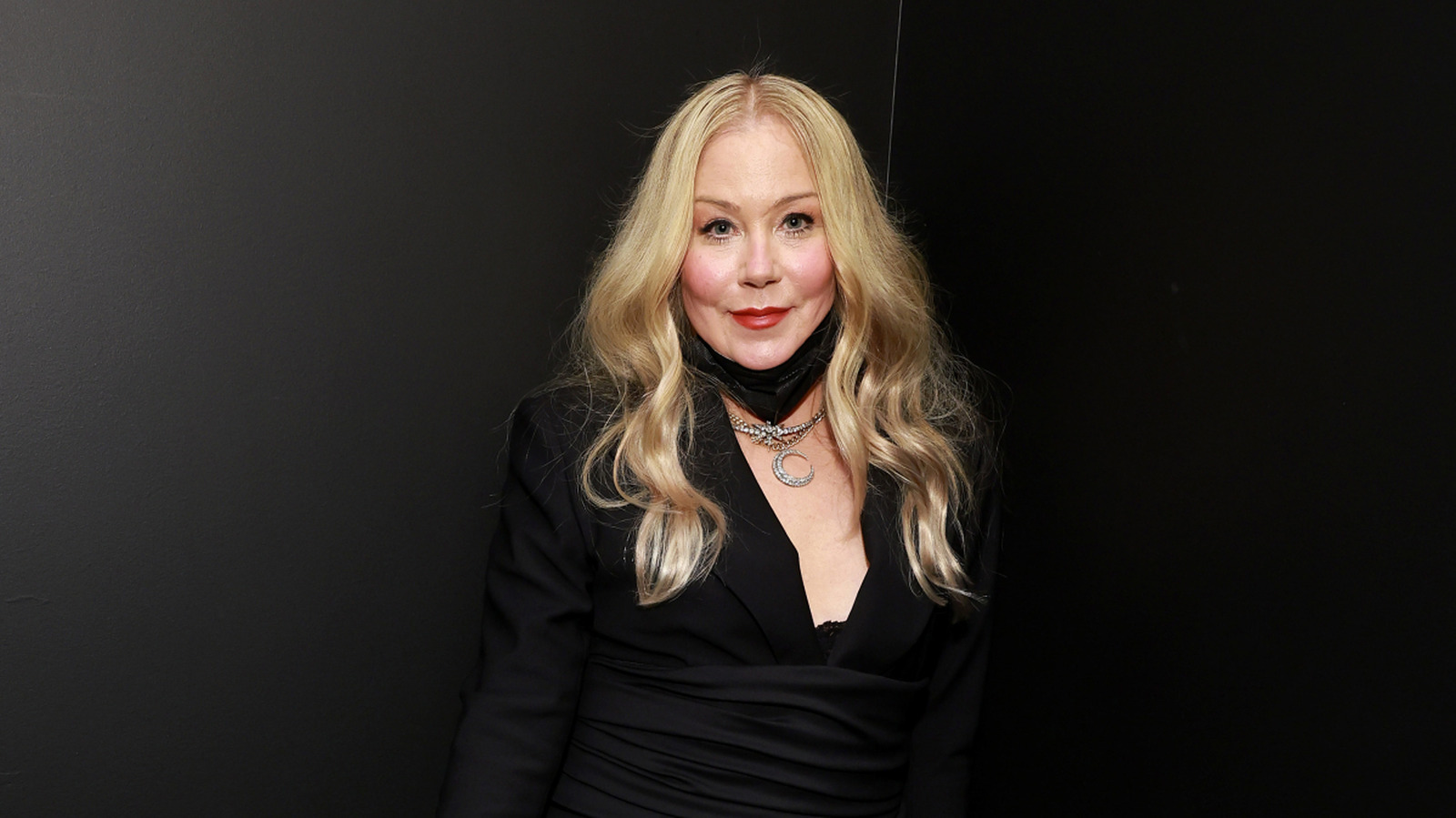
Christina Applegate says she has already purchased land to use for a burial plot. To some, this choice may seem a bit morbid, however, this writer disagrees.

​Health Digest – Health News, Wellness, Expert Insights

Categories
Entertainment

Why This State Is Called The Diner Capital Of The World

You can find diners all over the United States. However, this northeastern slice of the country has more of them per capita than any other state.

​Mashed – Fast Food, Celebrity Chefs, Grocery, Reviews

Categories
Music

Over 400,000 KitKat Bars Hijacked From Semi – Nestle Has Jokes

Imagine a truckload of KitKats, gone without a trace. This is one sweet heist that has everyone talking. Continue reading…​Country Music News – Taste of Country

Categories
Music

Over 400,000 KitKat Bars Hijacked From Semi – Nestle Has Jokes

Imagine a truckload of KitKats, gone without a trace. This is one sweet heist that has everyone talking. Continue reading…​The Boot – Country Music News, Music Videos and Songs

Categories
Entertainment

9 Unhealthiest Peanut Butter Brands You’ll Find At The Grocery Store

In its simplest form, peanut butter provides a decent amount of protein and fiber. These unhealthy options weigh down the formula with unnecessary additions.

​Mashed – Fast Food, Celebrity Chefs, Grocery, Reviews

Categories
Food

Gordon Ramsay And Anthony Bourdain Were Enamored By This Filipino Dish

Filipino cuisine is packed with mouthwatering flavors, but for culinary legends Gordon Ramsay and Anthony Bourdain, one specific meaty dish stole the show.

​Food Republic – Restaurants, Reviews, Recipes, Cooking Tips

Categories
Entertainment

What Happens To Unsold Girl Scout Cookies?

Pretty much everyone can agree that Girl Scout cookies are delicious, but more budget-minded customers means more leftover boxes. Where do these cookies go?

​Mashed – Fast Food, Celebrity Chefs, Grocery, Reviews

Categories
Politics

Georgia’s GOP Senate primary is a mess. Republicans are blaming each other.

Republicans once saw Georgia as the crown jewel of their Senate pickup opportunities. They’re now blaming each other as the GOP primary unravels into an intraparty brawl that could cost them their chance of defeating Democratic Sen. Jon Ossoff.

The party is grappling with a crowded field, no dominant front-runner, no endorsement from President Donald Trump — and the reality that the May 19 primary will very likely extend into an expensive, bruising mid-June runoff.

Rep. Mike Collins (R-Ga.), a close Trump ally, leads in public polling, with fellow Rep. Buddy Carter (R-Ga.) and Gov. Brian Kemp-endorsed former football coach Derek Dooley battling for second. But a large share of voters remain undecided, underscoring how fluid the race is. Meanwhile, incumbent Ossoff — who faces no primary challenge of his own — is keeping his powder dry and has amassed a formidable eight-figure campaign war chest ready to deploy in the general election.

Rep. Mike Collins (R-Ga.) speaks during a campaign rally on Oct. 15, 2024 in Atlanta, Georgia.

“If Ossoff could write a playbook for how he wants this primary to go, this is exactly it,” said a GOP operative, who, like others interviewed for this story, was granted anonymity to speak candidly about the race’s dynamics. They said that Georgia is like a “red-headed stepchild” not getting any attention from Washington.

Republicans point to several unforced errors that got the party to this point. Some say their current challenges were set in motion last year, when they failed to convince the state’s popular outgoing GOP governor, Kemp, to run for Ossoff’s seat. Others point to a lackluster effort by the National Republican Senatorial Committee to recruit a stronger crop of candidates or unify the field. Many also fault Trump and Kemp, who have had a sometimes-testy relationship, for failing to agree on a candidate they both could support to avoid a costly primary.

“It’s not ideal that it looks like it’s going to runoff,” said Cole Muzio, president of the conservative Frontline Policy Council. “There was so much talk about Kemp and Trump getting together and finding a nominee together, landing the plane on one person. I’m not going to try to sort out what happened with that, but a unity nominee would have been ideal.”

The early finger-pointing that has emerged in conversations with a dozen GOP strategists and officials in Georgia reflects their deep frustration with the state of their primary — and their chances of holding onto the Senate majority. The party is fending off competitive Democratic candidates in several red states as voters sour on Trump’s agenda, making flipping Georgia even more of a priority.

“It’s a mess that could have been much less messy if they had figured this out six months ago,” said a second Georgia-based Republican strategist unaffiliated with any campaign. “Everybody’s resigned to this going to May and then a June runoff and then pick up the pieces after that.”

Early general election polling shows Ossoff leading all three potential GOP candidates in a head-to-head matchup. After five years in the Senate, he has built a formidable political operation, churned out razor-thin statewide wins and amassed a sizable fundraising cushion.

“Jon Ossoff has $24 million. Jon Ossoff is on TV all of the time, carefully articulating his positions, grilling Tulsi Gabbard — really being methodical,” said Ryan Mahoney, a GOP strategist unaffiliated in the race. “He has tons of resources — great name ID, a lot of exposure — while the Republicans are fighting against each other, trying to see who can break out and ultimately be the nominee.”

“He’s just in a great position,” Mahoney noted.

Still, several Republicans say they’re confident about their prospects in a state that Trump won in 2024, and they expect money and outside support to dramatically ramp up once their nominee is decided.

“Republicans created this problem. We created this problem and it’s not any one person,” the second GOP strategist said. “I still think a Republican can win, I just think we’re making it way harder.”

With around 40 percent of likely GOP primary voters still undecided, according to recent public polling, the Senate candidates have been jockeying for Trump’s blessing — an endorsement that could be pivotal in deciding the future of the race.

All three candidates have engaged with the White House directly. In an interview with conservative host Clay Travis’ Outkick podcast, Dooley said he met with Trump in the Oval Office last year and had a “very engaging conversation.” Carter, for his part, told POLITICO in a brief interview that his campaign continues “to talk to the administration” about the race. Collins and the president have also met and discussed the race, according to a person familiar with the conversation. In February, Collins appeared onstage with the president during an event in Rome, Georgia, focused on Trump’s economic agenda.

Rep. Buddy Carter (R-Ga.) speaks at an event hosted by Vice President JD Vance on Aug. 21, 2025 in Peachtree City, Georgia.

Collins’ campaign recently released a lengthy memo outlining his argument for why the field should coalesce him around the primary. “[Democrats] are watching Republicans turn what should be the best pickup opportunity of the midterms into a needless intraparty squabble that wastes time and resources,” the memo reads. “Instead of spending the majority of 2026 focused on defeating Jon Ossoff, Republicans are on track to not be unified until late June, after a runoff, leaving the Republican nominee only four months to raise money and campaign across the largest state east of the Mississippi to unseat the Democrat.”

Most outside groups have been waiting to line up behind a clear front-runner, though Club for Growth PAC, a major conservative super PAC, has already endorsed Collins’ campaign — an unusual step for a group that usually acts in lockstep with the White House’s political strategy.

The White House did not respond to a request for comment regarding Trump’s thinking about the primary or his conversations with the three candidates.

Then there’s the Kemp factor.

After the governor declined to run, Republicans feared the primary could become a proxy war between himand Trump, who’ve previously clashed over Trump’s insistence that the 2020 election in Georgia was fraudulent. That hasn’t quite played out, with the president staying out of the race so far. But Kemp’s decision to back Dooley, the former football coach, means it’s unlikely they’ll find common ground.

Dooley has no prior experience in politics. State voting records show the former coach did not vote in presidential elections in 2016 and 2020 — attack fodder for his opponents as they seek Trump’s endorsement. (He did vote for Trump in 2024.)

“It’s no secret that the profile of a candidate that President Trump would prefer is much different than the profile of a candidate that Governor Kemp would prefer,” said a third local GOP strategist, who is unaffiliated in the race. “The nexus between those two just made it very hard, if not impossible, to come out with a consensus candidate.”

Garrison Douglas, a spokesperson for Kemp, doubled down on the governor’s support for Dooley in a statement and said he isn’t “wasting time worrying about the complaints of anonymous consultants.” Dooley spokesperson Connor Whitney said he’s confident Georgia voters will “choose the only political outsider in this race — not another stale D.C. politician.”

Former football coach Derek Dooley speaks at an event hosted by Vice President JD Vance on Aug. 21, 2025 in Peachtree City, Georgia.

Carter spokesperson Chris Crawford rejected the criticism of running a messy primary, saying that “only in Washington do consultants think voters choosing their nominee is a problem.”

Collins, in a statement, expressed confidence in his ability to win the primary, and added that his campaign “would welcome any help to ensure we could wrap this up in May and get on to the main event.”

With Georgia in a holding pattern, some local Republicans worry that Washington’s attention is drifting toward Michigan, where former GOP Rep. Mike Rogers has unified the party — and the president — around him in the state’s key battleground Senate race as a trio of Democrats battle it out in their own messy primary.

“There’s offense and defense. I think on offense, [Georgia] is still a top race. I think the only difference is that Michigan is a clear field. Rogers is ready to roll. He’s raising money. Dems have a mess on their side over there,” said one national Republican familiar with the party’s midterm strategy, who was granted anonymity to discuss behind-the-scenes planning.

Still, the person said they believe Georgia remains competitive, particularly if Republicans unify.

In a statement, Nick Puglia, a spokesperson for the NRSC, said Ossoff “is the most vulnerable incumbent on the map” and Georgia “has been and remains a top state for Republicans to expand President Trump’s Senate Majority.”

But Republicans in the Peach State are skeptical.

“I sense from some Republicans a feeling that maybe Michigan is a better opportunity, and of course, one of the reasons … for that is, ‘well, the field’s been cleared,’” said a fourth GOP strategist in Georgia.

“It feels like D.C. is shifting to Michigan because of a problem that they could solve today,” said the second Georgia-based GOP strategist.

​Politics