Categories
Uncategorized

Pam Bondi’s extreme political loyalty to Trump wasn’t enough to save her job

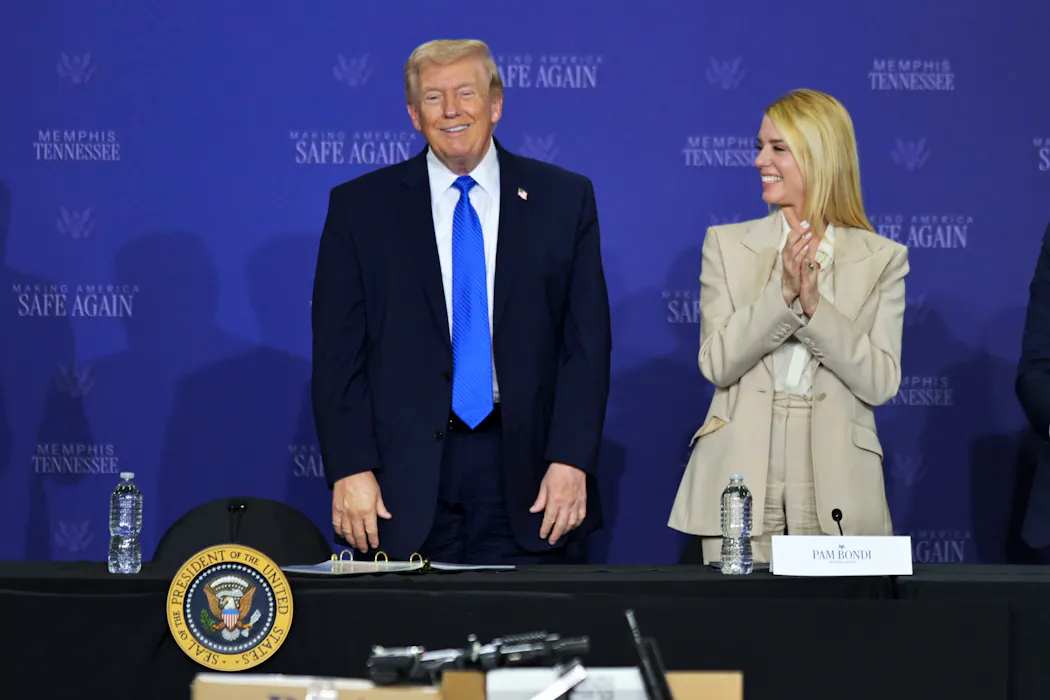
President Donald Trump participates in a roundtable discussion in Memphis, Tenn., with Attorney General Pam Bondi on March 23, 2026. AP Photo/Bruce Newman

After President Donald Trump fired Attorney General Pam Bondi on April 2, 2026, news reports suggested that she fell from grace, not for being too independent, but for not being effective enough at defending him and prosecuting his political enemies.

As The New York Times reported the previous day, Trump was disappointed with “Ms. Bondi’s handling of the Jeffrey Epstein files, which has become a political liability for Mr. Trump among his supporters. He has also complained about her shortcomings as a communicator and vented about what he sees as the Department of Justice’s lack of aggressiveness in going after his foes.”

The president has long indicated that whoever served as attorney general in his administration should see themselves as his lawyer rather than as someone representing the U.S. government.

During his first presidential term, Trump was gravely disappointed with Jeff Sessions, his first attorney general, who recused himself from the investigation into alleged political interference in the 2016 election. He replaced Sessions with William Barr, who abandoned Trump when the president did not accept the results of the 2020 election.

Having learned from those mistakes, Trump set out to find a political ally and loyalist to take the helm at the Justice Department in his second administration.

As a scholar of law and politics, and someone who has written about the role of the attorney general, I think Trump’s desire has a familiar ring to it. It is not unusual for presidents to put people who share their views and policy preferences into the role. But Trump has gone far beyond what is usually done.

A man dressed in a suit and tie lifts his right hand in front of a panel of lawmakers.
Jeff Sessions is sworn in as attorney general before the House Judiciary Committee on Capitol Hill on Nov. 14, 2017.
AP Photo/Alex Brandon

Bondi’s ascent

Florida Congressman Matt Gaetz was Trump’s first choice for attorney general during the president’s second term. Many commentators viewed Gaetz as a firebrand who was temperamentally unsuited for that position. Some criticized him for calling the president an “inspirational leader of a loving and patriotic movement” in the aftermath of the Jan. 6, 2021, attack on the Capitol. In the face of growing opposition generated in part by allegations of his misconduct, Gaetz withdrew.

Trump turned to Bondi a few hours later. She had served as Florida’s attorney general and drawn praise from across the political spectrum for her professionalism.

A bipartisan group of former state attorneys general wrote a letter attesting to their “firsthand knowledge of her fitness for the office” and her “wealth of prosecutorial experience and commitment to public service.”

In addition, as PBS noted at the time of her appointment, Bondi was “a longtime Trump ally and was one of his lawyers during his first impeachment trial, when he was accused — but not convicted — of abusing his power as he tried to condition U.S. military assistance to Ukraine on that country investigating then-former Vice President Joe Biden.”

She also showed her loyalty by attending Trump’s New York trial for paying hush money to porn actor Stormy Daniels, with whom he allegedly had an affair.

At the time of her nomination, Bondi seemed to have the attributes of an attorney general. She had the credentials to take on the job of running the DOJ and the confidence of the president who appointed her.

From confirmation to downfall

During her confirmation hearings, Bondi promised to safeguard the Justice Department’s independence and bolster its transparency. She also vowed to not serve as the president’s personal attorney.

And in response to a question from Rhode Island Senator Sheldon Whitehouse, she pledged in January 2025 that “there will never be an enemies list within the Department of Justice.”

But she also showed her willingness to joust with Democrats on the Senate Judiciary Committee. She hewed to the MAGA script by refusing to say that the president had lost the 2020 election. And she mounted a spirited attack on the Biden Justice Department, which she claimed had been “weaponized for years and years and years.”

A woman speaks in front of a microphone as a man stands behind her.
Attorney General Pam Bondi and Deputy Attorney General Todd Blanche speak to reporters in Washington on March 18, 2026.
Nathan Posner/Anadolu via Getty Images

Once in office, Bondi took on the difficult task of leading the Justice Department while also pleasing the president. She stood by when Trump used an appearance at the department to give, according to The New York Times, a “grievance-filled attack on the very people who have worked in the building and others like them.” The Times added: “He appeared to offer his own vision of justice in America, one defined by personal vengeance rather than by institutional principles.”

Bondi apparently did not do enough to deliver on that version of justice.

Last year, Trump had to urge Bondi to take action against his political enemies, including former FBI Director James Comey, California Senator Adam Schiff and New York Attorney General Leticia James.

“They’re all guilty as hell,” Trump posted on his social media platform, Truth Social, “but nothing is going to be done. “We can’t delay any longer, it’s killing our reputation and credibility,” he added. “They impeached me twice, and indicted me (5 times!), OVER NOTHING. JUSTICE MUST BE SERVED, NOW!!!”

Bondi took her marching orders and launched investigations of those the president named. However, she was not able to secure any convictions. NBC News quoted a former official in the Trump White House who said that failing to secure indictments “is a problem for job security with the president.”

If that wasn’t enough, Trump was also reportedly frustrated with the way Bondi had handled the release of the Epstein files, first promising full disclosure and then botching the rollout of the files.

Contending visions of the attorney general’s job

Bondi’s tenure illustrates the conflicting visions of what an attorney general should do that animate today’s American politics.

The questions Democrats asked her during her confirmation were designed to get her to commit to their view of what the attorney general should do. Those questions signaled their belief that anyone occupying that office should maintain their distance from the president and uphold the Justice Department’s independence.

But right from the start of the republic, presidents have chosen close political allies to serve as attorney general.

It’s common for presidents to appoint their friends and supporters to be attorneys general. Since Franklin D. Roosevelt, many presidents have chosen their campaign manager or their party’s national chairperson to be attorney general of the United States.

But even compared with this history, Trump and his allies have a radically different vision, seeing the attorney general as just another Cabinet member whose responsibility is to carry out the president’s policies and implement his directions. As Trump put it in a 2017 interview with The New York Times, he has the “absolute right to do what I want to do with the Justice Department.”

In the end, it seems that Bondi was fired for her failure to be effective in the political role assigned to her. It is likely that the president will want to replace her with someone even more political than she was, who promises to deliver more of the results he wants.

The Conversation

Austin Sarat does not work for, consult, own shares in or receive funding from any company or organization that would benefit from this article, and has disclosed no relevant affiliations beyond their academic appointment.

​Politics + Society – The Conversation

Categories
Alaska News

University of Alaska staff vote to unionize

One of the outdoor sculptures at the University of Alaska Anchorage campus is integrated into a fountain, pictured here on May 16. More than half of the University of Alaska system schools attend UAA or one of its satellite campuses. (Photo by Yereth Rosen/Alaska Beacon)

One of the outdoor sculptures at the University of Alaska Anchorage campus is integrated into a fountain, pictured here on May 16, 2022. More than half of the University of Alaska system students attend UAA or one of its satellite campuses. (Photo by Yereth Rosen/Alaska Beacon)

University of Alaska staff announced a vote to form a union on Wednesday. The union would represent 2,300 permanent staff across the three universities and a dozen community campuses. 

Staff voted to form the union Coalition of Alaska University Staff for Equity, or CAUSE, which would be part of the national United Auto Workers union, in a 1,106 to 610 vote, with 64% voting yes. 

UA staff that would be represented by the union include student services staff, researchers, fiscal and administrative staff, development staff, science communicators, information systems specialists, library workers, athletics coaches and many others, according to a statement announcing the vote. 

“Amid growing uncertainty around state and federal funding for the University, staff cited several reasons for forming a union: consistency and competitiveness in pay and benefits; greater transparency in promotion, career development, and retention; fair workload; and more,” the statement said. 

“This is an exciting day for staff at UA,” said Mike DeLue, a researcher with the International Arctic Research Center at the University of Alaska Fairbanks, in the emailed statement. 

“We did our research, discussed and debated, and overwhelmingly chose to unionize. As soon as the result is certified, we’re ready to sit down with the University and work constructively on addressing the issues that motivated us to form a union in the first place. Improving our working conditions will help us serve more students, enhance UA’s research capacity, and support Alaska communities,” he said. 

The results of the union vote are expected to be certified on April 8, barring any objections or challenges filed by either of the parties, said Jonathon Taylor, director of UA public affairs, by email on Wednesday. 

Taylor also cited financial uncertainty as one of the reasons the university opposed the union effort, which he said was communicated to employees ahead of the vote.

“The university opposed unionization because we believed it would reduce flexibility, slow decision-making, and limit our ability to respond to financial uncertainty,” he said. “That position was operational, not ideological.”

“UA respects the outcome and the right of staff to organize,” he said by email. “We’ll be bargaining in good faith with CAUSE-UAW in accordance with Alaska labor law.”

Taylor noted that existing wages and working conditions will remain in place while the contract is negotiated. He said initial contracts take roughly 400 days to negotiate. He said a 3% salary increase the university requested of the Alaska State Legislature in next year’s budget for all unionized and non-union staff will not apply to the new union members since they are in the process of forming the union and have not yet negotiated a new contract.

“Under Alaska labor law and case law, a contract with a bargaining unit must be in place for negotiated raises to be requested and approved by the legislature,” he said. Taylor said the issue was communicated to staff ahead of the union vote. 

“Non-represented staff remain eligible for that increase,” he said. 

But Charlie Banks, an organizer for the union effort and an academic advisor with the University of Alaska Anchorage, said Thursday that it is the university’s choice, and the new union members should be eligible.

“We believe that the university has the ability to issue the pay increases to us,” she said in a phone interview.

She said support for salary increases is also a show of support for retaining staff, which she says is a common goal of both the union and the university.

“We agree with university admins concerns about difficulties with recruitment and retention. One of the main reasons for this is that Alaska is not keeping up with its peers in maintaining competitive packages for workers,” she said. “Not surprisingly, our peer institutions that have staff unions have much stronger recruitment tools because their contracts are responsive to their needs.”

The new staff union follows the 2024 unionization of UA graduate workers to form the Alaska Graduate Workers Association within the United Auto Workers Local 1907. The union represents graduate teaching assistants, researchers and fellows. They bargained their first three-year contract within 96 days, which secured higher pay, an updated grievance process and a change from at-will to just-cause employment, according to reporting from the student-run newspaper The Northern Light. 

The new staff union joins the national UAW union, which includes approximately 120,000 higher education workers across the country, including staff at the University of Washington and University of California. 

SUBSCRIBE: GET THE MORNING HEADLINES DELIVERED TO YOUR INBOX

Categories
Music

Dan + Shay ‘Say So’ Inspired by Loss, Duo Feared It Was Too Heavy

The country duo reveals why their new song “Say So” felt different — and why they weren’t sure fans would be ready for it. Continue reading…​Country Music News – Taste of Country

Categories
Music

Dan + Shay ‘Say So’ Inspired by Loss, Duo Feared It Was Too Heavy

The country duo reveals why their new song “Say So” felt different — and why they weren’t sure fans would be ready for it. Continue reading…​The Boot – Country Music News, Music Videos and Songs

Categories
Entertainment

How Jana Duggar Found Out About Brother Joseph Duggar’s Arrest

Jana Duggar, Joseph DuggarJana Duggar is speaking out about her brother Joseph Duggar’s run-in with the law.
Two weeks after Joseph was arrested for allegedly molesting a 9-year-old girl during a 2020 vacation to Florida,…
​E! Online (US) – Top Stories

Categories
Entertainment

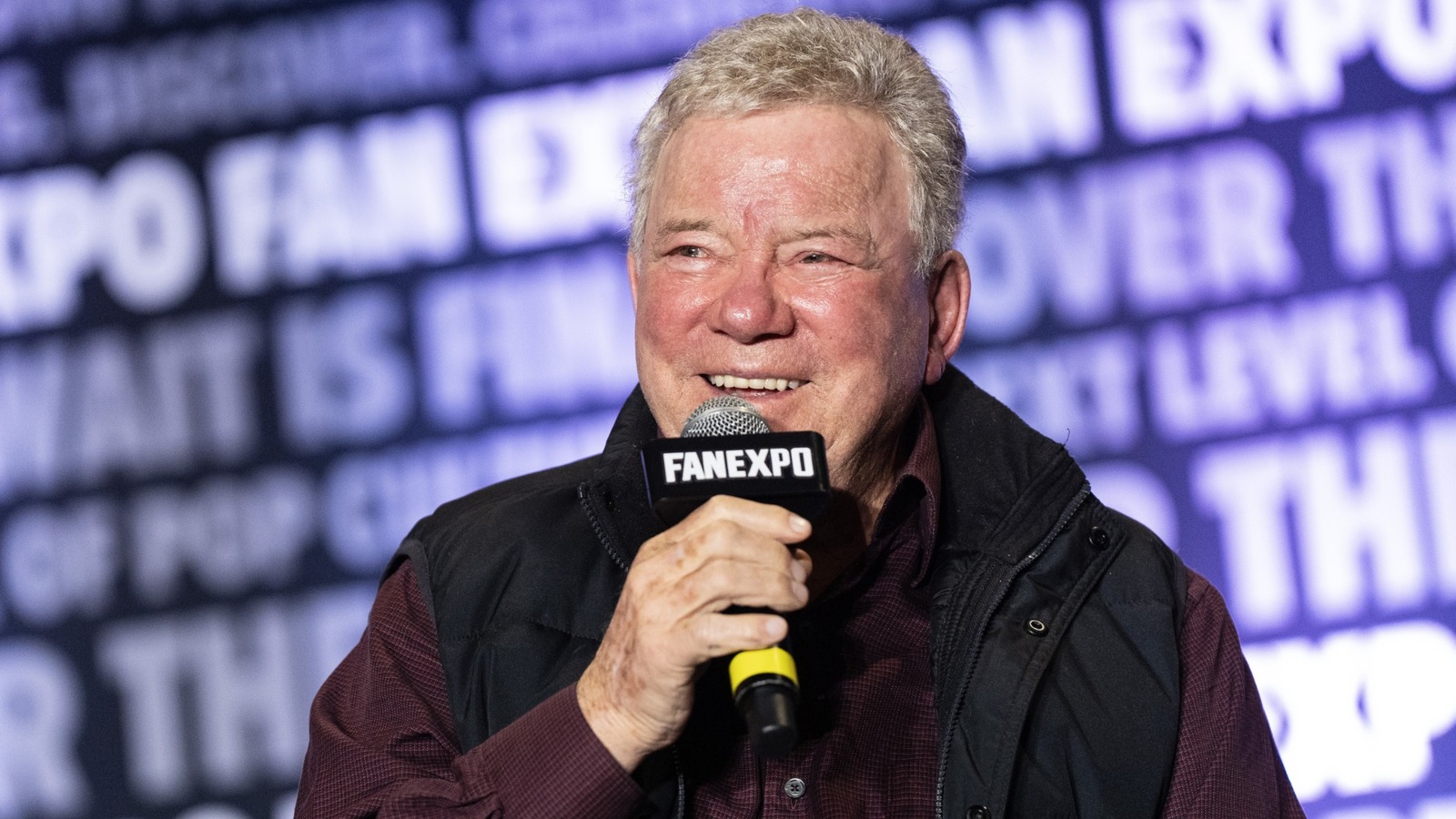
The Dish William Shatner Was Strangely Caught Eating In His Car

William Shatner was spotted eating an out-of-place food in his car, raising eyebrows. It turns out, there was more than met the eye behind his strange behavior!

​Mashed – Fast Food, Celebrity Chefs, Grocery, Reviews

Categories
Entertainment

These Press-on Nails Survived Airport Travel. Yes, Really

The Press-Ons That Stayed on Through a 6 Hour Flight & a Lay-OverNot all press-on nails are created equal, especially not during a long day of travel. That’s why I was in awe when this Glamnetic set stayed on through wrangling my suitcase through security, a…

​E! Online (US) – Top Stories

Categories
Entertainment

Sharon Stone Reveals This A-List Actor Is Hollywood’s “Best Kisser”

Sharon StoneSharon Stone isn’t afraid to kiss and tell.

In fact, the actress was so confident about her smooch with Robert De Niro in Casino that she had no hesitation declaring him the “best kisser in the…
​E! Online (US) – Top Stories

Categories
Food

The Mystery Behind Why This Fast Food Chain Sells 7Up Over Sprite

While In-N-Out first offered Pepsi-Cola products, the company switched to Coca-Cola in the early ’90s – yet it still serves 7Up instead of Sprite. Why?

​Food Republic – Restaurants, Reviews, Recipes, Cooking Tips

Categories
Alaska News

Alaska’s energy leadership means American energy independence

Sunlight reflects off solar panels lining the student recreation building at the University of Alaska Fairbanks campus on June 2, 2018. (Photo by Yereth Rosen/Alaska Beacon)

Sunlight reflects off solar panels lining the student recreation building at the University of Alaska Fairbanks campus on June 2, 2018. (Photo by Yereth Rosen/Alaska Beacon)

Alaska is about to see $22 billion invested in energy production and storage over the next five years. That’s real money, real opportunity and something we shouldn’t take for granted. What we do with that investment matters far beyond Alaska.

When you have a diverse energy grid, it’s harder to disrupt and less vulnerable to foreign pressure. That’s just common sense. Alaska can offer that diversity: oil and gas, hydropower, wind, solar. But only if we build it.

We should support programs that upgrade and modernize our electric grid and energy systems. Updated systems will be more efficient and can better handle extreme weather. They’ll be more secure from hackers and foreign interference. With clean energy, we can diversify our energy portfolio to prepare for any interruptions. For Alaska’s remote communities, renewable power is the innovation we need to make sure their power needs are met reliably.

For years, Senator Murkowski has been involved in shaping federal energy policy that supports responsible development of Alaska’s resources and strengthens long-term energy security. These efforts have helped maintain Alaska’s role as a key player in energy innovation. But we have more work to do. 

Investing in a clean energy economy will result in more manufacturing jobs here at home and not outsourced to other countries like China. It will ensure we have greater control over our energy supplies in a system built in America by American workers. If we don’t build it here, someone else will build it somewhere else. Right now, China is dominating clean energy manufacturing globally. They’re winning the race to produce solar panels, batteries and wind turbines. If America wants energy independence, we can’t outsource it. We must build these technologies here using American supply chains.

For Alaska specifically, that means jobs. Good-paying manufacturing and construction work for communities that need it. Fuel-free power sources also help stabilize electricity prices. I’ve watched communities like Kodiak and Juneau manage their energy costs in ways most Alaskans can’t. Kodiak used hydropower and wind to displace millions of gallons of diesel. Juneau runs almost entirely on hydropower. The result has been some of the lowest, most predictable electricity rates in the state. When your power comes from water or geothermal or wind instead of fuel markets, families and businesses are better protected from market shocks. Recent instability tied to the conflict in Iran has underscored how quickly global fuel supplies can be disrupted, driving up oil and gas prices and reinforcing the value of reliable, locally produced renewable energy.

Modernizing Alaska’s grid is equally critical. Extreme weather, cyberattacks and foreign interference aren’t hypotheticals. Our systems need to withstand all of it. That infrastructure work pays dividends for years.

 The practical opportunities are in front of us right now. Hydropower projects like the Dixon Diversion, a 50 percent expansion of Bradley Lake, could add real, affordable, clean power to the Railbelt while Cook Inlet gas is tightening up. We have the expertise and know-how to build things in harsh environments because we’ve been doing it for decades.

An America First energy agenda doesn’t mean picking one fuel over another. It means producing every kind of energy we can here at home: oil, gas, wind, solar and hydropower. It means building and deploying these technologies in Alaska, strengthening American manufacturing and securing supply chains.

Alaskans have always believed in using what we have and building things that last. That same practical mindset should guide what we build next. More Alaska-made energy where it makes sense, more American manufacturing and more control over our own energy future. That’s not just good for Alaska. That’s good for the rest of the country, too.

SUBSCRIBE: GET THE MORNING HEADLINES DELIVERED TO YOUR INBOX