 If you thought that full-coverage bikini bottoms couldn’t be cute, we’re here to prove you wrong. Sometimes you may not want to be quite as cheeky as certain bikini bottoms can leave you looking,…
E! Online (US) – Top Stories









If you thought that full-coverage bikini bottoms couldn’t be cute, we’re here to prove you wrong. Sometimes you may not want to be quite as cheeky as certain bikini bottoms can leave you looking,…
E! Online (US) – Top Stories

Rarely does a fast food giant escape scandal. From McDonald’s to Taco Bell, most industry leaders have faced significant controversy at one point or another.

Food Republic – Restaurants, Reviews, Recipes, Cooking Tips

Reading Time: 3 minutes
Christina Marie Plante went missing when she was only 13.
Some would say that being found alive even weeks later is a “miracle.”
At the very least, it would be a statistical outlier.
Finding a missing child alive over three decades later is a singular event. And it’s cause for celebration.
On May 15, 1994, Plante was only 13 years old.
She left her Payson, Arizona home to walk to a nearby stable. (The community of Star Valley exists there now, but was incorporated over a decade after her disappearance.)
Her horse was housed at that stable.
However, she vanished somewhere along the way.
For more than 30 years, she has been a missing person.
At the time, authorities classified her disappearance as “endangered and under suspicious circumstances.”
Barely a teenager, she had vanished.
Law enforcement and volunteers searched for any sign of her.
In some cases, missing persons are simply injured and unable to move. In 1994, essentially no teenager would have had a cell phone.
However, eventually, her case went cold. There were no leads. She became part of national missing children databases, and many assumed that she had died.

On Wednesday, April 1, the Gila County Sheriff’s office made a stunning announcement.
They shared that there had been a “successful” resolution to Plante’s case after 32 years.
At this point, most would expect the arrest of some depraved killer and the location of a young teen’s remains, buried for decades in some dark place.
Instead, she had been found alive.
Police vaguely shared that advances in technology and in investigative techniques had led to her discovery.
“Investigators have confirmed her identity, and her status as a missing person has been officially resolved,” the Gila County Sheriff’s Office announced.
They credited cold case initiatives for “bringing long-awaited answers to families and communities.”
However, the details on Plante’s life since her disappearance stop there.
“Out of respect for Christina’s privacy and well-being,” the sheriff’s office explained, “additional details will not be released at this time.”
Understandably, she is now an adult woman of 44 or 45 years. She doesn’t want a media circus.

Reading between the lines, it does appear that the unsaid truth may be that Plante staged her own disappearance.
We can only imagine what factors may have led to her wanting to leave her home as a child, and what difficulties she may have faced after that.
Many people are aware that most — but not all — runaways have extremely good reasons for leaving home. There are also times when they are manipulated into leaving home, and fear returning out of shame.
We don’t have to know what Plante went through, before or after she vanished. That is her business.
However, we are sorry for any hardships that she has experienced. And we are, of course, glad that she is alive.
Christina Marie Plante, Vanished at 13, Found ALIVE 32 Years Later was originally published on The Hollywood Gossip.
The Hollywood Gossip

You’re all saying these “famous” lines wrong! Continue reading…Country Music News – Taste of Country

A snow-covered totem pole stands next to the Alaska State Capitol on Wednesday, March 4, 2026. (James Brooks photo/Alaska Beacon)
At the Alaska Beacon, we’re constantly trying to figure out where we should put our attention. There’s always more news than there are people to report it.
Every Thursday, the Alaska Legislature publishes its committee schedule for the coming week. Public notices alert us to meetings and events. The governor’s office occasionally lets us know ahead of time that something’s coming down the pike, too.
Here’s what we know about for the coming week. If you know of something that’s coming up that you should think we should pay attention to, email us at info@alaskabeacon.com.
We can’t cover everything on this list, but we’re interested in them and we think you should know about them in case you’re interested in them, too.
This list is ripped from our notebooks, and it is likely to change over the course of the week. We’ll update it when we can.
Are you trying to keep track of when to testify on a bill? The Legislature has a website for that.
University of Alaska Fairbanks Northwest Campus Alumni Night and 50th anniversary celebration, 6 p.m., Nome.
No legislative committee meetings as lawmakers are away for the Easter holiday.
Alaska Miners Association trade show opens in Fairbanks.
Western Alaska Interdisciplinary Science Conference takes place in Bethel.
Alaska Municipal League infrastructure conference takes place in Anchorage.
Alaska infrastructure development symposium opens in Anchorage.
Governor’s health and safety conference opens in Anchorage.
Alaska Sea Grant 2026 Western Alaska Interdisciplinary Science Conference Apr. 7-9 at the Yupiit Piciryarait Cultural Center, UAF Kuskokwim Campus in Bethel, Alaska, see event info here.
8 a.m. – House Community and Regional Affairs will consider a governor’s appointee to the Regulatory Commission of Alaska: Julie Vogler and hear bills related to birth certificates and identification for unhoused young adults and retirement benefits for emergency dispatchers
10 a.m. – House Fisheries considers a bill related to a new administrative area in Cook Inlet for certain commercial set net fishing entry permits
12 p.m. – Lunch & Learn presentation on postsecondary education opportunities
1 p.m. – House Transportation hears an update on rural aviation and public testimony on a bill related to the maintenance of transportation facilities in wildland urban interface zones
1:30 p.m. – Senate Community and Regional Affairs hears a bill related to criminal penalties for hit-and-runs and a bill related to data centers
1:30 p.m. – House Finance hears a bill related to pharmacists’ prescription authority and a bill to add one more superior court judge in the state
3:15 p.m. – House State Affairs considers a governor’s appointee to the Board of Parole: Steve Meyer and the Alaska Police Standards Council: Veronica Lambertsen. It will consider a bill related to reduced interest on certain loans and a bill related to municipalities charging for public records
3:30 p.m. – Senate Health and Social Services Committee will hear a resolution related to the Rural Health Transformation Fund; a bill related to banning food dyes in school meals and a bill to establish a Citizen’s Review Panel for all cases of children taken into foster care
Western Alaska Interdisciplinary Science Conference takes place in Bethel.
Alaska Municipal League infrastructure conference takes place in Anchorage.
Community Advisory Board Meeting about programming and services at Alaska Public Media takes place at 6 p.m. in Anchorage and online.
House/Senate floor sessions in the morning
8 a.m. – House Education hears a bill related to funding school meals; and a bill related to establishing CPR training in all schools
9 a.m. – Board of veterinary examiners regular meeting
9 a.m. – Board of optometry examiners regular quarterly meeting
9 a.m. – Alaska Supreme Court hearing, Orutsararmiut Native Council v. Alaska Department of Environmental Conservation and Donlin Gold. Boney Courthouse, Anchorage.
9 a.m. – House Finance hears a bill related to funding special education
9 a.m. – Senate Finance hears a bill proposed by the governor to create a seasonal sales tax, and an increased tax on oil and gas in part to fund a bigger PFD
11 a.m. – Alaska Supreme Court hears oral arguments in Donlin Gold lawsuit
12 p.m. – Lunch & Learn on the Arctic Winter Games
12 p.m. – Lunch & Learn on Life Center West and organ donation
1-2 p.m. – Alaska Commission on Aging monthly meeting
1 p.m. – House Resources considers a governor’s appointee to the Regulatory Commission of Alaska: Julie Vogler; and a bill related to the governor’s tax break proposal for the Alaska LNG gas line
1:30 p.m. – House Finance considers a bill related to paid parental leave
1:30 p.m. – Senate Labor and Commerce hears a bill related to expanding the number of seats and adds criteria for membership on the Board of Parole; and a bill related to disclosure of wage information
1:45 p.m. – Senate Judiciary will hear a bill related to increasing criminal penalties for hit-and-runs
3:15 p.m. House Labor and Commerce will hear a bill related to reimbursement rates for telehealth services
3:30 p.m. – Senate Education will hear a bill related to a student loan forgiveness program, a bill related to local contributions to school districts and a bill related to University of Alaska fees
3:30 p.m. – Senate Resources will consider Julie Vogler as a governor’s appointee to the Regulatory Commission of Alaska and a resolution to support the proposed Alaska LNG gas line project
Western Alaska Interdisciplinary Science Conference takes place in Bethel.
Alaska Municipal League infrastructure conference takes place in Anchorage.
Alaska Young Professionals summit opens in Anchorage.
Alaska Migratory Bird Co-Management Council spring meeting, Fairbanks.
8 a.m. – House Tribal Affairs hears an update on the Alaska Council of Native Languages
9 a.m. – House Finance hears a bill related to how the state pays its contracts
9 a.m. – Senate Finance debates the capital budget
10 a.m. – The State of Alaska, Council on Domestic Violence and Sexual Assault (CDVSA), invites representatives from all 229 federally recognized tribes to a listening session. They want to hear your direct input on issues related to domestic violence, dating violence, sexual assault, and stalking. See info on public testimony here.
12 p.m. Lunch & Learn presentation on the Port of Alaska
1:30 p.m. Senate Community and Regional Affairs hears two bills related to child sexual abuse material
1:30 p.m. House Finance considers the capital budget and hears a presentation on Bond Reimbursement and Grant Review Committee by the Department of Education and Early Development
1:30 p.m. – Senate Finance hears a bill related to a state defined benefit retirement system
3 p.m. – Pioneer Homes advisory board meeting
3:15 p.m. – House State Affairs hears a bill related to regulating PFAS chemicals, remediation and water testing
3:30 p.m. Senate Health and Social Services hears a bill related to health compacts and the Rural Health Transformation Fund
Alaska Migratory Bird Co-Management Council spring meeting, Fairbanks.
8 a.m. House Education hears a bill related to retaining teachers; and a bill related to school maintenance positions
9 a.m. – House Finance hears a bill related to expanding the number of state judges
12 p.m. – Lunch & Learn presentation on the history of the global perspective on oil and gas
1 p.m. – House Judiciary considers a resolution passed by the Senate to lower the votes needed for a veto override
1 p.m. – House Resources considers a bill related to the governor’s proposed tax breaks for the Alaska LNG pipeline
1:30 p.m. – House Finance hears a bill related to peace officer or firefighters disability benefits
1:30 p.m. – Senate Labor and Commerce hears a bill related to employer contributions and a bill related to social worker licensure compact
3:15 p.m. House Labor and Commerce hears a bill related to emergency planning for pets and a bill related to corporate income tax
3:30 p.m. – Task Force on Education Funding hears a presentation on required local contributions and federal funding toward schools
SUBSCRIBE: GET THE MORNING HEADLINES DELIVERED TO YOUR INBOX

Even though sobriety isn’t a benefit typically associated with the use of GLP-1s, Oprah Winfrey shared that it was one of the benefits she experienced.

Health Digest – Health News, Wellness, Expert Insights

 There’s nothing complicated about how Alec Baldwin and Hilaria Baldwin’s eldest daughter feels about their age gap.
Indeed, the couple’s 12-year-old daughter Carmen took a playful jab at her…
E! Online (US) – Top Stories

 If fashion is feeling a little nostalgic lately, jelly shoes are leading the charge. The once-childhood favorite has officially reemerged as one of 2026’s most unexpected—and exciting—sandal…
E! Online (US) – Top Stories
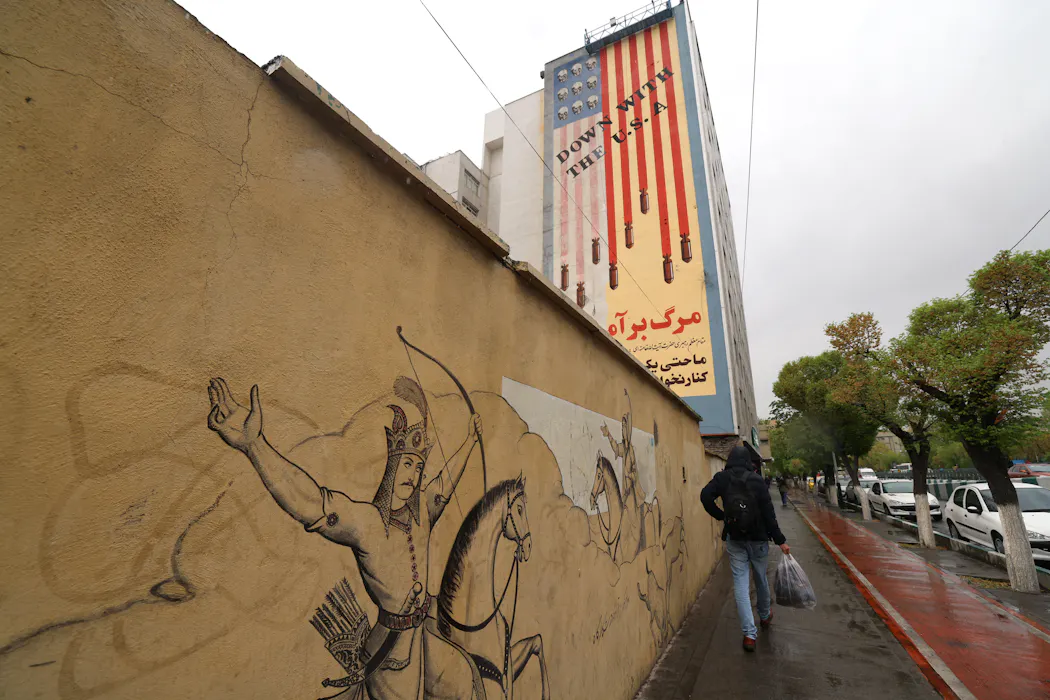
With U.S. bombs raining down on Iran and Tehran’s leaders responding by hitting targets across the Persian Gulf and restricting transit through the Strait of Hormuz, it is fair to suggest that the present moment represents a low in relations between the two countries.
But the bad blood isn’t new: The U.S. and Iran have been in conflict for decades – at least since the U.S. helped overthrow a democracy-minded prime minister, Mohammed Mossadegh, in August 1953. The U.S. then supported the long, repressive reign of the Shah of Iran, whose security services brutalized Iranian citizens for decades.
The two countries have been particularly hostile to each other since Iranian students took over the U.S. Embassy in Tehran in November 1979, resulting in economic sanctions and the severing of formal diplomatic relations between the nations.
Since 1984, the U.S. State Department has listed Iran as a “state sponsor of terrorism,” alleging the Iranian government provides terrorists with training, money and weapons.
Some of the major events in U.S.-Iran relations highlight the differences between the nations’ views, but others arguably presented real opportunities for reconciliation.
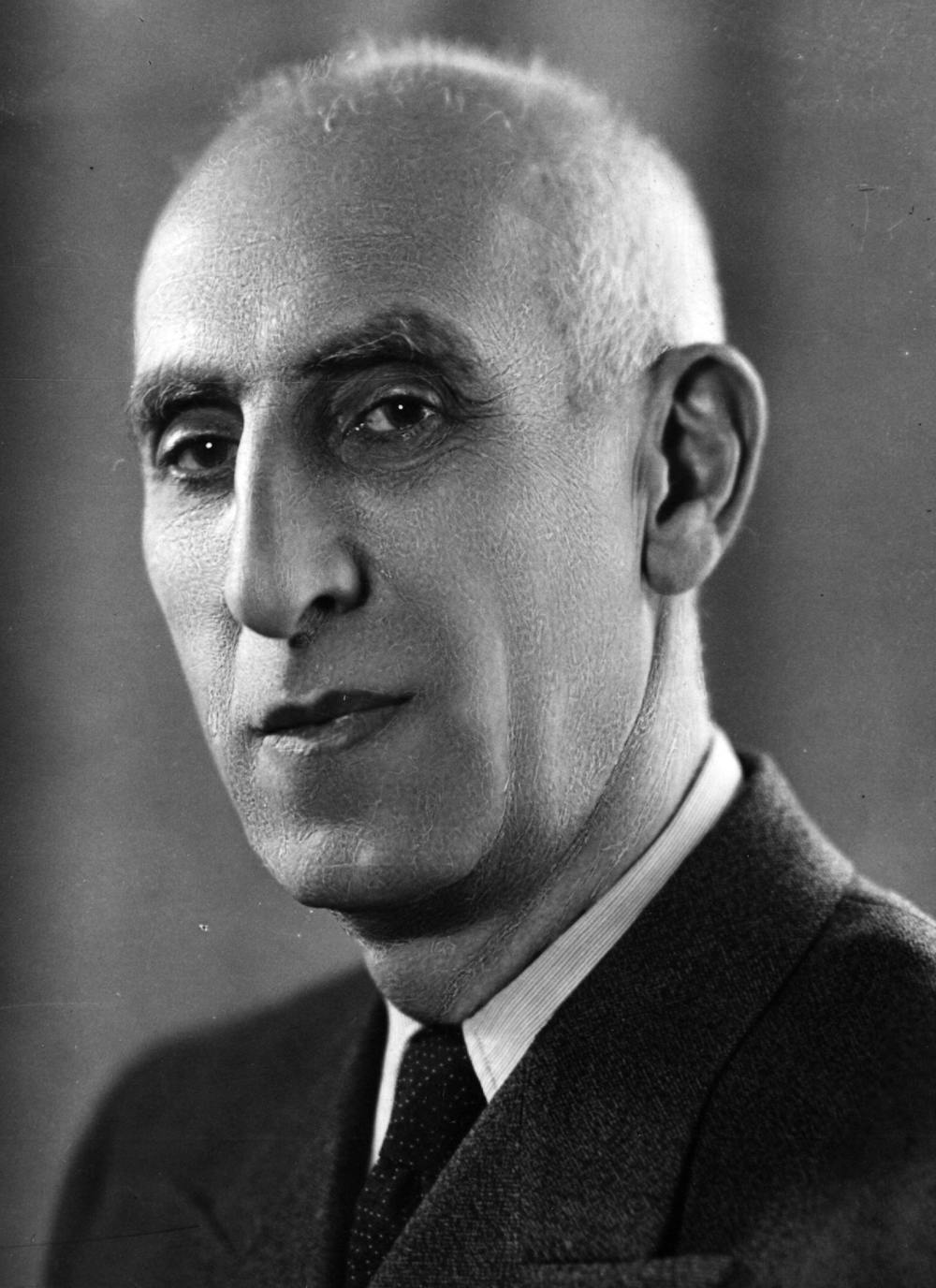
In 1951, the Iranian Parliament chose a new prime minister, Mossadegh, who then led lawmakers to vote in favor of taking over the Anglo-Iranian Oil Company, expelling the company’s British owners and saying they wanted to turn oil profits into investments in the Iranian people. The U.S. feared disruption in the global oil supply and worried about Iran falling prey to Soviet influence. The British feared the loss of cheap Iranian oil.
President Dwight Eisenhower decided it was best for the U.S. and the U.K. to get rid of Mossadegh. Operation Ajax, a joint CIA-British operation, convinced the Shah of Iran, the country’s monarch, to dismiss Mossadegh and drive him from office by force. Mossadegh was replaced by a much more Western-friendly prime minister, handpicked by the CIA.
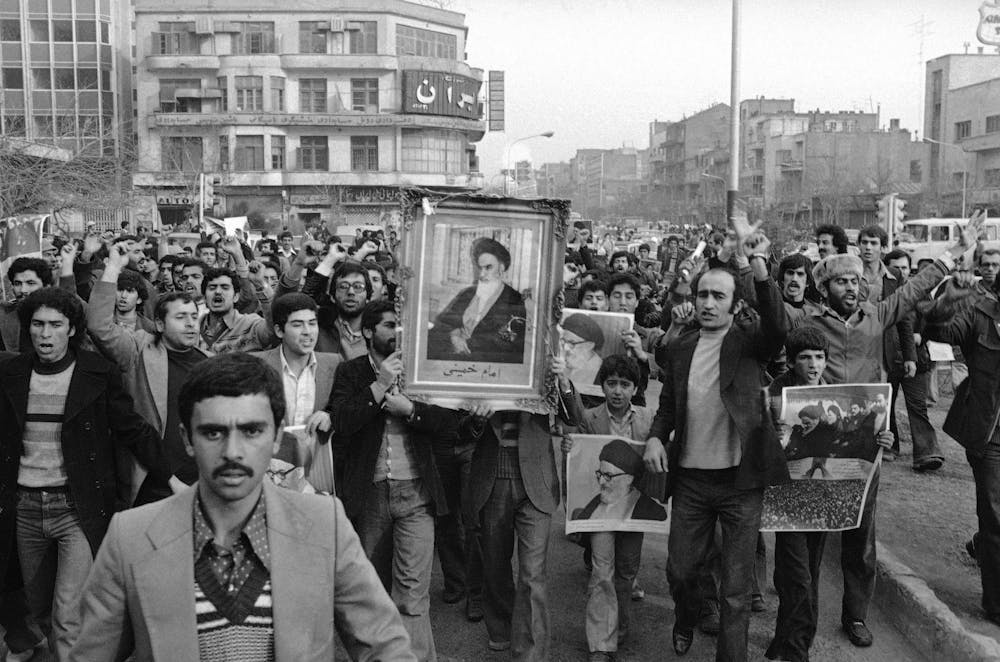
After more than 25 years of relative stability in U.S.-Iran relations, the Iranian public had grown unhappy with the social and economic conditions that developed under the dictatorial rule of Shah Mohammad Reza Pahlavi.
Pahlavi enriched himself and used American aid to fund the military while many Iranians lived in poverty. Dissent was often violently quashed by SAVAK, the shah’s security service. In January 1979, the shah left Iran, ostensibly to seek cancer treatment. Two weeks later, Ayatollah Ruhollah Khomeini returned from exile in Iraq and led a drive to abolish the monarchy and proclaim an Islamic government.
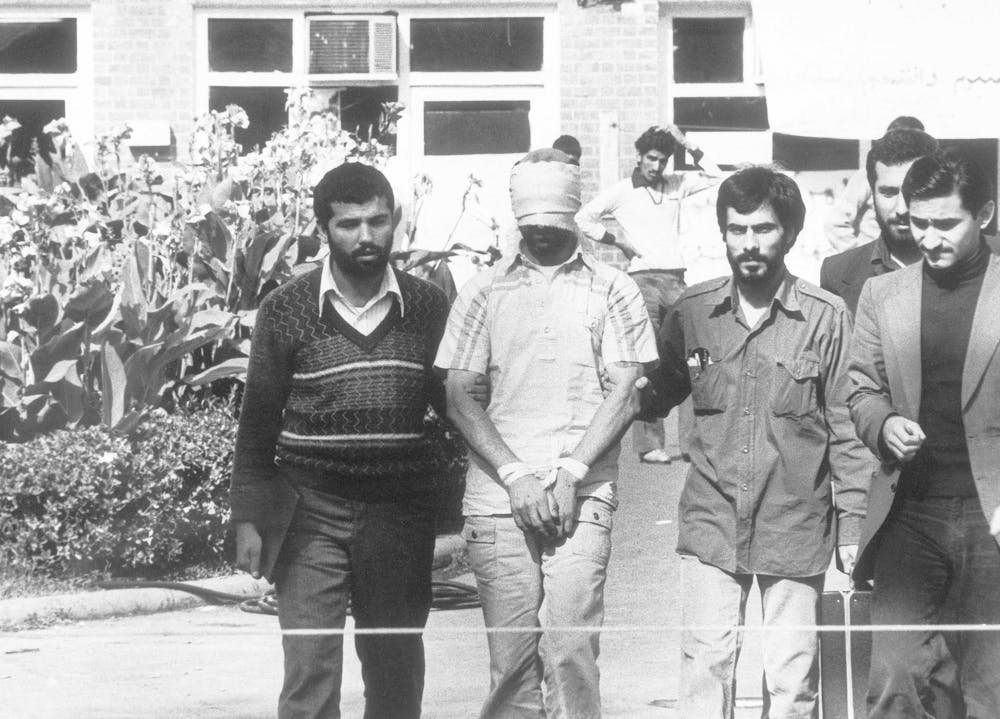
In October 1979, President Jimmy Carter agreed to allow the shah to come to the U.S. to seek advanced medical treatment. Outraged Iranian students stormed the U.S. Embassy in Tehran on Nov. 4, taking 52 Americans hostage. That convinced Carter to sever U.S. diplomatic relations with Iran on April 7, 1980.
Two weeks later, the U.S. military launched a mission to rescue the hostages, but it failed, with aircraft crashes killing eight U.S. servicemembers.
The shah died in Egypt in July 1980, but the hostages weren’t released until Jan. 20, 1981, after 444 days of captivity.
In September 1980, Iraq invaded Iran, an escalation of the two countries’ regional rivalry and religious differences: Iraq was governed by Sunni Muslims but had a Shia Muslim majority population; Iran was led and populated mostly by Shiites.
The U.S. was concerned that the conflict would limit the flow of Middle Eastern oil and wanted to ensure the conflict didn’t affect its close ally, Saudi Arabia.
The U.S. supported Iraqi leader Saddam Hussein in his fight against the anti-American Iranian regime. As a result, the U.S. mostly turned a blind eye toward Iraq’s use of chemical weapons against Iran.
U.S. officials moderated their usual opposition to those illegal and inhumane weapons because the U.S. State Department did not “wish to play into Iran’s hands by fueling its propaganda against Iraq.” In 1988, the war ended in a stalemate. More than 500,000 military and 100,000 civilians died.
The U.S. imposed an arms embargo after Iran was designated a state sponsor of terrorism in 1984. That left the Iranian military, in the middle of its war with Iraq, desperate for weapons and aircraft and vehicle parts to keep fighting.
The Reagan administration decided that the embargo would likely push Iran to seek support from the Soviet Union, the U.S.’s Cold War rival. Rather than formally end the embargo, U.S. officials agreed to secretly sell weapons to Iran starting in 1981.
The last shipment, of anti-tank missiles, was in October 1986. In November 1986, a Lebanese magazine exposed the deal. That revelation sparked the Iran-Contra scandal in the U.S., with Reagan’s officials found to have collected money from Iran for the weapons and illegally sent those funds to anti-socialist rebels – the Contras – in Nicaragua.
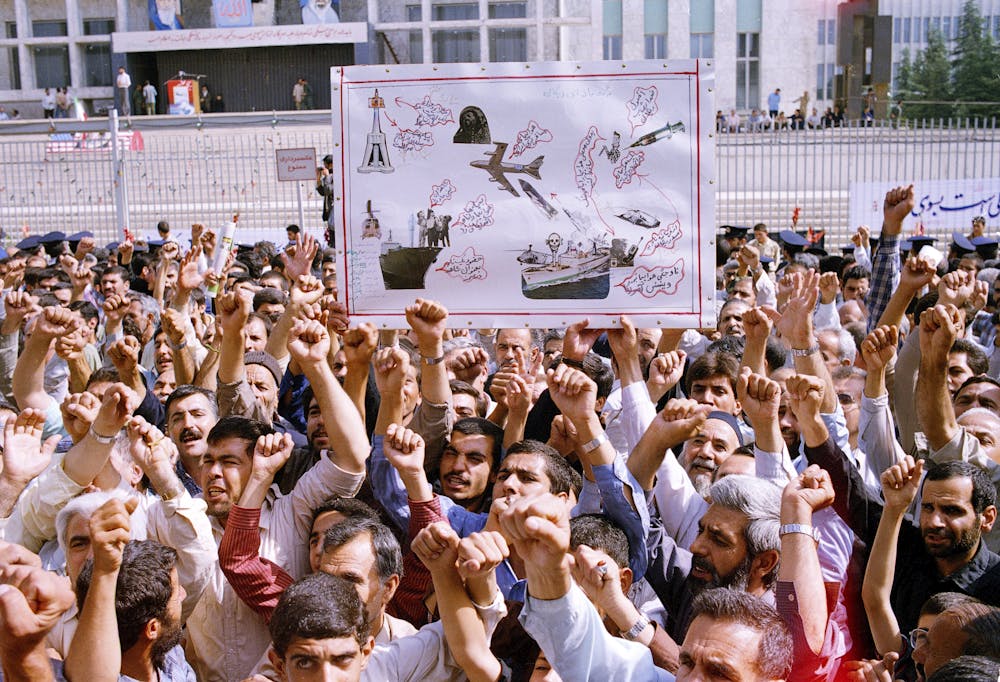
On the morning of July 8, 1988, the USS Vincennes, a guided missile cruiser patrolling in the international waters of the Persian Gulf, entered Iranian territorial waters while in a skirmish with Iranian gunboats.
Either during or just after that exchange of gunfire, the Vincennes crew mistook a passing civilian Airbus passenger jet for an Iranian F-14 fighter. They shot it down, killing all 290 people aboard.
The U.S. called it a “tragic and regrettable accident,” but Iran believed the plane’s downing was intentional. In 1996, the U.S. agreed to pay US$131.8 million in compensation to Iran.
In August 1997, a moderate reformer, Mohammad Khatami, won Iran’s presidential election.
U.S. President Bill Clinton sensed an opportunity. He sent a message to Tehran through the Swiss ambassador there, proposing direct government-to-government talks.
Shortly thereafter, in early January 1998, Khatami gave an interview to CNN in which he expressed “respect for the great American people,” denounced terrorism and recommended an “exchange of professors, writers, scholars, artists, journalists and tourists” between the United States and Iran.
However, Supreme Leader Ayatollah Ali Khamenei didn’t agree, so not much came of the mutual overtures as Clinton’s time in office came to an end.
In his 2002 State of the Union address, President George W. Bush characterized Iran, Iraq and North Korea as constituting an “Axis of Evil” supporting terrorism and pursuing weapons of mass destruction, straining relations even further.
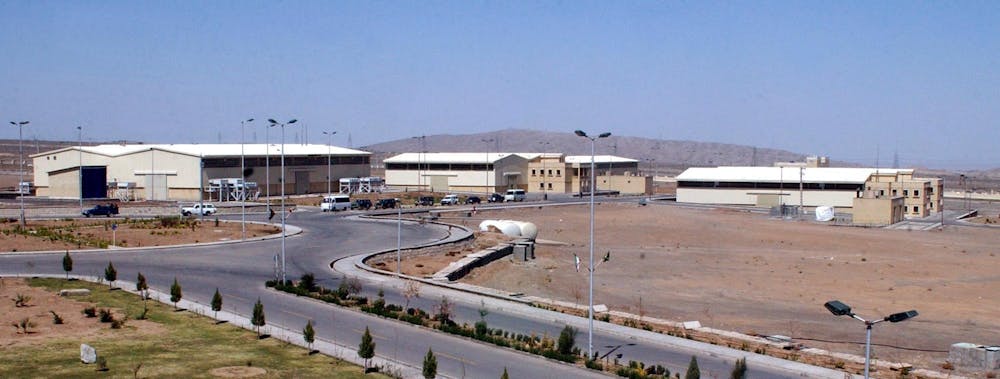
In August 2002, an exiled rebel group announced that Iran had been secretly working on nuclear weapons at two installations that had not previously been publicly revealed.
That was a violation of the terms of the Nuclear Nonproliferation Treaty, which Iran had signed, requiring countries to disclose their nuclear-related facilities to international inspectors.
One of those formerly secret locations, Natanz, housed centrifuges for enriching uranium, which could be used in civilian nuclear reactors or enriched further for weapons.
Starting in roughly 2005, U.S. and Israeli government cyberattackers together reportedly targeted the Natanz centrifuges with a custom-made piece of malicious software that became known as Stuxnet.
That effort, which slowed down Iran’s nuclear program was one of many U.S. and international attempts – mostly unsuccessful – to curtail Iran’s progress toward building a nuclear bomb.
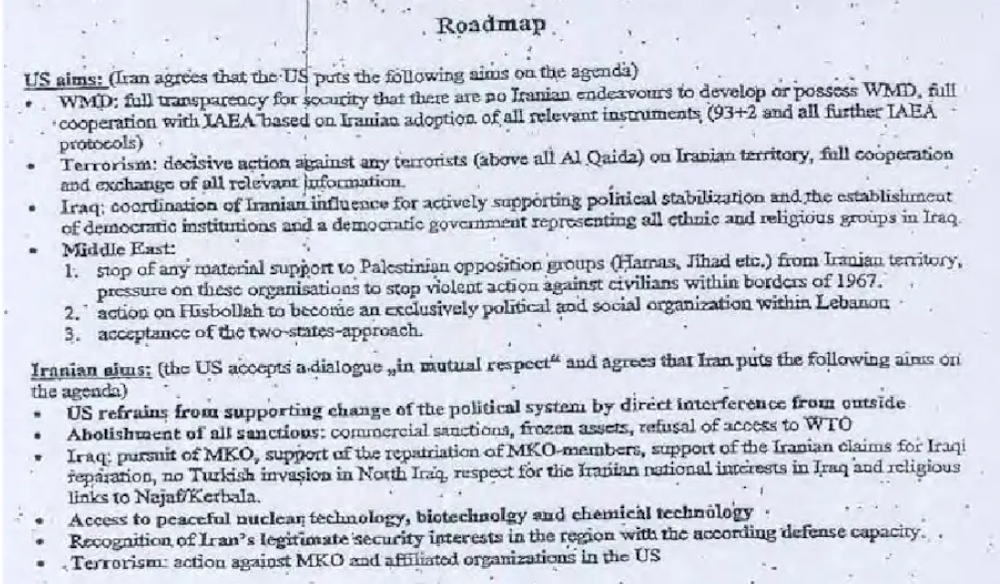
In May 2003, senior Iranian officials quietly contacted the State Department through the Swiss embassy in Iran, seeking “a dialogue ‘in mutual respect,’” addressing four big issues: nuclear weapons, terrorism, Palestinian resistance and stability in Iraq.
Hardliners in the Bush administration weren’t interested in any major reconciliation, though Secretary of State Colin Powell favored dialogue and other officials had met with Iran about al-Qaida.
When Iranian hardliner Mahmoud Ahmadinejad was elected president of Iran in 2005, the opportunity died. The following year, Ahmadinejad made his own overture to Washington in an 18-page letter to President Bush. The letter was widely dismissed; a senior State Department official told me in profane terms that it amounted to nothing.
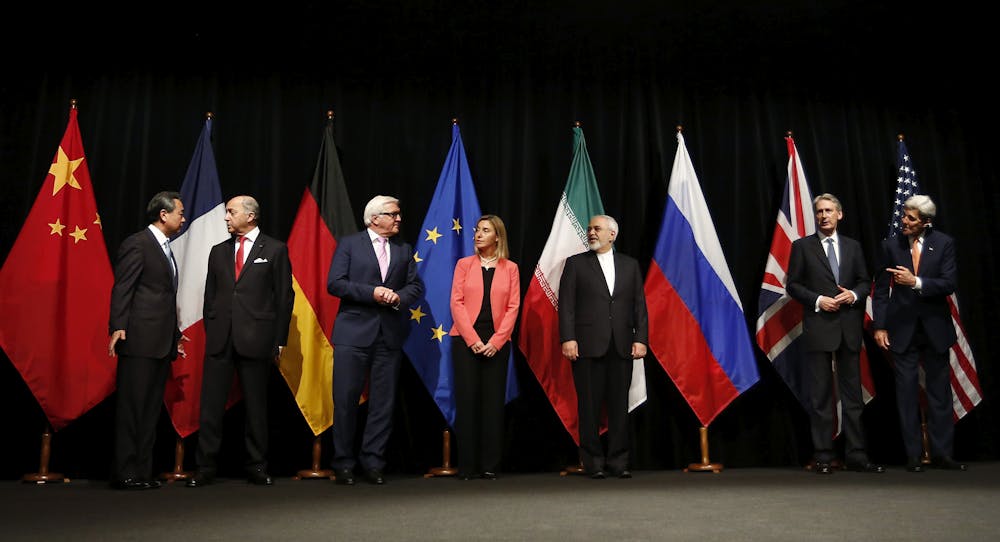
After a decade of unsuccessful attempts to rein in Iran’s nuclear ambitions, the Obama administration undertook a direct diplomatic approach beginning in 2013.
Two years of secret, direct negotiations initially bilaterally between the U.S. and Iran and later with other nuclear powers culminated in the Joint Comprehensive Plan of Action, often called the Iran nuclear deal.
Iran, the U.S., China, France, Germany, Russia and the United Kingdom signed the deal in 2015. It severely limited Iran’s capacity to enrich uranium and mandated that international inspectors monitor and enforce Iran’s compliance with the agreement.
In return, Iran was granted relief from international and U.S. economic sanctions. Though the inspectors regularly certified that Iran was abiding by the agreement’s terms, President Donald Trump withdrew from the agreement in May 2018.
On Jan. 3, 2020, an American drone fired a missile that killed Maj. Gen. Qassem Soleimani, the leader of Iran’s elite Quds Force. Analysts considered Soleimani the second most powerful man in Iran, after Supreme Leader Ayatollah Khamenei.
At the time, the Trump administration asserted that Soleimani was directing an imminent attack against U.S. assets in the region, but officials have not provided clear evidence to support that claim.
Iran responded by launching ballistic missiles that hit two American bases in Iraq.

Hamas’ brazen attack on Israel on Oct. 7, 2023, provoked a fearsome militarized response from Israel that continues today and served to severely weaken Iran’s proxies in the region, especially Hamas – the perpetrator of the attacks – and Hezbollah in Lebanon.
Trump initially saw an opportunity to forge a new nuclear deal with Iran and to pursue other business deals with Tehran. Once inaugurated for his second term, Trump appointed Steve Witkoff, a real estate investor who is the president’s friend, to serve as special envoy for the Middle East and to lead negotiations.
Negotiations for a nuclear deal between Washington and Tehran began in April, but the countries did not reach a deal. They were planning a new round of talks when Israel struck Iran with a series of airstrikes on June 13, forcing the White House to reconsider is position.
On June 22, in the early morning hours, the U.S. chose to act decisively in an attempt to cripple Iran’s nuclear capacity, bombing three nuclear sites and causing what Pentagon officials called “severe damage.”
The war lasted 12 days, during which Trump declared that Iranian nuclear sites had been “totally obliterated” – a claim denied by Tehran.
In early 2026, successive rounds of indirect talks took place between Iran and representatives from the U.S. administration. They followed major unrest in Iran during which Trump told protesters that “help is on its way.”
Then, on Feb. 28, the U.S. and Israel began bombing Iran in an operation the U.S. called “Epic Fury.” In the initial wave of airstrikes, Supreme Leader Ali Khamenei and other senior members of the Islamic Republic were killed. Tehran responded by hitting targets across the Gulf, turning the conflict into a wider, regional affair.
This is an updated version of a story originally published on June 17, 2025.

Jeffrey Fields receives funding from the Carnegie Corporation of New York.
Politics + Society – The Conversation

While Aldi offers everything from petite sirloin to grass-fed ribeyes, this ultra-meaty standout delivers a steakhouse-worthy meal right at home.

Food Republic – Restaurants, Reviews, Recipes, Cooking Tips
