The Burger King Whopper is already fast food royalty, but it turns out there are myriad ways to customize it. Here are five of our faves.

Food Republic – Restaurants, Reviews, Recipes, Cooking Tips









The Burger King Whopper is already fast food royalty, but it turns out there are myriad ways to customize it. Here are five of our faves.
Food Republic – Restaurants, Reviews, Recipes, Cooking Tips
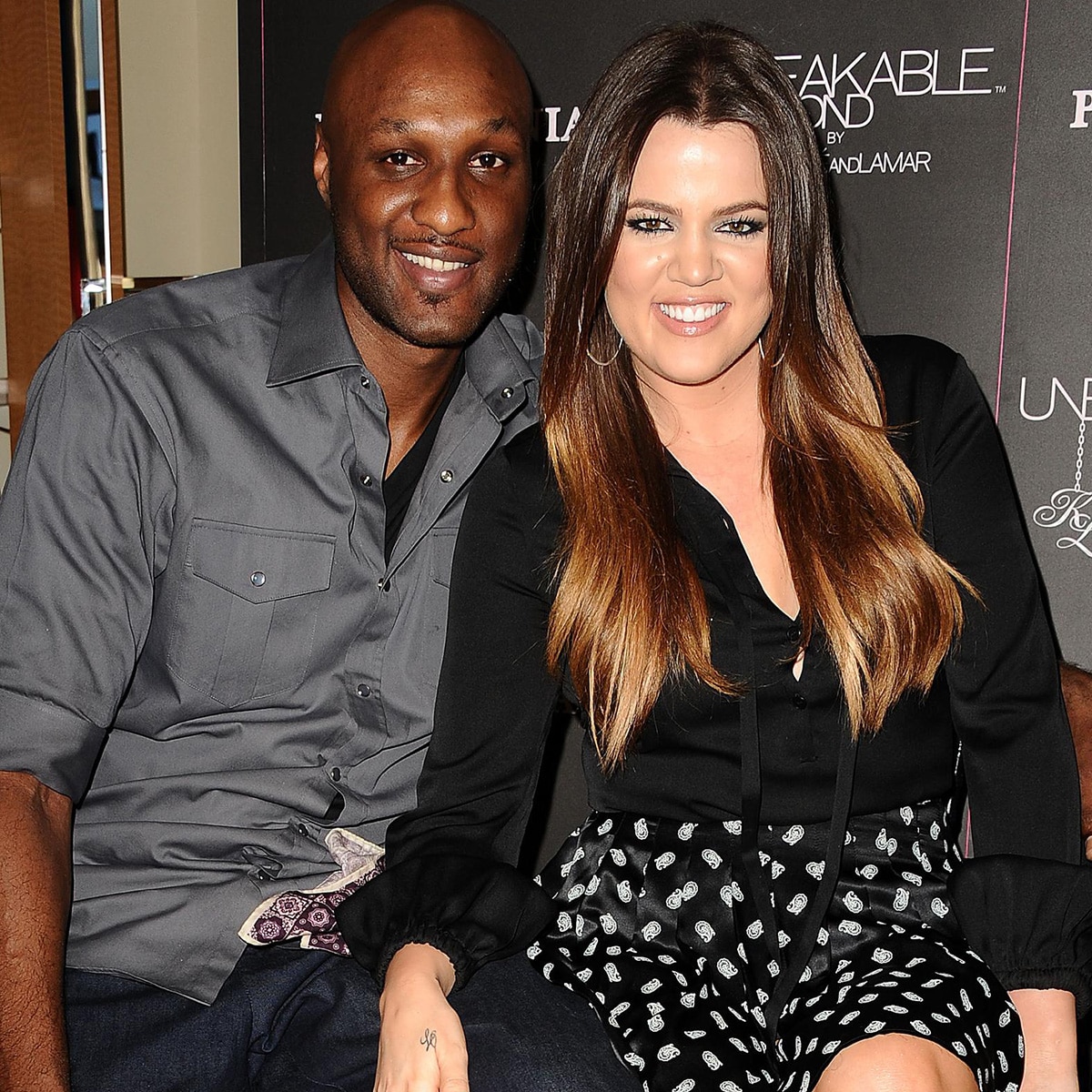
 Lamar Odom didn’t take Khloe Kardashian’s words lightly.
After The Kardashians star slammed the former NBA player for downplaying her role following his drug overdose, a source close to Lamar…
E! Online (US) – Top Stories
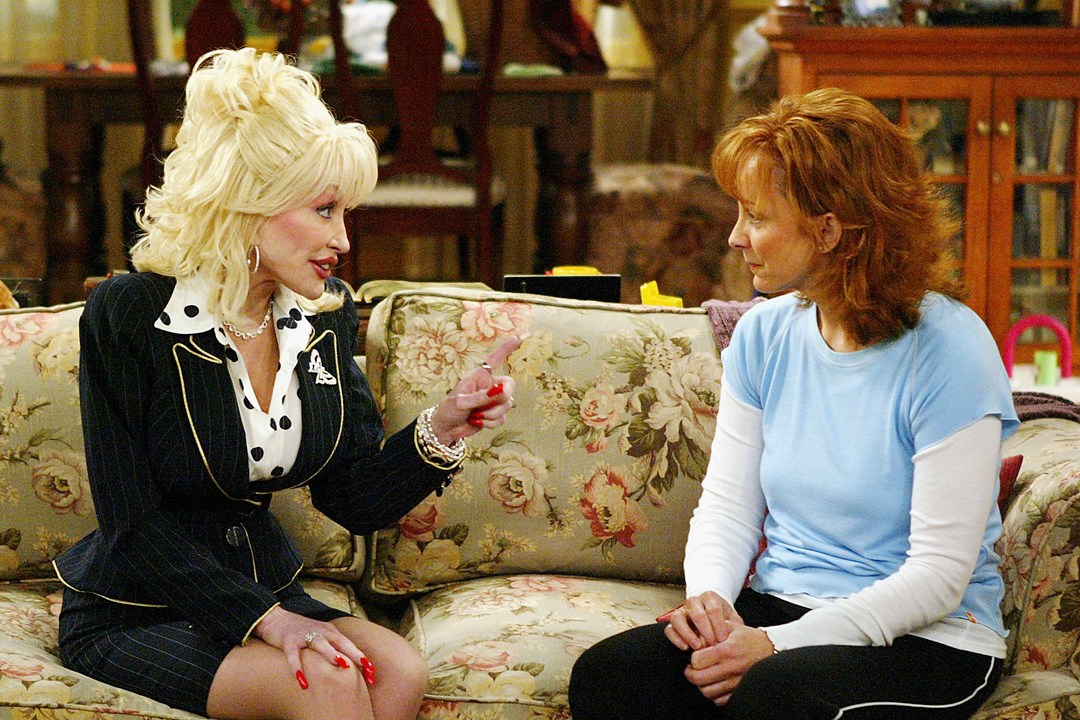
Sure, we’re biased, but this was television gold. Continue reading…Country Music News – Taste of Country

Ty Gibbs won his first Cup race in his 131st start. Many would have thought it would be sooner, but it’s not rare for a driver to need around 100 starts to earn his first win. Of the 26 full-time Cup drivers who have a win, their average first career win came in their 91st start. There are 10 full-time drivers in Cup who don’t have a win. Only one has fewer than 50 starts and that’s Connor Zilisch. And yet, when looking at the drivers who might get their first career Cup win, he’s near the top of the list. But he’s not at the top. Here’s how I’d rank the drivers who haven’t won and their chances to get their first Cup win this season. 10. Cody Ware (150 starts)Rick Ware Racing No. 51 Chevrolet With one career top-five finish and four consecutive finishes of 31st or worse, Ware’s focus isn’t on winning as much as trying to improve performance. 9. Ty Dillon (289 starts)Kaulig Racing No. 10 Chevrolet With no manufacturer support in Cup, it would take an amazing set of circumstances for Dillon to win a race. He has two career top fives and like Nemechek, he’s looking for his first top-15 finish of the season. 8. John Hunter Nemechek (121 starts)Legacy Motorsports No. 42 Toyota Nemechek has two career top-five finishes but more importantly, for these rankings, the Legacy organization is struggling. Nemechek hasn’t cracked the top 15 this year. 7. Noah Gragson (119 starts)Front Row Motorsports No. 4 Ford Gragson has three career top fives and if he was out front at the end of a drafting-style race, he’d have a shot to win. But he’s still looking for his first top 10 of the season. 6. Todd Gilliland (152 starts)Front Row Motorsports No. 34 Ford Gilliland might have snapped out of a slump with a sixth-place finish at Bristol. He has two career top-five finishes. He’d still be a long shot to win any race. 5. Riley Herbst (52 starts)23XI Racing No. 35 Toyota Herbst doesn’t have a top-five finish in his career, but he is driving arguably the best equipment of any driver on this list. And it did appear he had a shot (albeit a long shot) to win the Daytona 500. 4. Zane Smith (89 starts)Front Row Motorsports No. 38 Ford Smith has shown flashes of brilliance and has consistently performed the best among the Front Row cars. He has three career top-five finishes. 3. Connor Zilisch (11 starts)Trackhouse Racing No. 88 Chevrolet Zilisch will be a threat on the road courses. And he certainly knows how to win; he had 10 victories last year in what is now the O’Reilly Series. He showed he could still win at Bristol when he won the race in that series the day prior to the Cup event. But overall, Trackhouse appears to be a step behind this year and Zilisch’s best career Cup finish is 11th. 2. Ryan Preece (231 starts)RFK Racing No. 60 Ford Preece won the Clash at Bowman Gray and if there were more tracks like that on the schedule, he’d be first on this list. He’s running well, but his teammates (Brad Keselowski and Chris Buescher) are, too. And if his organization lands on something at the intermediate or superspeedways, he’s going to have to beat two solid drivers to capture the victory. But with his experience (Preece has seven career top-five finishes), he is the most likely to capitalize on a potential winning moment than any driver on this list. 1. Carson Hocevar (89 starts)Spire Motorsports No. 77 Chevrolet Hocevar and Preece are tied for the most points this year for a driver who has never won a Cup race. If there were more short tracks on the schedule coming up, Preece might be here, but Hocevar appears to have the potential to run closer to the front at more styles of tracks. He has five career top-five finishes. In Second Thoughts, Bob Pockrass offers his opinion on a burning motorsports topic.Latest Sports News from FOX Sports

Monday, April 6
Caller on PIedad Road reported a stolen car battery. An officer responded.
A caller on Deishu Drive reported a person trespassing on their property. Officers responded.
Tuesday, April 7
A caller on the 800 block of Main Street reported a moose in the area.
A caller in the 400 block of Main Street reported a verbal altercation. An officer was advised.
Wednesday, April 8
A caller on Third Avenue at Main Street left an item description for a lost wallet and contact information with dispatch.
A Haines police officer placed a 72-hour notice sticker on a vehicle in the 600 block of the Haines Highway.
Thursday, April 9
A caller on Mud Bay Road turned in a pair of prescription glasses they found.
A driver on Tower Road received a verbal warning for speeding.
A driver at Second Avenue at Mission Street received a verbal warning for failure to stop at a stop sign and not meeting turn signal requirements.
Friday, April 10
A caller on Small Tracts Road reported a utility cover in the roadway. An officer responded and replaced the cover.
A property owner on Second Avenue reported an accidental alarm activation.
A caller left information about his lost keys and contact information with the dispatcher.
A driver received a verbal warning for basic speeding at 1.5 mile of the Haines Highway.
A driver received a citation for speeding on the Haines Highway.
A caller reported a vehicle struck an animal on Deishu Drive. The fire department responded.
A driver received a verbal warning for license plate display requirements on the Haines Highway at Second Avenue.
A driver received a verbal warning for failure to stop at a stop sign on Mud Bay Road.
Saturday, April 11
A caller reported almost getting hit by a speeding vehicle on the Haines Highway near Second Avenue. Officers responded.
A caller turned into dispatch a debit card they found on Second Avenue.
A caller reported leaving their vehicle in a parking lot because it would not start. Caller reported that they’d pick up their vehicle in the 50 blok of the Haines Highway later.
A driver in the 50 block of the Haines Highway was ticketed for not having proof of insurance.
A driver received a verbal warning for speeding in the 30 block of Blacksmith Road.
An officer saw an open door in the 300 block of First Avenue. He closed it and the homeowner was notified.
A driver was given a verbal warning for failing to meet headlight requirements at Mile 1 of the Haines Highway.
There were 3 9-11 hangup calls, 12 EMS calls and 17 burn permits issued during this reporting period.
The post Blotter: April 6 – April 11 appeared first on Chilkat Valley News.
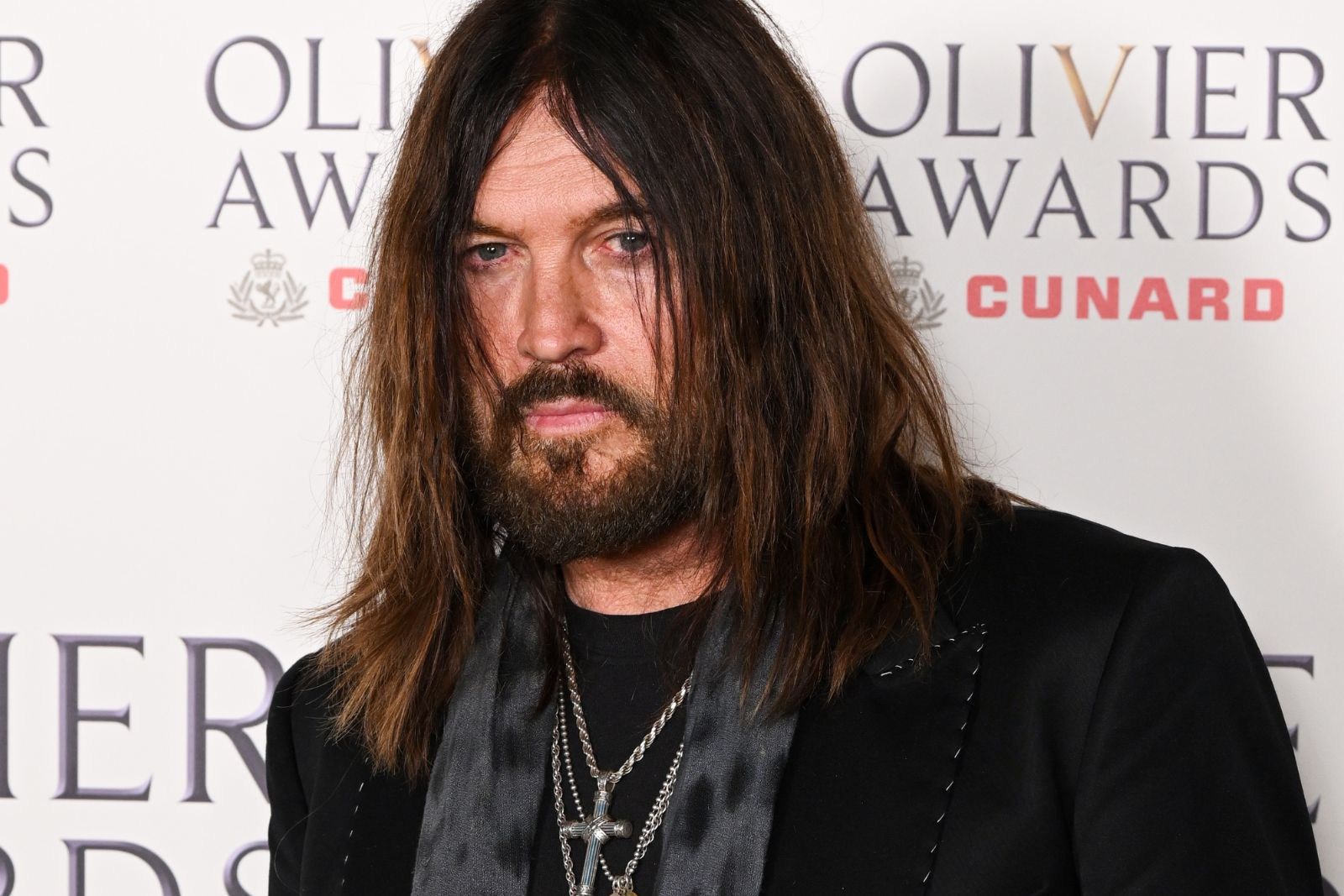
“Being president’s a tough job,” Cyrus reflects. “I pray for our country, I pray for our president and I pray for our world.” Continue reading…Country Music News – Taste of Country

Reading Time: 2 minutes
Just because Farrah Abraham’s daughter is homeschooled, that doesn’t mean she can’t get invited to prom.
Yes, a human child was educated by Farrah Abraham, but try to put those horrors out of your mind, so we can focus on the prom aspect of this story.
Sophia marked a major milestone this week, and she did it while rocking her signature style.
She showed off her look in an Instagram post in which she thanked her mom for helping make prom night memorable.
“Thank you so much mother for making this prom such an amazing, fun experience,” Sophia wrote (via Page Six).
“I’m so grateful for my beautiful, caring friends for making this very memorable night so fun. I had a blast, although as a homeschooled person i did expect prom to be a little more than just people watching with a side of dance floor.”
Farrah’s always had expensive taste, so we shouldn’t be surprised that Sophia rocked Dolce & Gabbana.
Not to be outdone as a poster, Farrah also penned a lengthy tribute to the occasion.
“The journey of being a present parent for @sophialabraham 2026 Prom was fun! Unexpected since she’s home schooled & much different then my prom ( in my book),” Farrah wrote, adding:
“I’m very proud of Sophia & the ladies in her group (no new friends & no broke boys) just being the Queens of value you are! Being you is enough.”
Warning teenagers about the dangers of “new friends” and “broke boys” probably isn’t the greatest thing, but if you made a list of Farrah’s biggest parenting fails, it wouldn’t even crack the top 1,000.
“As a teen mom to give Sophia ‘the prom experience’ (better then I had & more fun then the actual prom ), dress shopping, beauty prep days, shoe shopping, nails, limo, the best prom slumber party Lux 2 bedroom suite, best dinner view, pictures, and Support means the world,” Farah continued, adding:

“Sheers and excited for young adulthood it’s here — LFG!”
Yes, even in the age of AI, Farrah is still posting her semi-coherent word salads on social media.
We respect it, but she might be the one person who actually should use a bot to write her posts.
Like Sophia’s permanent fangs, her goth prom look received quite a bit of criticism on Instagram, but when you grow up as Farrah Abraham’s daughter, we’re sure you grow accustomed to the haters at a young age.
But that doesn’t mean it’s okay for strangers to bash a teenage girl.
We should all be saving our criticism for people who actually deserve it — like Farrah.
Farrah Abraham’s Daughter Sophia Rocks Expensive Goth Look for Prom, Divides … was originally published on The Hollywood Gossip.
The Hollywood Gossip

Six weeks of U.S. and Israeli bombardment have served to degrade Iran’s nuclear facilities and cripple parts of its military.
But the Islamic Republic’s offensive capabilities have been built up over nearly 50 years, during which Iran has been either at war or under the threat of conflict.
As an expert in military history and theory, I believe that to understand what may come next in Operation Epic Fury, it’s valuable to grasp the development of Iran’s modern military structure, capabilities and international activities.
Prior to the establishment of the Islamic Republic of Iran in 1979, Iran’s military was largely supplied by Western powers, particularly the United States.
It entered the Iran-Iraq war in 1980 with a substantial amount of then-modern equipment. That included nearly 80 F-14 fighter aircraft, over 200 F-4 and F-5 aircraft and thousands of tanks.
But Iran’s military was exhausted when the war ended in 1988. And the government had by then become a world pariah, making resupply all but impossible.
Although Iran imported some military equipment from the Soviet Union and China in 1990, its economy could not support substantial military spending.
Ironically, the arms embargoes that Iran faced during and after its war with Iraq made the regime self-reliant on its weapons stockpiles. And that triggered the development of a substantial domestic arms industry.
Most modern Iranian military equipment consists of reverse-engineered American and Soviet equipment, much of it obsolete. Since 1990, however, Iranian missile technology has substantially improved. That’s due to domestic production and importing expertise from other marginalized states, such as North Korea.

Starting in the 1990s, Iran also innovated a series of one-way attack drones, a relatively inexpensive way to attack distant targets.
The Iranian military is split into the regular military, or “Artesh,” and the Islamic Revolutionary Guard Corps. The Artesh plays a domestic defense role akin to a militia, while the Revolutionary Guard serves as the more professional military force.
The Revolutionary Guard projects regional power. During the 2003 U.S.-Iraq war, for instance, it provided improvised explosive devices to insurgents targeting American forces.
The Revolutionary Guard tends to receive the bulk of Iranian military resources, including the best personnel and equipment. Quds Force, the unconventional warfare wing of the Revolutionary Guard, has long played a role in exporting the revolutionary beliefs of the Iranian rulers. The Quds Force provides arms and guidance to proxies throughout the Middle East, primarily by fomenting insurrections against Arab Sunni governments.
Iran has long been the patron of Hezbollah, based in Lebanon, whose primary goal is the eradication of Israel. More recently, Iran has also engaged in substantial support of Hamas in Gaza, despite the fact that Hamas is a Sunni organization, while the rulers of Iran are members of the Shiite branch of Islam.
Iran has constantly sought means of exerting military influence beyond its borders, without risking external attack. It has embraced the use of cyber warfare, a method of attack with a relatively low cost for participation and a potentially outsized influence on the world stage.
Iranian hackers have attacked Western military and government networks, including a hack of FBI Director Kash Patel’s personal emails. Iranian-backed hackers have also launched attacks on infrastructure and cultural institutions, including U.S. wastewater treatment plants and electrical grids.

Iran’s government has relentlessly pursued nuclear weapons since at least the 1980s.
The Iranian government has always maintained that its nuclear program is to provide power for the developing nation, rather than weaponry. But definitive evidence of uranium enrichment far beyond the requirements of power generation have caused Western states to demand an end to the Iranian nuclear program.
In 2010, cybersecurity researcher Sergey Ulasen discovered an incredibly complex malware program, dubbed Stuxnet, that was created to undermine the Iranian nuclear program by disrupting the function of enrichment centrifuges. No nation has ever taken responsibility for the attack, which set back Iranian uranium enrichment efforts by years.
In 2015, after negotiations with the five permanent members of the U.N. Security Council and Germany, Iran agreed to halt its uranium enrichment program in exchange for relief from economic sanctions and the release of frozen Iranian assets. The negotiations resulted in the Joint Comprehensive Plan of Action, or JCPOA.
Although the Trump administration withdrew the U.S. from the JCPOA in 2018, the agreement continued to function, and Iran seemed poised to reenter the global economy.

However, in 2020 the Iranians restarted their nuclear program. They also ramped up production of ballistic missiles and one-way attack drones.
In June 2025, the United States and Israel launched a massive aerial attack on Iranian nuclear facilities, an effort that Trump characterized as having destroyed Iran’s nuclear facilities.
Iran responded by launching a wave of ballistic missiles and drones toward Israel, most of which were intercepted before entering Israeli airspace.
Prior to Operation Epic Fury, analysts estimated that Iran possessed 3,000 ballistic missiles and tens of thousands of one-way attack drones. They also concluded that Iran had a substantial production capacity to increase its stockpiles.
In the first six weeks of the current conflict, Iran expended at least 650 missiles in attacks on Israel and hundreds more against other targets in the region.
The U.S. has placed a heavy emphasis on attacking missile production and storage facilities. But it’s difficult to ascertain how many missiles and drones the Iranian military might still possess.
Iranian production and transportation has almost certainly sustained substantial losses in capacity. And U.S. and Israeli aircraft prowl the skies over Iran seeking signs of mobile launchers or attempts to transport missiles to firing locations.
The rate of Iranian missile fire has substantially declined since the first days of the conflict, but it has never dropped to zero. That has led some analysts to suspect that Iran maintains a significant cache of long-range weaponry in reserve, while U.S. Secretary of Defense Pete Hegseth argues that it has lost the capacity to launch major barrages.

Paul J. Springer is a Senior Fellow of the Foreign Policy Research Institute. His comments represent his own opinion and do not reflect the official policy of the United States Government, the U.S. Department of Defense, or the U.S. Air Force.
Politics + Society – The Conversation

Reading Time: 2 minutes
Lena Dunham has a new memoir out.
And as with everything she does, her fans are ecstatic, and her critics are using it as ammo to hate her even more.
In one of the book’s most controversial passages, Lena reveals that she frequently clashed with her Girls co-star Adam Driver while they were making the show.
In fact, she claims that Driver frequently lost his temper on set, at one point hurling a chair in her general direction.
She also recalled being thrown around by Driver during a sex scene.
Dunham writes in her book that her “careful blocking went out the window and he hurled me this way and that.”
“Stunned, I couldn’t speak for a moment, unsure of what had happened — had I lost directorial authority, allowed the scene to go off the rails, not given proper instructions? Would I be removed from my command post immediately?” she writes, adding:
“It wasn’t that I felt violated — and I also wouldn’t know if I had, as there was little in my sexual life that I hadn’t allowed to happen, and for no pay. But I felt that something intimate, confusing and primal had played out in a scenario I was meant to control.”

Elsewhere in the book, Lena wrote of her troubled romantic relationship with Bleachers frontman and acclaimed music producer Jack Antonoff.
Dunham writes that her connection with another man — a boyfriend from her youth — never fully disappeared, even while she was committed to Antonoff.
“I had observed careful boundaries, never taking it far enough that I could be declared out of bounds,” she wrote.
At the same time, she acknowledges that those boundaries may not have been as clear-cut as she believed:
“If I’d wanted to look, perhaps I may have seen that Jack was not observing them as closely as I was.”
She also admits that, despite being in a relationship, her behavior didn’t fully align with that commitment.
“I never stopped flirting,” Dunham wrote.
She said that a hysterectomy “changed the game” in late 2017, and she wrote to a former middle school boyfriend named Nick “with impunity, saying l’d just had major surgery and I needed to be cheered up. ‘Meet me by the bridge? Bring me a stuffed animal?’ I got an answer back in less than a minute: ‘I’m already running.’”
Lena concluded the anecdote by explaining that she “was ready to do adultery.”
These days, Lena is married to Luis Felber, and Jack is married to Margaret Qualley.
Dunham’s memoir, Famesick, is available in stores and online now.
Lena Dunham Blasts Adam Driver For Tantrums, Reveals She Cheated on Jack Antonoff In New … was originally published on The Hollywood Gossip.
The Hollywood Gossip

A mail ballot drop box is seen at a polling station on Nov. 4, 2025, in Arlington, Virginia. (Photo by Alex Wong/Getty Images)
On March 31, President Trump issued a new executive order on citizenship records and mail‑in ballots entitled “Ensuring Citizenship Verification and Integrity in Federal Elections.” The order has nothing to do with election integrity — the name is like “Newspeak,” Orwell’s fictional language for a totalitarian state. It is an unlawful attempt to seize control of how Alaskans vote and to make an error‑ridden federal database the gatekeeper of our ballots.
Ever since statehood Alaska has built an election system that reflects our geography and our values. By‑mail and absentee voting are not mere conveniences here; they are how thousands of our neighbors who live in remote areas accessible only by air or sea participate in democracy at all. Yet the president now proposes to tell Alaska when and to whom we may send ballots by mail, based not on Alaska law, but on whether a voter’s name appears on a new federal “citizenship list.”
The order directs the Department of Homeland Security to compile state‑by‑state rosters of presumed U.S. citizens eligible to vote in federal elections and then directs the Postal Service to withhold mail ballots from anyone not on those lists. In one stroke, the president purports to rewrite who may receive a ballot by mail, how ballots travel through the postal system and which government gets the last word on whether an Alaskan can vote. That authority does not belong to him.
The U.S. Constitution is explicit in this matter. It reads in pertinent part: “The Times, Places and Manner of holding Elections . . .shall be prescribed in each State by the Legislature thereof; but the Congress may at any time by Law make or alter such Regulations . . .” Alaska’s Legislature has determined who may vote absentee, how those ballots are requested and mailed, and how they are counted. An executive order that conditions ballot delivery on a federally controlled citizenship list displaces those laws with presidential preference. That is not faithful execution of the law; it is legislation by directive. And it is patently unconstitutional.
The order also collides with bedrock principles of federalism. The federal government may not simply commandeer state election officials or local postmasters to administer a new federal scheme that overrides state choices about mail voting. By insisting that Alaska adapt its procedures to match a federal citizenship database that we did not design, do not control and cannot effectively challenge, the administration seeks to turn state election workers into unwilling agents of a national policy they never adopted.
Even if the president had such power—which he does not—the policy itself is dangerously unsound. The citizenship records he proposes to rely on are notoriously unreliable. Federal and state databases routinely misclassify naturalized citizens as non‑citizens, lag months or years behind status changes, and contain basic errors in names, dates of birth and addresses. Tying ballot delivery to a single “State Citizenship List” assembled from these imperfect sources is a recipe for widespread disenfranchisement.
Those errors will not fall evenly. Naturalized citizens, Alaska Natives whose names and records do not conform to federal bureaucratic expectations and rural voters with inconsistent or non‑standard addresses are all especially vulnerable to being left off or misflagged in a national database. If the Postal Service is instructed not to send a ballot unless it can confirm a match on that list, many eligible Alaskans will simply never receive a ballot at all.
In urban areas, some voters might fall back on in‑person early voting or Election Day polling places. In much of Alaska, that is unrealistic. An elder in a village accessible only by plane or boat, a deployed service member relying on an overseas ballot or a college student temporarily out of state cannot easily “work around” a missing ballot. For them, the executive order does not mean extra paperwork. It means no vote.
The order also offers no meaningful, timely remedy for those wrongly excluded. By the time a voter discovers that no ballot has arrived and tries to untangle why their name is missing from a federal citizenship list, the election may be over. We will never know how many voices were silenced by database error rather than voter choice.
Alaska has used absentee and by‑mail voting for years without any evidence of widespread non‑citizen voting or ballot fraud. Our challenges are logistical, not criminal: weather, distance and infrastructure, not hordes of ineligible voters swamping the polls. Imposing a rigid, centralized federal screen on top of that system does nothing to address real problems, and threatens to create a new one that is far worse: a loss of confidence that ballots will arrive at all.
Let’s not attempt to dress this order up as a mere “data‑sharing” exercise rather than the federal takeover it truly is.
SUBSCRIBE: GET THE MORNING HEADLINES DELIVERED TO YOUR INBOX