Japan has claimed a Chinese military jet locked its radar on Japanese fighter jets near the southern island of Okinawa in a “dangerous act”.The Latest News from the UK and Around the World | Sky News












Japan has claimed a Chinese military jet locked its radar on Japanese fighter jets near the southern island of Okinawa in a “dangerous act”.The Latest News from the UK and Around the World | Sky News

Liverpool star Mohamed Salah says he has been “thrown under the bus” by the club, and his relationship with manager Arne Slot has broken down.The Latest News from the UK and Around the World | Sky News

More than half a month’s rainfall could hit some parts of the UK in just a 24-hour period this week, the Met Office has warned.The Latest News from the UK and Around the World | Sky News

At least for the Tartan Army travelling to the United States the World Cup schedule is favourable.The Latest News from the UK and Around the World | Sky News

The King and Queen have released their Christmas card for this year, featuring a portrait of the royal couple arm in arm as they celebrated their 20th anniversary.The Latest News from the UK and Around the World | Sky News

Police are investigating after a “number of people” were believed to have been attacked with pepper spray by a group of men who then fled.The Latest News from the UK and Around the World | Sky News

AP- A powerful, magnitude-7.0 earthquake struck in a remote area near the border between Alaska and the Canadian territory of Yukon on Saturday. There was no tsunami warning, and officials said there were no immediate reports of damage or injury.
The U.S. Geological Survey said it struck about 230 miles (370 kilometers) northwest of Juneau, Alaska, and 155 miles (250 kilometers) west of Whitehorse, Yukon.
In Whitehorse, Royal Canadian Mounted Police Sgt. Calista MacLeod said the detachment received two 911 calls about the earthquake.
“It definitely was felt,” MacLeod said. “There are a lot of people on social media, people felt it.”
Alison Bird, a seismologist with Natural Resources Canada, said the part of Yukon most affected by the temblor is mountainous and has few people.
“Mostly people have reported things falling off shelves and walls,” Bird said. “It doesn’t seem like we’ve seen anything in terms of structural damage.”
The Canadian community nearest to the epicenter is Haines Junction, Bird said, about 80 miles (130 kilometers) away. The Yukon Bureau of Statistics lists its population count for 2022 as 1,018.
The quake was also about 56 miles (91 kilometers) from Yakutat, Alaska, which the USGS said has 662 residents.
It struck at a depth of about 6 miles (10 kilometers) and was followed by multiple smaller aftershocks.
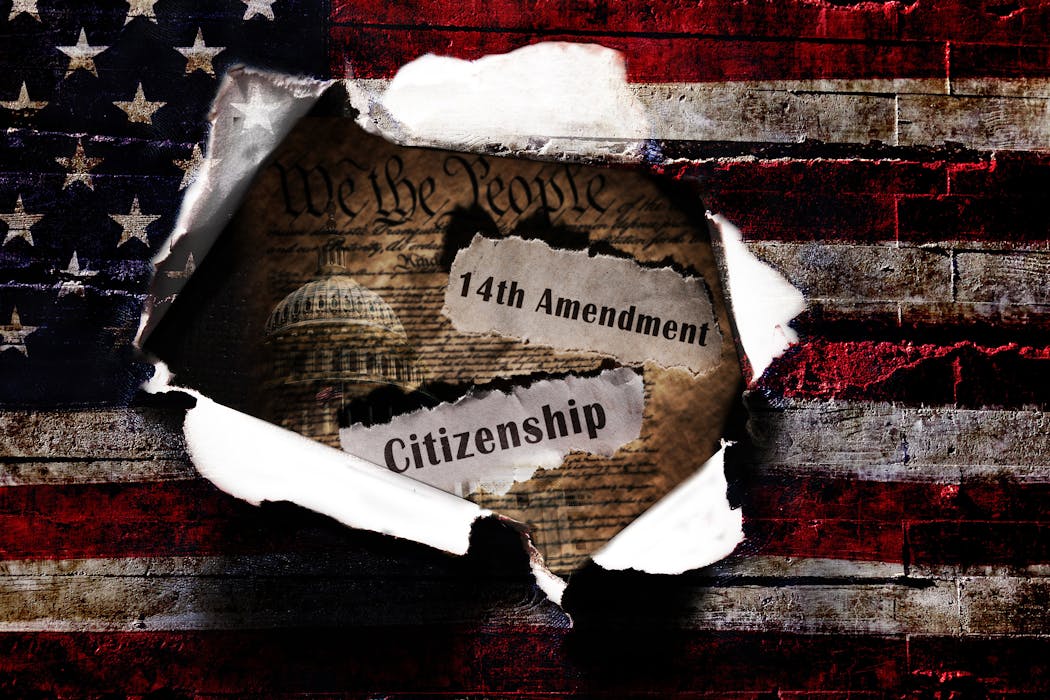
The Supreme Court on Dec. 5, 2025, agreed to review the long-simmering controversy over birthright citizenship. It will likely hand down a ruling next summer.
In January 2025, President Donald Trump issued an executive order removing the recognition of citizenship for the U.S.-born children of both immigrants here illegally and visitors here only temporarily. The new rule is not retroactive. This change in long-standing U.S. policy sparked a wave of litigation culminating in Trump v. Washington, an appeal by Trump to remove the injunction put in place by federal courts.
When the justices weigh the arguments, they will focus on the meaning of the first sentence of the 14th Amendment, known as the citizenship clause: “All persons born or naturalized in the United States, and subject to the jurisdiction thereof, are citizens of the United States and of the State wherein they reside.”
Both sides agree that to be granted birthright citizenship under the Constitution, a child must be born inside U.S. borders and the parents must be “subject to the jurisdiction” of the United States. However, each side will give a very different interpretation of what the second requirement means. Who falls under “the jurisdiction” of the United States in this context?
As a close observer of the court, I anticipate a divided outcome grounded in strong arguments from each side.
Simply put, the argument against the Trump administration is that the 14th Amendment’s expansion of citizenship after the eradication of slavery was meant to be broad rather than narrow, encompassing not only formerly enslaved Black people but all persons who arrived on U.S. soil under the protection of the Constitution.
The Civil War amendments – the 13th, 14th and 15th – established inherent equality as a constitutional value, which embraced all persons born in the nation without reference to race, ethnicity or origin.
One of the strongest arguments that automatic citizenship is the meaning of the Constitution is long-standing practice. Citizenship by birth regardless of parental status – with few exceptions – has been the effective rule since the time of America’s founding.
Advocates also point to precedent: the landmark case of United States v. Wong Kim Ark in 1898. When an American-born descendant of resident noncitizens sued after being refused re-entry to San Francisco under the Chinese Exclusion Act, the court recognized his natural-born citizenship.
If we read the Constitution in a living fashion – emphasizing the evolution of American beliefs and values over time – the constitutional commitment to broad citizenship grounded in equality, regardless of ethnicity or economic status, seems even more clear.
However, advocates must try to convince the court’s originalists – Clarence Thomas, Samuel Alito, Neil Gorsuch, Brett Kavanaugh and Amy Coney Barrett – who read the Constitution based on its meaning when it was adopted.
The originalist argument in favor of birthright citizenship is that the phrase “subject to the jurisdiction” was meant to invoke only a small set of exceptions found in traditional British common law. In the Wong Kim Ark ruling, the court relied on this “customary law of England, brought to America by the colonists.”
One exception to birthright citizenship covered by this line of rulings is the child of a foreign diplomat, whose parents represent the interests of another country. Another exception is the children of invading foreign armies. A third exception discussed explicitly by the framers of the 14th Amendment was Native Americans, who at the time were understood to be under the jurisdiction of their tribal government as a separate sovereign. That category of exclusion faded away after Congress recognized the citizenship of Native Americans in 1924.
The advocates of automatic birthright citizenship conclude that whether the 14th Amendment is interpreted in a living or in an original way, its small set of exceptions do not override its broad message of citizenship grounded in human equality.
The opposing argument begins with a simple intuition: In a society defined by self-government, as America is, there is no such thing as citizenship without consent. In the same way that an American citizen cannot declare himself a French citizen and vote in French elections without consent from the French government, a foreign national cannot declare himself a U.S. citizen without consent.
This argument emphasizes that citizenship in a democracy means holding equal political power over our collective decisions. That is something only existing citizens hold the right to offer to others, something which must be decided through elections and the lawmaking process.
The court’s ruling in Elk v. Wilkins in 1884 – just 16 years after the ratification of the 14th Amendment – endorses “the principle that no one can become a citizen of a nation without its consent.” By making entry into the United States without approval a federal offense, Congress has effectively denied that consent.
Scholars who support this view argue that the 14th Amendment does not provide this consent. Instead it sets a limitation. To the authors of the 14th Amendment, “subject to the jurisdiction thereof” conveyed a limit to natural citizenship grounded in mutual allegiance. That means if people are free to deny their old national allegiance, and an independent nation is free to decide its own membership, the recognition of a new national identity must be mutual.
Immigrants living in the United States illegally have not accepted the sovereignty of the nation’s laws. On the other side of the coin, the government has not officially accepted them as residents under its protection.

If mutual recognition of allegiance is the meaning of the 14th Amendment, the Trump administration has not violated it.
The opponents of birthright citizenship argue that the Wong Kim Ark ruling has been misrepresented. In that case, the court only considered permanent legal residents like Wong Kim Ark’s parents, but not residents here illegally or temporarily. The focus on British common law in that ruling is simply misguided because the findings of Calvin’s Case or any other precedents dealing with British subjects were voided by the American Revolution.
In this view, the Declaration of Independence replaced subjects with citizens. The power to determine national membership was taken away from kings and placed in the hands of democratic majorities.
For opponents of birthright citizenship, the 14th Amendment does not take that power away from citizens but instead codifies the rule that mutual consent is the touchstone of admission. The requirement to be “subject to the jurisdiction” provides the mechanism of that consent.
Congress can determine who is accepted as a member of the national community under its jurisdiction. In this view, Congress – and the American people – have spoken: Current federal laws make entry into U.S. borders without permission a crime rather than a forced acceptance of political membership.
The court will likely announce a ruling in summer 2026 before early July, just in time for the 250th anniversary of the Declaration of Independence. The court will ultimately decide whether the Constitution endorses the declaration’s invocation of essential equality or its creation of a sovereign people empowered to determine the boundaries of national membership.
The court’s three Democratic-appointed justices – Ketanji Brown Jackson, Elena Kagan and Sonia Sotomayor – will surely side against the Trump administration. The six Republican-appointed justices seem likely to divide, a symptom of disagreements within the originalist camp.
The liberal justices need at least two of the conservatives to join them to form a majority of five to uphold universal birthright citizenship. This will likely be some combination of Chief Justice John Roberts, Brett Kavanaugh and Amy Coney Barrett.
The Trump administration will prevail only if five out of the six conservatives reject the British common law foundations of the Wong Kim Ark ruling in favor of citizenship by consent alone.
America should know by July Fourth.

Morgan Marietta does not work for, consult, own shares in or receive funding from any company or organization that would benefit from this article, and has disclosed no relevant affiliations beyond their academic appointment.
Politics + Society – The Conversation
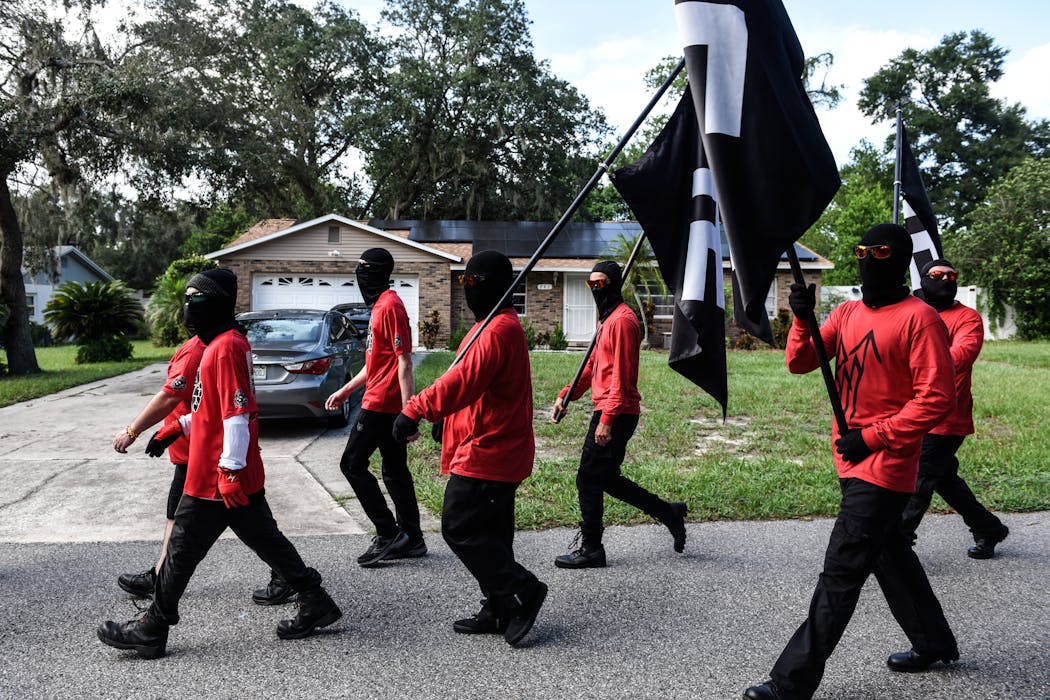
How can society police the global spread of online far-right extremism while still protecting free speech? That’s a question policymakers and watchdog organizations confronted as early as the 1980s and ’90s – and it hasn’t gone away.
Decades before artificial intelligence, Telegram and white nationalist Nick Fuentes’ livestreams, far-right extremists embraced the early days of home computing and the internet. These new technologies offered them a bastion of free speech and a global platform. They could share propaganda, spew hatred, incite violence and gain international followers like never before.
Before the digital era, far-right extremists radicalized each other primarily using print propaganda. They wrote their own newsletters and reprinted far-right tracts such as Adolf Hitler’s “Mein Kampf” and American neo-Nazi William Pierce’s “The Turner Diaries,” a dystopian work of fiction describing a race war. Then, they mailed this propaganda to supporters at home and abroad.
I’m a historian who studies neo-Nazis and far-right extremism. As my research shows, most of the neo-Nazi propaganda confiscated in Germany from the 1970s through the 1990s came from the United States. American neo-Nazis exploited their free speech under the First Amendment to bypass German censorship laws. German neo-Nazis then picked up this print propaganda and distributed it throughout the country.
This strategy wasn’t foolproof, however. Print propaganda could get lost in the mail or be confiscated, especially when crossing into Germany. Producing and shipping it was also expensive and time-consuming, and far-right organizations were chronically understaffed and strapped for cash.
Computers, which entered the mass market in 1977, promised to help resolve these problems. In 1981, Matt Koehl, head of the National Socialist White People’s Party in the United States, solicited donations to “Help the Party Enter The Computer Age.” The American neo-Nazi Harold Covington begged for a printer, scanner and “serious PC” that could run WordPerfect word processing software. “Our multifarious enemies already possess this technology,” he noted, referring to Jews and government officials.
Soon, far-right extremists figured out how to connect their computers to one another. They did so by using online bulletin board systems, or BBSes, a precursor to the internet. A BBS was hosted on a personal computer, and other computers could dial in to the BBS using a modem and a terminal software program, allowing users to exchange messages, documents and software.

With BBSes, anyone interested in accessing far-right propaganda could simply turn on their computer and dial in to an organization’s advertised phone number. Once connected, they could read the organization’s public posts, exchange messages and upload and download files.
The first far-right bulletin board system, the Aryan Nations Liberty Net, was established in 1984 by Louis Beam, a high-ranking member of the Ku Klux Klan and Aryan Nations. Beam explained: “Imagine, if you can, a single computer to which all leaders and strategists of the patriotic movement are connected. Imagine further that any patriot in the country is able to tap into this computer at will in order to reap the benefit of all accumulative knowledge and wisdom of the leaders. ‘Someday,’ you may say? How about today?”
Then came violent neo-Nazi computer games. Neo-Nazis in the United States and elsewhere could upload and download these games via bulletin board systems, copy them onto disks and distribute them widely, especially to schoolchildren.
In the German computer game KZ Manager, players role-played as a commandant in a Nazi concentration camp that murdered Jews, Sinti and Roma, and Turkish immigrants. An early 1990s poll revealed that 39% of Austrian high schoolers knew of such games and 22% had seen them.
By the mid-1990s, with the introduction of the more user-friendly World Wide Web, bulletin boards fell out of favor. The first major racial hate website on the internet, Stormfront, was founded in 1995 by the American white supremacist Don Black. The civil rights organization Southern Poverty Law Center found that almost 100 murders were linked to Stormfront.
By 2000, the German government had discovered, and banned, over 300 German websites with right-wing content – a tenfold increase within just four years.
In response, American white supremacists again exploited their free speech rights to bypass German censorship bans. They gave international far-right extremists the opportunity to host their websites safely and anonymously on unregulated American servers – a strategy that continues today.
The next frontier for far-right extremists is AI. They are using AI tools to create targeted propaganda, manipulate images, audio and videos, and evade detection. The far-right social network Gab created a Hitler chatbot that users can talk to.
AI chatbots are also adopting the far-right views of social media users. Grok, the chatbot on Elon Musk’s X, recently called itself “MechaHitler,” spewed antisemitic hate speech and denied the Holocaust.
Combating online hate is a global imperative. It requires comprehensive international cooperation among governments, nongovernmental organizations, watchdog organizations, communities and tech corporations.
Far-right extremists have long pioneered innovative ways to exploit technological progress and free speech. Efforts to counter this radicalization are challenged to stay one step ahead of the far right’s technological advances.

Michelle Lynn Kahn has received funding from the National Humanities Center, United States Holocaust Memorial Museum, American Historical Association, and American Jewish Archives.
Politics + Society – The Conversation

Reading Time: 3 minutes
What does Robyn Brown think of a fully polygamist reconciliation?
She has a lot of feelings about what she calls a “dangerous” topic to consider.
On Sunday’s Sister Wives, Kody and Janelle Brown meet face to face for the first time in ages.
Robyn’s face journey truly says it all. Take a look:
Us Weekly got a hold of a Sister Wives sneak peek for the Sunday, December 7 episode.
One producer’s question gets a response out of Robyn Brown that is so eye-catching that we simply had to GIF it.
(And we did — you can see it below)
A producer asks Robyn: “How would you react if one of the ex-wives wanted to return?”
The prospect of a polygamist reconciliation sends Robyn on a singular face-journey.
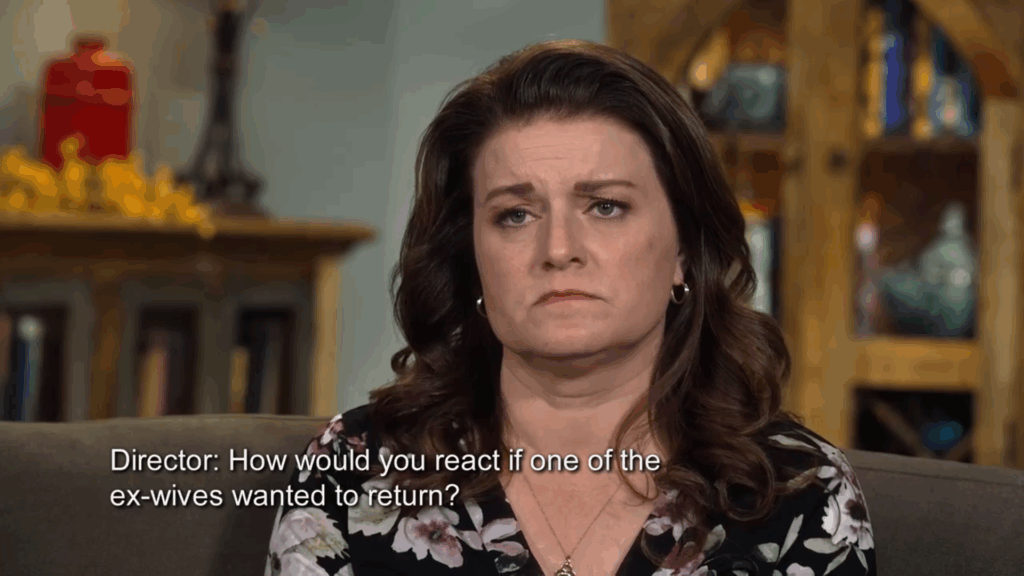
Most of Robyn’s answer plays out on her face as she makes almost every conceivable expression in rapid succession.
However, alongside her face journey, she also answers in words.
“I would be very surprised,” Robyn admits.
As emotions spike, she adds: “I don’t even want to answer this.”
Her reluctance to answer, it turns out, stems from how she has not even alllowed herself to consider the possibility.

During the Sister Wives sneak peek, Robyn Brown admits that considering the possibility is “making me sad right now.”
Before this, she had not even entertained the notion, she claims.
“ …. like, [that] just open[ed] this little portal of hope and I’m just, like, I didn’t even think of that,” Robyn tells the camera.
“And now I’m just, like, what if?” she describes.
“And I’m going down that road,” Robyn expresses. “I can’t, I can’t.”
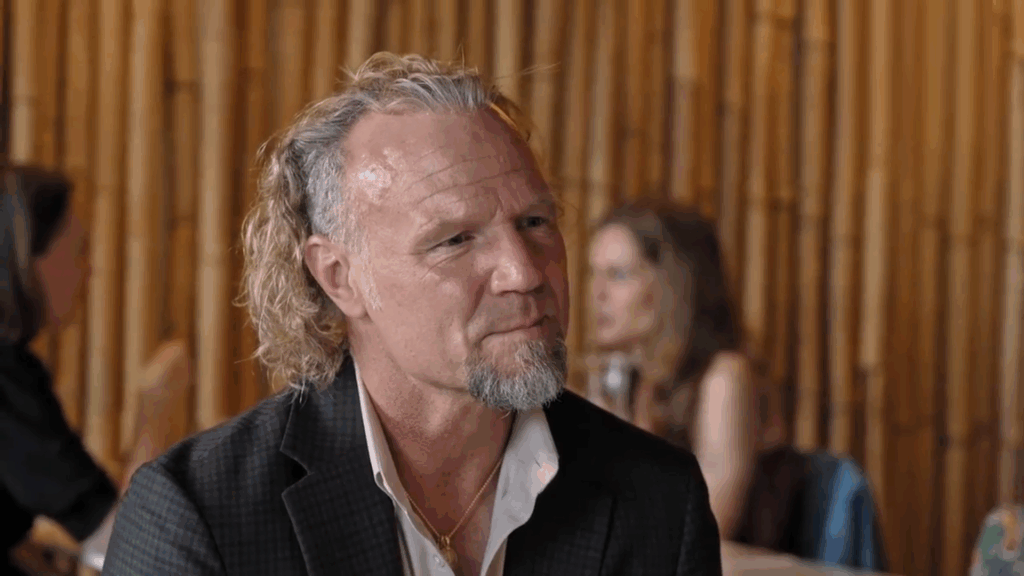
“I got to move away from that,” Robyn explains, “because I’ll fall apart and I can’t be on this set.”
She then goes on to tell the camera that, in her opinion, “hope is dangerous sometimes.”
Robyn tells viewers she believes that “hope is dangerous sometimes.”

There was probably a time when Meri would have given anything to get back with Kody. He iced her out long before Christine and Janelle left.
But Christine has not only moved on, but she has remarried. And she’s actually with a man who loves her and who her kids like.
Janelle hasn’t moved on quite so thoroughly. But she has put Kody behind her in every sense, moving to Raleigh to live near multiple children and grandchildren.
So, no, we don’t think that Robyn Brown has any reason to “hope” that the polygamist family will be back together.
Kody is a failed polygamist. Sister Wives is a documentary about the slow, simultaneous death of three marriages.
Robyn Brown Considers Kody Reuniting With an Ex: ‘It’s Dangerous’ was originally published on The Hollywood Gossip.
The Hollywood Gossip