Categories
Uncategorized

When immigration detention becomes a system of concentration: Lessons from research on 150 historical cases

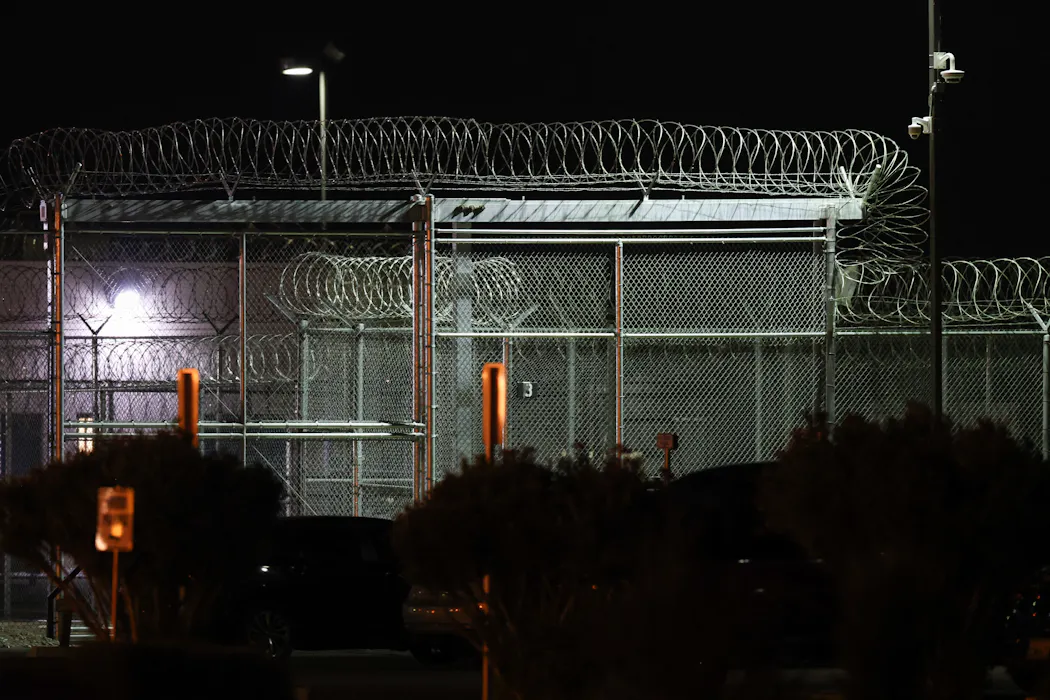
Barbed wire surrounds the GEO Group ICE detention facility in Adelanto, Calif. on July 10, 2025. Patrick T. Fallon/AFP via Getty Images

The phrase “concentration camp” is freighted with dark historical meaning. Most people hear it and instinctively think of concentration camps used by the Nazis to exterminate Jews and other minority populations during the Holocaust.

But the use and name of concentration camps originated far earlier. In the late 1800s, Spanish military officials used concentration camps – reconcentrados – during their 1896–97 Cuban campaign to isolate civilians from rebels, resulting in widespread death and disease.

We are scholars whose research into international relations and conflict includes studying historical and modern uses of these systems of camps as a form of repression.

In recent peer-reviewed research, we identified four characteristics that define what qualifies as a concentration camp system: targeting groups of civilians for imprisonment; enclosed spaces where the state controls who enters and exits; departure from standard detention practices; and abuse and neglect. We then created a dataset detailing 150 systems of camps used globally since 1896 that fit this criteria. This includes the U.S. internment of more than 125,000 Japanese immigrants and Japanese American citizens during World War II, the Argentine military junta’s use of camps in their mid-1970s campaign to reorganize society, and Vladimir Putin’s use of so-called filtration camps in Russia’s war against Ukraine.

Our use of the term “concentration camp” is not meant to sensationalize or diminish its historical meaning, particularly as it relates to the Holocaust.

Rather, identifying such systems early is how the concept of “never again” – the promise to prevent mass atrocities, such as genocide, and combat extremism – can be translated into meaningful policy action from the public and policymakers.

Based on our criteria, we believe the network of detention facilities maintained by U.S. Immigration and Customs Enforcement fits into this broader definition of a system of concentration camps.

The evolution of concentration camps

After the use of concentration camps by the Spanish in Cuba, British officials adopted the practice in southern Africa during their counterinsurgency campaign against the Boer population – descendants of Dutch, French and German Protestant settlers – at the turn of the 20th century. The British detained 110,000 Boers and 37,000 indigenous Blacks in their network of 120 camps. At least 27,000 Boers and 14,000 Blacks died as a result of rampant disease and insufficient food supplies.

By the time major German military operations in Eastern Europe began in 1939, states around the world had erected more than 30 systems of concentration camps, according to our research.

Yet the term soon took on an even darker meaning. Concentration camps were employed most infamously as part of the Nazi regime’s brutal genocide in the 1930s and ’40s. In its 12 years in power, the Nazi government opened more than 1,000 concentration camps in which it detained millions of individuals. In addition to facilitating the Nazi Holocaust and other group-targeted violence against minoritized and non-German populations, Nazi security forces used the camps to repress political opposition and provide labor to the German civilian and military economies.

Though few camp systems have reached the severity or scale of those used during the Holocaust, modern camps often pursue similar goals of ethnic cleansing and forced displacement, practices such as torture and an absence of due process.

In our study, we found 93 examples of systems of concentration camps used since the conclusion of World War II. This includes more than 1,200 camps erected by Chinese authorities in Xinjiang province as part of an expansive policy of discrimination against the Uyghur population there. The Chinese government has detained more than 1 million Muslim Uyghurs since at least 2017, stripping them of their traditions, cultures and languages.

Our 4 criteria further explained

Our research confirms that the word “concentration” is critical to describing these camps. Two key criteria of the camps are the concentration of large numbers of targeted civilians into spaces, which are then secured by small numbers of captors who control who enters and exits the camps.

A third criteria we examined identifies concentration camps as “irregular” insofar as they operate outside of legal frameworks that regulate prisons, refugee camps and immigration detention centers. Concentration camps are run by separate authorities that deny detainees due process, such as formal criminal charges, legal representation or a fair trial.

The last criteria we used as we evaluated camps was the presence of squalor and routine violence. Specifically, we looked for evidence that detainees regularly experienced at least two forms of abuse, including but not limited to torture, beatings, mass killing, sexual violence, psychological abuse, lack of food, lack of water, lack of shelter, lack of healthcare, overcrowding and spread of disease.

ICE detention centers

As of April 2026, there are more than 240 active ICE detention facilities across the U.S.

Migrants held in these camps are not free to leave, though some are given a choice: self-deport − agreeing to leave the country immediately − or remain in custody. Since the beginning of Trump’s second term, migrants have filed more than 34,000 habeas corpus petitions challenging their confinement without trial, exercising a constitutional right.

Based on the criteria we developed, ICE detention camps fit in the spectrum of a system of concentration camps.

Parents and children dressed in olive green outfits walk along a brightly lit hallway.
Families and their children walk along the halls of the T. Don Hutto Residential Center in Taylor, Texas, an ICE detention facility for families.
Robert Daemmrich Photography Inc/Corbis via Getty Images

Starting with the first criteria, groups of civilians are being targeted by ICE, often based on their perceived ethnicity.

Though ICE’s stated mission is to detain those without documented legal status, many arrests have been based on physical appearance and location rather than evidence of unlawful presence in the United States.

More than 272,000 people arrested by ICE in the first six months of Trump’s second term were booked into ICE detention facilities. While deportations are increasing at a rapid rate, at least 60,000 people remain in detention facilities as of April 2026 – neither released nor deported. These numbers easily exceed counts of individuals held in immigrant detention centers in earlier years.

Hundreds of U.S. citizens have been detained, without justification and against their will, by ICE. The number of individuals arrested in homes and communities, often without an arrest warrant signed by a judge, reached more than 400 people per day in October 2025.

In terms of the second part of our definition, these people are being concentrated in spaces where the Trump administration controls who, when and under what conditions people may enter or exit these facilities. Access has been restricted for lawyers, family members of migrants, journalists and members of Congress.

As for the third criteria, the ICE detention centers also operate separately from the U.S. Federal Bureau of Prisons. ICE detention is managed by the Office of Enforcement and Removal Operations under the Department of Homeland Security, in collaboration with private prison companies.

As of April 2026, more than 70% of migrants had no criminal conviction, while many of the remainder were held for minor offenses, such as traffic violations. Failure to provide trials for migrants, particularly those who do not pose these risks, is a departure from established norms.

Our framework’s final criterion is purposeful abuse or neglect. This includes the practice of inflicting direct physical harm or the failure to provide basic necessities – food, water, shelter, healthcare.

A white bus with blacked-out windows drives towards a large building.
A shuttle bus transports detainees outside the private prison company GEO Group’s ICE detention facility in Adelanto, Calif., on July 11, 2025.
Patrick T. Fallon/AFP via Getty Images

Numerous reports have highlighted cutoffs in payments to third-party medical providers who gave care to detainees and a 36% decline in mandated detention facility inspections by ICE’s internal Office of Detention Oversight. These actions have resulted in unsanitary conditions and medical neglect in these facilities. Twenty-three deaths were reported between October 2025 and March 2026, putting the current fiscal year on pace to be the deadliest in over 20 years.

As scholars, we argue that ICE detention centers meet the criteria for concentration camps. We do so not to be provocative but to provide precise language, rather than euphemisms, so people can heed the warnings of atrocities committed in the past.

As journalist Andrea Pitzer argues in her writing about concentration camps, the longer camps exist, the more they shift from a transient emergency measure to a permanent pillar of state function.

Malia Hirasa and Sydney Horton, undergraduate students at the University of Arizona, contributed to this story.

The Conversation

Alex Braithwaite received funding from the US National Science Foundation (NSF) through grant award 2213615.

Rachel D. Van Nostrand does not work for, consult, own shares in or receive funding from any company or organization that would benefit from this article, and has disclosed no relevant affiliations beyond their academic appointment.

​Politics + Society – The Conversation

Categories
Entertainment

Why You Shouldn’t Cook Tomatoes On Aluminum Foil

Tomatoes are acidic, which can be problematic when they’re cooked in aluminum foil. Learn why (it’s health-related) and what we recommend to do instead.

​Mashed – Fast Food, Celebrity Chefs, Grocery, Reviews

Categories
Food

5 Fast Food Burger Chains That Are Overpriced, According To Customers

Let’s be so for real: Fast food prices have skyrocketed across the board (thanks inflation), but these burger joints have customers complaining in particular.

​Food Republic – Restaurants, Reviews, Recipes, Cooking Tips

Categories
Entertainment

Who Makes Sam’s Club Member’s Mark Hot Dogs?

Like lots of major retailers, Sam’s Club sells plenty of in-house products, and that includes its Maker’s Mark hot dogs, but who’s behind this popular product?

​Mashed – Fast Food, Celebrity Chefs, Grocery, Reviews

Categories
Politics

The nation’s cartoonists on the week in politics

Every week political cartoonists throughout the country and across the political spectrum apply their ink-stained skills to capture the foibles, memes, hypocrisies and other head-slapping events in the world of politics. The fruits of these labors are hundreds of cartoons that entertain and enrage readers of all political stripes. Here’s an offering of the best of this week’s crop, picked fresh off the Toonosphere. Edited by Matt Wuerker.​Politics

Categories
Hip Hop

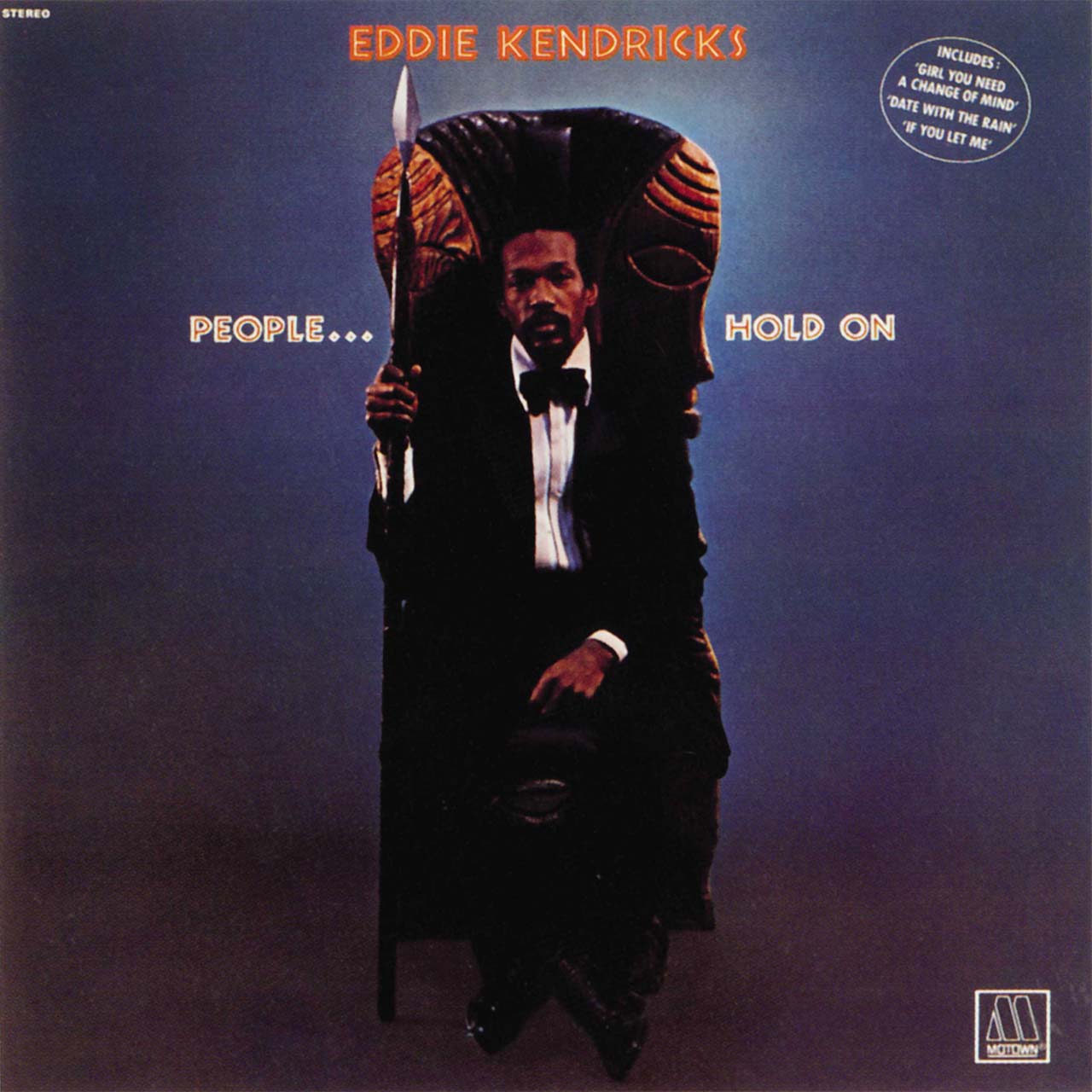
‘My People…Hold On’: Eddie Kendricks’ Spiritual Anthem

Eddie Kendricks People Hold On cover

You don’t always get to choose how a song will speak to its times. Once it hits the ears and hearts of the people, what you thought (or at least said) was a song about the universality of love becomes a powerful anthem for civil rights. That’s the story for “My People…Hold On” from Eddie Kendricks’ 1972 album People…Hold On.

Though never released as a single, the song found its way onto compilations steeped in Black pride, like 2004’s Black Power: Music of a Revolution – alongside Stokely Carmichael speeches and the proto-rap of The Last Poets – and 1995’s Movin’ On Up Vol. 2, right before War’s “The World Is a Ghetto.”

Listen to Eddie Kendricks’ “My People… Hold On” now.

Kendricks has an unmistakable sound. A clear and smooth falsetto, either floating over Melvin Franklin’s rich bass, playing tag with David Ruffin’s gritty lead or Paul Williams’ confident baritone, blending harmonies with Otis Williams or taking the lead for himself. The Temptations were essential parts in an intricate machine. But machines break down. Those perfectly-matched parts wear thin, and grooves that once worked smoothly grind against themselves.

For Kendricks, the wear became too much.

He left The Temptations in 1971 after eleven years. Soon before leaving, Kendricks told Soul, “I sometimes feel that being with a group can really be a drag. […] Even when I’m singing I’d like to be a little freer than I am.” As he released his second solo album, 1972’s People…Hold On, Kendricks had a new backing band – The Young Senators from Washington, D.C. – providing hazy psych-soul. And long-time Motown producer, Frank Wison, who’d produced his debut was again on board along with a sharp team of songwriters, Leonard Caston and Anita Poree, the writers behind the album’s (almost) title track.

If Eddie was looking for freedom, he found it in this album. Not just musically and vocally, but politically. Heroes had been murdered, cities were burning, but Black was still beautiful, and change was slowly but steadily coming.

YouTube Video
Click to load video

“My People…Hold On” is a syncopated chant, a call to action. Kendricks alternates between his signature falsetto and a deeper, earthier register throughout the track. “People were pretty surprised by it,” Kendricks told Disc in 1973. “I’ve always been able to sing like that, it’s just that I’ve never had the opportunity.” But Kendricks pushed back against the politics of the song, telling Disc, it’s “a spiritual song; it says ‘people hold on, hold on to love, that’s the only lasting thing.’ To me, that’s singing the truth. But I’m not hung up on getting political messages across. I leave that to the politicians.”

“I can see the struggle in your eyes,” he sings, the drums beating against a wailing guitar. What Kendricks may have intended as a spiritual message, spoke to people’s more earthly needs. Amiri Baraka explained it in a 1966 essay: “Black people’s songs have carried the fire and struggle of their lives since they first opened their mouths in this part of the world.” Maybe Kendricks didn’t intend it, but he was carrying fire with every note.

Listen to Eddie Kendricks’ “My People… Hold On” now.

​Discover more about the world’s greatest R&B artists | uDiscover Music

Categories
Politics

Can America trust AI? David Sacks makes the case.

Can America trust AI? David Sacks makes the case.

lead image

​Politics

Categories
Alaska News

Gov. Dunleavy vetoes bipartisan elections reform bill

Gov. Mike Dunleavy discusses proposed education legislation at a news conference on Jan. 31, 2025. (Photo by Corinne Smith/Alaska Beacon)

Gov. Mike Dunleavy discusses proposed education legislation at a news conference on Jan. 31, 2025. (Photo by Corinne Smith/Alaska Beacon)

Alaska Gov. Mike Dunleavy vetoed a bipartisan bill aimed at streamlining the state’s elections process on Thursday, just seven months ahead of high-stakes state and federal elections in November.

Leaders with the multipartisan House Majority caucus said there will be a joint legislative veto override vote within the next few days.

In a prepared statement announcing the veto, Dunleavy said while there are many provisions in the bills he supports, the bill contained “legal and operational challenges and could jeopardize the election process.” He told lawmakers his two main issues with the bill are related to when it would go into effect and voters’ signature verification.

“The Division of Elections warns such changes would be extremely difficult if not impossible, to implement securely and reliably in advance of the 2026 elections,” he wrote in a transmittal letter to the Legislature. He said the Division needs sufficient time to make necessary changes. 

The Alaska House passed the bill in March along caucus lines, following passage by the Senate last year. It contained a variety of changes to the state’s elections system, which supporters say is years overdue and needed to update and strengthen the elections process and expand voter access. 

The governor said that the bill would impose “significant operational hurdles” for the Alaska Division of Elections in administering state and federal elections in November. 

Sen. Bill Wielechowski, D-Anchorage, who carried the legislation in the Senate, condemned the decision in a written statement following the announcement.

“Governor Dunleavy has said, by his veto, that Alaska’s elections are secure enough,” Wielechowski said. “Unfortunately, they are not, and even his supporters confirm that. Our voter rolls stood at 114% of the voting-age population in 2022. Ballots are being rejected over technical errors. Tampering with a voting machine is not explicitly a crime under current law. This bill addressed every one of those concerns. The Governor had every reason to sign it.”

The bill would have authorized checks to update Alaska’s voter rolls. Officials have said managing an updated voter registration list is a continuous challenge with Alaska’s transitional environment and many residents moving in and out of state, resulting in the number of registered voters currently outnumbering actual eligible voters in state. 

The bill would also have enacted a new ballot tracking system, provided paid postage for all absentee mail-in ballots, strengthened security protocols, and  implemented provisions for faster elections results, among others.

The Legislature has five days to convene in a joint session to consider an override of Dunleavy’s veto. A majority of 40 votes of the Legislature’s 60 members are needed for an override. 

“There will be a veto override vote. I don’t think it will come as a surprise to the governor,” said House Speaker Rep. Bryce Edgmon, I-Dillingham, in a call Thursday evening. 

On Thursday afternoon, members of the House Majority caucus slammed the decision Thursday following the announcement, saying in a joint statement the veto is “a significant setback for election integrity and a direct blow to voting access for Alaskans living in rural and off-road communities.”

Edgmon called the decision “deeply disappointing.”

“This was a bipartisan effort to address the real challenges of voting in a state as vast, rural and remote as Alaska. We worked in good faith to improve access, strengthen transparency, and maintain the integrity of our elections,” Edgmon said. “Alaskans deserve a system that reflects our unique geography, not one that ignores it. This veto does exactly that.”

Rep. Nellie Unangiq Jimmie, D-Toksook Bay, said that rural Alaska “is the hardest place in the state” to vote. 

“Everyone who has looked at the data knows that. We passed a bill to clean up our rolls and remove barriers. It will not become law today,” she said.  “My people have been patient with systems that were not built for us, distances that were not considered, delays inevitable in rural areas beyond our control. So today, the problem doesn’t go away. Neither do we.”

Dunleavy also took issue with provisions to establish a ballot tracking system and to allow voters to fix mistakes on their ballot — a process called ballot curing — by requiring the division to contact the voter by phone or email within 24 hours. Under the bill, voters would have been allowed to return a form to correct the ballot with a copy of identification by email or by mail within 10 days of the election for their ballot to be counted.  

“The ballot-tracking and ballot-curing provisions are especially problematic,” Dunleavy wrote. “The ballot-curing provisions create tension with Alaska’s witness requirement by allowing a voter to cure a missing witness signature after the ballot has already been returned, even though Alaska’s absentee-ballot framework requires the voters certificate to be signed in the presence of a qualified attesting official or witness.”

The governor sent a letter following a meeting with presiding officers of the Legislature on Thursday with technical changes he’d like to see in legislation for fixing ballots, evaluating and verifying signatures.

Dunleavy said the potential Alaska gas line is his main priority, but he’s open to continuing negotiations on the elections bill this session.

“While the Alaska gas line bill is the most important bill this session, I am open to a conversation with lawmakers on how we can address the legal and operational issues this session.”

Other provisions in the now vetoed bill would have included:

  • Require all absentee ballots to be received within 10 days of Election Day; 
  • Establish a new rural community liaison position within the Division of Elections to support rural districts, including recruitment and training of poll workers;
  • Require the Permanent Fund Dividend Division to share data to improve the accuracy of the voter rolls’
  • Require the state to develop a cybersecurity program, and notify the public if there is a data breach;
  • Require the division to publish results for all rankings in the precinct results.
  • Require presidential ballots to include a line for write-in votes for president and vice president 
  • Updates crimes of unlawful interference with an election, ballot tampering and election official misconduct

Dunleavy said he applauded the Legislature’s efforts, but said the state needs more time to make changes to the state’s elections system.

“I appreciate the efforts made to improve Alaska’s elections. Going forward, I encourage those who wish to continue this work to use this bill as a starting point; ensure that any proposed changes comply with state and federal law; and pass any election legislation on a timeline that allows the Division of Elections to implement the necessary systems properly,” he said.

Edgmon said that the issues Dunleavy raised were “highly subjective” and lawmakers had heard from the division and the lieutenant governor, who is charged with overseeing state elections, that the timeline for implementing the bill was doable.

Edgmon said it’s unclear if there are the votes to override.

“You never know until the votes are tallied. You just never know,” he said. “And I know there will be plenty of votes. Will there be enough? I’m not going to hazard a guess at this point, because I’ve been proven wrong before.” 

This story has been updated as of 6 p.m.

SUPPORT: YOU MAKE OUR WORK POSSIBLE

Categories
Entertainment

Take a New York Minute and See Mary-Kate & Ashley Olsen’s Rare Outing

Ashley Olsen, Mary-Kate Olsen, 2025Mary-Kate Olsen and Ashley Olsen have a passport to Manhattan.
The Row co-founders made a rare appearance on April 30, when they were seen walking around Midtown Manhattan before meeting with a…
​E! Online (US) – Top Stories

Categories
Entertainment

Zendaya’s Stylist Law Roach Details 5 Months of Prep for Met Gala

Law Roach, Zendaya, Met GalaLaw Roach is ready to hold court at the 2026 Met Gala.
The longtime stylist to Zendaya, as well as other stars like Ariana Grande and Céline Dion, reflected on how he typically prepares his…
​E! Online (US) – Top Stories