As it turns out, the generational divide between baby boomers and millennials extends even to fitness practices, including how to lose fat and gain muscle.

Health Digest – Health News, Wellness, Expert Insights









As it turns out, the generational divide between baby boomers and millennials extends even to fitness practices, including how to lose fat and gain muscle.
Health Digest – Health News, Wellness, Expert Insights

Hate communities often flourish online for years, raising the question of how they persist. My research team has found that powerful stories keep members of a hate group galvanized, either by repeating the story over and over or by constantly adding fresh accusations and interpretations to it.
I’m a computational social scientist who studies social and political networks. My colleagues and I uncovered these trends by examining 10 years of posts, reactions and participation patterns in Facebook groups that shared antisemitic and Islamophobic content. Our findings have been accepted at the 2026 International Conference on Web and Social Media.
First, we measured who was posting and how that related to engagement on a site. Groups in which a small number of people produced most of the content tended to attract more reactions and responses. Then we looked at subjects the group members discussed – religion, immigration, geopolitics – and the kinds of stories members told about those topics, such as describing an entire group of people as criminals or warning that certain types of people are secretly taking over a country’s way of life.
When we put these pieces together, we discovered some clear patterns. Messages posted by a few very active people were strongly associated with higher site engagement in the form of likes and shares in the near term. And repetition – espousing the same ideas again and again – was an effective tactic. We also found that when many users kept adding fresh accusations, conspiracy theories and explanations, a group tended to persist. Very uniform content that used the same framing led to less engagement over time.
Different communities seemed to be drawn to different messaging patterns. In Islamophobic groups, the most prolific posters tended to repeat a narrow, consistent set of messages. Often these were religiously framed posts that portrayed Muslims as morally condemned. In antisemitic groups, the most engaged members were more likely to impart a mix of narratives, from tales of victimization to conspiracy theories about public figures.

Our findings suggest that hate communities can sustain themselves in various ways, so efforts to moderate them should consider these variations. If a few voices drive the conversation, removing them could quiet the noise. If new stories constantly appear from many contributors, harmful ideas may survive even if a few key online accounts are taken down. Hate networks can persist even after social media platforms ban specific groups or accounts.
It is also important to understand how stories can make prejudice feel justified and emotionally compelling. Extremist stories may claim that a group is under attack, that outsiders are dangerous or subhuman, or that violence is the only way to stay safe. Groups seen as outsiders – such as immigrants – are common targets, and they may be described as an “invasion” that threatens the nation.
Researchers are finding that extremist ideas are now spreading through looser networks where many voices contribute and messaging can vary widely. That could affect whether engagement in the future still depends on consistent repetition or novelty. Some investigators are also scrutinizing how harmful language, conspiracy theories and propaganda evolve over time.
Another important direction is tracking how hate narratives are spread by public figures and influencers, how the narratives move between online platforms, and how they surface in offline groups and efforts to organize supporters, all of which can normalize harmful ideas. My group is starting to study how this amplification works: who shares which narratives and why, which kinds of people become bridges across different online platforms, and how those roles shape which messages spread.
The Research Brief is a short take on interesting academic work.

Yu-Ru Lin’s research has received federal funding, including National Science Foundation and the Department of Defense (DARPA, AFOSR, Minerva, and ONR). Any opinions, findings, and conclusions or recommendations expressed in this material do not necessarily reflect the views of the funding sources.
Politics + Society – The Conversation

If you follow the Trump administration’s social media posts, you might spot its new mascot: a cartoon lump of coal with big eyes and babylike features. “Coalie” sparked a backlash almost as soon as Interior Secretary Doug Burgum debuted it for the Office of Surface Mining and Reclamation Enforcement in early 2026.
Coalie’s design draws on a type of Japanese anime called Kawaii, a word meaning “cute” or “adorable.” It’s the latest in the White House’s efforts to pass off coal as harmless, despite the well-established environmental and human health harms of mining and burning the fossil fuel.
As a scholar of American literature and culture, I write about media portrayals of coal, beginning in the 19th century with its rise to become the leading fuel in the United States. Coal use grew until the early 2000s, when other sources became cheaper and its health and environmental damage became unacceptable to more of the public.
While “Coalie” might be new, the logic behind it is not. For centuries, coal’s promoters have worked hard to show coal as harmless – as well as “clean” and “beautiful,” to use President Donald Trump’s words.
Humans living with the effects of burning coal have disliked it for as long as they have burned it.
In 1578, Queen Elizabeth complained that she was “greatly grieved and annoyed with [its] taste and smoke” in the air. In 1661, John Evelyne’s treatise Fumifugium outlined negative health effects of breathing coal smoke.

English settlers were drawn to North America in part because of the continent’s abundant supply of timber, a substitute for coal that deforestation had made prohibitively expensive in England.
But by the 19th century, the price of timber had risen in America as well. When, in the 1820s, news spread of Pennsylvania’s rich veins of anthracite coal, urban consumers were eager for a cheaper source of fuel.
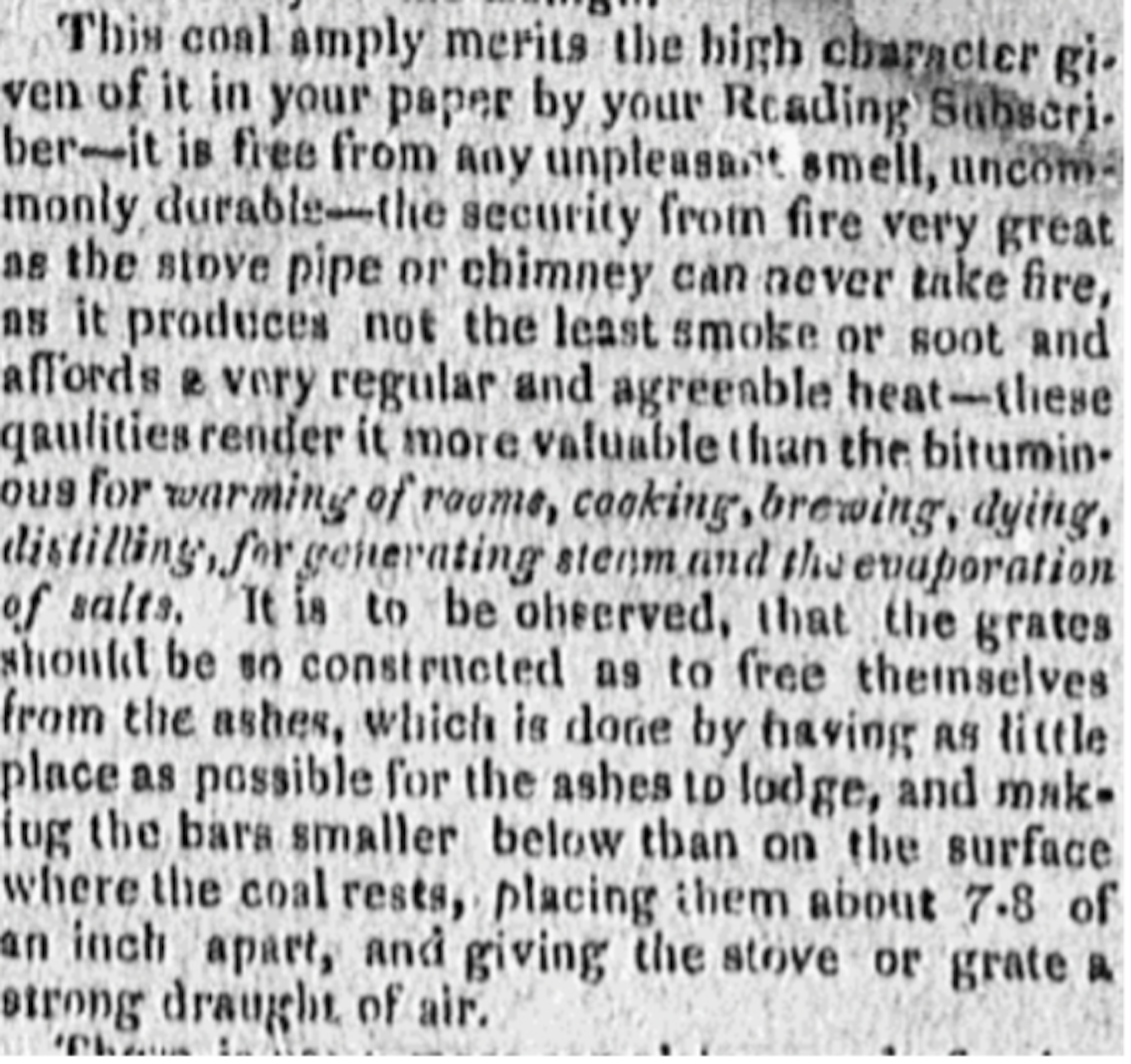
In addition to its lower price, anthracite coal grew desirable because of its high carbon, low-sulfur content, which produced less visible smoke when it was burned. An enthusiastic 1815 letter to the editor of the American Daily Advertiser captured increasingly common attitudes toward anthracite as “affor[ding] a very regular and agreeable heat.”
The spread of anthracite also shored up tolerance for smokier but cheaper bituminous coal.
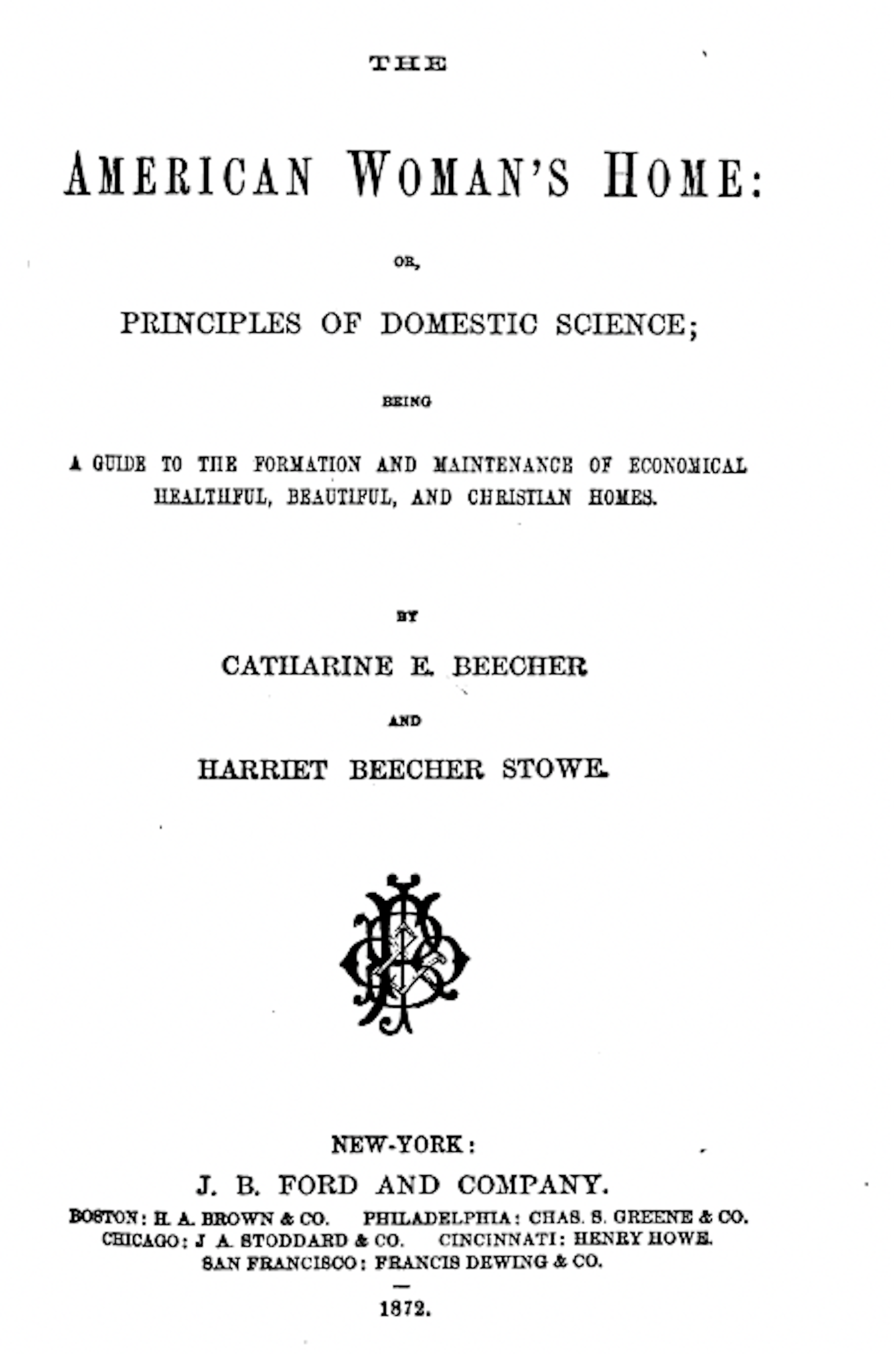
To help people, housekeeping manuals aimed at the fossil fuel’s mostly female users tried to invent workarounds for its smoke. In 1869, Harriet Beecher Stowe, best known as the author of “Uncle Tom’s Cabin,” and her sister Catharine Beecher wrote one of many 19th-century articles to acknowledge the “evils” of coal smoke, while outlining “modes of making a healthful home,” in the housekeeping manual American Woman’s Home.
Consumers provided temporary solutions for maintaining indoor air quality while burning coal by sending in suggestions that were published in housekeeping manuals, magazines and newspapers.

At the same time, as the century progressed, coal and coal-stove companies began to suggest that burning coal was healthy, that it could improve indoor air as well as domestic aesthetics. One 1892 newspaper advertisement claimed that stoves were “necessary to heat, cheer, and beautify the home and preserve its health.”
In the 20th century, marketers churned out more colorful claims about the benefits of coal: One magazine advertisement showed a mother and child pointing at the crackling stove aflame with the company’s coal, saying it “cannot be excelled in purity, cleanliness, and free-burning qualities.”

Similarly, the Lackawanna Railroad Company came up with the classy, often rhyming, character of Phoebe Snow. In one ad, she points to the importance of comfort, suggesting that not only could anthracite fuel faster travel, but it could also make your travel – and your life – more comfortable.

Coal marketing often used children to suggest safety and reach parents. Another iteration of the Phoebe Snow series promised that anthracite-powered railway travel could keep children “clean and bright.”

A 1930s advertisement went so far as to position a piece of anthracite coal next to a child in a bathtub, a visual proximity implying that coal was as good as soap.
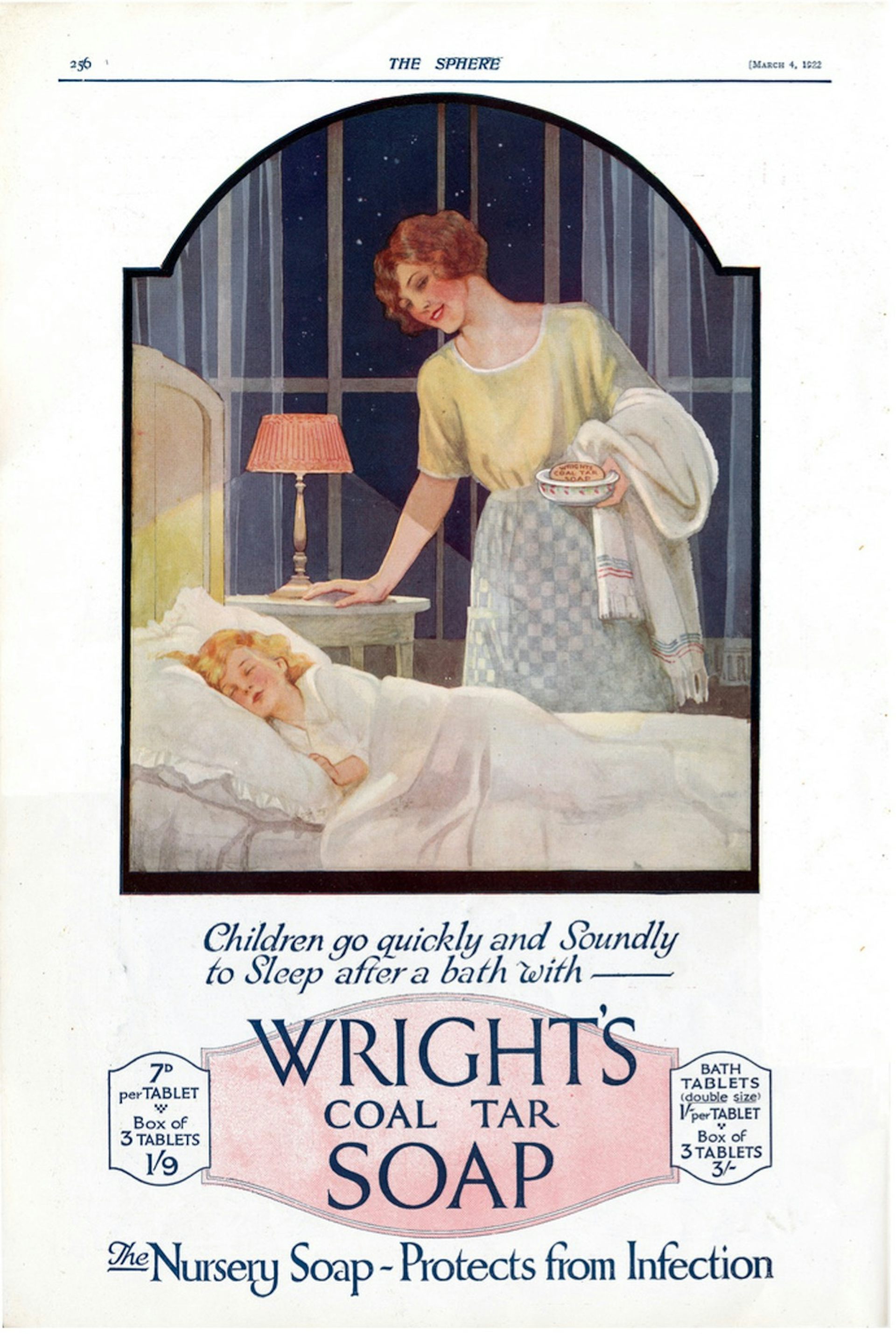
In fact, soap made of “coal tar” – a liquid byproduct of producing coke, a fuel made from bituminous coal used in industrial blast furnaces – did (and does) exist. The British company Wright’s, also popular in the U.S., generated a slew of advertisements praising its soap as having antiseptic properties for children.

Each of these advertisements tried to capitalize on a mother’s desire for healthy children. And they pushed back against the image of the tyrannical “King Coal” that had come about amid strikes by miners protesting dangerous, degraded working and living conditions as well as the rise of black lung disease.
By the mid-20th century, petroleum took coal’s place as America’s main energy source. The U.S. environmental movement continued to grow, and people got interested in natural gas as an alternative to coal.
In response, coal companies doubled down on the fantasy of “clean” coal.

A 1979 advertisement for American Electric Power, for example, flew in the face of Clean Air Act mandates that coal corporations employ “scrubbing” technology to remove sulfur dioxide from smoke – the ad depicted someone cleaning coal by hand.
Today, coal generates only 16.2% of America’s electricity, down from generating more than half of the U.S. power supply in the 1990s. But the country isn’t done with it. Even though coal production today is far below its peak, as companies try to shut down old uneconomic plants, Trump has promised to “reinvigorate” the coal industry.
In addition to ordering some coal plants to continue operating, the Trump administration has pulled out old coal promotion tactics from the past, including repeatedly referring to coal as “clean and beautiful.” One image inserts Coalie next to a coal-mining family that otherwise looks like an ad that could have appeared a century ago.

And, like its predecessors, this picture tries to present an innocent image of a product that harms human health and the environment.
A 2018 study found that black lung disease was on the rise in Appalachia, where about 40% of America’s coal is mined today. Living near a fossil-fuel power plant exposes residents to pollutants that contribute to premature deaths, asthma and lung cancer, including tiny particulate matter known at PM 2.5, sulfur dioxide and mercury. Even when it’s just sitting in piles waiting to be used at a power plant, coal can harm human health as the wind blows across it and carries coal dust into the air and people’s lungs.
The myth of coal as healthy and family friendly has been around for centuries – but coal has never been clean, or cute.

Annie Persons does not work for, consult, own shares in or receive funding from any company or organization that would benefit from this article, and has disclosed no relevant affiliations beyond their academic appointment.
Politics + Society – The Conversation

On the eve of the American Revolution, Matthias Aspden made a decision that would change the trajectory of his life. A wealthy merchant from Philadelphia, Aspden carefully prepared to leave his home in March 1776 as rumors of revolution circulated. He drafted a will and appointed trusted friends to manage his property while he traveled to England.
As a loyalist, someone who wanted to remain loyal to the crown and the British empire, Aspden believed the war would be brief. Historians estimate that at the beginning of the war as many as one-third of all American colonists identified as loyalists. Aspden believed his departure would be temporary. Order, he assumed, would soon be restored, and he would permanently return within a few years.
But that wasn’t the case.
The American Revolution is often told as a triumphant story of democracy and freedom. But this narrative leaves out a significant group: the loyalist men and women who remained faithful to Britain and, as a result, lost their homes, property and sometimes their sense of belonging.
As a historian of the American Revolution who studies Philadelphia loyalists, I believe Aspden’s story offers a glimpse into an overlooked experience of the war.
Born and raised in Philadelphia, Aspden was not a marginal figure. He was a Quaker merchant with extensive property holdings, including a home on Water Street, in what is now the Old City neighborhood, and land in Chester County outside Philadelphia.
When he left in 1776, he abandoned nearly everything he owned, believing he would return. As others celebrated independence that summer, Aspden quietly slipped away to London.

In England, reality set in. Exile was not just physical; it was deeply social and emotional. In Philadelphia, Aspden had been established. In London, he was one of tens of thousands of displaced loyalists trying to rebuild a life. He gravitated toward communities of fellow exiles. These networks offered some stability, but they could not replace what he had left behind.
Aspden’s letters to friends and family from this period reveal a man caught between hope and anxiety. He followed news from Philadelphia obsessively, requesting newspapers and updates from friends and business contacts. At one point, he described himself as “an idle man until I can return to America.” His words suggest both longing and uncertainty, as if his life were on pause.
By 1780, that uncertainty turned into fear.
Aspden began hearing about laws in Pennsylvania aimed at confiscating loyalist property. These laws required individuals accused of treason to appear in court and defend themselves. Aspden, still in England, could not do so. As a result, he was tried in absentia, declared a traitor and subjected to the state’s harshest penalties.
The consequences were devastating. In 1782, Aspden learned that all of his property had been confiscated and would be sold to aid the patriots in the American Revolution. An official commissioner of confiscation seized his Philadelphia home and wharf, which were worth thousands of pounds, along with his land in Chester County. Aspden, facing financial ruin, decided to return to Philadelphia to defend his name and his property.
In 1785, after nearly a decade abroad and with the war over, he crossed the Atlantic, hoping the new United States would restore his property under the terms of the peace treaty with Britain. Instead, he was met with rejection.
Pennsylvania officials informed him that individuals in his position were not protected. He had no legal claim to his property and, more shockingly, no rights as a citizen. While the peace treaty prevented further confiscation of loyalist property, his property was not restored.
The message was clear: Philadelphia was no longer his home.

Aspden left again, traveling through New Jersey and New York before securing passage back to England. Reflecting on his departure, he wrote of the pain of being forced from his “native country.” His brief return confirmed what he had feared. He had no home.
In the years that followed, Aspden sought compensation wherever he could. The American government offered nothing, so he turned to Britain. The Loyalist Claims Commission, established to reimburse those who had lost property during the war, eventually awarded him just over 1,100 pounds, a fraction of his estimated losses.
Aspden made one final visit to America in the early 1790s. By then, he had received a legal pardon and could travel without fear of arrest. But he still could not recover his property or successfully pursue compensation in American courts. Once again, he left – this time for good.

Aspden died in England in 1824, having spent nearly 50 years in exile from the city he always considered home.
Decades after his death, his heirs pursued a legal claim in the United States against Pennsylvania, arguing that his estate had been unjustly seized. After years of litigation, the court ruled in their favor in 1848, awarding them over a half-million dollars – approximately US$20 million today. It was a remarkable reversal, but Aspden never saw justice.
His life raises difficult questions about loyalty, identity and belonging. Aspden did not see himself as disloyal to Philadelphia. To him, loyalty to the British Crown and loyalty to home were not opposites.
His story reminds us that the Revolution was not just a fight for independence. It was also a civil conflict that divided communities and reshaped lives. For every celebrated patriot, there were loyalists like Aspden and others who lost so much during the American Revolution.
Read more of our stories about Philadelphia, or sign up for our Philadelphia newsletter on Substack.

Kimberly Nath does not work for, consult, own shares in or receive funding from any company or organization that would benefit from this article, and has disclosed no relevant affiliations beyond their academic appointment.
Politics + Society – The Conversation

Want to get the best possible McDonald’s Big Mac? You don’t have to rely on luck; these five ordering tips will get you a great sandwich every time.

Mashed – Fast Food, Celebrity Chefs, Grocery, Reviews

These projects tend to arrive at significant moments. Continue reading…The Boot – Country Music News, Music Videos and Songs

If you want to produce great-tasting food every time, there are some common grilling mistakes you need to avoid according to these four experts.

Mashed – Fast Food, Celebrity Chefs, Grocery, Reviews

This beloved Italian sandwich chain based in Portsmouth, New Hampshire, is still going strong after opening its doors to the public in 1959.

Food Republic – Restaurants, Reviews, Recipes, Cooking Tips

Sam’s Club had no intention of spending 2026 with its shelves full of the same old products. These are some of our favorite debuts from the warehouse chain.

Mashed – Fast Food, Celebrity Chefs, Grocery, Reviews

President Donald Trump has made the SAVE America Act a central GOP priority ahead of the midterms. Voters still don’t know how to feel about it.
New results from The POLITICO Poll show that while many Americans support some core provisions of the SAVE America Act — such as requiring documentary proof of U.S. citizenship to register to vote — that support is not overwhelming. And they are far less certain about the sweeping elections bill overall, even as Trump has for months pressured Republican lawmakers to pass it.
Democrats in particular oppose much of the SAVE Act, and many of them are unenthusiastic even about the voter ID provisions that generate the broadest support — a sign that Trump is prioritizing legislation that has little crossover appeal.
A 42 percent plurality of voters who supported former Vice President Kamala Harris in 2024 back requiring proof of citizenship when registering to vote, including when registering by mail. But that number is dwarfed by the three-quarters of Trump 2024 voters who support such a measure, according to the survey conducted by Public First.
Asked about the bill overall — by name, but without providing information on what’s included — just 37 percent of Americans said they support it, and 21 percent oppose it. A larger share, 42 percent, say they neither support nor oppose the SAVE America Act, or are unsure.
Slightly more Americans say the bill will make elections fairer (38 percent) than those who say it will make elections less fair (32 percent). But 30 percent say they don’t know — another sign that their views on the issue are still forming even as the president wields it as a campaign cudgel.
“We are either going to fix” elections, he wrote on his Truth Social recently, casting it in existential terms, “or we won’t have a Country any longer.”
The findings reveal that though voter ID and proof of citizenship are popular, the SAVE America Act has not broken through in the same way. In addition to requiring proof of citizenship, the bill would also require states to regularly review voter lists and remove non-citizens.
“Voter ID is very popular, but the SAVE Act has been loaded up with other stuff,” said Buzz Brockway, a GOP strategist and former state representative in Georgia. “I think Senate Republicans should strip the bill back to Voter ID only. It still won’t pass because of Democratic opposition, but it would be a more popular bill.”
White House spokesperson Abigail Jackson said the SAVE America Act is “commonsense legislation supported by the vast majority of Americans … who want to ensure our elections are secure and that only American citizens vote in American elections.”
The SAVE America Act passed the House in February and has stalled in the Senate amid GOP divisions and staunch Democratic opposition. Four Republican senators — Sens. Susan Collins (R-Maine), Lisa Murkowski (R-Alaska), Thom Tillis (R-N.C.) and Mitch McConnell (R-Ky.) — recently voted against an amendment that would have helped the legislation get across the finish line as part of a broader reconciliation package, raising new questions about its path forward in a narrowly divided Congress.
Critics of the legislation say it would make it much harder for Americans who lack the proper documentation — such as a paper copy of a birth certificate or passport — to vote.
“The SAVE Act will make it exceedingly and unacceptably difficult for hundreds of thousands, if not millions of Americans, to be heard,” Georgia Democratic Sen. Raphael Warnock said in a brief interview recently. “And so if all the people in the election can’t be heard, who are eligible to vote, then that’s something other than democracy.”
“I don’t think the American public knows what is in store for them if [the SAVE ACT] passes,” said Hawaii Democratic Sen. Mazie Hirono. “Millions of people are going to need to re-register.”
In the absence of movement in Congress, Republicans in some statesare pushing forward with their own efforts to impose proof of citizenship requirements to their voting laws. Several red states, including Arkansas and Kansas, are expected to vote on measures this November that mirror the federal SAVE America Act.
Lawmakers in the battlegrounds of Alaska and Michigan have also garnered the required signatures to put citizenship questions before voters — two states that could test whether Americans’ support for such measures in public opinion polling translates to the ballot box.
Politics