Plenty of people know that Tilly Ramsay’s dad is a fire-breathing chef. However, they are probably much less familiar with her significant other.

Mashed – Fast Food, Celebrity Chefs, Grocery, Reviews









Plenty of people know that Tilly Ramsay’s dad is a fire-breathing chef. However, they are probably much less familiar with her significant other.
Mashed – Fast Food, Celebrity Chefs, Grocery, Reviews

Do Vince Gill and Amy Grant bring the music home with them, or do they leave all that at work? Grant tells all. Continue reading…Country Music News – Taste of Country
Do Vince Gill and Amy Grant bring the music home with them, or do they leave all that at work? Grant tells all. Continue reading…The Boot – Country Music News, Music Videos and Songs

If you’re looking for some new ways to enjoy cottage cheese, this list might revolutionize the way you consume this protein-packed dairy product.

Mashed – Fast Food, Celebrity Chefs, Grocery, Reviews

Bravo is heading to Texas Hill Country with a new reality series following wealthy women balancing ranch life, marriage, social status and scandal. Continue reading…The Boot – Country Music News, Music Videos and Songs

Should you find yourself in Quebec hungry for KFC, the good news is that the familiar chicken is still there, though it goes by a different name.

Food Republic – Restaurants, Reviews, Recipes, Cooking Tips
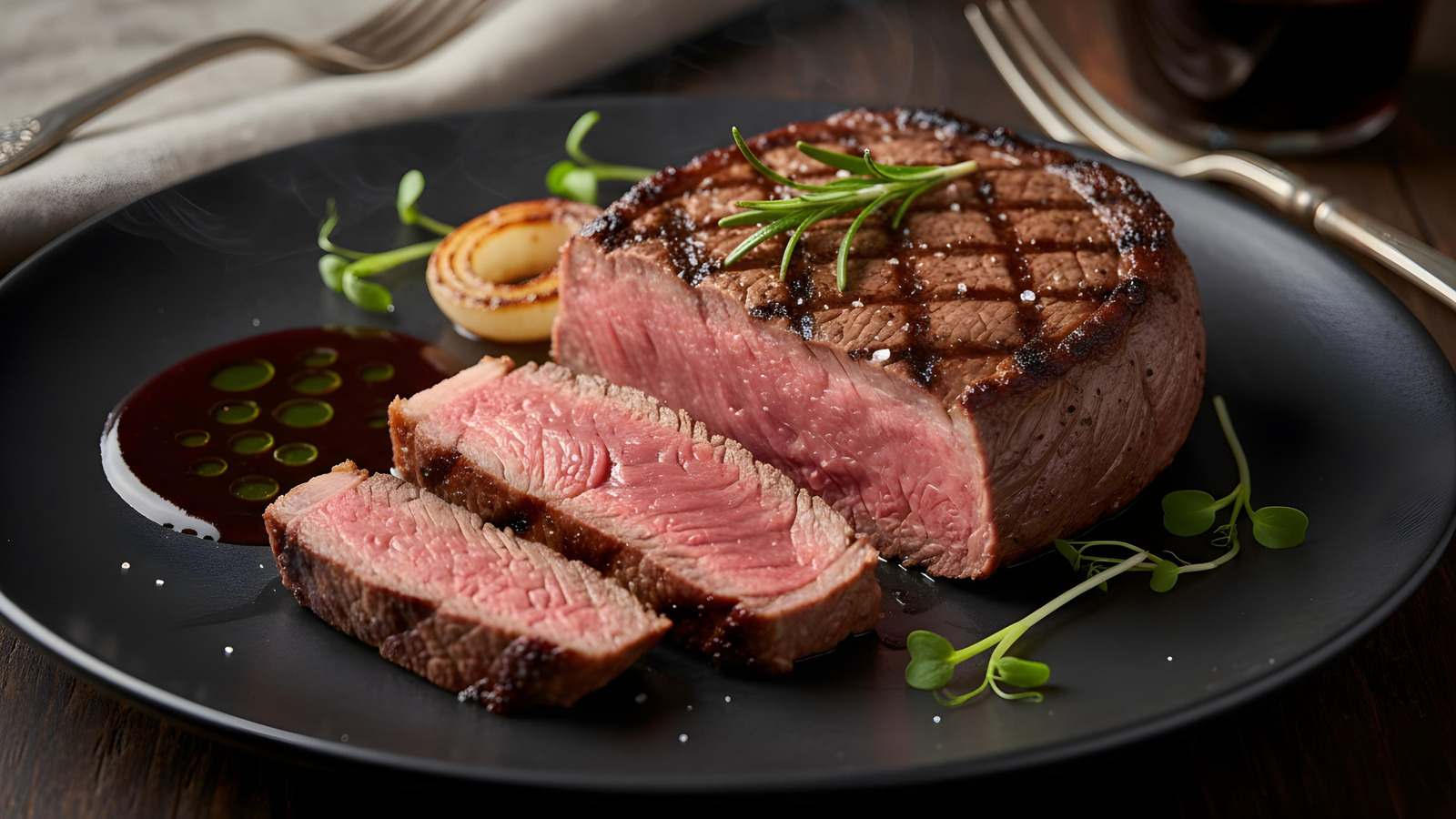
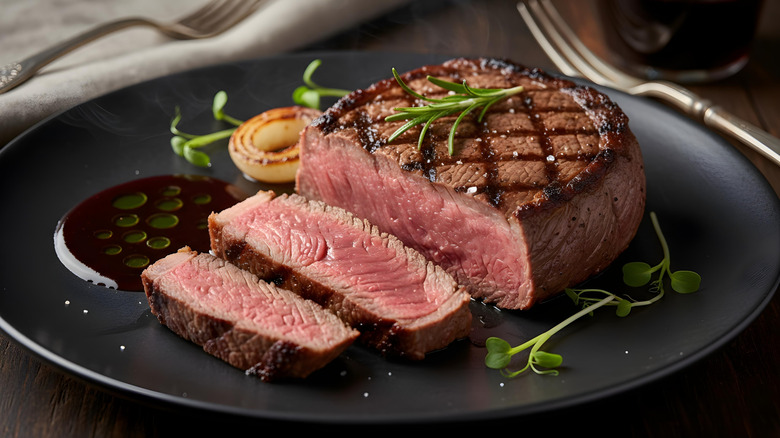
Obviously, beef is the star at a steakhouse, but that doesn’t mean you should ignore other proteins. You could try this high-quality alternative instead.
Mashed – Fast Food, Celebrity Chefs, Grocery, Reviews

Pete Buttigieg is picking sides in a heated Senate Democratic primary in the state that cemented his national political profile.
Buttigieg, who won the Iowa Democratic caucuses in 2020, is backing state Rep. Josh Turek — a move that shows his willingness to wade into contested primaries ahead of another possible presidential campaign.
The endorsement comes shortly after Buttigieg’s former 2020 rival, Massachusetts Sen. Elizabeth Warren, visited earlier this week to campaign for Turek’s opponent, state Sen. Zach Wahls.
“We made history in Iowa in 2020 because our campaign went everywhere,” Buttigieg said in a statement shared first with POLITICO. “We connected with people in rural towns and the largest cities, focused on the issues that affect everyday life, and brought Democrats, Independents, and even Republicans into the fold. Josh Turek has taken that same proven approach to his campaign, and that’s why I know he will be successful. I believe Iowa can make history again in 2026 by sending Josh to the U.S. Senate.”
Buttigieg’s decision to pick sides in the once-early nominating state is a reversal for him. In March, he told POLITICO it was “not in my plans” when asked whether he would endorse in sharply contested primaries in his adopted home state of Michigan or in Iowa. And while it could help elevate Turek — and potentially give Buttigieg a valuable ally if he runs in 2028 — it carries some risk of alienating Wahls’ supporters in the hard-fought contest.
It’s not a shock, however. Turek’s campaign in Iowa marks something of a reunion for Buttigieg’s 2020 campaign operation: his former national press secretary Chris Meagher is a Turek adviser, while Buttigieg’s former senior adviser Lis Smith and former aide Matt Corridoni are both advisers to The Bench, a new political group that’s been choosing sides in other Democratic primaries.
It’s not clear whether Iowa will have anywhere near the outsized role it historically held in the Democratic nomination process next time around. A calamitous caucus-night vote count and app breakdown played a role in Democrats bumping Iowa from the front of the primary line in 2024. Iowa Democrats are trying to get back in the first four states, along with a bevy of other states. Democrats are expected to choose their nominating order later this year.
Buttigieg joins Sens. Tammy Duckworth of Illinois, Catherine Cortez Masto of Nevada, and Maggie Hassan of New Hampshire in Turek’s corner — as well as former Sen. Tom Harkin (D-Iowa), the last Democrat to represent the state in the Senate.
“I am deeply honored to have Pete’s support in this race,” Turek said in a statement. “His unique ability to connect with Iowans who feel forgotten and left behind is exactly why he won the caucuses in 2020, and it’s that same approach that will help us win Senator Harkin’s seat back.”
Politics

SEARHC plans to build an 8,000-square-foot medical services building to consolidate dental and behavioral health services into a single campus, anchored by the hospital.
“We’re calling it the Wrangell Campus,” Ryan Matej, the Sitka-based chief administrative officer for the health care provider, said in a phone interview on Friday, May 1.
SEARHC has been looking at how to consolidate its multiple service locations in town, he said.
The dental clinic currently operates out of a SEARHC-owned building at Front and McKinnon streets, about a mile from the hospital. Behavioral health services are housed in a SEARHC-owned building at Church and St. Michaels streets.
Matej said no decision has been made on the future use of the two buildings after they are vacated.
“It’s really in the infant beginning stages,” he said of the construction project next to the hospital. “We’ve broken some ground,” with no specific timeline for construction.
Contractors will work over the next several months on site prep, preparing for a foundation and roughing in utilities, he said, but no actual construction.
At about 8,000 square feet, the medical services building will be about one-fifth the size of the Wrangell Medical Center, which SEARHC opened in 2021 with a hospital and long-term care unit.
The next phase, Matej said, will be the design work.
The health care provider has not yet applied for a building permit.
The new building also will include space for one or two optometry bays, he said, providing a dedicated area for visiting optometrists who currently work out of the hospital building.
SEARHC last month dedicated a new $300 million hospital and medical center on its Sitka campus. Charles Clement, who has served as president the past 14 years, talked about plans for Wrangell in a newspaper interview after the opening. “We have multiple facilities all over town, and we have enough land there to bring it all into a medical campus.”
SEARHC is the largest employer in Wrangell, with about 170 full-time equivalent employees and direct contractors in 2025, according to a Rain Coast Data economic report for the borough last fall.
The report said the health care payroll in Wrangell in 2024, at $15.2 million, exceeded all other industries in town.
SEARHC is the largest health care provider in Southeast, with facilities in 15 communities and traveling services for 13 more towns across the region.
This story was originally published by the Wrangell Sentinel.
The post SEARHC plans new medical services building in Wrangell appeared first on Chilkat Valley News.

The first month of the U.S. war against Iran caused crude oil prices to skyrocket around the world, and the price of Alaska’s oil has risen particularly far.
That rise is making tens of millions of dollars, maybe a few hundred million dollars if high prices persist, available for state services and the Permanent Fund dividend, even as it squeezes the finances of individual Alaskans.
In figures newly compiled by the Alaska Department of Revenue, the average price of a barrel of Alaska North Slope (ANS) crude was $111.17 in April.
That’s $8.70 higher than the average price of a barrel of Brent crude, a benchmark price for Europe’s North Sea oil. It was also $13.11 per barrel higher than the average price of West Texas Intermediate, the benchmark for oil from America’s second-largest state.
“The differential is the largest monthly value since the year 2000 and may be the highest value in history,” said the Department of Revenue, referring to the gap between Brent and North Slope crude.
“The large premium is due to a tightness in the Pacific basin oil market, where ANS is traded,” the department said.
Alaska crude goes to refineries in Washington state and California, with a small volume delivered to a refinery in Nikiski on the Kenai Peninsula.
In addition to Alaska oil, U.S. West Coast refineries obtain their crude from Canada, North Dakota and California oil fields, and a substantial volume from overseas suppliers.
“Uncertainty about shipping and delivery is incentivizing refiners to pay a premium for available crude that does not transit areas with substantial security risks. Crude grades from the Americas are the safest option. Brent primarily trades in the Atlantic basin, where the impacts from the Iran war are not quite as pronounced on a barrel-for-barrel basis.”
The premium now being paid for Alaska crude will have a significant impact on the state treasury if it continues for months.
Each $1 increase in the average price of a barrel of ANS crude for a full year is worth roughly $30 million to $50, depending on the price.
While more than half of the state’s general-purpose revenue now comes from the Alaska Permanent Fund’s investments, oil is still the No. 2 source of flexible spending money for the state, and prices — combined with production — cause the amount of available money to flex up and down each year.
Legislative budgeters write the state spending plan with an average crude price in mind for an entire fiscal year, from July 1 through June 30 of the following year.
In the current fiscal year, which ends June 30, the Department of Revenue expects prices to average $75.26 per barrel.
Thanks in part to the Alaska premium, the average through May 5 was $75.71. Every day that prices stay above that level, the more unexpected money the state will receive.
The state Senate already has a plan for that extra money.
The first $96 million would go to an “energy relief” payment that increases the amount of the 2026 Permanent Fund dividend by $150 per Alaskan. The next $111 million would be distributed to public schools, and anything above that would go into the state’s principal savings account, the Constitutional Budget Reserve.
While Alaska’s state treasury is receiving a boon from the high prices, legislators don’t expect it to last. In the fiscal year that starts July 1, they’re anticipating significantly lower average North Slope oil prices.
“The Senate operating budget, when combined with spending agreements for the capital budget, balances the budget on $73/barrel oil, with some money left over,” said Bethel Sen. Lyman Hoffman, co-chair of the Senate Finance Committee, speaking about the Senate’s budget proposal on May 6.
The post State profiting from higher prices for Alaska oil on U.S. West Coast appeared first on Chilkat Valley News.