We have shocking news to report out of Minneapolis today:
Department of Homeland Security Assistant Secretary Tricia McLaughlin has confirmed that a woman has been shot and killed by ICE agents.
According to McLaughlin, the woman began by using her vehicle to block ICE agents from “conducting targeted operations.”
Members of the Hennepin County Sheriff’s Office look on as people gather near the scene of a suspected shooting by an ICE agent during federal law enforcement operations on January 07, 2026 in Minneapolis, Minnesota. (Photo by Stephen Maturen/Getty Images)
She then allegedly “weaponized” the vehicle against agents.
Department of Homeland Security issues statement following ICE shooting
“An ICE officer, fearing for his life, the lives of his fellow law enforcement, and the safety of the public, fired defensive shots. He used his training and saved his own life and that of his fellow officers,” McLaughlin said in a statement issued Wednesday afternoon.
“The alleged perpetrator was hit and is deceased. Thankfully, the ICE officers who were hurt are expected to make full recoveries.
“This is an evolving situation, and we will give the public more information as soon as it becomes available,” McLaughlin continued, adding:
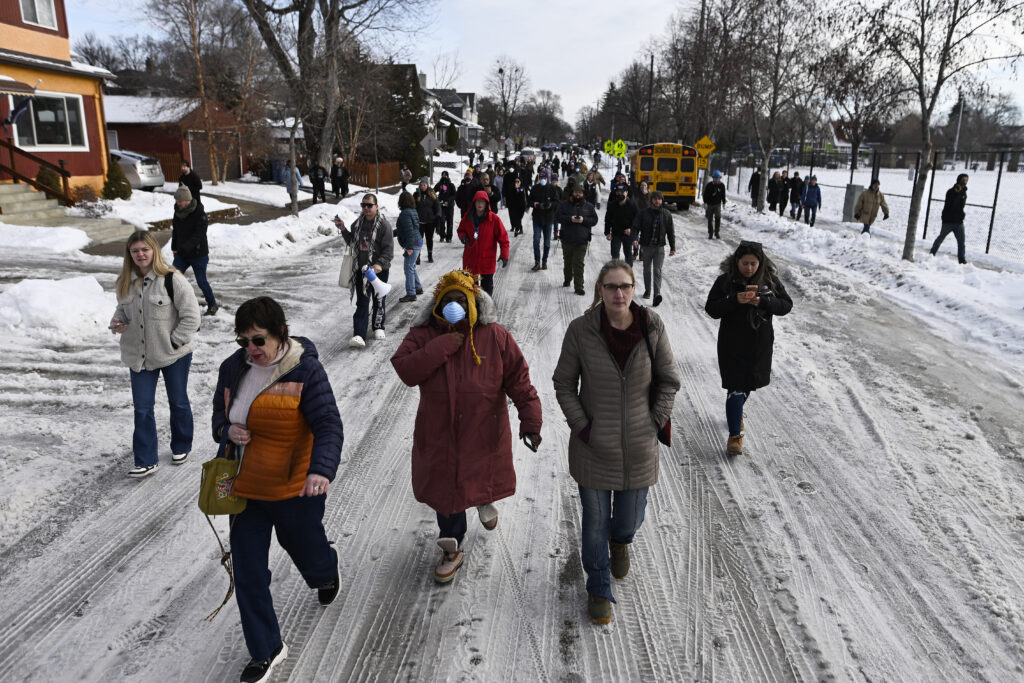
People gather near the scene of a suspected shooting by an ICE agent during federal law enforcement operations on January 07, 2026 in Minneapolis, Minnesota. (Photo by Stephen Maturen/Getty Images)
“This is an evolving situation, and we will give the public more information as soon as it becomes available.”
The woman, who reportedly died on the scene, has not been identified.
Several journalists and social media figures have pushed back against the narrative that the driver was killed in self-defense.
“To all of the MAGA Republicans and ICE defenders who are claiming that this woman in Minneapolis, Minnesota, tried to run ICE officers over with her car before they shot and killed her, here is the actual video,” wrote journalist Ed Krassenstein.
To all of the MAGA Republicans and ICE defenders who are claiming that this woman in Minneapolis, Minnesota, tried to run ICE officers over with her car before they shot and killed her, here is the actual video.
“As you can clearly see, there are three ICE officers to the side of her car, and she slowly pulls away as they shoot her in the face. This is Trump‘s America,” he added.
Within minutes of the footage going public, the words “Minneapolis” and “murder,” as well as the name of Homeland Security Secretary Kristi Noem all became top trending topics on X (formerly Twitter).
Needless to say, this is sure to become another hot-button political issue in a year that has already been rife with them.
We will have further updates on this developing story as new information becomes available.
But in an unexpected twist, he entered the courtroom without his famed attorney, Alan Jackson, and the situation forced yet another postponement.
According to a report from TMZ, Jackson has withdrawn from the case under uncertain circumstances.
Actor/Producer/Director Rob Reiner (center) and wife Michele Singer (L) and son Nick Reiner (R) attend Teen Vogue’s Back-to-School Saturday kick-off event at The Grove on August 9, 2013 in Los Angeles, California. (Photo by Michael Buckner/Getty Images for Teen Vogue)
Famed defense lawyer replaced by veteran public defender
The cause of his withdrawal is unclear, but for the time being, Jackson has been replaced by Kimberly Greene, a public defender with 19 years’ experience.
The judge in Nick’s case signed off on the change in representation, and for the first time since his arrest, the 32-year-old spoke in court.
“Uh, yeah I agree with that,” Nick said when asked if he agreed to a new arraignment date of February 23.
“They have the utmost trust in the legal process and will not comment further on matters related to the legal proceedings,” the Reiner family said in a statement issued today.
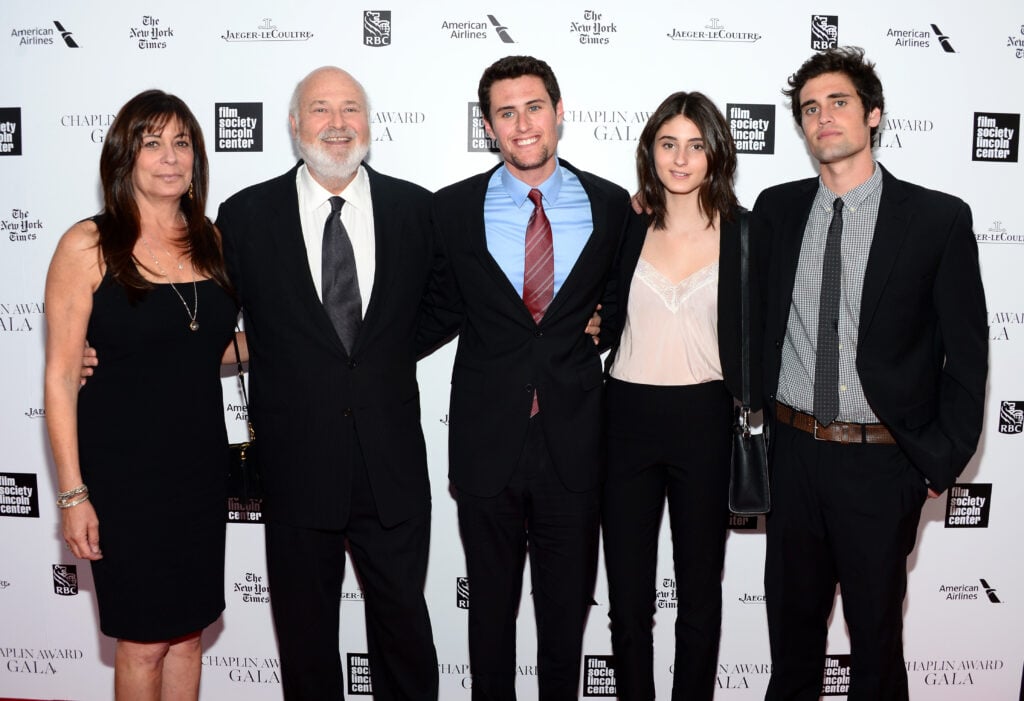
Honoree Rob Reiner poses with family at the 41st Annual Chaplin Award Gala at Avery Fisher Hall at Lincoln Center for the Performing Arts on April 28, 2014 in New York City. (Photo by Michael Loccisano/Getty Images)
Nick did not enter a plea today, but he will be expected to do so when he returns to court next month.
As expected, no bail amount was set, and Nick will almost certainly remain behind bars throughout his trial.
The previous delays in his cort proceedings stemmed from the fact that Nick had been placed on suicide watch.
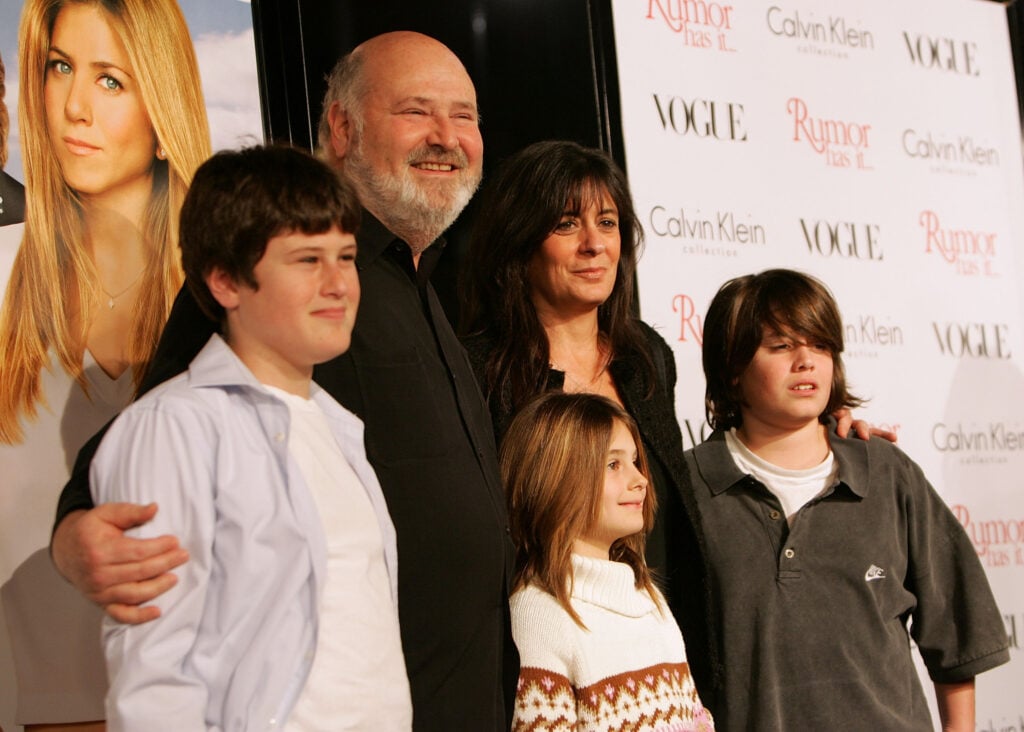
Director Rob Reiner (second from left) and family arrive at the premiere of “Rumor Has It” at the Grauman?s Chinese Theater on December 15, 2005 in Hollywood, California. (Photo by Kevin Winter/Getty Images)
It’s unclear at this time if the public defender is just a temporary solution, or if Greene will continue to represent Reiner once his case goes to trial.
Jackson is one of the most celebrated defense attorneys in the country, having recently scored a not guilty verdict for Karen Read, who was charged with the murder of her police officer husband.
Jackson addressed the media moments ago, and while he did not go into detail, he stated that the circmstances of his withdrawal were beyond Nick’s control.
“Nick Reiner is not guilty of murder,” Jackson stressed to reporters (per TMZ).
We will have further updates on this developing story as new information becomes available.
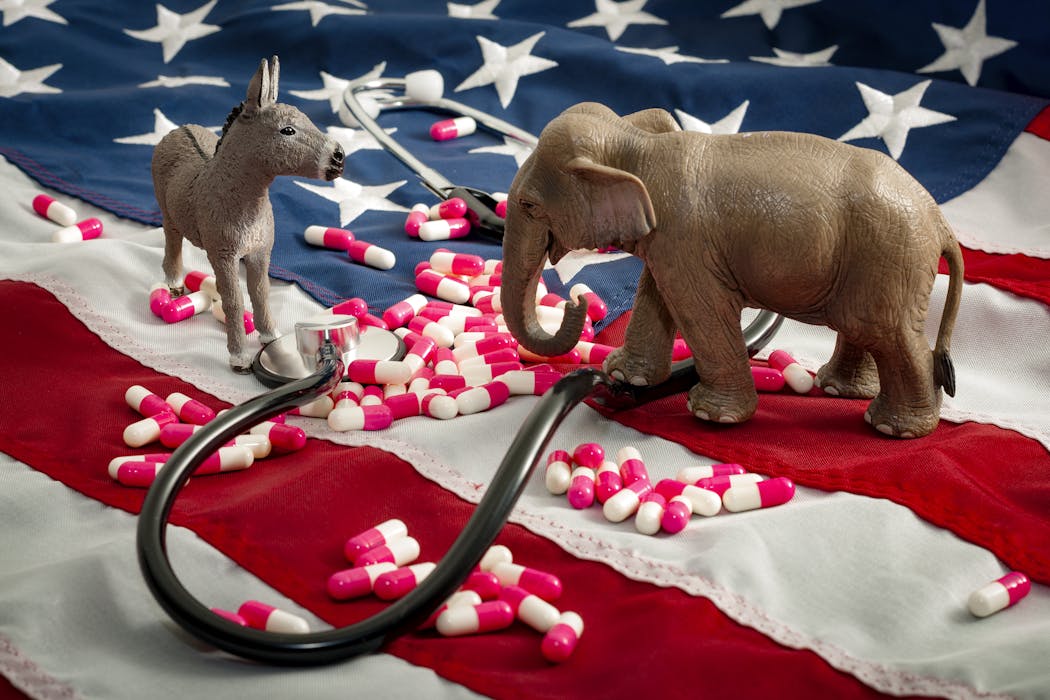
Congress has long been unable to come to an agreement on how to help constituents pay for health care.iStock/Getty Images Plus
As the bell struck midnight on Jan. 1, 2026, time ran out on Obamacare subsidies for over 24 million Americans. These subsidies, propped up through various legislative packages over the years, lowered the health insurance costs for Americans on the Obamacare exchange.
Following the expiration of these subsidies, health insurance premiums are skyrocketing for around 90% of Americans who use health insurance from the exchange. For many Americans, the new year means a choice between paying exorbitant costs or taking the risk of no health insurance at all.
But unlike other policy challenges that Congress may face in 2026, the expiration of health insurance subsidies was not unexpected.
The extension of health care subsidies was the pivotal disagreement that ultimately led to the longest government shutdown in U.S. history in the fall of 2025. Democratic members, in support of extending the subsidies, faced off against the majority party in Congress: Republicans who wanted a short-term legislative fix that did not fund subsidies.
Congress has reconvened, and Democratic members – joined by four Republican members – used the best possible procedural tool at the minority party’s disposal, the discharge petition, to force congressional leaders to allow votes on an extension of Obamacare subsidies during its first week back in session. But overcoming congressional leadership is an immense challenge: Even if the House is successful, Senate Republican leadership has made clear that there is no future for the legislation in that chamber.
The challenge of passing meaningful solutions to rising health care costs is not unique to this year or to this Congress. It has been a decades-long argument among lawmakers that shows no sign of being resolved.
Why is it so hard for Congress to lower the cost of health care for the people who sent them to Washington?
Like many policy problems, partisanship is partly to blame. But the sprawling complexities of the American health care system pose a particular challenge to members of Congress. As my own research finds, the outsized power and resources of congressional leaders means that for Congress’ most intricate issues, rank-and-file members do not have the time, resources or, frankly, the interest to dedicate to meaningful problem-solving.
The failure of two health care proposals in December 2025, one from Democrats and one from Republicans, meant certain Obamacare enrollees face huge premium increases.
Government ‘dips its toe’
Americans face some of the highest health care costs in the world. Lawmakers on both sides of the aisle have long campaigned on addressing exorbitant costs and equitable access.
Progressive politicians proposed the idea of national health insurance as early as the 1900s, but efforts were limited to women and children, and any policy successes were moderate and temporary.
Following the Great Depression and the advent of Social Security in the 1940s, Congress had warmed to the idea of the federal government providing social services. But attempts at widespread health care coverage failed to gain traction.
During the 1950s, as Americans began to expect more services from their tax dollars, formal coalitions formed in support of, and in opposition to, government-supported health care. Workers and unions, bolstered by Congress and the Supreme Court, used the power of collective bargaining to push for employee benefits such as health insurance. Doctors and medical providers, enjoying their current – and profitable – position, coordinated campaigns against national health insurance proposals.
In the private sector, employee demands and employer tax incentives led to a convoluted web of employer-based insurance programs. But for many Americans, particularly the retired and elderly and those with low-paying jobs, there remained few, if any, insurance options available.
Enter: Medicare and Medicaid
In the 1960s, under Democratic President Lyndon Johnson’s vision for a “Great Society,” and with a bipartisan vote in Congress, the federal government took the greatest step forward in providing federal health assistance for Americans: Medicare and Medicaid. The programs helped with the cost of health care via federal health insurance for those who were elderly and low-income, and they ushered in a new era of federal health policy.
This was a watershed moment for policymakers. With health care coverage now under the umbrella of the federal government, domestic policymaking responsibility expanded to match. For lawmakers, this meant not only new debates but also new federal agencies, new congressional committees, new lobbying firms and new interest group coalitions.
An elderly woman shows her gratitude to President Lyndon B. Johnson for his signing of the Medicare health care bill in April 1965. Corbis via Getty Images
In the decades that followed, Congress’ responsibility for health care policy continued to expand: Coverage amounts and eligibility requirements were tweaked, programs were expanded to include prescription drugs and vaccines, health savings accounts were introduced, and more.
Yet still, the web of private and federal health insurance programs left millions of Americans uninsured. It wasn’t until 2010, under President Barack Obama, that the Democratic-controlled House and Senate passed the Patient Protection and Affordable Care Act, known as “Obamacare,” to close that gap. But as evident from the 2025 government shutdown, this solution was far from perfect – and quite expensive.
Why, despite centuries of attention, does health care coverage remain one of – if not the most – perplexing and challenging domestic issues that Congress faces?
Consensus becomes more difficult
Part of this is a uniquely American problem: Like many services, the American health care system is based on economic incentives, and the foundational ideal of American liberalism means the government is inclined to let capitalism thrive.
But the issue is also immensely complex, and today’s Congress does not have the resources to meet the challenge, particularly in the face of a sprawling executive branch.
Over time, as policies were adopted by the federal government, the scope of potential solutions expanded. To put it another way, as more cooks enter the policymaking kitchen, consensus became more difficult. The history of American health care is populated by private industries, powerful interest groups, federal officials and concerned citizens.
And the web of federal funding and private insurance companies across 50 states has resulted in a policy landscape that is easier to tweak, rather than whole-scale reform.
This is further stymied by the limited resources and expertise of the modern Congress. My research has shown that rank-and-file members are increasingly reliant on party leaders to take the lead on policymaking and problem-solving. Negotiating across coalitions and parties is unpleasant, and communicating policy changes on such a complex issue is difficult.
The result? Tepid policy tweaks made for partisan messaging.
And as ideological divisions on government support and personal autonomy become crystallized by the two parties in Congress, partisan policy solutions diverge even further. Collaboration becomes harder every year.
The continuing resolution passed late in 2025 funded the government only until Jan. 30, 2026, which means Congress is facing a Groundhog Day rather than a clean slate for the new year. With millions of Americans facing exploding health care costs, the question becomes who will Congress follow: party leadership or concerned constituents?
SoRelle Wyckoff Gaynor does not work for, consult, own shares in or receive funding from any company or organization that would benefit from this article, and has disclosed no relevant affiliations beyond their academic appointment.
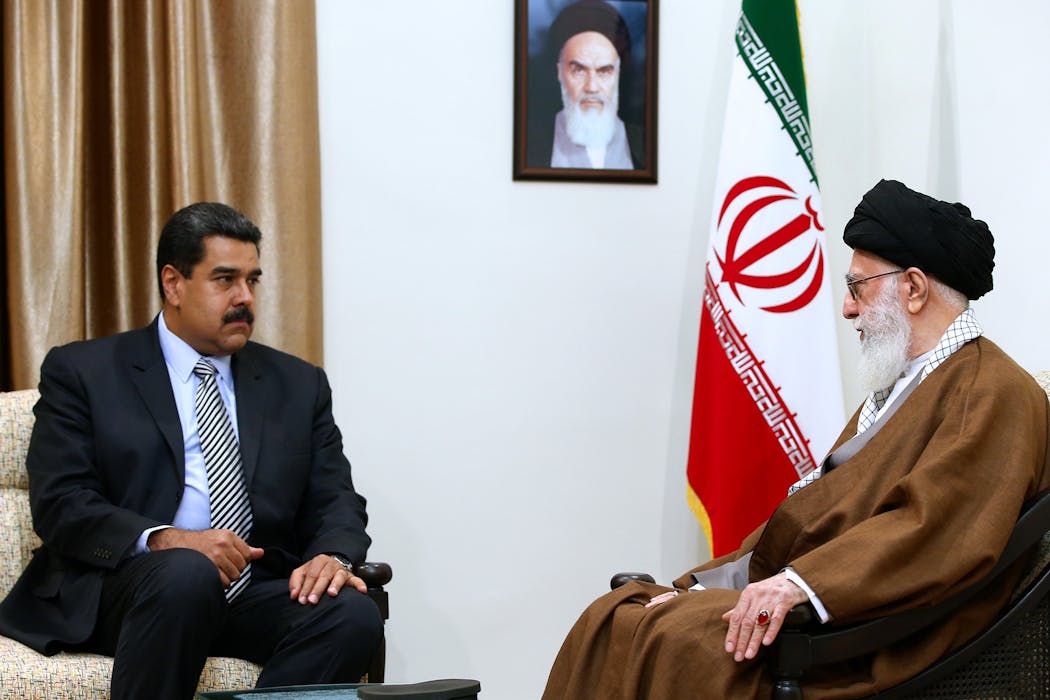
Perhaps no one outside of Venezuela or Cuba should care more about the U.S. capture of nominal President Nicolás Maduro than the Islamic Republic of Iran’s supreme leader, Ali Khamenei.
Khamenei and his regime are in trouble, and it’s not clear how they would survive should the Trump administration decide to support the millions who want a new government system without Khamenei and his ilk.
Iran has no state allies that would be willing to intervene militarily on its behalf. Further, its once-powerful network of partner and proxy militias – Lebanese Hezbollah, the Houthi rebels in Yemen, and other members of the Axis of Resistance – has been rendered incapable or reluctant to get involved. And Iran’s economy is in shambles in the midst of an ongoing water crisis with no relief in sight.
Further, the Iranian people have again taken to the streets to air their grievances against harsh economic conditions as well as government corruption, mismanagement and hypocrisy, echoing similar conditions to Venezuela in recent years.
Trump’s warning and show of solidarity will likely embolden protesters, which will almost certainly cause Iran’s internal security to crack down harder, as has happened in the past. Such U.S. intervention could lead to the overthrowing of the ayatollah, intended or not. Furthermore, Maduro’s fate demonstrates that the Trump administration is willing to use military force for that purpose if deemed necessary.
As an analyst of Middle East affairs focusing on Iran, I believe that these conditions place Khamenei’s regime under greater threat today than perhaps any other time in its 46-year history.
Protesters and security forces clash in Tehran’s Grand Bazaar in a video released on Jan. 6, 2026.
Growing threats, internal and external
If Khamenei hopes to survive politically or mortally, I believe he has three options.
In hopes of restoring deterrence, Khamenei could also continue rebuilding his country’s military capabilities, which were significantly degraded during the June 2025 12-day war in which Israel and the U.S. aimed to destroy Iran’s nuclear capability.
Khameini’s problems aren’t his alone. The revolutionary theocratic system of government that he leads is in danger of falling. And his military and internal security apparatus may not have the time or ability to address its growing and interrelated internal and external threats simultaneously.
There are two fundamental factors analysts like me consider when assessing enemy threats: offensive capability to inflict damage and hostile intentions to use these capabilities to harm enemies.
Determining offensive capability involves evaluating the quality of a country or organization’s complete arsenal – air, ground, maritime, cyber and space capabilities – and how trained, disciplined, integrated and lethal their forces might be. Determining intentions involves evaluating if, when and under what conditions offensive capabilities will be used to achieve their goals.
If states hope to survive when they come under such pressure, their defense strategy should account for differences between their own military capability and the enemy’s, especially if enemies intend to attack. Or states need to convince enemies to be less hostile, if possible.
Maduro’s mistake was his inability to defend against a far superior U.S. military capability while believing that U.S. leaders would not remove him from office. Maduro gambled and lost.
Bad choices
Iran’s supreme leader faces a similar conundrum: First, there is no foreseeable path that allows Tehran to produce or acquire the military capabilities necessary to deter Israel or defeat the United States, unless Iran develops a nuclear weapon.
But as the clear weaker party, it is in Tehran’s interest to change Trump’s mind about Tehran’s hostile intent. The way to do that would be by abandoning nuclear enrichment.
In terms of threat analysis, the regime’s oft-repeated chants of “Death to America” and “Death to Israel” perhaps have sent an easily misinterpreted message: that Iran’s hostile leaders intend to destroy the U.S. and Israel. But they simply lack the capability, for now.
President Theodore Roosevelt famously said “speak softly and carry a big stick; you will go far.” Today, he might say that Khamenei is unwise for speaking with such vitriol considering the size of Iran’s stick. The United States and Israel possess military capabilities far superior to Iran’s – as demonstrated by the 12-day war – but they did not then share the same intent. Though both Israel and the U.S. operations shared the objective of neutralizing Iran’s nuclear capability, Israel’s objectives were more broad and included targeting senior Iranian leaders and destabilizing the regime.
To Khamenei’s momentary personal and institutional fortune, Trump immediately called for a ceasefire following U.S. B-2 strikes on Iranian nuclear facilities, delineating the United States’ narrower objectives that at the time did not include regime change in Iran.
But that was before U.S. forces removed Maduro from Caracas and before the outbreak of protests in Iran, both of which coincide with Israel’s signaling preparations for Round 2 against Iran.
During Trump’s Dec. 29 press conference at Mar-a-Lago with Israeli Prime Minister Benjamin Netanyahu, he warned that the U.S. could “knock the hell” out of Iran if the country reconstitutes its nuclear facilities.
This is separate from the ominuous warning that the U.S. could intervene on behalf of Iranian protesters; it would almost certainly differ in scale.
Nevertheless, a potential U.S. intervention could embolden protesters and further undermine and destabilize the Islamic Republic regime. Khamenei has predictably scoffed at and dismissed Trump’s warning.
I believe this is a serious mistake.
Secretary of State Marco Rubio warned on Jan. 3, 2025, that Khameini should not “play games” as Maduro did. Khamenei, Rubio said, should take Trump’s warnings seriously. I agree.
If Iran refrains from violent crackdowns on protesters, there is a chance that anti-government protestors overthrow the government. But the supreme leader’s chances of surviving a popular uprising are probably greater than surviving an unbridled U.S. or Israeli military intent on ushering in a new – post-Islamic Republic – Iran.
Otherwise, Khamenei has to address superior U.S. and Israeli military capability, quickly. But Iran is broke, and even if sanctions were not continuously strangling Iran economically, the country could probably never purchase its way to military parity with the U.S. or Israel.
Alternatively, Iran could determine that it must move quickly to develop a nuclear weapon to mitigate U.S. and Israeli military capabilities and deter future aggression. However, it is extremely unlikely Iran could do this without U.S. and Israeli intelligence discovering the project, which would immediately trigger an overwhelming military campaign that would likely expedite regime change in Iran.
And like Maduro, the supreme leader is utterly alone. None of Maduro’s closest partners – China, Russia, Cuba and even Iran – were willing to fight in his defense, despite weeks of forewarning and U.S. military buildup near Venezuela.
Under these circumstances, it may be impossible for Khamenei to address overwhelming U.S. and Israeli military capabilities. He could, however, reduce the threat by doing what is necessary to ensure the United States’ objectives for Iran remain narrow and focused on the nuclear program, which may also keep Israel at bay.
However, Khamenei would have to demonstrate unprecedented restraint from cracking down violently on protesters and a willingness to give up nuclear enrichment. Due to historical animosity and distrust toward the U.S., both are unlikely, increasing, I believe, the probability of a forthcoming Iran without Khamenei.
Dr. Aaron Pilkington is a U.S. Air Force Senior Analyst of Middle East affairs and a Fellow at the University of Denver’s Center for Middle East Studies. The views expressed are those of the author and do not reflect the official position of the Department of War, the Department of the Air Force, or any other organizational affiliation.
Several major grocery chains have big plans for 2026, so you’re likely to notice some differences, but not all of these advancements will benefit customers.
Mashed – Fast Food, Celebrity Chefs, Grocery, Reviews
Both musically and biographically, Bruce Springsteen is inextricably linked to New Jersey. He even visits a Freehold eatery near one of his former homes.
Mashed – Fast Food, Celebrity Chefs, Grocery, Reviews
When it comes to travel advice, PBS host Rick Steves is a wealth of knowledge. To avoid overpriced eats or tourist trap meals, he recommends this street food.
Mashed – Fast Food, Celebrity Chefs, Grocery, Reviews
If you’re an unwavering believer in Guy Fieri and find yourself in the Windy City, check out these spots that serve everything from pizza to Caribbean cuisine.
Mashed – Fast Food, Celebrity Chefs, Grocery, Reviews
After the U.S. president shared the results of his third cognitive exam, Kimmel took the same test and aced it easily. What does this say about Trump’s health?
Health Digest – Health News, Wellness, Expert Insights