Categories
Alaska News

Alaska Legislature’s last-day action could cancel campaign-finance ballot measure

Senate President Gary Stevens, R-Kodiak, talks with Senate staff before resuming work on Tuesday, May 19, 2026. (James Brooks photo/Alaska Beacon)

A vote pending on the last day of the Alaska Legislature’s regular session could end up canceling a long-planned ballot measure that would restrict financial donations to political candidates in the state.

Late Tuesday night, the Alaska Senate voted 12-8 to approve House Bill 16, which would impose limits on the amount of money that individuals and groups can donate to political candidates. 

That action sends the bill to the House for a simple up-or-down concurrence vote. Success would send it to Gov. Mike Dunleavy for enactment or veto.

HB 16 is substantially similar to a ballot measure scheduled for a vote during the August primary election. Under the Alaska Constitution, if lawmakers enact a substantially similar law to a ballot measure scheduled for a vote, the ballot measure vote is canceled. 

Both methods would change state law, but there’s one key difference: A ballot measure cannot be repealed for two years after voters approve it. A law may be repealed the following year if legislators and the governor approve.

In 2018, a scheduled ballot measure dealing with legislators’ conflicts of interest was removed from the ballot after legislators passed a substantially similar law. In 2019, they rolled back that law.

Sen. Bill Wielechowski, D-Anchorage, arranged Tuesday night’s vote on HB 16. He has previously sought to impose campaign finance limits.

“I think (the ballot measure) is going to pass overwhelmingly, and this would save a little bit of money,” he said of the decision to advance HB 16. 

State law requires ballot measure information be published in a pamphlet that is sent to voters. In addition, the Division of Elections is required to hold in-person presentations at locations across the state to explain each ballot measure.

Rep. Calvin Schrage, I-Anchorage, helped orchestrate the ballot measure and House Bill 16.

Late Tuesday, he said he was surprised by the Senate’s action and was not informed until shortly before it took place.

“To see them pass it relatively unchanged was quite surprising, and a pleasant surprise,” he said, noting that he and his colleagues have been seeking new campaign finance limits in Alaska for five years.

In 2021, a three-judge panel of the 9th U.S. Circuit Court of Appeals ruled Alaska’s then-existing campaign finance limits were unconstitutional.

The Alaska Department of Law declined to appeal that ruling. Speaking to reporter Nat Herz months later, Dunleavy said, “You know me: I’m the guy that wants people to be able to drive four wheelers on the road. I’m a freedom guy,” he said. “My tendency is to just let people do what they want in campaign finance law, as long as it’s disclosed and it’s accurate.”

As a result, the state’s 2022, 2024 and 2026 elections have operated with no restrictions on the amount of money a person can give to a candidate.

The Alaska House passed Schrage’s bill in April 2025, but the Senate took no action before adjourning that year. That inaction meant the 2026 election cycle opened without limits. 

“We took it up last year, and there just wasn’t the support to do it at that time,” Wielechowski said.

What changed?

“I don’t know,” he said. “I mean, people just — honestly, it just kind of got buried in everything else, and just going through bills, we saw it was there, and we said, ‘Well, I have a chance to maybe take it off the ballot and pass it.’”

Neither Wielechowski or Schrage have talked to Dunleavy about whether he would veto the measure or allow it to become law.

If HB 16 becomes law, or if the proposed ballot measure is adopted by voters, new limits would be in place for the 2028 election. 

The new individual limits would be $2,000 in donations per candidate in each two-year election cycle. For the governor’s race, where a lieutenant governor candidate and governor candidate run together on a single ticket, the limit would be $4,000. The limit for donations from one person to a political party or group would be $5,000.

If a group wants to donate to a candidate, the limit is $4,000, or $8,000 for the governor’s race.

Those limits would be adjusted for inflation every 10 years.

Schrage said he’s open to either HB 16 or the ballot measure.

“It is very widely popular, and so — one way or another, I just want to see this taken and taken up and put back into law,” he said.

SUPPORT: YOU MAKE OUR WORK POSSIBLE

Categories
Entertainment

Kylie Minogue Reveals Second Cancer Diagnosis, Secret Health Battle

Reading Time: 2 minutes

In 2005, music legend Kylie Minogue was diagnosed with breast cancer.

What even her most diehard fans are only now learning is that she had a second, secret cancer battle.

In her new documentary, the Grammy-winning music star opens up about her second diagnosis.

She also explains why she kept it private until now.

Kylie Minogue in her Netflix documentary.
Despite some real high points in her Netflix documentary, Kylie Minogue also delved into painful moments — including a secret that she’d kept from fans. (Image Credit: Netflix)

She received her second diagnosis in 2021

In Kylie’s new documentary, which premiered on Wednesday, May 20, the Australian singer opened up about her second diagnosis.

In 2021, she explained, she “got through it again.”

Back in 2005, she was one of the few public figures to openly discuss her breast cancer battle.

This time, however, she decided to keep things quiet.

“My second cancer diagnosis was in early 2021,” Kylie confirmed. “I was able to keep that to myself. Not like the first time.”

“Thankfully, I got through it, again, and all is well,” Kylie confirmed, to the relief of millions.

“Hey, who knows what’s around the corner,” she acknowledged.

“But pop music nurtures me,” Kylie expressed relatably. “My passion for music is greater than ever.”

After keeping the cancer battle quiet, it was a challenge “to find the right time” to tell fans about what she’d been through.

In 2023, much of her world was wrapped up in her Grammy-winning global smash hit, “Padam Padam.”

‘I knew that cancer wasn’t just a blip in my life’

“I don’t feel obliged to tell the world,” Kylie clarified.

“And actually,” she explained, “I just couldn’t at the time because I was just a shell of a person.”

Kylie elaborated: “I didn’t want to leave the house again at one point.”

She shared: “Padam Padam opened so many doors for me but on the inside I knew that cancer wasn’t just a blip in my life.”

Kylie continued: “And I really just wanted to say what happened so I can let go of it. I’d sit through interviews and every opportunity I thought, ‘now’s the time’, but I kept it to myself.”

As for speaking up, Kylie shared that she hopes that there is “someone out there who will benefit from a gentle reminder to do their check-ups.”

Her own cancer was diagnosed following a routine screening. Early detection saves lives.

“Early detection was very helpful,” Kylie acknowledged.

“And,” she expressed, “I am so grateful to be able to say that I am well today,”

Her full documentary is on Netflix. She is an extraordinary artist and individual as well as a worldwide LGBTQ+ icon, and we’re so glad that she’s still with us.

Kylie Minogue Reveals Second Cancer Diagnosis, Secret Health Battle was originally published on The Hollywood Gossip.

​The Hollywood Gossip

Categories
Health

Boy Meets World’s William Daniels, 99, Had An ‘Open Marriage’ — And Research Backs Him Up

When details of the “open marriage” between William Daniels and Bonnie Bartlett came out, many were shocked. But research says this arrangement can be healthy.

​Health Digest – Health News, Wellness, Expert Insights

Categories
Uncategorized

For the first time in a decade, the next election could be less secure than the one preceding it

The Election Security Group turns intelligence about foreign election threats into warnings and offensive operations. Charly Triballeau/AFP via Getty Images

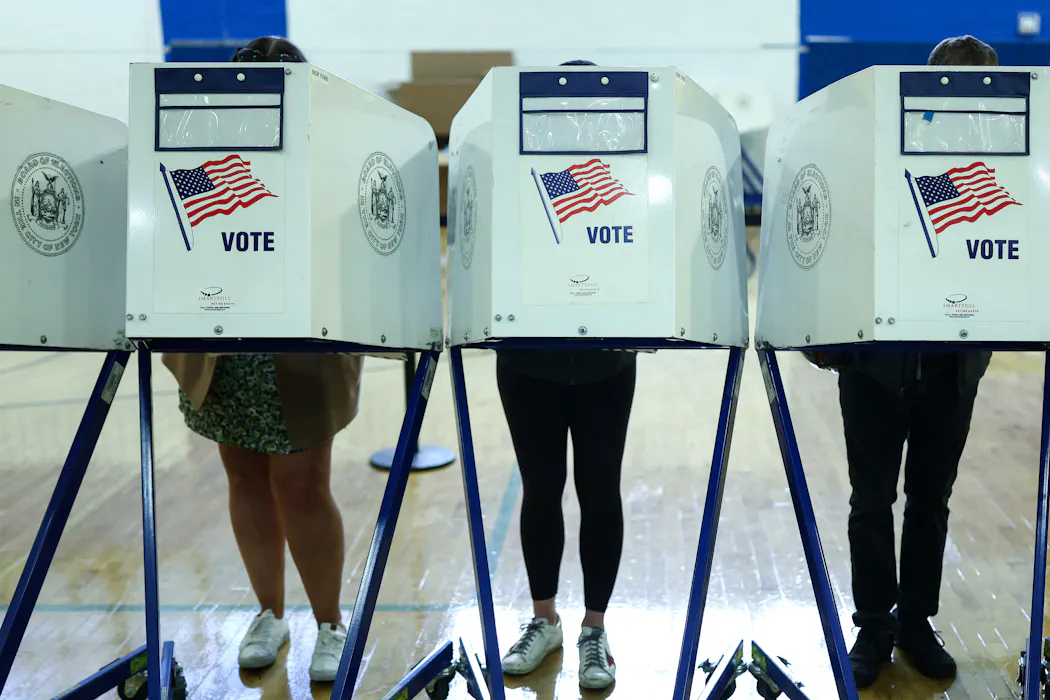
With the 2026 midterms less than six months away, the Election Security Group would normally be busy helping prepare the nation’s election infrastructure. The federal task force typically briefs Congress on upcoming threats and engages with state and local leaders to game out scenarios ranging from ransomware to critical infrastructure attacks on Election Day.

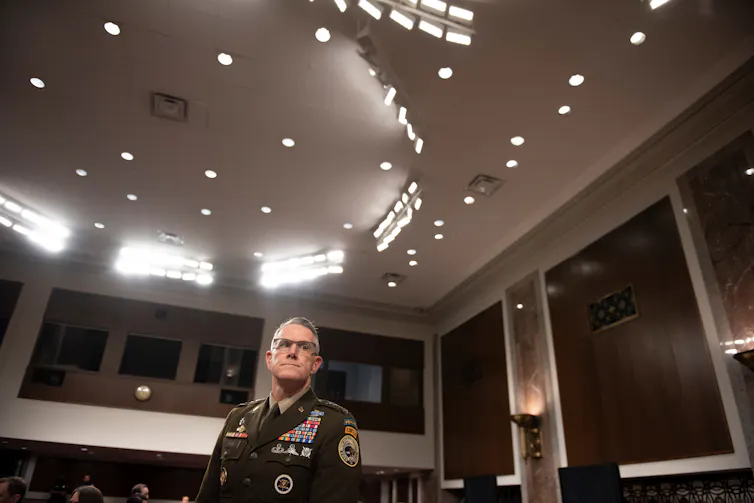
But Gen. Joshua Rudd, director of the National Security Agency and commander of the U.S. Cyber Command – the two agencies that jointly run the Election Security Group – told the Senate Armed Services Committee on April 28, 2026, that he didn’t know whether the group had been set up yet. The Election Security Group has worked every federal election cycle since 2018, but, as of mid-May, there is no public indication it has been activated.

This pending Election Security Group activation follows the Trump administration’s 2025 decision to defund the Elections Infrastructure Information Sharing and Analysis Center, the threat-sharing hub that helped make 2024 the most cyber-secure election in U.S. history, according to the Center for Internet Security, a nonprofit focused on protecting against digital threats. A White House spokesperson said of the cuts at the time that EI-ISAC’s work no longer effectuated the priorities of the Department of Homeland Security.

These losses – and the disbanding of other federal offices that counter foreign influence operations – make it harder for local officials to learn of threats to election infrastructure, like AI-enabled targeting of voting tabulation systems or deepfakes of candidates. Little is known about whether the proactive cyber deterrence that has defined U.S. elections for much of the past decade remains in place in any other form.

I’m a scholar of global efforts to secure democracy, and I co-edited a book called “Securing Democracies” about cyberattacks and disinformation worldwide. I can attest to the importance of guarding against foreign efforts to undermine trust in U.S. elections and believe that, without groups like the EI-ISAC and the Election Security Group in place, the 2026 midterms could mark a milestone: For the first time in perhaps a decade, the next election may be less secure than the last.

Gen. Joshua Rudd stands before the Senate Committee on Armed Services in Washington
Gen. Joshua Rudd, who’s in charge of the two agencies that jointly run the Election Security Group, told the Senate Armed Services Committee on April 28, 2026, that he didn’t know if the group had been set up yet for the midterm elections.
AP Photo/Cliff Owen

A decade of election defense

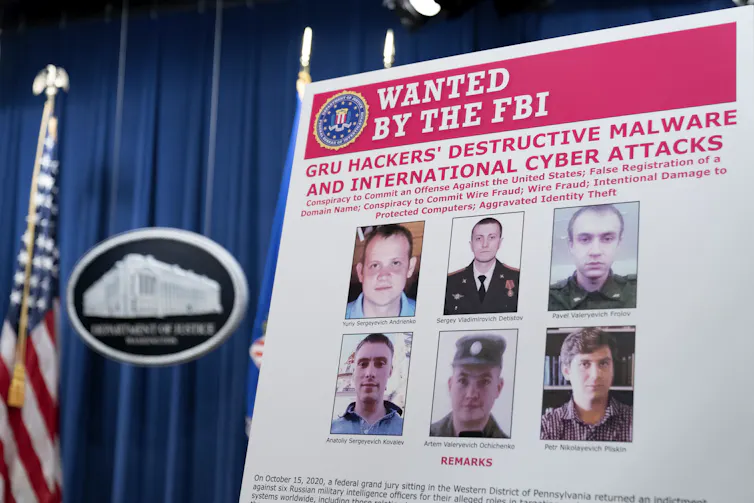
The Russian-backed Internet Research Agency began targeting the U.S. political system to sow divisions in 2014. Thanks to Internet Research Agency troll farms – organized groups paid to flood social media platforms with fake or divisive content – disinformation proliferated through the 2016 election. At the same time, Russia’s GRU – its military intelligence agency – homed in on the Democratic National Committee and probed all 50 state election systems. It breached Hillary Clinton’s campaign and compromised election systems in Illinois.

Though there is no evidence that votes were altered as a result, Russian influence exposed the country’s election vulnerabilities and set the stage for extensive investigations and hearings questioning how the U.S. government should respond. It left lasting damage in its wake, like lower trust in electoral processes and widened political divides.

In the final weeks of the Obama administration, the Department of Homeland Security designated election infrastructure as critical, akin to water and electricity. The first Trump administration built on that designation and created the Cybersecurity and Infrastructure Security Agency, a component of the Department of Homeland Security, in 2018. That same year, the National Security Agency and U.S. Cyber Command – the military nerve center for cybersecurity – partnered to launch what was initially called the Russia Small Group, a task force to guard U.S. election infrastructure against Russian interference.

Since at least the Obama administration, the U.S. had been largely focused on defensive measures to protect elections, like multifactor authentication and encryption, which make it harder to compromise systems in the first place. The Trump administration wanted to be more proactive, to put adversaries on notice and deter future attacks. This approach is known as defending forward, or persistent engagement.

The test for this new, more activist policy came during the 2018 midterms, as the Internet Research Agency again tried to widen divisions in U.S. society through hundreds of thousands of manufactured tweets and posts that made divisive views appear more widely shared than they were on both sides of hot-button issues. This time, however, the Russia Small Group took the Internet Research Agency offline during and immediately after the election. Although the details are classified, public reporting indicates that Cyber Command temporarily disrupted the Internet Research Agency’s internet access and sent direct messages to operatives warning them against such activities and instructing them to not interfere in U.S. elections.

A poster shows the photos and names of six Russian military intelligence officers
A Department of Justice poster shows six GRU officers charged with cyberattacks, Oct. 19, 2020.
Andrew Harnik/Pool via Getty Images

The Election Security Group

By the 2020 presidential election, the Russia Small Group had been renamed the Election Security Group, and its scope expanded beyond Russia to include China, Iran, North Korea and nonstate actors. It worked to “disrupt, deter and degrade foreign adversaries’ ability to interfere with and influence how U.S. citizens vote and how those votes are counted.”

The Election Security Group does this through detailed information-sharing across agencies and with local officials and the private sector. If, for instance, a foreign influence campaign falsely claims that polling places have closed early in a swing state, the Election Security Group can alert election officials, platforms and distributed cybersecurity teams before the claim goes viral. In true “defend forward” spirit, it can also help cut off foreign trolls and state-backed hackers from what’s needed to run an influence operation, like internet access, servers and accounts.

Typically, it is active during election years, serving as a vital coordination hub and turning intelligence about foreign election threats into warnings, defensive measures and offensive operations.

The Election Security Group’s absence comes at a time when both threats and technological vulnerabilities are multiplying.

The 2026 midterms

The current election cycle, in many ways, is more prone to targeting than previous ones because of the Iran war, AI-powered cyberattacks, nation state–sponsored attacks against U.S. election infrastructure, and the firing of key Cybersecurity and Infrastructure Security Agency personnel who worked with tech companies to spot election-related deepfakes and inaccurate or misleading content.

These challenges – combined with losing the EI-ISAC and, possibly, the Election Security Group – could leave the U.S. less prepared this November. Local and state election officials have fewer places to turn for the latest intelligence, and Congress is less informed about pressing threats – all while global U.S. standing is slipping and foreign adversaries could feel emboldened.

The Election Security Group, which was created by the first Trump administration – alongside both the Elections Infrastructure Information Sharing and Analysis Center and the Cybersecurity and Infrastructure Security Agency – has been an important weapon in the U.S. arsenal to defend vulnerable election systems. What fills these gaps remains unclear. One outlet has reported that plans to revive the Election Security Group are beginning to move through senior intelligence and defense channels, weeks after Rudd’s testimony. Even if the group is activated immediately, it will have less than six months to do what it has historically done across a full election year. With early voting beginning in some states even sooner, the clock is ticking.

The Conversation

The views expressed in this article are the author’s own.

​Politics + Society – The Conversation

Categories
Entertainment

Why This Popular Liqueur Is Actually One Of The Worst You Can Buy

Liqueurs are known for their densely-sweet taste with an alcoholic kick. Made from a variety of ingredients, liqueurs add concentrated hits of flavor to drinks.

​Mashed – Fast Food, Celebrity Chefs, Grocery, Reviews

Categories
Music

WATCH: Ella Langley Sets Five Big New Goals For Herself

Ella Langley’s on a winning streak after snagging seven ACM Awards, but she’s not slowing down anytime soon. What’s next for this country sensation? Continue reading…​Country Music News – Taste of Country

Categories
Music

WATCH: Ella Langley Sets Five Big New Goals For Herself

Ella Langley’s on a winning streak after snagging seven ACM Awards, but she’s not slowing down anytime soon. What’s next for this country sensation? Continue reading…​The Boot – Country Music News, Music Videos and Songs

Categories
Music

Where Does Riley Green Keep His Awards?

Green keeps his ACM and CMA trophies next to another, very different, prized possession. Continue reading…​Country Music News – Taste of Country

Categories
Entertainment

What Your Favorite Whiskey Says About You

Ever wondered what your preferred brand of whiskey reveals about your personality? We asked whiskey experts and bartenders what they really think.

​Mashed – Fast Food, Celebrity Chefs, Grocery, Reviews

Categories
Food

What Happened To Keystone Light’s Fruit-Filled Spinoff Beers?

Like a citrusy shandy, Keystone Light’s fruity spinoff beer was built for summer, but unfortunately, the first iteration didn’t last very long.

​Food Republic – Restaurants, Reviews, Recipes, Cooking Tips