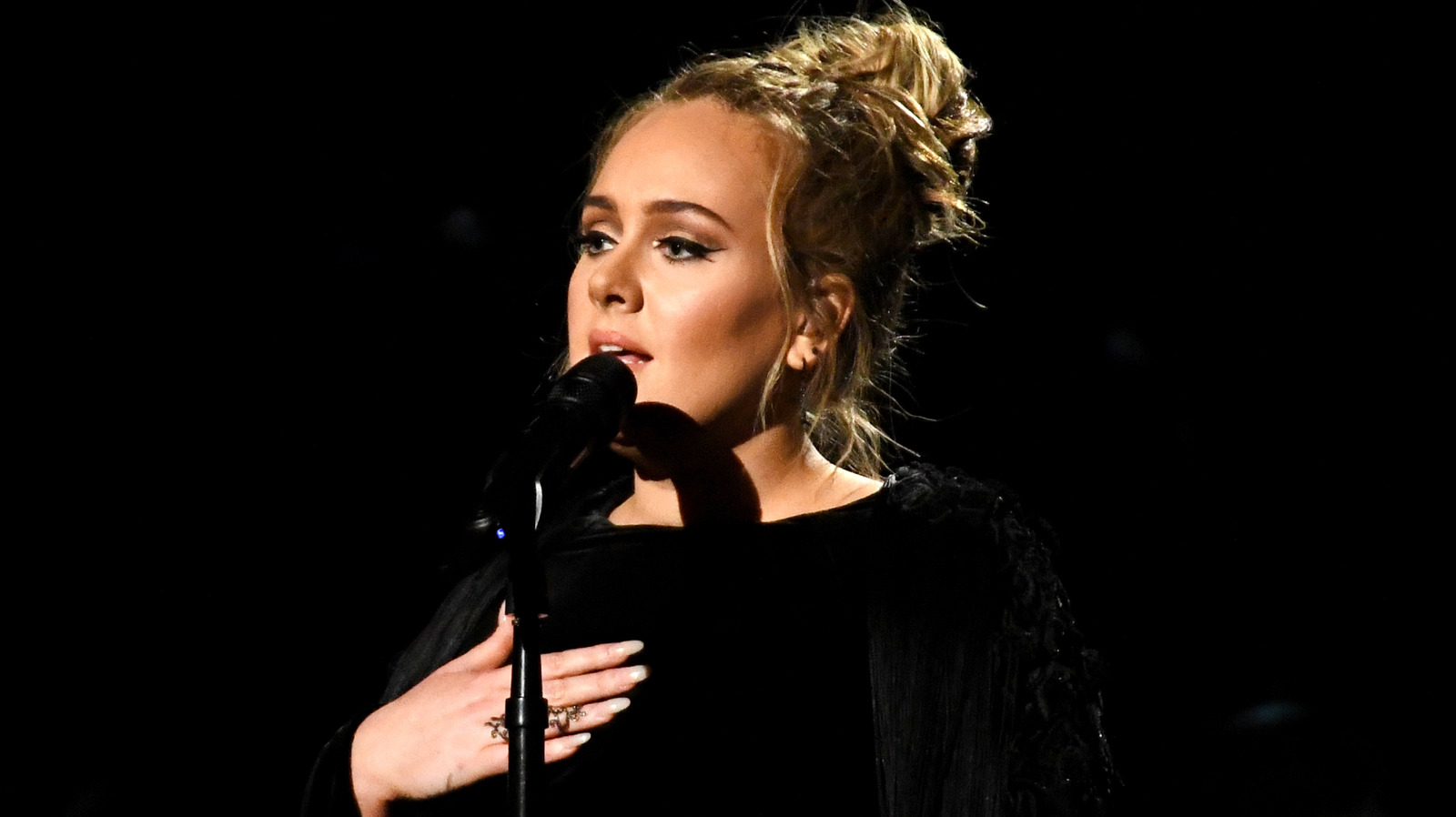
She and Oprah Winfrey are not and have never been an item.
Sorry, folks.
In addition to revealing how she once caught her now-ex and his mistress (her former close friend), Gayle King also opened up about the longstanding gay rumors.
When tabloids first began claiming that the two were secret lovers, Gayle begged her bestie to quash the claims. Oprah declined.
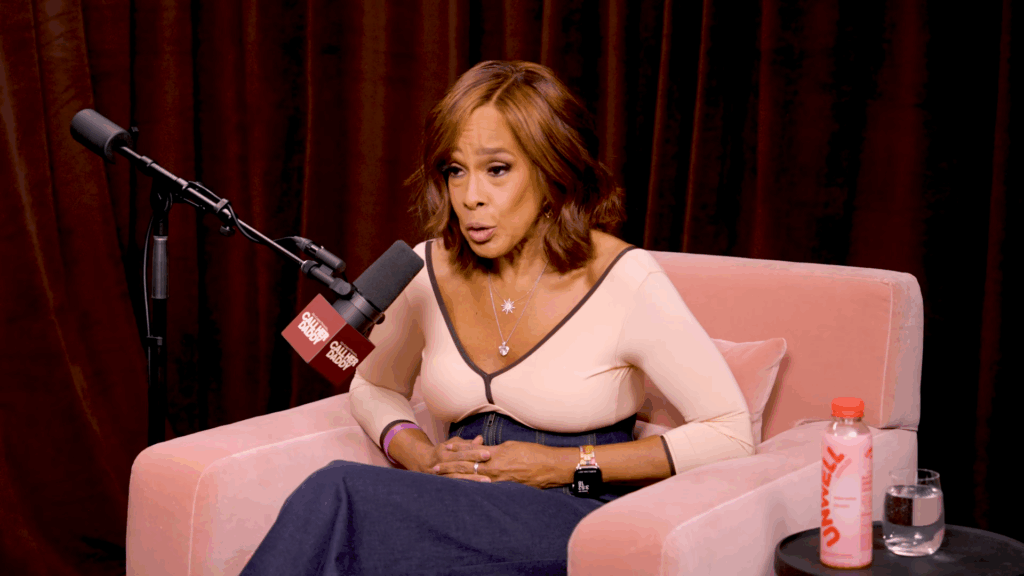
During her ‘Call Her Daddy’ podcast interview, Gayle King delved into a variety of personal topics. (Image Credit: YouTube)
‘If we were gay, we would tell you’
During the Wednesday, May 27 episode of the Call Her Daddy podcast, Gayle told host Alex Cooper how the gay rumors used to get under her skin.
“I tell you this, it used to really bother me,” the iconic broadcast journalist admitted.
It all started in 1993, when she — famously — caught her ex-husband, William Bumpus, cheating with a close friend. The two divorced.
At the time, a tabloid ran a nonsensical story claiming that Gayle and longtime bestie Ooprah were “secretly gay.” And it got to her.
“Number one, if we were gay, we would tell you because, believe me, there’s nothing wrong with it,” Gayle emphasized. “It’s just I prefer a man. I prefer a man.”
“And then I would say to her, ‘You’ve got to say something on your show because it’s hard enough for me to get a date on a Saturday night, and now people think I’m a lesbian,’” Gayle recalled telling Oprah.
“‘You’ve got to say something.’ And she said, ‘No, we should just leave it be,’” she recalled. “‘No, I’m just going to leave it alone. Leave it alone.’”
Oprah was, for 25 years, one of the most watched and influential people on the planet. She still falls into the latter category.
“So, well, that’s fine for you to say. You have somebody. I don’t,” Gayle remembered grumbling at the time.
“So, it used to really bother me,” she reiterated. “And now even today there are still people that say, ‘Well, you know, the truth is. …’”
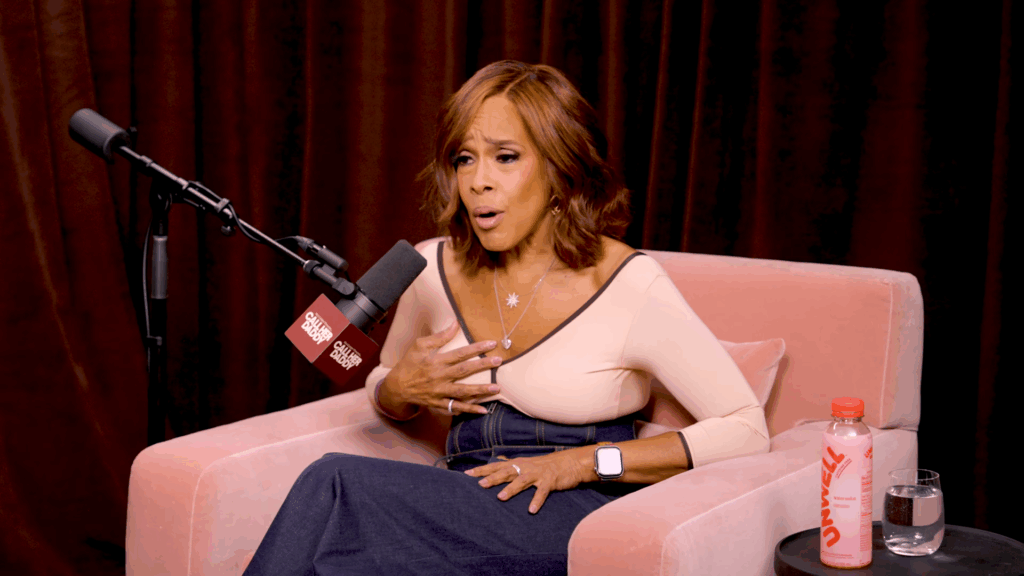
Journalistic icon Gayle King joined the ‘Call Her Daddy’ podcast in May 2026. (Image Credit: YouTube)
‘I’ve now gotten to the point in my life that very few things get to me’
Time has taught Gayle to care less about what others imagine her life to be like.
“I don’t care,” she bluntly admitted.
“I’ve now gotten to the point in my life that very few things get to me,” Gayle shared.
She explained that this is “because, you know, when you go on social media, it is an accelerator on hate.”
Gayle expressed: “As long as I feel good about what I’m doing … Otherwise, you’ll drive yourself nuts. So now I really don’t care.”
Oprah has been with Stedman Graham since 1986. She and Gayle met when both worked for WJZ-TV Baltimore.
Some people respond to gay rumors — in person or from tabloids — with explicit homophobia. Notably, Gayle is decidedly not doing that.
Incidentally, Gayle did not limit her commentary on relationships to clarifying that she likes men. She told Alex that she prefers younger men.
Honestly? Good for her. And, for what it’s worth, it’s pretty reasonable to be annoyed at people speculating that you and your bestie are secret lovers.
Gayle is a legendary broadcast journalist. She signed up to report the news. She never wanted to be the news.
Now, the wife of former Teen Mom star Ryan Edwards is opening up about her relapse.
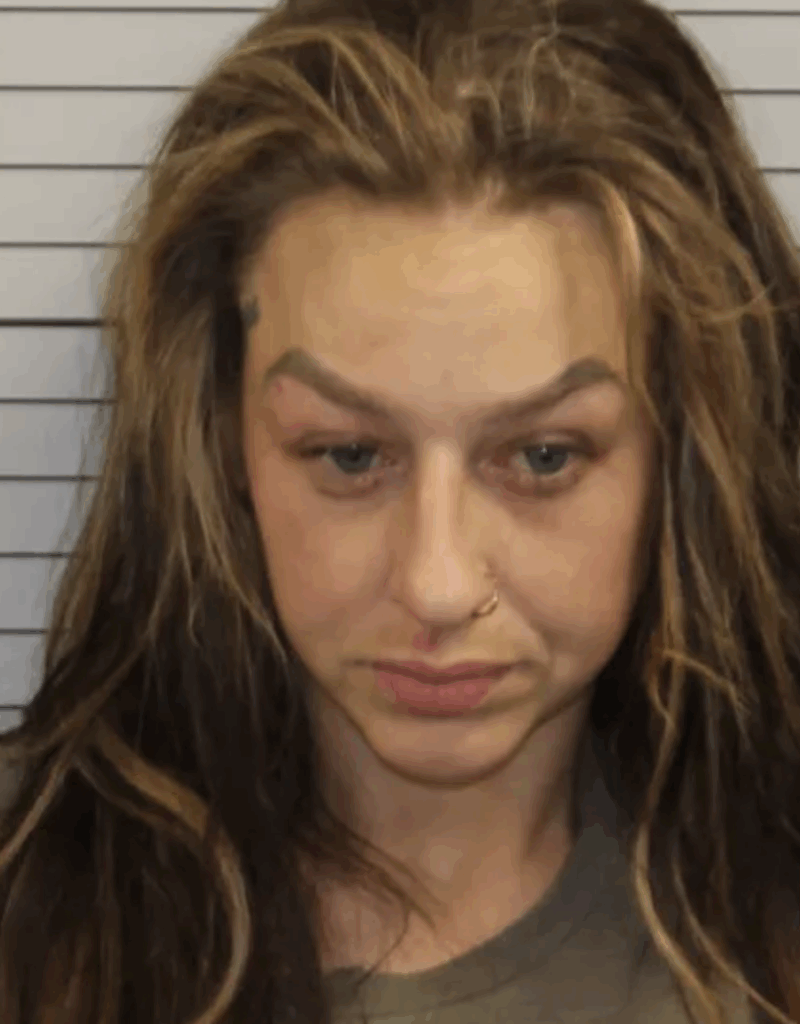
Days after being arrested in Tennessee on charges that included DUI, child neglect, and driving on the wrong side of the road, Conner took to social media to address what happened and to acknowledge that she has fallen off the wagon.
Amanda Conner is in trouble with the law yet again. (Hamilton County Sheriff’s Department)
“I relapsed. I fell hard,” Amanda said on TikTok.
Conner has long been open about her struggles with addiction and recovery.
As first reported by The Ashley’s Reality Roundup, Amanda said she had been doing well for a long period of time before everything unraveled, describing the relapse as both devastating and humbling.
And perhaps most painfully, she admitted that her choices affected the people she loves most.
Conner reportedly acknowledged the disappointment she caused her family, including her children, while also emphasizing that she intends to take accountability rather than run from what happened.
“I’m not proud of myself,” she reportedly shared, adding that she is determined to move forward and regain stability.
While social media reactions have been mixed — especially given the seriousness of the allegations tied to her arrest — some followers praised Amanda for publicly owning her mistakes instead of denying or minimizing them.
Amanda was arrested in Hamilton County, Tennessee, and booked on charges including DUI, child abuse/neglect and driving left of center.
Authorities reportedly alleged that a child was present during the incident.
Court records also indicate restrictions were put in place following the arrest, including limits regarding contact with the alleged child victim pending future legal proceedings.
As longtime Teen Mom fans know, Ryan spent years battling his own highly publicized addiction struggles, including arrests, rehab stints, and periods of estrangement from loved ones.
He met Amanda while they were both in early recovery, and for a while, it looked as though they might be good influences on one another.
Now, the couple finds itself facing another painful chapter. But Amanda appears determined to get back on the wagon.
We will have further updates on this developing story as new information becomes available.
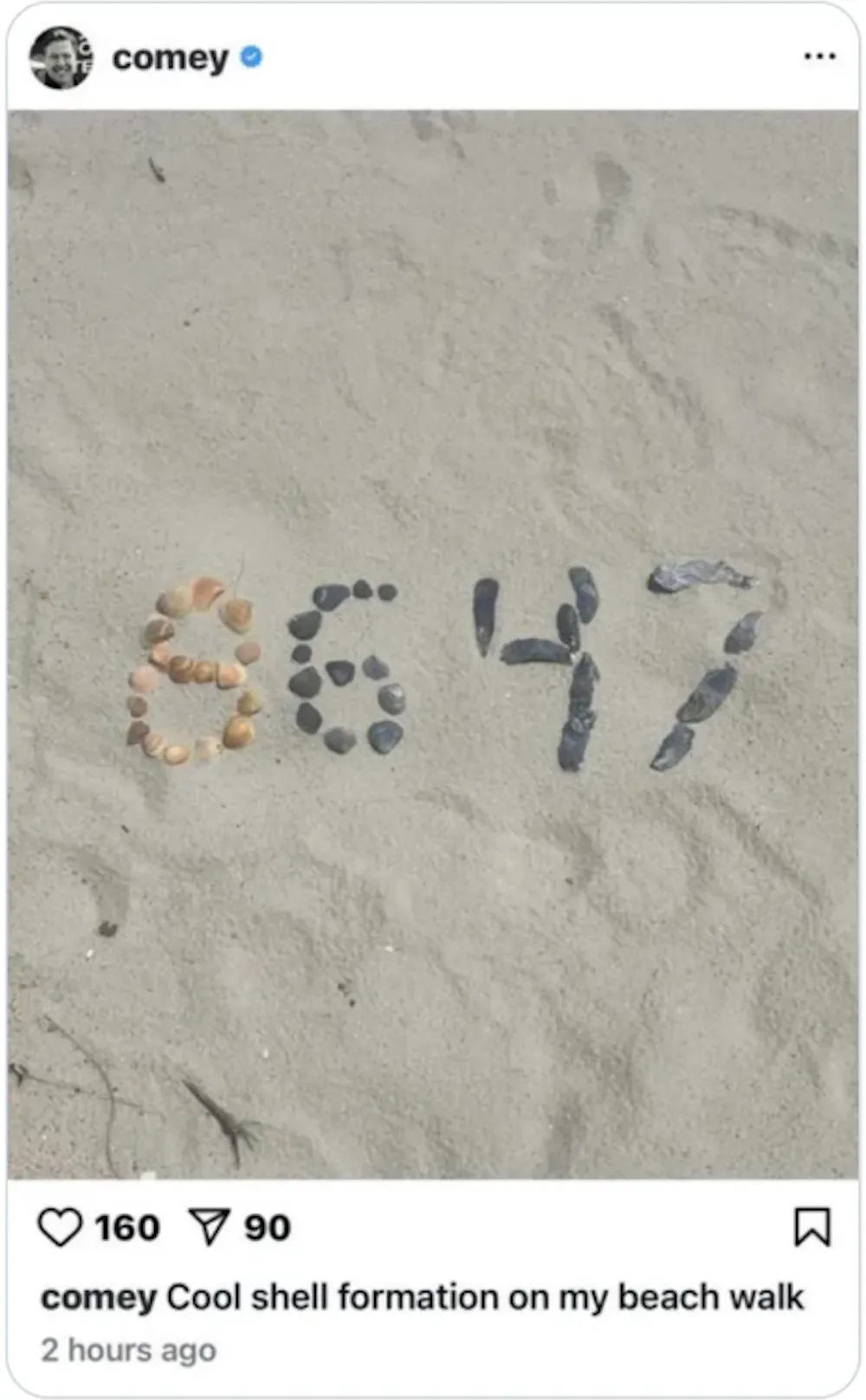
The charges came after Comey, the former FBI director, posted an image of seashells on a North Carolina beach, arranged in the form of the numerals “86” and “47.” Forty-seven was an ostensible reference to Trump, the 47th U.S. president, and 86 to a colloquial expression conveying a sense of “getting rid of” or “casting aside.”
But is “86 47” really a threat? And if so, is it a criminal one amounting to a threat to assassinate the president, as prosecutors have suggested?
In contrast to crimes such as murder or arson, which can be committed without uttering – or writing – a single word, threats are inherently crimes of language. They don’t exist without the linguistic symbols used to convey them.
Linguists like me who work in the field of language and the law understand these types of crimes to be “speech acts,” utterances that perform the action they name. What is a promise if not the words “I promise” or an apology if not the words “I’m sorry”?
The law is full of speech acts. Rulings, verdicts and arrests are all speech acts. So, too, are the crimes of language: solicitation, perjury, bribery and threats.
What is a threat?
Threats are language that states or implies the intent to intimidate or create harm. As a speech act, they need not be direct but often are.
In December 1984, the White House mail room received a letter with the message, “Ronnie, Listen Chump! Resign or You’ll Get Your Brains Blown Out,” referring to President Ronald Reagan. Below these words was a drawing of a pistol with a bullet being ejected from the barrel.
The Secret Service conducted a handwriting comparison analysis of the words, which led to the arrest of David Hoffman. He stated that “he didn’t know it was against the law to threaten the President.”
But Hoffman did commit a language crime. Although he didn’t use the words “I threaten to blow your brains out if you don’t resign,” the passive construction “you’ll get your brains blown out” accompanied by a drawing of a pistol constituted a direct threat that expressed a clear intent to intimidate and harm the president.
The scientific process of dictionaries
This brings us to the Comey case. Can a photo of 38 seashells arranged in the numerals “86” and “47,” and broadcast over Instagram, constitute a threat against Trump?
In theory, “86 47” could be an indirect threat, but the interpretation of Comey’s message really hinges on the meaning of “86” when used as a verb.
Acting Attorney General Todd Blanche speaks on April 28, 2026, in Washington, D.C., as charges are brought against former FBI Director James Comey. Tasos Katopodis/Getty Images
This is where tools of forensic linguistics, which helps solve crime and resolve matters of language and the law, can help.
The first tool is lexicography, the academic study of creating dictionaries. A classic maxim of lexicography is that dictionaries are out of date before they are printed. It’s a nod to the fact that words’ meanings change and new words enter the language quickly.
Although dictionaries are imperfect, their definitions are the result of the rigorous study of word meaning and adherence to the scientific process of lexicography, the practice of writing and editing dictionaries and other reference materials.
In the Comey case, we would expect to find “86” listed as a noun. But the inclusion of the nonstandard verb form – “to 86” – would tell us that what may seem mysterious and cryptic actually has a conventionalized and well-recognized meaning.
Of the five major dictionaries of contemporary English I consulted, all had entries for “86” as a verb. The Oxford English Dictionary, for example, includes: “to eject or debar (a person) from premises; to reject or abandon; (in earliest use) to refuse to serve (a customer).”
Oxford also offers this second entry: “In restaurants and bars, an expression indicating that the supply of an item is exhausted.” This may explain why many restaurant workers across the country have strong reactions to the Comey indictment.
The American Heritage Dictionary definition includes “to refuse to serve (an unwelcome customer) at a bar or restaurant; to throw out, eject; to throw away, discard.” Merriam-Webster provides a similar definition: “to refuse to serve (a customer); to eject or ban (a customer); broadly, to eject, dismiss or remove (someone).”
Collins Dictionary offers two entries, the first in line with the others – “ to reject from, or to refuse to serve at” – and the second: “to cut off, eject, cancel, eliminate, kill, etc.”
The dictionary evidence is therefore mixed: Most definitions convey a sense of “kicking out” or “refusing service,” but Collins does include “kill” as a secondary definition.
How ordinary speakers of English use ‘86’
More evidence is needed, so I turned to the second tool: linguistic corpora. A corpus – plural: corpora – is a collection of texts chosen to represent language as it is actually produced by speakers and writers across genres and time periods. Linguistic corpora are useful because they show us usage in context, while providing enough data to conduct quantitative analysis of word meaning.
With over 1 billion words, the Corpus of Contemporary American English is the largest corpus of spoken and written American English available today. I analyzed usage of the word “86” in the corpus and found 372 attestations in full form – “eighty-six,” not “86.”
Comey posted an image of seashells on a beach arranged in the form of the numerals ‘86’ and ‘47.’ James Comey/Instagram
The vast majority of the attestations had nothing to do with “ejecting.” But in a random sample of 100 cases of “eighty-six,” 20% were the verb form conveying the sense of “discard” or “eject.” Of those, two attestations meant “to kill,” and both came from fictional television and film. Far more common were expressions such as “Definitely 86 the coat, it sends the wrong message” and “Can we 86 the flags, please?”
When the direct object of the verb was a human subject, “86” still overwhelmingly meant “to discard” or “eject,” including this example when the subject was another sitting U.S. president: “Obama’s going to lose this election … they will blame his one term on a homophobic electorate who chose to eighty-six him because of his SSM stance,” in reference to his support for gay marriage.
In the Obama case, “86” clearly meant “vote him out.”
User-generated dictionaries are a third tool linguists use to analyze word meaning in the context of language crimes. They are less reliable than dictionaries written by professional lexicographers, but – like corpora – they give us a sense of the pulse of the language as it’s happening now.
Although they often contain factual errors, they tell us what English speakers think they know about the origins and meanings of words – a useful tool for analyzing language crimes.
I studied the entries provided by users for “86” on Urban Dictionary, where the highest-ranked definition is “to remove, end usage, or take away.” Of the 63 entries, only seven mention killing, one of those in reference to the Comey seashells. The vast majority of other entries align with the dictionary evidence: 86 means to get rid of something, or to have run out of a key ingredient.
The Comey indictment states that “a reasonable recipient who is familiar with the circumstances would interpret” Comey’s post “as a serious expression of an intent to do harm to President Trump.”
Looking across dictionaries, linguistic corpora and user-generated dictionaries, “eighty-six” could mean to kill but probably doesn’t. A general speaker of contemporary American English would interpret Comey’s post as an expression of opinion, a desire to “eject” the president from office.
Phillip M. Carter does not work for, consult, own shares in or receive funding from any company or organization that would benefit from this article, and has disclosed no relevant affiliations beyond their academic appointment.
Even people who are often in the spotlight can experience panic attacks. In fact, some celebrities have been vocal about sharing their mental health stories.
Health Digest – Health News, Wellness, Expert Insights
One of the worst alums to come out of the Real Housewives franchise has found herself on the wrong side of the law.
Again.
RHOC alum Kelly Dodd is accused of sharing revenge porn of an unnamed woman.
Notably, this is not the same woman whom she is accused of battering in June of last year.
Kelly Dodd attends opening night of the 2019 BravoCon at Hammerstein Ballroom on November 15, 2019. (Photo Credit: Arturo Holmes/WireImage)
She’s accused of secretly recording and then distributing private videos of a woman
TMZreports that prosecutors accuse Dodd of “unlawfully and intentionally” distributing images of an unidentified woman.
Specifically, it is said to be footage of a woman having sex and of the same woman masturbating.
There is no explanation for why Dodd may have allegedly shared the footage. Presumably, the motive will come up in court.
The date of the crime, court documents say, was on or around August 29, 2025.
Meanwhile, the alleged victim is identified solely as Jane Doe.
TMZ details that Dodd allegedly recorded the footage without Doe’s consent.
The recording took place when the alleged victim had a reasonable expectation of privacy.
According to court documents, Dodd and Doe discussed the footage, leading to a mutual agreement to keep the media private.
Around the same time as Dodd allegedly broke this agreement to share the revenge porn, she is accused of another wrongdoing.
Prosecutors say that the fallen Real Housewife contacted Doe and threatened to injure her, her property, and her family.
There’s a lot that we don’t know (yet) about what happened
As a result of all of this, prosecutors cite, Jane Doe suffered severe emotional distress.
It is unclear who was the alleged recipient of revenge porn.
And, again, we do not know what motive prosecutors say motivated Dodd to distribute the material — or issue the seemingly verbal threats late last summer.
Hopefully, more details will come out at trial, if not before then.
Though fans of RHOC remember Dodd’s propensity for outbursts (to say nothing of the sinister turn that her posts have taken over the past six years or so), people have a lot of questions.
We mentioned that Dodd is facing a separate and seemingly unrelated charge.
In June of 2025, two months or so before this revenge porn incident, she allegedly attacked a different Jane Doe.
This alleged attack was more physical.
TMZ tallied it up, and that means that Dodd is facing 3 different charges — all misdemeanors — and possible jail time.
Dodd’s behavioral problems have been obvious, on Bravo and social media, for years. We’d love to hear that she’s gotten things under control.
So you’ve just cracked open an egg, and the white inside has a cloudy look – should you still use it? Here’s the lowdown on what this characteristic means.
Mashed – Fast Food, Celebrity Chefs, Grocery, Reviews
Jasper “Jack” Daniel was the real man behind the legend of Jack Daniel’s, but his untimely (and somehow prolonged) death is just as fascinating as his life.
Costco has rolled out some new items, and the freezer section offers customers everything from side dishes to desserts. These are the best new frozen foods.
Mashed – Fast Food, Celebrity Chefs, Grocery, Reviews
Chilkoot Lake, Oct. 24, 2023. (Chilkat Valley News file photo)
One of the most widely used campgrounds in the Chilkat Valley is closed.
The Alaska Division of Parks, part of the Department of Natural Resources, has decided not to open the Chilkoot Lake State Recreation Area campground this summer
“[It’s] kind of an alarming development,” said borough mayor Tom Morphet during Tuesday evening’s assembly meeting. He said he wasn’t sure what was driving the closure, but that the campgrounds are an important part of the local tourism economy. “We may have to raise our voices a little bit, stomp our feet.”
Regional superintendent Brad Garasky did not return repeated phone calls and emails seeking more information about the closure. He instead forwarded questions to DNR spokesperson Lorraine Henry who wrote in an email that the campground is closed “due to a lack of staffing” and that the department didn’t have an estimated opening date.
Henry did not clarify what kind of staffing would be needed to reopen the area. But during the Tuesday assembly meeting, Haines Borough manager Alekka Fullerton said she has a meeting scheduled with DNR commissioner John Crowther about the hiring freeze and what would need to happen to allow state parks to hire a park technician.
“There are several communities that have received a waiver of the hiring freeze,” Fullerton said.
Henry wrote in the email that no one was available for an interview on the Chilkoot campground. But noted that the rest of the state parks’ operated area is open for use, including the boat launch and the area available to commercial operators to take people on tours.
It’s the second time in recent years that state parks, which oversees Chilkat State Park, Chilkoot Lake Recreation Site, the Alaska Chilkat Bald Eagle Preserve, and the campground at Mosquito Lake, has closed a local campground.
Lori Mastrella signs a petition asking the state to allow camping at Portage Cove during a “Camp-In” organized by mayor Tom Morphet on May 17, 2024. (Lex Treinen/Chilkat Valley News)
The state also oversees the downtown Portage Cove State Recreation Site, which banned camping at the site in 2022. Morphet organized a ‘camp-in’ and gathered signatures from people pushing state parks to reopen the area. Ultimately the borough signed an agreement with state parks to take over active management of the area which is now again used for camping.