Categories
Politics

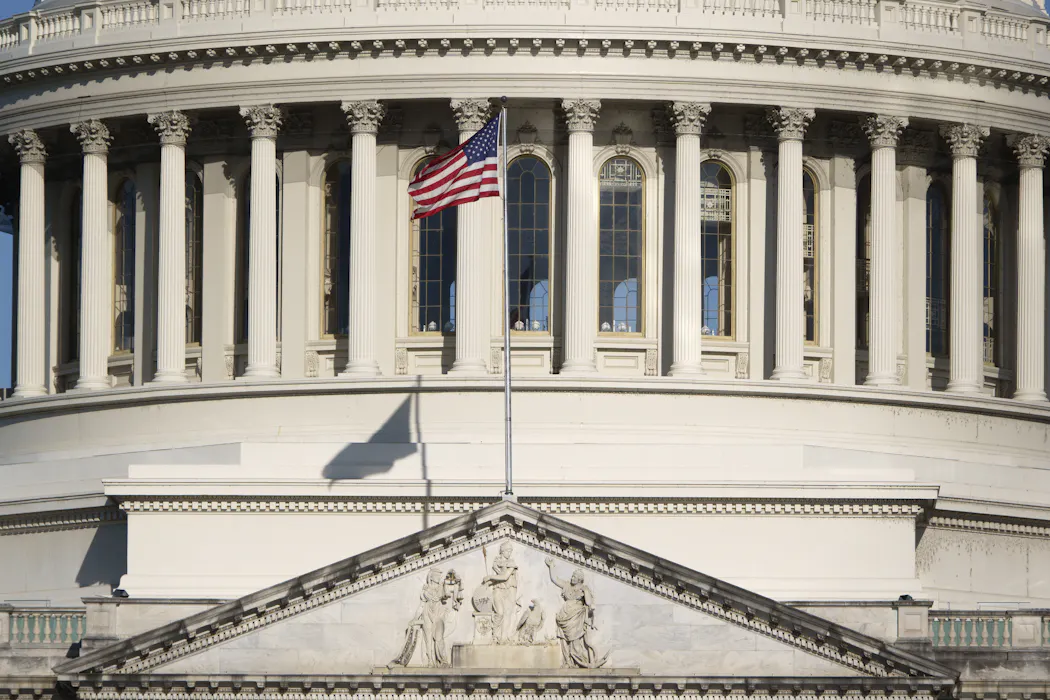
Trump-backed candidate wins GOP primary to replace Nevada Rep. Mark Amodei

David Flippo, a retired Air Force lieutenant colonel who earned President Donald Trump’s support, won the GOP primary to replace retiring Nevada Rep. Mark Amodei.

The race in Nevada’s 2nd District was a proxy war between Trump and prominent state Republicans, many of whom backed former state Sen. James Settelmeyer, including Amodei and GOP Gov. Joe Lombardo. Flippo ended up emerging victorious on Wednesday from a crowded, 13-person Republican field.

The victory continues Trump’s 2026 hot streak in GOP primary endorsements, marred only by a hiccup in last week’s Iowa gubernatorial primary. Trump backed Flippo in a Truth Social post in late May, less than two weeks before Election Day.

Flippo campaigned as a hardliner on immigration and transgender issues, and he slammed Settelmeyer as a “woke liberal” in ads. But Settelmeyer’s opponents took issue with Flippo, a longtime Las Vegas resident who only recently purchased property in Reno, attempting to run the state’s lone safely Republican district.

Amodei went as far as saying Trump “made a mistake” in a post on X.

But Flippo prevailed, riding support from Trump and Turning Point Action. He will enter November’s election as the heavy favorite in a district Trump won by 14 points in 2024.

​Politics

Categories
Food

Grow Healthier Cilantro By Adding One Ingredient To The Soil

Cilantro, like many plants (and especially herbs), thrives when you add this one specific thing to the soil, not only for health but to encourage leaf growth.

​Food Republic – Restaurants, Reviews, Recipes, Cooking Tips

Categories
Alaska News

Federal appeals judges reject lawsuit against Alaska Airlines by former state senator

Sen. Lora Reinbold, R-Eagle River, speaks Tuesday, May 10, 2022, on the floor of the Alaska Senate at the Alaska State Capitol in Juneau, Alaska. (Photo by James Brooks/Alaska Beacon)

Sen. Lora Reinbold, R-Eagle River, speaks Tuesday, May 10, 2022, on the floor of the Alaska Senate at the Alaska State Capitol in Juneau, Alaska. (Photo by James Brooks/Alaska Beacon)

A three-judge panel of the U.S. Court of Appeals for the 9th Circuit has upheld the dismissal of a lawsuit by former Alaska state Sen. Lora Reinbold, R-Eagle River, against Alaska Airlines.

Alaska Airlines banned Reinbold in 2021 for refusing to follow its masking policies during the COVID-19 pandemic emergency. She sued the airline in 2023, after leaving office.

By email, Reinbold said she was dissatisfied with the court’s decision.

“Alaska Airlines is the sole carrier to Juneau, which puts it in a position to control access to government, courts, medical care, and family for every Alaskan — and the same dynamic plays out in Hawaii and other places where a single carrier holds the keys,” she wrote. “A monopoly carrier with that kind of power needs accountability — including to the federal disability law it tried to ignore. The Ninth Circuit did not appear to grasp how serious that question is. This case deserved a thorough review and an assessment of the broad future impacts.”

Reinbold delivered oral arguments in April, the panel issued its order May 20, and Reinbold on June 3 filed a motion on June 3 asking the full court to hear the case. That motion is pending.

Reinbold, who represented herself in the suit, noted that Alaska Airlines was the sole commercial air carrier between Anchorage and Juneau during the 2021 legislative session, and her ban effectively denied her the ability to travel to Anchorage by commercial air flight. 

She ultimately drove across Canada and took a state ferry to reach Juneau.

Alaska Airlines’ monopoly, combined with its implementation of federal rules, made it a state actor and thus subject to constitutional claims, Reinbold argued.

Furthermore, the airline gave her no opportunity to appeal the ban, she said.

An Alaska District Court judge dismissed the case in 2024, and the judge rejected Reinbold’s attempt to amend her complaint and keep the case a live issue. 

“When corporations enforce government policy, hand-in-hand with the state, constitutional protections such as fair notice and due process must still apply,” she said by email.

During court arguments, Alaska Airlines raised a variety of procedural issues with Reinbold’s complaint and argued that it was not a government agency and thus not liable for alleged violations of the U.S. Constitution.

“Plaintiff was entitled to her personal views about COVID-19,” the airline’s attorneys wrote in 2023. “She was not, however, empowered to invoke her personal notions to evade or disregard federally mandated requirements for air travel that applied to all other Alaska Airlines guests during a worldwide pandemic.”

The airline was represented in court by attorney Richard Grotch, who said Reinbold did have a doctor’s note indicating that she did not need to wear a mask, but she never indicated that during booking, as the airline required.

“There’s no constitutionally guaranteed right to fly. There’s certainly no constitutionally guaranteed right to fly Alaska,” he said. 

SUPPORT: YOU MAKE OUR WORK POSSIBLE

Categories
Uncategorized

How money exchanges between House members shape the balance of power in Congress

Researchers tracked the campaign cash that senior House lawmakers steer to fellow members of their own party. Kevin Carter/Getty Images

When Americans think about campaign finance, they usually picture wealthy donors, political action committees and super PACs pouring money into elections.

But some of the most revealing money moves happen inside Congress itself.

Members of the U.S. House of Representatives routinely give campaign money to fellow members of their own party. These transfers make up only a small share of total campaign spending, but they can reveal something important: how parties reward influence, support vulnerable candidates and organize power from within.

In our recent study, my research colleague and I analyzed campaign contributions exchanged among House members from 2009 to 2022, using data from the Federal Election Commission. We looked at who gave money to whom across seven election cycles and asked a simple question: Are these decisions mostly ad hoc, or do they follow clear political patterns?

We found that they are far from random. Internal campaign giving reflects the structure of party politics in the House. Senior members and party leaders are more likely to be givers than receivers, and members facing pressure from outside spending are more likely to attract support from their party colleagues. We also found that Democrats and Republicans organize these campaign contributions differently.

A hidden side of campaign finance

Campaign contributions between House members are legal, common and publicly reportable. In practice, these transfers can help members build alliances, strengthen their party standing and direct resources to competitive races.

That makes these contributions politically meaningful even if they do not dominate the overall money race. More than a financial act, a contribution from one representative to another serves as a signal about who matters and who is vulnerable.

To study this, we treated member-to-member contributions as a network. Each House member was a node, and each contribution created a link from one member to another. This allowed us to track broad patterns over time rather than focusing only on high-profile lawmakers.

Leaders give more than they receive

One of our clearest findings is that party insiders – meaning senior lawmakers and members in formal leadership roles – play a major role in steering campaign cash.

In our study, leadership included the speaker, party leaders, whips, caucus or conference chairs, and committee chairs or ranking members. Across the seven election cycles that we analyzed, about 79% of Democratic leaders and 71% of Republican leaders gave to at least one fellow House member, compared with 65% and 58% of nonleaders.

Leaders also tended to give to far more colleagues. In the 2021-22 election cycle, for example, Democrat Hakeem Jeffries gave to 76 fellow members in our network, Nancy Pelosi to 61, and Republican Steve Scalise to 192. Republican Jason Smith gave to 100 fellow members.

Public reporting shows the scale that these efforts can reach. During the 2021-22 cycle, Kevin McCarthy’s Majority Committee PAC reportedly contributed about US$4 million to select House Republicans in difficult reelection races.

Seniority mattered too, especially among Democrats. Longer-serving Democratic members were more likely to give and less likely to receive. This suggests that experienced members often help channel money toward colleagues with greater electoral need.

The two parties do not look the same

Our study also found a striking difference between the two major parties.

Democratic contribution networks were relatively stable over time. Their giving patterns remained more centralized, with money flowing repeatedly through a smaller set of members. That suggests a more consistent and hierarchical internal system for directing support.

Republican networks changed more over the same period. Early in our study, their money flows were also more centralized. But over time, contributions became less focused on a small core of recipients and were more likely to occur within smaller connected groups. That suggests support was being coordinated less through a single hub and more through clusters of politically connected members.

While Democrats do seem to rely more on a stable central structure, and Republicans appear to have moved toward a more dispersed system, it should not be taken to mean that one party is orderly and the other is chaotic. Both approaches offer their own advantages.

In today’s political language, a uniparty means the idea that Democrats and Republicans are basically one indistinguishable establishment. Our findings point the other way: At least in internal campaign finance, the parties are behaving in distinct ways.

A photo of a large federal building with red dollar bills superimposed behind it.
House members targeted by more super PAC activity were more likely to receive contributions from fellow party members.
Greggory DiSalvo/Getty Images

What outside spending may be signaling

We also examined the role of super PACs, which can spend unlimited sums independently to support or oppose candidates.

We found a consistent pattern across both parties: Members targeted by more super PAC activity were more likely to receive contributions from fellow party members and less likely to contribute to others themselves.

A concrete example shows why this matters. In the 2020 cycle, our data shows that outside spending reached about $8.4 million in Abigail Spanberger’s Virginia race for the House and about $7.36 million in Rep. David Valadao’s California race. When that much outside money floods a contest, it sends a public signal that the race is competitive and strategically important. Other lawmakers can see that signal and redirect their own money toward the colleague under pressure.

Why this matters

At a time when the role of money in politics remains deeply contested, such patterns remind Americans that campaign finance is not just a story about donors and interest groups. It is also about how politicians finance one another from the inside.

Those internal flows help show how parties build influence, protect vulnerable members and respond to election pressures. They also offer a window into broader differences between Democrats and Republicans.

More interestingly, it tells a story about party insiders making strategic choices about where money should go — and, in doing so, helping shape the balance of power in Congress.

The Conversation

Mayank Kejriwal does not work for, consult, own shares in or receive funding from any company or organization that would benefit from this article, and has disclosed no relevant affiliations beyond their academic appointment.

​Politics + Society – The Conversation

Categories
Health

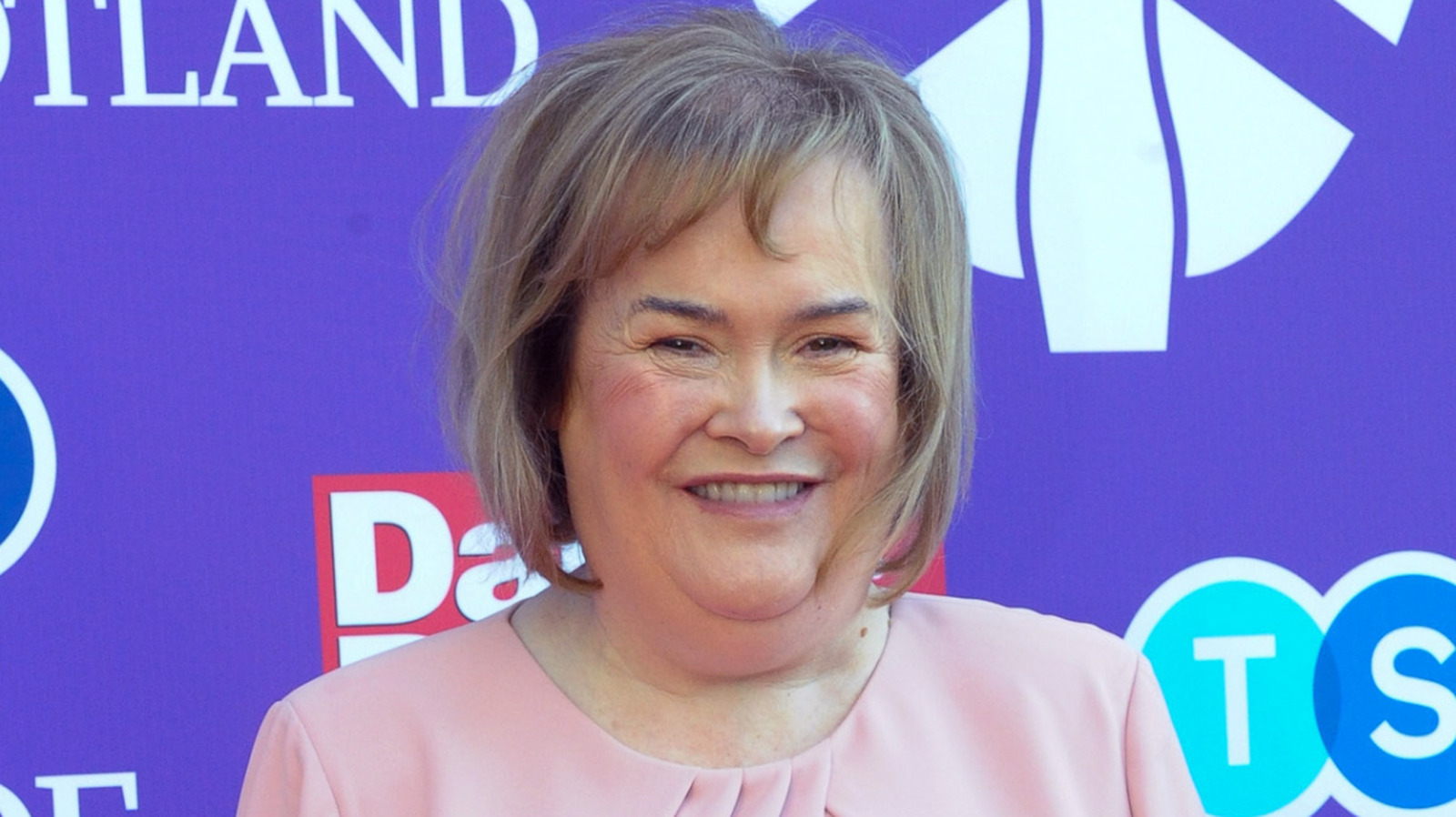
Forget The Legendary Audition: Susan Boyle’s Recovery After 2022 Stroke Is Her Real Comeback Story

A year after surviving one of the top causes of death worldwide, “Britain’s Got Talent” star Susan Boyle had a spectacular comeback at the show’s 2023 finale.

​Health Digest – Health News, Wellness, Expert Insights

Categories
Entertainment

How Many Glasses Can You Get From A Typical Box Of Wine?

Today’s options, along with affordability and sustainability benefits, have helped shift the perception that box wine is just a cheap alternative to bottled.

​Mashed – Fast Food, Celebrity Chefs, Grocery, Reviews

Categories
Entertainment

What Your Favorite Wine Says About You

Your wine selection says a lot more about you than you might expect. Find out what your favorite bottles reflect about your personality and character.

​Mashed – Fast Food, Celebrity Chefs, Grocery, Reviews

Categories
Food

Are Chick-Fil-A Brownies Made Fresh?

While Chick-fil-A’s desserts – especially the Chocolate Fudge Brownie – are a hit with customers, are they actually baked fresh by employees in the kitchen?

​Food Republic – Restaurants, Reviews, Recipes, Cooking Tips

Categories
Entertainment

This Aldi Competitor Has A Show-Stopping Bakery, According To Reviews

Aldi doesn’t hold a candle to this one German-based grocery chain when it comes to its fresh bakery section. Shoppers flock to it for the croissants alone.

​Mashed – Fast Food, Celebrity Chefs, Grocery, Reviews

Categories
Politics

The Democratic establishment begrudgingly moves to embrace Graham Platner

Graham Platner was far from establishment Democrats’ first choice to take on GOP Sen. Susan Collins. But they’re lining up behind him now — even if some are doing so begrudgingly.

With votes still being counted in Maine on early Wednesday morning, Platner looked to be winning just shy of three-quarters of the Democratic primary ballots. The strong showing marks a stunning political journey for the oysterman despite his many scandals — and it’s likely to quell murmurs from national Democrats that he could be pushed to withdraw from the race and replaced by another candidate.

Senate Minority Leader Chuck Schumer, who had recruited Gov. Janet Mills for the must-win Senate race — only to watch her drop out in April after trailing Platner in polls and fundraising — expressed confidence in the oysterman’s candidacy Tuesday.

Still, he wasn’t exactly effusive and focused most of his attention on defeating Collins.

“Susan Collins has never been more vulnerable after she voted with Trump 96 percent of the time, confirmed his far-right judicial nominees, and took millions from special interests while voting to rip health care away from Mainers,” Schumer and Democratic Senatorial Campaign Committee Chair Kirsten Gillibrand said in a statement. “In November, Maine voters will elect Graham Platner, and we will win a Senate majority.”

Senate Majority PAC, the super PAC aligned with Democratic leadership, similarly sought to draw contrast between Platner and Collins.

“The difference between the two couldn’t be plainer: Platner’s agenda supports working people and families, while Collins upholds Washington’s status quo,” spokesperson Lauren French said in a statement.

Even avowedly centrist Democrats focused on the importance of defeating Collins and winning back Senate control — though they continued to hint their concerns that Platner could blow it for them.

“This is a must-win seat,” said Lanae Erickson, senior vice president at Third Way. “Susan Collins has done nothing more than carry water for Trump. If we fail to beat her this year, that’s an own goal.”

Platner’s resounding win might quiet some of his Democratic dissenters, but he’ll still have to hold together a broad coalition to defeat Collins and shore up Democratic and independent voters — a group the Republican senator has long overperformed with — who may remain skeptical of his candidacy in light of his many controversies. And the same Democrats who have been worried about his candidacy remain concerned that more hits might be coming about his past.

Republicans didn’t waste time unloading on Platner and his long list of scandals in a preview of what’s to come for the next five months.

“Platner is easily the most toxic candidate of the cycle and the fact that Democrats have embraced him in service of a radical socialist agenda has placed the final nail in the coffin of their chances to win Maine in November,” Republican National Chair Joe Gruters said in a statement.

The National Republican Senatorial Committee released a new digital ad contrasting Collins and Platner that highlights his tattoo and profile on the messaging app Kik, while the Senate Leadership Fund launched a website running through much of the opposition research about him.

Republican groups, led by the SLF and the pro-Collins Pine Tree Results PAC, have already booked nearly $70 million in TV ad time in Maine from now through the general election, according to data from AdImpact, which tracks political advertising. Democrat groups have $26 million booked so far.

Platner, in a victory speech in Blue Hill, Maine, on Tuesday night, argued that the focus on his past had proven to be the wrong strategy.

“The national pundits, the political establishment, they keep looking for that one story, that one headline, that one moment in my life that they can define the campaign by,” he told a crowd of cheering supporters. “But in trying so hard to understand me, they failed to understand that this is not about me at all. This is a movement about us.”

Progressives bet big on Platner, arguing establishment candidates were part of Democrats’ failed strategy against Collins in previous elections and that Platner’s insurgent candidacy was worth the risk. His campaign drew unprecedented grassroots attention in Maine, with large crowds attending his events across the state.

Progressives who had long backed Platner’s candidacy were taking a victory lap Tuesday night.

“Tonight should be a wake-up call for a Democratic establishment that has spent too long underestimating the appeal of economic populism and outsider politics,” said Adam Green, co-founder of the Progressive Change Campaign Committee, which was an early endorser of Platner. “Platner’s November victory will set the Democratic Party on a bolder economic-populist course.”

Platner’s Tuesday primary win followed a tumultuous week for his candidacy. He enters the general election for one of the nation’s most closely watched Senate races still shaking off the latest scandal: a New York Times report featuring accounts from several of his ex-girlfriends alleging disturbing past behavior. One woman also claimed Platner had known one of his tattoos resembled a Nazi symbol when he got it.

Platner denied ever being physically violent but admitted to being a “bad boyfriend” in past relationships. He has also denied knowing the tattoo, which had covered up last fall, was related to the Nazis.

The story, which came on the heels of reporting that Platner had exchanged sexual messages with women while married, ignited another firestorm surrounding his candidacy just days before the primary. Some Democrats immediately came to his defense — including fellow progressive California Rep. Ro Khanna, who appeared alongside Platner at a campaign event in Maine in the days following the allegations.

“We reject, unequivocally, misogyny. But you know who else rejects it? Graham Platner,” Khanna said at the rally. “He understood that those years that he came back were not the best years of his life.”

Khanna also told NBC News that Platner should apologize to the women.

Platner drew some more big-name support in the immediate lead up to the primary: Sen. Brian Schatz, likely to be the next Democratic Whip, held a virtual fundraiser for Platner over the weekend, his first public indication of support. Left-leaning Sen. Tina Smith of Minnesota gave Platner a major boost on Monday amid the controversy, writing in a post that he would win “because he has connected with Mainers on what they really care about” and “because he’s not part of the Washington establishment.”

Still, others like Sen. Elissa Slotkin, a potential 2028 presidential candidate, deflected on answering questions about the allegations and expressed deep frustration: “I look forward to the day where I am not answering every single week a question about bad behavior by another dude,” she told MS NOW this past weekend.

Not every Democrat was quick to line up behind Platner on Tuesday night. Mills, in a lengthy statement, did not mention the oysterman. Despite having suspended her campaign, she had reminded voters up until Election Day that she remained on the ballot.

“I am grateful to Maine people and incredibly proud of what we have accomplished together. I will continue to fight with everything I have to improve the lives and livelihoods of Maine people,” the two-term governor said.

Liz Crampton contributed to this report.

​Politics