Matt Mahan suffered a disappointing finish in California’s gubernatorial primary last month, but the World Cup has offered the mayor of Silicon Valley’s largest city the chance of an immediate remontada.
His home San Jose, riding a sports tourism surge, stands to gain more economically today as the U.S. national team opens knockout play in Santa Clara. Mahan told POLITICO on Friday that he had not yet attended a match in the bordering city, but had been soaking in the action at watch parties in San Jose, where attendees have been so numerous they’ve begun watching from the tops of nearby parking garages to get a better view.
A FIFA official watch party in downtown San Jose’s San Pedro Square is streaming all 104 games and has hosted more than 300,000 fans, by the city’s count.
“It’s been just an incredible experience,” Mahan said. “We’re on track to double, if not triple, the amount of attendance we expected.”
A shooting a block from the venue Sunday evening was a reminder of the security challenges posed by such large gatherings, but city officials said the deadly incident wasn’t connected to the event and didn’t occur while matches were being streamed. Watch parties resumed on Monday and are set to carry on through the tournament — with an additional screen to spread out the crowds.
The U.S. match against Bosnia and Herzegovina today will be the last of six tournament games played in the South Bay, capping a banner sports year in which the region hosted the Super Bowl and NCAA March Madness games. San Jose officials tweaked their plans for the lineup’s longest and only international competition based on how the other events went, adding TVs to watch parties and looking for ways to limit congestion, Mahan said.
“One of the things we learned during the NFL Super Bowl experience was that it got fairly congested in the middle of the action, and we want to spread people out a little bit more, and so we’ve, we’ve got multiple screens up there, very large screens, so there’s no reason to crowd up front,” Mahan said.
Local governments coordinated to plan for the string of high-profile events, and San Jose hired dedicated staff to prepare for them. The planning, overseen by former Olympic short track speed skater Tommy O’Hare, took two years, while the city became involved in seeking the U.S., Mexico and Canada’s joint bid to host the World Cup over a decade ago.
The city embarked on a marketing campaign to attract visitors to San Jose Mineta International Airport — a lesser-known hub than SFO but one just minutes driving from Levi’s Stadium. Mahan opted not to name names over security concerns, but he said “a ton” of foreign dignitaries have landed at SJC during the tournament.
Representatives from China, South Korea and a half-dozen other countries were set to attend an overlapping summit in San Jose on international innovation and investment this week, mingling with expected attendees from Bay Area tech giants including NVIDIA and Apple.
But the mayor — a Democrat who finished sixth in the state’s jungle primary for governor in June — said the focus during the tournament has been less on fostering international relationships than on the fan experience.
“Our North Star has been, you know, whether you can afford a ticket to the big game, we want you to be able to have a fun, accessible, and memorable World Cup experience in downtown San Jose,” Mahan said. “I think we’ve proven that we’re offering that.”
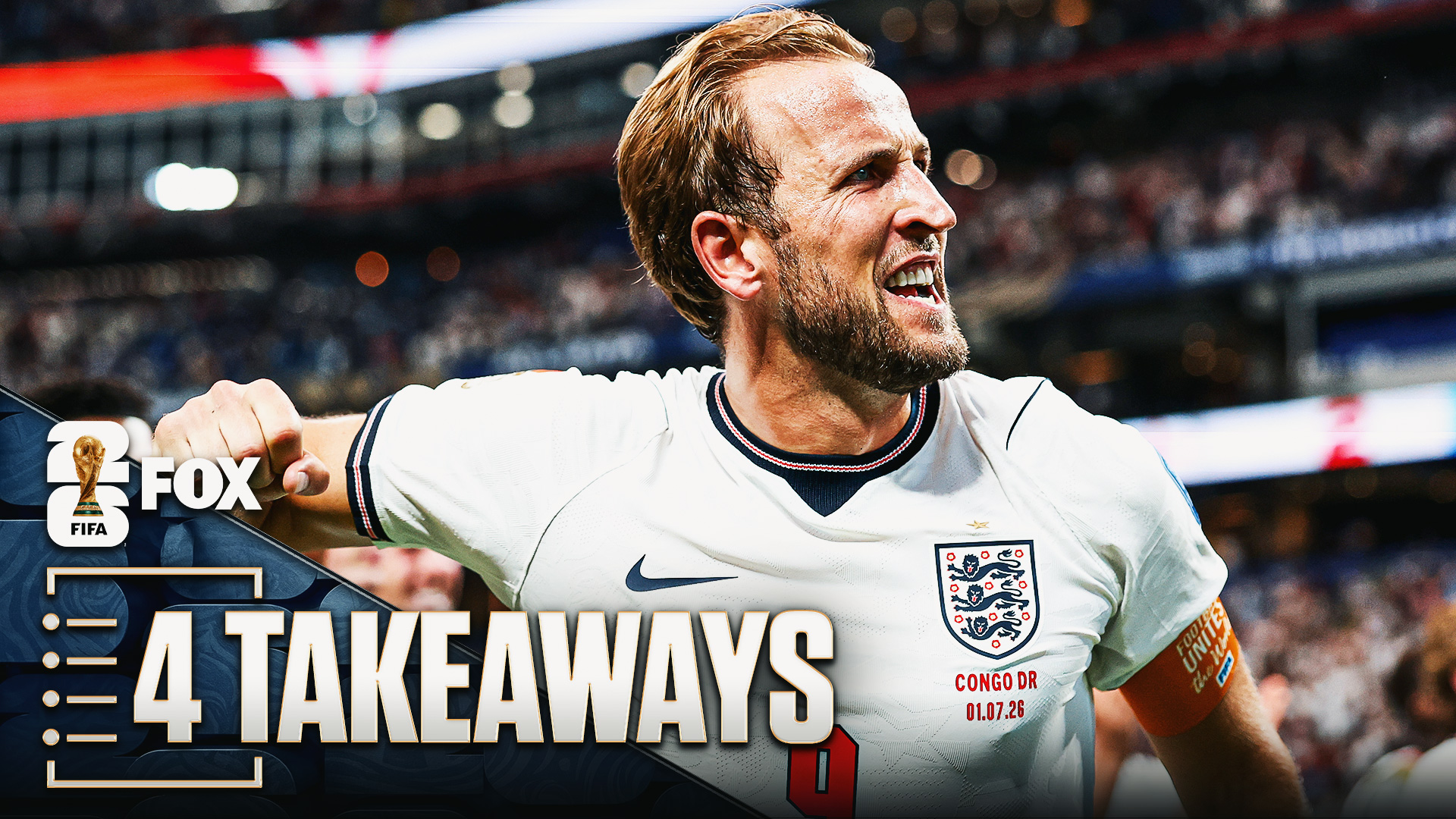
Nobody panic — everything is fine. That was the message England fans were desperately telling themselves as they watched their team trail a Congo DR side ranked 46th in the world for most of a sweltering afternoon in Atlanta. This game was bonkers. England was denied a penalty that half of the English media is still furious about, had a shot cleared off the line, were repeatedly stonewalled by a goalkeeper having the game of his life, and spent 74 minutes looking like a team that had forgotten how to score. And then Harry Kane happened. Twice. England is through to the round of 16, but they were pushed to the absolute brink to get there. Here are my four takeaways from England’s 2-1 win over DR Congo: 1. Harry Kane Doesn’t Need the Whole Game. He Just Needs a Moment. Let’s be honest about England’s tournament so far. A fun 4-2 win over Croatia, then a flat 0-0 draw with Ghana, and a labored 2-0 win over Panama that only came alive after halftime. Harry Kane, by his own colossal standards, had been quiet. Going a goal down inside seven minutes to Congo DR fit that uneasy pattern perfectly. England forgot how to break down a defensive low block. But here is the thing about Kane: when the moment is biggest, he arrives. He leveled it in the 75th minute, meeting an Anthony Gordon chip with a header of surgical precision. Then, with England’s World Cup teetering, he did it again in the 86th. Another Gordon delivery, another header, another ruthless finish tucked into the top corner — a world-class second-half brace to win the game in one of the biggest moments of Harry’s life. Before this tournament, plenty of people called Kane the best striker on the planet. 64 goals with Bayern Munich in 2025-26 will do that. He hadn’t quite looked himself here, but today, when his team needed their captain most, he delivered. That is what the greats of the game do. 2. That Penalty Decision Simply Has to Be Better. Rewind to the 43rd minute. England trailing, the tension unbearable, when Jude Bellingham threaded Harry Kane through on goal. Kane knocked it past goalkeeper Lionel Mpasi; there was contact, and down he went. Referee Adham Makhadmeh waved it away as a dive. VAR checked and declined to intervene. A few suggest Kane dragged his foot, inviting contact and essentially manufacturing the fall. There is a vocal minority who think Kane was a little clever. But the English press is convinced it’s a penalty, and they are not alone. On the Fox broadcast, former Premier League referee Mark Clattenburg was adamant: the keeper didn’t play the ball, he caught Kane’s foot, and that’s a penalty. Thierry Henry agreed, baffled that the referee wasn’t even sent to the monitor. Whichever side you land on, that is exactly the problem. A decision this divisive, in a World Cup knockout, cannot be settled by a wave of the hand. We cannot have mistakes like this at this stage of the tournament. That’s what VAR is for. 3. Farewell, Congo DR. You Belonged, and Then Some. Give this Congo DR team its full due. Brian Cipenga set the tone in the seventh minute, lashing a near-post finish past Jordan Pickford to stun the stadium. From there, the Leopards defended with a structure, a discipline, and a belief that almost nobody outside their camp saw coming. They held England’s expensively assembled attack at bay for 74 minutes and nearly went 2-0 up when Yoane Wissa, their Newcastle talisman and group-stage star, rattled Pickford’s post. Wissa scored three goals at this World Cup, matching the number he netted all season for Newcastle United. The Congolese squad has many Premier League connections, and that familiarity showed. Aaron Wan-Bissaka of West Ham and Burnley’s Axel Tuanzebe were immense at the back, while Sunderland’s Noah Sadiki scrapped for everything in midfield. But the true hero wore the gloves. Lionel Mpasi, the Le Havre goalkeeper, produced five saves, twice denying Jude Bellingham with reflexes that had nothing to do with luck. Congo DR didn’t just show up. They led for most of the day and made England sweat through every pore. No shame in this exit. Only pride. 4. Tuchel Has to Go Back to the Drawing Board. Mexico Awaits. England is through. That’s the headline, and it matters. But the rest of it demands an honest look in the mirror. Thomas Tuchel still hasn’t found the version of this team that lasts a full 90 minutes. The group stage was a loop of slow starts, sluggish first halves, and second-half rescues. Today repeated the pattern, except the stakes had soared. Against a well-drilled Congo DR side, England never truly imposed itself. The attack looked disjointed for an hour; the width was missing, and the service to Kane was thin. Without its captain’s brilliance, England goes home today. That should worry Tuchel as much as it relieves him. Because now comes the nightmare. Mexico, at Mexico City Stadium, at over 7,000 feet of altitude, inside a cauldron of 80,000-plus fans who will treat this like a final. Mexico has been ruthless, winning all three group games before dismantling a very good Ecuador 2-0. They haven’t conceded a single goal this tournament. Against Ecuador, it was one of the greatest Mexican performances of all-time. Ironically, this is not a vintage Mexican side on paper, but the Mexico City Stadium is a legitimate 12th man, and the thin air makes everyone else mortal. England survived today. Tuchel needs answers, fast. Against Mexico, survival won’t cut it.Latest Sports News from FOX Sports
Light, refreshing wines are a typical go-to for wine lovers in the summer. According to wine master Adam Lapierre, this particular bottle is sought after.
Mashed – Fast Food, Celebrity Chefs, Grocery, Reviews
Clint Black has been forced to cancel his July 3 appearance at Pearl River Resort Casino in Pearl River, MS after being admitted to the hospital following a medical emergency.
According to a statement from Black’s team, the country music icon was admitted to the hospital on Sunday, June 28, after developing an infection in his tonsils. He is currently receiving treatment, including emergency intravenous antibiotics.
Photo Courtesy of Clint Black
“Clint Black’s performance at the Pearl River Resort Casino, scheduled for Friday, July 3, 2026, has been cancelled due to a medical emergency. Clint was admitted to the hospital on Sunday with infected tonsils requiring emergency intravenous antibiotic treatment,” the statement reads.
His team assured fans that Black is improving and expected to make a full recovery.
“Clint is on the mend and will make a full recovery and is expected to be discharged from the hospital later this week. Clint and his management team sincerely apologize for the inconvenience this cancellation may cause.”
Fans who purchased tickets will receive a full refund through the original point of purchase.
According to Clint Black’s official website, his next scheduled appearance is set for July 9 in Minden, Nevada.
Clint Black – KILLIN’ TIME: My Life and Music
2026 has been a milestone year for the “A Better Man” singer. His long awaited memoir, Killin’ Time: My Life and Music, was released on May 19. The book finds the country legend telling his story of his journey from growing up outside of Houston to becoming one of the most iconic stars in country music.
Black told Country Now that he “never thought” he would or could write a book, but thanks to his wife, Lisa Hartman Black, he finally decided to do it.
Inside, he opens up about the personal and professional challenges he’s faced like never before, sharing candid reflections he hasn’t spoken about publicly until now.
Both Brown and Smollett have been at the center of controversy, for wildly different reasons.
Brown has made some unorthodox choices, from expressing a willingness to meet with Mike Pence to abruptly skipping a Queer Eye interview, blindsiding his former co-stars in the process.
Smollett, more famously, reported in January 2019 that he had been the victim of a hate crime.
Police would go on to claim that their investigation showed that he was lying. A years-long legal battle ensued, with some considering him too controversial.
Regardless, perhaps they both really have found their forever person. Good for them!
Youth sports have a significant impact on the development of all children. Sports provide children opportunities to build their social skills and confidence, as well as improve their sense of belonging and physical fitness.
What happens to these spaces when adults are given permission to inspect a child’s body to determine their gender?
The Supreme Court rulings on Little v. Hecox and West Virginia v. B.P.J. decided that transgender girls cannot play sports that align with their gender identity. Not only does this ruling essentially prohibit transgender kids from participating in most youth sports – codifying the exclusion this vulnerable population already experiences – it also puts all children at risk of the harmful consequences of body surveillance.
I am a social work scholar who studies LGBTQ+ belonging and organizational climate. I’m also a former NCAA Division II women’s volleyball athlete, and I know firsthand what it’s like to have uninvited scrutiny of your body because strangers doubt your gender.
Based on my research and experience, when policies allow for the bodily surveillance of children, all children are at risk of losing the benefits of youth sports – not just transgender children.
Youth sports can help children improve their sense of competence and confidence. They offer opportunities to practice life skills, such as setting goals, solving problems and thinking positively. Sports can also help protect against depression and stress by bringing supportive adults and positive role models into children’s lives.
However, when youth sports environments become overly stressful, unfair or humiliating, they can also serve as grounds for potentially harmful experiences. For example, coaches and parents can negatively affect a child’s body image by repeatedly criticizing their weight. Teammates and peers can also pressure each other in destructive ways.
The developmental value of youth sports depends on the environment it creates. It stands to follow that ensuring youth sports spaces have as many positive influences as possible is in the best interest of all children.
Research suggests that policies legalizing bodily surveillance are not a positive influence for any child in youth sports.
Bodily surveillance as an avenue for harm
Bodily surveillance plays out in significant ways for all children in youth sports, not just transgender youth. Policies that legalize bodily surveillance for youth open the door to causing harm in unsuspecting children.
Researchers define bodily surveillance as “viewing the body as an outside observer” through active judgments of a person’s physicality, superficial appearance or perceived gender presentation. While bodily surveillance claims to regulate women’s sports in the name of fairness, experts contest the scientific basis of these claims.
Women’s sports have been the site of bodily surveillance for decades, and the cisgender women involved in those sports are all too awareof the ways their bodies are judged through the lens of sexism. Often, how their bodies are judged are influenced by a definition of femininity based primarily on white bodies.
The Olympics has a long, complicated history of sex testing.
Bodily surveillance can involve assessing how tall is too tall for someone to be a girl? How strong is too strong? How fast is too fast? Who decides when a child exceeds that threshold, and what happens to that child if they do?
Children who compete at the top of their division or class will have to contend with invasive procedures. To evaluate claims of unfair advantages, strangers may request hormone or genetic testing to look for common biological variations that cisgender children and their parents may not even be aware of. Testing may also include genital or pelvic inspection to look for the presence or absence of a penis, or even transvaginal ultrasounds to detect the presence of ovaries.
Strangers are already policing children’s bodies
Bodily scrutiny is not restricted to just transgender children – it already affects cisgender children, too.
In 2022, a high school athlete in Utah was secretly investigated after she defeated other children in a sports competition. Parents of the second- and third-place finishers raised a complaint that led the high school athletics association to analyze her school records back to kindergarten to determine the child’s gender, without consulting her parents. This is a strong example of how people can initiate investigations simply because the child does not look “feminine enough.” In this case the child in question was indeed a cisgender girl.
In 2023, two adults harassed a 9-year-old child at an elementary school track meet. The adults, claiming the girl was transgender, stopped the entire event and demanded she show “certification of her sex.” This was also a cisgender female child.
Strong, athletic women are often subject to suspicion because of their so-called “masculine traits.” As a taller-than-average person who was assigned female at birth, I personally experienced countless moments of bodily scrutiny during my time as a NCAA Division II women’s volleyball athlete. These experiences made me want to shrink out of public view and did not give me confidence in my athletic performance. Moreover, the effects of this scrutity bled into my personal life, significantly affecting my self-esteem and self-perception throughout my young adulthood.
Imagine if that scrutiny happened when I was much younger, when I did not yet possess the emotional maturity or life experiences to cope with it. Research shows that such bodily scrutiny is already damaging transgender youth and that bodily shame can significantly affect young people’s mental health, leading to disordered eating and other physical and psychological harm.
When societies give formal permission to scrutinize a child’s body and question whether they belong in a sport, it opens the door to potential harm against all children. Children’s bodies, regardless of their gender identity, become open for people to inspect, create rumors about or render public judgment against them, often without any recourse for the children experiencing harm.
Children who had previously never faced the harms of bodily surveillance may soon be subject to its violence because of this law.
Inclusivity benefits all children
Just as all children can potentially suffer from bodily surveillance regardless of their gender identity, embracing inclusivity can improve the well-being of all children.
Youth sports, just like schools and churches, are not just places where children compete, learn facts or practice their faith. These community institutions are places where children build the confidence, relationships and sense of belonging that can shape their adult lives and the impact they’ll have on their family and community in the future.
The scope of sex-based bodily surveillance by necessity extends beyond transgender students, and the effects of this surveillance negatively affects all children involved in youth sports, regardless of identity.
Megan Gandy does not work for, consult, own shares in or receive funding from any company or organization that would benefit from this article, and has disclosed no relevant affiliations beyond their academic appointment.