Ah, ranch dressing: our nation’s pride and delicious joy, and delicious it truly is, so why does the rest of the world not have our favorite condiment?

Food Republic – Restaurants, Reviews, Recipes, Cooking Tips









Ah, ranch dressing: our nation’s pride and delicious joy, and delicious it truly is, so why does the rest of the world not have our favorite condiment?
Food Republic – Restaurants, Reviews, Recipes, Cooking Tips
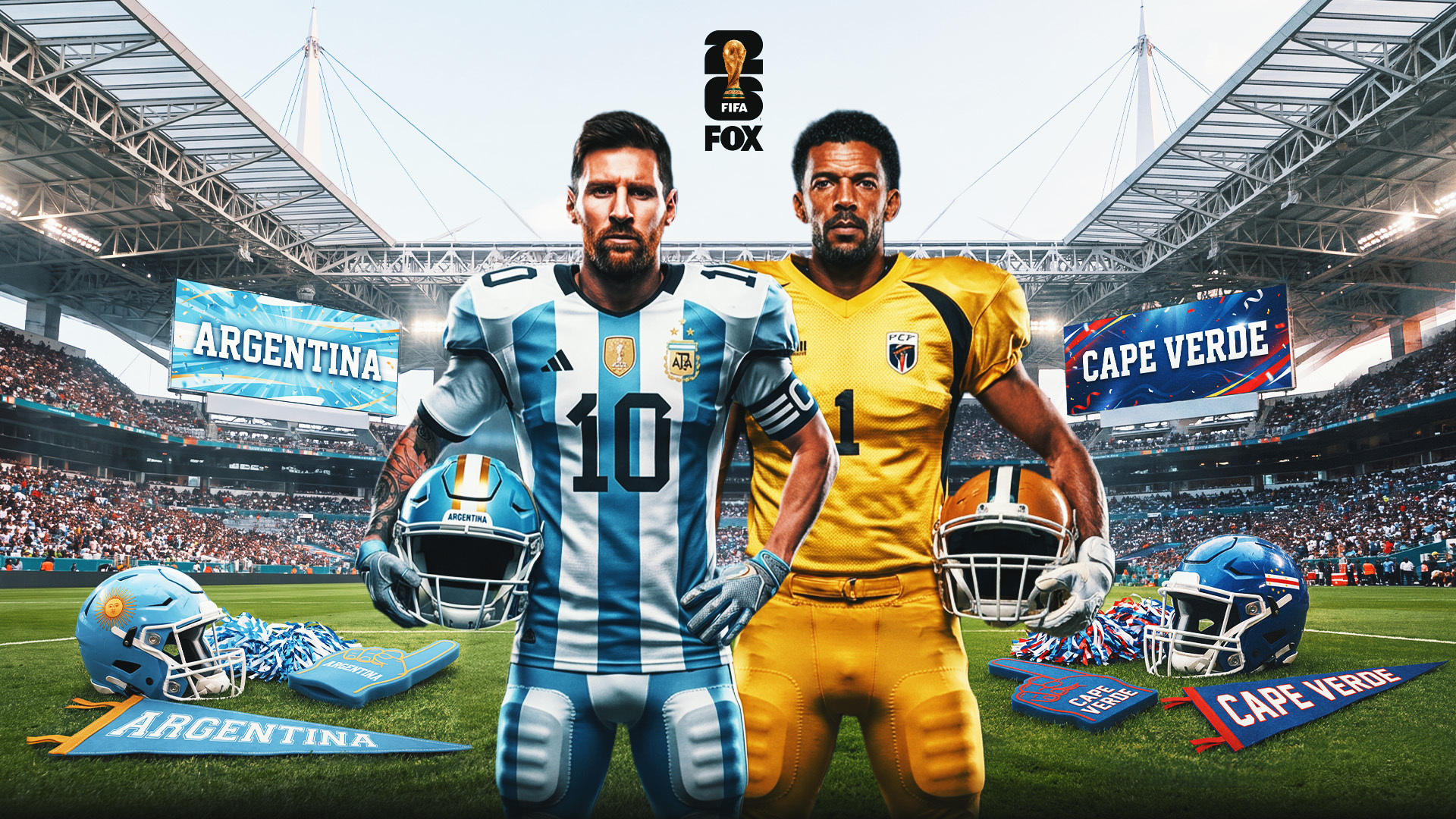
Argentina’s 2026 World Cup round of 32 matchup against Cape Verde isn’t like David versus Goliath. It’s not even FCS Appalachian State looking to upset Michigan back in 2007.As far as college football is concerned, the comparison is what would happen if we played a 48-team College Football Playoff where the third-best team in the WAC received a berth against an undefeated defending national champion with a Heisman Trophy winner returning at quarterback. Lionel Messi, considered by many to be the greatest soccer player of all time, is the leading goalscorer in men’s FIFA World Cup history. The college football equivalent is 2004 Heisman winner Matt Leinart, who led USC to a perfect 13-0 season and a national championship. Imagine the 2005 Trojans facing Louisiana Tech, which finished third in the WAC with a 7-4 record and lost by 38 points the last time it played a top-10 opponent. That’s the task facing Cape Verde. Even Appalachian State’s famous 34-32 upset win over Michigan in 2007 falls short as a comparison because Cape Verde simply isn’t as good as Appalachian State turned out to be. The Mountaineers entered the 2007 season fresh off back-to-back FCS national championships. They posted a 14-1 record the previous year, with their only loss coming against NC State. And 2007 was just as much of a banner year for Appalachian State, as it once again won the FCS national title and posted a 13-2 record. During an eight-year run from 2005-12, Appalachian State won seven conference championships and captured three straight national titles. The only college football program more dominant than the Mountaineers during that time was Nick Saban’s Alabama teams. Cape Verde isn’t that. This is a nation with fewer people than the state of Wyoming. It’s a team that has won just one of its last nine matches in international competition — excluding friendlies — and hasn’t left a match victorious in international competition since October 2025. This is a team that built its World Cup reputation on its ability to defend and timely goalkeeping rather than overwhelming talent. In fact, when Cape Verde goalkeeper José Évora Dias — or Vozinha, if you prefer — was asked about the chance to face Argentina and possibly the best player who has ever lived, his answer was quite humbling.”It would be really special to face [Argentina] because Lionel Messi is the greatest of all time,” Vozinha said. “And I honestly would love the chance to play against Lionel Messi because maybe I’ll get Lionel Messi’s jersey.” That’s what makes this matchup feel less like Michigan-Appalachian State and more like what would happen if a Group of 5 team snuck into an expanded playoff and drew the defending national champion. In many ways, Argentina-Cape Verde is the exact matchup college football fans have spent years arguing about. Those in favor of expansion want more access for the outsiders and the underdogs. Everybody wants to play Alabama until Alabama shows up to beat them like they stole something. We all love a good Cinderella story, and a victory by Cape Verde over Argentina would extend the legend of this Blue Sharks team as one of the game’s greatest fairytales. But read another way, Cinderella is just a lady who lost her slipper and rode into the ball in a carriage made quite literally of hopes and dreams. Remember this: Cincinnati got its shot against Alabama in 2021 and found out what it meant to get rocked by a mean stepsister. Boise State went up against Penn State in 2024 and was pummeled back down the palace steps. Tulane and James Madison got their chance in 2025 and then Ole Miss and Oregon, respectively, smashed them like pumpkins. It’s what happens when you extend the field. Teams that would never have gotten into the tournament in years past gladly become cannon fodder for the true powers among them. But, hey, they get to say they made the tournament, that they won their way into the knockout stage. Good on you, Cape Verde: Worst case, your only loss in the World Cup would be against the defending champions when the matches matter most. Is that worth celebrating? You’re damn right it is.Latest Sports News from FOX Sports

Every World Cup needs a fairytale. This one features a 40-year-old goalkeeper from a second-division club, an island nation of half a million people and a date with the greatest player who ever lived. On Friday in Miami, Cape Verde will walk out at Miami Stadium to face Argentina, the reigning world champions, in a round of 32 tie the bookmakers have already filed under “formality.” Cape Verde is given a 4.8 percent chance. On paper, this isn’t a contest. But that’s the thing about Cape Verde. Nobody told them about the paper. Let’s start with the sheer scale of what these islands have already pulled off, because it belongs in the history books. Cape Verde is an archipelago off the west coast of Africa with a population of roughly 525,000. That makes it the smallest nation by population ever to reach the knockout stage of a men’s World Cup. Not the smallest this year, the smallest ever. Iceland (in 2018) and Curaçao couldn’t do it. The Blue Sharks, in their debut tournament, did it without losing a single game. They opened by holding Spain, one of the pre-tournament favorites, to a 0-0 draw. Then they went toe-to-toe with Uruguay in a 2-2 thriller with Kevin Pina and Hélio Varela scoring the first World Cup goals in the nation’s history. They closed with a goalless draw against Saudi Arabia to finish second in Group H, a point clear of two-time champions Uruguay. Three games, three draws, zero defeats and a place in the last 32 that nobody outside their dressing room saw coming. Coach Bubista said before the tournament that everyone is entitled to dream. His players took him at his word. And then there’s Vozinha. If you’ve been anywhere near the internet this month, you know the name. Josimar José Évora Dias, a 40-year-old goalkeeper who most recently played his club football for Chaves in the Portuguese second division, walked onto the pitch against Spain with about 50,000 Instagram followers and walked off a global phenomenon. Spain managed 27 shots, and Vozinha made seven saves, earning him the Man of the Match award. A clean sheet against Lamine Yamal and the might of Spain. By the next morning, his follower count had exploded into the millions, and it hasn’t stopped climbing since. It’s now north of 17 million, having sailed past the likes of Patrick Mahomes along the way. Not bad for a man whose nickname translates to “granny” in Portuguese. The story only gets better. Vozinha’s mother missed the Spain game because of a visa issue, then made it in time to watch her son shut out Saudi Arabia, waving a tiny Cape Verde flag from the stands. He’s spent the better part of two decades playing professionally across six countries, waiting his whole life for a stage this size. He has earned every single follower. Which brings us to the small matter of what’s waiting for him on Friday. Argentina is not merely the reigning World Cup champion. It is one of the most decorated football nations on the planet: three world titles, a record haul of Copa América trophies and a squad that has looked ruthlessly efficient in cruising through the group stage with three wins from three. Lionel Scaloni’s side sits second only to France in the tournament’s title odds, and it’s barely shifted out of second gear to get there. At the center of it, as ever, is Lionel Messi. At 39, in his sixth and surely final World Cup, Messi has done something this summer that once felt untouchable. He is now the all-time leading goalscorer in World Cup history with 19 goals, surpassing Germany legend Miroslav Klose (16) and Brazil women’s great Marta (17) — although France superstar Kylian Mbappé (18) is on his heels. Messi opened with a hat-trick against Algeria, added a brace to seize the record against Austria, then came off the bench to curl in a free-kick against Jordan, becoming the first man ever to score in seven consecutive World Cup matches. He is, somehow, sharper than ever at an age when most players have long since retired. So yes, this is about as lopsided as a knockout tie can get. The unlikeliest matchup of the round of 32: the greatest goalscorer the tournament has ever produced against a goalkeeper who was a second-division unknown three weeks ago. A nation of 46 million against an archipelago of half a million. Goliath arrives with the best player in history and no discernible weakness. David has “granny” in goal and absolutely nothing to lose. Cape Verde won’t be favored. It won’t be expected to keep it close. But it’s spent this entire tournament making a mockery of expectation, and if Vozinha conjures one more miracle in Miami, the internet may break for good. David has already made history just by getting here. On Friday, he picks up the slingshot one more time.Latest Sports News from FOX Sports
Foreign-born players are increasingly a fixture of teams across the World Cup. In Switzerland, which faces off against Algeria tonight, the politics of a progressively diverse population have literally been on the ballot as the tournament unfolds.
Last month, just days after the first World Cup games kicked off, voters in Switzerland weighed in on an initiative from the right-wing Swiss People’s Party that would have capped Switzerland’s population at 10 million people until 2050. Under the proposal, a series of strict immigration controls would come into place as soon as the population crossed the 9.5 million mark. (It’s currently around 9.1 million.)
The vote came as the country’s national team took the field reflecting one of the soccer world’s most ethnically diverse player pools. Sixteen of the 26 players, or 62 percent of the team, have family roots from abroad, according to data compiled by the Institute for Economics and Peace. (Only France, England, Canada and Australia had higher percentages in that category.) Three of Switzerland’s 26 players were born abroad themselves.
It’s a distinctive feature of Swiss politics — and its robust system of direct democracy — that proposals like the “No to a Switzerland with 10 million!” initiative appear directly before voters. As often as four times a year, voters are confronted with federal, state and local proposals. (In 2024, they even weighed in on whether to ax public funding for Eurovision.)
In the end, 55 percent of voters rejected the initiative. For the time being the question of Switzerland’s multiculturalism will be on the field but off the table.
Politics

A mining bee is seen on a flower on Nov. 15, 2015. (Photo by Peter Pearsal/U.S. Fish and Wildlife Service)
If you kneel in a patch of early summer tundra and listen closely, you may hear a faint, steady buzz rising from the mosses and dwarf shrubs. It’s the sound of Alaska’s native bees — a diverse, resilient group of pollinators that have evolved to survive some of the harshest conditions on the planet.
While many people picture honeybees when they think of pollinators, Alaska’s story is different. The state’s pollination work is carried out almost entirely by native bees, not managed honeybee colonies. These wild species have lived here for thousands of years, adapting to cold temperatures, short summers and unpredictable weather.
More than 100 species of native bees have been documented in Alaska, and researchers believe more remain undiscovered. These bees come in a surprising variety of shapes, sizes and colors — from large, fuzzy bumblebees to tiny metallic sweat bees no bigger than a grain of rice.
Among the 22 species of bumblebees in Alaska, these five are the most common pollinators:
Bumblebees (Genus Bombus) Bumblebees are the most visible and charismatic of Alaska’s pollinators. With more than 20 species statewide, they are essential to berry crops, wildflowers, and alpine plants. Species such as Bombus polaris and Bombus hyperboreus are specially adapted to Arctic conditions and can generate heat through rapid muscle vibrations. This allows them to fly in temperatures that would ground most insects.
Mining Bees (Family Andrenidae) These solitary bees nest in the ground, often in sandy or well‑drained soils. They emerge early in spring — sometimes before the last patches of snow have melted — taking advantage of the first available blooms.
Leafcutter Bees (Genus Megachile) Leafcutter bees are master builders. They cut circular pieces of leaves to construct nests in hollow stems, wood cavities, or abandoned burrows. Their strong jaws and efficient pollination behavior make them important contributors to both wild and cultivated plants.
Sweat Bees (Family Halictidae) Small and often metallic in color, sweat bees are abundant across Alaska. Some species nest in soil, while others use rotting wood or plant stems. Their small size allows them to forage in tight spaces and on delicate flowers.
Cuckoo Bees (Genus Sphecodes) These parasitic bees lay their eggs in the nests of other species. While their behavior may seem harsh, cuckoo bees are important indicators of ecosystem health — they can only survive where host species are thriving.
Alaska’s bees use a wide range of nesting strategies. Some dig burrows in soil warmed by the sun. Others occupy hollow stems, abandoned rodent tunnels or natural cavities in moss and tundra hummocks. These nesting habits make them vulnerable to habitat disturbance — even small changes in soil structure or vegetation can affect their survival.
Their foraging patterns are tightly synchronized with the short summer bloom period. When flowers emerge, bees must work quickly to gather nectar and pollen before the season ends. A delay of just a few days in spring emergence can mean the difference between a successful colony and a failed one.
Despite their resilience, Alaska’s native bees remain understudied. Many regions of the state have never been surveyed, and new species records are still being discovered. Programs like the University of Alaska Anchorage’s Alaska Bee Atlas are helping fill these gaps, relying on volunteers and researchers to document species across the state’s vast landscapes. Agencies such as the U.S. Geological Survey and the U.S. Fish and Wildlife Service have noted the importance of these efforts in understanding pollinator health.
Understanding Alaska’s native bees is essential for protecting the ecosystems that depend on them. These insects are more than pollinators — they are indicators of environmental change, partners in food security and a vital part of Alaska’s natural heritage.
In the quiet hum of a bee moving through a patch of wild geranium, there is a reminder of the resilience and beauty of Alaska’s smallest wildlife.
SUBSCRIBE: GET THE MORNING HEADLINES DELIVERED TO YOUR INBOX.
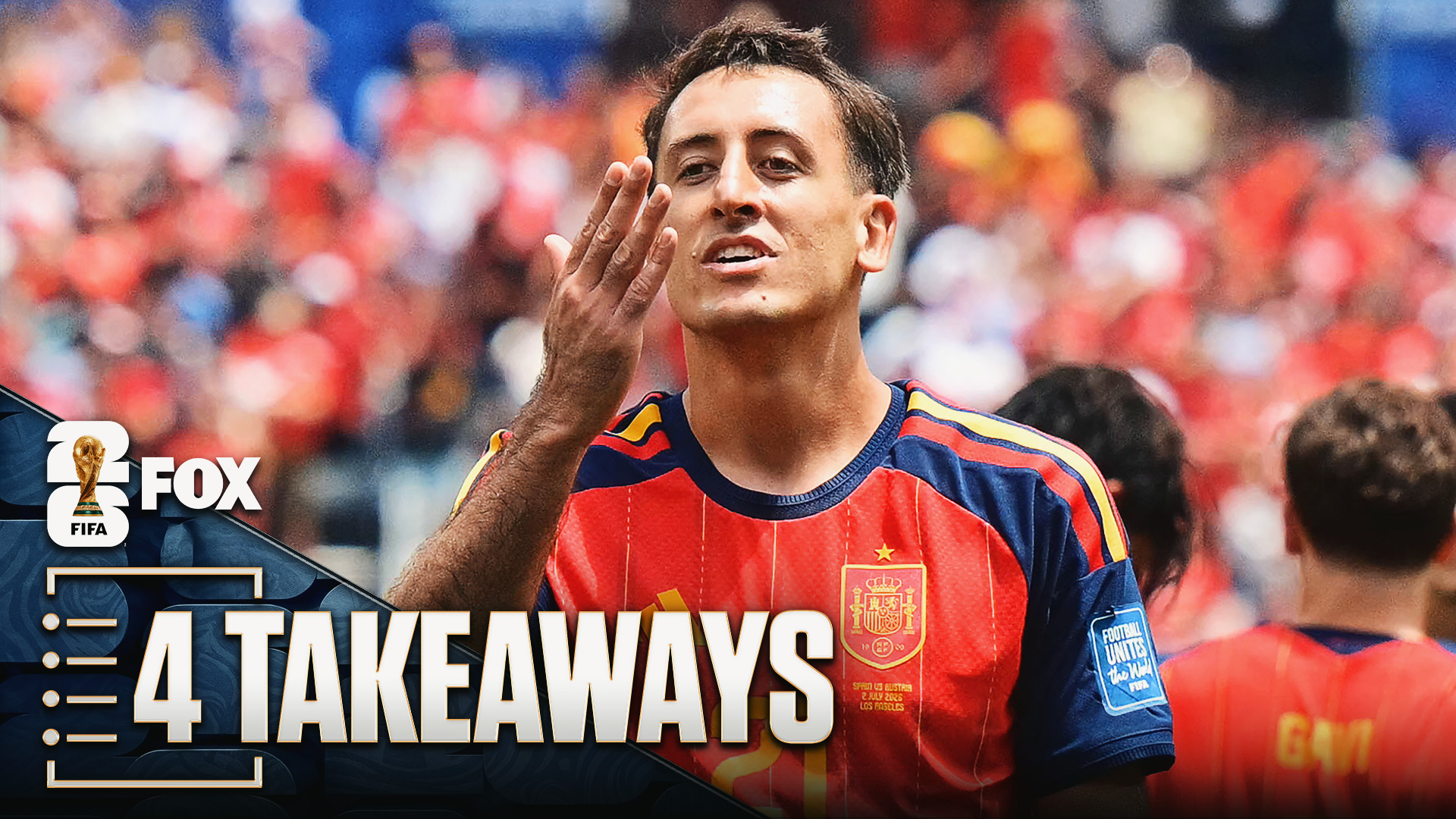
Now this is the Spain we all thought we were getting before the tournament. They kept the ball for fun, and spent 90 minutes in Los Angeles Stadium reminding everyone why they were labeled as co-favorites before a ball was kicked. The 3-0 scoreline flatters Austria. Mikel Oyarzabal opened it, Pedro Porro doubled it, and a late third put a bow on an afternoon that felt less like a knockout tie and more like a training exhibition with 70,000 witnesses. Here are four takeaways from Spain’s march into the last 16: 1. The Sleeping Giant Finally Wakes Up Let’s be honest about the group stage: Spain was dull. A 0-0 draw with Cape Verde in the opener was the kind of result that launched a thousand panicked radio segments in Madrid. Even the wins over Saudi Arabia and Uruguay felt more clinical than convincing. This was different. This was the Spain everyone feared in the pre-tournament projections — 65 percent possession, 23 shots, 10 on target, and a passing rhythm that turned Austria’s midfield into spectators with good seats. Luis de la Fuente’s side didn’t just win; they dictated every phase, every tempo shift, every restart. When a Marc Cucurella goal gets chalked off in the first half and nobody in red even flinches, you know the confidence has arrived. Champions tend to grow into tournaments. Spain just hit a growth spurt. 2. Basque In Mikel Oyarzabal’s Greatness He’s never played for Real Madrid. He’s never played for Barcelona. Mikel Oyarzabal has spent his entire career at Real Sociedad — over 400 appearances, 130-plus goals — and American casuals could walk past him at a Whole Foods without a second glance. Their loss. The 29-year-old came into this tournament having scored 13 goals in his previous 13 internationals, including a run of 12 straight starts with a goal or an assist. Add a brace against Saudi Arabia and Thursday’s opener against Austria, and the man who won Spain the Euro 2024 final is quietly building a Golden Boot case. All summer, the conversation has been Lamine Yamal this, Lamine Yamal that — and with Nico Williams out of form and nursing a leg injury, Spain needed someone else to carry the scoring load. Turns out the guy from the picturesque town of Eibar has been carrying it for a year. 3. No Shame, But Austria Didn’t Help Its Efforts There’s no shame in this for Austria — mostly. Ralf Rangnick’s side made its first World Cup knockout appearance since 1954, and its reward was a date with one of the most complete teams in the tournament. That’s not a tactical failure. That’s the bad luck of the draw. Still, the frustration boiled over. Cameras caught David Alaba and Florian Grillitsch shouting at each other as the game slipped away—the kind of scene that tells you a team knows it’s outgunned and about to go home. Austria managed five shots and not a single one on target, though Marcel Sabitzer’s deliveries deserved better — Sasa Kalajdzic’s header in the 61st minute was inches from making this a very different afternoon. It never came. Bowing out to this Spain side is noble enough. Doing it while arguing with their own teammates is a less flattering visual. 4. Spain’s Fullbacks Are The Cheat Code Everyone plans for Yamal. Nobody really plans for the fullbacks, and that’s exactly how de la Fuente likes it. Cucurella delivered the cross for Oyarzabal’s opener and thought he’d scored one himself before the referee intervened. On the other side, Pedro Porro — starting ahead of Marcos Llorente — arrived unmarked at the back post to head home Alex Baena’s cross for his first international goal. That’s the tactical wrinkle worth watching: while Austria doubled up on the wingers, Spain’s width came from behind them, with Baena drifting inside to create the space. And at the other end? A fourth straight clean sheet. Spain hasn’t conceded a goal at this World Cup. Great teams beat you with their stars. Terrifying ones beat you with their right back.Latest Sports News from FOX Sports
Despite Cristiano Ronaldo’s travails, Portugal heads into tonight’s World Cup knockout match against Croatia as a strong contender to win this year’s tournament. Victory in Toronto tonight would keep it on track for the latter stages — and reinforce a national brand that has consolidated the Atlantic country as a powerhouse far beyond the soccer field.
Portugal is home to just over 10 million people and has a modest economic footprint, but the small European nation has a remarkable track record when it comes to placing its candidates in top posts around the world.
Within the EU, Portugal stands out as having had more of its candidates occupy top institutional posts than any of the bloc’s other member countries. Since 1986, Portuguese citizens have served as president of the European Commission, the Court of Auditors, the Eurogroup, the Committee of the Regions — and former Prime Minister António Costa currently presides over the European Council. There has also been a Portuguese EU ombudsman, a vice president of the European Central Bank and nine vice presidents of the European Parliament.
Beyond the bloc, former Prime Minister António Guterres currently serves as United Nations secretary-general. And just last month the country scored a fresh diplomatic victory by beating out the larger, wealthier and more globally influential Germany to secure one of the vacant, nonpermanent seats on the U.N. Security Council.
According to former Portuguese Secretary of State for Internationalization Bernardo Ivo Cruz, Lisbon’s decision to go after top jobs on the global stage is an existential matter.
“After democracy was restored following the 1974 Carnation Revolution, we realized that our survival as a country depended on multilateralism: we’re too small to guarantee our strategic interests, and those of our citizens, on our own,” he said. “To do that, we needed to guarantee the world remained a place governed by the rule of law.”
The former diplomat said Portugal had worked hard to establish itself as a fair player that is capable of speaking with everyone on equal terms. “Being a small country is actually an advantage, because no one is afraid of us, and that makes us nonthreatening interlocutors,” he noted.
Thanks to its nearly 900-year history, Portugal has long-standing relationships with nearly every other nation. The bonds are especially strong with Portuguese-speaking former colonies like Brazil, Macau and Cape Verde, parts of the world with which Lisbon has worked to forge ties based on equal terms. And those good vibes among allies have been instrumental in having Portuguese candidates confirmed to posts where neutrality and a respect for the rules of diplomacy are paramount.
“The candidates that secure these top posts aren’t supposed to unfairly benefit their home countries,” Cruz noted. “But they benefit Portugal in a broad sense because they defend that multilateralism that benefits all countries, including our own.”
The matter, he added, was taken so seriously in Portugal that the country’s politicians had a habit of backing their candidates for international posts no matter what their politics might be.
“Our stance is that we never mix up internal drama with things happening beyond our borders,” he said. “You may hate someone in Lisbon, but the moment they’re up for an important post it becomes a matter of defending the interests of the state, and personal issues have no relevance there.”
Beyond political institutions like the U.N. or the European Council, Cruz said Portugal had a vested interest in the kind of soft diplomacy that plays out in sporting events like the World Cup.
“Evidently, if we end up winning this match, it only reinforces our country’s international prestige, and is a cause for celebration,” But, he added, “whatever happens, I think this edition of the World Cup is turning out to be a success for everyone.”
“Rather than hooliganism, what we’ve seen are the Scots marching through U.S. cities with their bagpipes and kilts, the Norwegians delighting American spectators with their rowing rituals,” he noted. “At a moment of such immense global tension, we all win by having this competition be defined by friendly celebration.”
Indeed, in much the same way that the small European nation is a force to be reckoned with when it comes to football, it also punches far above its weight in terms of broad international influence.
Politics

One Landman star will now make as much as Billy Bob Thornton. Continue reading…Country Music News – Taste of Country
One Landman star will now make as much as Billy Bob Thornton. Continue reading…The Boot – Country Music News, Music Videos and Songs
BELGRADE, Serbia — When Croatian supporters flooded Toronto and Philadelphia this summer, draping city halls in the red-and-white checkerboards found on the Croatian coat of arms and belting out one power ballad after another, the loudest songs, as always, belonged to Marko Perković.
“He’s become an inseparable phenomenon anytime Croatia plays or participates in any kind of competition, especially sporting events,” said Hrvoje Klasić, the leading Croatian historian focused on the legacy of World War II.
“People both at home and abroad view him as synonymous with love for one’s country,” he continued.
Better known as Thompson, after the submachine gun he carried in the Balkan wars of the 1990s, he is the country’s most popular singer — and its most enduring embarrassment.
Croatian fans have made his song, “Lijepa Li Si,” the unofficial anthem of the team and a fixture at every match, a song whose chorus salutes the wartime Croat statelet in Bosnia whose leadership was convicted of war crimes.
Thompson’s wider catalog is more explicit still. One track opens with “Za dom spremni,” the salute that functioned as Croatia’s answer to “Sieg Heil” during the World War II Ustashe regime.
In the past, his concerts have been banned or canceled in the Netherlands, Switzerland, Slovenia, Austria and Germany.
None of this is fringe within Croatia, however. Last summer Thompson drew more than 500,000 people to a single Zagreb concert, the largest in the country’s history, where fans chanted the same Ustashe slogan while the authorities looked away.
In 2018, when Croatia nearly won the World Cup, the second-placed team was welcomed back with Thompson aboard the victory bus and star midfielder Luka Modrić personally asking for him to perform.
Croatia has spent three decades declining to reckon with the Ustashe past, treating the fascist puppet state’s symbols as heritage rather than crime.
Across post-communist Europe, the end of the Cold War brought a wave of historical revisionism, as nations that felt their identity had been suppressed under communism recast neo-Nazi and far-right figures as patriots. Hungary, Ukraine and the Baltic states, as well as Croatia, have all made a version of this bargain, folding once-condemned nationalists into their modern national myths.
“These nations believe they were robbed of their national identities in the past century or are dissatisfied with their country’s present achievements, so they reach back into the past for themes from a more distinguished past,” Klasić concluded.
Politics