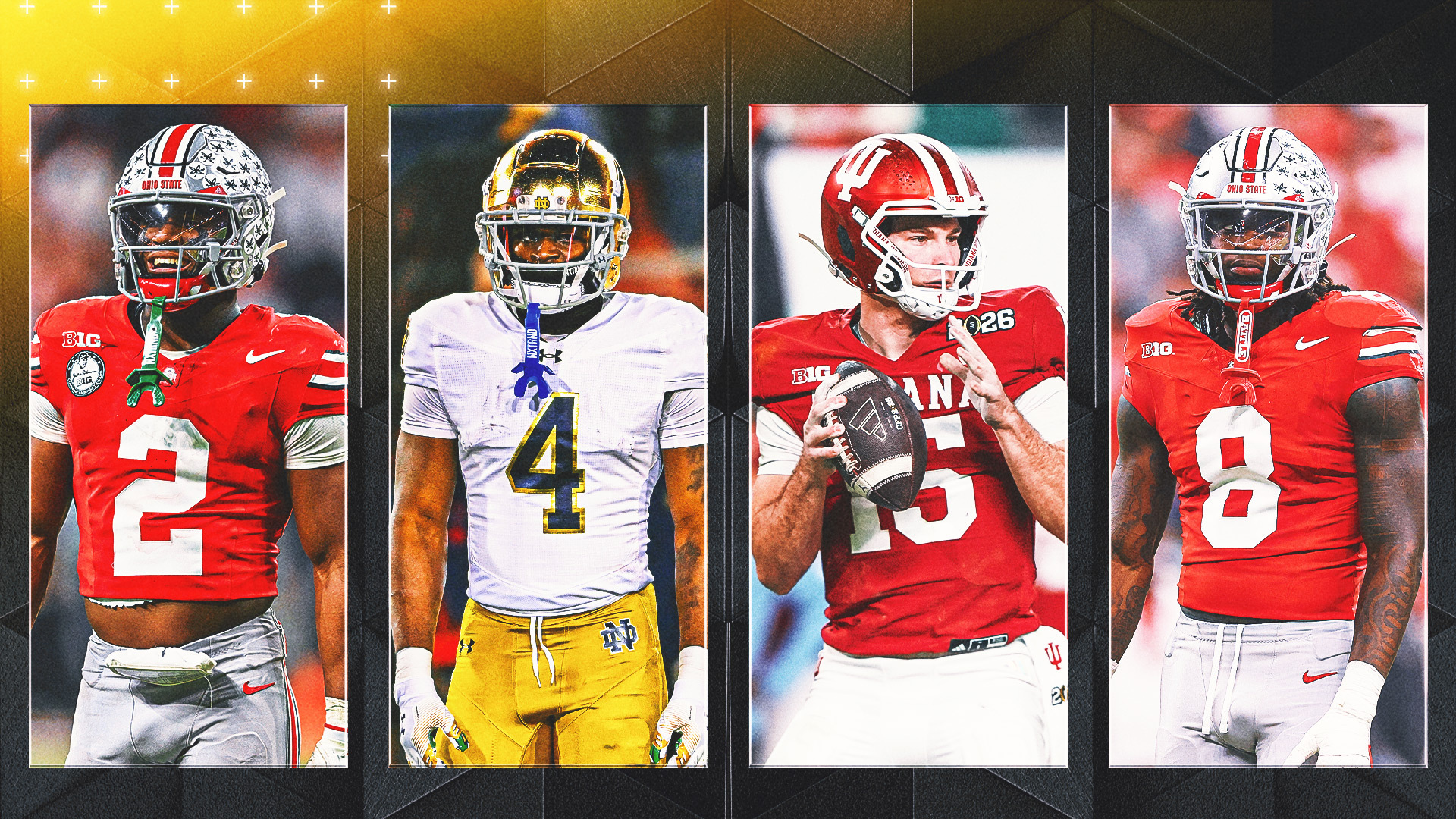
The top-end talent available in the 2026 NFL Draft falls short in comparison to prior years, but I like the depth of this class throughout the first 100 picks — at least at certain positions. The offensive line, defensive line, defensive backfield and wide receiver are the four strongest position groups, with each featuring enough starter-caliber prospects to last until deep into Day 2. With the Scouting Combine in the rearview and Pro Days now in session, here is how I currently rank the best 100 prospects of the 2026 NFL Draft. 100. Jimmy Rolder, ILB, Michigan Showing Jedi-like instincts and picture-perfect tackling technique, Rolder jumped from 26 tackles as a reserve in 2024 to leading the team in stops in 2025. Run-stuffers like Rolder aren’t as valued in today’s pass-happy NFL so it’s possible he slips into Day 3, but I see a future starter who will ultimately outplay his draft slot. 99. Romello Height, Edge, Texas Tech At 6-foot-3, 239 pounds, Height lacks ideal size for the edge, but he’s sudden and slippery, winning with a variety of dips and spins to efficiently get past would-be blockers and quickly close on the quarterback. 98. Sam Roush, TE, Stanford In a class full of pass-catching specialists at tight end, Roush is a legitimate “Y” with the size (6-6, 267), strength, smarts and athletic bloodlines to project as a quick contributor. 97. Wesley Williams, Edge, Duke Stubby arms (31 7/8″), average speed (4.89) and meager sack production in 2025 (two sacks) could cause some to overlook Williams, but he plays with the anticipation, intensity and violence that will keep him in the NFL for a long time. 96. Carson Beck, QB, Miami In some circles, Beck might be better known for his mistakes than his successes, but he’s battle-tested, a gifted natural passer and offers prototypical size. He is one of the few quarterbacks in this draft class with realistic starting potential, justifying a Day 2 investment. 95. Jude Bowry, OL, Boston College Bowry struggled with injuries throughout much of his four years at BC, but he was voted a team captain in 2025 and he offers an NFL-caliber combination of size and athleticism. He is my favorite of the so-called second-tier OTs in this class and may very well prove better in the NFL than he was in college. 94. VJ Payne, S, Kansas State Scouts can check a lot of boxes with Payne, a team captain and 42-game starter who boasts an exceptional size/speed combination and proven track record for generating turnovers. 93. Tacario Davis, CB, Washington An injury-plagued 2025 campaign may have kept Davis off the media radar, but he’s well-known by NFL scouts. The uniquely-built 6-foot-4 corner offers the 4.41 speed and hand-eye coordination to corral receivers off the line and at the catch-point. 92. Kage Casey, OG, Boise State Stopwatches at the Combine suggest that Casey is sluggish, but his tape shows good initial quickness and serious pop on contact — traits that I think will suit the college left tackle best inside at guard. 91. Malik Muhammad, CB, Texas The 6-0, 182-pound Muhammad might have a slight frame, but his long arms (32 3/8″), light feet and route anticipation make up for it — as does his experience playing against top competition. 90. Mason Reiger, Edge, Wisconsin Long and lean for the position but highly physical and a more nuanced rusher than his 13 career sacks might suggest, I think Reiger’s best football is still ahead of him. 89. Adam Randall, RB, Clemson The 6-foot-3, 232-pounder spent his first three years at Clemson as a receiver, but flourished in 2025 at tailback, showing impressive vision and toughness between the tackles, as well as power and surprising slipperiness to create yards after contact. 88. Germie Bernard, WR, Alabama Bernard isn’t the biggest or fastest receiver in this class, but he shifts gears well to create separation and possesses soft, strong hands to pluck outside of his frame, offering a nuanced skill set that projects nicely to the NFL. 87. Domonique Orange, DT, Iowa State Appropriately nicknamed “Big Citrus,” Orange uses his round frame and long (33 3/8″) arms to stack and shed opponents at the line of scrimmage. Unfortunately, he provides little “juice” as a rusher, recording just one sack in 50 college games. 86. Zakee Wheatley, S, Penn State He boasts prototypical size (6-2, 200) and excellent ball skills (six INTs among 12 career PBUs), but Wheatley must improve his open-field tackling. 85. Deion Burks, WR, Oklahoma Topping out at 629 receiving yards (and that was at Purdue in 2023), Burks never dominated in college like his timed speed (4.30 in the 40-yard dash) and strength (his 26 reps tied for the most among receivers) would suggest. But it is hard to imagine some NFL team not gambling a Day 2 pick on his upside. 84. Jake Golday, ILB, Cincinnati A moveable chess piece at nearly 6-foot-5, 239 pounds, Golday is a former edge rusher whose agility and speed have allowed him to excel at off-ball linebacker. He’s raw yet fast and physical. 83. Sam Hecht, C, Kansas State Quick as a hiccup with the low center of gravity well-suiting to his position, Hecht isn’t overpowering. But his agility and play-through-the-whistle mentality suggest a long NFL career. 82. Jaishawn Barham, Edge, Michigan Barham spent much of his career at Michigan (and previously at Maryland) as an off-ball linebacker, but he possesses projectable twitch and core flexibility to attack off the edge. 81. Logan Jones, C, Iowa An athletic technician who overcomes middling size and strength, Jones pounces out of his stance to stalemate DTs, projecting as a longtime NFL starter in a zone scheme. 80. Josh Cameron, WR, Baylor While Cameron is a couple inches taller, it is easy to see some shades of Deebo Samuel in the Baylor product’s game, as both are essentially running backs in a receiver’s body, bullying opponents with their long arms, strong hands and ultra physical style. 79. Joshua Josephs, Edge, Tennessee Josephs is currently a one-trick pony speed rusher, but he’s so sudden off the snap and has some of the longest arms (34 ¼”) in this class, which have helped him generate nearly as many pass breakups (nine) and forced fumbles (six) as sacks (9.5). 78. Michael Trigg, TE, Baylor A loose and fluid athlete with long arms, Trigg boasts intoxicating upside, but he’s sushi-raw as a route-runner and blocker with a lot of concentration drops on tape. 77. Antonio Williams, WR, Clemson With 25 combined touchdowns (21 as a pass-catcher, two as a runner, two as a passer) in 43 career games at Clemson, Williams has a proven big-play knack, showing impressive spatial awareness, body control and soft hands to make difficult plays look routine. 76. Keylan Rutledge, OG, Georgia Tech Teams prioritizing finishers up front will love Rutledge, a three-year All-ACC selection and bar-room brawler of a right guard with good athleticism and cinder blocks for hands. 75. Zxavian Harris, DT, Mississippi The massive 6-foot-8, 330-pound Harris is a polarizing prospect among scouts, as he loses leverage at the snap with too much of his production coming downfield. But his ability to play up and down the line of scrimmage and block kicks (six over his career) will have some team gambling on him with a Day 2 pick. 74. Garrett Nussmeier, QB, LSU A propensity for risky throws and an injury-marred senior campaign are clear red flags, but Nussmeier has the grit, smarts and arm talent required for NFL success. He may never prove to be a frontline starter in the NFL, but he should carve out a long career, justifying a Day 2 selection. 73. Bud Clark, S, TCU Teams will have to weigh the pros (elite ball skills) versus the cons (spindly 6-foot-1, 188-pound frame) with Clark. His awareness, agility and soft hands he showcased at the Senior Bowl suggest he’ll soon be starting in the NFL. 72. Trey Zuhn III, C, Texas A&M Zuhn started four years at left tackle for the Aggies, but his square-ish frame will push him inside in the NFL, where his short area quickness and the pop he generates on contact project him as a longtime starter at this level, as well. 71. Gennings Dunker, OL, Iowa With his long red hair, Dunker enjoyed more airtime during the Combine than some quarterbacks, but his game is built more on power and nastiness than athleticism, which is why the career right tackle might be pinched inside in the NFL. 70. Davison Igbinosun, CB, Ohio State A four-year starter at Ohio State (and Mississippi), the 6-foot-2, 189-pounder has a high-cut frame that leaves him vulnerable to shifty route-runners. Still, he closes quickly and confidently against both the pass and run, projecting best as a press corner in the NFL. 69. Jalon Kilgore, S, South Carolina The team that invests a Day 2 selection on Kilgore is banking on upside — and he offers plenty of that given his prototypical size and athleticism — but there are more lapses in coverage and missed tackles than his flashy highlight reels would suggest. 68. Brian Parker II, OL/C, Duke My favorite of this year’s projected position switchers, Parker is a three-year starting right tackle whose burly frame, core strength and underrated athleticism project best inside at the next level. 67. Chris Brazzell II, WR, Tennessee In size and style, Brazzell reminds me a lot of Bengals star Tee Higgins, towering over cornerbacks with an imposing 6-foot-4 frame. But it his rare burst off the snap that separates him from most taller vertical threats. 66. Tyler Onyedim, DT, Texas A&M Don’t let the fact that Onyedim generated just 5.5 sacks in 53 games at Texas A&M (and Iowa State) fool you, his first-step quickness, core flexibility and long arms make him one of this year’s most disruptive defensive tackles. 65. Emmanuel Pregnon, OG, Oregon A classic mauler whose square-ish 6-foot-4, 314 pound frame is seemingly all shoulders and thighs, Pregnon is one of the few true guards who projects as a Day 1 NFL starter. 64. Keyron Crawford, Edge, Auburn A late comer to the game who only switched from basketball to football as a senior in high school, Crawford needs to locate the ball quicker and learn to use his hands better to fend off blockers. But few in this class offer his zip and efficient change of direction off the edge. 63. Keionte Scott, DB, Miami If he weren’t such an instinctive, passionate football player, Scott could make it as a travel guide, starring at Snow Junior College, Auburn and Miami, where’s he’s played safety, linebacker, nickel, cornerback and punt returner. I like him best at big nickel, where his instincts and physicality should shine brightest. 62. A.J. Haulcy, S, LSU Feast or famine personified, Haulcy promises to be one of the more polarizing defenders of this class as he’s decisive and a heavy hitter but also hyper aggressive and prone to missed tackles. 61. Malachi Fields, WR, Notre Dame Clocking at a sluggish 4.61 seconds in the 40-yard dash and corralling just 36 catches for 630 yards and five touchdowns last year for Notre Dame, Fields won’t be for everyone. But the imposing 6-foot-4, 219-pounder offers the physicality, sure hands and surprisingly sharp route-running that project well as a traditional X receiver. 60. Emmett Johnson, RB, Nebraska Johnson may lack the top-end speed to consistently beat NFL defenders to the edge, but he earns high marks in some of the traits I think are even more important for success at the next level: lateral agility to make defenders miss in tight spaces, as well as both the vision and burst to attack cutback lanes. 59. R Mason Thomas, Edge, Oklahoma Reminiscent of another former Sooner — Broncos star Nik Bonitto — Thomas personifies the often-used scouting expression of “converting speed to power,” routinely forcing would-be blockers onto their heels and off-balance with an explosive burst and then bull-rushing them through the chest on a direct route to the ballcarrier. 58. Lee Hunter, NG, Texas Disappointing workout results might have highlighted some of Hunter’s athletic limitations, but the big man dominated in the trenches during Texas Tech’s playoff run, as well as at the Senior Bowl, winning with a stunning combination of explosive first step quickness and overwhelming brute strength. 57. Connor Lew, C, Auburn A baby-faced 20-year-old who opted for the 2026 NFL Draft despite tearing his ACL in October, Lew nevertheless looks the part of a decade-long NFL starting center, offering an ideal blend of size, balance, agility and already grown-man strength. 56. Derrick Moore, Edge, Michigan In a class full of Swiss Army knife rushers, the 6-foot-4, 255-pound Moore is the hammer, utilizing a pro-caliber bull rush to bully would-be blockers on his way to the quarterback, generating 10 sacks in 12 games for Michigan in 2025. 55. Eli Stowers, TE, Vanderbilt A former quarterback who is built more like a receiver than a traditional tight end, Stowers’ tape is full of highlight reel plays and his Combine workout was one of this year’s best. He needs to get stronger, but Stowers projects as a matchup monster out of the slot and wing in the NFL, warranting top-50 consideration. 54. Omar Cooper, Jr., WR, Indiana A talented pass-catcher in a running back’s body, Cooper is at his best out of the slot, where he can bully undersized nickel cornerbacks, generating consistent yardage after the catch. 53. Keith Abney II, CB, Arizona State Everything about the 5-foot-10, 187-pound Abney looks average except his tape — he’s among the most tenacious and competitive players in this class. 52. Josiah Trotter, ILB, Missouri A downhill thumper with a unique frame, closing speed and NFL bloodlines, Trotter — who won’t turn 21 until April — has the look and energy of a longtime starting middle linebacker. 51. Malachi Lewis, Edge, UCF With five-plus sacks each of the past three seasons, Lewis pairs production with exciting traits, including an explosive get-off, long arms and rare closing burst. 50. Dani Dennis-Sutton, Edge, Penn State He is among the handful of prospects to surge on my latest board, proving at the Combine that his stellar production in college was due not only to refined technique but underrated athleticism. Consider Dennis-Sutton one of this year’s biggest winners at Lucas Oil Stadium. 49. Zachariah Branch, WR, Georgia Branch is likely going to generate some Tyreek Hill comparisons during the pre-draft process, powered by the 4.35 speed he demonstrated at the Combine. Like Hill, Branch is at his best as a vertical threat or in the quick game, offering the kind of instant spark to a passing attack that only elite speed can provide. 48. Mike Washington Jr., RB, Arkansas Few boosted their stock at the Combine more than the burly Washington, whose 4.33-second 40-yard dash time not only was the fastest among all running backs, it was the fastest among any player weighing over 220 pounds. In a relatively weak year for running backs, Washington’s elite size-speed combination warrants top-50 consideration. 47. Christen Miller, DT, Georgia Miller elected not to participate in the timed drills at the Combine, but he’s just too good of a player to not include on this list. I don’t see a flashy athlete, but he has prototypical size (6-foot-4, 321 pounds) for blue collar run-stuffing duties. Miller’s length, strength and grit suggest that he’ll stick around in the NFL for a decade or more. 46. D’Angelo Ponds, CB, Indiana I’m less confident that undersized defenders such as Ponds will be among the first 50 players drafted than I am about him ultimately proving he should’ve been. At just 5-foot-9, 173 pounds, Ponds has obvious limitations, but he’s pound-for-pound the most physical and instinctive DB in this class with 33 pass breakups — including seven interceptions — in three standout seasons at the collegiate level. 45. Kyle Louis, OLB, Pittsburgh At just 5-foot-11, 224 pounds, Louis won’t be a fit for everyone. But, frankly, I think that’s a mistake. Louis is highly instinctive with lightning-quick closing speed. He is a proven big-play magnet with 24 tackles for loss, 10 sacks and six interceptions over the past two seasons. 44. Chase Bisontis, OG, Texas A&M An athletic 6-foot-5, 315-pounder, Bisontis looks and moves like a tackle — he even earned freshman All-American honors at right tackle back in 2023. He played even better inside at left guard the past two years, showing the initial quickness and agility to fit best in a zone-blocking scheme. 43. Jacob Rodriguez, ILB, Texas Tech More decorated than a wedding cake after winning the Bronko Nagurski, Chuck Bednarik and Butkus Awards, Rodriguez arguably should’ve been on this list even before a terrific showing at the Combine. But I certainly won’t make the mistake of excluding him after he erased any doubts about his pure athleticism in Indy. 42. Jadarian Price, RB, Notre Dame As demonstrated with his 4.49 time in the 40-yard dash, Price isn’t the athletic phenom that will earn fellow Notre Dame product Jeremiyah Love a top 10 pick. But he’s actually the more fundamentally sound running back, showing a future NFL bell cow’s blend of vision, burst and contact balance. He’s also one of this year’s most dynamic returners, taking back three kickoffs for touchdowns in just 22 opportunities. 41. Blake Miller, OT, Clemson Miller isn’t as agile or powerful as some of the top-rated tackles higher on my board, but as a rare four-year starter who faced elite competition every day in practice, he’s as safe as a Subaru. Miller has a somewhat gangly frame and upright stance that isn’t always the most aesthetically pleasing, but he’s quick, smart and has excellent hands to steer and sustain. 40. T.J., Parker, Edge, Clemson Like several of his former Clemson teammates, Parker was the victim of his own success, struggling to live up to expectations in 2025 after a dominant 2024 campaign that included 19.5 tackles for loss, 11 sacks and an FBS-leading six forced fumbles. He’s a functional, rugged edge defender whose game is built more on torque than twitch. 39. Caleb Lomu, OT, Utah Quick and coordinated, it was Lomu — and not his more celebrated teammate Spencer Fano — who started the past two seasons at the critical left tackle position for the Utes. Just a redshirt sophomore still growing into his frame, Lomu is currently a better pass protector than run blocker, but he has a bright future if he commits to the weight room. 38. Akheem Mesidor, Edge, Miami As a sixth-year collegiate athlete, Mesidor (24) was literally a man amongst boys for Miami a year ago, leading the ACC with 10.5 sacks and forcing four fumbles. He wins in more ways than perhaps any rusher in this class, pairing impressive physical traits such as burst, bend and power with refined hand play and nuanced counter moves. 37. Zion Young, Edge, Missouri Young capped a terrific week of Senior Bowl practice by being named the National team’s Player of the Game. At a rocked-up 6-foot-5 and 262 pounds, Young isn’t as explosive off the ball as some of the undersized pass-rush specialists listed earlier, but he is a passionate and physical tone-setter at the line of scrimmage. 36. Emmanuel McNeil-Warren, S, Toledo The ability to create turnovers is like catnip to football scouts, and few in this class offer a more tantalizing track record of that than the lanky, hard-hitting McNeil-Warren, who enters the NFL with nine forced fumbles and five interceptions in his career. 35. Brandon Cisse, CB, South Carolina Cisse has all the traits to become a quality NFL starter — including a prototypical blend of size, speed and physicality in run support. His occasional mistakes on tape seemed coachable, and with Cisse not turning 21 until July, the expectation is that he’s just scratching the surface. 34. Max Iheanachor, OT, Arizona State A native Nigerian who grew up playing soccer and basketball, Iheanachor is a 6-foot-5, 325-pound investment for the future who seemingly just needs time to master the nuances of the position. His easy movement skills and natural power turned heads at both the Senior Bowl and the Combine. 33. Kayden McDonald, NG, Ohio State At 6-foot-3, 326 pounds, McDonald is every bit the run-plugger his frame suggests, complementing his dense, powerful frame with excellent balance and spatial awareness. He isn’t going to ever lead the NFL in sacks, but he’s no slug against the pass, either, showing effort, power and surprisingly quick feet to play all three downs. 32. Ty Simpson, QB, Alabama Simpson, a former 5-star recruit, torched the SEC for 28 touchdowns and a conference-leading 3,567 yards in his lone season as a starter in Tuscaloosa, showing the pro-caliber accuracy to project as a future NFL starter. The traits were obvious during the throwing session at the Combine, all but cementing his position as the No. 2 quarterback in this class. Simpson has a quick release, plenty of zip and excellent touch to make every NFL throw — but there were some “deer in the headlights” moments on his tape. Moreover, the track record of quarterbacks selected in the first round with 20 or fewer starts (Simpson has 15) is a bright red flag. 31. Chris Johnson, CB, San Diego State Johnson was named the Mountain West Conference’s Defensive Player of the Year in 2025, taking two of his four interceptions back for scores. A technician with excellent route awareness, he erased any doubts about his pure athleticism in precisely 4.40 seconds at the Combine. 30. Gabe Jacas, Edge, Illinois Using a blend of physicality and instincts that translates well to the pro game, Jacas led the Big Ten with 11 sacks and three forced fumbles in 2025 before delivering a stellar performance at the Senior Bowl. Jacas may lack the twitch of some of this year’s top pass-rushers, but I see shades of a young DeMarcus Lawrence in Jacas’ game. 29. CJ Allen, ILB, Georgia Many of the top off-ball linebackers in this class are hybrid-types with limited experience taking on and shedding blockers in the hole. Allen isn’t flashy, but he’s as close to a Day 1 starting middle linebacker as this class has to offer. He’s smart, stout and just scratching the surface of his potential at just 20 years old. 28. Denzel Boston, WR, Washington The whole point of playing receiver is to catch touchdowns, and with 20 TDs over the past two seasons, Boston is the most prolific scorer of this year’s top wideouts. He should be able to continue this red zone mastery in the NFL, using his 6-foot-4, 209-pound frame, timing, body control and strong hands to win above the rim. 27. Cassius Howell, Edge, Texas A&M Stubby (30 1/4-inch arms) and less explosive (32.5-inch vertical jump) than expected, Howell slips down my board a bit after a disappointing Combine. But he remains one of my favorite prospects in this class because of his slipperiness off the edge and ability to drop into coverage. If Howell falls to the latter portion of the first round, some playoff contending club is going get a steal. 26. Avieon Terrell, CB, Clemson Nickel cornerbacks have never been more in demand, and Terrell is my favorite among them in this class. The NFL legacy plays significantly above his weight class (180 pounds), averaging 50 tackles over the past two seasons and generating eight forced fumbles during that span, including an ACC-best five this past year. 25. Dillon Thieneman, S, Oregon Typecast as a highly instinctive player who played fast, Thieneman proved at the Combine that he possesses elite athleticism to go with his diagnostic skills and soft hands, running the 40-yard dash in 4.35 seconds (with a 1.52 10-yard split) and generating an explosive 41-inch vertical jump. Thieneman has the look of an “easy” first-round pick at this point and a decade-long NFL starter. 24. Anthony Hill Jr., ILB, Texas Hill was asked to play many roles during his three years at Texas, spanning from edge rusher to inside linebacker to even nickel cornerback. That fact speaks to Hill’s football IQ. The tape shows uncommon agility for a 6-foot-3, 240-pound linebacker, as well reliable open-field tackling skills. 23. Colton Hood, CB, Tennessee Hood travels as well in the hip pocket of receivers as he does in the transfer portal, bouncing from Auburn to Colorado to Tennessee over the past three years before entering the draft at just 20 years old. He is an easy mover with impressive awareness of the ball and in run support, as well as a legitimate playmaker with touchdowns scored via interception and fumble recoveries. 22. Peter Woods, DT, Clemson Similar in some ways to Auburn’s Keldric Faulk, Woods is young (he’ll turn 21 in March), powerful and athletic, with his best football still ahead of him. He pairs his hands and feet well for such a young player, offering more to affect the quarterback than his five sacks in 35 college games might suggest. 21. KC Concepcion, WR, Texas A&M With 28 combined rushing and receiving scores in 38 career games at Texas A&M and North Carolina State, Concepcion is easily the top point producer of this year’s standout receiver class. Concepcion’s given name is Kevin, but KC is his preferred nickname and it better describes the silky-smooth athleticism he uses to consistently create space. 20. Kadyn Proctor, OL, Alabama It isn’t often that a man listed at 366 pounds can be described as muscular, but Proctor boasts as power-packed of a frame as you’ll see. What you see is what you get with Proctor, a bar-room brawler whose girth and power could ultimately push him inside to guard. 19. Jordyn Tyson, WR, Arizona State Simply put, Tyson has the best tape of this year’s receiver crop. It isn’t often that receivers of his size, twitch and tracking skills come around. Tyson is a case of “buyer beware,” however, as he has missed multiple games because of injuries in each of the past three seasons. 18. Kenyon Sadiq, TE, Oregon As demonstrated with one of the greatest workouts from a tight end in Combine history, Sadiq is cut from a different cloth than most players at his position, possessing a squatty 6-foot-3, 240-pound frame and a rare combination of explosive athleticism and physicality. There are bright flashes on his tape as a pass-catcher, but he’s already an NFL-caliber blocker, showing excellent leg drive and grip strength to control opponents. 17. Olaivavega Ioane, OG, Penn State At a dense 6-foot-4, 328 pounds, Ioane is perfectly built for the battles in the trenches, absorbing would-be rushers with his broad frame and heavy hands. While possible tackle converts could ultimately be drafted earlier, Ioane is the consensus top-rated “pure” interior offensive lineman of this class. 16. Jermod McCoy, CB, Tennessee McCoy’s first two college seasons (at Oregon State and Tennessee, respectively) were so impressive that he maintained a first-round grade on my board even after missing the entire 2025 season with an ACL injury. When healthy, McCoy is a smooth cover corner with terrific ball skills, breaking up 16 passes (with six interceptions) over that span. 15. Makai Lemon, WR, USC Lemon reminds me a lot of Golden Tate, a dynamic run-after-the-catch weapon who played 11 years in the NFL. Like the 5-foot-11, 197-pound Tate, Lemon is a difficult matchup for cornerbacks because of a compact, almost RB-like frame to go with dynamic speed and top-notch ball skills. 14. Caleb Banks, DT, Florida Pardon the pun, but Banks has made a lot of money in the past two months, dominating at the Senior Bowl after missing seven games this year due to a fractured foot that required surgery. Standing a massive 6-foot-6, 335 pounds, with 35-inch arms and 10 3/4-inch hands, Banks is simply bigger than most trying to block him, and he can simply rag-doll blockers at times. 13. Monroe Freeling, OT, Georgia With a steady stream of NFL blockers ahead of him on Georgia’s depth chart, Freeling had to wait his turn before seeing the field in Athens, starting just 16 games before heading early to the NFL. But there isn’t a blocker in this class who looks the part of an NFL left tackle more than the loose and long 6-foot-7, 315-pound Freeling. 12. Keldric Faulk, DL, Auburn If scouts were asked to draw up the ideal defensive lineman for today’s NFL, it might look a lot like the long-armed 6-foot-6, 285-pound ball of clay that is Faulk, whose size, strength and smooth athleticism offer great positional and schematic flexibility. As one of the youngest players in this class (he won’t turn 21 until September), Faulk is still growing into his frame and will need to get stronger to fulfill his potential, but he possesses the physical traits and intangibles to become one of the best players in this draft. 11. Carnell Tate, WR, Ohio State Receiver is one of the better positional groups of this year’s draft class, and Tate tops it because of his ability to win in multiple ways. The 6-foot-3, 195-pounder has excellent body control, hand-eye coordination and grit to pull in contested passes, and he’s surprisingly slippery as a route-runner with excellent tracking skills. 10. Mansoor Delane, CB, LSU Cornerback may just be the strongest positional group of this draft, and Delane tops it by a wide margin for me. He is a terrific man-to-man cover corner, showing easy change of direction and smooth acceleration to shadow receivers all over the field. He didn’t allow a single touchdown pass in 2025. 9. Spencer Fano, OT, Utah A dancing bear at 6-foot-6, 310 pounds, Fano looks and moves more like a tight end than a traditional offensive lineman, excelling in pass protection because of his initial quickness, lateral agility and balance. I thought his positional workout at the Combine was one of the best of any player, regardless of position. 8. Sonny Styles, OLB, Ohio State A former safety-turned-linebacker who might evolve into an edge rusher, Styles is the ultimate ball of clay from this draft class. He was arguably the biggest star of the Combine, posting a remarkable 43.5-inch vertical jump and 4.46-second time in the 40-yard dash at 6-foot-5, 246 pounds. His rare size and agility could allow his future defensive coordinator to move Styles around similarly to how the Seattle Seahawks employed star rookie Nick Emmanwori in their Super Bowl run. 7. Rueben Bain Jr., Edge, Miami It is appropriate that Bain rhymes with pain, as there isn’t a prospect in this class who plays with more violence than the three-year Miami standout. He enters the NFL with 33.5 tackles for loss generated in 38 collegiate games. Bain’s relatively stubby 6-foot-3, 270-pound frame will be a talking point in every NFL war room, but teams shouldn’t make the mistake of overthinking his fit. 6. Francis Mauigoa, OT, Miami Arguably the most powerful and pro-ready prospect in this draft class, Mauigoa simply engulfs opponents with his sheer size and iron grip, reminding me of another Mario Cristobal pupil, Detroit Lions All-Pro Penei Sewell. Facing a vaunted Miami pass rush every day in practice, Mauigoa has the look of a decade-long anchor at right tackle. 5. David Bailey, Edge, Texas Tech Simply put, Bailey is the best pass-rusher in this class, boasting a terrific blend of burst, lateral agility and core flexibility to force whiffs from would-be pass protectors. The concern some will have is that at 6-foot-3, 250 pounds, Bailey lacks the size and power to be as effective in the running game, but that shouldn’t keep one of the few true matchup nightmares in this class from earning a top-10 selection. 4. Fernando Mendoza, QB, Indiana Mendoza doesn’t possess the strongest arm of this class, nor is he the most dynamic running threat. He is, however, the consensus top quarterback, offering an exceptional blend of anticipation, accuracy and poise to project as a longtime, high-level NFL starter. 3. Jeremiyah Love, RB, Notre Dame With all due respect to Heisman Trophy winner and likely No. 1 pick Fernando Mendoza, Love is the best offensive prospect in this class — and frankly, I don’t think it’s particularly close. Love isn’t just the best back in this class; he’s among a select handful of the elite runners to enter the NFL since I began scouting a quarter-century ago, offering a blend of size, quick feet and breakaway speed reminiscent of recent blue-chip backs Saquon Barkley and Bijan Robinson. 2. Arvell Reese, OLB, Ohio State A blue-chip talent who starred mostly as an off-ball linebacker at Ohio State but possesses the twitch to attack off the edge, Reese is arguably the best prospect in this class. In terms of sheer athleticism, versatility and career trajectory, I see an awful lot of similarities between Reese and another former Big Ten star you might have heard of: Micah Parsons. 1. Caleb Downs, S, Ohio State Sometimes scouting is easy. Whether at Alabama or Ohio State, Downs’ instincts, closing speed and reliable open-field tackling consistently shined, forecasting for years that his pathway to the NFL would come as a first-round pick. Downs won’t be the first player selected this year — safeties just aren’t valuable enough. But make no mistake, Downs comes with the highest floor, projecting as an immediate starter and foundational piece for one fortunate franchise.Latest Sports News from FOX Sports