The tour just keeps getting bigger! Continue reading…The Boot – Country Music News, Music Videos and Songs









The tour just keeps getting bigger! Continue reading…The Boot – Country Music News, Music Videos and Songs

 Ashe wasn’t wasting her night out and wearing her heart out over these romance rumors.
Nearly three months after the singer released her track “Stop The Wedding,” she addressed speculations that…
E! Online (US) – Top Stories
Reading Time: 3 minutes
In Hollywood and beyond, factors like race can hold someone back from greater success.
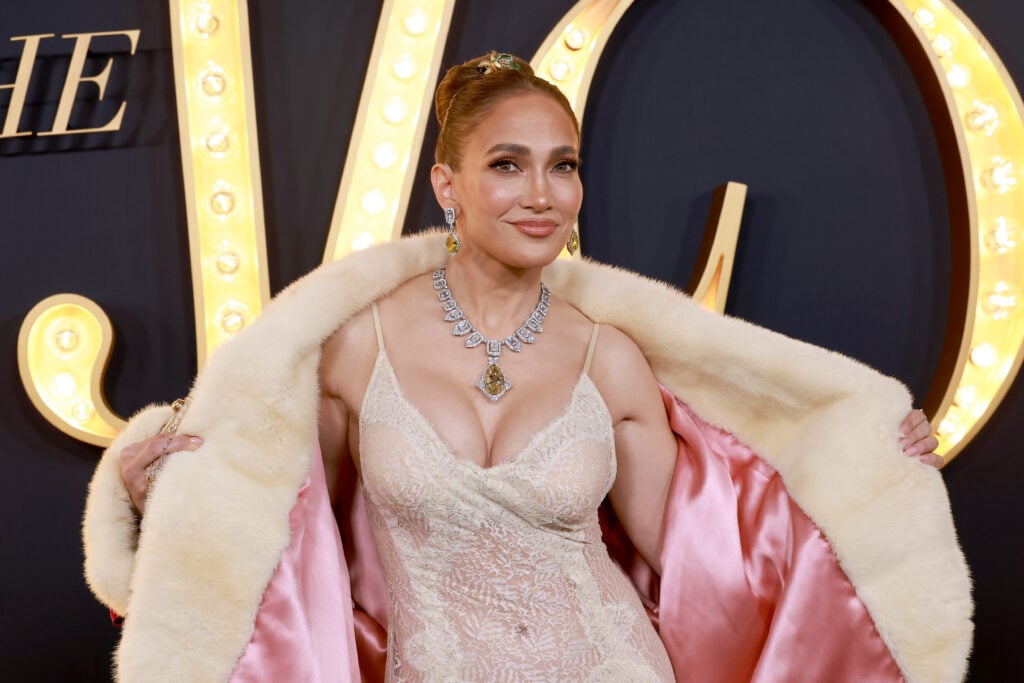
But is Jennifer Lopez, the first Latina actress to earn $1 million for a movie role, an example of this?
She thinks so.
Lopez received online backlash for saying this. But is she right?
During a recent interview for The New York Times‘ show, Popcast, J-Lo delved into her decades-spanning career.
Those early years were not nearly as glamorous as easy as where things stand today.
“I got offered things, but I was only offered a few things,” Lopez recalled.
Why was that?
“I just wasn’t the typical kind of, like, to be honest, a white actress,” she summarized. “You know what I mean? And it’s still kind of the same today.”
In Lopez’s estimation, however, the entertainment industry has made some progress in the realm of representation.
“There’s a certain thing that they look for, and it’s more diverse now for sure, and that’s good,” she praised.
Over the years, J-Lo commented, she had to “create my own lane in a lot of ways.”
By pursuing what she wants, she gets roles written for her — rather than waiting around hoping that a studio wants to make a project that isn’t looking for a white woman.
Lopez stops short of calling herself a trailblazer, but it’s entirely possible that carving her own path has given younger Latina actresses a trail to follow in her footsteps.
Naturally, Lopez’s very accurate assessment of the industry as a whole received pushback from the worst people.
(We’ll get into her personal success in a moment.)
Extremist hate account (which is putting it mildly) LibsofTikTok, whose real name is Chaiya Raichik, posted to ridicule J-Lo’s statement on the grounds that she achieved success despite this.
Naturally, this invited others to accuse Lopez of “playing the race card,” as if racism were not a real factor.
If you thought that this kind of racism and feigned ignorance was over in 2020, you missed the years of deliberate post-2020 racist backlash against any and all progress. You also probably missed the dire 2024 election results.
Earlier, we mentioned that Lopez was the first Latina actress to make $1 million for a single film.
The first actress overall to land such a payday was Elizabeth Taylor, slightly over 30 years earlier in the 1960s.
(It also happened to be for Taylor’s portrayal of Cleopatra, yes the ancient Egyptian woman Cleopatra, a wild casting choice for a real woman who existed and was Persian, Sogdian, and of course of Macedonian ancestry.)
Lopez’s success was despite racism — the casual, institutional racism that tangles up society and culture in so much of the world. It is not proof that the racism never existed in the first place.
We’ve been critical of J-Lo at times when she has earned it (just like how service workers earn their tips!), but she’s right about this.
Jennifer Lopez Says Not Being a ‘Typical White Actress’ Was an Early Career Hurdle was originally published on The Hollywood Gossip.
The Hollywood Gossip
The 120th Congress, which will be sworn in on Jan. 3, 2027, will have 20 physicians as members, along with twice that number of members who have other professional health backgrounds.
This physician class will make history for including the most Democratic physicians in a single Congress – 11 – in American history – a marked shift from the Republican dominance of previous physician members. These Democratic physicians made their professional expertise and their health policy ideas centerpieces of their campaigns, and now they have the opportunity to advance their health policy agendas.
I am a political scientist who studies the partisan politics of health and health policy in the U.S. While physicians have long shaped American health policy, the physician class elected to the upcoming Congress is the most Democratic in the modern era.
The Democratic physician class in the Senate includes South Carolina’s Annie Andrews, a pediatrician. Andrews made reproductive health and rural healthcare access core tenets of her campaign. For instance, her campaign website stressed that “As a doctor and a mom, I’ve cared for women in some of the most difficult moments of their lives. … I’ll fight to: Restore the protections of Roe v. Wade, Guarantee access to contraception and infertility care, Expand maternal health services, especially in rural areas.”

In the House of Representatives, the Democratic physician class includes California’s Richard Pan, also a pediatrician. Pan’s campaign website, which featured many pictures and references to his physician background and stressed the importance of holding “RFK accountable for endangering Americans” – referring to Health and Human Services Secretary Robert F. Kennedy Jr. – as well as fighting to lower prescription drug costs, preventing the continued withering of the Affordable Care Act and banning prior authorization.
Other Democratic medical doctors who will be serving in the 120th Congress include two newly elected members in the House, Adam Hamawy of New Jersey and Amish Shah of Arizona, in addition to six returning representatives. Newly elected to the Senate alongside Andrews is Abdul El-Sayed of Michigan, an epidemiologist with a medical doctorate.
Beyond Congress, Democratic medical doctors will also serve as governors – with Amy Acton newly elected in Ohio and Josh Green reelected in Hawaii – as well as in numerous state legislative positions.

Physicians have played important roles in shaping American politics and health policies, back to the nation’s founding. For instance, Pennsylvania’s Dr. Benjamin Rush, an early public health advocate who led the city of Philadelphia through the yellow fever epidemic of 1793, was the only person with a medical degree to sign the Declaration of Independence.
Since the late 1980s, the number of physicians serving in Congress has increased substantially term over term. My colleagues and I have documented this rise, as well as how physician members of the House have influenced policy.
We found that physician members of the House were more active and effective in enacting health policy than other members. Physician members were more likely to sponsor health legislation, and their health bills advanced further in the legislative process. This was true for physicians from both parties, both on and off congressional health-related committees.
Since at least 1973, when our data begin, physician House members’ congressional voting behaviors and their health policies have been more conservative than other members on average, even those of their own parties. For example, we found that physician members were more likely to sponsor bills related to curbing abortion access, repealing the ACA and protecting private sector physician autonomy.
However, one of the most striking changes we observed was the shift from the Republican dominance of physician members of Congress to the steadily increasing number of Democratic physicians elected since 2015. That year, there were just two Democratic physicians in Congress, but the 119th Congress – 2025-2027 – has six Democratic physicians. The upcoming Congress will nearly double that amount, with the largest class of Democratic members with medical doctorates in American history.
It will be the first Democratic physician majority since 1995, during the 103rd Congress, when two out of the three physician House members were Democrats. Before 1995, physician members were much rarer, but the majority of them were Republicans. Between 1995 and 2023, 80% of physician members were Republicans.

These partisan changes reflect the broader partisan shifts within the medical community itself.
For most of the 20th century, the majority of physicians – both in Congress and more generally as a group – were Republicans. The American Medical Association was largely a conservative organization.
The party loyalties of today’s physician class mirror the slowly shifting demographics of physicians as a group.
Since the 1970s – and especially since the 1990s – medical school applicants and new physicians have become more diverse in terms of gender, race and ethnicity.
These groups tend to identify as Democrats at higher rates, though medicine as a field continues to be dominated by white men. Additionally, becoming a physician obviously requires getting an undergraduate and a professional degree, but higher educational attainment alone has also become increasingly related to Democratic support.
Beyond these more glacial demographic changes, three Trump-era events have shaped the political mobilization of Democratic physicians.
First, the partisan politics of COVID-19 and especially the politicization of the COVID-19 vaccine, has been associated with decreasing trust in medicine and science from Republican-aligned voters and an increase in physicians’ Democratic support.
Second, the elevation of Kennedy as HHS secretary, whose own vaccine skepticism has long run contrary to medical science and the advice of physicians, further pitted many physicians against the Republican Party.
Finally, the Supreme Court’s decision in Dobbs v. Jackson Women’s Health, which overturned the Constitutional right to abortion, also appears to have politically mobilized many OB-GYNs and other women’s health professionals in response to threats to the care they provide and their professional livelihoods.
All these factors have contributed to a new physician class in Congress that is more Democratic and liberal in their health policy views than previous years.
Ultimately, what this difference means for future public policy remains to be seen. However, if politicians’ campaign priorities portend their legislative activity, there may be a more active push than Congress has ever seen for health reforms related to reproductive healthcare, rural health, prescription drug pricing, bans on prior authorization requirements by health insurers and maybe even Medicare for all.

Michael E. Shepherd does not work for, consult, own shares in or receive funding from any company or organization that would benefit from this article, and has disclosed no relevant affiliations beyond their academic appointment.
Politics + Society – The Conversation

The U.S. Army is scheduled to execute Nidal Hasan on Dec. 3, 2026, after Hasan killed 12 soldiers and one civilian at Fort Hood, Texas, in 2009. Secretary of Defense Pete Hegseth got President Donald Trump’s approval to use the firing squad to put Hasan to death.
However, the U.S. military hasn’t used the firing squad since 1945. And the execution method has been minimally used outside the military, accounting for only six of 1,664 executions in the U.S. in the past 50 years. Since 1976, the firing squad has been used in only two states: South Carolina and Utah.
The infrequency of its use might seem surprising to many Americans. After all, the firing squad is the least complicated execution method ever used in the U.S. All that is needed are guns, bullets and marksmen.
Still, it has not caught on throughout America’s history. And as a scholar of execution methods, I know why. Firing squad executions are bloody and brutal, and the U.S. has been more comfortable using methods that appear more humane.
The first use of a firing squad in what eventually became the U.S. occurred in 1608 in the English settlement of Jamestown. George Kendal, a British naval officer, was tried, convicted and sentenced to death for mutiny and treason. He was shot rather than hanged because of his high social standing. It was thought of as a more honorable way to die.
In 1996, a group of archaeologists found the skeleton of a young man in the walls of the original Jamestown fort, in what is modern-day Virginia. The skeleton showed signs of several gunshot wounds, and the archaeologists suspected it was Kendall’s remains.
The firing squad was used in the American Revolution to punish desertion. During the Civil War, both sides used it to create a “public spectacle, a vision of terror” to discourage desertion.
The U.S. Supreme Court in 1878 upheld the constitutionality of firing squad executions. Firing squads, the court decided, would not bring the sort of “terror, pain and disgrace” that would violate the Eighth Amendment’s ban on cruel and unusual punishment.
Nonetheless, after the Civil War and into the early 20th century, the firing squad was used only in Utah and Nevada. In 1913, Nevada built a device that fired three guns by pulling strings. The move came after the state had trouble finding volunteers to serve on firing squads.
In 1915, labor activist Joe Hill was put to death in Utah by firing squad after being convicted of murdering three people. Hill had been a very vocal critic of capitalism and what he called the “greedy master class.” Some of his sympathizers claimed he was murdered as much for his activism as for his crimes.
As The Salt Lake Tribune noted in 2015, “Joe Hill was tied to a chair. Blindfolded. A small target was pinned to his chest. ‘Let it go, fire,’ he yelled. Rifles protruding from the blacksmith shop at Utah’s state prison obliged. Three of the bullets pierced his heart. The fourth went a little wide.”

In 1951, a firing squad execution in Utah went awry when the state put Eliseo J. Mares to death. He had been sentenced for the 1946 murder of an Ohio sailor who was killed while traveling to California for his marriage. Two of the four bullets missed Mares’s heart. They hit his hip and abdomen. He did not die quickly.
In January 1977, Utah also killed Gary Gilmore by firing squad. Utah law allowed prisoners to choose hanging or firing squad as execution methods. Gilmore elected the latter, saying it would allow him to “die with dignity.”
Gilmore was the first person executed in the U.S. after the Supreme Court‘s 1976 ruling that the death penalty was not a cruel and unusual punishment.
As Time magazine reported, “His neck, waist, wrists and feet were loosely bound to the chair. Twenty-six feet away hung a sailcloth partition with five slits. Hidden behind the curtain stood five riflemen armed with .30-.30 deer rifles, four loaded with steel-jacketed shells, the fifth with a blank.”
Gilmore’s last words: “Let’s do it.”
I believe the firing squad has not played a large role in America’s death penalty history because it’s offensive to this country’s evolving standards of decency.
As an anesthesiologist told The Associated Press in March 2023, “Inmates could remain conscious for up to 10 seconds after being shot depending on where bullets strike … and those seconds could be ‘severely painful, especially related to shattering of bone and damage to the spinal cord.’”
States abandoned the firing squad because it was thought to mimic the violence to which executions were responding.
But Hasan’s execution comes at a time of revived interest in firing squads as an execution method, aided by continuing problems with lethal injection. They are now legal in five states: Idaho, Mississippi, Oklahoma, South Carolina and Utah.

Idaho is the only state that designates the firing squad as its primary execution method. Idaho state Rep. Bruce Skaug has called the method “certain” and “quick.”
Others agree. In a 2017 opinion, Supreme Court Justice Sonia Sotomayor wrote, “In addition to being near instant, death by shooting may also be comparatively painless.”
And in October 2026, former federal appellate judge Alex Kozinski applauded Hegseth’s decision to execute Hasan by firing squad. He was reiterating a view he expressed in a 2014 dissenting opinion: “Eight or ten large-caliber rifle bullets fired at close range can inflict massive damage, causing instant death every time.”
“Sure,” Kozinski added, “firing squads can be messy, but if we are willing to carry out executions, we should not shield ourselves from the reality that we are shedding human blood. If we, as a society, cannot stomach the splatter from an execution carried out by firing squad, then we shouldn’t be carrying out executions at all.”
On Dec. 3, Americans will again have a chance to consider whether they can stomach an execution by firing squad or whether they should be carrying out executions at all.

Austin Sarat does not work for, consult, own shares in or receive funding from any company or organization that would benefit from this article, and has disclosed no relevant affiliations beyond their academic appointment.
Politics + Society – The Conversation
On the day after the 2026 midterms, Atlanta’s WSB-TV led off its coverage by showing a series of almost entirely white men get replaced, one by one, by Black women.
Not only had Georgia elected Keisha Lance Bottoms as the nation’s first Black woman governor, African American women had also won positions as secretary of state, attorney general, state school superintendent, agriculture commissioner, insurance commissioner and labor commissioner.
In the legislative branch, Georgia’s likely incoming speaker of the House of Representatives is also a Black woman. Reporter Candace McEwen, herself a Black woman, ended her report by recounting how her 9-year-old goddaughter, upon seeing the graphic showing all the new Black women leaders in Georgia, commented, “I might have a shot!”
As McEwen concluded: “Indeed she does.”
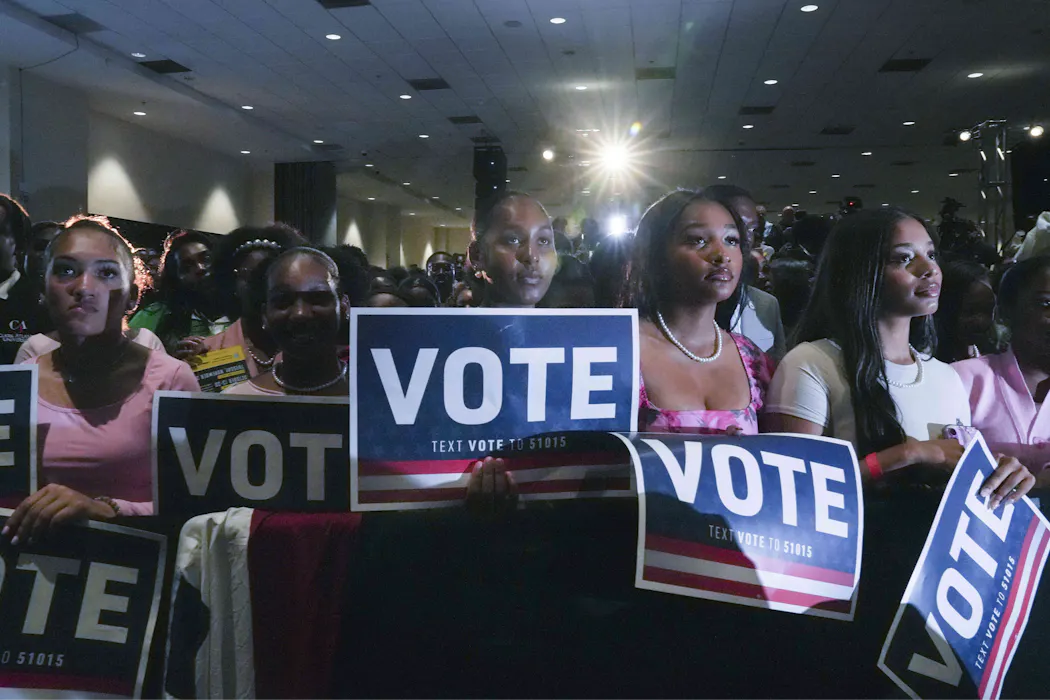
As political scientists who have long studied the effects of women politicians, our research has shown that both McEwen and her young goddaughter are right: When young people see politicians who look like them, they are inspired to be politically engaged.
Following the 2026 midterm elections, a record number of women will serve in state and national offices. More women of color will serve in prominent political offices than ever before.
As of this writing — with some races yet to be called — at least 162 women will serve in the U.S. Congress, 138 of them in the House of Representatives, according to the Center for American Women and Politics.
A minimum of 18 women will serve as governors, while 108 will serve in other statewide executive offices. The new Congress will seat an unprecedented 31 Black, 29 Hispanic, nine Asian American/Pacific Islander and four Native American women, and three women of Middle Eastern heritage.
These women of color will no doubt have significant effects on public policy as they draw on their life experiences while governing. In addition, our research shows that they will have another kind of impact on young people in their states and districts. Specifically, when women run for office, they motivate young girls to get involved in politics.
Women of color, however, are especially inspiring for young girls. Not surprisingly, they serve as role models for young girls of color, igniting their political interest and even leading them to envision themselves as running for office one day.
But their impact also extends to white girls, who are inspired by seeing these women overcome the double barriers of gender and race. This inspiration while young leads to greater political participation in adulthood.
There’s the concrete connection: Inspiration now, participation later.
While teenagers typically do not spend a lot of time following politics, they often absorb lessons from their political environment by osmosis, such as a news story shared on social media, passing by a billboard or holding a conversation with a parent or teacher. Because politics has historically been a man’s game – and a white man’s game at that – seeing women, and women of color especially, in public life changes their default assumption about who is suited to govern.
Politics is no longer just for white men. In the famous words of civil and children’s rights advocate Marian Wright Edelman, you can’t be what you can’t see. When young women see women in positions of leadership, they believe they can be leaders too.
If we left the story here, the election of all these women of color may seem like an unmitigated win for the long-term vitality of American democracy. But the story is a little more complicated.
The historic wave of women is a win for the future of the Democrats specifically. This is because the overwhelming majority of these newly elected women are Democrats.
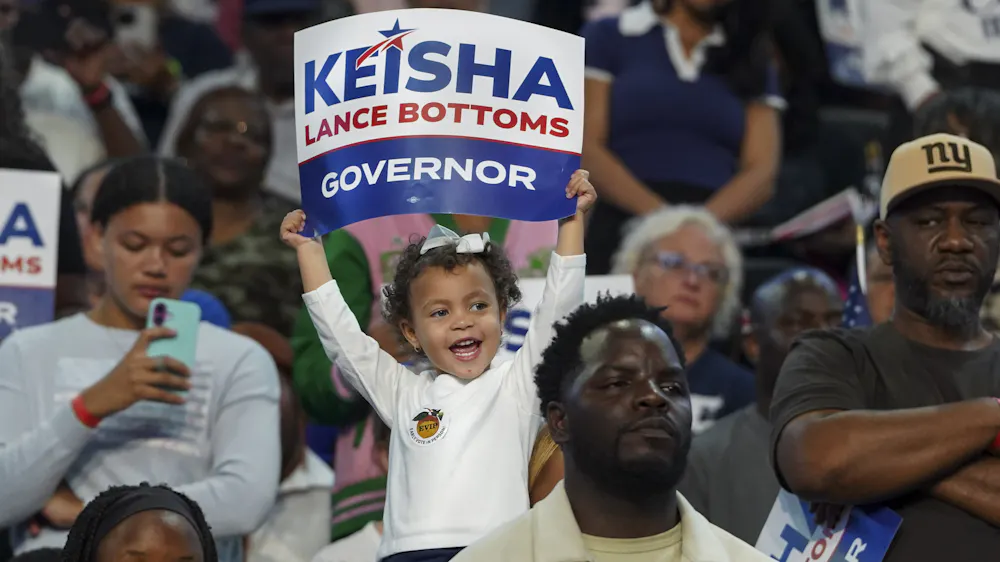
Of the 162 women who have officially won their midterm House or Senate races so far, 122 – 75% – of them are Democrats. That’s a stunning party imbalance.
There is an even greater imbalance for women of color. In Georgia, all the African American women elected to statewide office are Democrats. In the U.S. House, all but four of the women of color are Democrats; in the Senate, it’s 100%.
This matters because we have also found that young people are most likely to see candidates from their own party as role models.
Lest you doubt that we can speak of teenagers as Democrats or Republicans, study after study finds that party attachments develop young, and the same polarization found among adults is mirrored in their children.
In other words, the girls who are inspired by this wave of women are far more likely to be Democrats than Republicans. Since partisan teens usually grow up to be partisan adults, this suggests that future Democratic women – whether they be racial minorities or whites – will be more politically engaged in adulthood.
For all the attention paid to the political choices of young Republican men, the party should be worried about the future of Republican women. Without more women politicians representing the GOP, Republican girls are likely to continue seeing politics as a man’s game and stay on the sidelines of civic life.
This doesn’t mean this wave of mostly Democratic women politicians won’t have any impact on Republican teens.
When women of either party run for office, both Republican girls and boys change their attitudes about women.
In general, Republican teens are less likely than Democrats to think that women have the necessary traits to be political leaders. But when they live in a community where women candidates run, they come to see women as fit to govern.
Why the change among Republicans and not Democrats? To be blunt, it is because Democratic kids do not need to be convinced that women are as capable of leadership as men.
Representation matters. We have found that barrier-breakers and firsts are particularly effective in changing young people’s beliefs and behaviors. The 2026 midterm elections produced many of those.
We expect that the effects will play out for years to come as more women believe that in politics, they have a shot.

The authors do not work for, consult, own shares in or receive funding from any company or organization that would benefit from this article, and have disclosed no relevant affiliations beyond their academic appointment.
Politics + Society – The Conversation
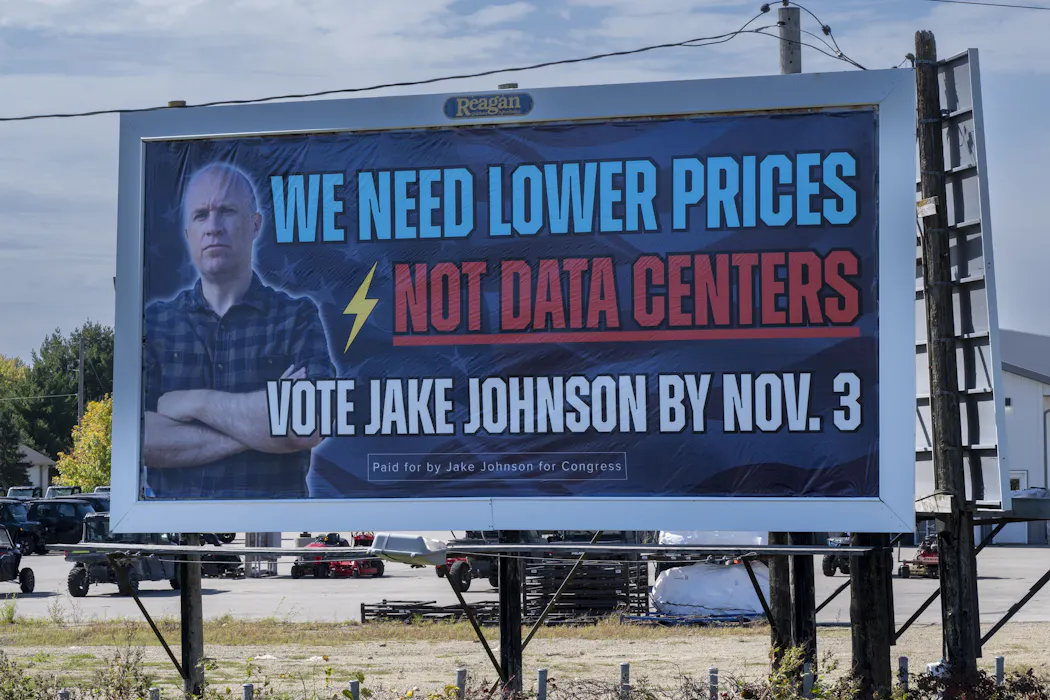
The 2026 midterm elections that swept Democrats into power in Congress and state legislatures also delivered a stunning rebuke to the artificial intelligence industry.
Ballot measures that limited the construction of data centers – from California to Kansas to North Dakota – were approved by voters in 40 of 41 instances. These measures included the Kansas prohibition on construction of a type of battery energy storage system, a 180-day moratorium on data centers in Maine, and the outright ban on data center construction in Ohio.
Drawing on recent survey data, we suggest that the Democratic sweep and the nationwide rejection of data centers are related. Republicans’ connections with an unpopular AI industry may have contributed to their poor showing at the polls.
We are survey researchers. Our August 2026 survey of a nationally representative sample of 1,000 American adults shows that opposition to data centers is widespread.
The survey shows that 65% of Americans oppose the construction of data centers in their communities. This opposition is bipartisan, with 76% of Democrats, 67% of independents and 52% of Republicans opposed to the sites.
To better understand the sources of this opposition, we asked respondents to explain it in their own words. Twenty-eight percent of respondents voiced concerns about the negative environmental impact of data centers. One respondent stated: “Draining our water reserves significantly with a data center would be catastrophic to our region.”
Some respondents, 15%, also expressed concerns about data centers’ negative impact on their quality of life. For example, one respondent said: “Noise issues, energy issues and visual site are three issues that are major concerns for a AI data center to be in the area I live in.”
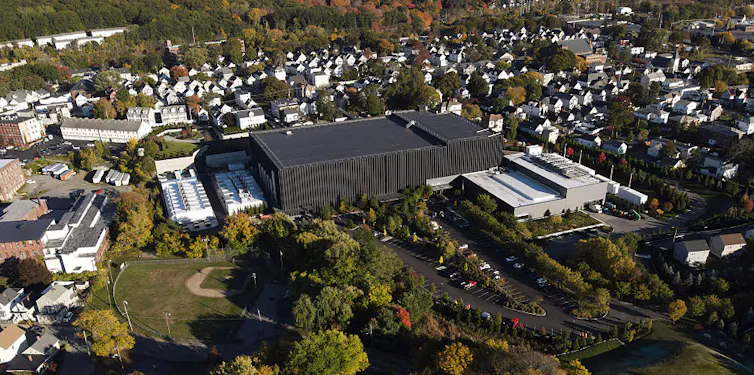
Ten percent of respondents singled out the centers’ connection to increased utility costs. One respondent said that “ever since a data center has been built in my local area the prices of water and electricity have more than doubled.”
Finally, 13% of respondents expressed a broad distrust of AI and the industry itself, with one stating, “I think that AI needs to be better regulated and a lot more developed and proven safe before any massive full scale deployment.”
Despite mounting public opposition to data centers, President Donald Trump expressed strong support for data center construction before Election Day. He said that if Americans want to live in “crime-infested areas” and “squalor,” they should not have a data center. Days after the midterms, Trump threatened to penalize U.S. companies that build data centers overseas.
As widespread opposition to data centers grew through 2026, Republican congressional candidates increasingly had to weigh loyalty to Trump against local backlash. As Election Day neared, many Republican candidates had distanced themselves from unrestricted data center construction.
In contrast, many Democrats made opposition to data centers an important theme of their campaigns.
Our poll suggests that these efforts may have resonated with voters.
Among Americans who expressed opposition to data centers, 48% indicated they would support the local Democratic candidate in the U.S. House of Representatives, compared to 25% for the Republican candidate. And 47% of those living in states that held a Senate election were planning on voting for the Democratic candidate, while 28% planned to vote for the Republican Senate candidate.
Even taking partisanship, ideology and demographic characteristics into account, opposition to data centers was associated with an intention to support Democratic House and Senate candidates.
Given widespread public concern about data center construction, Democrats have electoral incentives to make AI regulation a part of their legislative agenda in the new Congress. Whether or not they enact new legislation, popular opposition to data centers is unlikely to abate anytime soon.

Jesse Usher Barrett is registered with the Democratic Party
Jesse Rhodes has received funding from the National Science Foundation, the Spencer Foundation, the Russell Sage Foundation, the Harvard Election Law Clinic, and the Women’s Sports Foundation.
Tim Komatsu is registered with the Democratic Party.
Tatishe Nteta does not work for, consult, own shares in or receive funding from any company or organization that would benefit from this article, and has disclosed no relevant affiliations beyond their academic appointment.
Politics + Society – The Conversation

Marie Callender’s is one of the best-known frozen food brands out there, but not all of its dishes are worth your hard-earned bucks – like our least favorite.

Mashed – Fast Food, Celebrity Chefs, Grocery, Reviews

 Dax Shepard is getting candid about his mental health amid controversy.
The Armchair Expert host shared he’s experiencing depression over allegations that he’s an “abusive husband” to his wife of…
E! Online (US) – Top Stories
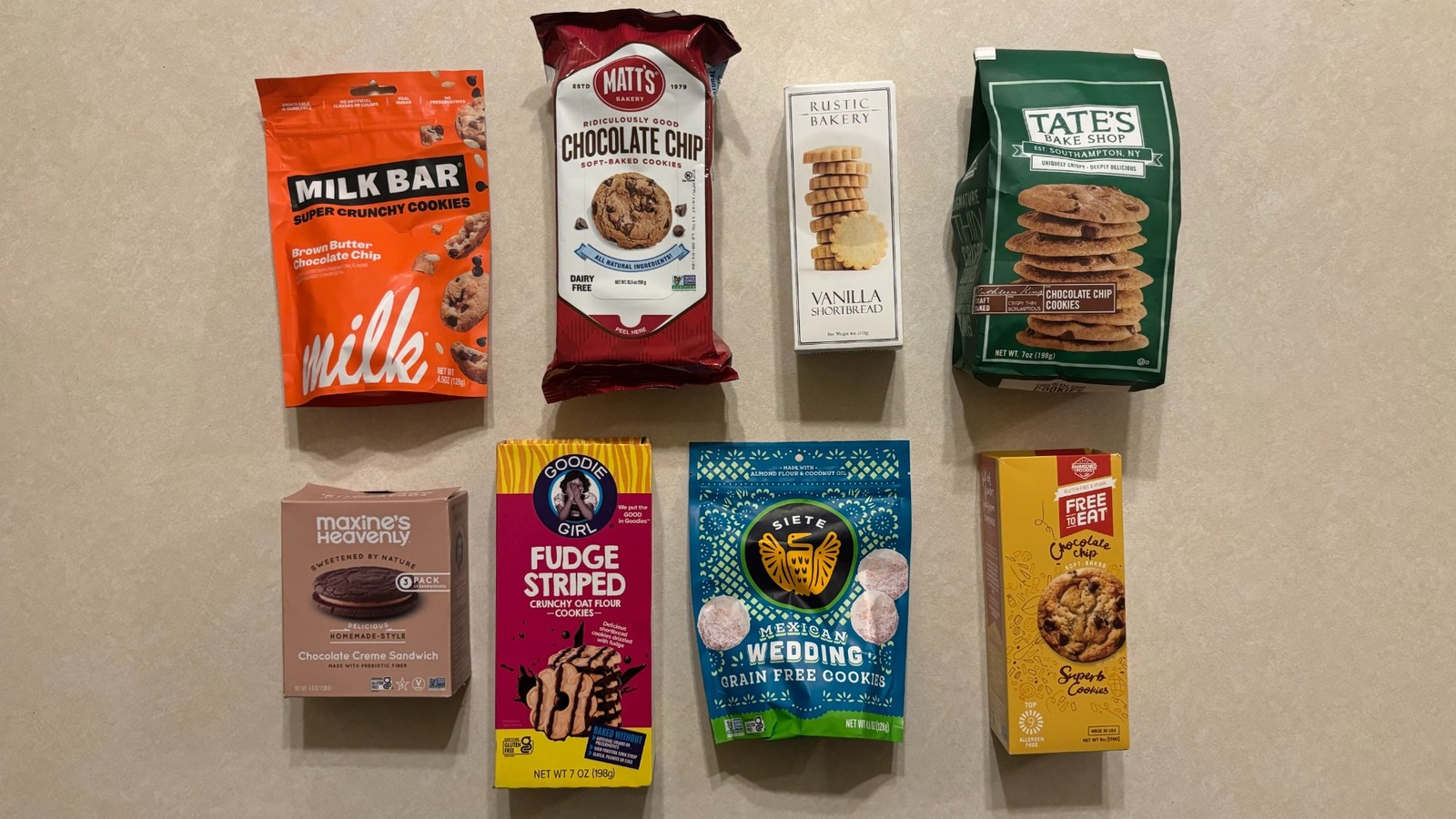
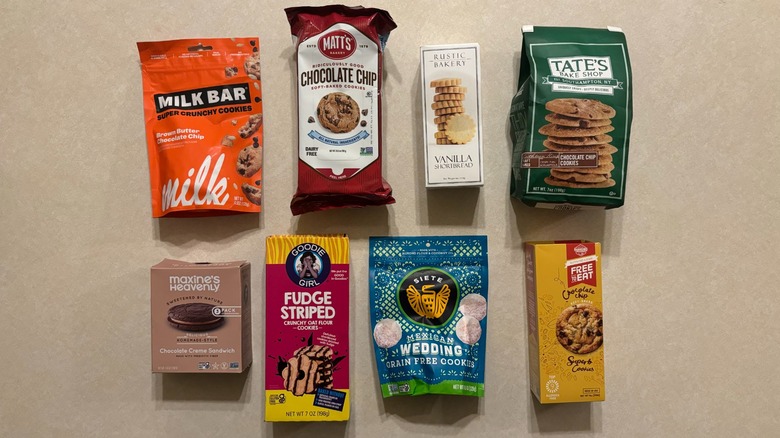
When we ranked 10 high-end grocery store cookie brands, a Keebler dupe took the top spot. These cookies aren’t just tasty; they’re also gluten-free.
Mashed – Fast Food, Celebrity Chefs, Grocery, Reviews
