The term “open source” has long had a clear meaning in traditional software. It signals that you can inspect the source code, change it, share your version, and use it for your work. With decades of open source practice, teams know how to decide if a tool fits their needs and if its licensing makes […]WordPress Planet
Brooks Laich and wife Katrín Tanja Davíðsdóttir have more news that will melt your heart.
The couple are expecting their second baby together, they announced on social media.
“Baby #2,” the former… E! Online (US) – Top Stories
The Teen Mom: The Next Chapter hiatus is keeping everyone in limbo.
That includes viewers as well as the stars.
Maci Bookout has racked up a substantial tax debt.
Between the show and her business’ latest update, it’s not clear how she’ll pay this down.
Maci Bookout attends the Bridal Fashion Show at The Grosvenor House Hotel on March 6, 2016. (Photo Credit: John Phillips/Getty Images)
That is a lifetime of debt in just a few short years
According to a report by The Sun, Maci and her husband, Taylor McKinney, are being buried under a mountain of debt.
Their latest federal tax bill comes up to over $200k.
When combined with existing tax liens against Maci and against the couple, the total is over $601,000.
Maci has had recurring tax liens — many of which have been paid off — dating back to at least 2013. Her latest liens date back only a few years, however.
A $600k debt — particularly one that cannot be erased through a bankruptcy filing — is still a major weight.
The last episode of Teen Mom: The Next Chapter to air was in May 2025.
It is so important that we emphasize that, despite some reports, the show has not officially been canceled.
However, the indefinite hiatus is functionally the same thing for the stars — who clearly depend upon their MTV paychecks.
(We wouldn’t hold our breath on a renewal. Skydance in an act of unchecked avarice has consumed both Paramount and Warner Bros, with the former ultimately owning MTV and Teen Mom. They’re likely looking to save money wherever they can.)
We’re sure that a renewal would be helpful for Maci’s finances. But she may need to consider other options.
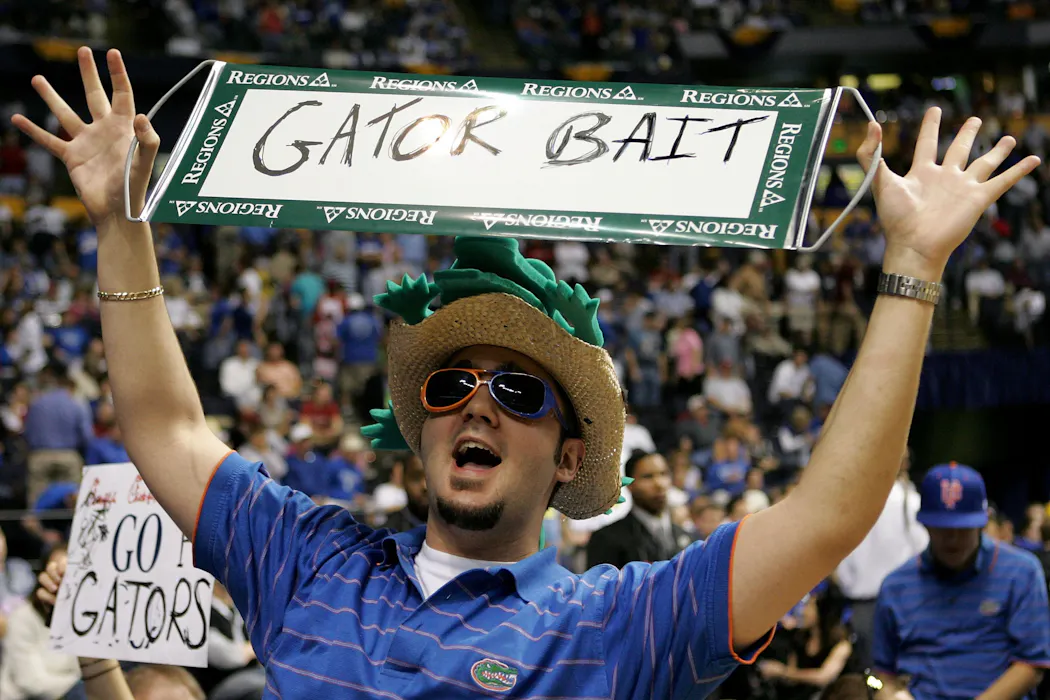
When the marching band played the familiar cue, thousands of fans responded with the “Gator chomp,” raising their outstretched arms and repeatedly opening and closing their hands like alligator jaws while shouting “Gator bait!”
The decision to bring back the popular cheer reversed a ban imposed in 2020 by University of Florida President Kent Fuchs, who was concerned about its racist origins amid the nationwide reckoning over race that followed the murder of George Floyd.
The roots of the “alligator bait” trope stretch back to the 18th century, when French explorers in North America claimed that a “certain exhalation” given off from Black skin attracted the voracious reptiles.
White plantation owners eagerly took up this racist theory because it discouraged enslaved people from fleeing into Southern swamps and marshes, where pursuing runaways was often difficult.
One of these racist stereotypes was the depiction of Black Americans, especially children, as natural prey for alligators. Though it operated through images and ideas rather than physical force, the stereotype reinforced beliefs in Black inferiority. It also helped justify the intimidation, exclusion and violence that African Americans routinely faced during this period.
It was in this context that the racial slur “alligator bait” began circulating widely in the late 19th century. A bestselling photograph bearing that title, published in 1897, helped popularize the slur. Although the composite image of nine naked African American toddlers did not include an actual alligator, its title invited viewers to imagine Black children as special targets of the reptile.
Whether Black children were ever actually used as bait to hunt alligators remains a subject of historical debate. But what is beyond dispute is that these images helped entrench degrading associations between African Americans and alligators in American popular culture for decades.
‘Gator bait’ comes to campus
As the phrase alligator bait gained currency across the United States, it also began appearing in a new setting: University of Florida football games. The earliest published reference to the cheer seems to be a 1939 newspaper account of a home game against Georgia Tech.
When Georgia Tech’s Yellow Jackets took the field, Florida students taunted the all-white team with cries of “alligator bait.” Georgia Tech’s coach used the insult to motivate his players, asking whether they could imagine “anything lower than that.”
While it is impossible to know precisely how everyone present understood the phrase, it entered Florida football culture at a time when “alligator bait” remained a recognizable racial slur. By the late 1940s, the shortened form, “Gator bait,” which was both easier to chant and more closely aligned with the university’s “Gators” nickname, had become a regular fixture at Florida football games.
Desegregation did not immediately transform the broader campus culture. The university continued to embrace traditions that celebrated the Confederacy and romanticized the Old South. In 1962, football coach Ray Graves placed decals of the Confederate battle flag on his players’ helmets before the Gator Bowl.
As late as the 1970s, the all-white Kappa Alpha fraternity continued a decades-long tradition of staging an annual “Old South” weekend that featured students parading in Confederate uniforms. In the 1950s and 1960s, that celebration even included a mock execution of Union General William T. Sherman and a secession proclamation.
When the student newspaper surveyed the campus in 1968 about whether to continue playing “Dixie” – the unofficial anthem of the Confederate States of America – at football games, 83% of students supported the practice. But the majority of Black students surveyed opposed it. “Dixie” remained a game-day staple until 1973.
By the late 20th century, most Florida fans no longer understood “Gator bait” through the lens of Jim Crow-era racial stereotypes. Decades of use at football games had transformed the chant into a symbol of school spirit and athletic success.
No individual played a larger role in that transformation than Lawrence Wright, the hard-hitting safety who helped lead Florida to its first national championship. Wright, who is African American, did not invent the cheer, as is often claimed, but he helped elevate it to iconic status. Following Florida’s victory over rival Florida State in 1995, he famously rallied fans with the refrain, “If you ain’t a Gator, you must be Gator bait.”
When the Gators became national champions the next season, the chant became even more deeply enshrined in Florida football culture. For most fans, “Gator bait” came to symbolize pride in the university rather than anything connected to the phrase’s earlier racist history.
While most fans were unaware of it, “alligator bait” remained a documented racial slur, creating a tension between the phrase’s historical origins and its modern meaning.
That tension came to a head in 2020, when Fuchs suspended the cheer amid a broader university effort to address racism and inequity. While acknowledging that he knew of “no evidence of racism associated with our ‘Gator Bait’ cheer at UF sporting events,” Fuchs argued that the phrase’s “horrific historic racist imagery” warranted its retirement.
Critics, including Wright, responded that the cheer’s meaning at Florida had become detached from those historical associations. “Gator bait” was a cherished university tradition, they argued, neither generally understood nor intended as racist.
Still, I believe the debate surrounding its return reveals that the controversy has never simply been about political correctness or school spirit. In my view, it is also about how institutions reckon with difficult histories and whether traditions can be separated from the historical meanings that gave rise to them.
Even if most fans today understand the cheer as an expression of school spirit, universities do not simply inherit traditions. They choose which ones they wish to preserve, modify or discard.
Whether the university made the right decision is open to debate. What is not in dispute is that the “Gator bait” cheer emerged during a period when “alligator bait” functioned as a racial slur and the University of Florida excluded Black students while embracing traditions that celebrated the Confederacy.
The Conversation reached out to the university, and it declined to add to Bell’s previous comments on this matter.
The University of Florida is a founding partner of The Conversation.
Mark V. Barrow, Jr. earned his BA in History at the University of Florida in 1985 and has received funding from the National Endowment for the Humanities.
The book describes a “massive restructuring” of the monarchy that William has allegedly already discussed with aides, The Blast reports.
Under the reported plan, royal titles and the use of His or Her Royal Highness would depend on doing official work for the Crown.
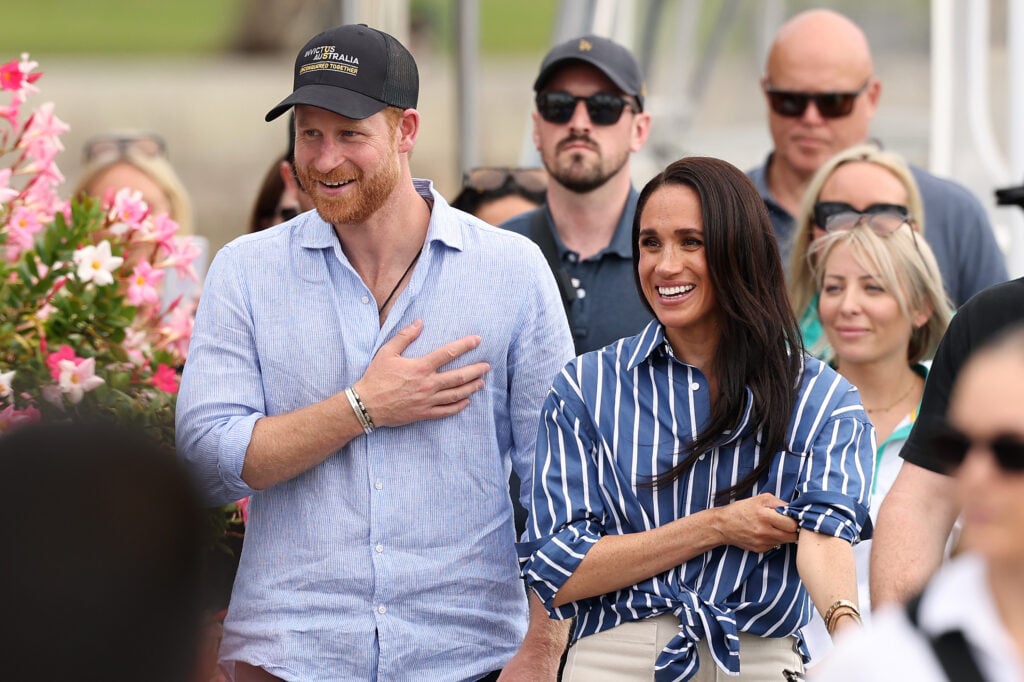
Prince Harry, Duke of Sussex and Meghan, Duchess of Sussex greet members of the public at the Cruising Yacht Club of Australia on April 17, 2026 in Sydney, Australia. (Photo by Cameron Spencer/Getty Images)
In other words, titles would work more like job titles than birthrights. Royals who carry out public duties would keep their titles, financial support and official housing. Those who choose private careers would not.
A friend of William quoted in the book reportedly laid it out bluntly. “If you are not doing those things and you are not a working royal, you will not get to be an HRH,” the source said.
The same friend added that non-working family members would not get subsidized accommodation or special favors, but would be free to live their own lives and build their own careers.
That would hit the Sussexes hardest. Sykes reportedly writes that Harry, Meghan, Archie and Lilibet would all lose their royal styles and titles under William’s current plan.
Harry and Meghan stepped back as senior working royals in 2020. They agreed to stop using their HRH styles in an official capacity, but they kept their titles as the Duke and Duchess of Sussex.
Harry is also a prince by birth, and Archie and Lilibet are entitled to be called Prince and Princess under existing royal conventions. Those are exactly the distinctions William reportedly wants to make less meaningful.
None of this can happen yet. King Charles is still on the throne, and William, 44, is the heir. The reported overhaul would only come into play once he becomes king.
Even then, it may not be simple. Pulling an HRH style is one thing, but removing a hereditary peerage like Harry’s Dukedom of Sussex would involve legal and constitutional hurdles beyond just withdrawing a style.
The plan reportedly isn’t only about Harry. According to Sykes, William also wants Princess Charlotte and Prince Louis to have more freedom to choose their futures, including the option to give up their titles and HRH styles if they pursue careers outside the monarchy.
Prince George would be the exception, since he is next in line after his father. The approach reportedly takes inspiration from Princess Anne’s children, Peter Phillips and Zara Tindall, who have built independent lives without prince or princess titles.
Sykes suggests William sees the changes as a way to give his own kids more options while shrinking the number of royals supported by the institution.
A spokesperson for the Prince and Princess of Wales declined to weigh in on the book itself. “As a matter of policy, we don’t comment on books or claims made within them,” the spokesperson said.
Kensington Palace has since reportedly pushed back on claims that William plans to remove Harry’s and other non-working royals’ HRH status, saying the report has “no factual basis.”
The proposals have not been formally announced, and there is no indication that any change to the Sussex family’s titles has been legally set in motion.
William has made no secret that he wants to shake things up, though. He has previously declared that “change is on my agenda.”
Royal author Christopher Andersen said at the time that neither brother believes he has anything to apologize for. “Reconciliation is not in the cards,” he said.
Andersen also claimed that “William views Harry as having betrayed not only the royal family but the institution of the monarchy itself.”
That standoff reportedly extends to the holidays. William is said to remain unwilling to reconcile with Harry and Meghan ahead of Christmas, despite the Sussexes’ return to Britain.












 Brooks Laich and wife Katrín Tanja Davíðsdóttir have more news that will melt your heart.