Americans are standing up to protect public lands and bringing concerns about conservation and management into broader public discussion.









Americans are standing up to protect public lands and bringing concerns about conservation and management into broader public discussion.
Post Content
New York City summers are abuzz with energy, from the lively streets to the outer borough’s sandy beaches. If the vibe could be bottled, it would be this drink.
Mashed – Fast Food, Celebrity Chefs, Grocery, Reviews

Thanksgiving hosts expect to welcome an average of 10 people this year, according to Butterball. That is a lot of plates, side dishes and last-minute … Read moreThe post The Thanksgiving prep you can start now to save time later…
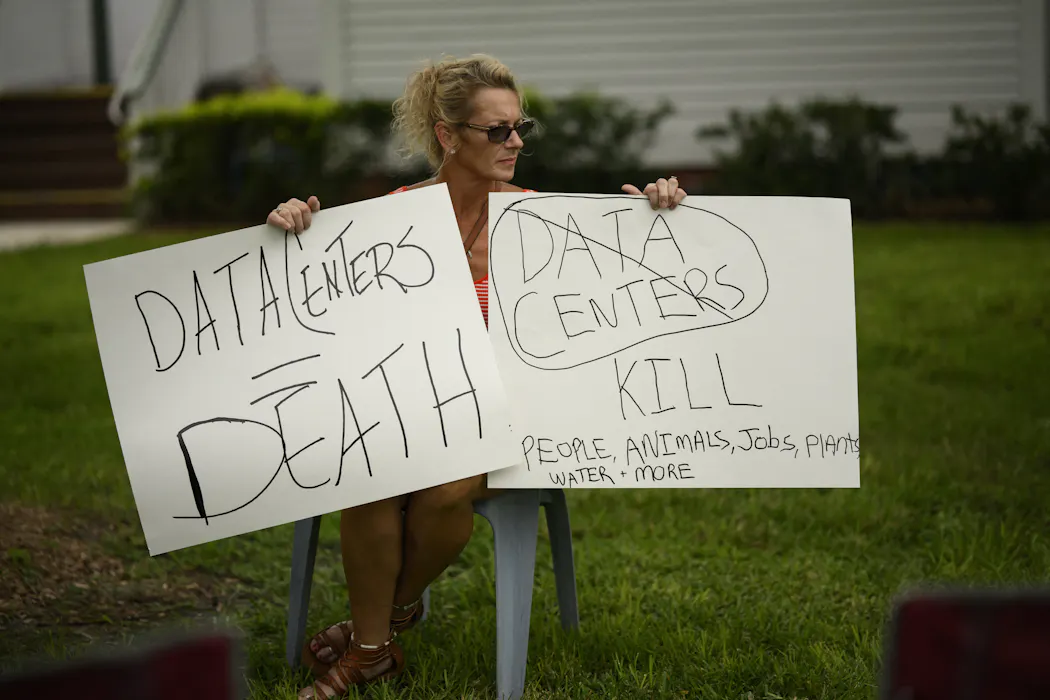
Data centers were on the ballot, both directly and indirectly, in the 2026 midterm elections.
A total of 41 local ballot initiatives concerning data centers in 10 states were up for a vote. All but one resulted in measures to restrict or limit their development.
The centers also may have played a role in several high-profile contests. In Ohio’s race for a U.S. Senate seat, Democratic challenger Sherrod Brown hammered incumbent Jon Husted for his past support of data centers. In Texas, Gina Hinojosa made Republican Gov. Greg Abbott’s track record of supporting tax breaks for data centers a focal point of her winning campaign. Her victory marked a historic break with decades of Republican control in the state. As governor-elect, she immediately reaffirmed her campaign pledge to pursue legislation protecting Texans from data centers.
According to NBC exit poll data, 56% of voters felt that data centers were a major or even a crucial factor in influencing their congressional vote. For Black voters, the share was even higher, at 68%.
Data centers are key components in artificial intelligence infrastructure, housing the computing resources used to train AI models. These massive facilities guzzle energy and water and are very noisy. Many Americans argue that their costs, in terms of land use, higher utility bills and environmental degradation, outweigh the benefits.
I’m a professor of political science who studies political parties, electoral politics and technology. My forthcoming book, “Democratic Intelligence: Navigating Electoral Politics in an AI World,” examines how the adoption of this technology is reshaping established practices and power dynamics in campaigns.
Before the midterms, it had already appeared to be disrupting some partisan alignments. Following those historic elections, which have thoroughly shaken up America’s political geography, the widespread pushback against data centers is now part of the narrative explaining the dramatic results of the 2026 midterms.
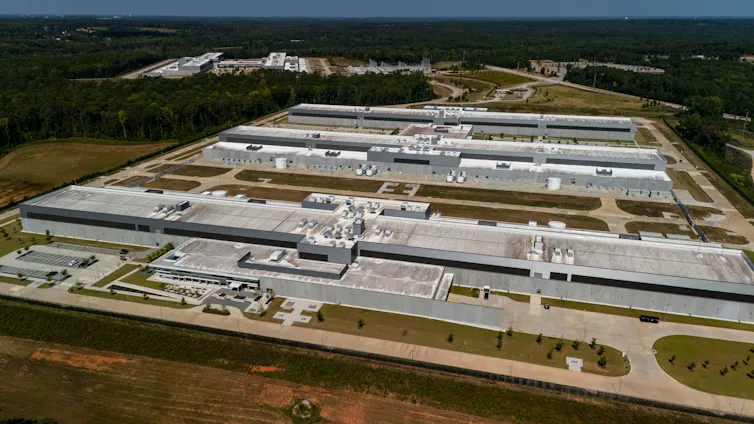
In contrast to many other issues, concern about data centers is relatively bipartisan. The Annenberg Public Policy Center asked Americans in mid-2026 whether they support or oppose having data centers in their communities. Opposition was stronger among Democrats, at 69%, than Republicans, at 54%, but it crossed party lines.
Local ballot measures restricting data centers also cut across traditional political alignments. Communities as disparate as deeply red Edgewater, Florida, and solidly blue Alhambra, California, voted to prohibit them. The margins for the restrictions were large, averaging 49 percentage points.
The one restrictive local measure that failed to pass was in Harwood, North Dakota, population around 800. With a data center project already in progress, political and economic leaders prevailed in arguing that restrictions would cut into local revenue and stifle economic development more generally.
Exit polls taken during the midterm elections also detected a degree of bipartisanship. Of the 56% of voters who said data centers played a “major” or “crucial” role in their vote, approximately two-thirds were Democrats and one-third Republicans. Exit polls, however, should be interpreted with care, given their methodological limitations.
These responses hint at why the narrative that opposition to data centers helped fuel the Democrats’ historic midterm victory emerged right away.
The seeds of this argument were in place before the election, picking up on unusual alliances that marked the data center opposition. In cities and counties, zoning fights are drawing a diverse kind of resistance: environmentalists, voters reeling under high electricity costs, local-control advocates and farmers concerned that data centers eat up land. They unite in opposition to projects backed by powerful corporate interests.

Some of the bipartisanship around this issue has even seeped into Congress. Several weeks before Election Day, the House passed the Ratepayer Protection Act by a 417-3 vote. The bill would require states to consider adopting a policy that data centers pay for the upgrades necessary to meet their high electricity needs. The three nay House votes were from progressives who felt the bill’s measures, which would be voluntary, didn’t go far enough to protect consumers.
Similar concerns killed the Senate version, a reminder that even allies sometimes follow different strategic paths. Some proponents of tighter regulation will accept incremental progress, while others push for more sweeping change.
Brookings Institution scholars anticipate that the newly elected Congress will take up the issue again, this time with a directive to states to establish mandatory, not voluntary, requirements.
As the midterm elections approached, candidates up and down the ballot blanketed the airwaves and digital platforms with ads against data centers. President Donald Trump pushed back, suggesting that data center opponents want their communities to be “backwards and poor.”
Some Republican candidates walked a fine line between responding to voters’ concerns and not alienating the president.
It matters little whether the data center electoral narrative is accurate, and so far, the reported evidence is limited. We need to know where losing candidates stood on data centers, not just the winners. That voters considered data centers important says nothing about which direction they leaned. And despite a 98% success rate across the 41 local ballot measures, it’s hard to gauge how much resistance there is to the more than 600 proposed data centers that are slated to be built.
What does matter is that many people apparently are accepting the narrative because that alone will affect politics and the economy. Consider Elon Musk’s post on Nov. 4 on X, his social media platform: “Data centers in space looking pretty appealing right now,” and the sell-off of data center-related stocks the next day.
As the 2028 presidential primaries come into focus, I believe we should expect to see many Democratic and Republican hopefuls emphasizing their support for data center restrictions and bans as they throw their hats into the ring.
Some parts of this article appeared in a previous article published on Oct. 26, 2026

Barbara A. Trish does not work for, consult, own shares in or receive funding from any company or organization that would benefit from this article, and has disclosed no relevant affiliations beyond their academic appointment.
Politics + Society – The Conversation
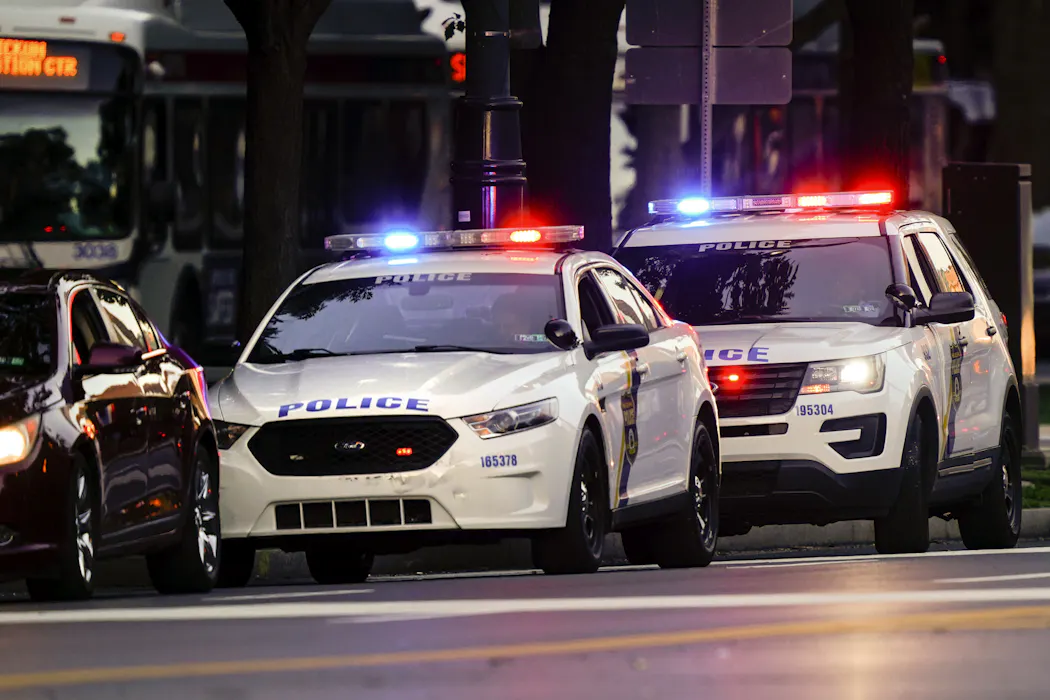
Deciding whether to drive somewhere alone or with friends is typically a matter of convenience or personal preference. But for young Black men in Philadelphia, that decision may carry an additional consideration: the likelihood of being pulled over by police.
My recent co-authored research suggests that young Black men traveling together attract significantly more police scrutiny than those driving alone.
In fact, the apparent effect of traveling with another young Black man was larger than the racial disparity detected when comparing young Black and white male drivers.
These findings challenge a common assumption about racial profiling: that its defining feature is simply whether a driver is Black or white.
As a criminologist, I have published numerous peer-reviewed articles on police stops. I recently published a study on this topic in the journal Race and Social Problems with Molly Biddle, who at the time of writing was a data analyst for the Police Accountability Unit at the Defender Association of Philadelphia. In that study, we analyzed Philadelphia Police Department traffic stop records from 2021 through 2024.
We focused on men ages 18-29 stopped for motor vehicle code violations that did not involve an arrest. Among young Black males, approximately 1 in 4 were investigated alongside another young Black man in the car. Among young white males, less than 1 in 20 were investigated with another young white man.
This fivefold disparity is striking, but it does not necessarily establish discriminatory policing. Different groups might have different driving habits or preferences for traveling together.
To investigate whether police decisions contributed to this disparity, we employed a statistical technique known as the “veil-of-darkness” test.
The veil-of-darkness test takes advantage of the fact that sunset occurs at different times throughout the year.
For example, an officer may be able to clearly see a vehicle’s occupants from a distance at 7 p.m. during summer but have a much more obscured view at the same hour during winter. Importantly, the idea is that daylight visibility can help an officer distinguish who is in the vehicle before the decision is made to pull the car over.
By comparing stops occurring at similar times under different lighting conditions, researchers can investigate whether the ability to distinguish vehicle occupants from afar influences traffic enforcement.
Our results revealed two important patterns.
First, the disparity between young Black men stopped and young white men stopped decreased when it was harder to see who is in the car. This is consistent with what other researchers have found using earlier data for Philadelphia.
Second, and this is what makes our analysis novel, we found that obscured visibility had an even greater impact on reducing the gap between young Black males stopped in groups versus driving alone.
Both patterns were statistically significant, even after accounting for time of day, neighborhood, police assignment, season and other factors.
These findings suggest that the visibility of a young Black male passenger in a vehicle may influence police decisions as much or even more than the visibility of a driver’s race alone.
Social psychological research offers a possible explanation for our results. People sometimes perceive groups as more threatening than individuals, and racial stereotypes can intensify those perceptions.
Two young Black men together may therefore be perceived as much more suspicious than either would be individually.
Indeed, in our sample, young Black male drivers investigated with young Black male passengers were far more likely to be pulled out of the vehicle and fruitlessly frisked for contraband than to receive a citation for the traffic offense used to justify the encounter in the first place. Only 7% were ticketed, which suggests that many stops were pretextual.
Our recent findings build on our earlier study that examined more than 76,000 traffic stops involving Black drivers in predominantly Black Philadelphia neighborhoods.
That research found that the proportional representation of younger Black men among stopped drivers increased with daylight visibility, while the proportional representation of older Black women decreased.
The estimated magnitude of this within-race disparity was comparable to estimates commonly reported in studies comparing stops of Black versus white motorists.
Together, our two studies reveal that unfair differences in police scrutiny within the Black population can be as large as, or larger than, disparities detected through conventional Black-white comparisons.
Beyond investigating the extent to which the police pull over a greater quantity of Black drivers than white drivers, our research points to the need for police accountability advocates to ask additional questions about passengers and intraracial disparities.
For example, when policing in virtually all-Black communities, are some officers more blind to a driver’s age and gender than others? Likewise, are certain officers more likely to pull over young Black men when they are seen traveling in groups?
Such questions call attention to the idea that fairness within communities is just as important as fairness between them.
Read more of our stories about Philadelphia and Pennsylvania, or sign up for our Philadelphia newsletter on Substack.

Lance Hannon does not work for, consult, own shares in or receive funding from any company or organization that would benefit from this article, and has disclosed no relevant affiliations beyond their academic appointment.
Politics + Society – The Conversation
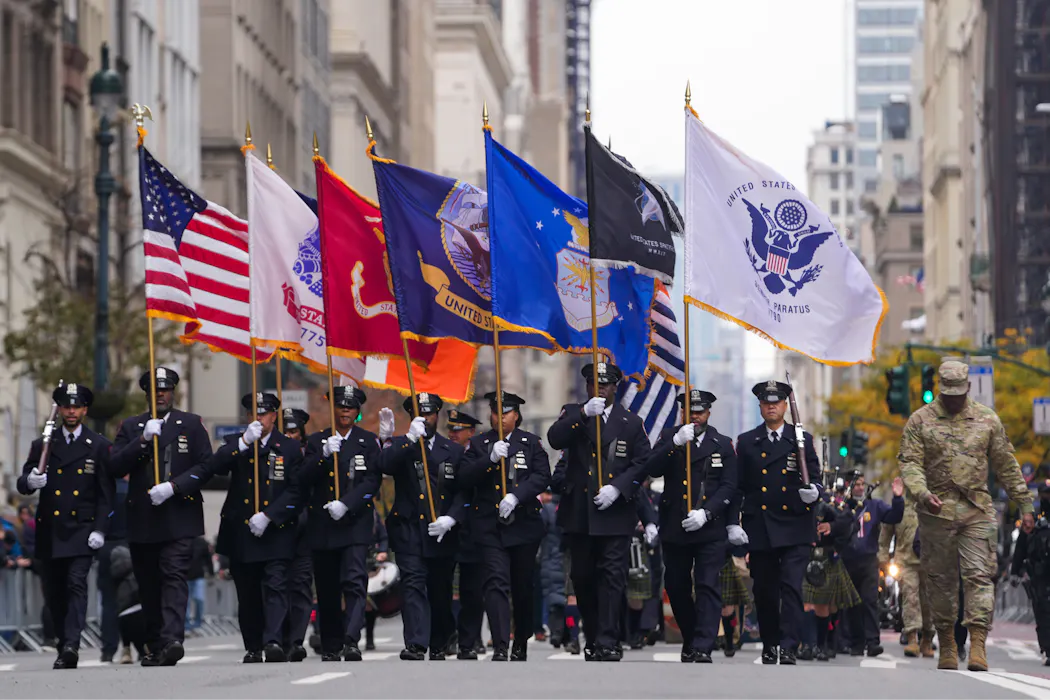
When the voice came over the plane’s PA system, it seemed familiar yet surprising: “Hello, everybody.”
“What?!” a passenger shouted, shocked. Others laughed and rose from their seats as former President Barack Obama appeared in person and welcomed the airplane of veterans to Washington before Veterans Day in 2025. They had flown from Wisconsin to Ronald Reagan Washington National Airport aboard an Honor Flight to see the capital’s monuments to military service.
“I wanted to stop by and just say thank you for your extraordinary service – to you, your family,” Obama said in brief remarks later posted to social media. “The sacrifices that all of you made to protect our country is something that will always be honored.”
Obama’s post was one of 399,000 references to veterans on the social media platform X on Veterans Day last year, Nov. 11, 2025. The annual holiday was established to “solemnly remember the sacrifices of all those who fought so valiantly on the seas, in the air and on foreign shores, to preserve our heritage of freedom,” as President Dwight D. Eisenhower proclaimed.
The hundreds of thousands of posts are compelling to me as a social scientist who studies how veterans are represented in the media. The volume of commentary illustrates Americans’ desire to recognize veterans, but it also captures the transience of public attention.
By the following Tuesday, Nov. 18, 2025, the number of references to veterans plummeted by 374,000, or nearly 94%. The news cycle had moved on.
The shift was not particularly surprising. My research shows that social media mentions of veterans peak in positive sentiment at two points each year: Veterans Day and Memorial Day. The rest of the time, the conversations on social media are largely driven by news outlets releasing stories and politicians announcing programs and events.
Indeed, social and other mass media play a role in what experts describe as a military-civilian gap. Put simply, while U.S. adults hold the military in high regard, they do not understand the institution or the experiences of its personnel despite its importance in domestic and international affairs and its US$900 billion in taxpayer funding.
This military-civilian gap can create problems when it comes to military recruitment, civilians’ ability to identify with neighbors who serve and veterans reintegrating into civilian society.
The military-civilian gap exists in part because, since the draft ended in 1973, the share of Americans who have served in the armed forces has declined. Only about 6% of adults were veterans in 2022, a decline from 18% in 1980. Compounding the issue, a decreasing proportion of U.S. adults personally know someone who has served. That means much of the population is learning about military life through mass media representation.
Journalists gravitate toward stories in which the subject matter is timely, emotional or full of conflict, because these qualities engage audiences. They operate on tight deadlines with limited resources. They also face restricted access to the Pentagon.
That means news outlets may be more inclined to cover a holiday, charity event or violent crime involving veterans than to take deep dives into the military budget or examine the role of veteran-owned businesses in the local economy.
Because of this, veterans end up typecast as heroes or victims of their service.
Politicians also influence which issues people in the U.S. see in the news or discuss on social media, but the share of members of Congress with military experience has plummeted since the 1970s.
In a 2018 study, our research team examined how news organizations in all 50 states represented veterans in news stories shared on X. In analyzing 1,460 stories, we identified three themes, which together described a majority of stories: veterans as heroes, as recipients of charity, or as victims of mental or physical harm.
Some military veterans may be heroes, and some may face challenges related to trauma, reintegrating into civilian society or navigating government bureaucracy. Such coverage may certainly be newsworthy.
The problem, according to critics of veterans’ representation in news media, is that not much else appears in the media. As one veteran told a researcher, “It doesn’t sell newspapers that Joe Smith from Davenport went to Afghanistan three times, got out of the military, went to college, and now works as an account manager for American Eagle.”
But media representations of social groups shape our perceptions of the world. A 2021 experiment found that exposure to stereotypical news stories about veterans led readers to associate veterans with post-traumatic stress disorder, a misunderstood and stigmatized condition. This, in turn, led readers to feel less desire to be socially close with veterans. The outcome illustrated how stories can have unintended downstream consequences even when journalists are covering newsworthy topics – in this case, PTSD and homelessness.
We also tested whether reading a second story – one in which veterans talked about media stereotypes – would dampen those negative effects. It worked, illustrating the importance of a news feed that provides nuance.
In another study, we asked 1,047 U.S. adults to picture a veteran, describe the veteran and then explain where the image originated. When people depended on media for their image, rather than personal experience, they called to mind stereotypical images such as homelessness, PTSD and heroism.
Given these stereotypes, a number of veterans organizations are advocating for broader, more insightful media representation. Military Veterans in Journalism and Veterans in Media & Entertainment are nonprofits that help veterans pursue professional careers in news and entertainment media, motivated in part by the potential for veterans to produce nuanced stories about military life. There are also nonprofit news organizations, such as The War Horse, seeking to bridge the military-civilian gap through storytelling and investigative reporting.
Media can draw attention to veterans. Obama’s airport surprise racked up 10.8 million views, 136,000 likes and 18,000 shares on X. But it will take more than made-for-media moments to bridge the military-civilian gap. That includes taking conversations with veterans offline.
In a 2019 study, U.S. Air Force Maj. Nicholas J. Mercurio conducted focus groups with veterans and active-duty service members and asked how they felt about “reflexive and formulaic expressions of gratitude” from the public such as “thank you for your service.”
Responses were mixed, in part because veterans assumed civilians did not understand what that service entailed. Nonetheless, there was general agreement that civilians could go beyond thank you by showing interest in the personal experiences of veterans and having sincere conversations about their jobs.
In doing so, civilians can demonstrate “interest in the individual,” Mercurio wrote, “not what they represent.”

Scott Parrott does not work for, consult, own shares in or receive funding from any company or organization that would benefit from this article, and has disclosed no relevant affiliations beyond their academic appointment.
Politics + Society – The Conversation
Reading Time: 2 minutes
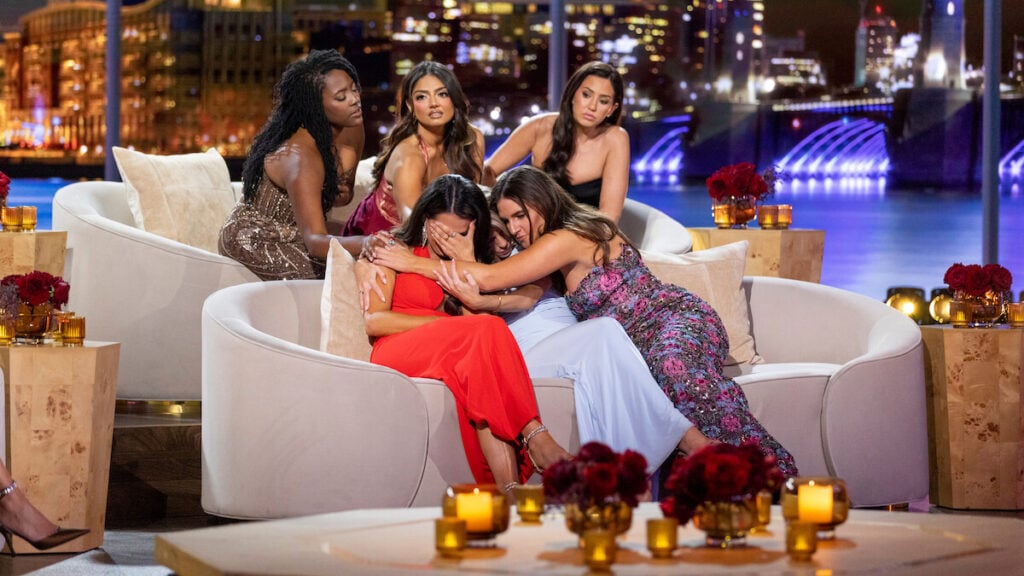
The Love Is Blind Season 11 reunion had plenty of unfinished business, and apparently, several contestants weren’t interested in keeping their secrets to themselves.
The Netflix special brought the Boston cast back together on Sunday night, giving viewers some long-awaited answers about the relationships that unraveled during the season.
And while Sarah Williams and John Shannon were the only couple to actually get married, their marriage was also among the biggest disasters to emerge from the experiment.
Sarah filed for divorce in June, less than a year after exchanging vows. During the reunion, John took responsibility for their split, admitting that he made a serious mistake during a boys’ trip.
John eventually acknowledged sending three inappropriate text messages to an adult entertainer, which Sarah viewed as emotional infidelity. He insisted that nothing physical happened, but admitted that his behavior crossed a boundary.
“I take full accountability,” John said, adding that the situation was “100 percent my fault.”
Sarah explained that she felt increasingly alone in the marriage and said the messages confirmed her belief that John didn’t want to be married to her.
Although she admitted that the experience was painful, she also revealed that she had forgiven him.
Elsewhere, Jax Guelli and Scott “Stew” Stewart offered an update on their relationship after Jax ended their engagement shortly after they met face-to-face.
The two remain close, although Stew suggested that their romantic future remains uncertain. Jax also revealed that she kept her engagement ring, having it reset into a pinky ring.
Aneha Singh and Cam Halloran also confirmed that their relationship was over. After Aneha left Cam at the altar, the pair attempted to figure out their future.
However, Aneha claimed that Cam told her he was no longer in love with her during a hotel getaway. Cam suggested that he probably would have said no at the altar anyway.
Meanwhile, Michaella Giorgio confronted Rob Feeley about his behavior during their relationship. Rob apologized and revealed that he had started therapy, even spending 50 days avoiding going out after filming wrapped. Michaella, however, made it clear that she had no interest in maintaining a connection with him.
Wilnie Louis and Wilson Monteiro revisited their disagreements over household responsibilities, while Erika Ellis and Blake Carver discussed why their relationship never worked outside the experiment. Blake admitted that he might have blown his chance with Erika, whom he still holds in high regard.
There was also an unexpected romantic revelation involving Michaella and Matt Waldrip, the season’s beekeeper. Matt revealed that they briefly dated after filming, describing their relationship as meaningful. Michaella wasn’t quite as sentimental, insisting their friendship should never have become romantic. She also claimed she only told him she loved him because she was on mushrooms.
Finally, Benita Paloja revealed that she’s engaged to a mystery man after dating him for approximately a year. Not a bad way to end a reunion!
At least someone found lasting love in Boston — unfortunately, it didn’t happen during Netflix’s increasingly infamous dating “experiment.”
‘Love Is Blind’ Season 11 Reunion: Who Broke Up? Who’s Still Together? Who’s on Mushrooms? was originally published on The Hollywood Gossip.
The Hollywood Gossip

 John Shannon and Sarah Williams are sharing a closer look at the dissolution of their marriage.
While news broke before the Love is Blind season 11 reunion that Sarah had filed for divorce from…
E! Online (US) – Top Stories
Reading Time: 3 minutes
She had more to say than plugging her late husband’s brand of hot sauce.
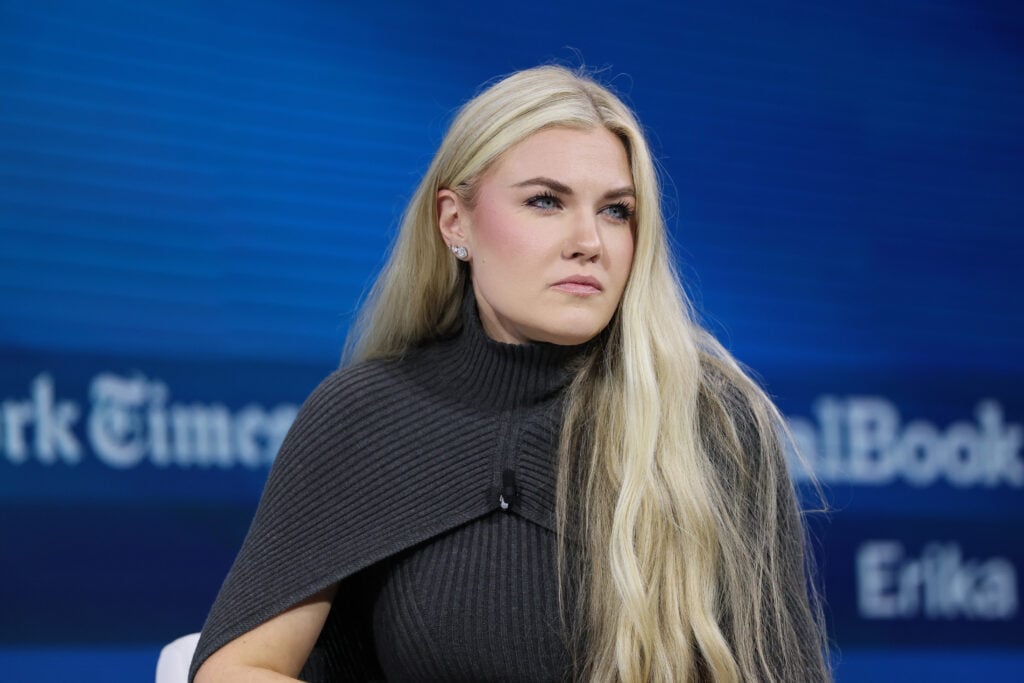
Over the weekend, Erika Kirk loudly condemned anyone joking about the death of her late husband, Charlie Kirk, or even merely laughing at such jokes.
Who was she talking about?
Dave Chappelle and Jennifer Welch come to mind, given the timing. But they’re hardly alone.
Charlie Kirk’s widow is once again unhappy with the jokes that people have been making at his expense.
On Sunday, November 8, Erika posted a lengthy tweet condemning it — and, though she did not name anyone telling such jokes, she did not shy away from blaming her political adversaries.
“To see leftist podcasters, comedians, and commentators laugh about political assassination as though it’s entertainment and the destruction of a human life is a punchline, is beyond disgusting,” she began.
“My husband, Charlie Kirk, was killed in an act of political violence,” the post continued.
Erika wrote that this is “something our two children and I will live with every day for the rest of our lives.”
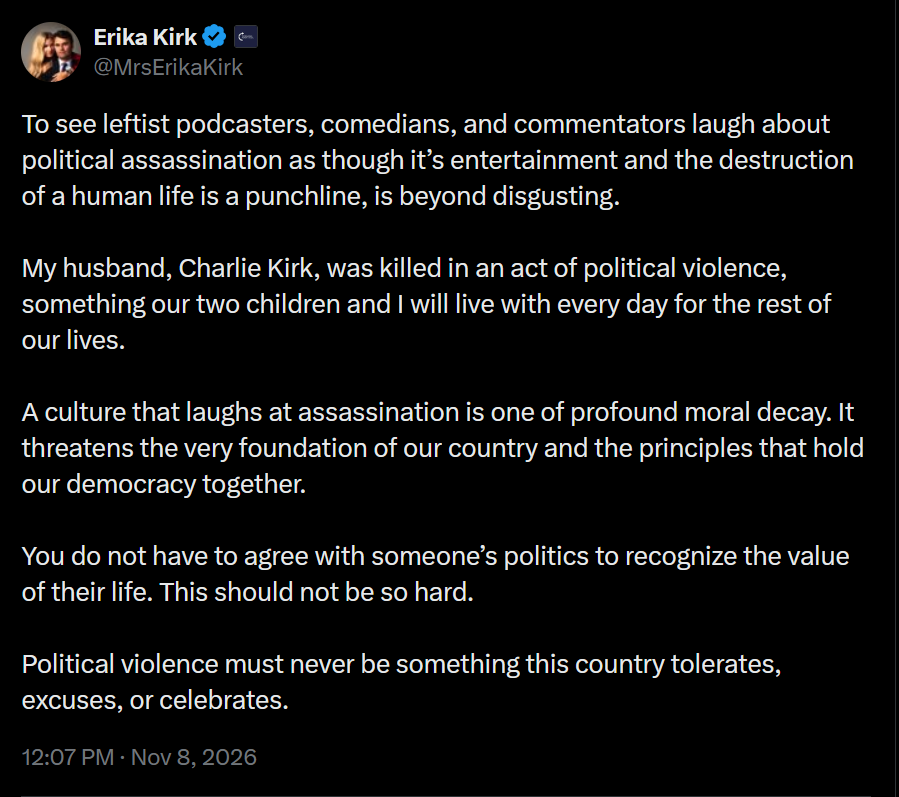
“A culture that laughs at assassination is one of profound moral decay,” Erika asserted.
“It threatens the very foundation of our country,” she claimed, “and the principles that hold our democracy together.”
Erika wrote: “You do not have to agree with someone’s politics to recognize the value of their life.” That part, at least, is true.
“This should not be so hard,” she complained.
“Political violence must never be something this country tolerates, excuses, or celebrates,” Erika concluded.
*sniffs* It’s interesting what I miss the most… what really hits me hard is *wipes tear* when I see Charlie Kirk hot sauce at the supermarket and I’m like BUY NOW BUY NOW BUY NOW DONATE TO TPUSA
— Arizona Right Watch (@azrww.bsky.social) November 7, 2026 at 10:21 AM
Obviously, there are several potential points of contention in Erika’s post. But who was she talking about?
Many believe that the tweet refers to comments that controversial comedian Dave Chapelle made at a Madison Square Garden show on Saturday, November 7.
“I feel f–ked up saying this. It’s scary being a public speaker,” Chappelle told the audience.
He shared: “Ever since that guy Charlie Kirk got murdered — and I shouldn’t say this publicly — but, I feel better.”
This flies in the face of comments that he made during his The Unstoppable Netflix special a few months after Kirk’s 2025 death. Perhaps his views have slowly evolved, or perhaps he is a political opportunist. Who can say?
It’s also possible that Erika was speaking more broadly — or was even not yet aware of Chappelle’s remark. (Notably, it doesn’t sound like he made a joke, but rather that he was just expressing a feeling of relief.)
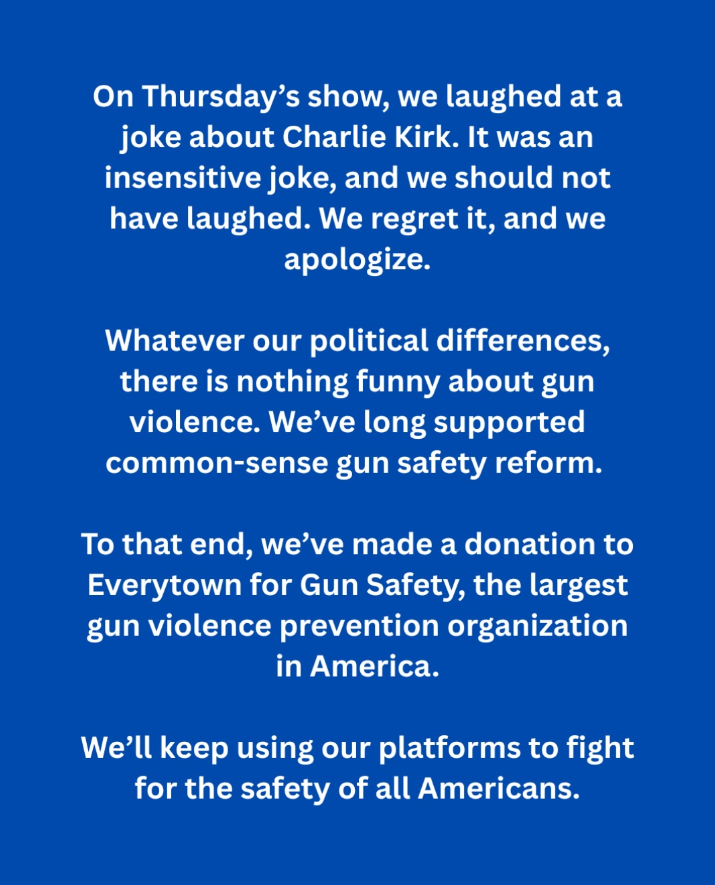
On Thursday, November 5, Mother herself (podcaster Jennifer Welch) read a joke that referred to Charlie Kirk.
She has since publicly apologized for being insensitive. One can argue that she shouldn’t have apologized, but it’s always up to her.
In fact, there were numerous posts — the majority of the jokesters not being famous — referring to Charlie Kirk or to his death, all across social media. From quips about how Texas would turn blue “over his dead body” to simple “live Charlie Kirk reaction” images of an empty chair, they’re more or less what you might expect.
Not every joke or reference is in good taste. But Erika will one day need to reckon with the hateful legacy that her husband left behind. He will never have the chance to grow or change or become a better person, but she could choose to do that any day.
Erika Kirk Blasts Dave Chappelle Over Charlie Kirk Joke was originally published on The Hollywood Gossip.
The Hollywood Gossip