As a record-breaking 21.7 million Americans set sail on ocean cruises in 2026, cruise lines respond with more than a dozen new ships launched in … Read moreThe post MSC’s Yacht Club delivers a luxury small-ship feel without the price…










As a record-breaking 21.7 million Americans set sail on ocean cruises in 2026, cruise lines respond with more than a dozen new ships launched in … Read moreThe post MSC’s Yacht Club delivers a luxury small-ship feel without the price…
(The Center Square) – Stephen Hubbard, a retired American teacher from Michigan, has been released from a Russian prison, according to President Donald Trump.

Politics is about the distribution of power and money. So it comes as little surprise that many politicians campaign on the material benefits that citizens can expect if those candidates win.
President Donald Trump has been no different in this respect. He has promised voters, among other things, a “DOGE dividend” using money saved by cutting federal jobs, rebates from tariff revenues, and a diversion of money currently used to subsidize health insurance companies directly to Americans.
But his pledge to give US$5,000 to every U.S. citizen if Republicans retain majorities in the House and Senate in the November 2026 midterm elections had a different dimension. This offer wasn’t a rebate for taxes paid or a subsidy for an impacted constituency. Instead, it was tied to an electoral outcome. That brings it closer to vote buying, which raises concerns from a legal point of view.
For this to actually happen, it needs congressional approval – and Republican legislators haven’t taken action. But Trump has yet to rescind the idea, which could cost over $1 trillion. So it’s time to ask whether it could make a difference in the midterms, where margins are tight in key races.
I’m a political scientist who has studied for the past decade vote buying in countries around the world. Cash for votes may seem like a straightforward way to win support, but my research shows that offering people money rarely changes their vote.
The practice dates back to ancient Rome and was a staple of American political machines from the 19th century to the mid-20th century in New York City, Chicago and states including Georgia, Missouri, New Jersey, Ohio and Virginia.
By diverting public money for partisan purposes, local power brokers cultivated relationships with particular constituencies, such as newly arrived immigrants. Institutional reforms, including the professionalization of government bureaucracies at the federal and local levels, slowly constricted these political machines until the last holdout in Chicago succumbed by the late 1970s.
But in recent decades, vote buying has surged in new democracies, with politicians in at least 73 countries offering cash, food, clothes, building supplies, medical care or legal advice for votes.
If vote buying is so common, it stands to reason that it must work. But a survey of recent research shows otherwise. On average, I have found that the vote-buying attempts across 10 countries and 57 elections around the world have had no detectable influence.
Why are the electoral returns so poor? For vote buying to work, the value of the benefits people receive has to outweigh the factors pushing them toward an opposing party. As in the U.S., voters around the world make their choices based on considerations such as their own partisanship; issue preferences; the performance of the incumbent party; the perceived competence of the candidates; and more. Very few voters in any electorate are truly indifferent.
As long as those factors together outweigh the value of the benefits that people would receive to switch, vote buying fails. And that’s what typically happens, as I explain in my new book, “Against the Machine.”
There are three specific reasons why vote buying usually flops.
First, local competition creates vigorous campaigns that amp up partisan sentiments. These sentiments influence voters’ responses to electoral gifts. If you already like the political machine, you interpret its gifts as a sign that it cares about your welfare. But if you strongly identify with an opposing party – and therefore are a potential target of vote-buying efforts – you interpret gifts as an attempt to manipulate your vote and deprive you of basic political rights.
This calculation is one reason why vote-buying attempts can backfire, as a vivid example from Mexico shows. In 2018, two vote brokers working for Mexico’s conservative National Action Party were accosted by local voters in Nuevo Laredo. Angry residents stripped the brokers down to their underwear and painted them with the party’s blue color from head to toe, decorating them with the words “Vote for the PAN for 500 pesos.”

The second reason vote buying often fails is that competitive elections make it difficult for party machines to identify the best voters to target. Strong opposition identifiers react negatively, but weakly opposed voters might trade their vote for a payday. The trouble is that even if local vote brokers can pinpoint these voters before the election, they’re also among the most susceptible to the influence of standard campaigning. That makes them moving targets: Their changing preferences mean that machines end up inadvertently paying voters who either don’t need gifts to vote for them or would need more to actually change their decision.
Finally, even when voters who are good targets get these benefits, they often look for an escape hatch to vote their sincere preferences anyway. The secret ballot provides one if they trust that it’s truly secret.
It turns out that people are acutely aware of who’s watching them vote. When they see poll watchers only from the party machine, they worry that their votes could be discovered by spies, cameras or by other means. But when they also see poll watchers from an opposing party, they believe that ballot secrecy is preserved and that they can vote sincerely without punishment.
Taken together, these reasons have led me to optimistically conclude that the effectiveness of vote buying depends not on the party machine’s prowess but on the strength of the parties that oppose it.
Vote buying has a checkered recent history in elections around the world, but could the “Trump dividend” swing the midterms? I see that scenario as unlikely.
Partisanship, a core element that makes people resistant to vote buying, is very strong in the U.S. electorate. There’s no need to pay committed Republicans, while committed Democrats will see the offer as a bald monetization of politics that can deepen their antagonism.
The design of Trump’s offer also makes it likely to flounder. Promising to pay everyone gets around the targeting challenge, but it also creates what social scientists call a “free-rider problem.”
At issue is that people tend to behave in selfish ways. If they expect a certain outcome anyway, they’ll make a decision based on self-interest. For example, independents and less committed Democrats who could be swayed by a $5,000 check might think they can avoid feeling like a sellout if they vote sincerely but they will still get paid as long as others switch their vote to Republican.
In theory, there is one way Trump’s offer could succeed. Research shows that buying turnout, rather than trying to change vote choices, is routinely effective. But all the examples come from countries where party officials actively monitor who comes to the polls. Without that surveillance, which is illegal in the U.S., the free-rider problem could bedevil turnout as well.
But whether enacted or not, the promise of cash for votes has a big downside for democracy. It means that no one will know whether victorious Republican candidates won this November because Americans preferred their policies and gave them a mandate – or because they expected to get paid.

Kenneth Greene’s research has been funded by the National Science Foundation, the University of Texas at Austin, and the Mellon Foundation.
Politics + Society – The Conversation

An appointment to a local library commission, reluctantly accepted, may not sound like an auspicious event. For Nancy Pelosi, however, that 1973 appointment launched what would become one of the most influential careers in modern American politics.
Pelosi’s work on the commission led to opportunities for higher office until she eventually reached her position as the first woman to serve as speaker of the House in 2007, shaping politics and policy in the United States for a generation.
Leading up to the 2026 U.S. midterm elections, the public’s attention is on national races. But like Pelosi, many of the women who have been elected to Congress launched their careers at the local level: Ayanna Pressley, Tammy Baldwin, Sarah Palin and Mia Love, to name a few.
For these women, local office served as an entry point to higher office. Yet their experiences raise an important question: How likely are women to be ambitious for local office in the first place?
Political scientists define political ambition as an individual’s interest in or intention to run for elected office.
Scholars know that women are less likely than men to be interested in pursuing state and national political office. In our recently conducted analysis, Gender and Local Political Ambition, published in the Elements in Gender and Politics series from Cambridge University Press, we investigate whether the gap in ambition for office persists locally. Along with co-authors Christina Wolbrecht, Mirya Holman and Lakshmi Iyer, we surveyed 2,000 civically and politically engaged Americans to understand how women view local offices, their motivations for seeking them and whether they are just as ambitious for them as men.
We found that the gender gap endures and women remain less ambitious for local office compared to men. However, the women who do express ambition tend to be ambitious for local office only.
For women, local politics may present a best-case scenario for those interested in seeking office.
The positions are closer to home, making it easier for officeholders to balance the demands of public service and their personal lives. Running for local offices also requires less time and money to mount successful campaigns. For women, who often find campaigning more challenging, this is especially attractive.
Though harassment, threats and violence toward women still occur in local contexts, the lower visibility of being a local government official rather than holding a state or federal office means this violence may occur less frequently.
Local government may also provide a setting uniquely suited for women to engage in problem solving, as the opportunity to work toward resolving problems in their own communities may be more attractive to them.
While local office might be more attractive to women, the ambition gender gap persists.
We found that women’s lesser ambition can be attributed to lower confidence in their ability to serve. They view themselves as underqualified, though on paper they are often overqualified. Women also receive less encouragement to pursue local office from their family and community networks.
The women we surveyed were especially concerned about harassment and violence, with good reason. Women holding local office across the country report increasing levels of harassment and threats, such as Emma Mulvaney-Stanak, the mayor of Burlington, Vermont, who was subjected to stalking this year.
Given our sample of highly engaged Americans, these are the women we might expect to be most interested in attaining local office. Yet they are still less ambitious than men.
Even women who are politically ambitious are more likely to seek only local-level office rather than state or federal office.
Women in our surveys expressed a strong desire to seek local office to make a difference and solve problems within their community.
One respondent wanted to improve the “quality of life and access to services for (her) community.” Another noted that she wanted to use her education and experience to “add to the conversation and be part of the solution rather than the bitchfest.”
For the women in our sample, the needs of their immediate community were a source of motivation. Specifically, women cited as motivators “affordable housing,” “crime” and “poverty,” and in some cases “corruption.” One respondent put it bluntly, saying, “Our city leaders are rather useless. They make poor decisions and don’t strive to represent their constituents.”
Women were also less likely to aspire to higher office, perhaps because local office provides the ideal venue to solve the problems they care about most. By contrast, men tended to view local office primarily as a pathway to higher office.
Differences also emerged across identity groups. Black women were especially likely to concentrate their ambitions at the local level, while Hispanic women were more likely to look beyond local office.
We found that LGB-identifying respondents were not particularly ambitious for local, state or federal office, whereas trans and nonbinary people were more ambitious for local compared to higher office.

There is no shortage of skilled and qualified women to run for local office. Ambition is partially to blame for their underrepresentation in those offices.
Our research offers insight on closing this gap, such as encouraging women to run for local office and encouraging local organizations to recruit women for candidate training programs.
The next generation of women politicians could just be waiting for one person to encourage them to seek local office. As more women serve in local offices, they may inspire other women to follow in their paths, helping develop the next generation of political leaders.

The authors do not work for, consult, own shares in or receive funding from any company or organization that would benefit from this article, and have disclosed no relevant affiliations beyond their academic appointment.
Politics + Society – The Conversation

As public figures, celebrities aren’t immune to callous comments regarding their bodies. Sometimes, this leads to them taking drastic weight loss measures.

Health Digest – Health News, Wellness, Expert Insights

 This update did not make Lily Allen fans smile.
The West End Girl artist had to cancel her Oct. 21 show in Auckland, New Zealand—the only one in the country on her tour—mere hours before she was…
E! Online (US) – Top Stories
Reading Time: 2 minutes
“We’re going to have a baby,” he announced.
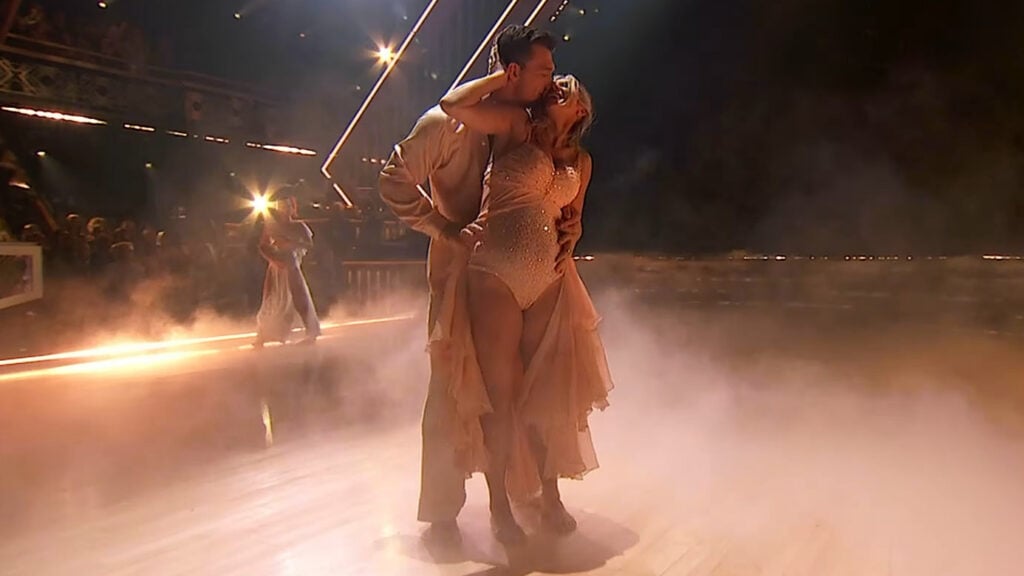
Bachelor Nation hottie Tyler Cameron has been competing on Dancing With The Stars.
He and fiancee Tate Madden have big news: they’re expecting!
They even did a sex reveal for DWTS viewers.
On the Tuesday, October 20 episode of Dancing With The Stars, Tyler and Tate shared their happy news.
During a contemporary dance routine, one set to “Supermarket Flowers’ by controversial singer Ed Sheeran, the audience heard a voiceover by Tyler.
(He was, of course, dancing with Sharna Burgess, though he has referred to Tate has his dance partner since their relationship first went public in 2024. Tate even joined him on.)
The dance was dedicated to moms everywhere.
And Tyler specifically addressed his own mother, who passed away in 2020.
“Hey, mom, there’s so much I wish I could tell you,” Tyler began.
“You would have loved the woman I’m going to marry,” he gushed.
“All the things that made you special,” Tyler continued, “I found in her.”
(Some of us may find it jarring to compare a romantic or sexual partner to our own human parent, but this seems to be particular common among straight men praising the women in their lives.)
“She’s going to be the most incredible mama, just like you,” Tyler gushed as Tate joined him on the dance floor. “And we’re going to have a baby.”
“I can’t believe I’m going to be a dad,” Tyler marveled as the announcement continued.
“I wish you were here,” he earnestly expressed.
Tyler aspired: “Hope that I make you proud.”
Without knowing Tyler’s mother, many of his fans can attest that they’re confident that his mother would continue to feel pride in him.
“I love you and I miss you, every day,” he concluded.
Alfonso Ribeiro, DWTS co-host, helped Tyler and Tate to reveal that they’re expecting a daughter.
The pink confetti was a lot, but it didn’t start a forest fire, so that we’ve seen sex reveals go worse.
“I get to be a girl dad, what a gift,” Tyler gushed at the news.
Tyler and Tate’s big news (and the dance) won a 32/40 points.
Congratulations to this beautiful couple!
Tyler Cameron Announces Fiancee’s Pregnancy on ‘DWTS’! was originally published on The Hollywood Gossip.
The Hollywood Gossip
Ground beef dinners can turn into lunches worth packing. Choose from pasta bakes, casseroles, soups, chili, patties, burgers, and stuffed tomatoes, with quick meals and longer simmered options for tomorrow.The post 15 tasty ground beef recipes that have my coworker…

When you spend your hard-earned money on a ribeye, you want it to be a good cut of beef. Look for well-marbled meat and uniformity in thickness.

Mashed – Fast Food, Celebrity Chefs, Grocery, Reviews

There’s going to be an emergency PHP release made in just over 2 hours. It’s to address a critical security bug.
I’m not sure how long it’ll be before Ubuntu updates, but I will preload a bunch of posts here and on inphotos.org using WP Super Cache and turn off PHP until it’s updated. The files will be served by Apache’s mod_rewrite, so no PHP involved at all. Uncached pages won’t be so lucky, but at least some pages will still be live.
#PHP #WordPressWordPress Planet