Categories
Sports Fox

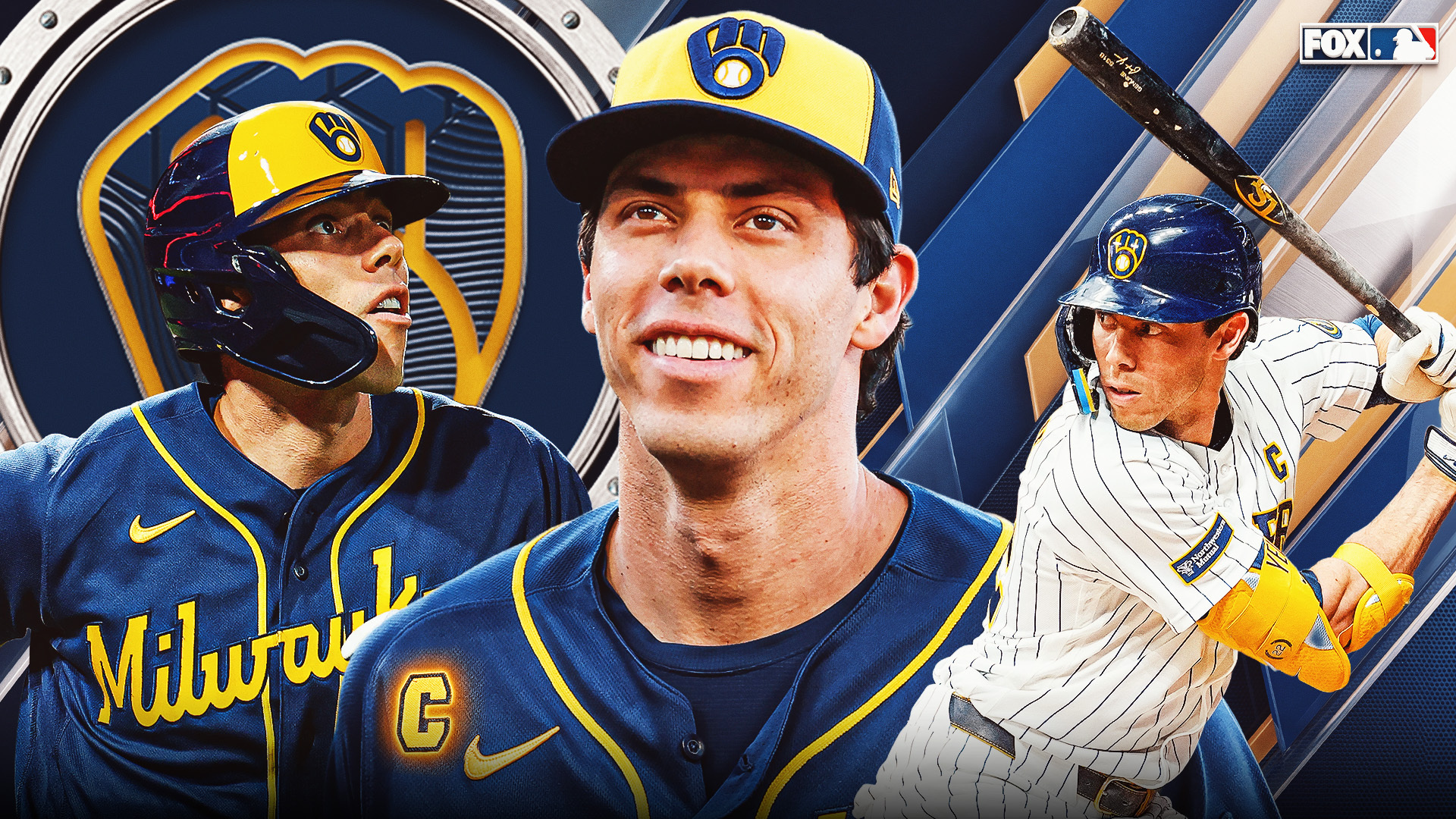
Mentor, Head Honcho, Captain: Christian Yelich Epitomizes The Brewers

American Family Field (MILWAUKEE) – On Sept. 26, during a team meeting before the Brewers’ penultimate game of their franchise-record 103-win regular season, outfielder Christian Yelich was officially named the first team captain in franchise history. The honor, while meaningful, was something of a formality. The “C” on his uniform denotes what has already been clear for years to every player who has stepped through Milwaukee’s clubhouse. “I could speak for an hour on it,” Brewers outfielder Sal Frelick told me, “but he was the captain before he got the ‘C.’ We all know that.” “I don’t think anyone would question that,” added infielder Joey Ortiz. “We go through him,” infielder David Hamilton told me. “Head honcho.” In many ways, Yelich’s teammates credit him for building the culture that has this Milwaukee squad in position to do what no team in Brewers history has done before, now four wins away from winning the franchise’s first World Series championship. Before Frelick was a big-leaguer, he already witnessed Yelich’s impact first-hand. Drafted in the first round in 2021, Frelick couldn’t believe the way that Yelich decided to take him under his wing. “My first big-league camp, before I was in the big leagues, he’s walking me through baserunning stuff,” Frelick recalled to me. “I’m like, ‘This guy’s won an MVP, why is he telling me how tight I have to cut the third-base bag when I’m running home from second?’ It’s because he just knows how to play the game. He cares. He knows that’s how to win baseball games. And he knows if people hear it coming from him, they’ll tell other guys and show how important it is.” Before Yelich arrived in 2018 and was named MVP in his first season with the team, the Brewers had missed the playoffs six straight seasons. Since Yelich’s arrival, they’ve won the division six times and made the playoffs eight times in the last nine years. “I just think the culture that was built here has been on him,” Frelick said, “on his back.” EARLY ON, MUCH of Yelich’s impact came with his play. He hit 36 homers in 2018, another 44 in 2019, then staked his future to the franchise in 2020, when he signed a club-record nine-year, $215 million extension with Milwaukee that cemented his place as a Brewer for life. He has spent every season since then, whether healthy or not, trying to instill the values and attention to detail that would build the club’s foundation for success and ultimately lead to the franchise’s first trip to the World Series since 1982. “I think the last three years, we have the best record in baseball,” said Brewers manager Pat Murphy. “Christian Yelich is at the forefront of all of that, whether he’s injured or not injured or whatever. He’s leading these young people that nobody expected. Nobody picked us to win the division one time in those three years, and he’s in the middle of it all, helping these young players believe in themselves.” Sometimes, it’s as simple as trying to get them into a better mindset. “This last year, when I was in a slump, he helped me out a lot with just the mental side of things, understanding that every day is a new day,” Ortiz told me. “Just try not to dwell on the past and keep moving forward.” This October, Yelich is practicing what he preached. This season, he hit below league average for the first time in his career. He is no longer the offensive force he once was, before age and back issues turned him from a superstar into more of a complementary player, but his manager knows how important he is to the team. So, Murphy stuck with him as his designated hitter for each of the Brewers’ four games in the National League Division Series against the Padres. Yelich rewarded Murphy’s confidence by recording a hit in each game. “He’s been through a lot,” outfielder Garrett Mitchell told me. “He’s had a long, successful career, first and foremost, but has also worked through the ups and downs. He’s someone who’s kind of seen it all, someone you can easily have conversations with, and he’s willing to sit down for however long and just sit and talk. When you have a leader who’s willing to do whatever it takes not only to win but to help teach you, show you the ropes, teach you right from wrong, it’s incredible.” And when the Brewers decided to play lefty masher Andrew Vaughn over Yelich in Game 1 of the National League Championship Series against ace Tarik Skubal, despite Yelich’s success to start October, the captain didn’t pout. He returned to the lineup a day later and followed Jake Bauers’ iconic 12-pitch walk against Yoshinobu Yamamoto with a go-ahead, two-run hit that knocked the reigning World Series MVP out of the game in the third inning. “This guy won an MVP — you could argue he should’ve won two — and just around the clubhouse, you would never know it,” Bauers told me. “He’s extremely humble. He doesn’t care about Christian Yelich; he cares about the Milwaukee Brewers, and I think that really kind of sets the tone for the rest of the roster.” “Everybody looks up to him,” added Vaughn. “If he has something to say, you’re going to listen. I think he’s the piece of this team that kind of keeps everybody together.” YELICH ARRIVED IN Milwaukee three years before Ryan Braun departed. The two franchise icons were both part of the 2018 team that fell one game short of going to the World Series. Over the next decade, Yelich claims he didn’t make a conscious decision to take on more of a leadership role. “It’s just doing what’s got to be done to win and to be successful,” Yelich told me. “We’ve got a lot of young players, and having been a guy that’s kind of been around for a while and seen a lot of different things in the game and experienced a lot of the things that they’re probably going through for the first time, you kind of remember what it felt like to be at that point in your career. If you can lend a helping hand or guide somebody through those times or wish you knew something back then when you were going through it, it’s just stuff like that.” “It’s more like he’s an open book,” Mitchell explained. “If you have a question you want an answer to, he has it. With me, it’s just learning how to be a professional. How do you show up every day and do the things that you do? I think that shows up in a lot of different ways, but the fact he’s willing to do whatever to help a guy learn, whether it’s,  ‘Hey, you don’t show up that late,’ or, ‘Hey, you gotta be here at this time,’ or, ‘Hey, this is how you go about your work in the cage,’ it shows up in a lot of ways. It’s different for everyone. But he’s been one of my favorite teammates I’ve ever come across.” Yelich and Brandon Woodruff are the only players who remain from that 2018 Brewers squad, which came so close to ending the World Series drought. Eight years later, the NL champions are reaping the rewards of the wisdom of their most-tenured players. “We’ve seen it all together,” Woodruff said. “He means a ton to the city and the organization. His voice carries a lot of weight. He’s our franchise player. He just means a ton to the guys. He goes about his days and playing the game the right way, which is why guys respect him so much.” At 34, Yelich is now the oldest player on a youthful Brewers squad known for its ability to pressure opponents with contact and speed. He no longer runs the way he did in 2019, when he stole 30 bases, led the majors with a 1.100 OPS and had an argument to win MVP for a second straight season, but his impact remains. “He’s way more important to this process than anyone knows,” Murphy said. Along with the Yankees’ Aaron Judge and the Royals’ Salvador Perez, Yelich is now one of only three active players with the title of captain. Before accepting the honor, he asked for the permission of Hall of Famer Robin Yount, who was a vital part of the last Brewers team to make it to a World Series. Now, Yelich is trying to help his squad do what no Brewers team has done before, whether through his play, his perceptiveness or both. “There’s a lot of stuff that goes on behind the scenes with Yeli that I don’t think many people get to see,” Ortiz told me. “So, I’m glad he got the ‘C’ on his chest.”​Latest Sports News from FOX Sports

Categories
Music

Pitbull Recalls Dolly Parton Calling Herself ‘Miss Worldwide’

Pitbull and Dolly Parton teamed up for “Powerful Women,” but one of their most memorable moments together came when Dolly had a title of her own in mind. Continue reading…​The Boot – Country Music News, Music Videos and Songs

Categories
Alaska News

Alaska Lt. Gov. incorrectly put disqualified candidate on the ballot, state judge rules

Voters line up to cast their ballots at the Midtown Mall polling site on Oct. 21, 2026. The mall site is among several in the state open for early voting in the general election. (Photo by Yereth Rosen/Alaska Beacon)

The Alaska Division of Elections and Lt. Gov. Nancy Dahlstrom acted incorrectly when they put disqualified Republican candidate Jose Tagle on the ballot for state House District 22, an Anchorage Superior Court judge said Thursday.

Judge Josie Garton’s decision, published in the late afternoon, means “Tagle’s election may not be certified if he does win a majority of votes in the general election,” she wrote.

Tagle is running against Democratic incumbent Rep. Ted Eischeid, who is heavily favored in the district that went for Democratic Presidential candidate Kamala Harris two years ago.

Garton did not order the division to reprint ballots without Tagle’s name. Absentee and early voting is already taking place, and Tagle may appeal the ruling. A successful appeal could see his candidacy restored.

“The Division’s certification, while erroneous, does not undermine the fundamental fairness of the election,” Garton said.

The Alaska Division of Elections, Alaska Department of Law and Dahlstrom’s office did not immediately respond to a request for their opinion of the decision.

Tagle did not immediately respond to an email on Thursday afternoon seeking his thoughts.

The head of the Alaska Democratic Party, which filed the lawsuit that challenged Tagle’s candidacy, said she was pleased with the decision.

“Mr. Tagle’s completely blank disclosure left Alaskans in the dark,” said party executive director Jenny-Marie Stryker. “Voters deserve to know the financial interests of our elected officials — that’s the law, and it’s just what’s right.”

New ruling concerns issue that also involved a candidate for governor

Thursday’s ruling comes after a two-month-old dispute that also involved Republican gubernatorial candidate Treg Taylor. 

The Alaska Public Offices Commission, which regulates candidates and campaigns, recommended in late August that Tagle be disqualified as a candidate after submitting a blank financial disclosure form and failing to amend it within a grace period allowed by state law.

It also recommended Taylor be disqualified for filing an incomplete form and failing to amend it before the deadline. Taylor and Tagle submitted amended forms after the deadline.

Dahlstrom initially followed APOC’s recommendation, but days later, she reversed herself and put the two men back on the general election ballot, citing a review from the Department of Law indicating that disclosure forms filed by many other candidates could also have problems.

The Beacon analyzed that review and found many of the problems flagged by the Department were either minor or did not exist at all.

Alaska Democratic Party fought the issue through the summer

The Alaska Democratic Party sued the Division of Elections in July after it permitted Tagle’s candidacy for the state primary election despite his blank financial disclosure form.

It did not challenge Taylor’s candidacy, and subsequent proceedings did not involve him or Dahlstrom’s decision to certify him.

Garton ruled against the party in August, saying that under state law, Tagle had 30 days to fix his blank form, and the party had filed before that grace period was over. In addition, Garton said that the commission, not the Division of Elections, should have the final word on the correctness of financial disclosure forms.

After Dahlstrom certified Tagle despite the APOC recommendation, the Democratic Party filed a new complaint in September and asked Garton to re-examine the issue. She declined to issue an immediate ruling and held oral arguments Oct. 9. 

Procedural problems aren’t an obstacle for APOC decision 

During oral arguments, attorneys from the Department of Law — representing Dahlstrom and the Division of Elections — abandoned the earlier argument that Tagle’s restoration was warranted by the fact that other candidates also had problematic forms.

Instead, they contended that APOC’s disqualification recommendation was not final and that procedural errors — including a notice that failed to state that Tagle could appeal the recommendation — meant that Dahlstrom was not bound by the recommendation.

But writing on Thursday, Garton concluded that based on state laws, regulations and the procedures used by APOC, the commission’s decision was “final and appealable.”

She wrote that while APOC’s statement was officially billed as a recommendation, state law requires the lieutenant governor to follow it.

“While it may be true that APOC’s recommendation ‘did not order anyone to do anything,’ both parties agree, as does the court, that the Lt. Governor has no discretion to disregard a final decision by APOC that Tagle failed to substantially comply with (state law) within the deadline,” Garton wrote.

State attorneys argued that APOC’s recommendation didn’t take effect until 30 days after it was ordered and that procedural problems also left the door open for the lieutenant governor not to follow the recommendation, but Garton disagreed.

“APOC’s decision was effective immediately, and the potential procedural irregularities in APOC’s proceedings did not provide grounds for the lieutenant governor to ignore the clear command of (state law),” she wrote.

Garton said the issues facing Tagle’s nomination “are precisely the circumstances under which the Legislature intended a candidate for public office to forfeit his nomination.”

“By certifying Tagle’s nomination after APOC entered a final decision finding that Tagle failed to substantially comply … within the deadline established by law, the Lieutenant Governor and the Director of the Division of Elections violated (state law).”

Garton concluded that APOC should notify Tagle that he has 30 days to administratively challenge the disqualification decision. He — or state officials — could also appeal Garton’s ruling to the Alaska Supreme Court.

SUPPORT: YOU MAKE OUR WORK POSSIBLE

Categories
Sports Fox

Why Tom Brady Believes A Pair Of Veteran QBs Throw The Prettiest Passes In The NFL

Throwing a football can age like fine wine — at least that’s the case for a couple of quarterbacks, according to Tom Brady. In the most recent edition of #AskTom, Brady was asked which quarterback throws the prettiest ball in the NFL. He actually responded with a pair of quarterbacks, and they’re both veterans. “One is Aaron Rodgers and the other is Matthew Stafford,” Brady replied. And not only did Brady say that the two decorated quarterbacks throw the prettiest passes in the league today, but he also went on to say that the way Rodgers and Stafford throw the ball might be among the best in NFL history. “Both those guys spin the ball as well as anybody that’s ever played,” Brady said. “They have silky-smooth deliveries. They’re so accurate, and it’s just effortless when it comes out of their hands.” This actually isn’t the first instance where Brady has compared Rodgers to all-time passers. In April 2025, he said that Rodgers and Dan Marino instantly came to mind when he was asked which quarterback has the most talented arm in NFL history. Rodgers’ résumé speaks for itself, as his four MVPs are the second-most in NFL history. At 42, Rodgers is still putting up respectable numbers and occasionally dropping dimes. He’s thrown for 1,487 yards, 12 touchdowns and five interceptions this season, helping the Pittsburgh Steelers get out to a 4-2 start. Stafford, meanwhile, threw some pretty balls last season en route to winning his first MVP, doing so at age 37. Now 38, Stafford has continued to make some impressive throws this year. He leads the league in passing entering Week 7 (1,794 yards) as he continues to spark the Los Angeles Rams’ offense. As Rodgers and Stafford continue to drop dimes, Brady thinks the two quarterbacks have an innate talent for throwing the ball. “I think there’s really natural passers from the time you’re born, and you see that all the way through baseball leagues, and then Pop Warner football,” Brady said. “Then, you get to college, and you really start to refine it, because you’re practicing so much. By the time you get to the pros, those fundamentals are pretty hardwired into what you do. You can make minor modifications, but both those guys were natural passers the day they came into the NFL.” Rodgers might have some of the most impressive passes in NFL history. His 61-yard Hail Mary to help the Green Bay Packers beat the Detroit Lions in 2015 has been debated as the best Hail Mary in NFL history. On that play, which has since been dubbed the “Miracle in Motown,” Rodgers scrambled around the backfield before unleashing a pass from the Packers’ 35-yard line. His pass traveled a few yards into the end zone, where Richard Rogers came down with the game-winning grab. That wasn’t the only Hail Mary that Rodgers completed that season. In fact, he completed two Hail Mary passes in the Packers’ playoff loss to the Arizona Cardinals. The first was a fourth-and-20 completion to Jeff Janis, where Rodgers threw the ball nearly 60 yards in the air to help Green Bay go from deep in its own territory to Arizona’s side of the field. A couple of plays later, Rodgers eluded the Cardinals’ pass rush and found Janis on a Hail Mary pass for a touchdown that had nearly 60 air yards. Those Hail Mary throws might not even be the most impressive of Rodgers’ career, either. A year later, Rodgers threw a ball on a tightrope for a 36-yard completion to Jared Cook to help set the Packers up to kick the game-winning field goal against the Dallas Cowboys in the divisional round of the playoffs. That might be too bland a way of describing that pass, though, as Rodgers scrambled to his left before squeezing the throw by a Cowboys defender and to Cook, who perfectly kept himself aligned with the sideline. Years before those throws, Rodgers made an impressive throw on the game’s biggest stage. He completed a 21-yard touchdown pass to Greg Jennings for a touchdown in the Packers’ Super Bowl XLV win over the Steelers. On that pass, Rodgers threaded the needle by perfectly placing a ball between Steelers safeties Ryan Clark and Troy Polamalu. The ball went just past a diving Clark, while Polamalu was just too late to make a play and knock Rodgers’ pass away. If Rodgers is the King of Hail Mary throws, then Stafford might be the equivalent of no-look passes. Stafford has made several highlight no-look throws over the years, including on the biggest drive of his career. When the Rams needed to score a touchdown in the final minutes of Super Bowl LVI, Stafford deceived the Cincinnati Bengals’ defense when he looked toward the sideline as he fired a pass over the middle to Cooper Kupp for a 22-yard gain. Stafford has continued to make big plays on no-look passes as he ages. Just last season, he faked out the Seattle Seahawks’ defense when he looked toward the flat as he threw a touchdown pass to Puka Nacua on a slant. The most iconic pass of Stafford’s career might have come when he was with the Lions, though. It actually occurred in his rookie season. Stafford separated his non-throwing shoulder on the penultimate play from scrimmage in the Lions’ win over the Cleveland Browns in 2009, with a pass interference giving Detroit the ball at the 1-yard line on the ensuing play. Stafford stayed on the field for the next play, throwing a tight spiral over the middle to Brandon Pettigrew for a touchdown that helped serve as the game-winning score. In a follow-up question, Brady was asked which throw is tougher to make: a go route or pass over the middle. Brady combined the two and said that throwing a deep post was the toughest throw for him to make during his career. “I thought a deep go route down the sideline was a little easier because, A, you were only dealing with one defender, the cornerback usually, and B, that receiver was always on the same path,” Brady said. “He was always running directly down the field. So you could gauge his speed, and then try to put the perfect arc in place, drop it right into the bucket and let your receiver catch it. “When you’re running a post, you’re running also horizontally across the field. I always felt that was much harder to judge, and a lot of times, you’re involving either the middle-of-the-field safety and the corner, which is kind of a two-on-one ball and was always a little tricky. I probably threw more go-balls for touchdowns than post for touchdowns over the course of my career.” While there isn’t an exact number that shows how well Brady did at throwing passes to receivers on post routes during his career, there are some numbers that suggest he didn’t do as well throwing deep and over the middle of the field. Brady threw for more touchdowns and a higher passer rating on throws of 20-plus yards outside the numbers as opposed to 20-plus-yard throws between the numbers in 10 of his 16 final seasons, per Pro Football Focus.​Latest Sports News from FOX Sports

Categories
Entertainment

8 Aldi Products That Have Been Discontinued In 2026 (So Far)

One of the best things about Aldi is its ever-changing options, but that’s also a downfall, especially when a beloved product is discontinued.

​Mashed – Fast Food, Celebrity Chefs, Grocery, Reviews

Categories
Food

The Fruit With The Most Fiber Per Serving Isn’t Strawberries Or Blueberries

Fruit and fiber go hand in hand, but some pack more punch than others. While melon barely has any, this tropical fruit punches well above its weight.

​Food Republic – Restaurants, Reviews, Recipes, Cooking Tips

Categories
Sports Fox

Rays-Brewers World Series Breakdown: Stacking Lineups, Pitchers, Bullpen

Don’t be surprised by this World Series matchup. The Milwaukee Brewers and the Tampa Bay Rays had the two best regular season records in their respective leagues — and they’ve shown why during the playoffs. Both have the talent to give us a worthy Fall Classic. Star aces in Jacob Misiorowski and Drew Rasmussen. Young sluggers in Jackson Chourio and Junior Caminero. Let’s look at these squads as we get set for Game 1. The 2026 World Series between the Tampa Bay Rays and Milwaukee Brewers, who are each seeking their first championship triumph, can be exclusively viewed on FOX, beginning on Oct. 23. Game 1: Friday, Oct. 23 Game 2: Saturday, Oct. 24 Game 3: Monday, Oct. 26 Game 4: Tuesday, Oct. 27 Game 5*: Wednesday, Oct. 28 Game 6*: Friday, Oct. 30 Game 7*: Saturday, Oct. 31 * – if necessary​Latest Sports News from FOX Sports

Categories
Sports Fox

The Bryce Underwood Experiment Has Become A Cautionary Tale For College Football

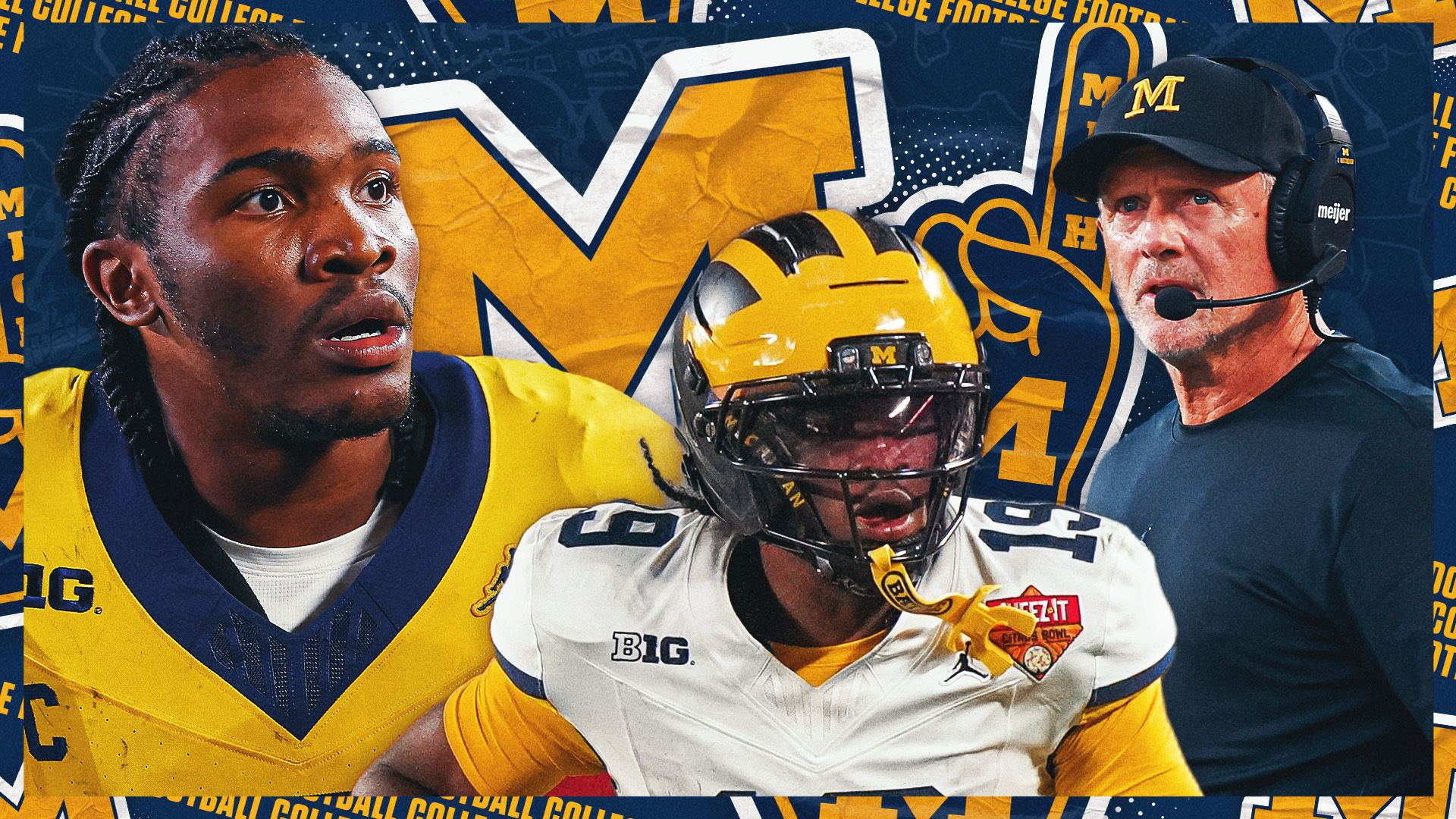
There is no savior in Ann Arbor — not after last week. You’ve heard the tale by now. That Michigan outlasted LSU for a local five-star phenom. That billionaire Larry Ellison had a hand in helping secure the prominent passer. That this was the dynamic quarterback hand-selected to anchor the transition from Jim Harbaugh into the Sherrone Moore era. So much for all that. Michigan quarterback Bryce Underwood walked toward the sidelines on Saturday, slipped off his helmet toward the tail end of the first half after another underwhelming outing against Penn State and frustratedly barked toward the bench. No lip-reader needed. Two years, two staffs, and a dozen middling performances later, Underwood is a sunk cost — around $3 million annually, to be more precise. Consider that cash flushed. “Underwood’s value, I think, what Michigan was willing to pay him was way more than what anyone else was willing to pay him,” said longtime recruiting analyst Steve Wiltfong. “I don’t think it was just a little more. At some point, they were bidding against themselves.” It wasn’t supposed to be this way. The hometown kid staying home. The enormous contract. The billionaire booster’s wife. The headlines, everywhere. That was all supposed to equal wins, extending one era of dominance into the next. Those rosy fantasies ended on Saturday with Underwood’s benching. Perhaps it’s short-term. Perhaps backup Tommy Carr struggles on Saturday against No. 6 Indiana. Perhaps Underwood flashes once more in maize and blue, or elsewhere. But, realistically, the Michigan chapter of this experiment is over — and front offices across America are taking notice. “Sometimes you have to walk away and get your ego out of the way,” said one Power Four general manager on the condition of anonymity, in order to speak freely. “[Michigan] didn’t need Bryce Underwood. Let him go somewhere else for $3 million. There are plenty of quarterbacks that can get you to a championship that are not named Bryce Underwood. “And now you’ve seen it.” Michigan and Underwood haven’t exactly been the rosiest marriage — and there are plenty of parties to blame for that. There’s the former Michigan staff that was ousted amid the fallout of the Sherrone Moore scandal. There’s the new group of Kyle Whittingham and offensive coordinator Jason Beck that has been patient, but seen little to no tangible results on Saturdays. There’s Underwood himself, too, who clearly hasn’t made the strides expected of an elite passer with the pedigree of the No. 1 overall recruit despite Zeus-like measurables and a howitzer arm. But wherever that blame may be placed, the broader sentiment is that Underwood’s deal is a cautionary tale about big spending on prep prospects in a new-look world in which everyone in front offices is still developing best practices. “I always try and lean toward paying for guys that come with less projection,” said a second Power Four general manager. “Ideally, you see what you’re getting before you buy it. Spending big on a high school QB is a massive gamble, and it’s really hard on both sides because there is an urgency to play that player early because of the money.” Consider college football staffs these days like a teenager landing their first credit card. They conceptually understand the card translates to money. Utilizing it responsibly is another challenge in itself. Underwood is simply the latest example. “Like five years ago, we were trying to figure out the karaoke song for a mom on a Friday night. Now, all of a sudden, we’re talking to CAA, negotiating contracts,” quipped a Big Ten front office staffer. “It’s like, ‘What the f— are we doing?’” Common knowledge in college football recruiting circles — new as these philosophies might be — would state money is best spent on experienced transfers compared to developmental projects, no matter how elite they might be coming out of the high school ranks. The market has borne that out. Opendorse, one of the industry’s leading NIL data providers, provided information that showed four-year transfers are receiving around 48% of football revenue share dollars, while only about 9% has been earmarked for high school recruits. Transfers are also receiving a little more than double what the average high school recruit makes, while their market share has jumped from 36% of spend last year to 54% this year. There have been outliers. Underwood is one. Nico Iamaleava’s $8 million deal with Tennessee was another. As was the Jaden Rashada saga at Florida. Not exactly ringing endorsements. For each Underwood or Rashada, there are also homegrown success stories. CJ Carr at Notre Dame. Kamario Taylor at Mississippi State. Julian Sayin at Ohio State, recent injury aside. “Transfer data on top quarterbacks has always shown it to be a bit of a crap-shoot anyway, so in most cases, it’s a much smarter business decision to invest significant dollars in a portal quarterback over a high school player,” said a third Power Four general manager. “Most of us believe it’s too big a risk to invest huge dollars into an unproven player at that position.  And honestly, it’s a huge risk at every position, but the other markets haven’t caught up — or slowed down — with the QB market yet.” Underwood is expected to hold a clipboard Saturday vs. No. 6 Indiana, which figures to have a broader impact on front office operations and how their decision-making might be scrutinized. The majority of general managers that spoke with me this week pointed to the Underwood situation as an indicator of poor evaluations and a responsibility that should fall on the front office as much as an indictment of development or a lack of meshing with the new staff. That carries its own microscope. Think in an NFL context. General managers oversee draft picks, roster construction, etc. When those results don’t bring success, there’s accountability. College football could be due for its own reckoning. “Much like an NFL Draft situation, if you draft your quarterback at 16 overall and you think that he’s going to be the guy, you better put him in a position to succeed,” said Rivals national recruiting analyst Sam Spiegelman. “… The truth is, high school quarterback recruits are not all always ready to play right out of high school. That takes an extremely gifted quarterback to be able to come in and make an impact from Friday nights and then onto Saturdays. But when you have a million-plus dollar price tag attached to your name coming out of high school, the pressure is certainly on.” “It highlights how strictly GMs will be evaluated moving forward,” added a fourth Power Four general manager. “There’s a real cost to having money on the sidelines. If you have too much of it, there will likely be consequences.” There will almost certainly be no parades in Ann Arbor this fall. No dreams of Heisman trophies. No thoughts of a CFP run. No celebrations of the local boy done good. The Underwood era at Michigan started with promise. No. 1 overall recruits and a price tag in the tens of millions of dollars bring such aspirations and expectations. It hasn’t worked out. It doesn’t always. But when there’s that kind of money involved, perhaps it will serve as a case study for front offices to spend their resources elsewhere — or not. “Giving $3 million out of high school, I don’t think I’d ever feel great about doing that,” said a fifth Power Four general manager. “But if you can show me this guy [can play], I think there’s probably a couple of them in the 2028 class. “If you told me some of those guys might cost $3 million — whether it’s (Ohio State commit Christopher) Vargas or (Indiana commit) Lukas Prock — I might think about doing it.”​Latest Sports News from FOX Sports

Categories
Alaska News

New geological estimate puts Alaska North Slope gas resources at 96 trillion cubic feet

Tundra in the northeastern area of the National Petroleum Reserve in Alaska is seen from the air on June 28, 2014. (Photo by Bob Wick/U.S. Bureau of Land Management)

Tundra in the northeastern area of the National Petroleum Reserve in Alaska is seen from the air on June 28, 2014. A new U.S. Geological Survey resource assessment estimates undiscovered natural gas resources across the entire North Slope, including hte 23 million-acre petroleum reserve. (Photo by Bob Wick/U.S. Bureau of Land Management)

Alaska’s North Slope probably holds enough undiscovered natural gas to fuel the nation for nearly three years, according to a new federal report.

A resource assessment released Wednesday by the U.S. Geological Survey produced a mean estimate of 96 trillion cubic feet for undiscovered conventional natural gas reserves across the entire North Slope.

That is far more than the 35 trillion cubic feet of known reserves, most of which lie within the Greater Prudhoe Bay Unit, which has been producing oil since the 1970s.

The 96 trillion cubic feet estimate is “roughly three times the size of the known gas accumulations on the Alaska North Slope,” said Alicia Lindauer, coordinator of the USGS energy resources program, in a news briefing Wednesday.

“If you think about the total natural gas consumption across the country, it would be the equivalent of just under three years’ worth of U.S. natural gas consumption.”

The new assessment also contains a mean estimate of 17 billion barrels of undiscovered oil on the North Slope.

It is the first North Slope-wide resource assessment for natural gas. Past USGS assessments have been for portions of the North Slope. Recent USGS assessments for different areas were released in 2021, 2020 and 2017.

The total was not surprising, given that it was a North Slope-wide assessment, said William Craddock, a USGS geologist who was one of the report’s authors.

“In a sense, we think this is fairly consistent with how the province has been viewed in the past,” Craddock said at the news briefing.

The report incorporates new knowledge and new technology, the USGS officials said. Like other geologic reports, it does not consider the economics of extracting that oil and gas, they said.

Big oil discoveries at Willow, the huge project that ConocoPhillips is developing on the western North Slope, and at Pikka, the nearby project where operator Santos started production this year, were among the factors considered, the report’s authors said.

“Those plays in particular are very prospective, are highly prospective, for undiscovered oil and gas resources,” Craddock said. “The geology that defines those fields extends across vast portions of the northern part of this province, and so that prospectivity is reflected in the undiscovered oil and gas resource numbers.”

Like other USGS resource assessments, the new report does not consider economic factors. The new report also considers only conventional oil and gas, whether associated with oil deposits or independent of those liquids. It does not consider unconventional resources like gas hydrates or coalbed methane.

And like other USGS resource assessments, it includes estimate ranges. For natural gas, the range is between 17.3 trillion and 276.6 trillion cubic feet.

The new assessment includes three general geologic layers below the North Slope’s surface: the Brookian sequence, which holds rocks 140 million years old and younger, covering most of the Cretaceous era; the Beaufortian sequence, which holds rocks from about 140 million to 200 million years old, including the Jurassic period; and the Ellsemerian sequence, which has rocks as old as about 350 million years, and includes the Triassic period.

The Brookian sequence is the one most relevant to current and future oil activities on the North Slope. It holds formations that are important to current North Slope oil production, including the Sagavanirktok formation, which provides oil produced at Prudhoe Bay and other fields, and the Nanushuk and the Torok formations, which underlie newer fields on the western side of the North Slope.

Trump administration touts report

USGS officials said the new resource estimate was not ordered for any specific reason but is part of the agency’s normal operations, which include periodic assessments every few years of energy resources on the North Slope and elsewhere.

“This assessment was conducted as part of our regular process. We’ve had ongoing work to really assess both oil and gas resources across the Alaska North Slope. This one wasn’t prompted by a specific request but was part of that overall plan to assess the entire Alaska North Slope,” Lindauer said.

However, Department of the Interior leaders said the new assessment is in line with President Donald Trump’s policies and an Inauguration Day executive order called “Unleashing Alaska’s Extraordinary Resource Potential.”

“Alaska is one of America’s greatest energy frontiers, and President Trump is committed to unlocking its extraordinary potential,” Secretary of the Interior Doug Burgum said in a statement. “Alaska’s natural gas reserves can supply affordable, reliable, secure energy to Americans and our South Pacific allies for generations, and this assessment helps underscore the importance of understanding these vast resources beneath the North Slope and using world-class American science to turn that potential into opportunity. By advancing responsible energy development, we can strengthen American Energy Dominance, create jobs and deliver lasting economic benefits for Alaskans and the entire nation.”

For now, the 35 trillion cubic feet of known natural gas and the estimated 96 trillion feet of prospective natural gas remains stranded on the North Slope, hundreds of miles from any market. For that reason, energy companies have not explored for North Slope gas and have focused instead on oil, which has been shipped through the Trans Alaska Pipeline System since 1977.

Proposals to build a massive natural gas pipeline project to commercialize the North Slope’s gas — sending it either through Canada to Lower 48 markets or through an 800-mile pipeline to a liquefaction facility at tidewater for shipment to Asian markets — date back to the time even before oil production started at Prudhoe Bay in 1977.

None has been deemed economically viable.

Alaska natural gas pipeline dreams stretch over half a century

The Trump administration is the latest presidential administration to advocate for a massive natural gas pipeline project to ship North Slope reserves to markets.

Trump, his cabinet members, Alaska Republican Gov. Mike Dunleavy, U.S. Sen. Dan Sullivan, R-Alaska, and U.S. Rep. Nick Begich, R-Alaska, said last month that the Republic of Korea had pledged to invest $54 billion in the current project, which proposes to ship LNG to Asia using an 800-mile pipeline and a liquefaction plant at Cook Inlet.

The claim was false. The Korean government said it has not made any such commitment, though it is evaluating possible participation in the Alaska LNG project.

During an Oct. 13 campaign rally in Wasilla, Trump said the government of Taiwan has committed to invest in the project. In response, the Taiwanese government said it, too, is considering participation but has not yet made a commitment.

SUPPORT: YOU MAKE OUR WORK POSSIBLE

Categories
Entertainment

Mistakes Everyone Makes With Sweet Potato Casserole

When the holidays start to roll around, we tend to roll out the sweet potato casserole. Are you making these common mistakes, though?

​Mashed – Fast Food, Celebrity Chefs, Grocery, Reviews