Losing weight and keeping it off isn’t as straightforward a journey as one might hope, a fact that many Hollywood celebs have talked about through the years.
Health Digest – Health News, Wellness, Expert Insights









Losing weight and keeping it off isn’t as straightforward a journey as one might hope, a fact that many Hollywood celebs have talked about through the years.
Health Digest – Health News, Wellness, Expert Insights
Reading Time: 3 minutes
In The Shadow of Eight has detailed horrible moments from Collin Gosselin’s miserable childhood.
The allegations are piling up. But Kate keeps denying any wrongdoing.
Jon seems to know that he failed his kids in many ways, and he’s doing what he can to make up for it.
Right now, that means telling the truth — and hoping that his ex-wife will do the same.
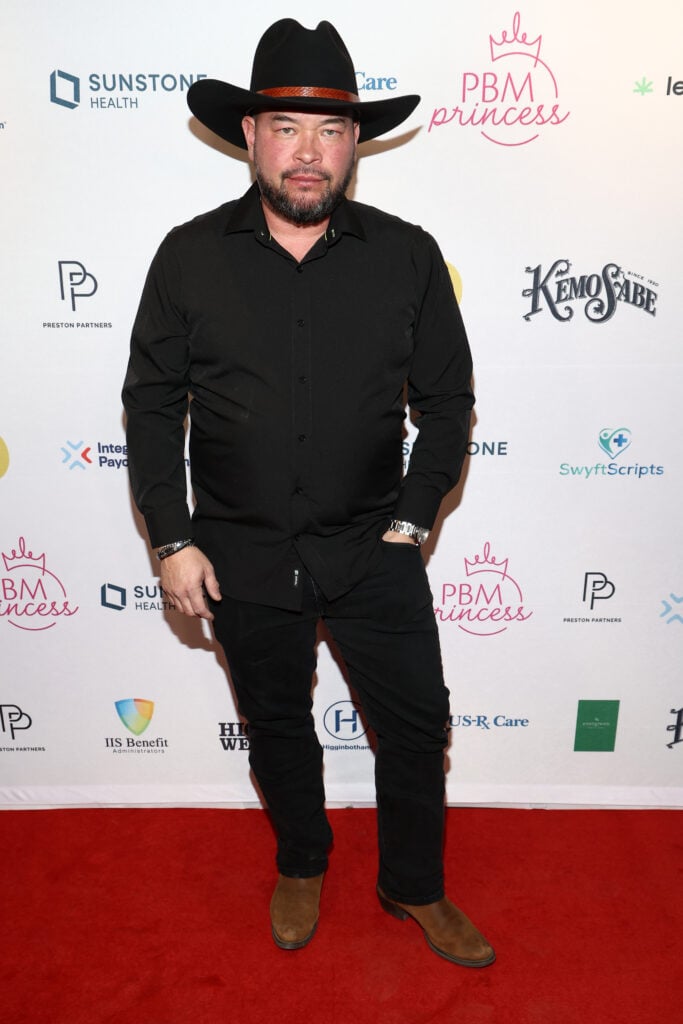
On Thursday, TMZ spoke to Jon in New York.
There, Collin’s father expressed the desire for his ex-wife to just be honest.
Jon’s doing it, he argues.
(That is in reference to the upcoming Netflix documentary.)
He doesn’t think that it’s unreasonable to ask Kate to do the same.
Collin’s focus isn’t on expecting Kate to do the write thing.
That’s probably sensible. She’s had decades to decide to be even a halfway decent person. Why start now?
Instead, Collin hopes to reach out to his estranged siblings — four of his fellow sextuplets, plus his two older sisters.
He wants them to do their own research. He says that he has evidence showing that Kate stole from them.
(The psychology of families like this can be complex. It can be hard, after clinging for so long to the idea that Kate is the “good” one, to accept the truth.)
Many people are showering Collin with support — verbally, financially, and by purchasing his bestselling memoir.
To some, this is all new information. They only knew that something was wrong after Collin vanished from Kate Plus 8 and from all family photos and turned out to be locked away in an institution.
Others remember the 2009 evidence of Kate hitting her daughter and have, frankly, been waiting for her to face justice for a long time.
Collin has resolved to move on as much as possible, even with public calls for him to see if he can press legal charges against Kate for, let’s be honest, ruining his life.
Jon doesn’t sound so forgiving. He has expressed a desire for Kate to face criminal charges.
Collin shares this iconic clip on his Instagram Story
by
u/SingerSubstantial462 in
gosselinssnark
Kate has, of course, denied allegations of abuse. Or at least, the allegations that cannot be proven.
She has even gone so far as to claim that Collin fabricated these allegations due to mental illness.
(There are rare cases when someone can falsely accuse someone of wrongdoing, but there tend to be other factors — the abuse coming from a different person, for example, or a manipulative third party pushing a “recovered memories” hoax.)
Believe it or not, there are people who actually defend Kate. Some do so out of habit — a bad habit that they need to quit. Others went through their own divorce challenges and formed a parasocial bond with the idea of Kate while ignoring reality.
Will Kate do as Jon hopes and tell the truth about her estranged son? Will Collin’s estranged siblings break through two decades of programming and turn on their mom? Those sound nice … but unlikely.
Jon Gosselin: Kate Should Finally Tell the Truth About Collin! was originally published on The Hollywood Gossip.
The Hollywood Gossip
Reading Time: 2 minutes
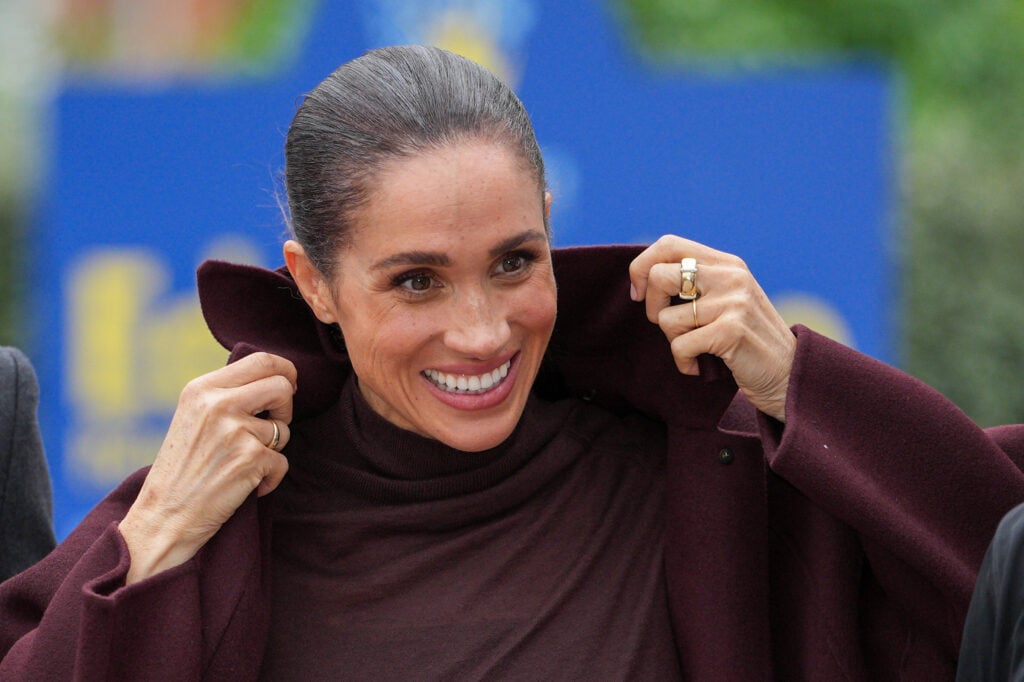
Meghan Markle is shedding new light on her estrangement from her father, Thomas Markle Sr., after disturbing allegations involving the 82-year-old emerged in the Philippines.
The Duchess of Sussex says concerns about her father date back years, and she is now explaining why she has not allowed him to have contact with her children, Prince Archie and Princess Lilibet.
According to a report from The New York Post, Meghan’s half-brother, Thomas Markle Jr., recently discovered hundreds or potentially thousands of disturbing images among their father’s belongings at his home in Cebu, the Philippines.
The images allegedly involved child sexual abuse material.
Thomas Jr. contacted authorities after making the discovery. The allegations could also prompt an FBI investigation because Thomas Markle Sr. is an American citizen, though no criminal charges or findings of guilt have been announced.
Thomas Sr. has vehemently denied possessing the material, reportedly describing the accusations as “sick lies.”
The allegations have now prompted Meghan to revisit a troubling episode from 2018, the year she married Prince Harry.
In a statement to the Post on October 23, Meghan said a letter containing what she described as “troubling and disturbing allegations” about her father was sent to London’s Metropolitan Police and Royalty and Specialist Protection that year. She said the letter was shared with her and that she was assured the allegations were being investigated.
Meghan did not reveal the letter’s contents or identify its author.
“My thoughts are with any children who may have been harmed,” she said.
She also addressed the years of speculation surrounding her decision to cut ties with her father, making it clear that protecting her own children was central to that decision.
“I hope it can now be understood that, despite certain media publications’ distortion over the years, any distance from my father and my choice to not allow him to have contact with our children was for one reason: to protect them,” Meghan explained.
Her half-sister, Samantha Markle, has challenged the accusations, reportedly calling them unsubstantiated and accusing Thomas Markle Jr. of making claims for financial gain. Those claims have not been independently established.
The Markle family’s fractured relationships have played out publicly for years. Thomas Markle Sr. missed Meghan’s 2018 wedding after a controversy involving staged paparazzi photographs and subsequent health concerns. King Charles III, then Prince Charles, ultimately walked Meghan down the aisle.
The father and daughter have remained estranged ever since.
Now, with fresh allegations drawing renewed attention to the family, Meghan hopes the focus will remain on the welfare of children and the need to establish the facts.
The allegations remain unproven, and the investigation’s outcome could determine what happens next. For Meghan, however, the decision to maintain distance from her father is one she says was made to protect her family.
We will have further updates on this developing story as new information becomes available.
Thomas Markle Investigated For Child Sex Abuse Images; Meghan Markle Says She Cut Ties to Protect Her Kids was originally published on The Hollywood Gossip.
The Hollywood Gossip

 Collin Gosselin is sharing his side of the story.
After his sister Hannah Gosselin—who was assumed to be the one sibling Collin still had a relationship with amid his estrangement from mom Kate…
E! Online (US) – Top Stories

The clock change gives you a little extra time to get the game day table ready. These 17 snacks include dips, sliders, shrimp, pinwheels, and make-ahead bites, so you can prep a spread before kickoff.The post 17 game day snacks…

When it comes to breakfast on the go, Trader Joe’s has you covered with its bakery section. Grab this convenient handheld item for those busy mornings.

Mashed – Fast Food, Celebrity Chefs, Grocery, Reviews

 Just Google Ryan Reynolds and Blake Lively and you’ll find a pool of headlines.
Not that this is anything new. After all, the public has followed the Deadpool star—who turns 50 Oct. 23—and the…
E! Online (US) – Top Stories
On a Monday night in September 1964, television viewers watched a little girl counting petals on a flower. Her voice gave way to a man counting down, and then a nuclear blast filled the screen.
The ad ran as a paid spot only once, in support of President Lyndon B. Johnson’s reelection campaign. It never mentioned his opponent, republican Barry Goldwater. The ad played on a fear voters already held, that Goldwater might start a nuclear war. Republicans protested loudly, Democrats pulled the spot, and the uproar got it rebroadcast in full on network news.
I study how emotional appeals persuade, from how viewers’ moods shape their reactions to political ads to how anxiety drives people to seek out, and sometimes fail to absorb, information about threats.
The LBJ “Daisy” ad shows why political campaigns to this day continue to reach for fear, and it hints at why the payoff is less predictable than you might think.
Fear is an alarm. It tells you something threatening is close. You feel scared when you believe you are at risk from something dangerous that can hurt you.
Anxiety knocks people off autopilot, sharpens attention and sends them looking for new information. That heightened attentiveness may be exactly what a struggling campaign wants.
When political scientists Travis Ridout and Kathleen Searles tracked Senate ads from 2004, they found that front-runners often leaned on enthusiasm and pride in their messaging, while candidates who were behind leaned on fear and anger.
Sometimes, fear works.
During the 1998 Massachusetts governor’s race, political scientist Ted Brader ran a study that embedded campaign ads in a news broadcast and changed only the music and images, keeping the words identical. Those changes produced completely different reactions. When a negative ad paired grainy black-and-white images of drug use with tense music, viewers paid closer attention to the spoken message and became more open to reconsidering their chosen candidate.
Fear cues – like a nuclear mushroom cloud – can push viewers to weigh fresh information and reconsider their choice. One surprise: Politically informed citizens were more responsive to these emotional cues than less engaged ones. Fear is not simply a tool for swaying the uninformed, undecided voter. It also reaches people who follow politics closely. Emotion provides the motivation, while knowledge provides the ability to think carefully about the issues and positions and seek out more information.
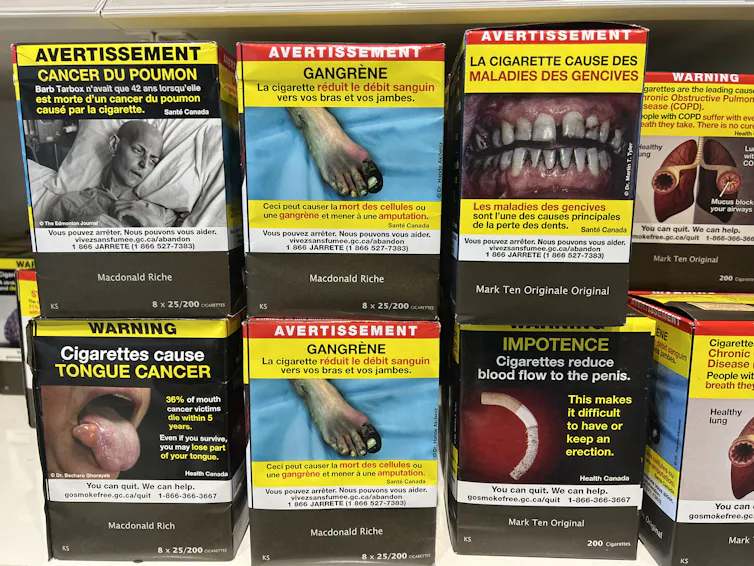
More broadly, a meta-analysis of over 100 studies found that fear appeals reliably shift attitudes and behavior across health and other domains. For instance, public health researcher Lucy Popova tested fear-based messages designed to discourage smokers from trying snus, a smokeless tobacco product. She found that when participants perceived a serious threat but also felt capable of acting on it, they held less favorable attitudes toward snus and were less inclined to try it.
Political attack ads – fear messaging being one type – have a shakier record. A review of more than 100 studies found no dependable evidence that negative campaigning wins elections, and some evidence that it lowers positive feelings toward the candidate who sponsors it.
Communication scholar Kim Witte’s research found that fear motivates action when people believe there is a workable response that they can carry out. When the threat feels big and the solution feels out of reach, people protect themselves from the message instead. They tune out, deny the threat or decide the messenger is the problem.

For example, picture an ad geared toward adolescent vaping that shows teens in hospital beds with ventilators using scary terms like “popcorn lungs.” If the ad also communicates that vaping can destroy lungs irreversibly, the teen audience is likely to experience extreme fear while at the same time feeling like there’s no way to fix the problem.
My colleagues and I have seen this effect in our own experiments. We found that people who felt highly anxious and also confident they could act sought out the most information. Those who felt anxious but lacked that confidence did go looking, yet they recalled very little. Anxiety pushed them to search but got in the way of absorbing what they read.
A campaign that frightens voters without offering a clear step to address the issue could end up producing plenty of anxious attention and very little learning.
Empowerment also helps explain who shows up at the polls. Political scientist Nicholas Valentino and colleagues found that anger boosted voter participation more reliably than anxiety, and anxiety mattered mainly for people who already had the skills and resources to take actions like donate to campaigns, attend rallies, sign petitions and so on.
Fear does its most reliable work when it attaches to a stereotype voters already carry. The 1988 presidential race provides two classic examples.
One controversial ad, produced in support of Republican George H.W. Bush, showed a mugshot of a Black man. The ad named the man, Willie Horton, and a voiceover explained that he’d committed rape and assault while on a weekend furlough from prison as part of a program run under Massachusetts Governor Michael Dukakis, the Democratic candidate. The spot linked fears about crime to race without saying so directly.
Bush’s campaign followed up with the “Revolving Door” ad, which built on that anxiety. It featured stark, black-and-white footage of inmates marching through a revolving gate while a narrator warned that Dukakis had let murderers out of prison on weekend passes.
Political scientist Tali Mendelberg’s research described in “The Race Card” shows that these implicit appeals to prejudices and fears are powerful. But they lose much of their force once someone publicly names them as racial. Implicit appeals work because they slip past most voters’ commitment to racial equality; once the racial message is pointed out, voters recognize it and many reject it rather than see themselves as endorsing prejudice.
Gender works in a similar way.
In a national experiment, Public Policy researcher Mirya Holman and colleagues found that when campaign messages triggered fears of terrorism, voters turned to their stereotypes of strong leaders as masculine. Those stereotypes hurt a female Democratic candidate, while Republican candidates of either gender were unaffected, since Republicans are already seen as tough on security.
A message communicating a threat does not need to name a candidate’s identity to disadvantage them. It simply makes voters reach for the stereotypes they already hold. There’s less systematic research on candidates’ religion, though the same mechanism – fear pushing voters to rely on the stereotypes they already hold about who can keep them safe – predicts similar vulnerability for Muslim candidates.
Using fear as a campaign tool is nothing new.

In 1828, opponents accused presidential candidate Andrew Jackson of murder and cannibalism. Both parties have leaned on fear in the television era, from Reagan’s 1984 “Bear” ad about an unnamed Soviet threat, to Democrats’ 1996 warnings that seniors’ Medicare was at risk.
What has grown is negativity overall. Political scientist John Geer’s analysis of presidential ads from 1960 to 2004 documents that rise, though he also found attack ads, more likely than positive ones, to focus on real issues rather than personal traits. The evidence that fear specifically has increased, as opposed to negativity in general, is less clear.
The current media landscape shifts this dynamic significantly; while traditional nightly news broadcasts have seen a decline in viewership, targeted social media feeds have become the emotional battleground.
Recent digital campaign data shows that negative ads are highly prized online because they successfully grab attention by provoking strong emotions like fear and anger. Because platform recommendation systems are heavily driven by user activity, campaigns are incentivized to use emotionally charged appeals to maximize viral engagement across feeds.
Fear works less like a switch and more like a spotlight. It grabs attention and opens minds to change, but whether that turns into a vote, a boycott of the ballot box or resentment toward the messenger depends on what comes next.

Monique Mitchell Turner does not work for, consult, own shares in or receive funding from any company or organization that would benefit from this article, and has disclosed no relevant affiliations beyond their academic appointment.
Politics + Society – The Conversation

 Meghan Markle is speaking out.
After her dad Thomas Markle Sr., 82, was accused of being in possession of child sex abuse images by his son Thomas Markle Jr. in a report published by The Sun Oct….
E! Online (US) – Top Stories
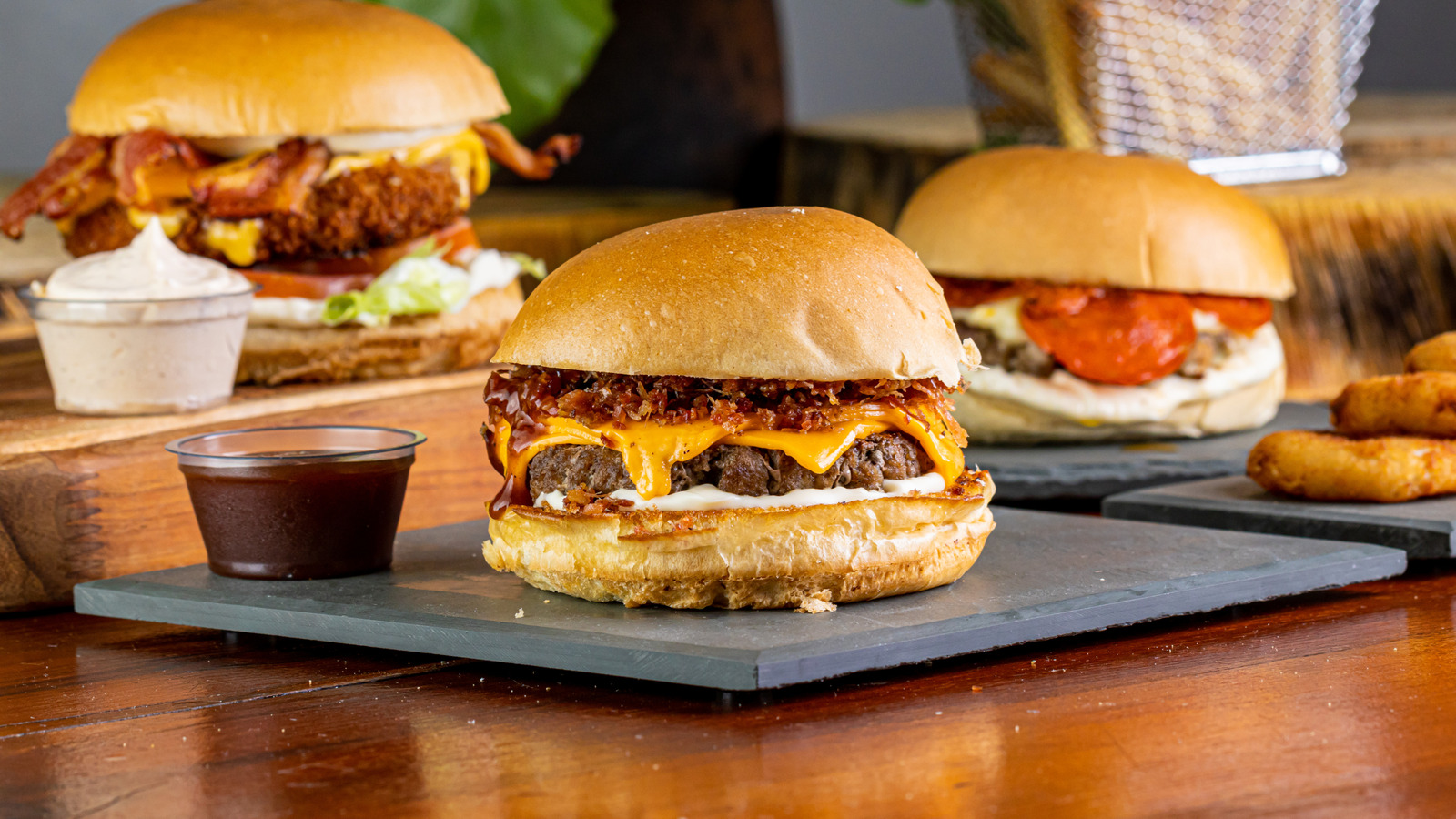
These fast food cheeseburgers are some of the best of 2026, but don’t take our word for it. Posters on social media can’t get enough of them, either.
Mashed – Fast Food, Celebrity Chefs, Grocery, Reviews
