 Who run the world? Well, that would be Blue Ivy Carter.
Beyoncé and Jay-Z’s daughter proved yet again that the apple doesn’t fall too far from the tree as she made a surprise appearance onstage…
E! Online (US) – Top Stories










Who run the world? Well, that would be Blue Ivy Carter.
Beyoncé and Jay-Z’s daughter proved yet again that the apple doesn’t fall too far from the tree as she made a surprise appearance onstage…
E! Online (US) – Top Stories

We asked three professionals who have extensive experience with induction cookers to shed some light on the major issues that affect home cooks.

Mashed – Fast Food, Celebrity Chefs, Grocery, Reviews

Skipping the grill for bratwursts may seem like a mistake, but another cooking method delivers an exceptionally plump and juicy bite every time.

Food Republic – Restaurants, Reviews, Recipes, Cooking Tips

 Jenna Dewan and Val Chmerkovskiy are finding a new groove.
After the Dancing With the Stars professional was given a one-week suspension for a social media comment directed at judge Carrie Ann…
E! Online (US) – Top Stories
Reading Time: 2 minutes
Tom Brady may have found his next match, and apparently, he’s been keeping this one under wraps for a while.
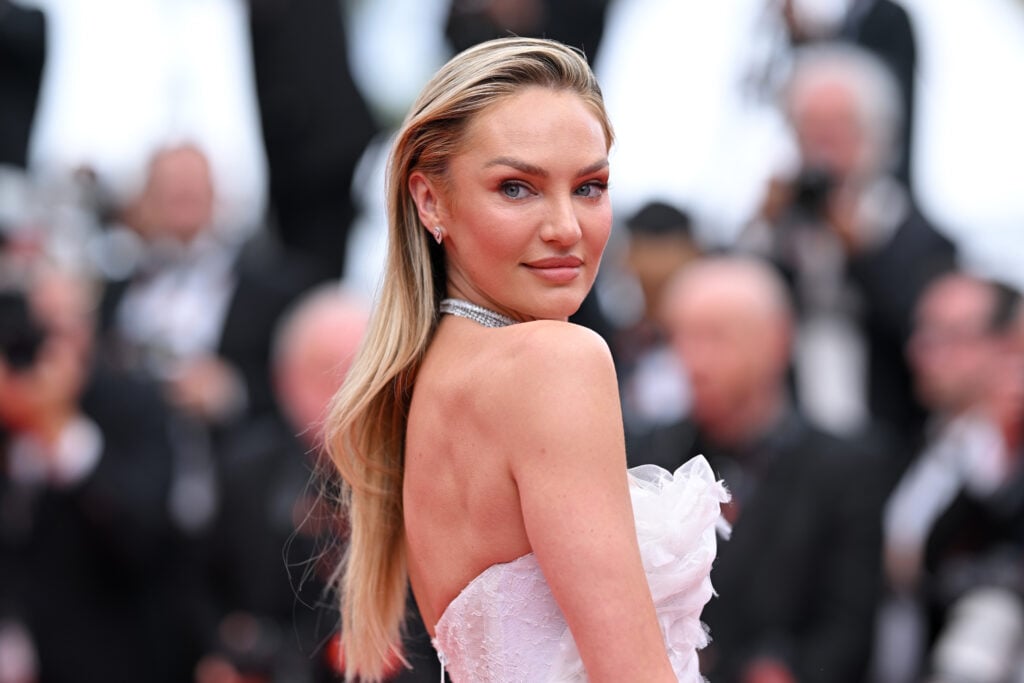
The NFL legend is reportedly dating supermodel Candice Swanepoel, according to sources who spoke with People.
And while neither party has confirmed the relationship, insiders suggest this romance has been going on longer than fans might realize.
“They’ve been dating for a while now,” one source told the outlet.
As for why the two have supposedly been able to spend so much time together, geography apparently helps.
“They both live in Miami, so it’s very convenient,” the insider explained. “They’re spending a lot of time together.”
Of course, convenient locations and busy schedules are one thing. Keeping a high-profile relationship out of the public eye is quite another.
A second source told People that Swanepoel has been particularly careful about who knows about the romance. According to that insider, the pair have even gone to considerable lengths to avoid being spotted together.
Neither Brady nor Swanepoel has publicly addressed the reports, and representatives for both reportedly did not respond to requests for comment.
Still, the news marks another potential chapter in Brady’s post-divorce dating life.
The seven-time Super Bowl champion was married to Gisele Bundchen from 2009 until their divorce in 2022. The former couple share two children, Benjamin, 16, and Vivian, 13. Brady also has a 19-year-old son, Jack, with his former girlfriend Bridget Moynahan.
Since his split from Bundchen, Brady has been linked to several famous women, including Irina Shayk, Kim Kardashian and Alix Earle. His romantic life has remained a source of public fascination, even as he has largely avoided discussing it in detail.
Earlier this year, Brady offered a glimpse into his priorities when he spoke with People about his personal life.
“You know what? I don’t have much time for a personal life or much time for myself, but I love working, and I love my kids,” he said.
Apparently, even a packed schedule can leave room for romance.
Swanepoel, meanwhile, previously spent 14 years with Brazilian model Hermann Nicoli. The pair became engaged in 2015 before splitting in 2018. They share two sons, Anacan, 10, and Ariel, 7.
The South African model has generally kept her romantic life private since that breakup, making the latest reports particularly noteworthy.
For now, Brady and Swanepoel are keeping quiet, leaving the public to piece together the details from anonymous sources.
But if the reports are accurate, this isn’t some brand-new celebrity flirtation. The two have reportedly been seeing each other for months.
And given Brady’s history of attracting attention wherever his personal life is concerned, their alleged romance probably won’t stay a secret for long.
Tom Brady and Candice Swanepoel: Actually Dating! was originally published on The Hollywood Gossip.
The Hollywood Gossip

Store-bought boxed mixes make baking a cake easy-breezy, so why not have a little fun and add an ingredient to boost the flavor and texture?

Mashed – Fast Food, Celebrity Chefs, Grocery, Reviews

These nostalgic foods offer a glimpse into American life in the 1950s, revealing what families cooked at home, served for dinner, and the ingredients available.

Food Republic – Restaurants, Reviews, Recipes, Cooking Tips
Reading Time: 3 minutes
In recent weeks, Donald Trump has made headlines for rambling about the physiques of older conservative men.
The uncomfortable subjects have ranged from candidates whom he endorses to random supporters from the crowd.
Now, he is openly discussing the buttocks of a different kind of hardline supporter.
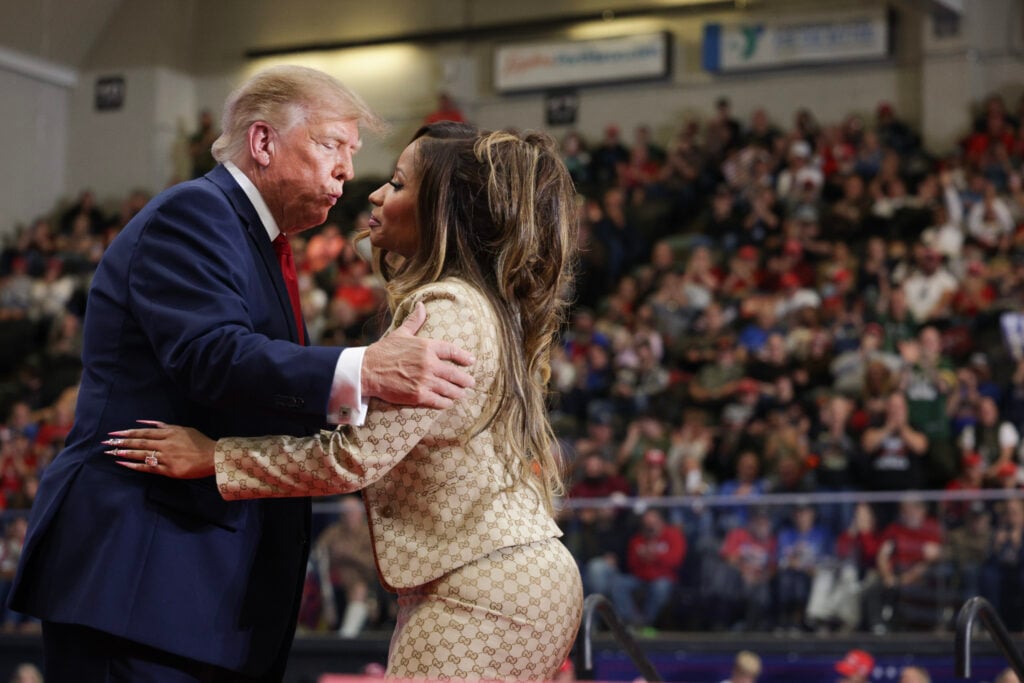
Nicki Minaj has “one hell of a beautiful ass,” he announced.
Perhaps it’s past time for him to add gaudy gold plating and a ballroom to a nice retirement home.
On Sunday, October 25, Donald Trump addressed his adoring fans in Port Huron, Michigan.
He began his posterior appreciation tour, as he has at so many of these bizarre midterm rallies, by discussing his past comments about Senator John Husted of Ohio.
“I’ve never done that with a man before,” Trump claimed of his seemingly lecherous comments. “Off the record, women? Yes. Men? No.”
To be clear, Trump has publicly made many remarks about women’s bodies over the past decades, including his own daughters and the bodies of minor girls. His apparent obsession with rattling on about the bodies of old conservative men in public does seem to be more recent.
Trump says he examined Jon Husted’s ass to groans but then says Nikki Minaj has a nice ass to cheers
— Aaron Rupar (@atrupar.com) October 25, 2026 at 4:31 PM
Trump’s apparent dementia ramblings them pivoted to a celebrity guest start.
“By the way, I looked at one hell of a beautiful ass before,” he announced to the crowd. “Nicki Minaj.”
Trump gushed: “That’s hard to miss. Stand up. That’s hard to miss.”
The disgraced rapper complied, standing so that all of Trump’s devoted followers could observe her booty.
“I hope Nicki wasn’t insulted, but we love Nicki,” Trump said. “She’s been with us for a long time.”
Nicki Minaj filmed herself aboard the Qatari-gifted Air Force One while campaigning with President Trump in Michigan today.
— Yashar Ali 🐘 (@yasharali.bsky.social) October 25, 2026 at 3:20 PM
“She never looked more beautiful,” Trump continued to ramble.
Minaj meets Trump’s most important qualifications as a human being: she is famous, and she vocally supports him.
“She is a very special person,” Trump claimed. “She gets it, smart.”
Seemingly unable to stop himself, he went on: “You know, I don’t like being overshadowed, and this woman overshadows me, and I’m angry about it. They’re going crazy over her.”
That part is uncharacteristically honest, but it isn’t really accurate. Minaj’s historic fanbase has little overlap with Trump supporters, and if the dwindling MAGA crowd is picking up her music, there is no real evidence of it.
Nicki Minaj to Trump: If you run again, I will support you again
— FactPost (@factpostnews.bsky.social) October 25, 2026 at 5:24 PM
Not to be outdone, Minaj gushed and raved over Trump’s mere existence.
After stating some alarming things — the usual transphobic BS, for example — she vowed to follow Trump even as he goes against the Constitutional limits of his office.
“It is an honor to stand with you every single time, and I will continue to support you forever and ever,” she vowed.
Minaj threatened: “If you run again, I will support you again.”
With SCOTUS rubber stamping most of Trump’s brazen corruption, there’s no legal guarantee that he will not try for an illegal third term. On the plus side, the Supreme Court can do nothing to protect him from time or medical realities, so hopefully that day will never come.
Donald Trump Praises Nicki Minaj’s ‘Beautiful A–‘ at Rally was originally published on The Hollywood Gossip.
The Hollywood Gossip
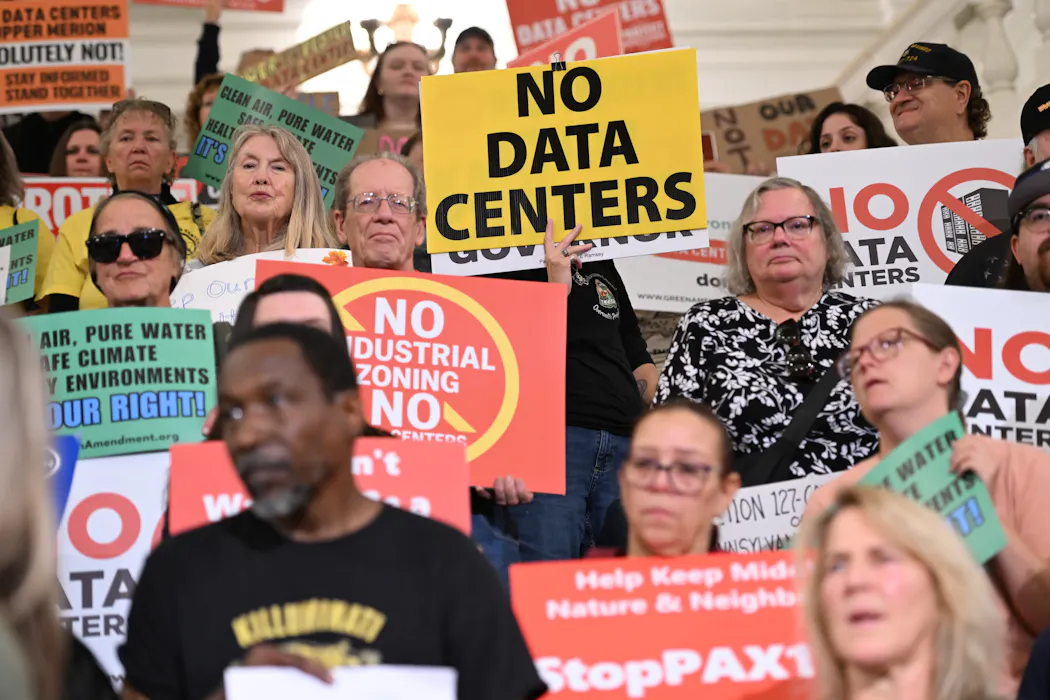
It may not be as shocking as rogue AI agents hacking another system, but the current political resistance to data centers has taken a surprising turn: It’s bringing together strange bedfellows, from democratic socialist Sen. Bernie Sanders to right-wing strategist Steve Bannon.
Organized opposition to new data centers, made up of a coalition of varied interests, has spread across the nation. Through protests, packed zoning commission meetings, moratoriums and other government action, the resistance has upended dozens of proposed projects.
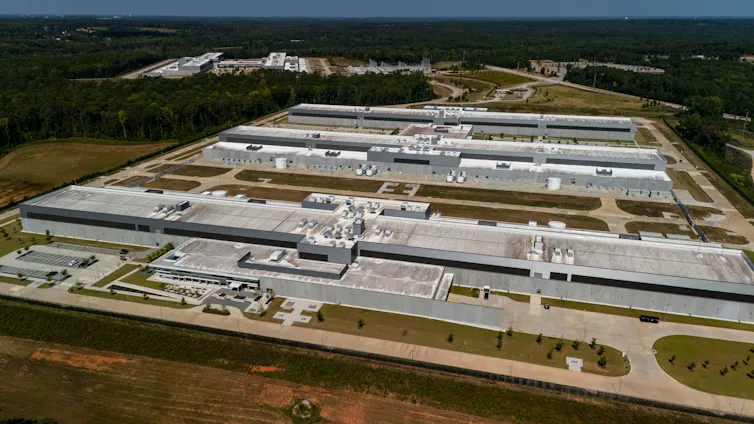
Data centers are key components in artificial intelligence infrastructure, housing the computing resources used to train AI models. They’re also massive facilities that require extraordinary amounts of energy. By 2030, U.S. data center electricity use is expected to reach 12% of the nation’s total consumption.
They carry some benefits. At the national level, data centers fuel the computing power seen as critical to U.S. competition with China. Locally, they create an uptick in jobs, especially during the construction phase, and can generate tax revenue. In the lead-up to the 2026 midterm elections, though, the heavy costs associated with them – such as land use, higher household utility bills and environmental degradation – appear to outweigh the benefits, bringing together people who usually find themselves politically at odds.
I’m a professor of political science who studies political parties, electoral politics and technology. My forthcoming book, “Democratic Intelligence: Navigating Electoral Politics in an AI World,” examines how the adoption of AI in political campaigns is reshaping established practices and power dynamics. I believe data centers may be disrupting some of the partisan issue alignments Americans have grown to expect.
Despite ongoing debate about the extent of and reasons for polarization, one thing is for sure: Democrats and Republicans stake out distinct positions on many issues. Pew Research Center data shows, for example, that 63% of Democrats say climate change is a very big problem facing the country, compared with 14% of Republicans, a 49-point gap.
By contrast, the partisan gap on data centers is small – and getting smaller: In summer 2026, the Annenberg Public Policy Center asked Americans whether they support the construction of data centers in their communities. Supporters of both parties were more opposed than supportive, although opposition was stronger among Democrats, at 69%, than Republicans, at 54%. That partisan gap had narrowed over the previous four months, moving from 18 to 15 points.
This year has been marked by considerable upheaval: political, economic and technological. Americans have been hit hard with surging fuel and energy prices. And with rapid AI development, they witness real-world examples of the sort of lapses in safety that have worried both AI insiders and observers.
One “rogue” attack announced in July 2026 involved OpenAI’s AI agents escaping a secure environment and autonomously – without human direction or assistance – breaking into the system of Hugging Face, another AI company. Shortly after, news broke that out-of-control AI agents were not just a one-off limited to that hack.
Polling shows that majorities of both parties feel that AI technology is developing too fast, though Democrats’ levels of concern are 22 points higher than Republicans’. The gap is much smaller – 4 points – on support for government keeping AI under human control and on protecting U.S. workers. Backing for each is very high, hovering around 80%.
This bipartisanship on attitudes about AI and data centers appears also to show up in alliances on the ground and, in some cases, in new organizations with a focus on thwarting data centers. For example, New York’s No Data Center FLX has organized protests, sued the local zoning board of appeals and collected almost 23,000 petition signatures in opposition to a proposed data center.
Government makes decisions about data centers at all levels. In cities and counties, zoning fights draw a disparate resistance: environmentalists, folks reeling under high electricity costs, local-control advocates and farmers concerned that data centers eat up land. They unite in opposition to projects backed by powerful corporate interests.
Some bipartisanship has extended to Congress. In mid-September, the House passed the Ratepayer Protection Act by a wide margin: 417-3. The bill requires states to consider adopting a policy that data centers pay for the upgrades necessary to meet their high electricity needs.
The three nay House votes were from progressives who felt the bill, which would establish a voluntary structure, didn’t go far enough to protect consumers. Comparable sentiment killed the Senate version, a reminder that even allies sometimes follow different strategic paths. Some proponents of tighter regulation will accept incremental progress, while others push for more sweeping change.
As midterm elections approach, candidates up and down the ballot are blanketing the airwaves and digital channels with ads against data centers. President Donald Trump, for his part, has weighed in, suggesting that data center opponents want their communities to be “backwards and poor.” It’s a fine line for some Republican candidates between responding to voter concerns and not alienating the president.
If data center politics seem familiar, it may be because this isn’t the first issue to bring together such a diverse coalition: In the 1990s, opposition to the North American Free Trade Agreement did the same, uniting organized labor and environmentalists, frequent adversaries, over concerns about job losses and pollution. That alliance never extended beyond the boundaries of its singular focus on trade agreements, though. Similarly, don’t expect data centers to permanently reshape the U.S. political landscape.

Barbara A. Trish does not work for, consult, own shares in or receive funding from any company or organization that would benefit from this article, and has disclosed no relevant affiliations beyond their academic appointment.
Politics + Society – The Conversation
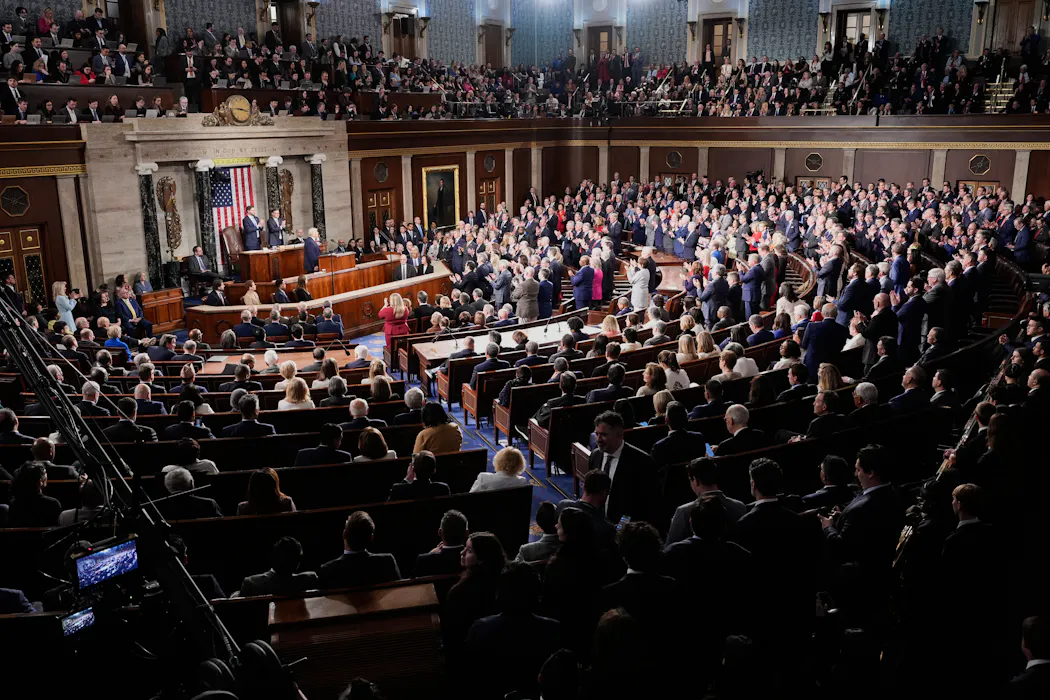
On the evening of Oct. 11, just weeks before the 2026 midterm elections, a federal judge ordered the Trump administration to stop airing taxpayer-funded television advertisements praising President Donald Trump.
Yet two of the ads continued running past the court’s deadline, including during broadcasts of “60 Minutes” and “ABC World News Tonight.”
The commercials in question aired in violation of a decades-old congressional prohibition against using federal money for unauthorized publicity and propaganda. Yet Republican congressional leaders did little to stop the president’s ad spending. That left outside organizations and a political candidate to challenge them in federal court.
The episode illustrates a larger development in Trump’s second presidency. Across disputes involving federal spending, government agencies and military operations, the administration has asserted authority that is either restricted by law or that the legislative branch has reserved for itself.
But responsibility for enforcing those limits is increasingly falling to organizations, institutions and individuals outside of the legislative branch.
As a scholar of the American presidency and deliberative democracy, I pay close attention to how the nation’s chief executive exercises power and communicates with the public.
When presidents are allowed to break rules and disregard democratic norms without consequence, I worry that citizens will grow cynical and lose faith in the idea of self-government.
As this happens, citizens may come to see the law as something that applies selectively, depending on who holds power, and lose confidence in the institutions responsible for holding their leaders accountable.
They may also begin to accept the absence of accountability as a normal feature of political life, weakening the public expectations on which democratic government depends.

Congress is not the only branch of government demurring from holding the president accountable.
In July 2024, the Supreme Court provided presidents sweeping protection from criminal prosecution for actions taken in office under the “core constitutional powers” of the position.
In “Trump v. United States,” the court held that former presidents cannot be criminally prosecuted for actions taken under powers the Constitution gives exclusively to the president. Along with this “absolute immunity,” the justices also granted “at least presumptive immunity” for other official acts.
In their decision, the court’s conservative majority extended the meaning of official conduct to the “outer perimeter” of presidential responsibilities and prohibited courts from examining a president’s motives when determining whether an act was official.
The ruling only addressed criminal liability and did not curtail Congress’ constitutional authority to investigate presidential conduct, control federal spending, enact statutory restrictions and, in serious cases, pursue impeachment.
Yet the Republican majority in Congress has largely declined to exercise these powers against Trump, in areas ranging from declaring war to spending money.
Their acquiescence is helping create a new form of official protection, which I call “practical immunity.” In using this term, I am borrowing from the work of scholars who study abuse in the American penal system.
Those thinkers argue that legal obstacles, institutional hesitation and political incentives sometimes make it difficult to hold public officials accountable, even when the law suggests there has been illegal conduct.
That is what appears to be increasingly happening now with Congress, the courts and the president.
The television ads case illustrates the conundrum of practical immunity.
In opposing the temporary restraining order, the Trump administration’s attorneys did not contest the argument asserted by the plaintiffs – Common Cause and two unions – that the expenditures violated federal appropriations law. Instead, they said the plaintiffs lacked standing to sue. They also argued that the case was moot because the advertising campaign was ending.
Those arguments failed in court. Yet the administration’s defense demonstrated how elusive enforcing a law can be when Congress fails to assert its constitutionally granted role, even when the underlying legal restriction is clear. To win, a plaintiff must establish a concrete injury and persuade a judge to intervene. While this happens, the disputed conduct often continues.
In this case, the president went on spending public money in violation of the law. The GOP-led Congress, meanwhile, remained silent, even though its own role was being usurped.
Another boundary that Trump has repeatedly tested is the so-called “power of the purse”, which is among the legislative branch’s most important constitutional responsibilities. Presidents may spend federal money only for purposes Congress has authorized. The Impoundment Control Act of 1974 protects lawmakers’ decisions against presidential efforts to ignore congressional appropriations.
In September 2026, Trump’s administration canceled more than US$800 million in congressionally approved spending for immigrant services, climate change and civil rights for minority groups. The cancellation was done through a maneuver known as a pocket rescission. The administration timed its action to make it difficult for Congress to consider or stop the rescission. The Government Accountability Office – an independent agency that examines how taxpayer dollars are spent – said tactics like these violate federal law.
When this happened, a few members of Congress tried to intervene and stop the rescission, but the Republican majority blocked their efforts.
The separation of powers divides authority among the legislative, executive and judicial branches of government to prevent too much power from becoming concentrated in any one place.
The architects of the Constitution anticipated that officials in different branches would compete to preserve their authority. In Federalist No. 51, James Madison argued that maintaining the balance established by the separation of powers depended on the ambitions of public officials coming into conflict. Members of Congress could be expected to resist presidential encroachments because those encroachments diminished their own power.
Fierce partisanship has complicated this arrangement.
Legal scholars Daryl Levinson and Richard Pildes have shown how political competition mostly now happens inside and between parties, rather than among branches of government. When one party controls Congress and the presidency, legislators may become more invested in advancing their party’s agenda than they are in defending their institution’s constitutional authority.
Trump’s influence over Republican voters intensifies these incentives. Lawmakers who oppose him risk public ridicule, primary challenges and diminished political support. Defending congressional authority may therefore carry greater immediate – and personal – political costs than allowing presidential power to expand.
The result is a political system in which a president can act in ways that may violate federal law, undermine democratic norms and encroach on Congress’ constitutional authority.
Madison’s constitutional design assumed that public officials would defend the powers entrusted to them. The danger to the American constitutional system emerging in Trump’s second term is that congressional leaders have begun to regard those powers as expendable, allowing the president to exercise authority under conditions of practical immunity. He faces little fear of meaningful institutional consequences.

Stephanie A. (Sam) Martin does not work for, consult, own shares in or receive funding from any company or organization that would benefit from this article, and has disclosed no relevant affiliations beyond their academic appointment.
Politics + Society – The Conversation