Categories
Sports Fox

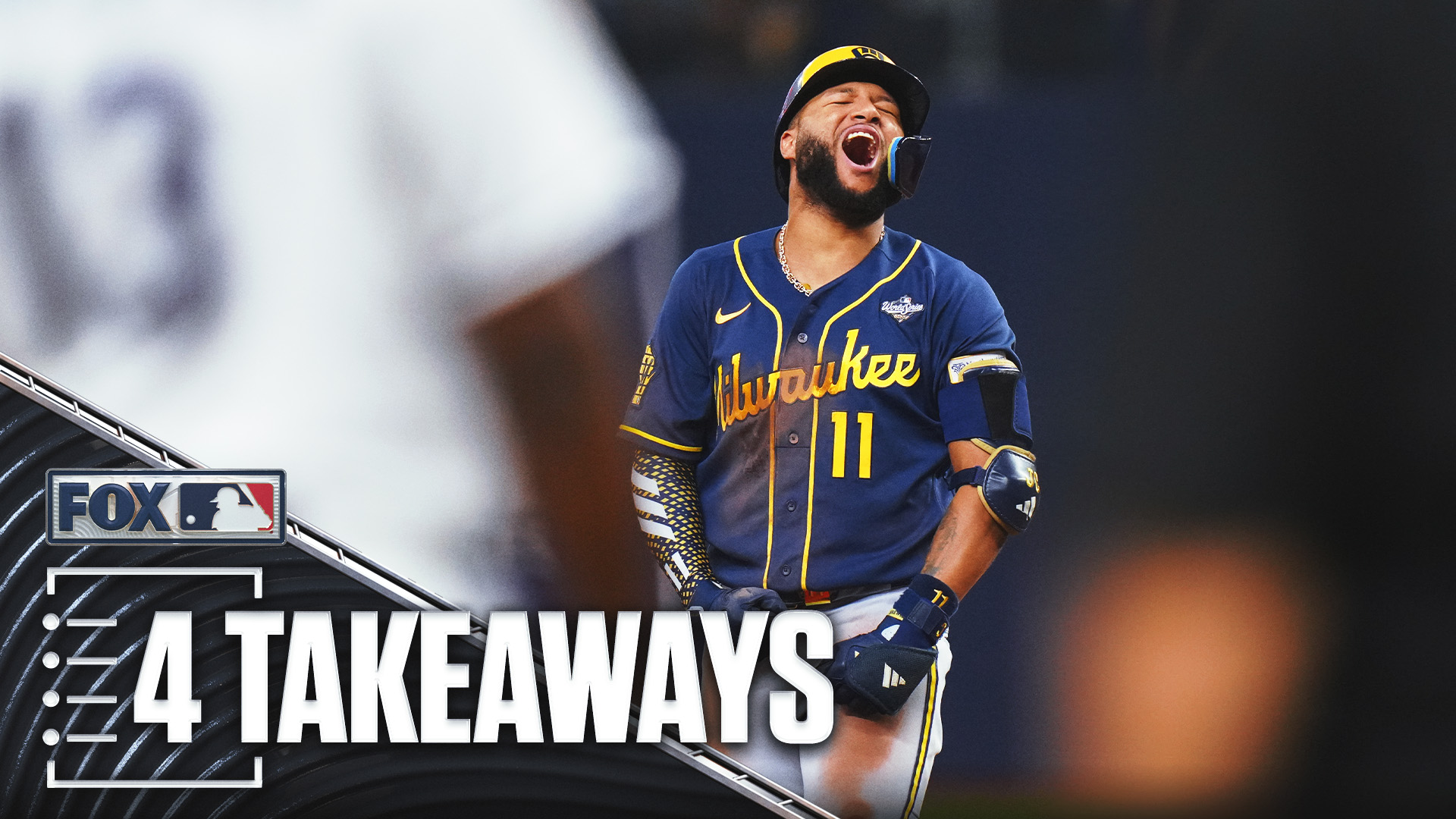
Dominant Brewers On The Cusp: 4 Takeaways From World Series Game 3 Win Over Rays

Tropicana Field (ST. PETERSBURG, Fla.) – The Brewers are one win away from history. With a 3-0 World Series lead, the dominant 103-win club is on the doorstep of the first championship in franchise history, 44 years after their last trip to the Fall Classic. Tampa Bay is backed into a corner no team has ever escaped. In the history of the Fall Classic, no club has rallied from being down 0-3. The Rays, also chasing their first title, must win four straight, starting with Game 4 on Tuesday night. A Brewers sweep would cap an October that already included sweeping the Dodgers. Milwaukee’s champagne is waiting on ice. Here are my takeaways from the Brewers’ 10-1 win: The Brewers entered the fifth inning with a 2-0 lead. By the time it was over, they scored eight runs — all with two outs — and none of them came in the form of home runs. In other words? Brewball. Jackson Chourio reached base twice in the same inning, and both were base hits to right field. Brice Turang picked up a two-run single in the unlikeliest of ways, by ripping a 106 mph ground ball to Rays shortstop Taylor Walls, who is one of the best gloves in the league at his position. But Walls couldn’t get his leather on it, and it opened up the floodgates for Milwaukee. Garrett Mitchell sliced an RBI single through the hole to left, then Cooper Pratt lined a two-run double to left. Then Sal Frelick, who was denied an extra-base hit in his previous at-bat thanks to an incredible wall-slamming catch from Chandler Simpson, hit it to almost the same exact spot in the fifth, and this time Simpson wasn’t even close. Frelick scored two more runs on that double. The only hitters in the Brewers lineup who didn’t reach base in that fifth-inning ambush were Jake Bauers and David Hamilton. Even the typically even-keeled, straight-faced Brewers manager, Pat Murphy, couldn’t help but smile from his post in the dugout. How could he not be satisfied with his offense’s relentless approach? That fifth inning encapsulated everything it means to face an inexhaustible, indefatigable Milwaukee lineup. It’s an unrelenting offense that can embarrass even the best team in the American League. Peralta took the mound on Monday carrying the emotional baggage of facing his former team, all while hoping to be the stopper for his newest ballclub. He spent eight years playing for the Brewers before they traded him to the Mets before the 2026 season. It was always going to be a challenge going up against the organization and the hitters who know him best. In the end, he didn’t meet that challenge. Peralta’s only clean inning was the fourth, when he retired the bottom of the Brewers order as part of a string of five consecutive outs from the right-hander. But that was his high-water mark of the night. The heart of Milwaukee’s lineup consistently gave Peralta trouble. Jackson Courio went 3-for-3 against him. Christian Yelich reached base all three times against his former ace. William Contreras, who has caught more pitches from Peralta than any other catcher in the league, ripped an RBI single off him in the third and another base hit in the fifth. The veteran’s final line looked worse than it was, because reliever Cam Booser allowed all of his inherited runners to score in the disaster that was the fifth inning. Peralta was charged with five earned runs on seven hits. He allowed three walks and struck out four batters across 87 pitches. This was most likely Peralta’s final outing before he hits free agency this offseason. Robert Gasser, known by some as Bobby Petrol, entered his Game 3 World Series start with the chance to be Milwaukee’s top starter this postseason. After being in full control against Tampa Bay on Monday, there is no longer any doubt. The 27-year-old lefty faced the minimum through six shutout innings against the Rays. The lone hit he allowed in Game 3 came against leadoff man Yandy Diaz in the bottom of the first inning. It was erased moments later when Chandler Simpson, who reached base on a fielder’s choice, was tagged out after sliding off second base on a steal attempt. Then Gasser retired 12 consecutive Rays from the second inning to the fifth, picking up four punchouts along the way. And he stayed efficient throughout the outing, which led to Tampa Bay’s demise. The Rays were off balance facing the southpaw, and it showed. In the sixth, Gasser finally allowed his first man to reach base since the first inning by walking Victor Mesa Jr. on eight pitches. And even that was instantly erased thanks to a double play to the next batter. It likely helped that Gasser was working with an eight-run lead for two of the six innings he threw. But his confidence never wavered. This was who he has been all October. Gasser became the first Brewers starter to complete six innings this postseason. After his magnificent, career-defining start in Game 3, he lowered his ERA this October to 0.60 (one earned run allowed in 15 innings pitched). He was everything the Brewers could’ve asked for and more, and nothing like what the Rays expected. It was clear that the Rays were hoping for a short outing from Gasser, because they stacked their lineup with right-handed hitters and removed two huge bats in the process. First baseman Jonathan Aranda and catcher Liam Hicks were catching bench splinters instead of going to war against the Brewers with their club down 2-0 in the World Series. In the regular season, Aranda occasionally sat against lefties. But for the most part, he was an everyday player for the Rays. So it was an odd choice to bench Aranda, one of Tampa Bay’s biggest hit producers in the regular season and in October, because the lineup severely struggled without him. One of the biggest knocks against the Rays entering this postseason was that the lineup was top-heavy, and Aranda was a part of that force. In Game 3, with Aranda on the bench, the Rays lineup looked especially feeble, and it showed in the results. The Rays had just one hit through eight innings against the Brewers. Aranda entered Monday’s Game 3 with the second-most hits this postseason (13), trailing only Brewers catcher William Contreras (15). He finally entered the game in the seventh inning as a pinch-hitter, and he popped out to third. By then, it was already too late, anyway. Ironically, it was Aranda who made the final out of the game.​Latest Sports News from FOX Sports

Categories
Entertainment

Ditch Baked Potatoes — Try Them Danish-Style For A Crispy And Caramelized Upgrade

If you’re used to seeing baked potatoes on your dinner plate, it’s time to set your sights on sweeter, crispier spuds inspired by Danish cuisine.

​Mashed – Fast Food, Celebrity Chefs, Grocery, Reviews

Categories
Sports Fox

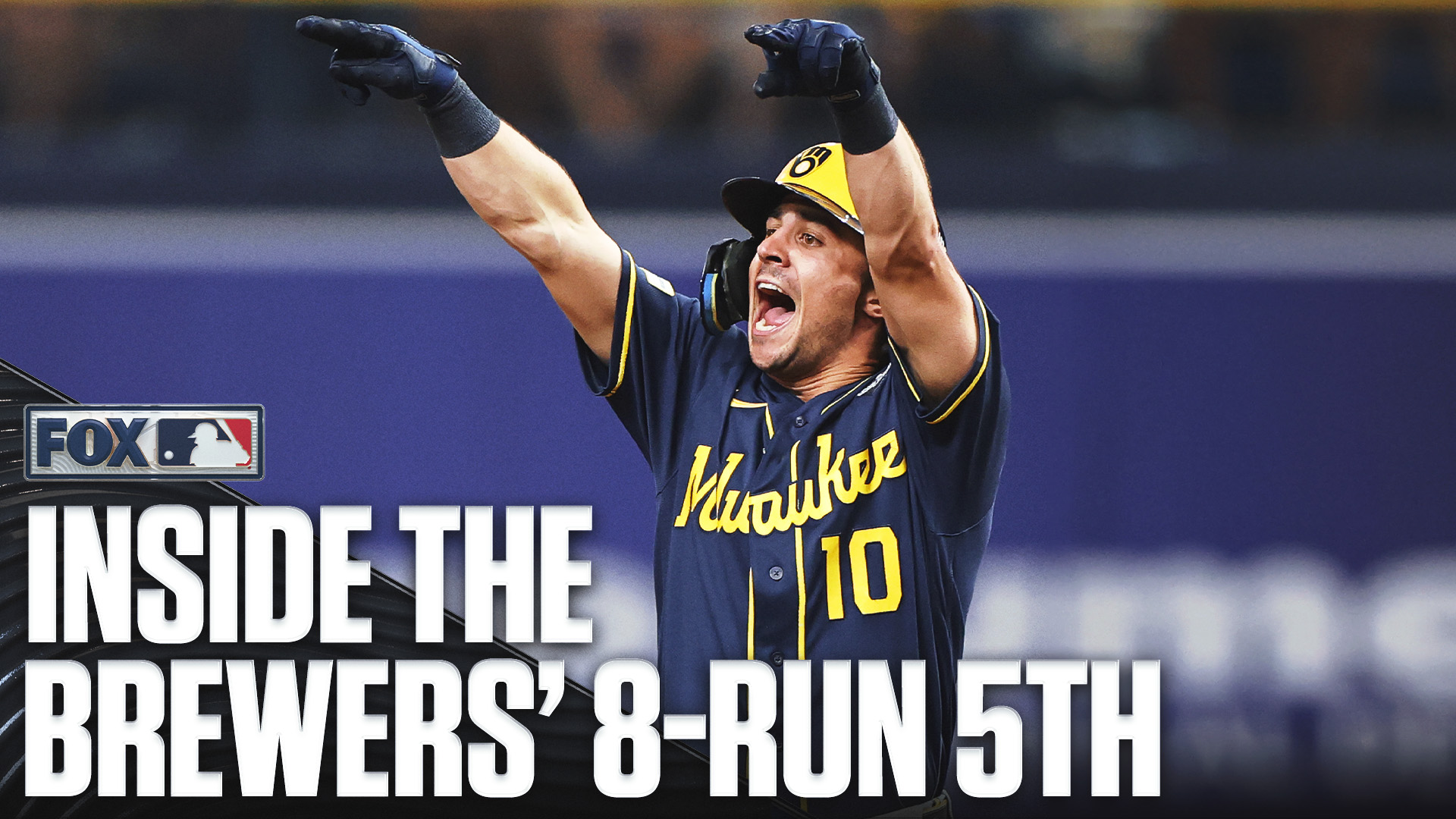
Inside The Brewers’ Relentless 8-Run Fifth Inning That Made World Series History

The Milwaukee Brewers might just be unstoppable, and the fifth inning on Monday night was a perfect example. Milwaukee scored eight runs in Game 3 of the 2026 World Series, giving it a 10-0 lead over the Tampa Bay Rays. The Brewers’ relentless lineup made history in multiple ways. The Brewers became the first-ever team to score eight runs with two outs in World Series history and the second ever to do it in the postseason, after the Dodgers scored 10 in the first inning against the Braves in the 2020 National League Championship Series. The Brewers’ eight runs in the fifth inning tied the most in World Series history without a home run. Two other teams have done that before: the 2001 Arizona Diamondbacks in Game 6 against the New York Yankees and the 1921 New York Giants in Game 3 against the Yankees. Jackson Chourio was the star of the show with two hits in the inning. He started the game 4-for-4, becoming the fourth player ever with four hits in the first five innings of a World Series game. Here is how the inning unfolded: Lefty Cam Booser entered the game in relief of Rays starter Freddy Peralta, who left the bases loaded and two outs. Brice Turang greeted Booser with a single that brought home Jackson Chourio and Christian Yelich. Then, Garrett Mitchell’s single scored William Contreras. Next was a Cooper Pratt double that saw Turang and Mitchell cross the plate, before another double by Sal Frelick drove in Pratt to come in. Frelick’s double led to another pitching change, with Cole Sulser replacing Booser. Hamilton then singled and Frelick scored. To cap the scoring, Chourio doubled for his second hit of the inning to bring in Frelick and bring his mark for the game to 4-for-4. Jake Bauers finally ended the inning with a flyout. Here’s a record of the Brewers’ run-scoring at-bats after Booser entered the game with two outs and the bases loaded: WalkSingleSingleSingleDoubleDoubleSingleDoubleOut It was also tied for the fourth-highest-scoring inning in World Series history. The 1968 Detroit Tigers and 1929 Philadelphia Athletics scored 10 times, and the 2025 Blue Jays scored nine.​Latest Sports News from FOX Sports

Categories
Music

Dolly Parton ‘The Seeker’: Song Meaning + Lyrics

Trying to become a better person isn’t always a straight path. “The Seeker” captures the struggle of knowing your shortcomings and still searching for a way forward. Continue reading…​The Boot – Country Music News, Music Videos and Songs

Categories
Entertainment

Why Do Induction Cooktops Make A Humming Noise?

Your induction stovetop doesn’t create a humming noise; it’s the pan you’re using that generates the noise, and it’s a normal part of induction cooking.

​Mashed – Fast Food, Celebrity Chefs, Grocery, Reviews

Categories
Entertainment

This Is One Of The Best Wines You Can Buy From Costco

Costco is known for its affordability, but that doesn’t mean its wines are low-quality. This particular Kirkland Signature red is one of the best.

​Mashed – Fast Food, Celebrity Chefs, Grocery, Reviews

Categories
Alaska News

Opposition grows to Trump lawsuit seeking to aid Sen. Dan Sullivan’s re-election bid

Sen. Lisa Murkowski, R-Alaska, speaks as Sen. Dan Sullivan, R-Alaska, listens at the conclusion of a May 5, 2026, roundtable on Missing and Murdered Indigenous People held at the Cook Inlet Tribal Council office in Anchorage. (Photo by Yereth Rosen/Alaska Beacon)

Sen. Lisa Murkowski, R-Alaska, speaks as Sen. Dan Sullivan, R-Alaska, listens at the conclusion of a May 5, 2026, roundtable on Missing and Murdered Indigenous People held at the Cook Inlet Tribal Council office in Anchorage. (Photo by Yereth Rosen/Alaska Beacon)

One of the most prominent figures backing Sen. Dan Sullivan’s re-election campaign is speaking out against a Department of Justice lawsuit intended to aid him.

Sen. Lisa Murkowski, R-Alaska, said on Friday that the DOJ should have never filed a lawsuit asking a federal judge to pause certification of the ongoing U.S. Senate election if another candidate defeats Sullivan.

“Alaskans don’t need any help voting for their preferred candidates, and the State of Alaska has already handled this by clearly distinguishing the candidates on this year’s ballot,” Murkowski said in a post on social media. 

Sullivan is being challenged by Democratic candidate Mary Peltola, undeclared candidate Dan J. Sullivan and Republican candidate Gerald Heikes. Murkowski backed Peltola in a 2022 race for U.S. House but endorsed Sen. Sullivan for re-election this year.

[Voter Guide: 2026 General Election Voter Guide: The candidates, the ballot measures, and the tools you need to cast your vote.]

Dan J. Sullivan is listed on the ballot as “Daniel J. Sullivan Jr.,” while Sen. Sullivan is listed as “Dan S. Sullivan (Registered Republican) Incumbent.”

In a complaint against the Alaska Division of Elections last week, the DOJ said that because Alaskans could be confused by the fact that there are two Dan Sullivans on the ballot, it would be appropriate to pause certification of the election results if Peltola wins. 

Legal experts say the lawsuit — and the federal government’s authority on voting issues in Alaska — is dubious. 

“I believe that this lawsuit is abusive in its intentions and borders on frivolous in its arguments, and that it is destined for defeat in the courts should it reach the merits,” said Walter Olson, a senior fellow at the Cato Institute, a libertarian think-tank.

President Donald Trump, who has endorsed Sen. Sullivan and visited Alaska to campaign for him earlier this month, said he ordered the DOJ to file the lawsuit.

On the day Murkowski criticized the lawsuit, Peltola’s campaign and the national Democratic Senate Campaign Committee asked to intervene on the side of the defense, alongside the Division of Elections.

Immediately afterward, they filed a motion to dismiss the case. 

“DOJ’s claim is lawless and utterly unsupported by precedent or statute,” wrote attorneys for the two groups, noting that the Alaska Supreme Court already ruled in June that Dan J. Sullivan’s candidacy did not harm the election.

The Division of Elections, represented by the Alaska Department of Law, has yet to respond to the federal government’s claims, and Judge Sharon Gleason, an appointee of former President Barack Obama, has not yet ruled on any outstanding motions.

Attorneys for the Peltola campaign and the DSCC have asked Gleason to set an expedited schedule of arguments and decisions that could have the case resolved by the end of the week. 

Legal experts have said that unless Gleason dismisses the case outright, it is unlikely to be ripe for argument until after the election. If Sen. Sullivan wins outright or Peltola wins by a margin larger than the number of votes received by Dan J. Sullivan, the federal government’s arguments would be moot.

That’s because the DOJ has argued that some voters for Sen. Sullivan may accidentally vote for Dan J. Sullivan as well. 

If Peltola wins by more votes than Dan J. Sullivan receives, it would show that even if every Dan J. Sullivan voter was a confused backer of Sen. Sullivan, that confusion was not enough to change the result of the election. 

Two nonpartisan groups represented by attorneys from the American Civil Liberties Union also filed motions to intervene on Friday.

The League of Women Voters of Alaska, and Common Cause, a national group, said they are interested in having a free and fair election, and that the DOJ case “risks disenfranchising Alaska residents entirely.”

By email, Dan J. Sullivan said on Monday that “this experience has been beyond anything I could have ever imagined. To say that it has now become overwhelming and intimidating is an understatement. It is unending stress, at times paralyzing and I am looking forward to it being over.”

“I ran because I was unhappy with the status quo and wanted to be a voice for common sense, Alaska values and change.  With the litigation and threats, I was never really able to get up and running like I wanted, but I did the best I could under the circumstances,” he said. 

“As for the DOJ lawsuit against the state, it seems a gross misuse of the Justice Department for a situation that has already been litigated and resolved by the Alaska Supreme Court. I think the Division of Elections did a notable job of differentiating two candidates on the ballot with similar names and the primary showed there was little if any confusion. Alaskan voters are smart and I have faith in their ability to make an informed decision on their ballots.”

SUPPORT: YOU MAKE OUR WORK POSSIBLE

Categories
Entertainment

American Vs Cheddar Cheese: What’s The Difference?

American and cheddar are two of the most common cheese options available at grocery stores and restaurants, but what’s the difference and which do you use when?

​Mashed – Fast Food, Celebrity Chefs, Grocery, Reviews

Categories
Uncategorized

What legal experts say about the Trump administration’s attempts to make a federal case out of state elections

The Trump administration argues that if Republican Sen. Dan Sullivan, left, narrowly loses his reelection bid, it’ll be because voters mistakenly voted for Daniel J. Sullivan Jr. AP Mark Thiessen; Becky Bohrer

The Trump administration’s lawsuit against Alaska, which seeks to block certification of the U.S. Senate results there if the GOP candidate does not win, is the latest in a long series of actions throughout 2026 in which the administration has attempted to wrest control of federal elections from states.

In the Alaska case, the U.S. Department of Justice, directed by President Donald Trump, claims that it aims to “protect the integrity of the 2026 Senate election in Alaska.” If incumbent Republican Sen. Dan Sullivan does not win reelection in a close vote, the DOJ asserts, it’s likely the result of voter confusion because another candidate with a very similar name – Daniel J. Sullivan, with no party affiliation – is on the ballot, too. So in the event that Sen. Sullivan fails to win reelection, the DOJ demands that Alaska not certify the election and instead should conduct an inquest into who voters thought they were voting for.

The campaign of the Democratic candidate, Mary Peltola, whose potential win in the hotly contested election could help shift the Senate to Democratic control, has called the lawsuit “wholly baseless” and “an unprecedented pre-emptive strike on democratic elections” in a court filing. Another filing states that the DOJ lawsuit “asks the Court to preemptively nullify Alaska’s U.S. Senate election and disenfranchise Alaska voters without any legal basis whatsoever. It seeks to go where law ends.”

There’s lots of other heated language in the case’s legal filings. But colorful language and legal citations are a much longer way of articulating a simple fact: The U.S. Constitution gives the president no authority over federal elections. That authority rests with the states and, to a limited degree, with Congress.

Over the past year, as the 2026 midterm elections approached, The Conversation has published a number of stories illustrating this fundamental constitutional rule. Here is a selection of them:

A man at a desk, gesturing with his hands.
President Donald Trump speaks before signing an executive order on election integrity in the Oval Office on March 31, 2026.
Brendan Smialowski/AFP via Getty Images

1. The Constitution bars presidential control

“States are empowered under Article 1, Section 4, of the Constitution to conduct elections and set the time, place and manner of those elections,” former federal judge John E. Jones told The Conversation in an interview on April 22, 2026. Jones was discussing Trump’s March 31 executive order to take control of mail-in voting from states and give it to the U.S. Postal Service and the Department of Homeland Security.

Jones, who is now the president of Dickinson College, explained why the framers of the Constitution set up a process in which states run elections and not the federal government:

“First of all, the federal government didn’t have the apparatus to conduct elections. And states had been running elections; they knew how to do it. There was a great deal of trust in the states’ ability to run elections. And there was the core debate of federalism, as to what powers states could retain, and they didn’t want to abdicate many of those powers,” Jones said.

There was also, Jones added, “a debate about the potential for fraud, that if there was a single entity controlling all the elections – that is, if you centralize elections under one politically motivated executive – it’s a really fraught situation which can be abused.”

“The Constitution is clear,” said Jones. “Unless amended, Article 1, Section 4 is – to use the trite phrase – what it is. The power rests with the states, absent congressional action. There is no mention of the president. None.”


Read more:
Why Trump can’t just decree changes to voting by mail – a former federal judge explains how the president’s executive order is ‘a solution looking for a problem’


2. Limits on Congress, too

The Republican-controlled House also tried this year to horn in on the constitutional power of states to regulate elections and who can vote.

In February 2026, the House, urged by Trump, passed the SAVE America Act. The act would have required those registering to vote in federal elections to – in person – “provide documentary proof of U.S. citizenship.” It also required some people who were voting in federal elections to give proof of U.S. citizenship.

John J. Martin, an election law scholar at Quinnipiac University Law School, wrote that the act “presents a constitutional dilemma. By requiring individuals to show documentary proof of U.S. citizenship to vote, the SAVE America Act is implicitly saying that someone must be a U.S. citizen to vote in federal elections.”

In other words, Martin wrote, “Congress would be instituting a qualification to vote, a power that the Constitution leaves exclusively to the states. Normally, when state and federal laws conflict, the Constitution’s supremacy clause mandates that federal law prevails. Yet, in this instance, where Congress has no actual authority to implement voter qualifications, the SAVE America Act would seem to have no constitutional leg on which to stand.”

The Senate proved unwilling to pass the SAVE Act this year, so this particular constitutional battle has yet to hit the courts.


Read more:
Citizenship voting requirement in SAVE America Act has no basis in the Constitution – and ignores precedent that only states decide who gets to vote


3. A bar on federal limits to mail voting – so far

People working at a long table covered with papers and green boxes.
Election workers open midterm elections ballots at the King County Elections headquarters on Oct. 23, 2026, in Renton, Wash.
David Ryder/Getty Images

Trump frequently targets mail voting, claiming it’s rife with fraud. The March 2026 executive order by the president aimed, it said, to ensure “integrity in federal elections” by placing severe restrictions on mail voting.

Among that order’s provisions was a directive to the U.S. Postal Service to implement, election scholar Martin wrote, “uniform ballot and envelope requirements for mail and absentee ballots used in federal elections.” The order also mandated that states must “provide the Postal Service, 60 days prior to Election Day, with lists of all voters eligible to vote by mail or absentee.”

A mail ballot that didn’t comply with the Postal Service’s requirements, or was sent by somebody not on a state-provided list, would not be delivered by the Postal Service, wrote Martin, “effectively canceling that vote.”

Lawsuits were filed by a host of state officials and voting rights groups. The suits eventually made their way up to the U.S. Supreme Court.

Martin summarized their arguments: “The president does not possess unilateral authority to alter the methods of voting in federal elections. Rather, the elections clause of the Constitution vests the authority to regulate the ‘time, place, and manner’ of federal elections in the states. Congress also has the authority to regulate federal elections, if it chooses to do so.”

On Sept. 14, 2026, the Supreme Court apparently agreed, with a 7-2 vote upholding a preliminary injunction blocking the new rules.


Read more:
Why the Supreme Court blocked Trump and the Postal Service from restricting mail-in voting for the midterms


The Conversation​Politics + Society – The Conversation

Categories
Uncategorized

9 Best WordPress LMS Plugins in 2026 (Compared on Price, Payments, and Features)

Comparing the 9 best WordPress LMS plugins on real pricing, renewals, free features, and payments. Find the right LMS for your courses, from free to premium!

The post 9 Best WordPress LMS Plugins in 2026 (Compared on Price, Payments, and Features) appeared first on Themeisle Blog.