Categories
Uncategorized

These state supreme court races could decide abortion access and trans rights

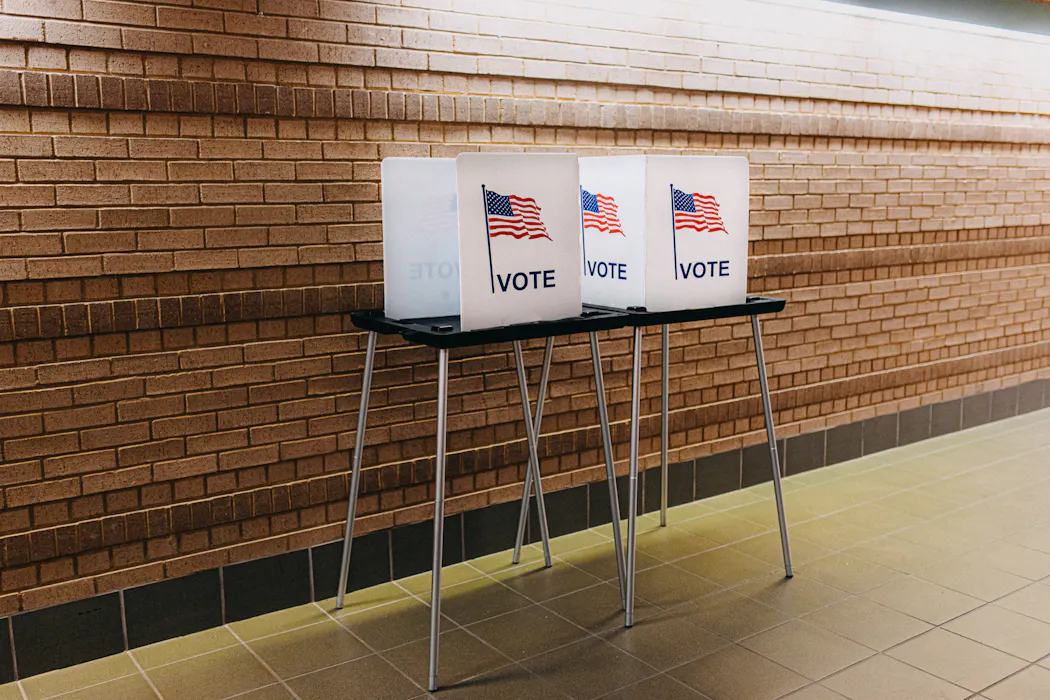
Whoever wins state judicial races in November will not just be interpreting the law. They will be writing the next chapter of it. Stefania Pelfini la Waziya/Getty Images

In the heated news coverage of what’s at stake in the 2026 midterms, state supreme court races are drawing relatively little attention. Yet these are highly significant elections.

Thirty-one states are holding supreme court elections in 2026, with voters nationwide picking judges to fill more than 60 open seats.

As a law professor whose research and writing focuses on reproductive health, I’m watching these races closely. That’s because in the coming years these courts will have the final word on many consequential legal fights around abortion and trans healthcare.

State supreme court judges make high-stakes decisions

When the U.S. Supreme Court overturned Roe v. Wade in 2022, ending a half-century of federal constitutional protection for abortion, it handed this major issue back to the states. As a result, in addition to prompting ballot initiatives, the court’s decision in Dobbs v. Jackson Women’s Health Organization has also spurred litigation in state courts.

These cases ask judges to discern, for example, whether state constitutions create a right to abortion – or, at least, prohibit restrictions on abortion access.

Moreover, in weighing the legality of abortion bans, state judges must determine specific issues of abortion access. Idaho’s high court recently approved Republican officials’ rewritten wording for a ballot initiative that would repeal the state’s abortion ban; advocates for the initiative argue that the language misrepresents Idaho’s abortion law.

In Indiana, the state Supreme Court recently heard arguments over whether a religious freedom law creates an exception to the state’s near-total abortion ban. The plaintiffs in that case argued that their faiths allowed or required the procedure in circumstances the ban currently forbids.

Increasingly, the U.S. Supreme Court has been handing questions concerning transgender rights back to states, too.

In June 2025, the Supreme Court ruled 6-3 in United States v. Skrmetti that Tennessee’s ban on puberty blockers and hormone therapy for transgender minors does not count as sex discrimination under the U.S. Constitution. Consequently, that and similar bans only need to pass the lowest level of judicial review; they no longer have to pass the higher bar of “strict scrutiny.”

This means lower courts can essentially rubber-stamp the bans that state legislatures have passed. In fact, the Skrmetti decision cleared the way for the roughly two dozen states with similar bans to keep enforcing them.

Skrmetti did not, however, require any state to pass such a law. And it does not address how far the ruling extends to adults or whether it applies to other related aspects of gender-affirming care, such as insurance coverage.

In other words, the people who now decide whether abortion restrictions stay on the books or whether a minor can get gender-affirming care are, in many cases, not justices sitting on the U.S. Supreme Court. In many cases, they will be state supreme court judges.

An illustration depicts an American flag, a voter casting a ballot and the scales of justice.
State supreme court judges will decide whether abortion restrictions stay on the books and whether a minor can get gender-affirming care.
wildpixel/Getty Images

North Carolina, Georgia, Michigan, Montana have races to watch

In Montana, judicial races could change the ideological bent of the state’s top court. Judicial elections in the state are technically nonpartisan, but Republicans see a chance to retake the state Supreme Court with judges they endorse.

In 2023, its Democrat-endorsed majority ruled that the state constitution protects abortion rights. It also determined that attempts to stop one class of health providers – advanced practice registered nurses – from performing abortions violated those rights.

Judges who upheld restrictions affecting residents’ reproductive rights will face voters this fall in Alabama, Arizona, Florida, North Dakota, Oklahoma and Texas. In some of these races, abortion is a live – and legally dynamic – issue.

North Carolina’s high court also leans heavily conservative. This year one of just two Democrats on the seven-judge panel – incumbent Democrat Anita Earls – is up for reelection. If she loses, the GOP would gain a near-total supermajority on North Carolina’s Supreme Court. That outcome would likely cement the party’s edge on key political matters for years to come.

Michigan looks like the mirror image of North Carolina. All justices there are officially nonpartisan, but Democrat-backed justices hold a 6-1 majority on the seven-member court. Chief Justice Megan Cavanagh and Justice Noah Hood – both Democrats – are up for reelection this fall.

Democrats are hoping to retain their edge, in part to keep abortion protected. Voters enshrined abortion rights directly into Michigan’s Constitution in 2022, and the state’s highest court has already interpreted that amendment to dismiss abortion-related restrictions.

Ohio protects abortion, but courts will decide how much

Ohio is a powerful example of what is at stake in this year’s state supreme court races. Republicans hold a 6-1 majority on the state’s high court, a dominant position built over successive election cycles in 2022 and 2024.

In the 2026 midterms, Ohio’s only Democratic state Supreme Court justice, Jennifer Brunner, is defending her seat against a Republican challenger. If Brunner loses, Ohio’s highest court could become a unanimous conservative bench – one that will likely determine the outcome of high-profile cases related to both abortion access and gender-affirming care.

Ohio voters approved a constitutional amendment in 2023 protecting abortion access. The amendment establishes that individuals have the right to make their own reproductive decisions. The language covers contraception, fertility treatment, continuing a pregnancy, miscarriage care and abortion up to fetal viability. It also asserts that the state generally cannot interfere with these decisions.

Now, lower courts are litigating whether restrictions on abortion access – for instance, the state’s 24-hour waiting period and ban on telehealth for medication abortion – can survive scrutiny under that amendment.

The Ohio Supreme Court may eventually decide that case. In my assessment, an even more conservative Ohio court might be inclined to read the voter-approved abortion amendment as narrowly as possible.

Ohio’s Supreme Court is similarly poised to make big decisions on trans rights. For example, it could uphold the state’s ban on gender-affirming care for transgender minors. That would reverse a 2025 appellate ruling that had struck down the law, which was passed over the veto of Republican Gov. Mike DeWine.

Even if they don’t change the partisan makeup of these courts, elections for state supreme court seats in places such as Ohio may matter for the scope and breadth of rulings that claw back individual rights. Or they may foretell how a conservative near-supermajority might lock in abortion and trans restrictions for a generation.

Whoever wins these judicial races in November will not just be interpreting the law. In a real sense, they will be writing the next chapter of it.

This story was produced in collaboration with Rewire News Group, a nonprofit newsroom that covers reproductive health.

The Conversation

Rachel Rebouché does not work for, consult, own shares in or receive funding from any company or organization that would benefit from this article, and has disclosed no relevant affiliations beyond their academic appointment.

​Politics + Society – The Conversation
Categories
Health

Happy Days Star, 77, Shares Shirtless Selfie — But It’s Not For Vanity

“Happy Days” star Anson Williams recently uploaded a shirtless selfie to Instagram. However, it wasn’t for vanity. You’ll want to read his uplifting message.

​Health Digest – Health News, Wellness, Expert Insights

Categories
Entertainment

Matthew Ingalls, Accused ‘Cornell 7’ Rapist, Claims Jane Doe …

Reading Time: 3 minutes

Matthew Ingalls, the guy who invited his Cornell University frat bros to “walk in and whip it out” on Jane Doe, claimed to administration that he was actually a victim that night.

The following year, he claimed that the woman who reported that she was gang raped “sodomized” him that night.

He then accused the school, which is also accused of withholding key evidence from prosecutors in the alleged gang rape, of ignoring his complaint.

What’s going on?

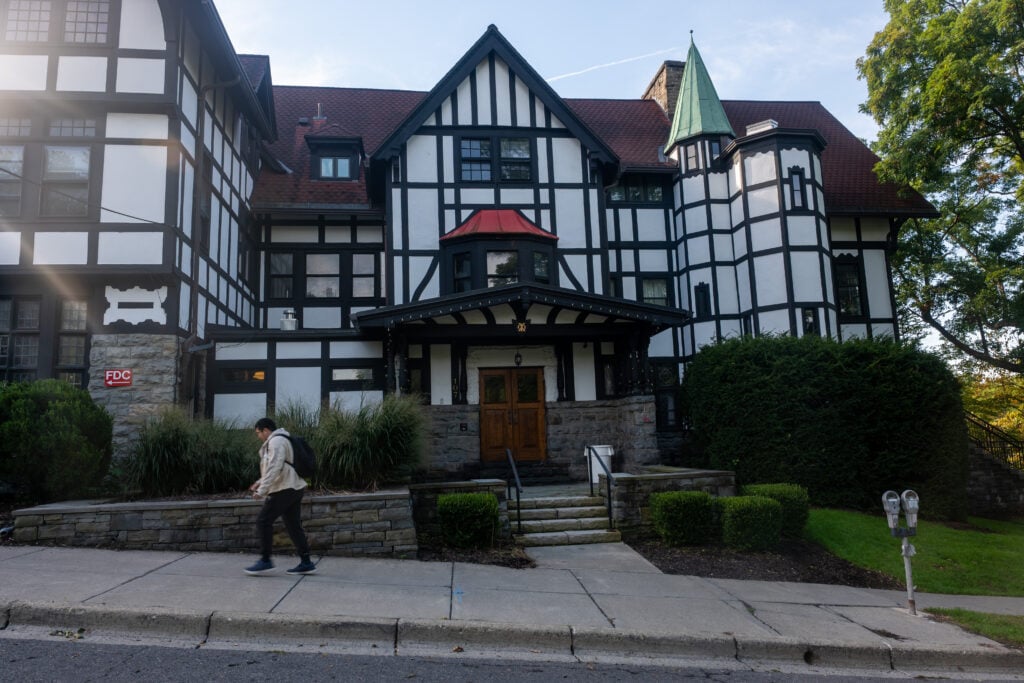
The Chi Phi fraternity house in September 2026.
The fraternity house at the center of a rape allegation stands on the campus of Cornell University on September 30, 2026. (Photo Credit: Spencer Platt/Getty Images)

What did Matthew Ingalls tell Cornell University?

Of the “Cornell 7,” the accused gang rapists accused of drugging and raping Jane Doe in October 2024, offering her up to each other in a Chi Phi Snapchat conversation that night, Matthew Ingalls stands out.

Prior to that night, Jane Doe had considered him to be her friend.

There is even a recording of her calling him and trying to piece together a timeline and identify which men were there that night, though it seems that she likely suspected that he had a sinister role in what happened to her.

(He was less than helpful, and even appeared to try to persuade her that either she was sober or that he had earnestly believed that she was sober — even in the same breath that he claimed to not have a good memory of the night himself.)

Now, a new layer of his claims says that he was a victim — her victim.

Know their names: Scott Kretzschmar, Scott Norris, Diego Sarabia, Gillio Lopes, Winston Lee, Johnathan Newell and Matthew Ingalls #Cornell7

But also, everyone in the group chat, the administrators, university, and DA. SHAME.

[image or embed]

— FLAVOR FLAV ⏰ (@flavorflav.bsky.social) September 29, 2026 at 10:49 PM

In a February 2025 email to Cornell University’s Title IX office, Ingalls claimed that he was “sodomized by her while I was incapacitated.”

To be clear, it seems that he is accusing Jane Doe of nonconsensual acts (reading between the lines, maybe fingering him?) during her alleged gang rape.

Ingalls accused Cornell of gender discrimination for failing to inform him of his rights under Cornell’s sexual misconduct guidelines.

If someone performs a nonconsensual sex act during sex — from removing a condom to choking to impact play to invading an orifice without permission, that is probably sexual assault. The same would go if the person is incapacitated.

But … is that what happened to Ingalls?

Jane Doe and her medical records tell a very different story

Matthew Ingalls allegedly invited Jane Doe over to his frat house.

He said that she was sober (or claimed to be sober), while she says that not only had she been drinking beforehand, but told him as much. She believed them to be friends.

According to her lawsuit, Doe was heavily intoxicated with alcohol, marijuana, and ketamine.

Ingalls “popped the question” (his phrasing) about a threesome, and then proceeded to invite other Chi Phi frat brothers.

On Snapchat, he shared a photo of Doe — naked on a bed — while inviting other men to “walk in and whip it out.” Even if the physical acts that Ingalls described took place, one wonders how he would argue in court that Doe — drugged and offered up to his fraternity brothers — was the predator.

You cannot convince me that frat brothers organically walked into separate police interviews using the same word, “consensual,” and that it wasn’t coordinated.

Especially after a witness told police there was allegedly a fraternity meeting to get everyone “on the same page”.

[image or embed]

— Christopher Webb (@cwebbonline.com) October 6, 2026 at 11:48 PM

Jane Doe says that this was not a consensual encounter. Her memory of the incident fades in and out, and she became confused as to how so many men entered the room.

She also sustained physical injuries, she described, prompting her to seek medical attention.

Cornell expelled Ingalls and Newell after an internal investigation. Other participants received suspensions or had to write essays.

Meanwhile, prosecutors say that the university withheld key elements of Jane Doe’s testimony. Had they known at the time what she had described, they say, they would have pressed charges.

The hands that fumbled this are no longer in control. New York Attorney General Letitia James is acting as a special prosecutor for this case after it has dominated headlines for weeks.

Matthew Ingalls, Accused ‘Cornell 7’ Rapist, Claims Jane Doe … was originally published on The Hollywood Gossip.

​The Hollywood Gossip

Categories
Uncategorized

Armed poll watchers: New Jersey’s 1981 racist voter intimidation campaign is a cautionary tale ahead of 2026 midterms

Will voters in the upcoming Nov. 3 election face a voter intimidation campaign like New Jersey voters faced in 1981? Backyard Production, iStock/Getty Images Plus

In the history of voter suppression in the United States, including attempts to stop Black and Latino people from voting, Republican tactics in the 1981 New Jersey gubernatorial race stand out.

That November, voters in several cities saw posters at polling places printed in bright red letters: “WARNING. This area is being patrolled by the National Ballot Security Task Force.”

About 200 patrols were deployed statewide, many of them uniformed and carrying guns.

In Trenton, patrol members asked a Black voter for her registration card and turned her away when she didn’t produce it. Latino voters were prevented from voting in Vineland, while in Newark some voters were physically chased from the polls by patrolmen, one of whom warned a poll worker not to stay at her post after dark. Similar scenes played out in at least two other cities, Camden and Atlantic City.

Weeks later, after a recount, Republican Thomas Kean won election as governor by fewer than 1,800 votes.

Democrats, however, soon won a significant victory. With local civil rights activists, they discovered that the “ballot security” operation was a joint project of the state and national Republican committees. They filed suit in December 1981, charging Republicans with “efforts to intimidate, threaten and coerce duly qualified black and Hispanic voters.”

In November 1982, the case was settled when the Republican committees signed a federal consent decree – a court order applicable to activities anywhere in the U.S. – agreeing not to use race in selecting targets for ballot security activities and to refrain from deploying armed poll watchers.

That decree expired in 2018 after Democrats failed to convince a judge to renew it.

The 1981 voter suppression efforts resonate today in the midst of the Trump administration’s persistent efforts to suppress the vote and undermine trust in elections nationwide.

In May 2026, a PBS reporter asked President Donald Trump whether he would send the National Guard or ICE to polling places in the midterm elections.

“He did not rule it out,” wrote reporter Liz Landers.

The Republican ‘ballot security’ plan

Considered an early referendum on Ronald Reagan’s presidency, New Jersey’s 1981 gubernatorial race featured Kean – with Roger Stone at the campaign’s helm – promising corporate tax cuts and relying heavily on Reagan’s endorsement.

State and national Republican party officials then devised a project they claimed would prevent Democratic cheating at the polls.

In the summer of 1981, the Republican National Committee sent an operative named John A. Kelly to New Jersey to run a ballot security effort. Kelly had previously served as one of the RNC’s liaisons to the Reagan White House.

In August 1981, under the guise of the National Ballot Security Taskforce, Kelly sent about 200,000 letters marked “return to sender” to voters in heavily Black and Latino districts. Those whose letters were returned had their names added to a list of voters to be challenged at the polls on Election Day, a tactic known as voter caging.

In the Newark area, Kelly produced a list of 20,000 voters whom he deemed potentially fraudulent. He then hired local operatives to organize patrols, ostensibly to keep such fraud at bay. To run the Newark operation, he hired Anthony Imperiale.

Newark’s white vigilante

Imperiale, in turn, hired off-duty police officers and employees of his private business, the Imperiale Security Police, to patrol voting sites in the city.

The gun-toting, barrel-chested former Marine had first adopted the security role during Newark’s 1967 uprising – five days of protests and a deadly occupation of the city by police and the National Guard following the police beating of a Black cab driver. During the uprising, Imperiale organized patrols of his predominantly white neighborhood to keep “the riots” out.

Soon, Imperiale became a hero of white backlash politics. His opposition to police reform earned him widespread support from law enforcement. And his fight against Black housing development in Newark’s North Ward delighted many of his neighbors. By the end of the 1970s, Hollywood was making a movie based on his activities.

After serving as an independent in both houses of the state legislature, Imperiale became a Republican in 1979. Two years later, he campaigned with Kean.

Once in office, the new governor named Imperiale director of a new one-man state Office of Community Safety – an appointment often interpreted as reward for Imperiale’s leadership of the ballot efforts in Newark, but stymied when Democrats refused to fund the position.

A clipping from the New York Times showing a dark-haired man taking an oath.
After winning the closest gubernatorial race in New Jersey history, Thomas Kean urged Democrats to work with him on state problems.
New York Times

Outcome and legacy

Despite Kean’s slim margin of victory, Democrats at the time were careful not to claim that Republican voter suppression efforts had decided the election. In 2016, the former Democratic candidate claimed they did indeed make the difference.

Rather, the state and national Democratic committees brought suit against the Republican National Committee to ensure it couldn’t again use such methods anywhere. For nearly 40 years – through amendments and challenges – the resulting consent decree helped curtail voter suppression tactics.

After the decree’s expiration in 2018, Republicans ramped up their recruitment of poll watchers for the 2020 presidential election. After his loss in that election, Trump led a campaign aimed at discrediting the vote’s legitimacy, claiming fraud and irregularities that he’s been consistently unable to prove.

Since winning in 2024, Trump has led a comprehensive effort to discredit and suppress mail voting. And the Department of Justice, Assistant Attorney General Harmeet Dhillon posted on X, has a “plan to send 1,000 federal election monitors to select locations around the country to observe the general election in November. This will be the largest monitoring effort in @theJusticeDept history!”

In addition to those efforts, CNN reports that “the Republican National Committee is training new ‘special monitors’ to scrutinize voting machines.”

This November, Republican tactics in 1981 are worth remembering. They demonstrate that the safeguarding of polling places from allegedly fraudulent voters and of public places from supposedly threatening people of color share not only a logic.

They also share a history.

This story is an updated version of an article originally published Aug. 10, 2020.

The Conversation

Mark Krasovic does not work for, consult, own shares in or receive funding from any company or organization that would benefit from this article, and has disclosed no relevant affiliations beyond their academic appointment.

​Politics + Society – The Conversation

Categories
Entertainment

Travis Barker Shares Photos From Hospital Bed

Travis Barker, Alabama BarkerTravis Barker has his family by his side for all the things, big and small.
And this time, when the Blink-182 drummer found himself in the hospital, wife Kourtney Kardashian and his daughter…
​E! Online (US) – Top Stories

Categories
Entertainment

Why Fall Is the Best Time to Buy This 25% off Prime Day IPL Deal

IPL Remover PRIME THUMB.jpgFall is in full swing, and it’s actually the ideal time of year to start IPL (a.k.a. intense pulsed light) treatments! The shorter days, less sun and cooler weather mean there’s less UV exposure,…

​E! Online (US) – Top Stories

Categories
Entertainment

6 Things To Bring To A Dinner Party And 5 To Avoid

Dinner parties can be daunting when you’re deciding what to gift your host with. But, thanks to our experts you’ll now know what to bring and what to avoid.

​Mashed – Fast Food, Celebrity Chefs, Grocery, Reviews

Categories
Entertainment

Who Is Gordon Ramsay’s Son-In-Law, Adam Ramsay-Peaty?

Whether you’re a foodie or not, just about everybody recognizes Gordon Ramsay. However, his son-in-law is almost as famous in his own right.

​Mashed – Fast Food, Celebrity Chefs, Grocery, Reviews

Categories
Entertainment

This One Butter Add-In Takes Corn On The Cob To The Next Level

When you want to spice up your corn on the cob, you don’t need anything fancy. Adding this spice blend to your butter could have you grinning from ear to ear.

​Mashed – Fast Food, Celebrity Chefs, Grocery, Reviews

Categories
Alaska News

State cuts cruise ship pollution inspections to once every two years, rather than every year

As of July, the state is inspecting cruise ships for pollution violations every other year, rather than every year under a program that began in 2021, according to Alaska Department of Environmental Conservation officials.

The cutback occurred without a public notification process, DEC Commissioner Randy Bates said in a conference call with the Juneau Independent on Friday that included two other department officials. The change officially took effect when the current fiscal year began July 1.

“There’s no need for an announcement like that,” he said. “It’s just a recalibration, which I have that opportunity to do with all of our inspection protocols and staffing exercises.”

Bates said the decision was made for both financial and regulatory reasons, noting on the latter point that other industries undergoing pollution inspections such as mining, oil, seafood and timber aren’t subject to annual DEC inspections.

“We’re using our resources where we can best use them,” he said. That means “equitable industry treatments so that one industry like the cruise industry isn’t getting over-reviewed on a comparative level with the mining industry.”

Two Democratic Juneau state lawmakers who are members of the finance committees in their respective chambers — Rep. Sara Hannan and Sen. Jesse Kiehl — told the Juneau Independent on Monday the change to the inspection schedule came as a surprise since there was no mention of that possibility during budget discussions at the Alaska State Capitol during the past session.

“In fact, when I started hearing rumors about existing inspections getting dismantled I looked back to make sure I hadn’t missed anything in the budget process,” Kiehl stated in an email. “I had not. The budget request was status quo, so this new radical reduction raises serious questions about what the Dunleavy administration plans to do with the money they asked the legislature for.”

The change does not mean discharge limits, or monitoring and reporting requirements for cruise lines, have changed, Bates said.

“We have all of this other protocol of reports and reporting and data submissions on a daily or a weekly or a monthly basis,” he said. “And that’s where we spend so much more time as staff is looking at those, working with the industry on what those reports look like, and if there’s excursions let’s get those fixed immediately.”

The now-biennial inspections are “minimal in terms of their impact,” Bates said.

“They are appropriate and necessary for oversight to confirm what we’re seeing and what we’re doing, and that the vessel has got the controls in place that we expect them to,” he said. “But the work that we do on a daily basis is so much more significant than maybe people understand.”

But doubts have been raised by state lawmakers and others about the effectiveness of the state’s Commercial Passenger Vessel Environmental Compliance (CPVEC) program implemented in 2021. The program requires vessel owners and operators to complete an annual registration, pay compliance fees, and submit detailed voyage reports, sampling plans and discharge logs.

Also, critics say the current program is less stringent than the Ocean Ranger, which has been effectively dead since 2019 due to Gov. Mike Dunleavy vetoing its operating funding. Monitors with the program filed 1,580 daily reports in 2018, the last year it was active, compared to 76 total inspections on large cruise ships by DEC in 2025.

“The program was extensive, but also expensive,” Kiehl stated in his email to the Independent. “There was room to reform it, but Dunleavy wanted only to end it. Thus his vetoes. I worked with the administration in its early years to get the kind of inspections that just got dismantled. They weren’t what Alaska voters said to do, but in the face of the veto they were marginally adequate as far as they went. Now it would appear that’s too much for this outgoing governor.”

DEC recorded 21 instances of cruise ships failing to meet wastewater regulations in 2025, compared to 56 wastewater and 40 oil pollution violations reported by Ocean Ranger observers in 2018, according to a Chilkat Valley News article published in April. But the article also notes that of 264 reported wastewater violations in 12 years of the Ocean Ranger program, only six resulted in notices of violation from state officials.

Bates said that while Ocean Ranger participants conducted in-person inspections on vessels, it was up to DEC officials to assess the findings.

“The important part there is they didn’t have inspection credentials,” he said of the Ocean Rangers. “They didn’t have enforcement capacity. What they could do is write reports, submit those reports to us, and then we would look at them after the fact, and decide, is there anything to do with these reports and the numbers they show?”

Kiehl acknowledged “one benefit (of the new program) was that the inspectors were DEC employees so they could hypothetically write a citation for a violation on the spot, whereas rangers were contractors who could write a report that had to be followed up. Occasional overnight port-to-ports were also much cheaper because there was no need to buy a cabin for the whole cruise the way we did with the rangers.”

The flip side, he wrote, “the DEC inspectors don’t have the same breadth of authority to look at everything onboard that the rangers did.”

A $4 per-passenger berth fee is still collected via the Ocean Ranger program approved by voters in 2006, but funding is being redirected to other uses — including possible electrical hookups at cruise ship docks in Juneau and Ketchikan.

Reviving the original project is still being discussed by some state politicians. Hannan, in a text message to the Independent, stated the program was again part of this year’s budget discussions, and former gubernatorial candidate Tom Begich called for restoring it during his abandoned campaign.

Questions about industry’s compliance with the state’s self-reporting requirements again surfaced this spring due to Carnival Corp. withholding water pollution data from state officials.

Carnival argued DEC has authority over wastewater including sewage and greywater, but not exhaust filtered through what are known as “scrubbers” — and can be discharged into the sea — since that is regulated by the U.S. Environmental Protection Agency. Bates, in a letter to the company, challenged that as a basis to withhold data from the state.

In an opinion essay published by the Juneau Independent on Thursday, Bates stated DEC this past season “focused its routine cruise ship wastewater inspections on the discharges regulated under the state’s wastewater permit.”

“That does not mean scrubber discharges are unregulated, nor does it limit DEC’s ability to address water-quality concerns within its jurisdiction,” he wrote.

Because the change occurred at the midpoint of the cruise season, inspections of ships before that were still conducted at the higher pace that guided annual inspections, said Gene McCabe, director of DEC’s Division of Water. As a result, he estimates about 80% of cruise ships arriving in Alaska this year were inspected under the program by July 1.

“So any ship we didn’t inspect this year, next year absolutely is on the list, right?” he said. “We’re going to inspect those first. We are likely, until we normalize, going to have to have a couple of vessels to even out the inspection schedule that we’ll have to do again next year, but once we hit the ’28 cruise season we should be on that odd-year, even-year schedule by that point.”

McCabe said the number of violations from this year’s inspections is not yet available since the season is just reaching its end. The last cruise ship in Juneau is scheduled to depart on Tuesday.

“This time of year is when they start crunching all the data and they’re going to start comparing all that,” McCabe said.

DEC’s cutback in cruise ship inspections is part of a series of environmental protections that have either been proposed or implemented since President Donald Trump began his second term in January 2025, with state officials often citing his day-one executive order to repeal all regulations that inhibit maximum utilization of natural resources. Bates said he doesn’t see a connection between that agenda and the department’s new inspection policy.

“I was not told. I was not guided. This is just common practice,” he said.

This story was originally published by the Juneau Independent.

The post State cuts cruise ship pollution inspections to once every two years, rather than every year appeared first on Chilkat Valley News.